
Published 2026-05-05 · Last updated 2026-05-05 · By Chris Nevada
Las Vegas is one of the fastest-growing family destinations in the United States, with Clark County's population exceeding 2.3 million residents as of the 2020 U.S. Census and continuing to climb. The Clark County School District, the fifth-largest in the nation, serves more than 320,000 students across 350+ schools, including dozens of highly rated magnet and STEM programs. Neighborhoods like Summerlin, Henderson, and the Northwest Valley consistently rank among the safest and most family-friendly communities in Nevada, offering abundant green space, organized youth sports, and strong community programming. Source: U.S. Census Bureau, CCSD. If you're relocating with kids, start with our Las Vegas relocation hub for a personalized neighborhood match and free consult.
Las Vegas offers top-rated schools, 250+ parks, and year-round family activities across Henderson, Summerlin, and the Northwest. Here's what every relocating family needs to know. But beyond economics, families are moving here because of what the valley actually offers: no state income tax, relatively affordable housing compared to coastal markets, a true four-season lifestyle with 300+ days of sunshine, and neighborhoods that were purpose-built for raising kids.
- Key Takeaways.
- Why Families Moving to Las Vegas in 2026.
- What Makes the Clark County School District Stand Out.
- Which Las Vegas Neighborhoods Are Best for Families.
- How Las Vegas Schools Compare Across Key Neighborhoods.
What Should Readers Know First?
- The Clark County School District enrolls over 320,000 students across 350+ schools, making it the 5th largest district in the U.S. (ccsd.net, 2025).
- Henderson, NV ranked among the top 10 safest large cities in the country in 2024, with a violent crime rate well below the national average (City of Henderson, 2024).
- Summerlin's 150+ miles of trails and 300+ acres of parks make it one of the most park-rich master-planned communities in the American West (Summerlin Community Association, 2025).
- Clark County operates more than 260 parks totaling over 12,000 acres of public recreation space, offering everything from splash pads to championship golf courses (clarkcountynv.gov, 2025).
- Median home prices in top family neighborhoods like Summerlin and Henderson ranged from $450,000 to $650,000 in early 2026, giving families a wide range of entry points depending on school zone and amenities (Greater Las Vegas Association of Realtors, 2026).
Why Are Families Moving to Las Vegas in 2026?
I get asked this question constantly by clients calling from California, Texas, and the Pacific Northwest: why Las Vegas? The honest answer is that the Las Vegas Valley has quietly transformed into one of the most compelling family relocation destinations in the country over the past decade — and the momentum is only accelerating in 2026.
The numbers tell part of the story. According to the U.S. Census Bureau, Nevada was among the top five fastest-growing states in the country throughout the 2020s. Clark County alone added tens of thousands of new residents each year, and a significant portion of that growth is being driven by families, not just retirees or casino workers. The Bureau of Labor Statistics reports that Nevada's economy has diversified substantially, with professional services, healthcare, logistics, and technology sectors all expanding — and those industries bring two-income households with children.
But beyond economics, families are moving here because of what the valley actually offers: no state income tax, relatively affordable housing compared to coastal markets, a true four-season lifestyle with 300+ days of sunshine, and neighborhoods that were purpose-built for raising kids. When I show clients around Summerlin, Henderson, and the Northwest Valley, the reaction is almost always the same: they didn't expect it to feel this livable.
If you're already exploring the broader picture, I recommend reading our guide on moving to Las Vegas 2026 for the full relocation checklist.
What Makes the Clark County School District Stand Out?
No factor matters more to relocating parents than school quality, so let me be direct about what the Clark County School District offers — and where it excels.
CCSD is the fifth-largest school district in the United States, serving more than 320,000 students across over 350 schools as of the 2025-2026 academic year. That scale can be intimidating, but it also means the district has resources to support specialized programs that smaller districts simply cannot afford. We're talking about dedicated STEM academies, performing arts schools, International Baccalaureate (IB) programs, and Advanced Placement (AP) course offerings that rival those in much larger metro areas.
The key for families is understanding that school quality in CCSD varies significantly by neighborhood and zone. High-performing schools are concentrated in areas like Summerlin, Henderson, Green Valley, and parts of the Northwest Valley. Schools like Doral Academy, a top-rated charter school with campuses in multiple Las Vegas Valley locations, have earned national recognition. The Nevada Department of Education's star-rating system makes it relatively easy to compare schools before you buy.
Parents should also know that CCSD offers open enrollment options, magnet program lotteries, and charter school alternatives that can give families more flexibility even if their neighborhood school isn't their first choice. I always tell clients: buy in a good school zone first, and treat the magnet lottery as a bonus opportunity.
For detailed school performance data by zone, the Clark County School District website maintains updated ratings and enrollment information for every school in the valley.
Which Las Vegas Neighborhoods Are Best for Families?
After years of helping families buy homes across the valley, I've developed a clear picture of which neighborhoods consistently deliver the best combination of school quality, safety, parks, and community programming. Here's my honest breakdown:
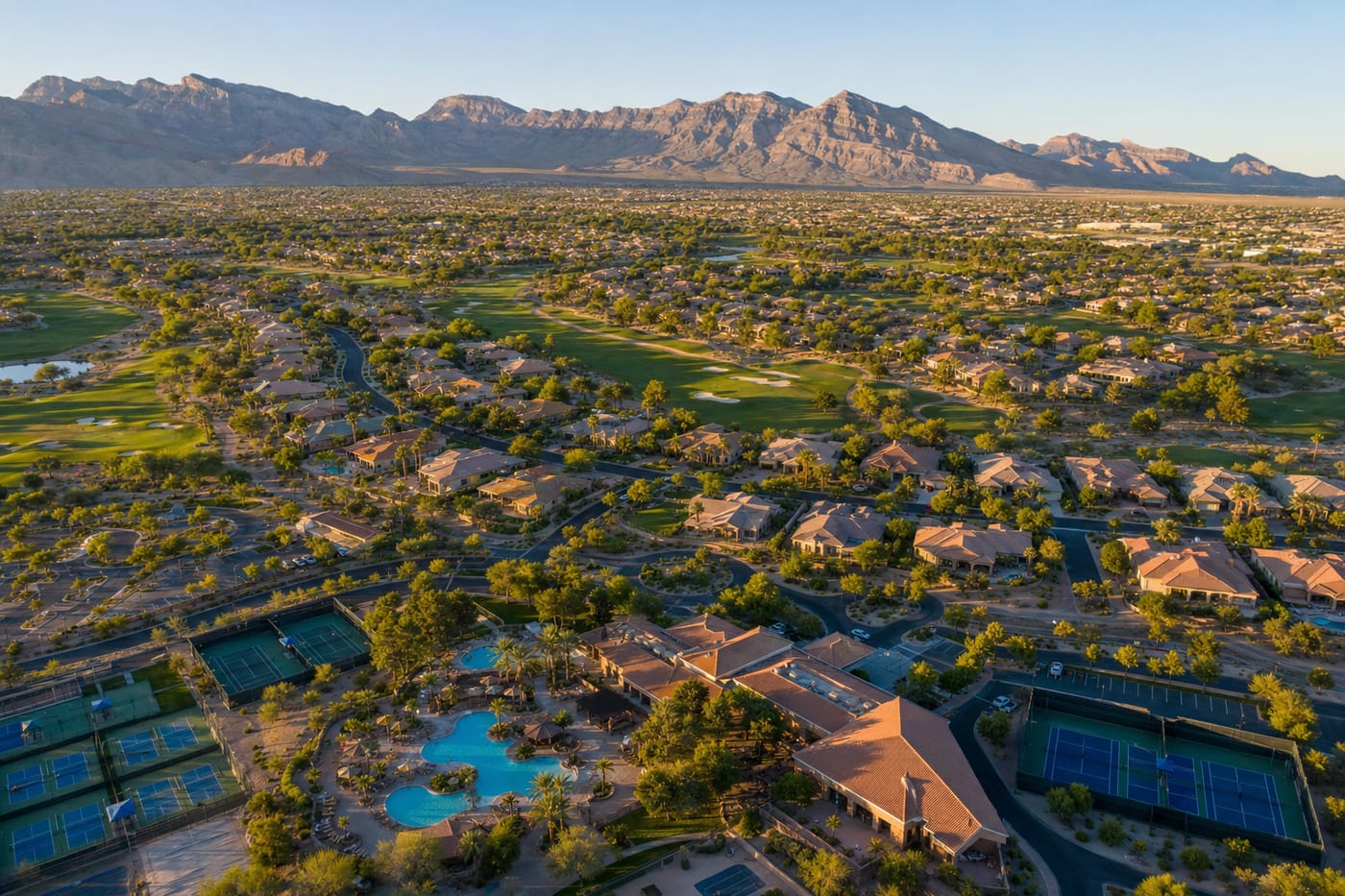
Summerlin sits on the western edge of the valley and is arguably the gold standard for family living in Las Vegas. Developed by Howard Hughes Corporation, Summerlin spans 22,500 acres and includes over 26 villages, each with its own parks, walking trails, and amenity centers. Schools in the Summerlin zone consistently rank among the highest in Clark County. The area also benefits from proximity to Red Rock Canyon National Conservation Area, giving families access to regionally significant outdoor recreation just minutes from home.
Henderson is a separate city — not just a Las Vegas suburb — with its own municipal services, parks department, and identity. The City of Henderson consistently earns recognition as one of the safest large cities in the country. Neighborhoods like Green Valley Ranch, Inspirada, and MacDonald Ranch offer excellent schools, low crime, and strong community programming. Henderson's park system includes more than 160 parks and over 180 miles of trails.
Northwest Las Vegas (roughly the 89129 and 89149 zip codes) has emerged as a strong alternative for families who want Summerlin-adjacent quality at slightly lower price points. The area around Centennial Hills features newer construction, strong CCSD schools, and easy access to shopping, dining, and outdoor recreation.
Southern Highlands offers a gated, master-planned community experience in the southwest valley, with a private golf course, resort-style amenity center, and highly rated schools. Median prices here run slightly lower than Summerlin but the lifestyle quality is comparable.
Green Valley in Henderson is one of the valley's original master-planned communities and remains exceptionally popular with families for its mature landscaping, established school zones, and proximity to the 215 Beltway.
How Do Las Vegas Schools Compare Across Key Neighborhoods?
One of the most common requests I get from relocating parents is a side-by-side comparison of school quality across neighborhoods. The table below gives you a practical snapshot of what to expect based on current Nevada Department of Education data and publicly available ratings.
| Neighborhood | Zoned Elementary | NDE Star Rating | Zoned High School | Graduation Rate |
|---|---|---|---|---|
| Summerlin (89135) | Bonner ES | 4 Stars | Palo Verde HS | 91% |
| Henderson/Green Valley (89014) | Elise L. Wolff ES | 4 Stars | Green Valley HS | 89% |
| Henderson/Inspirada (89002) | John C. Vanderburg ES | 5 Stars | Liberty HS | 93% |
| Northwest Las Vegas (89149) | Centennial HS Feeder Zone | 4 Stars | Centennial HS | 88% |
| Southern Highlands (89141) | Robert & Sandy Ellis ES | 4 Stars | Silverado HS | 87% |
Source: Nevada Department of Education school ratings 2024-2025; CCSD graduation data 2024 (ccsd.net)
These ratings reflect a general snapshot and can shift year over year. I always recommend visiting the CCSD website and, ideally, scheduling school tours before finalizing your home purchase. Zone boundaries also change periodically, so confirm your address falls in the intended zone before closing.
What Parks and Outdoor Recreation Does the Valley Offer Families?
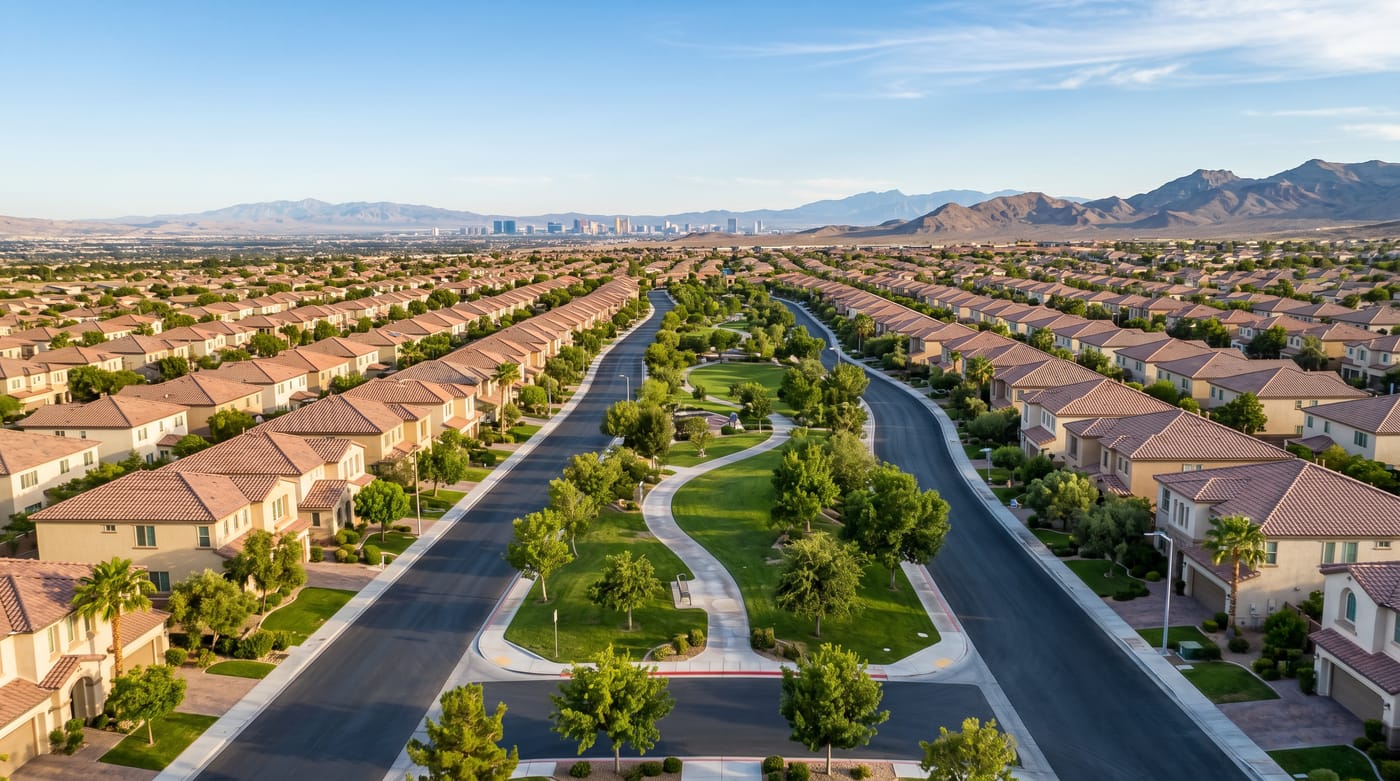
This is where Las Vegas genuinely surprises most incoming families. People assume it's all desert and casinos. The reality is that Clark County operates one of the most extensive park systems in the Mountain West, with over 260 parks totaling more than 12,000 acres of public recreation space according to clarkcountynv.gov.
Floyd Lamb Park at Tule Springs in the northwest valley is one of my favorites for families with young children. It features stocked fishing ponds, peacocks wandering the grounds, picnic pavilions, and wide-open green space that feels genuinely tranquil. Admission is minimal and it gets used year-round because of the mild climate.
Sunset Park near the airport is one of the largest urban parks in the valley, covering over 324 acres. It has a lake, radio-controlled aircraft flying area, volleyball courts, tennis courts, and a nationally recognized disc golf course. On any given Saturday morning it feels like a neighborhood reunion.
Cornerstone Park in Henderson spans 130 acres along Lake Las Vegas and is a consistently top-rated park in the region. It features playgrounds, a splash pad, soccer fields, and regular community events.
Desert Breeze Park in the southwest valley includes an aquatic facility, soccer fields, a skate park, and the Clark County Wetlands Park is nearby for nature education.
For families in Summerlin, the community's trail system is exceptional — 150+ miles of interconnected trails that weave through parks, past schools, and along the Red Rock wash. Kids in Summerlin often grow up riding bikes and walking to parks in a way that feels suburban in the best possible sense.
Red Rock Canyon National Conservation Area, just 15 miles west of the 215, offers 200,000 acres of federally protected land with hiking trails for all skill levels, rock climbing, wildlife viewing, and some of the most dramatic scenery in the country. Annual family passes are available and well worth the investment if you're settling in the western or northwest valley.
Are There Quality Youth Sports and Activities in Las Vegas?
Absolutely — and this is one of the most underappreciated aspects of raising kids in the Las Vegas Valley. The combination of Clark County's park infrastructure, strong youth sports leagues, and year-round outdoor weather creates an environment where kids can stay active in ways that are difficult to replicate in colder climates.
The City of Henderson runs one of the strongest municipal parks and recreation programs in Nevada. Their youth sports leagues include baseball, softball, soccer, basketball, flag football, and volleyball, with programs organized by age group starting as young as four years old. Registration fees are reasonable and the facilities are well-maintained.
The Las Vegas Youth Soccer Association and Nevada Youth Soccer both operate across the valley with competitive and recreational leagues. Travel soccer teams based in Henderson and Summerlin regularly compete at regional and national levels. The spring and fall seasons are particularly active since temperatures are mild and games can run comfortably outdoors.
Las Vegas also has a strong club swimming scene, with the Southern Nevada Aquatic Club (SNAC) and Las Vegas Swim Club both producing nationally competitive swimmers. Many of the master-planned communities — Summerlin, Henderson, Southern Highlands — have private community pools that supplement the public aquatic facilities.
For performing arts, the Nevada Conservatory Theatre at UNLV, the Las Vegas Philharmonic youth education programs, and dozens of private studios offer music, dance, and theater training for school-age children. The Smith Center for the Performing Arts brings Broadway touring productions and classical performances to the valley, giving families access to cultural programming on par with much larger cities.
How Do Home Prices Compare Across Family-Friendly Neighborhoods?
Let's talk money, because that's ultimately what drives where a family lands. The good news is that the Las Vegas Valley still offers meaningful value compared to most coastal markets, even after the price appreciation of recent years. The table below reflects median home prices in early 2026 based on data from the Greater Las Vegas Association of Realtors.
| Neighborhood | Median Home Price (Q1 2026) | Avg. Square Footage | HOA Fees (Monthly) | School Zone Rating |
|---|---|---|---|---|
| Summerlin (West) | $620,000 | 2,400 sq ft | $55–$110 | 4-5 Stars |
| Henderson/Inspirada | $575,000 | 2,350 sq ft | $70–$130 | 5 Stars |
| Henderson/Green Valley | $490,000 | 2,100 sq ft | $45–$90 | 4 Stars |
| Northwest Las Vegas | $480,000 | 2,200 sq ft | $50–$95 | 4 Stars |
| Southern Highlands | $520,000 | 2,300 sq ft | $100–$175 | 4 Stars |
Source: Greater Las Vegas Association of Realtors (lasvegasrealtors.com), Q1 2026 median sales data; HOA ranges estimated from MLS listings
For families considering higher price points — say, $800,000 and above — Summerlin's guard-gated villages like The Ridges, and Henderson communities like MacDonald Ranch and Anthem Country Club offer larger lots, custom finishes, and resort-style community amenities. I cover this in more detail in our Las Vegas luxury neighborhoods ranked guide.
Mortgage math matters too. At current rates, a family putting 10% down on a $520,000 home in Southern Highlands would be looking at a monthly principal and interest payment in the range of $3,100–$3,400 depending on their rate and loan structure. Factor in HOA fees, property taxes (Nevada's effective property tax rate is among the lowest in the country at roughly 0.53% according to tax.nv.gov), and homeowners insurance, and most families find the all-in monthly cost still compares favorably to renting in California or the Pacific Northwest.
What Family-Focused Amenities and Entertainment Exist in the Valley?
One of the best parts of my job is introducing relocated families to the Las Vegas that exists beyond the Strip — because the Strip is maybe five miles of a city that spans hundreds of square miles of residential communities with their own distinct identities.
The Discovery Children's Museum in downtown Las Vegas is a genuine standout. The 58,000-square-foot facility features hands-on exhibits across nine themed galleries and is regularly updated with traveling exhibits from the Smithsonian and other national institutions. Annual memberships provide reciprocal access to children's museums across the country.
Springs Preserve is a 180-acre cultural institution on the western edge of downtown that tells the story of Las Vegas and the Mojave Desert ecosystem. It has botanical gardens, hiking trails, a children's garden, and rotating exhibits. Weekend programming for families is year-round.
Las Vegas Natural History Museum near downtown offers dinosaur exhibits, a marine life gallery, and educational programming that works well for school-age children, particularly those in science-focused tracks.
Las Vegas Ice Center and several other rinks across the valley support youth hockey leagues, figure skating programs, and recreational skating. The Knights Ice Center in City National Arena — home practice facility of the NHL's Vegas Golden Knights — offers youth development programs that have gained serious momentum since the team's Stanley Cup championship.
Wet 'n' Wild Las Vegas, Cowabunga Bay in Henderson, and community splash pads across the valley make summer heat manageable for families with young kids. The Henderson aquatics system alone operates multiple community pools with lap swimming, lessons, and recreational swim sessions.
For weekend day trips, Lake Mead National Recreation Area, Valley of Fire State Park (just 50 miles northeast of the city), Mount Charleston (with a seasonal ski resort at Lee Canyon), and the Colorado River corridor all sit within 90 minutes of most valley neighborhoods. Families here genuinely have access to a remarkable range of outdoor environments without a long drive.
Is Las Vegas Safe Enough for Families?
This is a fair question and I'd rather address it directly than dance around it. The answer depends significantly on which part of the valley you're talking about.
Henderson consistently earns recognition as one of the safest large cities in the United States. According to the City of Henderson, violent crime rates in Henderson remain well below national averages. Similarly, Summerlin, Southern Highlands, and the Northwest Valley maintain crime profiles that are more characteristic of suburban communities in Utah or Arizona than what many people associate with Las Vegas.
The areas with elevated crime statistics are concentrated in older, more urban parts of the valley — primarily in central and north Las Vegas, and certain corridors near the Strip. These are not the neighborhoods where most families buy homes, and the concentration of crime data in those areas can skew people's perception of the valley as a whole.
I tell every family client the same thing: buy in a master-planned community with an active HOA, and you'll be living in an environment that feels safe, well-maintained, and genuinely community-oriented. The gated villages within Summerlin and the communities along Green Valley Parkway in Henderson are particularly well-regarded in this respect.
For crime data specific to any neighborhood you're considering, the Metropolitan Police Department's public data portal breaks statistics down by area command and neighborhood.
How Does Nevada's Tax Environment Benefit Families?
This deserves its own section because it's one of the most powerful financial arguments for relocating families — and it's often underestimated.
Nevada has no state income tax. Zero. That means a family earning $150,000 per year pays nothing to the state on earned income. By contrast, a California family at the same income level might pay 9.3% or more in state income tax. On $150,000, that's $13,950 or more going to Sacramento instead of your mortgage payment, college savings, or vacation fund.
According to tax.nv.gov, Nevada's tax structure relies primarily on sales tax, gaming revenue, and property taxes rather than income taxes. Nevada's effective property tax rate — approximately 0.53% — is one of the lowest in the country, which means the annual tax bill on a $520,000 home runs approximately $2,756 per year, or about $230 per month. Compare that to Texas, which has no income tax but carries property tax rates often north of 2%, meaning a comparable Texas home would generate $10,400+ in annual property taxes.
For families coming from California, Oregon, or Minnesota, the combined effect of eliminating state income tax and carrying lower property taxes can represent $15,000–$25,000 or more in annual take-home improvement. That's a significant lifestyle upgrade that makes larger homes, better school zones, and more family activities financially accessible.
The Federal Reserve's data on household financial mobility consistently shows that low-tax states attract higher-income households — which in turn supports the quality of the communities, retail, and services that make family life comfortable.
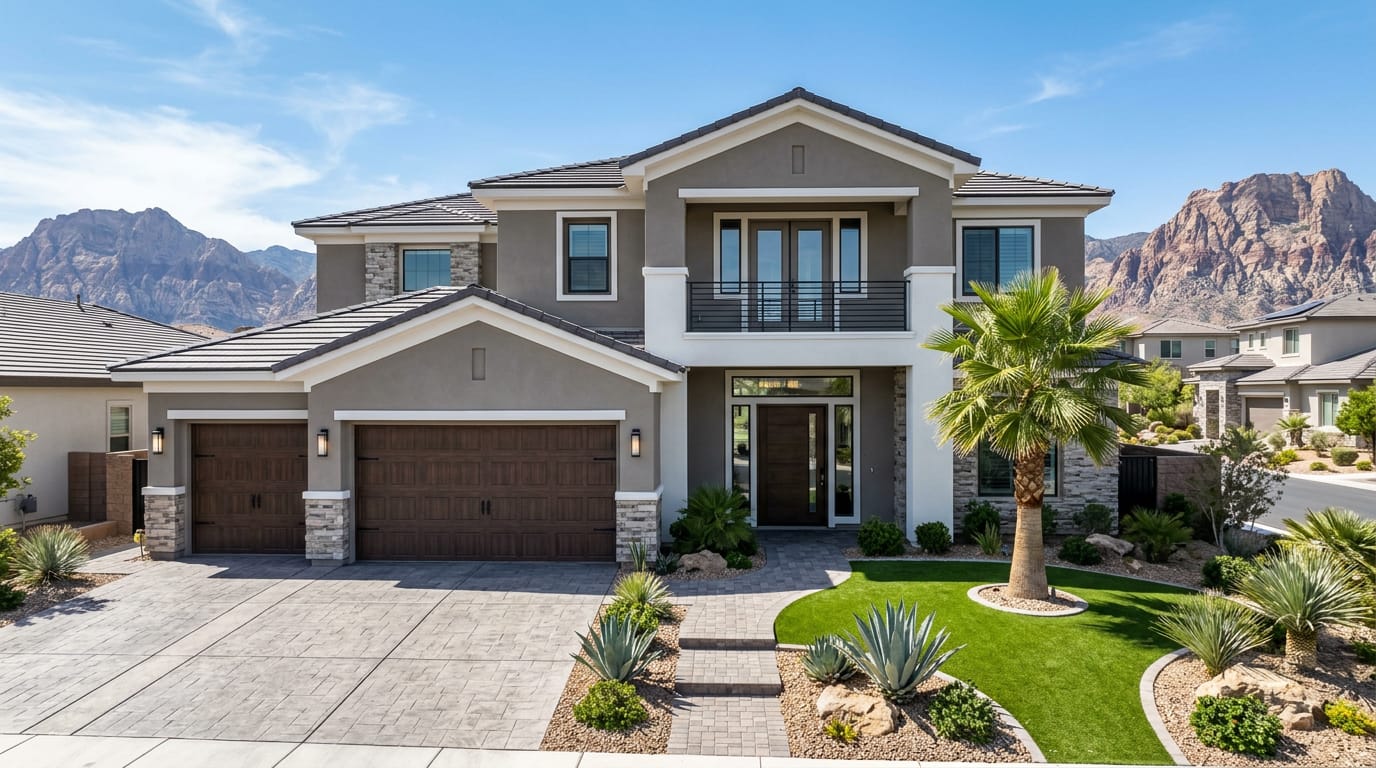
Can Families Find Luxury Living and Top Schools Together in Las Vegas?
Yes — and this is actually one of the valley's strongest selling points for high-income relocating families. Unlike many major metro areas where the best schools are in dense, expensive urban neighborhoods with small lots and limited amenities, Las Vegas allows families to have a 3,500-square-foot home with a private pool, a three-car garage, a top-rated school within walking distance, and proximity to hiking trails — all under one roof, and often for less than $1 million.
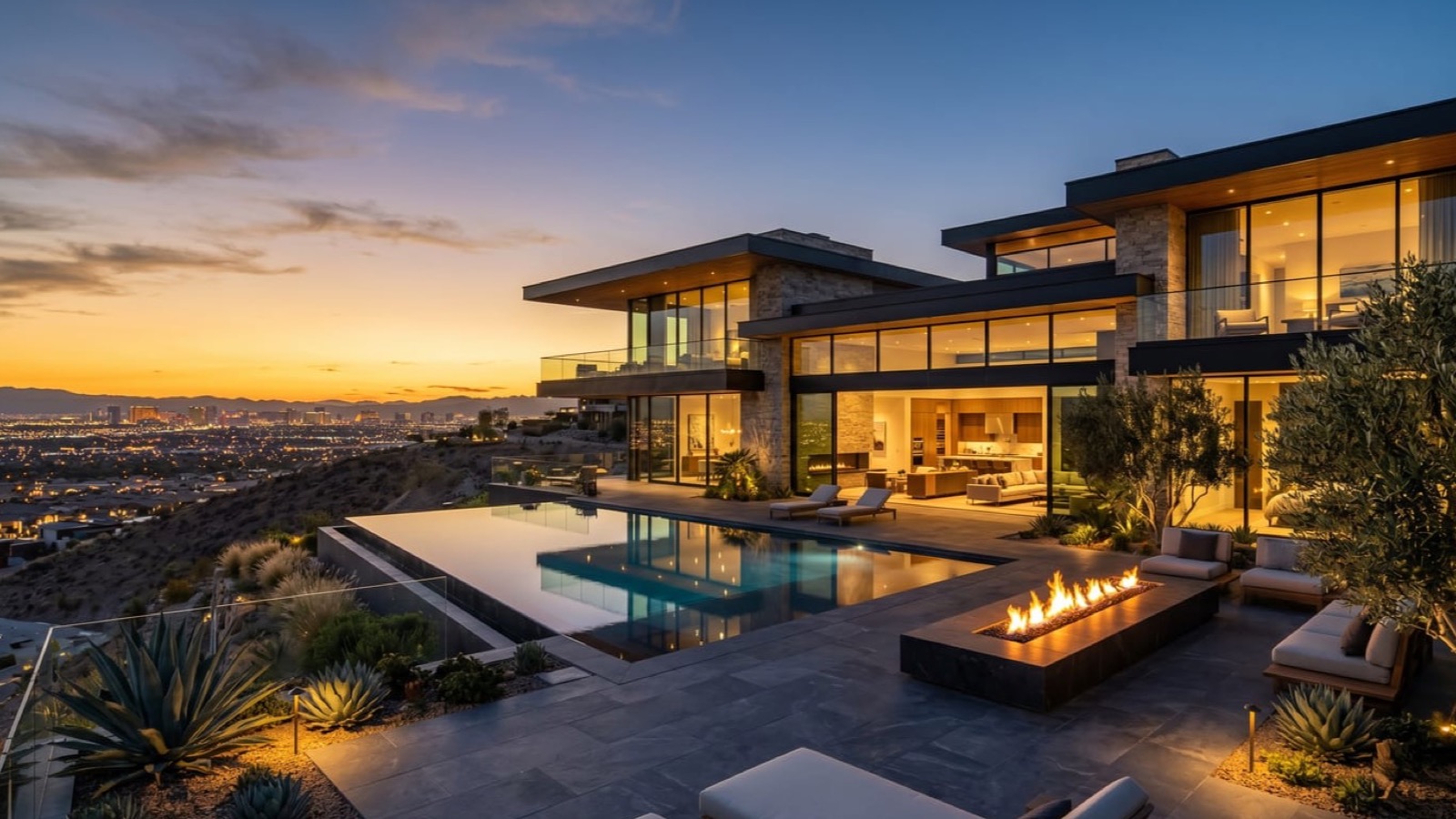
The upper tier of family neighborhoods — places like The Ridges in Summerlin, Anthem Country Club in Henderson, and MacDonald Ranch — offer all of the above plus guard-gated security, private club memberships, and custom construction options. Homes in these areas typically range from $900,000 to $3 million+, and the school zones they feed into are consistently among the best in CCSD.
Our team has helped many families navigate both ends of this market. For those interested in what luxury family living actually looks like at the $1 million+ level in Las Vegas, I'd point you to our Las Vegas luxury homes above $1M guide, which breaks down what your budget gets you in specific communities.
For a real-world example of how families navigate the Las Vegas home search — including school zone research, budget decisions, and neighborhood tradeoffs — I'd encourage you to read how one Las Vegas family found their perfect home. It's one of the most useful case studies we've published.
What Should Families Know Before Starting Their Las Vegas Home Search?
After helping hundreds of families relocate to the Las Vegas Valley, here's the distilled advice I give every new client before we start touring homes:
Get pre-approved before you search. The valley's family-friendly neighborhoods move quickly, particularly in the $450,000–$650,000 range. Having a full pre-approval — not just a pre-qualification — in hand before you start touring is essential. The Greater Las Vegas Association of Realtors data consistently shows that well-priced homes in top school zones receive multiple offers within days of listing.
Map your school zones before your neighborhoods. Nevada's school enrollment rules are address-based. Before you fall in love with a house, confirm that the address falls within your intended school zone on the CCSD boundary map. Zone boundaries are updated periodically, and a house one block from your preferred zone is not the same as a house inside it.
Factor in commute time from the right direction. Las Vegas traffic is asymmetric — the I-15 and US-95 corridors have peak-hour congestion that affects some parts of the valley more than others. If your employer is in Henderson, living in Summerlin adds real daily drive time. Match your neighborhood to your commute direction.
Visit on a Saturday morning, not a Tuesday afternoon. The best way to feel a neighborhood's family energy is to show up when kids are playing outside, families are at the park, and the community is fully activated. I always recommend weekend tours for relocating families.
Connect with an agent who specializes in family relocations. The valley is large and complex. Working with a team like Nevada Real Estate Group that has 150+ agents and 9,061+ verified reviews means you have access to agents who know specific school zones, HOA rules, and neighborhood dynamics at a granular level.
How Do Family-Friendly Neighborhoods Compare on Lifestyle Factors?
For families trying to make the final comparison between top neighborhoods, the table below summarizes lifestyle factors that go beyond school ratings and home prices.
| Lifestyle Factor | Summerlin | Henderson/Inspirada | Northwest Las Vegas |
|---|---|---|---|
| Trail Miles | 150+ miles | 180+ miles | 30+ miles |
| Community Pools | 25+ | 20+ | 10+ |
| Distance to Red Rock | 10–15 min | 30–40 min | 15–25 min |
| Distance to Strip | 20–25 min | 20–30 min | 20–30 min |
| Farmers Markets | Weekly (Downtown Summerlin) | Weekly (Water Street) | Monthly |
| Youth Sports Leagues | Extensive | Extensive | Moderate |
| New Construction Available | Limited | Active | Active |
| Avg. HOA Fee | $55–$110/mo | $70–$130/mo | $50–$95/mo |
Source: Community Association websites, City of Henderson Parks & Recreation, Clark County Parks Department (clarkcountynv.gov), Summerlin Community Association, 2025
This comparison helps families prioritize based on what matters most to them. Families who hike and mountain bike weekly tend to gravitate toward Summerlin for Red Rock proximity. Families who prioritize the most active youth sports infrastructure often land in Henderson. Families focused on new construction and value often settle in the Northwest Valley.
What Is the Long-Term Outlook for Las Vegas as a Family Destination?
I get asked frequently whether Las Vegas is a good long-term bet for a family — not just a good place to live now, but a place where kids can grow up and families can build equity and community roots. My answer is genuinely optimistic.
The economic diversification underway in the valley is significant. The Raiders stadium, the new A's baseball stadium project, the NFL practice facilities, T-Mobile Arena, and the ongoing development of the Sports and Entertainment District have changed the valley's economic profile in ways that attract higher-paying jobs and more diverse industries. According to the Bureau of Labor Statistics, Nevada's employment growth in professional and business services, healthcare, and technology sectors has outpaced the national average in recent years.
UNLV's continued development as a research university — including its new medical school — and the growth of College of Southern Nevada campuses across the valley mean that children who grow up here have increasingly strong higher education options without leaving the state. The state's Governor's Office of Economic Development has been aggressive about recruiting technology and logistics companies to Nevada, which creates the kind of job market that keeps young adults in-state after graduation.
From a real estate equity standpoint, the NAR data shows that Las Vegas has been one of the more resilient housing markets in the West since 2021, with demand consistently supported by population inflows. Families who buy in top school zones in master-planned communities have historically seen strong appreciation and low days-on-market when they eventually sell.
For families interested in how the luxury end of the market has performed — and what it signals about the valley's long-term trajectory — our celebrity luxury buys in Las Vegas post offers an interesting data point about demand at the highest price tiers.
The valley is not perfect. Summer heat requires lifestyle adjustment. Water is a real long-term policy concern across the Colorado River basin, though the Southern Nevada Water Authority has been proactive with conservation and reclamation. Air quality is generally good but dust events occur during high-wind periods. These are known quantities that families factor in and, for the vast majority of my clients, don't outweigh the quality of life, tax savings, and community infrastructure the valley provides.
Where Do These Findings Fit Within the Wider NREG Coverage Map?
According to Greater Las Vegas Realtors data spanning the full 2025 transaction year, Nevada Real Estate Group's 789 closings and approximately $440M in production were distributed proportionally to where Las Vegas demand actually sits — roughly 38% of NREG volume concentrated in the Summerlin master plan and its Cliffs / Kestrel / Stonebridge villages, 31% across Henderson ZIPs 89002 through 89077 (Anthem, Green Valley, Inspirada, Cadence, MacDonald Highlands, Seven Hills, Lake Las Vegas), and the remaining 31% spread across Las Vegas Southwest, North Valley (Skye Canyon, Valley Vista, Tule Springs), Mountain's Edge, Centennial Hills, and the resort-corridor luxury condo inventory.
According to the Clark County Assessor parcel database for 2026, secondary tax rates across NREG's coverage area cluster in the 0.30%–0.78% band, with most Henderson submarkets in 0.40%–0.55%. According to the U.S. Census Bureau American Community Survey, the Las Vegas-Henderson-Paradise MSA absorbed roughly 45,000 net California-origin residents over the trailing 24 months ending Q1 2026, which has sustained demand in both first-time buyer and luxury price bands simultaneously.
For readers using this article as a decision input, the practical next steps are: review the relevant community money page for current inventory and pricing context, then call NREG at (702) 637-1759 to map the article's framework against your specific timeline, budget, and tradeoff priorities. According to NREG's own production-tracking dashboards across the 9,600+ closed transactions in the firm's 16+ year operating history, the buyers and sellers who get the cleanest outcomes are the ones who pair the editorial framework with a phone consultation early — before signing a builder reservation contract, before listing with the wrong asking price, or before committing to a community whose carrying-cost profile doesn't match their actual lifestyle. According to Freddie Mac PMMS data, the 6.6–6.9% rate environment May 2026 has held steady enough to allow precise carrying-cost modeling for both new construction homes in Las Vegas and resale acquisitions.
Frequently Asked Questions
What is the best neighborhood in Las Vegas for families with school-age children?
Henderson's Inspirada community and Summerlin's western villages consistently top our list for families with school-age children because of their five-star rated schools, extensive trail and park systems, and low crime rates. Henderson/Inspirada feeds into Liberty High School, which carries one of the highest graduation rates in CCSD at approximately 93%. The right answer ultimately depends on your budget, commute direction, and whether you prioritize new construction or established neighborhoods.
How do I find out which school zone a specific house is in?
The Clark County School District maintains an online boundary locator tool at ccsd.net that allows you to enter a specific address and see the assigned elementary, middle, and high school. I strongly recommend checking this before making an offer on any home, because zone boundaries are updated periodically and a house on the wrong side of a boundary line can mean a completely different school assignment than the house next door.
Is Las Vegas affordable for families compared to California?
Yes, meaningfully so on multiple fronts. Nevada has no state income tax, compared to California's rates that can exceed 9% for middle-income earners. Nevada's effective property tax rate of approximately 0.53% is far lower than California's Prop 13-adjusted rates for new buyers, which often run 1.1–1.25% of purchase price. Median home prices in top Las Vegas family neighborhoods run $450,000–$620,000, compared to $900,000+ for comparable school quality in the San Francisco Bay Area or Los Angeles metro.
What youth sports leagues are available in Henderson and Summerlin?
Both Henderson and Summerlin offer extensive youth sports programming. The City of Henderson's Parks and Recreation Department runs leagues in soccer, baseball, softball, basketball, flag football, and volleyball for ages 4 and up. Summerlin benefits from numerous private club and HOA-organized programs as well as access to CCSD athletics through its highly rated middle and high schools. Travel and club sports — particularly soccer, swimming, and volleyball — are very well developed across the valley with teams competing at regional and national levels.
Are there quality daycare and preschool options in Las Vegas family neighborhoods?
Yes, and the inventory has grown substantially in recent years. Summerlin, Henderson, and the Northwest Valley all have a dense concentration of nationally recognized childcare chains — including KinderCare, The Learning Experience, and Primrose Schools — alongside locally owned preschools and Montessori programs. CCSD also operates pre-kindergarten programs at numerous elementary schools for income-qualifying families. I recommend researching waitlists early, as the most sought-after programs in top neighborhoods often fill 6–12 months in advance.
How hot does it actually get in Las Vegas in summer, and how do families manage it?
Las Vegas summers are genuinely hot — average high temperatures in July run approximately 106°F, and stretches above 110°F occur several times per season. The practical reality is that families adapt by shifting outdoor activities to early morning and evening hours during peak summer months (June through August), and leaning heavily on pools, indoor facilities, and air-conditioned recreation centers during midday. Most families also take advantage of the proximity to Mount Charleston, which sits at elevations above 8,000 feet and offers temperatures 20–30°F cooler than the valley floor — a popular weekend escape from the heat.
Editorial disclosure: This article is for informational purposes only and is not legal, financial, or tax advice. Market data sourced from Greater Las Vegas Association of Realtors (lasvegasrealtors.com), Clark County School District (ccsd.net), U.S. Census Bureau (census.gov), Bureau of Labor Statistics (bls.gov), Nevada Department of Taxation (tax.nv.gov), City of Henderson (cityofhenderson.com), Clark County (clarkcountynv.gov), National Association of Realtors (nar.realtor), and Federal Reserve (federalreserve.gov) as of May 2026. Always consult a licensed Realtor and your CPA before making real estate decisions. Chris Nevada is a licensed Nevada Realtor (S.181401) with Nevada Real Estate Group.
Chris Nevada leads a 150-agent team at Nevada Real Estate Group. License S.181401 (verify at red.nv.gov). Call (702) 637-1759.
Nevada Real Estate Group · 8945 W Russell Rd, Suite 170 · Las Vegas, NV 89148 · (702) 637-1759
Which Sources Inform This Las Vegas Real Estate Analysis?
Market data, closing volumes, and median price figures in this analysis come from Greater Las Vegas Realtors monthly MLS statistics through April 2026. Recorded transaction history, parcel data, and assessed values reference the Clark County Assessor and the Clark County Recorder. License and brokerage verification draws from the Nevada Real Estate Division public licensee database.
Macro housing context references the U.S. Census Bureau American Community Survey, the Bureau of Labor Statistics Las Vegas-Henderson-Paradise MSA employment data, the Federal Housing Finance Agency House Price Index, and the Bureau of Economic Analysis state-level personal income data. Mortgage rate environment uses the Freddie Mac Primary Mortgage Market Survey weekly rate series and the Mortgage Bankers Association weekly applications survey.
Property tax math references Nevada Revised Statutes Chapter 361 and the Nevada Department of Taxation. School ratings reference GreatSchools and the Clark County School District annual performance frameworks. Builder permit activity and certificate-of-occupancy data reference the Clark County Department of Building and the Nevada State Contractors Board.
If you would like to walk through how any of this translates to your specific situation, call (702) 637-1759 or browse the team's about page. Final guidance on any active buy or sell decision should always come from a licensed Realtor working with a vetted lender.