
Published June 30, 2026 · By Chris Nevada, Nevada Real Estate Group · NV License S.181401
"Is Las Vegas safe?" is one of the first questions buyers ask me when they call about relocating to the valley, and it is a fair one. The Las Vegas most people picture — the Strip at 2 a.m., neon and crowds — is a four-mile tourist corridor that almost nobody actually lives on. The Las Vegas where 2.3 million residents raise families, walk dogs, and leave the garage door open is a completely different place, and the gap between the two is the single biggest misconception I correct every week.
The honest answer is that safety in Las Vegas is hyper-local. The valley is enormous, and crime is concentrated in specific corridors while large master-planned communities post crime rates that rival the safest suburbs in America. A family buying in Summerlin or Green Valley is living in a different statistical universe than a visitor on Fremont Street. This guide breaks down what the data actually says in 2026, which neighborhoods are the safest places to buy a home, what guard-gated living really buys you, and exactly how to vet any address before you write an offer.
Across the more than 9,600 transactions Nevada Real Estate Group has closed, "where is it safe to raise my kids?" comes up in nearly every relocation. If you want a neighborhood-by-neighborhood safety read tailored to your budget, call our team at (702) 637-1759 or start with our live valley home search.
Yes — most of residential Las Vegas is safe, and several master plans rank among the safest places to live in the Southwest. Crime concentrates in the tourist corridor and a few older central areas, not the suburban valley where families buy. Summerlin, Green Valley, Centennial Hills, and Mountain's Edge post violent-crime rates well below the city average. Safety is street-by-street, so vet the specific address — not "Las Vegas" as a whole.
- Most residential Las Vegas is safe; crime concentrates in the tourist corridor, not the suburban master plans where families buy.
- Summerlin, Green Valley, Centennial Hills, Mountain's Edge, and nearby Henderson rank among the valley's safest places to live.
- Guard-gated communities add a layer against property crime — for roughly $150 to $600+ a month in HOA dues.
- Safety carries a real price premium: the safest master plans run $480,000 to well over $1,000,000.
- Vet the exact address using LVMPD and FBI data, then call (702) 637-1759 for a neighborhood-level read.
Is Las Vegas actually safe to live in?
For residents, yes — far safer than its reputation suggests. The reputation problem is that 40-plus million tourists a year experience Las Vegas as the Strip and downtown, the two square miles with the highest concentration of crowds, alcohol, and opportunistic crime in Nevada. That is not where you will live. The residential valley — Summerlin to the west, Henderson and Green Valley to the southeast, Centennial Hills and Aliante to the north — operates on suburban norms, with the cul-de-sacs, master-plan patrols, and HOA standards you would expect anywhere in the Sunbelt.
According to the Las Vegas Metropolitan Police Department (LVMPD), which publishes crime statistics by area command, the overwhelming majority of violent crime clusters in the resort corridor and a few aging central zip codes, while the suburban commands report rates that look like any quiet American suburb. According to the FBI's Uniform Crime Reporting program, metro-wide rates have trended down from their early-2020s peak, in line with national declines. The takeaway for a homebuyer is simple: do not judge Las Vegas by the Strip you visited — judge the specific neighborhood you are considering, because the spread between the safest and least-safe areas is enormous.
How does Las Vegas crime compare to other big cities?
On a metro basis, Las Vegas sits roughly in the middle of large U.S. metros — safer than cities like Memphis, Albuquerque, or Baltimore, and broadly comparable to peers like Phoenix and Dallas. The number that matters more for a buyer, though, is the neighborhood rate, not the metro average, because a single high-crime corridor pulls the citywide figure up while suburban master plans sit far below it.
| Area | Relative safety vs U.S. metro average | What a buyer should note |
|---|---|---|
| Las Vegas Strip / Fremont corridor | Well below average | Tourist zone — almost no one lives here |
| Las Vegas metro (overall) | Near the middle of large metros | Average is skewed by the corridor |
| Suburban master plans (Summerlin, Green Valley) | Well above average (very safe) | Where most families buy |
| Guard-gated enclaves | Among the safest anywhere | Controlled access cuts property crime |
According to the FBI, comparing cities is genuinely tricky because reporting methods and city boundaries differ — Las Vegas proper, unincorporated Clark County, Henderson, and North Las Vegas are separate jurisdictions with separate police agencies. That fragmentation is exactly why "the Las Vegas crime rate" is a misleading single number. When buyers tour the valley with us, the safety conversation is always at the master-plan and street level, never the metro level.
What are the safest neighborhoods in the Las Vegas valley?
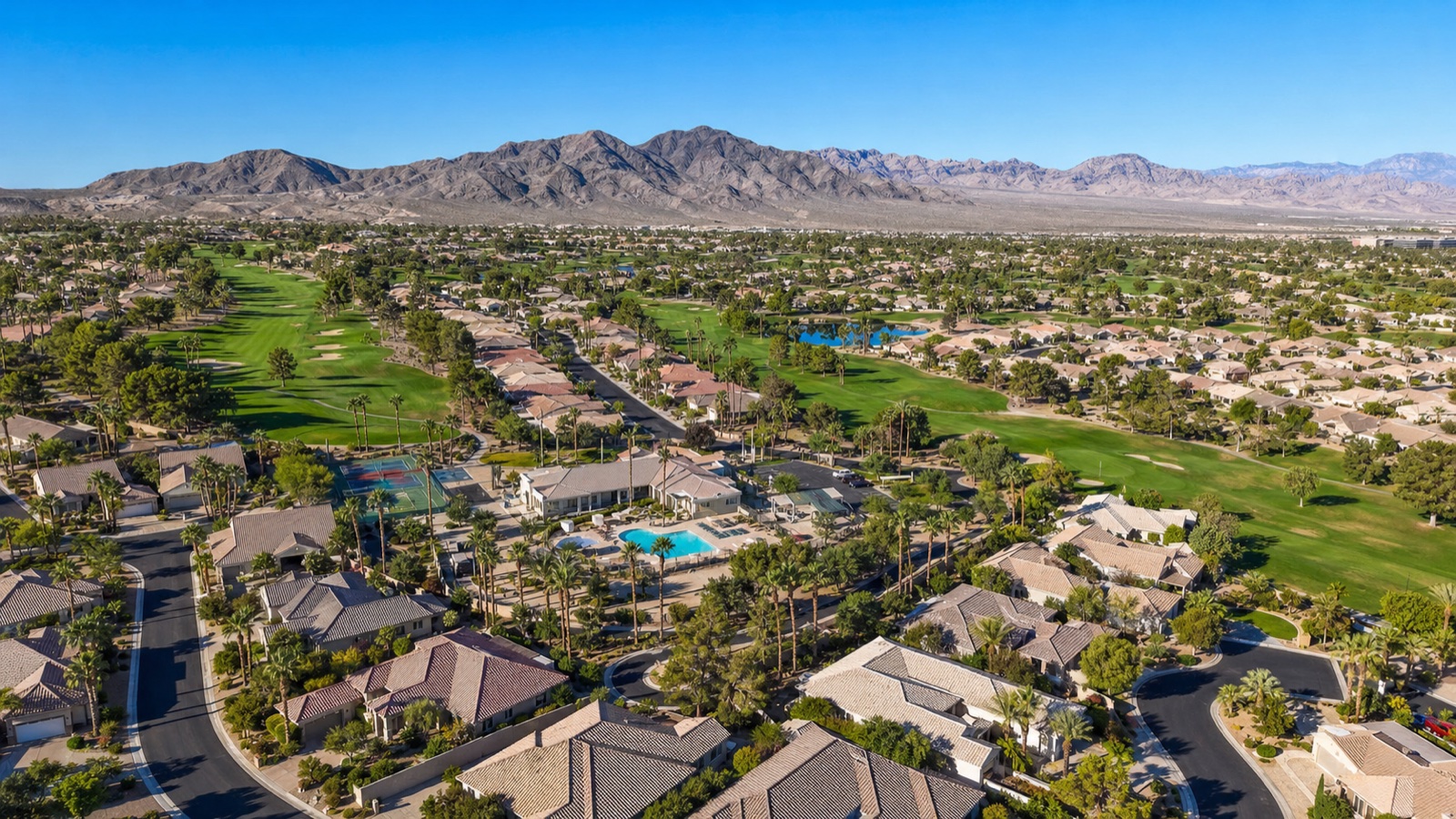
The safest places to live cluster in the newer, master-planned edges of the valley — west into Summerlin, southeast through Green Valley and Henderson, north into Centennial Hills, and south into Mountain's Edge and Southern Highlands. These areas combine newer construction, active HOAs, strong schools, and lower-density single-family housing, all of which correlate with lower crime. Here is how the most-requested safe communities stack up on price in 2026.
| Community | Area | Approx. median price | Safety profile |
|---|---|---|---|
| Summerlin | West | $700,000 | Consistently among the valley's safest |
| Green Valley | Henderson (SE) | $560,000 | Established, very low crime |
| Centennial Hills | Northwest | $485,000 | Newer, family-oriented, low crime |
| Mountain's Edge | Southwest | $525,000 | Master-planned, strong HOA |
| Southern Highlands | South | $675,000 | Guard-gated options, very safe |
| Lake Las Vegas | Henderson (E) | $850,000 | Gated, resort-grade security |
| The Ridges (Summerlin) | West | $2,400,000+ | Guard-gated luxury, minimal crime |
According to LVMPD area-command data, the suburban commands that cover these communities report violent-crime rates a fraction of the citywide figure. If you want the full breakdown of where families cluster, our guide to the best neighborhoods in Las Vegas pairs safety with schools, commute, and price, and our Summerlin community hub covers the valley's flagship master plan in depth.
Why is Summerlin considered one of the safest places to live?
Summerlin is the answer I give most often when a relocating family asks where to buy for safety. The 22,500-acre master plan on the valley's western rim was designed from the ground up by Howard Hughes Corporation with low through-traffic, abundant parks, strong HOAs, and a deliberate separation from commercial corridors — all of which suppress the conditions that drive crime. According to the Howard Hughes Corporation and Las Vegas REALTORS, Summerlin consistently ranks as one of the top-selling master-planned communities in the nation, and its safety reputation is a big part of why families pay a premium of $150,000 to $250,000 over comparable homes in less-established areas.
Within Summerlin, villages like The Ridges, Red Rock Country Club, and The Summit Club add guard gates on top of the master-plan baseline, pushing property-crime exposure close to zero. A single-family home in Summerlin's core villages runs from roughly $600,000 into the $900,000s, while custom guard-gated estates clear $2,000,000 and climb past $8,000,000. For most buyers prioritizing safety with a sub-$1,000,000 budget, the non-gated Summerlin villages hit the sweet spot.
Is Henderson safer than Las Vegas?
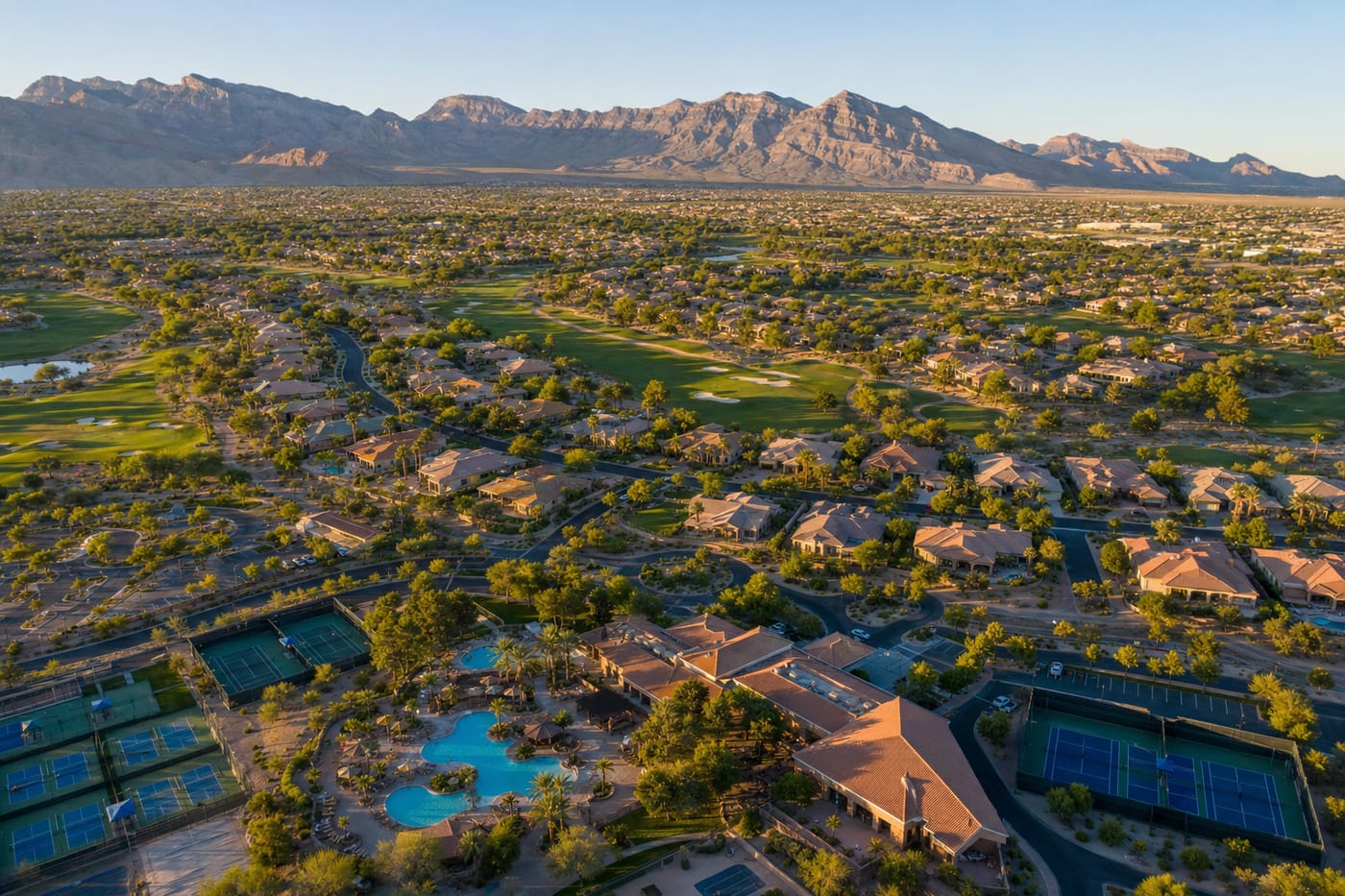
In short, yes — Henderson is consistently ranked one of the safest large cities in the United States, and it is technically its own city southeast of Las Vegas, with its own police department. According to FBI data, Henderson's violent-crime rate runs well below the national average for cities its size, and the city markets itself, accurately, on that reputation. Communities like Green Valley, Anthem, Seven Hills, and MacDonald Highlands are perennial picks for families and retirees who want the lowest-risk profile in the metro.
The trade-off is price and commute: Henderson's safest neighborhoods run $560,000 to well over $1,000,000, and you are 20 to 30 minutes farther from the northwest job centers. If safety is your top filter, though, Henderson belongs at the top of the list — our Henderson hub and the Green Valley Ranch family guide go deep on the specific communities. Many of my clients ultimately choose between Summerlin and Henderson purely on whether they work on the west or east side of the valley.
How safe are Centennial Hills and the northwest?
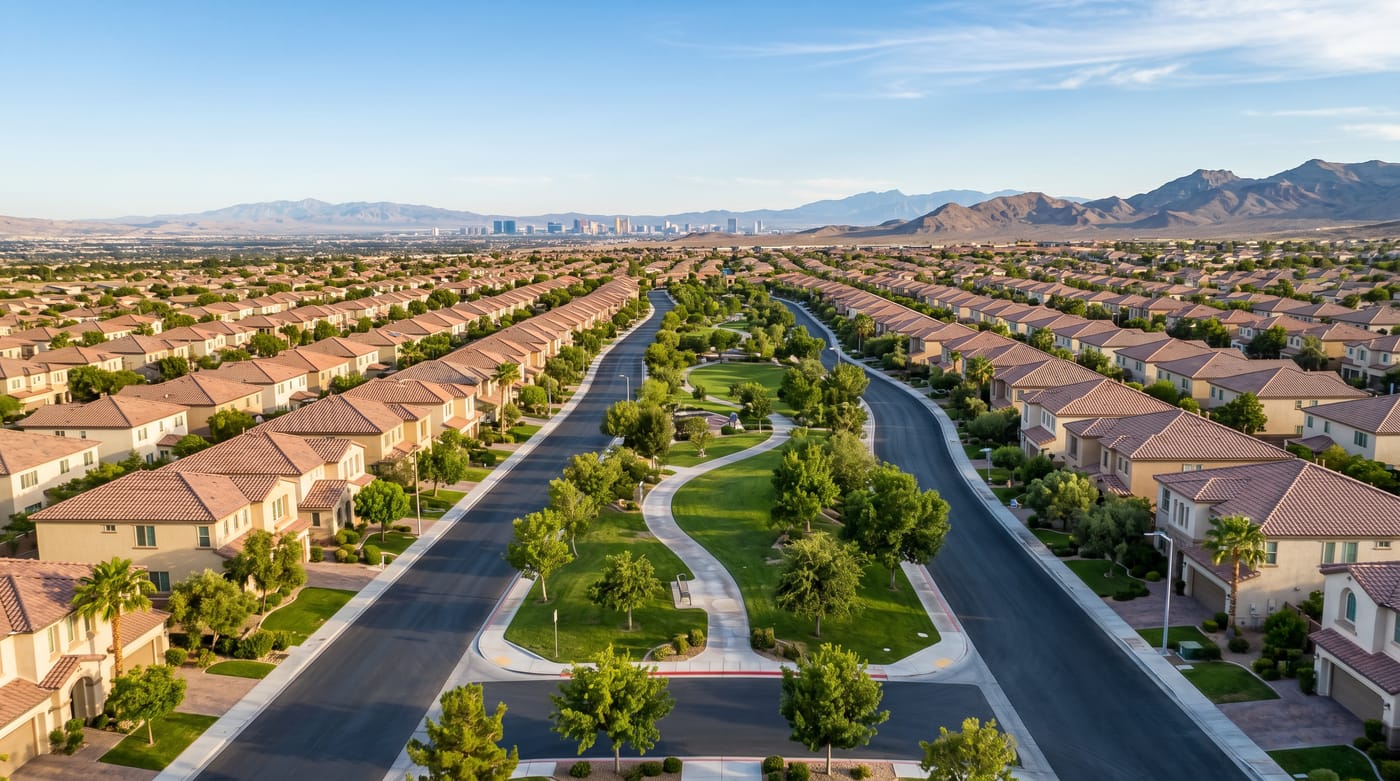
The northwest — Centennial Hills, Skye Canyon, and Providence — is the value answer for buyers who want strong safety without Summerlin pricing. These newer master plans were built largely after 2005, so the housing stock is modern, HOAs are active, and the street layouts discourage cut-through traffic. According to LVMPD's northwest area command data, the region reports some of the lowest property- and violent-crime rates in the city of Las Vegas proper.
Median prices in Centennial Hills sit around $485,000 — roughly $200,000 less than Summerlin for a comparable-size newer home — which is why I steer a lot of first-time and move-up buyers here when safety and budget both matter. Skye Canyon and Providence push a bit higher, into the $500,000s and $600,000s, but all three deliver the suburban-safe profile families are after. For a deeper look, our Centennial Hills master-plan guide covers schools, builders, and amenities alongside the safety picture.
What about Mountain's Edge, Southern Highlands, and the southwest?
The southwest is the valley's other safe-and-growing quadrant. Mountain's Edge is a 3,500-acre master plan with extensive parks and trails, median pricing around $525,000, and a low-crime profile that makes it a favorite for families priced out of Summerlin. Just south, Southern Highlands blends standard neighborhoods with guard-gated golf-course enclaves, with medians around $675,000 and gated estates well past $1,500,000.
According to the Clark County and City of Las Vegas planning data, the southwest's newer infrastructure and master-plan design contribute to its strong safety record, much like the northwest. The southwest also offers some of the valley's best guard-gated communities at relatively attainable price points — gated neighborhoods here can start in the $600,000s rather than the seven figures common in Summerlin's gated villages.
Do guard-gated communities actually reduce crime?
Guard-gated living measurably reduces property crime — the package theft, car break-ins, and opportunistic burglary that make up the bulk of suburban crime — because controlled access removes the casual opportunity. It does less for violent crime, which is already rare in these areas, so think of a guard gate primarily as property-crime insurance and a privacy amenity, not a force field. According to criminology research summarized by the Bureau of Justice Statistics, access control and natural surveillance are among the more effective situational crime-prevention measures, which is consistent with what gated-community residents report.
What it costs is the real question. Guard-gated communities carry higher HOA dues to fund the staffing and infrastructure.
| Community | Approx. entry price | Typical monthly HOA |
|---|---|---|
| Southern Highlands (gated) | $650,000 | $150–$300 |
| Lake Las Vegas (gated villages) | $700,000 | $250–$450 |
| Red Rock Country Club (Summerlin) | $1,100,000 | $300–$500 |
| The Ridges (Summerlin) | $2,400,000 | $400–$650+ |
| MacDonald Highlands (Henderson) | $1,800,000 | $350–$600 |
For most safety-focused buyers, the math is that an extra $200 to $400 a month in HOA dues buys meaningful peace of mind. Whether that is worth it depends on your budget and how much the privacy matters to you — something we walk through directly with every client touring gated options.

Which parts of the valley have the most crime?
Being honest about this is part of doing the job well, and it is best handled with data rather than reputation. According to LVMPD, the highest crime concentrations are in and around the resort corridor, downtown/central Las Vegas, and several older zip codes near the urban core — areas with dense, aging housing, transient populations, and proximity to the tourist economy. These are also, not coincidentally, areas where very few of my relocating buyers are shopping.
The important nuance is that crime in Las Vegas varies block by block, even within a single zip code. A revitalizing pocket of the Arts District can sit two streets from a high-incident corner. That is why I never tell a client "avoid this zip code" — instead, we pull the address-level data, drive the streets at different times of day, and look at trend direction rather than a single year's snapshot. Fair-housing law also matters here: a good agent gives you objective data and tools to evaluate safety yourself, never steers you toward or away from areas based on the demographics of who lives there. The data is the data; the decision is yours.
How much does safety add to a Las Vegas home's price?
Safety is priced into Las Vegas real estate as clearly as square footage. The valley's safest master plans command a premium that, in my experience, runs $100,000 to $250,000 over a comparable home in a higher-crime area — and gated communities add another layer on top. A 2,200-square-foot home that lists for $400,000 in an older central neighborhood can fetch $575,000 to $650,000 in Summerlin or Green Valley, and the difference is overwhelmingly location, schools, and the safety reputation that comes with them.
That premium is not wasted money — it is value that tends to hold. Homes in the safest, most-desirable master plans have historically been the most resilient in downturns and the quickest to sell, because the buyer pool for "safe, great schools, master-planned" is the deepest in the valley. According to Las Vegas REALTORS market data, days-on-market in the top master plans consistently run below the metro average. If you are weighing the premium against your budget, a quick conversation with our team or a quick look at homes across our safest master plans will help you find the safety-to-price sweet spot.
For first-time buyers, the safety premium can feel steep, but there are ways to capture most of the benefit without the top-tier price tag. Newer northwest and southwest neighborhoods deliver a strongly suburban-safe profile at $480,000 to $550,000 — well under Summerlin's core pricing — and many sit minutes from the same parks, trails, and schools that anchor the pricier master plans. Buyers willing to consider new-construction homes often find that builders are concentrated in exactly these newer, low-crime edges of the valley, where street layouts and lighting were designed with current safety standards in mind. The result is that you can buy into a genuinely safe Las Vegas neighborhood across a wide budget band, from the high $400,000s to well past $1,000,000 — the question is which trade-offs (commute, lot size, gate or no gate) matter most to you.
People relocating to Las Vegas from higher-cost metros are frequently surprised by how much safety their budget buys here. A household selling a modest home in coastal California can often pay cash, or close to it, for a $600,000 home in one of the valley's safest master plans — a level of security and space that would cost two or three times as much back home. That math is a big part of why the safest Las Vegas communities have absorbed so much out-of-state demand over recent years, and why their prices have held up even as mortgage rates climbed past 6%.
What can buyers do to evaluate a neighborhood's safety?
You do not have to take anyone's word for it — including mine. The best safety due diligence combines public data with your own eyes. According to the FBI and LVMPD, both agencies publish crime data the public can access, and pairing that with a few low-tech checks gives you a reliable read.
| Step | What to do | Why it matters |
|---|---|---|
| Pull LVMPD area data | Check the area-command crime stats for the address | Official, address-relevant numbers |
| Check FBI UCR trends | Look at multi-year direction, not one year | Trend beats snapshot |
| Drive it 3 times | Morning, evening, and a weekend night | Reveals what daytime tours hide |
| Talk to neighbors | Ask about car break-ins and package theft | Property crime is what you'll actually face |
| Review the HOA | Patrols, cameras, gate status, rules | Active HOAs correlate with lower crime |
Do all five and you will know more about a neighborhood's real safety than any single "safety score" website can tell you. When we represent buyers, we run this process for every finalist address — it is part of the job, not an add-on.
How does the Las Vegas Metropolitan Police Department keep neighborhoods safe?
LVMPD polices the city of Las Vegas and unincorporated Clark County (Henderson and North Las Vegas run their own departments), and it organizes coverage into geographic area commands with community-policing programs, dedicated patrols, and published statistics. According to the Las Vegas Metropolitan Police Department, programs like its area-command structure and neighborhood watch partnerships are designed to put resources where data shows they are needed and to keep residents informed.
For a homebuyer, the practical implication is that you can look up which area command covers an address and review its specific crime picture before you buy — granular information that simply is not available in many metros. Master-planned communities frequently layer their own private patrols on top of LVMPD coverage, which is part of why HOA dues in the safest neighborhoods buy real value. The result across the valley's suburban core is a level of day-to-day safety that surprises buyers who only knew Las Vegas from the Strip. In practice, that means a family touring Summerlin, Green Valley, or Centennial Hills for the first time almost always remarks on how ordinary and quiet the streets feel — wide sidewalks, kids on bikes, neighbors out walking — which is exactly the point. The headlines come from a few square miles; the lived experience for most residents comes from the other 500.
Frequently Asked Questions
Is Las Vegas safe for families to live in?
Yes — for families buying in the suburban master plans, Las Vegas is very safe. Communities like Summerlin, Green Valley, Centennial Hills, and Mountain's Edge combine strong schools, active HOAs, and low crime, and nearby Henderson is consistently ranked among the safest large cities in the country. The Strip's reputation has little to do with where families actually live; the residential valley operates on normal suburban safety norms.
What is the safest neighborhood in Las Vegas?
There is no single answer, but Summerlin (west) and Green Valley in Henderson (southeast) are the two most-cited for overall safety, with guard-gated villages like The Ridges and gated Southern Highlands enclaves posting near-zero property crime. Centennial Hills in the northwest offers a very safe profile at a lower price point — around $485,000 versus Summerlin's roughly $700,000 median.
How does Las Vegas crime compare to the national average?
On a metro basis Las Vegas lands near the middle of large U.S. metros — safer than cities like Memphis or Albuquerque and broadly comparable to Phoenix or Dallas — but the metro average is skewed upward by the tourist corridor. According to the FBI, neighborhood-level rates are what matter, and the suburban master plans report rates well below both the metro and national averages.
Are guard-gated communities in Las Vegas worth the cost?
For buyers focused on property crime and privacy, often yes. A guard gate meaningfully reduces package theft, car break-ins, and opportunistic burglary in exchange for higher HOA dues — typically $150 to $650 a month depending on the community. It does less for violent crime, which is already rare in these areas, so weigh it as property-crime insurance plus a privacy amenity rather than a necessity.
Which areas of Las Vegas have the most crime?
According to LVMPD, crime concentrates in and around the resort corridor, downtown/central Las Vegas, and several older zip codes near the urban core. These are dense, aging areas tied to the tourist economy where few relocating buyers shop. Because crime varies block by block, the right approach is to evaluate a specific address with data — not to write off an entire zip code.
How can I check if a specific Las Vegas address is safe?
Pull the LVMPD area-command crime data for the address, review multi-year FBI trends, drive the street at three different times (morning, evening, weekend night), ask neighbors about property crime, and review the HOA's patrol and security setup. Doing all five gives you a more accurate read than any single online "safety score." We run this process for every finalist address when we represent buyers.
Is Henderson safer than Las Vegas?
Generally, yes. Henderson is its own city with its own police department and is consistently ranked one of the safest large cities in the United States, with violent-crime rates well below the national average for its size. Communities like Green Valley, Anthem, and Seven Hills are top picks for safety-focused families and retirees, though prices run higher — $560,000 into the seven figures.
Does living in a safe Las Vegas neighborhood cost more?
Yes. The valley's safest master plans typically command a premium of roughly $100,000 to $250,000 over comparable homes in higher-crime areas, with gated communities adding more on top. That premium tends to hold its value, though — safe, well-schooled master plans have historically been the most resilient in downturns and the fastest to sell, per Las Vegas REALTORS data.
Which Sources Inform This Las Vegas Safety Guide?
This guide draws on Nevada Real Estate Group's direct experience relocating families across the valley plus public data from law-enforcement, government, and industry authorities. Crime data changes and varies block by block — confirm current, address-level specifics with the relevant agency before acting. This is general educational information, not legal advice, and all home buying and selling is offered in compliance with the Fair Housing Act.
- Las Vegas Metropolitan Police Department — crime statistics and area commands
- FBI — Uniform Crime Reporting (UCR) and Crime Data Explorer
- Bureau of Justice Statistics — crime and victimization data
- U.S. Census Bureau — Las Vegas QuickFacts
- City of Las Vegas — neighborhood services and public safety
- Clark County, Nevada — community and planning resources
- Nevada Department of Public Safety — statewide crime and safety
- Las Vegas REALTORS — Southern Nevada market data
- Howard Hughes Corporation — Summerlin master plan
- GreatSchools — Las Vegas school ratings
- U.S. Department of Housing and Urban Development — Fair Housing Act