
Published June 25, 2026 · Updated June 25, 2026 · By Chris Nevada, Nevada Real Estate Group · NV License S.181401
It is one of the first questions every family relocating to Reno asks, and it deserves an honest answer rather than a marketing one: is Reno safe? The truth is that Reno, like every city in America, cannot be answered with a single yes or no. The safety of the neighborhood you choose matters far more than the city-wide average — and Reno's average is pulled up by a few older corridors while its suburbs register rates that compare favorably to safe Western suburbs.
I'm Chris Nevada, and across the Reno and Northern Nevada closings Nevada Real Estate Group has represented, I've seen families make confident, safe choices once they understood how to read the data by area instead of by headline. This guide gives you the data-first picture for 2026: what the crime statistics actually say, which neighborhoods are the safest, which areas to research carefully, and exactly how to evaluate a neighborhood's safety before you write an offer.
Reno is safe in the suburban neighborhoods where most buyers shop, though its city-wide crime average is raised by a few older corridors near downtown and east 4th Street. The safest areas — Northwest Reno, Somersett, Caughlin Ranch, and Damonte Ranch — register low crime and feel like quiet family suburbs, with homes from about $500,000 to $1.3 million. Always evaluate the specific neighborhood, not the city average. Call (775) 277-2120 for a safety-first home search.
- Reno's city-wide crime average is skewed by a few older corridors; suburban neighborhoods are far safer.
- The safest areas: Northwest Reno, Somersett, Caughlin Ranch, Damonte Ranch, and the Old Southwest.
- Safe-neighborhood homes run roughly $500,000 to $1.3 million, with a Reno median near $575,000.
- Evaluate safety by ZIP code and street, not by the city-wide statistic — it's true in every metro.
- Property crime, not violent crime, is the more common concern in the suburban areas.
Shopping the area? Browse live Reno homes for sale — every active MLS listing with prices, photos, and instant filters.
Is Reno, Nevada Safe in 2026?
Yes — in the neighborhoods where buyers actually purchase homes, Reno is a safe place to live. According to FBI Uniform Crime Reports, Reno's city-wide crime rates are moderate for a metro its size, and the numbers are heavily influenced by a handful of older, denser, lower-income corridors rather than by the suburban neighborhoods where most families settle.
This is the single most important thing to understand: a "city-wide crime rate" lumps together the safest cul-de-sac in Somersett and the busiest block downtown into one misleading average. In my experience, families who fixate on the city number get unnecessarily scared off, while families who look neighborhood by neighborhood make confident choices. The reality for 2026 is that Reno's growth has brought more attention to public safety, and the suburban areas — Northwest, Caughlin Ranch, the south valley — remain quiet and family-friendly. Start a safety-focused search on our Reno homes for sale hub, and pair this with our is Reno a good place to live guide.
What Do Reno's Crime Statistics Actually Say?
The data tells a nuanced story. According to FBI Uniform Crime Reports, Reno records both violent and property crime, but the rates concentrate geographically rather than spreading evenly across the city. The older downtown core, the east 4th Street corridor, and a few aging commercial strips account for a disproportionate share of incidents, while the residential suburbs report far lower numbers.
According to the Reno Police Department, the agency publishes incident data that consistently shows this geographic concentration — which is exactly why a neighborhood-level read beats a city-level one. The broader context also matters: according to the U.S. Census Bureau, Reno's population and visitor base have grown quickly, and crime counts naturally rise with population even when per-capita rates hold steady. For a buyer, the lesson is to look at trends and at your target neighborhood specifically, not at a raw count or a single city-wide figure. We help buyers pull and interpret this data for any area they are considering.
Which Reno Neighborhoods Are the Safest?
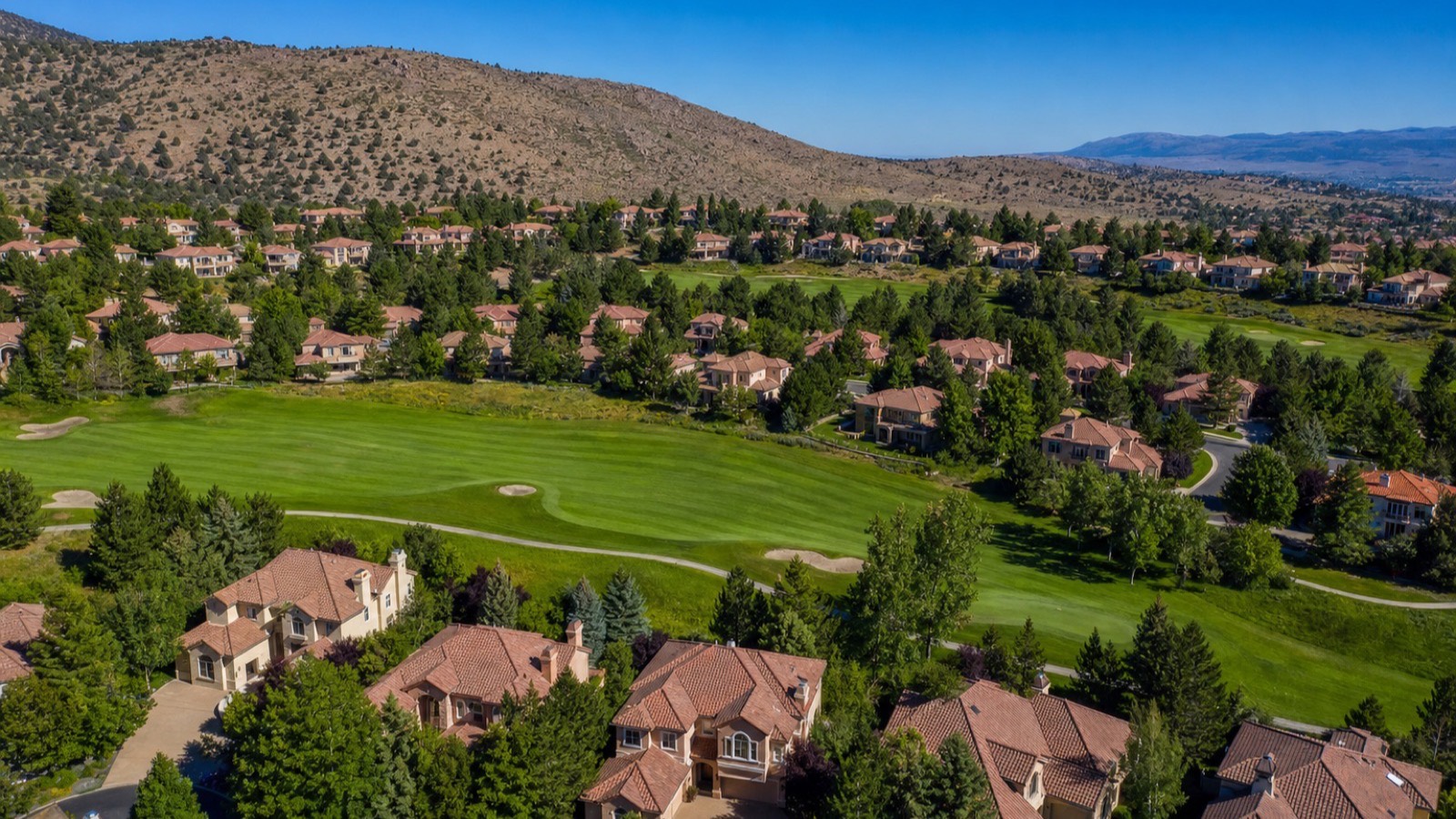
The safest Reno neighborhoods are its newer master plans and established suburban areas, where limited-access street layouts and family demographics keep crime low. These are where safety-focused buyers should concentrate.
| Neighborhood | Typical home price | Why it's safe |
|---|---|---|
| Somersett (NW) | $650,000 – $1.3M | Gated and master-planned, limited access |
| Caughlin Ranch | $650,000 – $1.5M | Established, trails, strong schools |
| Northwest Reno | $550,000 – $1.1M | Suburban, family-oriented, newer stock |
| Damonte Ranch (S) | $500,000 – $1M | Newer south-valley master plan |
| ArrowCreek / Montrêux | $1.2M – $5M+ | Guard-gated foothill communities |
According to the Reno/Sparks Association of REALTORS, these neighborhoods also command a premium precisely because buyers value the safety and quiet — homes here run from about $500,000 in Damonte Ranch to well over $1 million in the gated foothill communities. In my experience, the gated and master-planned areas (Somersett, ArrowCreek, Montrêux) offer the most reassurance to safety-first buyers, while Caughlin Ranch and Northwest Reno pair low crime with top schools. Explore them in our best neighborhoods in Reno guide, and a Reno real estate agent can target the safest fit for your budget.
Which Areas of Reno Should Buyers Research More Carefully?
Honesty matters here, so let me be direct: the areas that raise Reno's crime average are mostly the older, denser corridors, not the residential suburbs. According to FBI Uniform Crime Reports, incidents concentrate around the downtown casino core, the east 4th Street corridor, and some aging commercial strips along the older parts of the city.
This does not mean these areas have no value — downtown and Midtown are revitalizing, and some blocks are excellent — but it does mean a buyer should research street by street rather than assume. The same caution applies to a few pockets of older east Reno and around transient-heavy commercial zones. According to the Reno Police Department, incident maps make these patterns clear, and they are exactly the kind of thing a local agent watches. The practical advice: if you are drawn to a downtown loft or an urban-core condo for the walkability and price, do it with eyes open, tour at different times of day, and check the specific block. We never steer buyers, but we do make sure they have the full picture for any area, including our Reno condos for sale inventory downtown.
How Does Reno's Safety Compare to Other Cities?
Context helps. Reno is a mid-size metro, and its crime profile sits roughly in the middle for cities its size — safer than the largest, higher-crime urban centers, and comparable to other growing Western metros. According to FBI Uniform Crime Reports, Reno's per-capita rates are not an outlier in either direction.
Against the nearby Nevada alternatives, the smaller communities feel safer on a city-wide basis simply because they lack a large downtown casino core — Carson City, Sparks, and the Carson Valley towns of Gardnerville and Minden all post low suburban crime. Against California metros that many Reno buyers are leaving, Reno generally compares favorably on both crime and cost. In my experience, families relocating from a larger or higher-crime city find Reno's suburbs a noticeable upgrade in everyday peace of mind. The key, again, is comparing like for like — a Reno suburb to another city's suburb, not a Reno suburb to another city's downtown.
Is Reno Safe for Families?
For families, Reno's suburban neighborhoods are a genuinely good fit. The combination of low-crime master plans, strong suburban schools, extensive parks and trails, and family-oriented demographics makes areas like Caughlin Ranch, Somersett, and Damonte Ranch popular with relocating families.
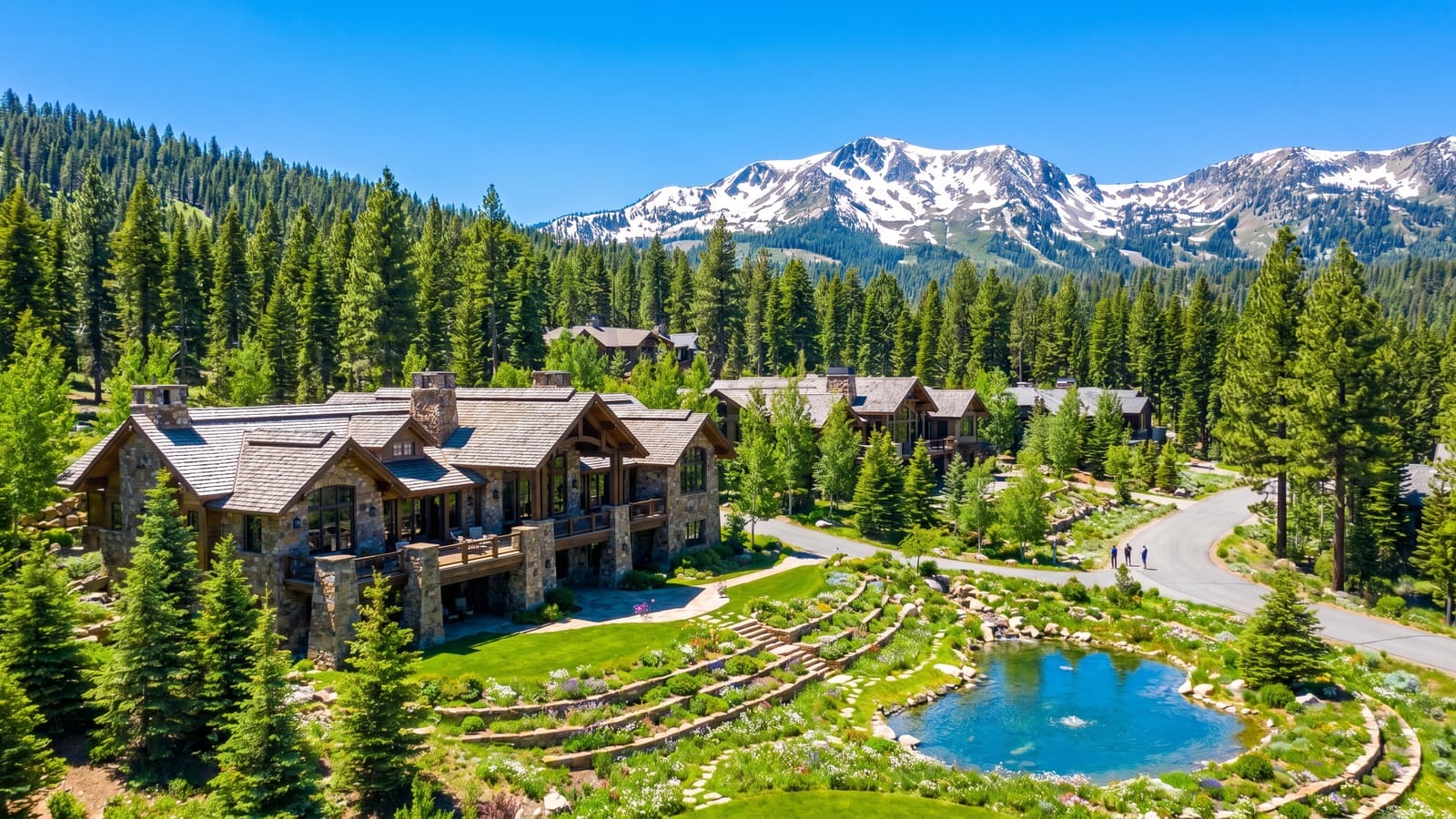
According to the U.S. Census Bureau, these family neighborhoods show stable homeownership and household profiles, the kind of established community that supports both safety and school quality. Families also benefit from Reno's outdoor lifestyle — parks, the Truckee River, and Lake Tahoe nearby give kids year-round activities. The main considerations for families are verifying the specific school zone (which tracks closely with the safe neighborhoods) and budgeting for the premium those areas command. We help families align safety, schools, and budget, and many compare Reno's family suburbs against nearby Sparks options like Spanish Springs.
How Does Safety Affect Reno Home Values?
Safety and home value are tightly linked in Reno, as everywhere. The neighborhoods with the lowest crime — Somersett, Caughlin Ranch, ArrowCreek, Montrêux — are also the ones that command the highest prices and hold value best through market cycles. That is not a coincidence; buyers pay a measurable premium for safety and quiet.
According to the Federal Housing Finance Agency, home values in established, low-crime suburbs tend to be more resilient in downturns than values in higher-turnover urban cores. In practical terms, a $700,000 home in Caughlin Ranch or a $1.2 million home in ArrowCreek carries a safety premium baked into the price — but that premium also protects your resale. In my experience, safety-focused buyers who stretch slightly for a top suburb are usually rewarded both in daily quality of life and in long-term value. For buyers weighing the trade-off, our home valuation tool and buyer resources help model the numbers, and our Reno luxury market guide covers the gated foothill tier.
What About Property Crime in Reno?
For most suburban buyers, property crime — not violent crime — is the more relevant concern, and it is the type that responds most to ordinary precautions. According to FBI Uniform Crime Reports, property crime such as theft from vehicles and package theft is the most common category across growing Western metros, Reno included, and it concentrates in higher-traffic and commercial-adjacent areas.
The good news is that property crime is highly preventable with standard measures — well-lit streets, garage parking, doorbell cameras, and the natural surveillance of an established neighborhood. Master-planned and gated communities like Somersett and ArrowCreek add another layer through limited access and HOA-managed common areas. According to the Reno Police Department, community awareness programs help further. For buyers, the takeaway is that the property-crime risk in a quiet Reno suburb is manageable and similar to comparable suburbs anywhere, while the violent-crime risk in those areas is low. We point buyers to the data so they can choose with confidence rather than fear.
How Can Buyers Evaluate a Reno Neighborhood's Safety Before Buying?
The best safety decision is an informed one, and there are concrete steps every buyer should take. First, look at neighborhood-level crime data, not the city average — the Reno Police Department and FBI Uniform Crime Reports both provide geographic detail. Second, tour the specific street at different times of day, including evening, to get a real feel.
| Step | What to check |
|---|---|
| Pull local crime data | Neighborhood-level, not city-wide, via Reno PD and FBI UCR |
| Tour at multiple times | Daytime and evening; weekday and weekend |
| Read the street | Maintenance, lighting, traffic, owner-occupancy |
| Check school zoning | Safe areas track strong school zones in Reno |
| Ask a local agent | On-the-ground knowledge the data can miss |
Third, weigh owner-occupancy and maintenance — neighborhoods with high owner-occupancy and well-kept homes tend to be safer and more stable. Fourth, talk to a local agent who works the area daily and can tell you what the data cannot. In my experience, this five-step approach gives buyers far more confidence than any single statistic. Our Reno real estate agent team does exactly this for every client, on any neighborhood you are considering, and we coordinate remote evaluations for out-of-state buyers through our contact page.
Where Should Safety-Focused Buyers Look in Reno?

If safety is your top priority, concentrate the search on Reno's master-planned and gated suburbs, where low crime, strong schools, and stable values come together. The clearest options are Somersett and Northwest Reno for newer master-planned living, Caughlin Ranch for established suburban quality, Damonte Ranch for south-valley value, and the guard-gated ArrowCreek and Montrêux for the highest level of security and privacy.
Each balances safety against price differently, so the right pick depends on budget. A safety-first family on a moderate budget often lands in Damonte Ranch or Northwest Reno around $500,000 to $750,000; a buyer wanting gated security and foothill views looks at ArrowCreek or Montrêux above $1.2 million. Buyers open to nearby alternatives also find very safe options in Sparks (Spanish Springs, Wingfield Springs) and in Carson City and the Carson Valley. New-construction buyers should explore the new construction pipeline in the safest master plans. Whatever your budget, we will match it to the safest fit and, when you are ready to sell your current home, our seller resources handle that side. Call (775) 277-2120 to start.
Are Gated Communities in Reno Safer?
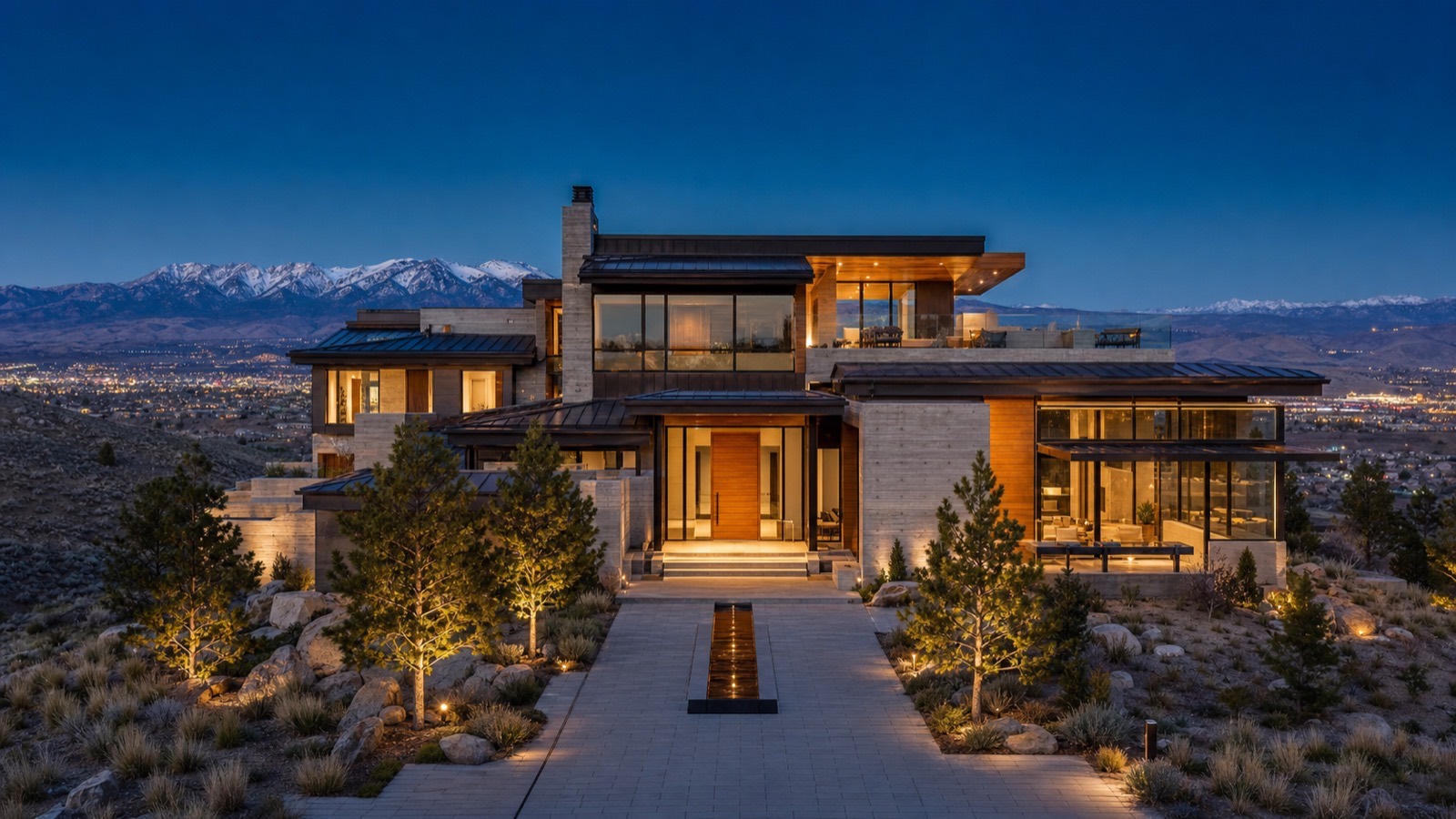
For buyers who want the highest level of security and peace of mind, Reno's guard-gated and master-planned communities offer it — and they price accordingly. Limited-access entry, HOA-managed common areas, and the natural surveillance of well-kept, owner-occupied streets all reduce both property and violent crime relative to open neighborhoods.
| Community | Typical price | Security feature |
|---|---|---|
| Montrêux | $1.5M – $6M | Guard-gated, golf, foothill privacy |
| ArrowCreek | $1.2M – $4M | Guard-gated, two golf courses |
| Somersett | $650,000 – $1.3M | Master-planned, gated sub-villages |
| Caughlin Ranch | $650,000 – $1.5M | Established, low-traffic, trails |
According to the Reno/Sparks Association of REALTORS, these communities command a premium of hundreds of thousands of dollars over comparable open-neighborhood homes — a $1.2 million ArrowCreek home versus a $700,000 home of similar size elsewhere — and a meaningful share of that premium is the security and privacy. In my experience, safety-first buyers with the budget gravitate to Montrêux and ArrowCreek for the guard gate, while families wanting strong security at a lower price choose Somersett or Caughlin Ranch around $650,000 to $1.3 million. The trade-off is HOA fees and the premium itself, but for many buyers the peace of mind is worth it. Our Reno luxury and new construction options include several of these communities.
How Has Crime in Reno Changed Over Time?
Trends matter as much as a single year's snapshot, and Reno's picture has been shaped by rapid growth. According to the U.S. Census Bureau, the metro has added population quickly over the past decade, and according to FBI Uniform Crime Reports, raw crime counts naturally rise with population even when per-capita rates hold steady or improve.
The nuance for buyers is to separate counts from rates. A growing city will record more total incidents simply because there are more people, more visitors, and more economic activity — but the per-capita risk in an established suburb can stay flat or fall. According to the Reno Police Department, investment in community policing and the revitalization of formerly rougher corridors like downtown and Midtown has improved several areas that once dragged the average down. In my experience, the suburban neighborhoods where most buyers purchase have remained consistently safe through Reno's growth, while the improvement has come mostly in the urban core. The practical takeaway: judge a neighborhood on its current, local data and its trajectory, not on an old reputation or a city-wide headline. We help buyers read both for any area on our Reno listings.
What Safety Resources Are Available to Reno Residents?
Reno residents have solid public-safety infrastructure, which is part of what keeps the suburbs secure. According to the Reno Police Department, the city operates community-policing programs, publishes incident data and maps, and supports neighborhood-watch organizing that buyers can tap into before and after a purchase.
Beyond city police, the broader region is served by the Washoe County Sheriff's Office for unincorporated areas, and master-planned communities add HOA security and managed common areas on top. According to the U.S. Census Bureau, Reno's established neighborhoods show the high owner-occupancy that correlates with engaged, safety-conscious communities. For a relocating buyer, the practical move is to use these resources during due diligence: pull the local incident map, check whether the neighborhood has an active watch group, and ask the HOA about security in gated communities. In my experience, buyers who engage these resources feel far more confident in their choice — and the information is free and public. We walk every client through it, on any neighborhood from the Old Southwest to Sparks and Carson City.
Frequently Asked Questions About Reno Safety
Is Reno, Nevada safe to live in?
Reno is safe in the suburban neighborhoods where most buyers purchase homes, even though its city-wide crime average is raised by a few older corridors near downtown and the east 4th Street area. The safest neighborhoods — Northwest Reno, Somersett, Caughlin Ranch, Damonte Ranch, and the gated foothill communities — register low crime and feel like quiet family suburbs. Always evaluate the specific neighborhood rather than the city-wide statistic.
What are the safest neighborhoods in Reno?
The safest Reno neighborhoods are its master-planned and gated suburbs: Somersett and Northwest Reno for newer master-planned living, Caughlin Ranch for established suburban quality, Damonte Ranch for south-valley value, and guard-gated ArrowCreek and Montrêux for maximum security. Homes range from about $500,000 in Damonte Ranch to well over $1 million in the gated foothill communities.
What part of Reno should I avoid?
The areas that raise Reno's crime average are mostly the older, denser corridors — the downtown casino core, the east 4th Street corridor, and some aging commercial strips — rather than the residential suburbs. These areas are revitalizing in parts and have value, but buyers should research street by street, tour at different times of day, and check the specific block before buying.
Is Reno safe for families?
Yes, in its suburban neighborhoods. Areas like Caughlin Ranch, Somersett, and Damonte Ranch combine low crime, strong schools, extensive parks and trails, and family-oriented demographics, making them popular with relocating families. The main steps for families are verifying the specific school zone (which tracks closely with the safe areas) and budgeting for the premium those neighborhoods command.
Is downtown Reno safe?
Downtown and Midtown Reno are revitalizing, with a growing restaurant and arts scene, but the urban core carries higher crime than the suburbs and varies block by block. If you are drawn to a downtown loft or condo for the walkability and price, it can be a good choice — but tour at different times of day and check the specific block. The suburban neighborhoods remain the safest overall.
How do I check crime rates for a specific Reno neighborhood?
Use neighborhood-level data rather than the city average. The Reno Police Department publishes incident data and maps, and the FBI Uniform Crime Reports provide geographic detail. Beyond the data, tour the street at multiple times of day, assess maintenance and lighting, check owner-occupancy, and ask a local agent who works the area daily. This combined approach gives a far more accurate read than any single statistic.
Which Sources Inform This Reno Safety Guide?
This guide draws on government, law-enforcement, and regional MLS sources. No competitor listing portals were used.
- FBI Uniform Crime Reports — crime data
- Reno Police Department — local incident data
- U.S. Census Bureau — population and demographics
- Reno/Sparks Association of REALTORS — market statistics
- Federal Housing Finance Agency — home-value resilience
- Nevada Department of Taxation — Nevada tax context
- Nevada Revised Statutes Chapter 361 — property framework
This guide reflects conditions current as of mid-2026 and is intended for informational purposes only. Crime patterns change; verify current local data and consult a licensed Nevada real estate professional before making any purchase decision. Nevada Real Estate Group · Chris Nevada · License S.181401 · (702) 637-1759 · Northern Nevada office line (775) 277-2120.