

Published March 5, 2026 · Updated September 19, 2026 · By Chris Nevada, Nevada Real Estate Group · NV License S.181401
If you are thinking about selling your home this year, you may still be picturing the "unicorn" spring of 2021, when a yard sign meant three offers by dinnertime. I will be honest with you: those days are in the rearview mirror — but the pessimistic version you have heard at the office is wrong too. Las Vegas homes are not sitting for months. Correctly-priced homes across the valley are going under contract in weeks, not seasons, and the data below shows exactly which homes do and which do not.
Here is what makes this guide different from the recycled advice floating around: every figure below comes from Las Vegas MLS data pulled through Repliers on September 19, 2026, covering 27,376 closings in Las Vegas, Henderson, North Las Vegas and Boulder City between September 19, 2025 and September 18, 2026, plus 12,404 active listings as of September 18, 2026. Across the 789 homes our team closed in 2025 and the 9,600-plus transactions we have represented, the single biggest driver of how long a home sits has never been the market — it has been the list price relative to what a buyer will actually finance. Let me show you the real timeline so you can plan your move without either the false panic or the false nostalgia.
The median Las Vegas home went from listing to accepted offer in 30 days over the 12 months ending September 18, 2026, and half of closings sold within a month. Add a 30-to-45-day escrow and a well-priced home takes 60 to 75 days from sign to funded. Price band matters most: homes under $600,000 post a 28-day median, while $5 million-plus estates run 64 days. Price to the comps and you land in the fast half.
- Median days-to-offer is 30 across 27,376 valley closings, and 50.5% of homes sold within 30 days.
- Price band is the biggest lever: $400,000 to $600,000 homes sell in 28 days, $5 million-plus homes take 64.
- North Las Vegas is fastest at a 23-day median; Boulder City is slowest at 35.5 days and 227 closings.
- Homes that sold in their first 14 days closed at full original list; 91 to 180 days cost $34,900 off.
- Escrow adds a fixed 30 to 45 days after acceptance, so budget 60 to 75 days from list to keys.
How Long Does It Really Take to Sell a Home in Las Vegas Right Now?
When sellers ask "how long," they are usually blending two very different clocks: the time it takes to get an offer, and the time it takes to close that offer into cash and a moving truck. Confusing the two is why so many people quote scary timelines.
The first clock is days on market (DOM) — listing date to accepted offer. According to Las Vegas REALTORS, the valley finished August 2026 with just over 4.5 months of inventory, which is balanced territory, and the live MLS bears that out: across the 27,376 closings in the 12 months ending September 18, 2026, the median home went pending in 30 days. The average is higher — about 49 days — and that gap is the tell. A median of 30 with a mean of 49 means most homes sell quickly and a minority of badly-priced listings sit for months, pulling the average up. In fact, 50.5% of all closings sold within 30 days, while 16.5% took 90 days or longer. You control which group you land in.
Narrow the window to the most recent 90 days (June 19 through September 18, 2026) and the picture is slightly faster: 4,417 closings at a 28-day median and a $440,000 median price. Active listings as of September 18, 2026 carried a median of 25 days on market, which tells you the homes buyers are currently touring are, on the whole, fresh rather than stale.
The second clock is escrow. Nevada is an escrow state, and once you accept a contract the buyer needs 30 to 45 days to finish inspections, the appraisal, and loan underwriting. Cash buyers compress that to two weeks; financed buyers rarely beat 30 days.
The bottom line: list a standard, well-priced single-family home in Las Vegas today and plan for roughly 60 to 75 days from sign in the yard to money in your account. That is a month faster than the "three months minimum" figure that gets repeated in break rooms — and it is why getting your home's value dialed in before you list is worth more than any staging trick. For the deeper statistical breakdown behind the 30-day figure, including how the median has moved month by month, read our companion report on average days on market in Las Vegas.
What Determines How Fast Your Las Vegas House Sells?
Sellers tend to blame the market when a home sits and credit themselves when it flies, but the MLS record is more precise than that. When I sort the same 27,376 closings by the factors a seller can actually see before listing, five variables explain most of the spread between a two-week sale and a six-month one, and they rank in a consistent order: price relative to the comps, price band, property type, condition and presentation, and the month you launch. Location matters, but mostly because it sets your price band — a Henderson move-up home and a North Las Vegas starter home sell at different speeds because of who is shopping them, not because of the city limits sign.
The most revealing cut is what happens to the sale price as days on market accumulate. The table below groups every closing in the 12 months ending September 18, 2026 by how long it took to go under contract, then shows the median sale-to-original-list ratio and the median dollar discount for all homes and, separately, for the $1.2 million-plus segment where the stakes are highest.
| Sold after | Share of all closings | Sale ÷ original list (all homes) | Median discount (all homes) | Sale ÷ original list ($1.2M+) | Median discount ($1.2M+) |
|---|---|---|---|---|---|
| 0–14 days | 30.9% | 100.0% | $0 | 97.8% | $44,990 |
| 15–30 days | 19.5% | 98.1% | $9,500 | 96.0% | $75,000 |
| 31–60 days | 21.2% | 96.4% | $15,000 | 93.4% | $134,900 |
| 61–90 days | 12.1% | 94.8% | $24,900 | 91.7% | $185,000 |
| 91–180 days | 13.0% | 92.9% | $34,900 | 89.7% | $210,000 |
| 180+ days | 3.2% | 89.4% | $46,000 | 87.5% | $299,000 |
Read that table as a price-cut schedule, because that is what it is. Nearly a third of all valley homes — 30.9% — went under contract in their first two weeks, and the median one sold at exactly its original asking price. By the time a listing crosses 90 days, the median seller has given back $34,900 from the original ask, and on a $1.2 million-plus home the median give-back is $210,000. Days on market are not a neutral waiting period; they are the mechanism by which the market corrects an overpriced listing, one reduction at a time. Every factor in the sections that follow — price band, area, property type, season, condition — matters mainly because of how it moves you up or down this schedule.
What Is the Median Days on Market in Las Vegas by Price Tier?
If you remember one section of this guide, make it this one. Price band predicts your selling speed more reliably than neighborhood, square footage, or the color of your front door. The reason is simple financing math: according to Freddie Mac, the 30-year fixed mortgage averaged 6.95% for the week of September 17, 2026, up from 6.76% the prior week, which makes buyers acutely payment-sensitive. The deepest, most competitive buyer pool sits under $600,000, so homes there move fastest. As you climb toward $1 million and above, the pool thins, financing gets more bespoke, and the calendar stretches.
Here is the Las Vegas MLS data pulled through Repliers on September 19, 2026, covering closings from September 19, 2025 through September 18, 2026, arranged by price band so you can read your own row straight across.
| Price band | Closings | Median DOM | Mean DOM | Sold within 30 days | Took 90+ days | Sale ÷ original list |
|---|---|---|---|---|---|---|
| Under $400,000 | 9,920 | 29 | 49 | 51% | 17% | 97.2% |
| $400,000–$600,000 | 11,197 | 28 | 45 | 52% | 15% | 98.0% |
| $600,000–$900,000 | 3,943 | 33 | 52 | 47% | 18% | 96.9% |
| $900,000–$1.2M | 910 | 34 | 55 | 46% | 20% | 95.0% |
| $1.2M–$2M | 839 | 37 | 60 | 45% | 24% | 94.4% |
| $2M–$3M | 286 | 37 | 62 | 45% | 23% | 93.8% |
| $3M–$5M | 146 | 44 | 67 | 38% | 28% | 95.5% |
| $5M and up | 97 | 64 | 100 | 29% | 38% | 91.9% |
Notice that the two entry-level bands — under $400,000 and $400,000 to $600,000 — post 29- and 28-day medians and together account for 21,117 of the year's 27,376 sales, roughly 77% of the market. That is the heartbeat of the valley. Once you pass $600,000 the median steps up to the low-to-mid 30s, and above $1.2 million the mean climbs past 60 days because luxury is bimodal: the sharply-priced trophy home sells in a week and the aspirational overpriced one sits for a season. At $5 million and up, only 29% of homes sold inside a month and 38% took 90 days or longer. If your home lands in that upper tier, the buyers browsing our luxury communities and guard-gated pages are patient and precise, and pricing discipline matters even more.
How Do Days on Market Differ by Area Across the Las Vegas Valley?
Zoom out from price to geography and the story shifts again. Each submarket has its own tempo driven by inventory, buyer demographics, and how much new construction is competing with resale. Before the table, one clarification that trips up out-of-state sellers: master-planned communities like Summerlin sit inside the City of Las Vegas, and Aliante sits inside North Las Vegas — so their sales roll up into those city totals even though locals talk about them as separate places. When you compare "Summerlin days on market" to "Las Vegas days on market," you are partly comparing a subset to its own parent.
| Area | Median DOM | Mean DOM | Median sold price | Sale ÷ original list | 12-month closings |
|---|---|---|---|---|---|
| North Las Vegas | 23 | 40 | $417,000 | 98.9% | 3,087 |
| Las Vegas (city) | 31 | 50 | $438,000 | 97.1% | 18,500 |
| Henderson | 32 | 51 | $489,000 | 97.1% | 5,562 |
| Summerlin ZIPs (89134, 89135, 89138, 89144) | 35 | 52 | $645,000 | 95.8% | 2,418 |
| Boulder City | 35.5 | 62 | $475,000 | 95.7% | 227 |
North Las Vegas is the valley's speed champion at a 23-day median and a 98.9% sale-to-original-list ratio, powered by a deep pool of first-time and relocating buyers priced near the $417,000 sweet spot. Its fastest ZIP codes, 89081 and 89085, posted 19-day medians, and 89031 came in at 21. Henderson runs at 32 days despite a higher $489,000 median, because more of its inventory sits in move-up price bands; its slowest large ZIP, 89011 around Lake Las Vegas and Cadence, ran 40 days on 1,234 closings, while 89002 in older Henderson ran 28. The Summerlin ZIPs' 35-day median reflects a $645,000 price point — still brisk for the money. Boulder City is the outlier at a 35.5-day median and a 62-day average; it is a small, distinctive market of only 227 annual sales where unique lakeside and historic homes take longer to find their exact buyer. Inside the City of Las Vegas the extremes are instructive: 89104 near downtown and 89107 sold in 19 and 21 days, while 89109 on the Strip corridor — dominated by high-rise condos — ran 57 days with a 93.0% sale-to-list ratio. None of these are slow by historical standards — a decade ago a "normal" market meant 60-to-90-day medians everywhere.
What Does the Full List-to-Close Timeline Look Like?
Sellers plan around calendars, not statistics, so here is how the 60-to-75-day arc actually breaks into stages. The prep phase is the one you fully control; the rest runs on the buyer's and lender's schedule once you go live.
| Phase | Typical duration | What happens |
|---|---|---|
| 1. Prep and staging | 1–3 weeks | Paint, declutter, repairs, photography, pricing analysis |
| 2. Active to offer | 23–35 days (median, by city) | MLS launch, syndication, showings, open-house weekend |
| 3. Negotiation | 2–5 days | Counteroffers on price, credits, and closing costs |
| 4. Escrow and closing | 30–45 days | Inspection, appraisal, loan underwriting, funding |
The prep phase matters more in 2026 than it did in the frenzy years. Because buyers are payment-sensitive, they rarely have leftover cash for renovations, so they pay a premium for "move-in ready" and discount anything that smells like a project. Investing two or three weeks up front — a coat of paint, fresh landscaping, professional photos — routinely shaves a week or more off phase two. According to the U.S. Census Bureau, the Las Vegas population keeps growing, and a meaningful share of those buyers are relocating sight-unseen from California, so your listing's first impression online often decides whether phase two runs 14 days or 51.
One more planning note: the phases are sequential, but the prep for phase four starts during phase one. Order your HOA resale package, dig out permits for the pool or the patio cover, and complete the Nevada Seller's Real Property Disclosure before the first showing. Every one of those documents will be requested during escrow, and having them ready is the difference between a 30-day close and a 45-day one.
Why Does Pricing Strategy Move Your Days on Market the Most?
This is the single biggest lever you can pull, and it dwarfs every other factor combined. In our experience across thousands of Las Vegas listings, the homes that sat were almost never bad homes — they were good homes wearing the wrong price tag. Here is the mechanism: buyer's agents run saved MLS searches with hard price ceilings. Price a $475,000 home at $499,000 and you vanish from every "$450K–$475K" search that would have delivered your buyer, while looking overpriced to the "$500K-plus" crowd who expect more. You end up in a no-man's-land, invisible to both.
Overpricing also burns your most valuable asset: the first two weeks. The sale-to-list table above shows why. The 30.9% of valley homes that went under contract within 14 days sold at a median of 100% of original list — no discount at all — because they were priced where the buyers already waiting with saved searches expected them to be. Miss that window with an inflated price and you are left "chasing the market down" with reductions: the median 31-to-60-day sale gave back $15,000 from the original ask, and the median 91-to-180-day sale gave back $34,900. Buyers read a price-cut history as leverage, not opportunity. A disciplined pricing strategy anchored to genuine sold comps is how you beat the 30-day median instead of drifting past it. Start with a real home value estimate, then price at the market, not above it.
The valley-wide numbers hide one more subtlety: the discount schedule is steeper at the top. A $1.2 million-plus home that sold in its first two weeks still closed at 97.8% of original list — luxury buyers negotiate even when they move fast — but the same segment at 61 to 90 days closed at 91.7%, a median $185,000 haircut. If you own an expensive home, the cost of testing the market with a high number is measured in six figures, not in weeks.
How Much Does Home Condition Change Your Selling Speed?
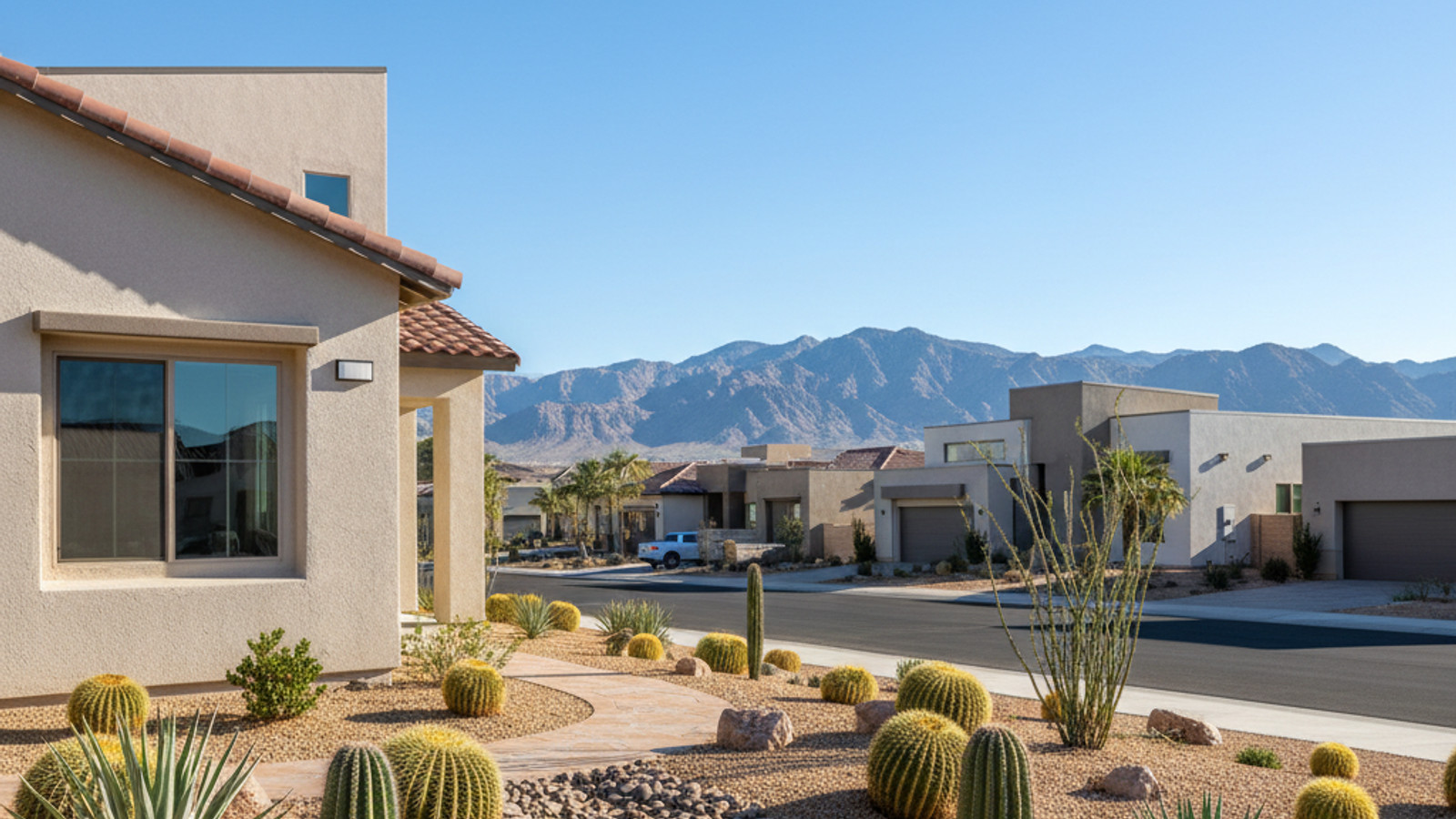
Condition is the second-strongest lever after price, and the two interact: a pristine home justifies a top-of-band price and still sells fast, while a tired home priced as if it were pristine sits the longest of all. The "move-in-ready premium" is real because payment-sensitive buyers cannot absorb a $30,000 kitchen or a $15,000 roof on top of a 6.95% mortgage.
You do not need a full renovation to compete. The highest-return moves are cosmetic and cheap relative to the price they protect: neutral paint for $2,500 to $4,000, professional deep-cleaning and carpet for under $1,500, and decluttering that costs nothing but a weekend. According to the National Association of REALTORS 2025 Profile of Home Staging, 49% of sellers' agents said staging reduced the time a home spent on the market, 83% of buyers' agents said staging made it easier for a buyer to visualize the property as a future home, and the median cost of a professional staging service was $1,500. On a $445,000 median Las Vegas home, that is about a third of one percent of the price to protect the two-week window where homes sell at full ask.
A home that shows turnkey routinely sells inside the median while a comparable "needs updating" listing two doors down takes twice as long or attracts offers $20,000 to $40,000 below ask. The desert adds its own condition checklist: a tired AC unit, a cloudy pool, cracked stucco and sun-faded exterior paint are the four items Las Vegas inspectors flag most, and each one reads to a buyer as a five-figure project. If your home needs real work, price it honestly for its condition from day one — that is far cheaper than three months of carrying costs and a stale-listing stigma. The alternative, when the work is extensive and the timeline is short, is an as-is sale to a cash buyer, which trades price for certainty; I cover that trade-off below.
When Is the Best Season to Sell Fast in Las Vegas?
The desert dictates our market rhythm as surely as school calendars dictate it elsewhere, and the closing record shows it plainly. The table below lists every month's closings, median sale price and median days on market. Remember that a closing date trails the contract date by 30 to 45 days, so homes that "closed in March" mostly went under contract in February, and the newest months are still filling in as late-posted closings arrive.
| Month closed | Closings | Median sold price | Median DOM | Sold within 30 days |
|---|---|---|---|---|
| October 2025 | 2,190 | $437,000 | 32 | 49% |
| November 2025 | 1,871 | $447,000 | 35 | 46% |
| December 2025 | 2,269 | $442,000 | 36 | 44% |
| January 2026 | 3,646 | $440,000 | 39 | 43% |
| February 2026 | 2,720 | $441,000 | 27 | 53% |
| March 2026 | 2,693 | $449,900 | 26 | 55% |
| April 2026 | 2,679 | $447,000 | 26 | 55% |
| May 2026 | 2,512 | $455,000 | 27 | 55% |
| June 2026 | 2,406 | $445,000 | 26 | 54% |
| July 2026 | 2,145 | $440,000 | 28 | 52% |
| August 2026 | 1,295 | $440,000 | 30 | 50% |
Spring is the fastest window: homes closing March through June went under contract in a median of 26 days and 55% sold inside a month, which means they were listed in February through May, when relocating families want to close before the next school year and the weather still invites weekend touring. The May closings also posted the year's highest median price at $455,000. The slowest stretch is the holiday and January cohort — 36 days for December closings and 39 for January's — which reflects homes listed into Thanksgiving and Christmas. Once daytime highs push past 110°F in July and August, casual foot traffic thins and the median drifts back toward 28 to 30 days, though it never approaches the winter figure.
The counterintuitive bright spot is late fall and winter: fewer listings compete, and the buyers who are out in December are serious, pre-approved, and ready to close — which is exactly why some sellers do better listing in the off-season than fighting the spring crowd. Season nudges your timeline by a week or two in either direction; price and condition move it by a month. Do not let a "wait for spring" instinct override a strong price today.
How Does Property Type Affect Time on Market?
Single-family homes are moving faster than attached product right now, and the gap is wider than most condo sellers expect. The 12-month closing record sorted by property style shows a clean ladder from detached houses down to condominiums.
| Property style | Closings | Median DOM | Mean DOM | Median sold price | Sale ÷ original list |
|---|---|---|---|---|---|
| Single-family residence | 20,966 | 28 | 46 | $484,990 | 97.6% |
| Manufactured home | 306 | 27 | 48 | $249,000 | 96.5% |
| Townhouse | 2,909 | 34 | 53 | $344,000 | 97.4% |
| Condominium | 2,439 | 41 | 60 | $225,000 | 95.1% |
Condos and townhomes face two headwinds: rising HOA dues that eat into a payment-sensitive buyer's qualifying budget, and lender scrutiny of HOA financials that can slow or complicate financing. According to Las Vegas REALTORS, condo and townhome sales in August 2026 were down 7.4% from a year earlier while the count of attached listings without offers rose 6.0% to 2,714, so the attached segment is carrying more competition and less demand than the detached one. The result is a 41-day condo median against 28 for single-family homes, and a 95.1% sale-to-original-list ratio against 97.6%.
That does not mean attached homes do not sell — they do, and briskly when priced right — but a condo seller should expect a slightly longer runway and should be especially careful to have HOA documents, reserve studies, and dues history ready so escrow does not stall over a lender's condo questionnaire. High-rise units on the Strip corridor are the extreme case: ZIP 89109 posted a 57-day median and 11.2 months of supply as of September 18, 2026, which is why our high-rise condo sellers plan for a longer marketing window and a buyer pool that skews to cash. If you own a detached home in a deep price band, you are in the fastest-moving category the valley offers. Browse active Las Vegas homes for sale to see how your property compares to current competition before you set a price.
Should You Take a Cash Offer to Sell Faster?
Sometimes the calendar wins over the net sheet — a job transfer, a probate deadline, two mortgages you cannot carry. When speed is the priority, you have options beyond a traditional listing, but each trades dollars for days. Here is the honest comparison.
| Dimension | Traditional listing | Cash / iBuyer | For sale by owner |
|---|---|---|---|
| Time to offer | 23–35 days (median, by city) | 1–7 days | Highly variable |
| Time to close | 30–45 days | 7–14 days | 30–45 days or more |
| Typical net | Highest | 5%–12% below market | Below market (no MLS reach) |
| Best for | Maximizing equity | Urgent, as-is, distressed | Rare — experienced sellers only |
A traditional agent listing nets the most and, at a 30-day median, is not even slow anymore — it is the default for good reason. A cash offer can close in a week, but you are paying a convenience discount of roughly 5 to 12 percent for that certainty; it makes sense for distressed or inherited property you want gone as-is, not for a market-ready home. Compare that discount to the market's own schedule: even the median seller who sat 91 to 180 days on the open market gave back only 7.1% from original list, so a 12% cash discount only pencils when the alternative is a home that would not pass a buyer's inspection or a lender's appraisal at all. For-sale-by-owner is the riskiest path: without full MLS syndication your home reaches a fraction of the buyer pool, and in a higher-inventory market that usually means longer on market and a lower final price — the opposite of the speed FSBO sellers are chasing. When someone needs both speed and top dollar, a professionally-priced MLS launch beats the alternatives on the math almost every time.

What Can You Do to Reduce Your Days on Market in the Desert?
If you want to be the 14-day home instead of the 60-day home, cater to what the Las Vegas buyer specifically fears and wants. Four moves punch above their cost.
Master your curb appeal. Xeriscape is standard here, but "low maintenance" is not "no maintenance." Pull the weeds from the rock, trim and green up the desert plants, and pressure-wash the driveway. A dusty, neglected exterior makes buyers assume deferred maintenance inside before they ever open the door.
Make climate control non-negotiable. Your home must be a refuge from the heat during every showing. Service the AC and run it cool — if a buyer starts sweating in your living room, they will speed through the tour and never write the offer. This one is free and it is the most-skipped.
Keep the pool pristine. A pool is a genuine asset in Vegas, but only when it sparkles. Green or cloudy water reads as a liability and a money pit, and it can knock thousands off perceived value. If you have one, keep it crystal through the entire listing.
Invest in high-quality visuals. With so many buyers relocating from California and starting their search online, drone shots that show lot size and a 3D virtual tour are how you hook a long-distance buyer before they drive across the state line. Great photography is the cheapest way to compress phase two of your timeline.
Launch on the right day with everything ready. In our experience, a Thursday launch with the full photo set, a completed disclosure package and open houses booked for Saturday and Sunday produces the strongest first-weekend traffic, because buyers' agents set up their weekend tours on Friday. A listing that goes live on a Tuesday with six photos and "professional photos coming" in the remarks wastes the two-week window in which 30.9% of valley homes sell at full ask.
How Does Escrow and Closing Add to Your Timeline?
Once you accept an offer, the clock hands off to the buyer's lender and the title company, and this stretch is largely out of your hands — but not entirely. According to the Nevada Revised Statutes, a seller must serve the completed Seller's Real Property Disclosure form at least 10 days before the property is conveyed, and under NRS 113.150 a buyer who never receives it may rescind the purchase at any time before conveyance without penalty. Getting your seller disclosures completed accurately and early therefore prevents both a mid-escrow renegotiation and the rare but real scenario where a buyer walks on day 40 because of a paperwork miss.
The appraisal and loan underwriting are the biggest time consumers in a financed sale; a low appraisal is the classic escrow speed bump, which is one more reason disciplined pricing pays off — a home priced to real comps appraises cleanly. According to the Clark County Assessor, property records and tax data are public and pulled during escrow, so any lien or boundary surprise surfaces here. Keep your HOA documents, warranty records, and permit history organized before you list, and a 45-day escrow can often close in 30. Cash deals skip the appraisal and underwriting entirely, which is why they close in two weeks or less.
Two Las Vegas-specific escrow items deserve a mention. First, HOA resale packages: under NRS 116.4109 the seller must furnish the resale package at the seller's expense, and the buyer may cancel the contract until midnight of the fifth calendar day after receiving it, so ordering it the day you accept an offer rather than the day the lender asks keeps that five-day clock from landing in the final week of escrow. Second, the buyer's inspection period is typically 7 to 10 days, and in a balanced market buyers use it to request repairs or credits; deciding in advance what you will and will not concede keeps the negotiation to a day instead of a week. Sellers who prepare for these two items routinely close a financed sale in 30 to 35 days rather than 45.
What Do Current Market Conditions Mean for Sellers in 2026?
The macro backdrop explains why the median is 30 days rather than seven or 70. According to the Federal Housing Finance Agency, house prices have stabilized after the pandemic surge, and according to Freddie Mac the 30-year fixed averaged 6.95% for the week of September 17, 2026 — high enough to keep buyers disciplined, low enough to keep them shopping. Inventory has climbed from the razor-thin pandemic lows to a healthier supply: as of September 18, 2026 the four-city market carried 12,404 active listings against a 12-month closing pace of about 2,281 a month, roughly 5.4 months of supply, and Las Vegas REALTORS reported 7,590 single-family homes listed without offers at the end of August 2026, up 5.3% from a year earlier.
For you as a seller, "balanced" is good news wrapped in a caution. Homes are absolutely selling — 27,376 of them closed in the four-city market in the year ending September 18, 2026 at a $445,000 median, and Las Vegas REALTORS put the August 2026 single-family median at $475,000, down just 1.0% from a year earlier and 3% below the $490,000 record set in May and June 2026. But buyers now negotiate on repairs and closing costs, and they punish overpricing swiftly: the median valley sale closed at 97.4% of its original list price, and the ones that sat past 90 days closed below 93%. The migration engine from higher-cost states keeps demand solid, yet those relocating buyers are value hunters doing careful math. The winning 2026 posture is simple: price to the live comps, present the home turnkey, and you will beat the median. Fight the market on price and you will define the slow tail yourself.
How Long Does It Take to Sell in Summerlin Versus the Rest of the Valley?
Summerlin deserves its own note because it is the valley's marquee master plan and its numbers run slightly different from the citywide median. Across the four Summerlin ZIP codes — 89134, 89135, 89138 and 89144 — the 12 months ending September 18, 2026 produced 2,418 closings at a 35-day median, a 52-day mean, a $645,000 median sale price and a 95.8% sale-to-original-list ratio. That is four days slower than the 31-day citywide figure and two points lower on sale-to-list, but it is purely a price-point effect, not a desirability gap. Summerlin's inventory skews toward move-up and luxury bands, and the $600,000-to-$900,000 band valley-wide posts a 33-day median with a 96.9% ratio — almost exactly Summerlin's profile.
The village-level spread is wide. ZIP 89135, which holds The Ridges, Red Rock Country Club and the newer villages near Summerlin Parkway, closed 664 homes at an $840,000 median and a 34-day median DOM with 5.6 months of supply as of September 18, 2026, while 89134 — Sun City Summerlin and the older northern villages — closed 732 homes at $492,500 and 33 days. ZIP 89138 in the newer western villages carried the most competition, with 357 actives against 720 annual closings, or 6.0 months of supply, and a 39-day median. If your home is in the master plan, the same rules apply with sharper stakes: at a higher price point, a pricing miss costs more days and more dollars. The village-by-village detail now lives in this guide rather than a separate Summerlin article. For everyone else, the citywide 31-day median and your specific price band from the table above are the numbers to plan around. Whatever your neighborhood, you can see today's competition on our Las Vegas homes for sale and Henderson homes for sale pages before you set your list price.
Ready to Map Your Las Vegas Selling Timeline With Nevada Real Estate Group?
Every number in this guide describes the market as a whole; your home has one price band, one ZIP code, one property type and one launch month, and the combination is what actually sets your timeline. That is the conversation I have with sellers before we ever talk about staging or photography. We pull the same MLS data you have just read — but filtered to your subdivision, your square-footage range and the last 90 days of closings — and we show you where your home would land on the sale-to-list schedule at three different list prices. Sellers who see that schedule almost never choose the aspirational number, because the cost of a 90-day sit is right there in dollars.
Nevada Real Estate Group is the #1 real estate team in Nevada, with 9,600+ closings, $4.85 billion+ in total sales volume, 150+ agents and 9,061+ verified five-star reviews; in 2025 alone we closed 789 transactions and $361.5 million+ in volume. That volume is why our pricing recommendations are calibrated to what buyers are actually paying this month, not to what a national estimate model guessed last quarter. Our listing process is built around the two-week window: professional photography and twilight shots, a completed disclosure package before launch, a Thursday go-live with weekend open houses, and a written plan for what happens on day 14 if the offers have not arrived.
Start with a free home value estimate, explore our seller resources and the market report for your city, or call or text the Nevada Real Estate Group team at (702) 637-1759 to map your personal list-to-close timeline. If your priority is certainty over price, ask about a cash offer and we will show you both numbers side by side so you can choose with the full picture.
Frequently Asked Questions About Selling Speed in Las Vegas
How fast are homes actually selling in Las Vegas right now?
Over the 12 months ending September 18, 2026, the median home in Las Vegas, Henderson, North Las Vegas and Boulder City went from listing to accepted offer in 30 days across 27,376 closings, per Las Vegas MLS data pulled through Repliers on September 19, 2026. The average is about 49 days because a minority of overpriced listings sit much longer and drag the mean up. Half of all homes sold within 30 days, and 30.9% sold within two weeks. Plan for roughly two to five weeks to an offer if your home is priced to the comps, then add escrow.
What is the best month to sell a house in Las Vegas?
Homes that closed March through June 2026 went under contract in a median of 26 days, the fastest of the year, and 55% of them sold inside a month — which means the best listing window is February through May, before the summer heat thins the touring pool. May closings also posted the year's highest median price at $455,000. Winter is slower — December closings ran 36 days and January's 39 — but the buyers who are out in December are serious and pre-approved.
How long does closing take in Nevada after I accept an offer?
A standard Nevada escrow runs 30 to 45 days for a financed buyer, covering inspection, appraisal, and loan underwriting. Cash deals close much faster — often in two weeks or less — because they skip the appraisal and lender underwriting. So from accepted offer to funded, budget four to six weeks for a mortgage buyer and about two weeks for cash. Ordering your HOA resale package and completing the NRS 113 disclosure form on day one can pull a 45-day escrow closer to 30.
Is 2026 a buyer's or seller's market in Las Vegas?
It is a balanced market leaning slightly toward buyers, with a healthier supply than the pandemic years. Las Vegas REALTORS reported just over 4.5 months of inventory at the end of August 2026, and the four-city MLS pull shows roughly 5.4 months as of September 18, 2026. Neither side has full control: sellers must price competitively and present the home well, while buyers have room to negotiate repairs and closing costs. At a 30-day median with 27,376 annual closings, homes are clearly selling — buyers just punish overpricing quickly.
Does my price range change how long my home takes to sell?
More than any other factor. Homes between $400,000 and $600,000 post a 28-day median with 52% selling inside a month; the $600,000-to-$900,000 band runs 33 days; $900,000 to $1.2 million is 34 days; $1.2 million to $3 million is 37 days; and $5 million and up runs 64 days with only 29% selling in the first month. The deepest buyer pool sits under $600,000, which is why entry-level bands move fastest and why luxury sellers need the sharpest pricing.
Which Las Vegas area sells homes the fastest?
North Las Vegas leads at a 23-day median and a 98.9% sale-to-original-list ratio, driven by a deep pool of first-time and relocating buyers near the $417,000 sweet spot; its 89081 and 89085 ZIPs posted 19-day medians. The City of Las Vegas is 31 days, Henderson 32, the Summerlin ZIPs 35, and Boulder City the slowest at 35.5 days — a small, distinctive lakeside market where unique homes take longer to find their exact buyer.
Should I take a cash offer to sell faster, or list traditionally?
A cash offer closes in about a week but typically nets 5 to 12 percent below market — worth it for distressed, inherited, or urgent as-is sales. A traditional listing nets the most and, at a 30-day median, is no longer slow. Even homes that sat 91 to 180 days on the open market gave back a median of only 7.1% from original list, so unless you have a hard deadline or a property you want gone as-is, a professionally-priced MLS launch usually wins on both speed and dollars.
Which Sources Inform This Las Vegas Selling-Timeline Guide?
The days-on-market, sale-price, sale-to-list and closing-volume figures in this guide are Las Vegas MLS data pulled through Repliers on September 19, 2026, covering closings from September 19, 2025 through September 18, 2026 and active listings as of September 18, 2026 in Las Vegas, Henderson, North Las Vegas and Boulder City; they are cross-checked against our own 2025 book of 789 closings and 9,600-plus career transactions. They are not official Las Vegas REALTORS statistics. Macro and disclosure context comes from the authorities below.
- Las Vegas REALTORS — August 2026 housing report: $475,000 single-family median, 2,252 sales, 7,590 homes without offers, 4.5 months of supply
- Freddie Mac Primary Mortgage Market Survey — 6.95% 30-year fixed for the week of September 17, 2026
- National Association of REALTORS — 2025 Profile of Home Staging — staging effects on time on market and buyer visualization
- U.S. Census Bureau — Las Vegas QuickFacts — population and migration
- Federal Housing Finance Agency — house-price index and stabilization
- Nevada Revised Statutes Chapter 113 — seller disclosure timing and buyer rescission rights
- Clark County Assessor — property records and tax data
- Clark County, Nevada — permits and public records
- U.S. Bureau of Labor Statistics — Las Vegas employment context
- Nevada Department of Taxation — transfer tax and closing costs
- Consumer Financial Protection Bureau — buyer financing and closing timelines