
Roughly six or seven months of the year, a private pool in Las Vegas is not a luxury — it is how families actually live through a desert summer that runs from April into October. That is why so many buyers set "pool" as their very first search filter, and why a pool-equipped home in the mid-to-upper price tiers sells faster and draws more competitive offers than the identical floor plan without one. But buying a home that already has a pool is a different transaction than buying one without: the inspection is bigger, the appraisal treats the pool unevenly, the homeowners insurance changes, and the negotiation has levers that most buyers never think to pull.
Across our 9,600+ closings at Nevada Real Estate Group since 2011, pool homes have run through our pipeline in every price tier — from first-time buyer entry homes under $350,000 to guard-gated estates above $3 million — and the mistakes buyers make are consistent and avoidable. This is the complete 2026 playbook for deciding whether a pool home is right for you, what to inspect, how to value it, how to insure it, and how to negotiate the price. Our direct line is (702) 637-1759 if you want us to pull pool-vs-no-pool sold comps in a specific neighborhood before you write an offer.
Buy a pool home in Las Vegas when you are shopping at $600,000 or above, where a pool is expected and adds marketability — but budget $3,000–$5,500 a year to run it, order a separate pool inspection ($150–$350), and confirm the barrier fencing is Clark County code-compliant before you close. A pool recovers only about 50–70% of build cost, so it is negotiating leverage below $500,000, not a value-add.
- Above $600,000 a pool is expected and speeds the sale; below $500,000, weigh the $3,000–$5,500/year carrying cost first.
- Order a separate pool inspection ($150–$350) — a standard inspector never tests the shell, equipment, or plumbing.
- A pool adds roughly $15,000–$40,000 of value but recovers only 50–70% of build cost — negotiate that gap.
- Clark County requires a 5-foot barrier fence with a self-latching gate; non-compliant fencing can void a claim.
- Budget $150–$350/year extra liability plus a $1,000,000 umbrella — a pool is an "attractive nuisance" under Nevada law.
Why Are Pool Homes So Common in Las Vegas?
Las Vegas sits in the Mojave Desert, where summer highs top 100°F for weeks at a stretch and a backyard pool gets used seven to eight months a year — compared with the three to four months typical of most of the country. According to the Clark County Department of Building, residential pool permits are consistently among the top-ten permit categories by volume in the county, which makes Southern Nevada one of the highest pool-density metros in the United States.
In our experience, that density changes buyer psychology. In much of the country a pool is a niche feature that narrows the buyer pool; here it is the opposite. Across our 789 closings in 2025 — $361.5M+ in production as the #1-ranked real estate team in Nevada — a pool came up in the inspection, appraisal, or negotiation on a large share of our mid-to-upper-tier transactions. According to Las Vegas REALTORS, pool-equipped homes in the $600,000-plus tier reliably show shorter days-on-market than comparable non-pool listings in the same community.
The takeaway for a buyer: a pool is not a red flag in this market, but it is a system — a $45,000–$200,000+ piece of infrastructure attached to the home — and you are buying that system's age, condition, and liability along with the house.
Should You Buy a House With a Pool at All?
The honest answer depends on your price tier, your household, and how you will use the backyard. A pool that delights a family of five is a maintenance chore and a safety worry for a retired couple who will swim twice a summer. Here is how we counsel buyers by profile.
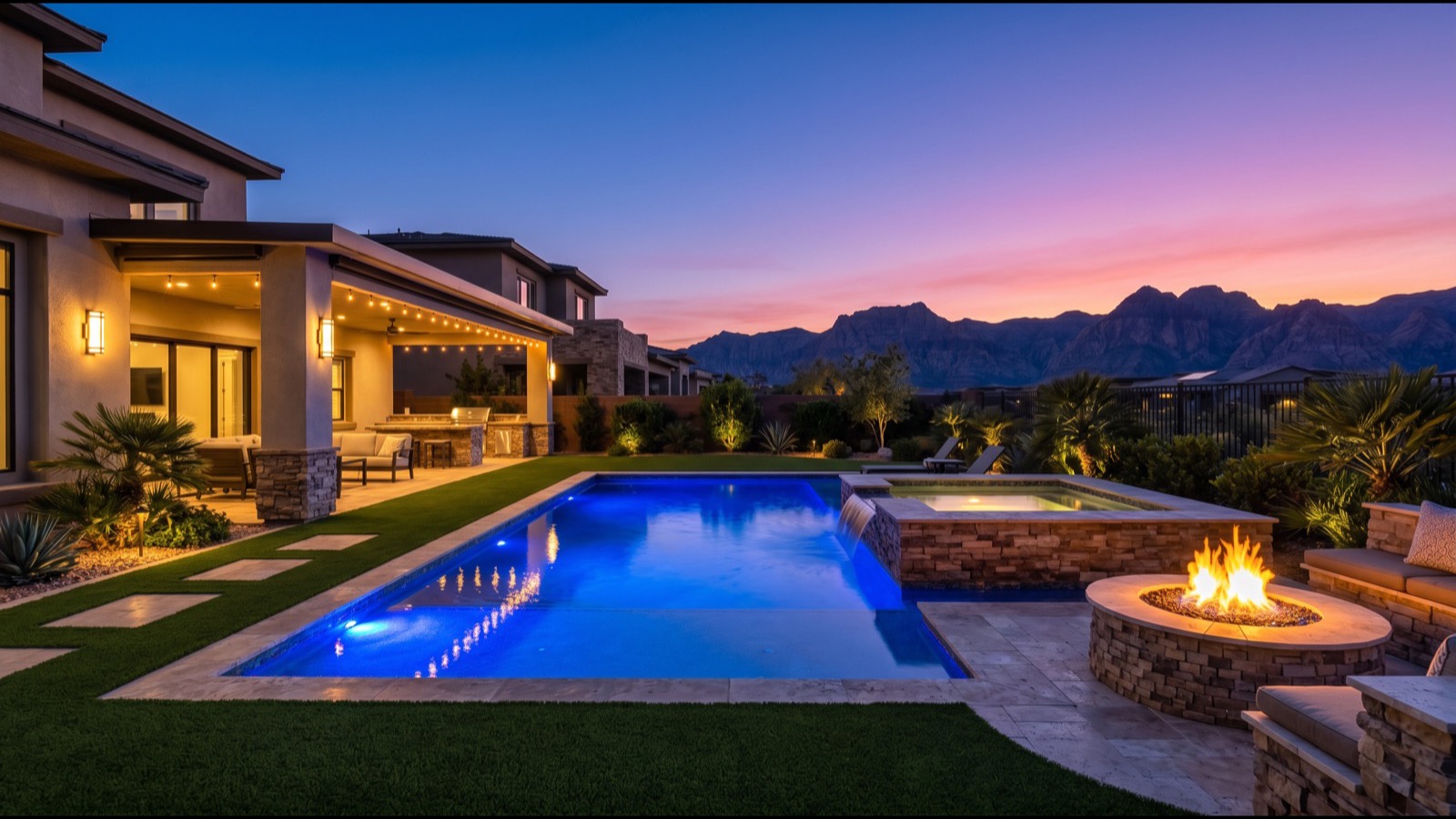
- Families with kids — a pool is often the single most-wanted feature; the daily-use value over a long desert summer usually justifies the carrying cost. Confirm the barrier fencing and consider a pool alarm.
- Move-up and luxury buyers ($600K+) — a pool is expected, and buying a home that already has a quality build saves you the 8–14 week construction wait and the $45,000–$100,000 build cost. This is the tier where a pool is a genuine asset.
- First-time and entry buyers (under $450K) — run the numbers carefully. A $3,000–$5,500 annual carrying cost is real money against a starter budget, and the pool premium is thinner here. A pool home can still make sense, but treat the pool's condition as a price-negotiation lever, not a bonus.
- Retirees and second-home buyers — decide honestly how often you will swim. Many downsizers prefer a home near a community or resort-style HOA pool they never have to maintain, or they buy the pool home and budget for full-service care.
- Investors and short-term-rental operators — a pool is close to mandatory for a competitive Las Vegas vacation rental; it directly drives nightly rate and occupancy. We cover that math below.
How Much Does a Pool Add to a Home's Value in Las Vegas?
This is where buyers most often misjudge the transaction. A pool adds marketability — faster sale, more offers — more reliably than it adds appraised dollar value. According to Las Vegas REALTORS closing data and the appraisal practices we see on our own transactions, a pool in the Las Vegas market typically recovers only 50–70% of its build cost at resale, and an appraiser will usually assign a pool a contributory value in the $15,000–$40,000 range in the mid-to-upper tiers — well below the $65,000–$100,000 a comparable pool costs to build new.
That gap is the single most useful fact a pool-home buyer can hold. It means the seller who spent $80,000 on a custom pool did not add $80,000 to the home's value, and their list price should not assume they did.
| Price tier | Is a pool expected? | Typical contributory value | Effect on days-on-market |
|---|---|---|---|
| Under $400,000 | No — often a bonus | $8,000–$18,000 | Modest; carrying cost can deter buyers |
| $400,000–$600,000 | Increasingly expected | $15,000–$30,000 | Faster sale in family neighborhoods |
| $600,000–$1,000,000 | Yes — expected | $25,000–$40,000 | Noticeably faster; more offers |
| $1,000,000+ | Essentially required | $40,000+ (varies widely) | A missing pool can stall the sale |
According to appraisal guidance consistent with Fannie Mae and FHFA valuation standards, pools are valued on a contributory basis against local comparable sales, not on replacement cost — which is why two identical pools contribute different dollar amounts in different neighborhoods. We pull pool-vs-no-pool comps for every pool-home buyer we represent so the offer reflects real contributory value, not the seller's build receipts. For a full breakdown of build and ownership economics, our companion guide on the real cost of a pool in Las Vegas runs the numbers in depth.
What Does It Actually Cost to Own a Pool Here?
Before you fall in love with the backyard, model the carrying cost — because it is higher in the desert than almost anywhere else. According to NV Energy, Southern Nevada residential electricity runs roughly $0.11–$0.14/kWh in 2026, and a variable-speed pump plus seasonal heater use adds about $60–$120/month to the bill. Professional weekly pool service runs $100–$200/month ($1,200–$2,400/year); DIY chemical care runs $50–$80/month in materials.
Then there is water. According to the Southern Nevada Water Authority, an uncovered Las Vegas pool loses four to six feet of water depth over a single summer to evaporation — a real cost in a market where water is metered and conservation rules are tightening. A pool cover cuts evaporation by more than half and can earn SNWA rebates.
| Cost line | Low | High | Notes |
|---|---|---|---|
| Professional service | $1,200 | $2,400 | Weekly visits; DIY is $600–$960 |
| Added electricity | $720 | $1,440 | Pump + heater; higher with spa |
| Water / evaporation refill | $300 | $700 | A cover cuts this 50%+ |
| Chemicals (if self-serviced) | $300 | $600 | Included if you use a service |
| Repairs / reserve fund | $400 | $1,000 | Set aside for equipment + resurfacing |
| Typical annual total | $3,000 | $5,500 | Model this into your monthly budget |
What Should a Pool Inspection Cover?
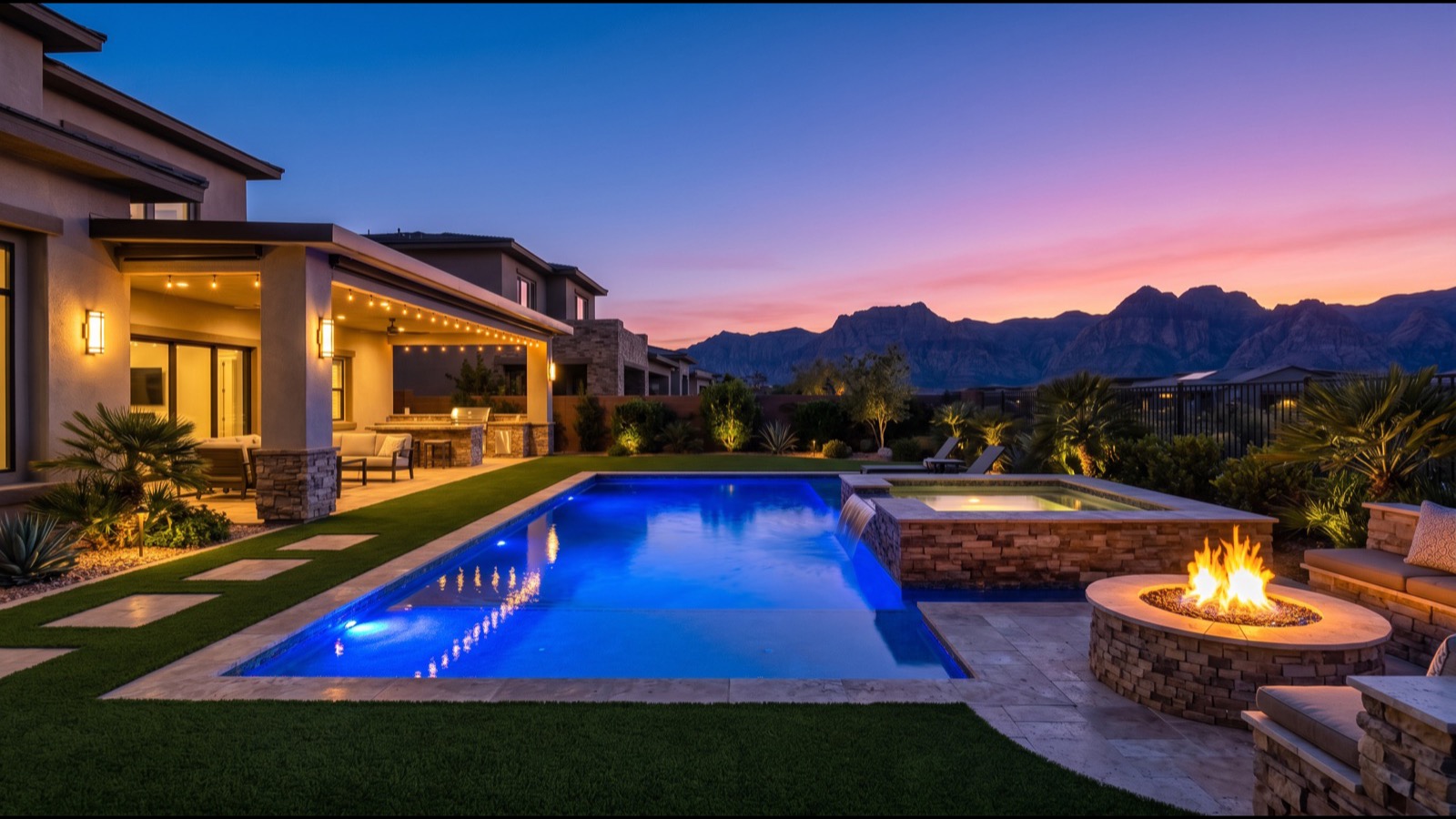
Here is the mistake we see most often: buyers assume the standard home inspection covers the pool. It does not. A general inspector will note the pool exists and flag obvious issues, but a proper evaluation of the shell, equipment, and plumbing requires a separate pool inspection, which runs $150–$350 in Las Vegas — the best money a pool-home buyer spends. Add leak detection ($200–$500) if the inspector notes any moisture near the deck.
According to Las Vegas REALTORS data on pool-home transaction concessions, the defects most commonly discovered at inspection in our market — and worth negotiating over — are these:
| Component | What to check | Typical repair cost |
|---|---|---|
| Plaster / pebble finish | Age, staining, rough spots — resurfacing due every 10–15 years | $5,000–$15,000 |
| Heater | Age, function, gas vs. electric | $2,500–$5,000 to replace |
| Pump | Variable-speed (code), noise, age, flow rate | $600–$1,500 to replace |
| Deck | Cracks, settling, trip hazards | $1,000–$8,000 |
| Shell / plumbing leak | Water-loss test, wet spots near deck | $500–$5,000+ |
| Barrier fencing | Height, self-latching gate, no direct house access | $500–$3,000 to bring to code |
According to the Pool & Hot Tub Alliance, older pools frequently carry single-speed pumps that no longer meet current energy code — a detail buyers miss because the pump still runs. If it fails, replacing it triggers a code-compliant variable-speed upgrade. Fold every one of these findings into your inspection-contingency negotiation; our guide to home-buying contingencies in Nevada explains how to structure that request so it protects you.
How Do You Negotiate the Price on a Pool Home?
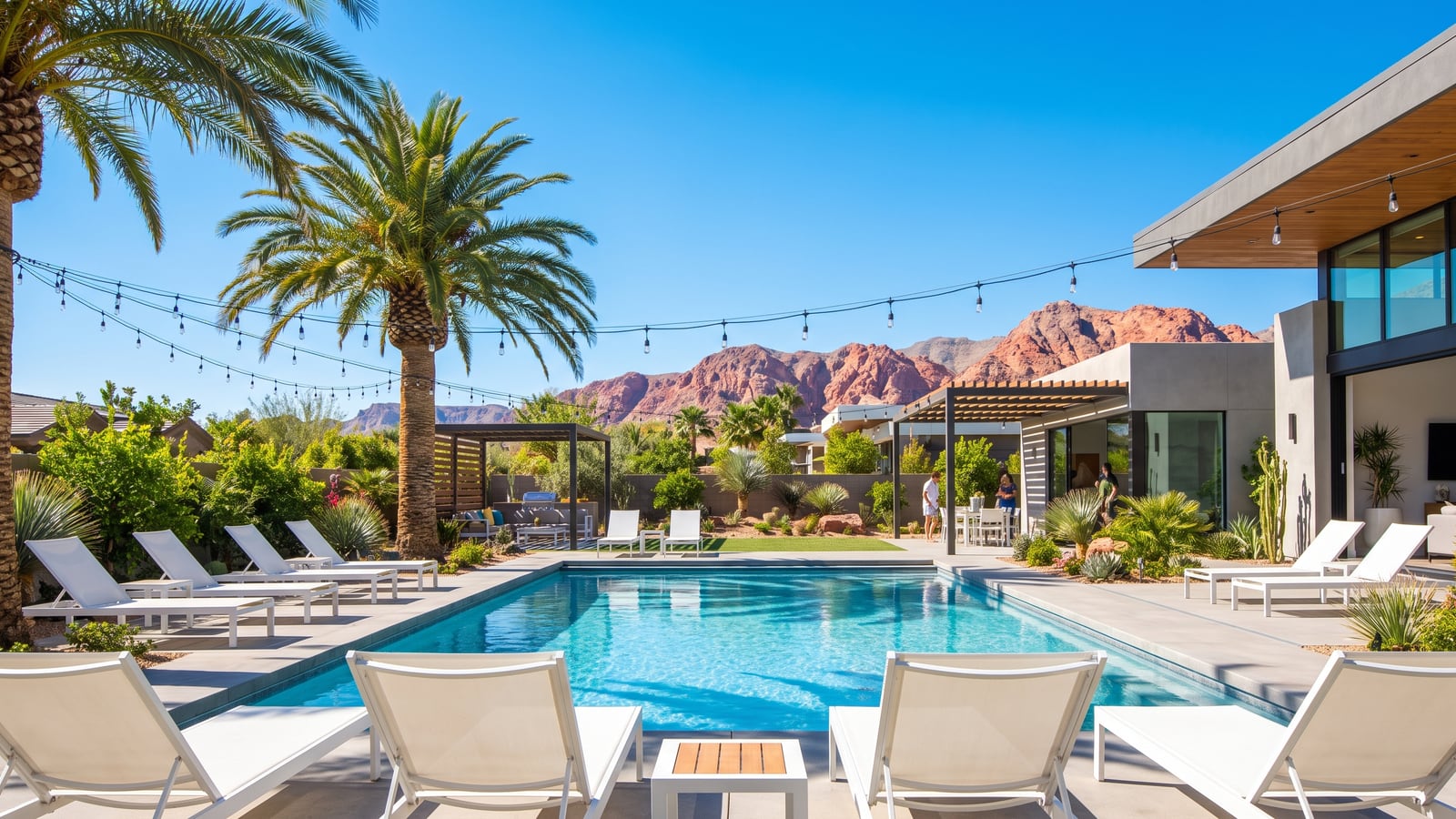
Because a pool recovers only 50–70% of build cost and appraises on contribution, a pool home hands a prepared buyer real leverage — especially if the pool needs work. The levers we use for our buyers:
- Price against contributory value, not build cost. If a seller priced in an $80,000 pool, the comps rarely support it. We show the appraiser-basis value and anchor the offer there.
- Turn inspection findings into credits. Aging plaster due for resurfacing ($5,000–$15,000), a heater near end of life ($2,500–$5,000), or non-compliant fencing ($500–$3,000) are legitimate credit requests. In our experience sellers concede on these because the next buyer will find them too.
- Ask for the maintenance records and equipment age. A pool serviced weekly with recent equipment is worth more than one that was neglected — and the paper trail tells you which you are buying.
- Value a cover and automation. A pool cover, variable-speed pump, and smart controller lower the carrying cost you just modeled; their absence is a fair thing to price in.
According to Freddie Mac, financed buyers should also confirm the appraisal supports the contract price — if the pool pushed the list price above comparable sales, an appraisal gap becomes a renegotiation point. We have used a low pool-home appraisal to recover tens of thousands for buyers more than once.
How Does a Pool Affect Your Homeowners Insurance?
A pool raises your homeowners liability premium because Nevada common law treats it as an "attractive nuisance" — a feature that foreseeably draws children who cannot appreciate its danger. According to the Insurance Information Institute, a pool typically adds $50–$300/year to a policy, and most Las Vegas pool owners should carry $300,000–$500,000 in base liability plus a separate umbrella policy of at least $1,000,000 — a combination that adds roughly $150–$350/year over a non-pool profile.
According to Nevada Revised Statutes and the attractive-nuisance doctrine, a homeowner can be liable for injuries around the pool even to an uninvited child — the doctrine removes the normal trespasser defense. That is why we tell every pool-home buyer to price insurance before closing, not after. For the full picture on carriers and premiums in our market, see our Las Vegas homeowners insurance cost guide. One more warning worth repeating: if the barrier fencing is not code-compliant, a carrier can deny a pool-related claim outright, so the safety inspection and the insurance quote are two halves of the same decision.
What Are the Clark County Pool Safety Rules?
Before you close, confirm the pool meets local barrier code — it is both a legal and an insurance requirement. According to Clark County, a residential pool barrier must meet these minimums:
- A barrier fence at least 5 feet high surrounding the pool.
- Self-closing, self-latching gates that open outward, with the latch at least 54 inches above the ground.
- No direct access from the house to the pool area without a separate self-closing barrier — a door straight from the living room to the pool deck does not satisfy code on its own.
- Many carriers additionally require a pool alarm that triggers when the water surface is broken.
According to the U.S. Consumer Product Safety Commission, layered barriers and compliant drain covers under the federal Virginia Graeme Baker Pool & Spa Safety Act are the most effective way to prevent child drownings and entrapment. The CDC reports that drowning is a leading cause of unintentional death for young children — and in a high-pool-density market like Las Vegas the exposure is real. Verify barrier compliance in writing as part of your inspection contingency; bringing an older pool into compliance runs $500–$3,000 and is a fair credit to request.
Should You Buy a Pool Home, or Buy and Build Your Own?
If you love a home that has no pool, you have three paths: buy a home that already has one, buy a pool-less home and build, or buy near a resort-style community pool. Each has a different cost and timeline profile.
| Dimension | Buy a pool home | Buy, then build | Community / HOA pool |
|---|---|---|---|
| Upfront cost | Priced into home; about $15K–$40K contributory | $45,000–$200,000+ after closing | Included in HOA dues |
| Timeline | Immediate — swim day one | 8–14 weeks permit-to-water | Immediate |
| Customization | You inherit the design | Full — you design it | None |
| Annual cost | $3,000–$5,500 | $3,000–$5,500 | Part of HOA dues |
| Best for | Move-up + luxury buyers | Buyers who found the right house, wrong yard | Retirees + low-maintenance buyers |
For buyers leaning toward building, our new-construction buyers frequently add the pool through the builder or a licensed contractor right after close — just know the permit and 8–14 week timeline. For buyers who want the swim without the upkeep, many luxury communities and master plans across the valley offer resort-style amenity pools included in the dues.
Which Las Vegas Neighborhoods Have the Most Pool Homes?
Pool density tracks price tier and lot size. In our experience the highest concentrations of private pool homes sit in the established mid-to-upper-tier communities where lots are large enough to hold a pool and buyers expect one:
- Summerlin — master-planned villages across nearly every price tier; pools are standard from the mid-$600Ks up, and the guard-gated enclaves are pool-dense.
- Henderson — Green Valley, Anthem, Seven Hills, and MacDonald Highlands carry heavy pool density in the upper tiers.
- The luxury and guard-gated communities — Red Rock Country Club, The Ridges, Ascaya, Southern Highlands — where a pool is close to required.
- Established central and southwest valley neighborhoods — larger 1990s–2000s lots where pools were built with the homes.
If you are relocating and unsure where pool homes fit your budget, we map pool-vs-no-pool inventory by neighborhood for every buyer we represent — a call to (702) 637-1759 gets you a shortlist tuned to your price and swim priorities.
What Does a Pool Mean for Investors and Short-Term Rentals?
For an investor, a pool is closer to mandatory than optional. In the Las Vegas vacation-rental market a private pool is one of the strongest drivers of nightly rate and occupancy, and pool-less listings compete at a disadvantage — guests searching a desert destination in summer filter for pools the same way local buyers do. That said, the carrying cost, the added liability, and the barrier-compliance requirements all rise for a rental, and Clark County and the City of Las Vegas short-term-rental rules govern where you can operate at all.
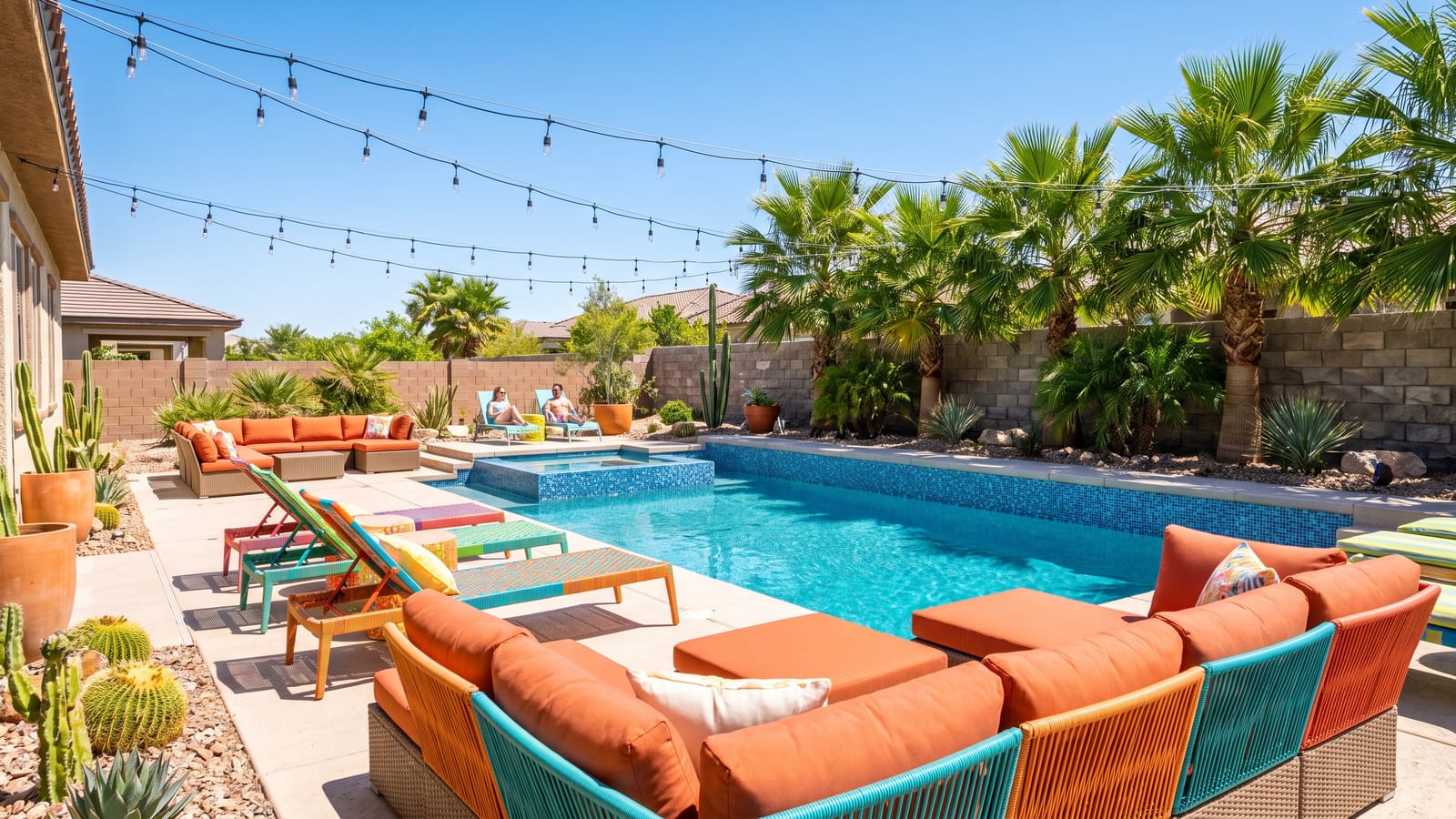
According to Las Vegas REALTORS market data, pool homes in investor-favored zip codes trade at a premium precisely because the rental math supports it — but the same 50–70% resale-recovery rule applies when you eventually sell, so buy the pool for the income it produces, not as a value store. We underwrite pool-home rental deals with the full carrying cost and liability baked in before we recommend an offer.
How Do You Search for Pool Homes in Las Vegas?
The good news: filtering for a pool is straightforward, and every serious pool buyer should search that way from day one. Use our Las Vegas homes for sale inventory and set the pool filter, or run a custom search on our property search tool to see live pool listings by neighborhood, price, and lot size. Because pool homes move faster in the upper tiers, set up an instant-alert search so you see new pool listings the day they hit the market.
When you are ready to write on one, this is where representation pays for itself: we pull the pool-vs-no-pool comps, order the separate pool inspection, structure the contingency, and negotiate the plaster, heater, pump, and fencing findings into your favor. In our experience buyers who treat the pool as a system to evaluate — not a bonus to admire — close on better homes at better prices. Call (702) 637-1759 and we will build your pool-home search and represent you through the offer.
Frequently Asked Questions
Does a pool add value to a home in Las Vegas?
A pool adds marketability more than dollar value. It typically recovers only 50–70% of build cost and appraises on a contributory basis of roughly $15,000–$40,000 in the mid-to-upper tiers — well below the $65,000–$100,000 cost to build one. Above $600,000 a pool is expected and speeds the sale; below $500,000 it is thinner value and better used as negotiating leverage.
How much does it cost to maintain a pool in Las Vegas?
Budget $3,000–$5,500 a year all-in: professional weekly service ($1,200–$2,400), added electricity for the pump and heater ($720–$1,440), water to replace summer evaporation ($300–$700), and a repair reserve ($400–$1,000). DIY chemical care can cut the service line to roughly $600–$960, but most owners with jobs and families outsource it.
Do I need a separate pool inspection when buying?
Yes. A standard home inspection does not test the pool shell, equipment, or plumbing. A dedicated pool inspection runs $150–$350 in Las Vegas — plus $200–$500 for leak detection if warranted — and it is the best money a pool-home buyer spends. It surfaces plaster, heater, pump, deck, and barrier issues you can negotiate over.
How much does a pool raise homeowners insurance in Las Vegas?
Expect roughly $150–$350 more per year over a non-pool home, because Nevada law treats a pool as an "attractive nuisance." Carry $300,000–$500,000 in base liability and a $1,000,000 umbrella policy. Critically, if the barrier fencing is not Clark County code-compliant, a carrier can deny a pool-related claim — so quote insurance and verify the fence before closing.
What safety features does Clark County require for a pool?
A barrier fence at least 5 feet high, self-closing and self-latching gates that open outward with the latch at least 54 inches high, and no direct unbarriered access from the house to the pool. Many insurers also require a pool alarm. Bringing an older pool into compliance runs $500–$3,000 and is a fair credit to request from the seller.
Is it cheaper to buy a home with a pool or build one after closing?
Buying a home that already has a pool is almost always cheaper than building, because the pool's contributory value ($15,000–$40,000) is far below the $45,000–$200,000+ cost to build one new. Building gives you full customization and a fresh pool but adds an 8–14 week timeline and the full build cost after you close.
Should a first-time buyer buy a pool home in Las Vegas?
It can work, but run the carrying cost first — $3,000–$5,500 a year is meaningful against a starter budget. If the numbers fit, treat the pool's condition and any inspection findings as price-negotiation leverage rather than a bonus, since the pool premium is thinner under $450,000. A pool-less home near a community pool is often the better value at entry price points.
Which Sources Inform This Pool Home Buyer Guide?
Every figure in this guide is drawn from Nevada Real Estate Group's own closing pipeline layered against public data. The pool-home value, days-on-market, negotiation, and inspection observations reflect the 9,600+ transactions we have closed since 2011 and the 789 homes we closed in 2025 as the #1-ranked team in Nevada. Cost, code, and safety figures are sourced from the authorities below; where we cite a range, it reflects both public data and what we see in live transactions. For pricing a specific pool home, we pull neighborhood-level pool-vs-no-pool sold comps — call (702) 637-1759.
- Clark County Department of Building — residential pool permits and volume
- Clark County — pool barrier and safety code
- Southern Nevada Water Authority — pool evaporation and conservation rebates
- NV Energy — Southern Nevada residential electricity rates
- Las Vegas REALTORS — closing, days-on-market, and concession data
- Nevada Legislature (NRS) — attractive-nuisance and premises-liability law
- Insurance Information Institute — pool liability premium guidance
- U.S. Consumer Product Safety Commission — pool safety and the VGB Act
- Centers for Disease Control and Prevention — drowning-prevention data
- Pool & Hot Tub Alliance — equipment and energy-code standards
- Freddie Mac — appraisal and financing guidance
- Federal Housing Finance Agency — home-price and valuation standards
- U.S. Census Bureau — Las Vegas housing characteristics