

Buying a home on the Nevada side of Lake Tahoe is not a normal purchase, and treating it like one is the single most expensive mistake I see out-of-market buyers make. Every parcel in the Tahoe Basin sits under the Tahoe Regional Planning Agency — a bi-state authority that governs how much of your lot can be covered, whether you can build at all, and what you must retrofit before you sell. Layer on wildfire insurance that has hardened dramatically, lakefront pier and buoy rights that trade separately from the dirt, and a state line that decides whether you pay income tax, and you have a transaction where the diligence matters as much as the view.
Nevada Real Estate Group has closed more than 9,600 transactions across the state — including the Tahoe deals where TRPA status, BMP certificates, and littoral rights decide whether a buyer overpays or walks away protected. This guide walks the whole Nevada-side purchase: the market as it actually reads today, the TRPA rules that gate remodels and new builds, the lakefront-versus-lake-view diligence split, and the no-income-tax reason so much California equity keeps landing in Incline Village and along the Nevada shoreline.
Buying on the Nevada side of Lake Tahoe means buying under TRPA — the bi-state agency that caps land coverage, gates new building through IPES scoring, and requires a BMP retrofit at most sales. Incline Village's 101 active listings carry a $1,199,000 median (live NNRMLS feed, July 12, 2026), and Nevada charges no state income tax. Verify every parcel's TRPA status before you write an offer. Call Nevada Real Estate Group at (775) 277-2120.
- TRPA governs land coverage, IPES scoring, and BMP retrofits on every Tahoe parcel — verify before you offer.
- Incline Village shows 101 actives at a $1,199,000 median (live NNRMLS, July 12, 2026).
- A BMP retrofit certificate is typically required at or near sale — budget it early.
- Nevada's zero state income tax pulls California equity to Zephyr Cove, Glenbrook, and Crystal Bay.
- Lakefront is scarce — the $5 million-plus tier held just 11 Incline actives; pier rights need diligence.
- Call Nevada Real Estate Group at (775) 277-2120 before you write a Tahoe offer.
Why Does Buying on the Nevada Side of Lake Tahoe Work Differently?
Three forces make a Tahoe purchase its own discipline, and none of them exist in a normal Reno or Las Vegas transaction.
First, a regional government sits on top of local zoning. TRPA was created by a bi-state compact between Nevada and California and ratified by Congress in 1969, and its authority over building, coverage, and grading supersedes ordinary county planning inside the Basin. A parcel that looks buildable on a county map can be effectively frozen by TRPA rules — and a buyer who does not know that pays retail for a lot that cannot be improved.
Second, the environment is regulated as the product. The clarity of the lake is a legal mandate, not a marketing line, so drainage, defensible space, and impervious surface are all controlled. That is why a Best Management Practices retrofit — the drainage and erosion-control package covered later in this guide — becomes a live issue at almost every sale.
Third, the state line is a tax line. Incline Village and Crystal Bay sit in Washoe County; Zephyr Cove, Cave Rock, Glenbrook, and Stateline sit in Douglas County. All of it is Nevada — no state income tax, no capital-gains tax at the state level — while the identical shoreline a few miles west is taxed by California. That single fact drives a measurable share of the demand you are competing against.
What Does the Nevada-Side Lake Tahoe Market Look Like in 2026?
Here is the live picture, pulled directly from Nevada Real Estate Group's NNRMLS feed on July 12, 2026 (methodology: active for-sale counts and price statistics by Nevada-side town, cross-checked against the same feed that powers our Reno-region search):
- Incline Village: 101 active listings, with a median list price of $1,199,000 and an average of $3,039,177 — the spread you would expect when the top of the market includes a $47,500,000 lakefront trophy.
- 26 closed sales in the last 90 days in Incline Village at a median sold price of $1,054,500, with a median 91 days on market.
- The $5 million-plus luxury tier held just 11 active listings in Incline Village — proof of how thin the true trophy segment runs.
- Zephyr Cove: 31 active listings at a $2,195,000 median.
- Glenbrook: 18 active listings at a $4,522,500 median — the most exclusive gate on the Nevada shore.
- Crystal Bay: 6 active listings at a $7,947,500 median.
- Stateline (Nevada side): 87 active listings at an $849,000 median, where condominiums pull the middle of the market down.
Add the core Nevada-side towns together and you are shopping a market of roughly 240-plus active listings where a seven-figure median is the baseline, not the ceiling. According to the Tahoe Regional Planning Agency, the Basin's development caps mean new supply barely moves year to year — so scarcity, not construction, sets the price floor. Tahoe sits at the very top of Nevada's luxury communities, and it is the crown of our Northern Nevada communities coverage. For a deeper read on how the tiers stack up, our Lake Tahoe market report breaks the segments down further.
To connect the purchase process with a realistic property shortlist, compare Lake Tahoe homes by luxury price tier while keeping each home's restrictions separate.
What Is TRPA and How Does It Affect Buying at Lake Tahoe?
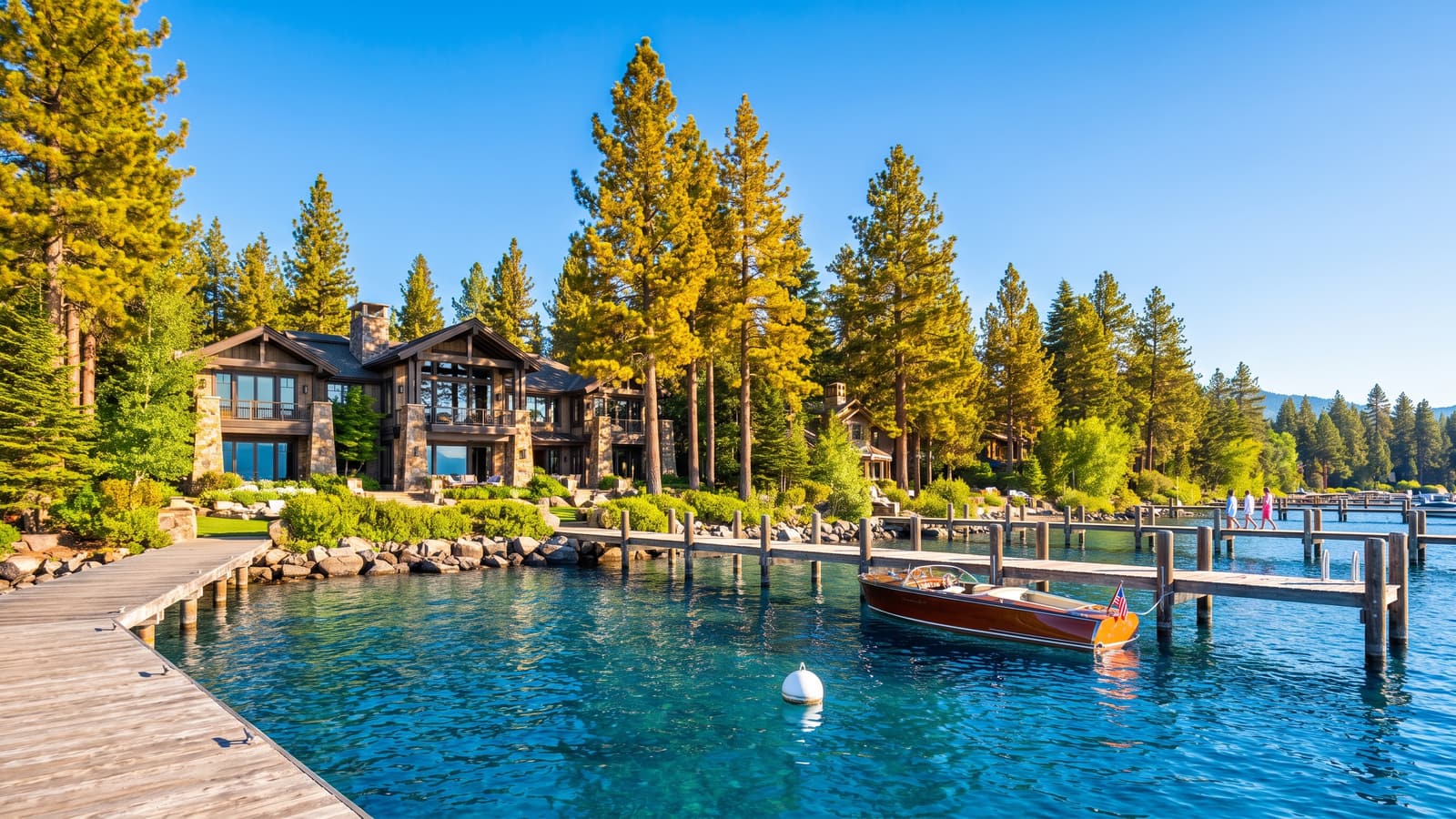
TRPA — the Tahoe Regional Planning Agency — is the bi-state planning body that regulates land use, transportation, water quality, and building across the entire Lake Tahoe Basin, on both the Nevada and California sides. Think of it as a second, stricter layer of zoning that answers to the goal of keeping the lake clear, and its rules routinely override what a county would otherwise allow.
For a buyer, three TRPA concepts control almost everything you can do with a property:
| Concept | What it controls | Why a buyer cares |
|---|---|---|
| Land coverage | How much of the lot can be hard/impervious surface (roof, driveway, patio) | Caps how large a home or addition you can build; excess coverage may need removal or mitigation |
| IPES score | An engineering-based ranking of a vacant lot's suitability to build | A low score can make a "buildable" lot un-buildable until it rises on the priority list |
| BMP retrofit | Best Management Practices — drainage and erosion controls on the parcel | A certificate is generally required at or near sale; non-compliance is the buyer's problem after closing |
According to the Tahoe Regional Planning Agency, land coverage is allocated by a parcel's Bailey land-capability class and is one of the most valuable — and most misunderstood — attributes a Tahoe property carries. Coverage can sometimes be transferred between parcels, banked, or purchased, which means an experienced agent reads a listing for its coverage math the way a Las Vegas agent reads it for square footage. This is complex, frequently amended regulatory territory, so treat everything here as market commentary, not legal advice, and confirm the current rules for your exact parcel with TRPA before you rely on any of it.
The practical takeaway: never assume you can expand, rebuild, or add a garage until TRPA coverage and permitting are verified for that specific parcel. In my experience, the buyers who get burned are the ones who fall in love with a cabin's footprint and assume a second story or a bigger deck is a formality. At Tahoe, it rarely is.
Can You Build or Remodel on a Tahoe Lot Under IPES and Land Coverage?
Sometimes — and the answer depends almost entirely on TRPA math, not on your budget or your builder. Two systems decide it.
For vacant land, TRPA uses the Individual Parcel Evaluation System (IPES), an engineering assessment that scores each undeveloped lot on slope, soil stability, drainage, and access. According to the Tahoe Regional Planning Agency, lots must reach a rolling IPES threshold before a residential building allocation can be issued, and low-scoring parcels can sit un-buildable for years. A "view lot" listed at $600,000 is only worth that if it can actually be built — and I have seen raw lots trade at a steep discount precisely because their IPES score keeps them on the sidelines.
For existing homes, the constraint is usually land coverage plus the region's development-rights system. Expanding a footprint, adding impervious surface, or demolishing and rebuilding can require additional coverage, transferred development rights, or an existing residential unit of use — none of which are guaranteed. Grading is seasonally restricted, too: the Basin's grading window generally runs only from roughly May to mid-October to protect water quality, which compresses every remodel timeline.
Across the Tahoe closings our team has represented, the remodel-minded buyers who succeed do one thing differently: they price the project, not just the purchase. They get a coverage and permitting read before removing the inspection contingency, and they budget for the reality that a Tahoe remodel costs more and takes longer than the same job in Reno. If your plan depends on adding square footage, verify feasibility with TRPA and a Tahoe-experienced architect first — again, current rules only, because this framework is amended regularly.
What Is a BMP Retrofit and Why Does It Matter at Sale?
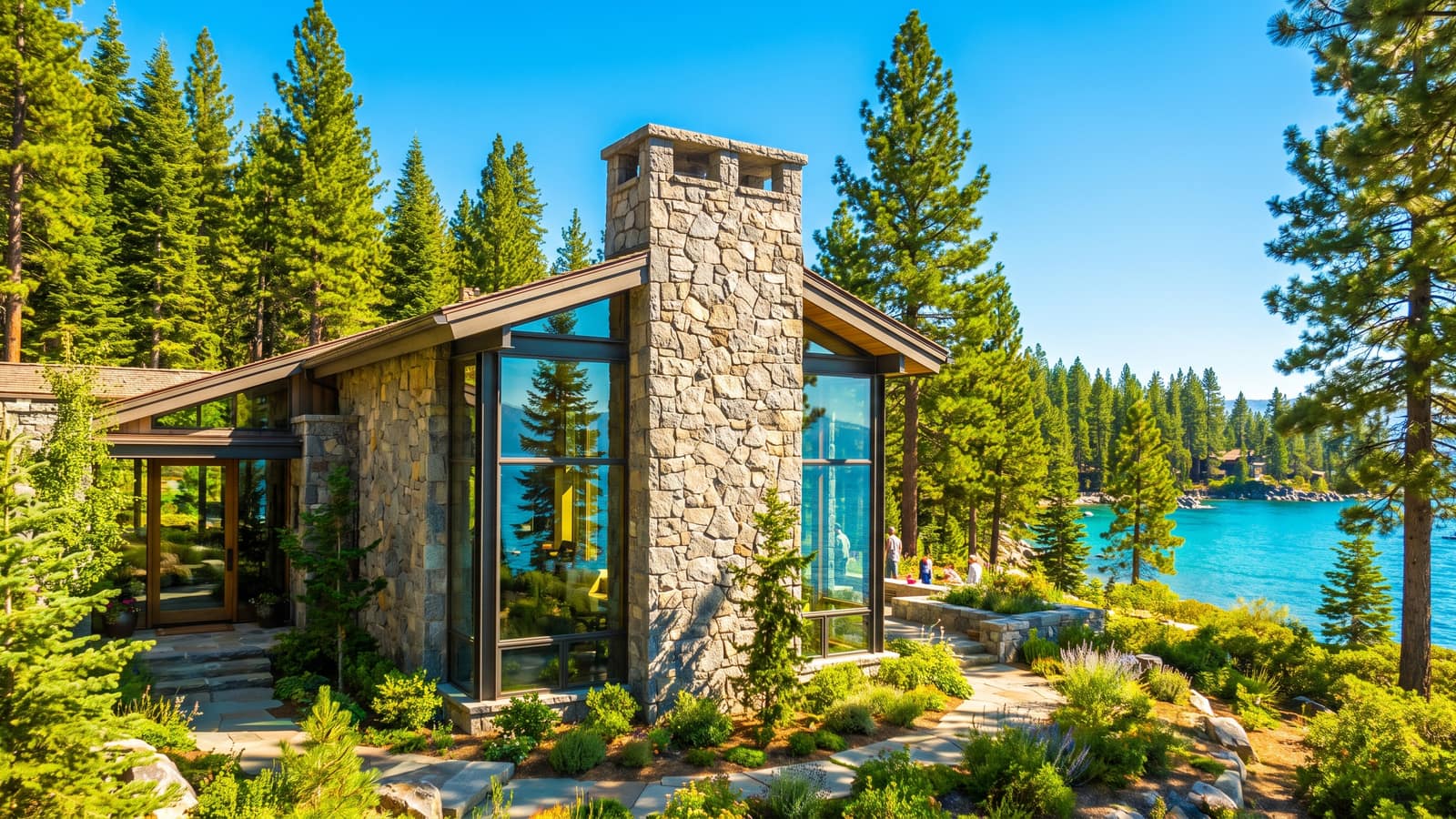
A BMP retrofit — Best Management Practices — is the package of drainage, infiltration, and erosion-control improvements TRPA requires on Tahoe parcels to keep sediment and runoff out of the lake. In practice it means things like paving or graveling bare soil, installing drip lines and infiltration trenches, mulching disturbed ground, and directing roof and driveway runoff into the ground on your own lot rather than down the street toward the water.
Why buyers care: a BMP certificate of completion is generally expected at or around the time of sale, and if the seller has not completed the retrofit, the obligation — and the cost — lands on the new owner. According to the Tahoe Regional Planning Agency, BMP requirements apply broadly across developed Basin parcels, and a property's compliance status is a diligence item every buyer should confirm, not assume.
The dollars are real but manageable relative to the price of the home:
| Item | Typical range | Notes |
|---|---|---|
| BMP site evaluation | $0 to a few hundred dollars | Local agencies have historically offered site evaluations to guide the retrofit |
| BMP retrofit installation | $3,000 to $15,000-plus | Driven by lot size, slope, driveway, and drainage complexity |
| Defensible-space clearing | $1,500 to $8,000-plus | Understory removal, limbing, ember-resistant zone near the structure |
| Ongoing maintenance | A few hundred dollars per year | Re-mulching, clearing infiltration areas, keeping defensible space current |
The strategic move is to make BMP status a negotiating point. If a home needs a $10,000 retrofit, that is a credit to ask for — or a reason to price the offer accordingly. I always want the parcel's BMP and defensible-space status documented before my buyer waives contingencies, because "the seller said it was done" and "the certificate is in hand" are very different things.
How Real Is the Wildfire and Insurance Challenge at Lake Tahoe?
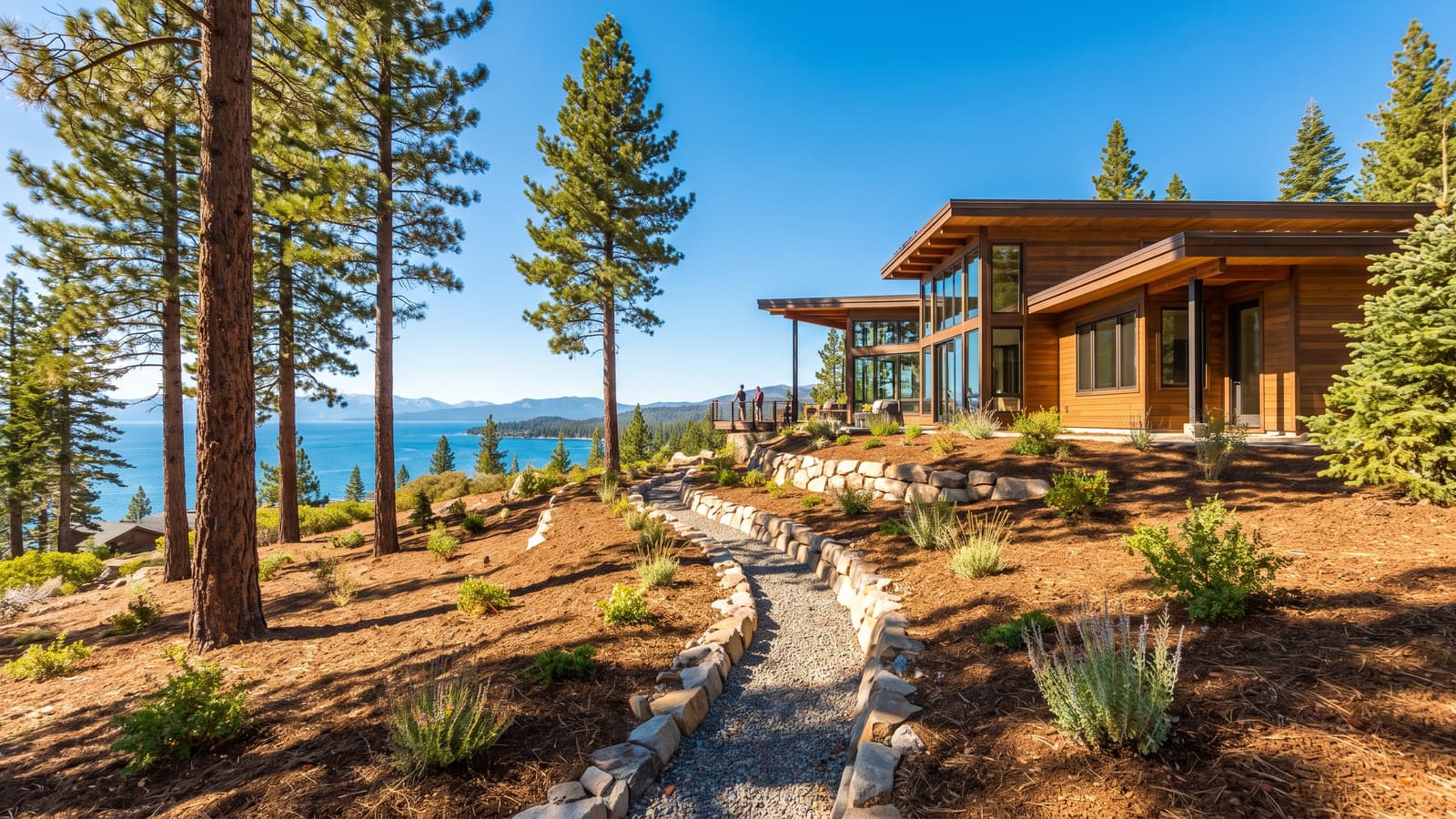
Very real — and it is now a purchase-shaping issue, not a footnote. Tahoe is a forested, high-elevation wildland-urban interface, and the insurance market has repriced that risk hard over the last several years. Some carriers have pulled back from high-risk mountain zip codes, premiums have climbed, and a buyer who waits until the last week of escrow to shop coverage can find the deal in jeopardy.
Two things protect a Tahoe buyer here. The first is defensible space — the ember-resistant zone around the structure that the state of Nevada and local fire districts require and inspect. According to the Nevada Division of Forestry, creating and maintaining defensible space is both a legal expectation in fire-prone areas and one of the most effective ways to improve a home's survivability and its insurability. The second is hardened construction — Class A roofs, ember-resistant vents, and non-combustible siding — which increasingly affects both premium and eligibility.
The buyer discipline is simple: get an insurance quote early, in writing, on the specific address, and treat it as a diligence item on par with the inspection. According to the Nevada Division of Insurance, Nevada homeowners facing availability challenges have consumer resources and a state fair-access backstop to understand before assuming a property is uninsurable. Across our Northern Nevada practice, the buyers who close smoothly are the ones who line up coverage in the first week of contract — not the last.
How Do Lakefront Lake-View and Mountain Properties Differ in Diligence?
At Tahoe, the words "lakefront," "lake-view," and "mountain" describe three genuinely different assets — different price tiers, different rights, and different diligence checklists. Confusing them is how buyers overpay.
| Dimension | Lakefront | Lake-view | Mountain / forest |
|---|---|---|---|
| Typical Nevada-side price | $5M to $47M-plus | $1.2M to $5M | $800K to $2.5M |
| Signature right | Littoral (shoreline) rights, pier/buoy potential | View — but views can be lost to trees or new builds | Privacy, space, forest access |
| Key diligence | Pier/buoy permits, shorezone rules, high-water line | View protection, tree-removal limits, IPES on lots | Defensible space, access/egress, snow load |
| Biggest risk | Assuming a pier is permittable when it is not | Paying a view premium that a future build erases | Underestimating wildfire and road-maintenance cost |
Lakefront carries littoral rights and the possibility — never the guarantee — of a private pier or buoy, which is the single biggest value driver on the lake. Lake-view homes command a real premium, but views are not permanently protected the way shoreline is; tree growth and TRPA-permitted new construction can change them, and tree removal at Tahoe is itself regulated. Mountain and forest parcels trade at the accessible end of the market and reward buyers who take wildfire, access, and snow seriously. In my experience, the fastest way to overpay at Tahoe is to pay a lakefront-adjacent price for a lake-view home whose view has no legal protection.
What Do You Need to Know About Piers Buoys and Littoral Rights?
This is where lakefront buyers make or lose the most money. A pier or buoy at Tahoe is not a given — it is a heavily regulated privilege governed by TRPA's shorezone rules and, in the water itself, by additional state and regional authorities. A shoreline lot that looks like it should have a dock may have no permitted structure and no realistic path to one.
Three points every lakefront buyer should nail down before removing contingencies:
- Existing structures must be legal and permitted. An old pier or buoy is only an asset if its permits are current and transferable. An unpermitted structure can become a liability the day you close.
- New piers are tightly constrained. TRPA's shorezone framework limits new pier construction, and permitting is complex, discretionary, and periodically litigated. Do not underwrite a "we'll just add a dock" plan without expert confirmation.
- Buoys are separately permitted and finite. A registered buoy is a real, tradable value; an aspirational one is not. Confirm the buoy's permit status the same way you confirm the pier.
According to the Tahoe Regional Planning Agency, shorezone and pier policy is among the most scrutinized areas of Basin regulation, which is exactly why a lakefront offer should be written with the pier and buoy status verified in advance. Because littoral rights and the high-water line interact with Nevada water law, this is another place to lean on qualified counsel — market commentary here, not legal advice. Homes with confirmed lakefront access cluster on the Nevada shoreline and in enclaves like Glenbrook and Cave Rock, which is a large part of why their medians run so high.
Why Buy on the Nevada Side Instead of the California Side?
Because the state line is a tax line, and at Tahoe price points the difference compounds into serious money. Nevada has no state personal income tax and no state capital-gains tax; California's top marginal rate is among the highest in the country. For a buyer whose income or investment gains are large — the exact profile of most seven-figure Tahoe buyers — establishing Nevada residency can change the after-tax math dramatically.
According to the Nevada Department of Taxation, Nevada levies no state income tax, which is the structural reason so much California equity crosses to the Nevada shore. According to the Internal Revenue Service, where you are taxed as a resident turns on facts like days present and domicile, so buyers pursuing a residency change should plan it deliberately with a CPA rather than assume a second home does the job by itself. Our dedicated breakdown of the Incline Village tax advantages walks the residency question in detail, and it pairs naturally with the diligence in this guide.
| Factor | Nevada side | California side |
|---|---|---|
| State income tax | None | Among the highest in the U.S. |
| State capital-gains tax | None | Taxed as ordinary income |
| TRPA jurisdiction | Yes — same bi-state rules | Yes — same bi-state rules |
| Signature towns | Incline Village, Crystal Bay, Zephyr Cove, Glenbrook | South Lake Tahoe, Tahoe City, Kings Beach |
| Who it favors | High-income and high-gain buyers seeking residency | Buyers prioritizing California-side amenities/schools |
Note that TRPA applies identically on both shores — the environmental rules do not care about the state line. The tax code very much does, and that asymmetry is the Nevada side's enduring advantage.
What Does Lakefront Actually Cost at Lake Tahoe?
More than almost any other residential product in Nevada — and the live data tells the story. On July 12, 2026, our NNRMLS feed showed the Nevada-side luxury shore anchored by a $47,500,000 lakefront listing at the top of Incline Village, with Crystal Bay's six actives carrying a $7,947,500 median and Glenbrook's 18 actives at a $4,522,500 median. The true lakefront tier — homes with private shoreline and pier or buoy potential — is a small fraction of even that inventory.
To frame the tiers a buyer will encounter:
- Entry to the Nevada-side market: condominiums and smaller homes in Stateline and Incline start around the $500,000 to $900,000 band (Stateline's median sat at $849,000).
- Core single-family: Incline Village's $1,199,000 median list and $1,054,500 median sold define the heart of the market.
- Lake-view and premium: $2 million to $5 million, where Zephyr Cove's $2,195,000 median lives.
- Trophy lakefront: $5 million and up, a tier that held just 11 active Incline listings and runs to eight figures on the water.
According to the Tahoe Regional Planning Agency, the Basin's fixed development ceiling means this scarcity is structural — you cannot simply build more shoreline, so lakefront behaves like a finite collectible. For buyers weighing a Tahoe purchase as a second home and long-term hold, our guide to buying a second home in Incline Village pairs the lifestyle case with the carrying-cost math.
How Should You Approach the Nevada-Side Buyer Process?
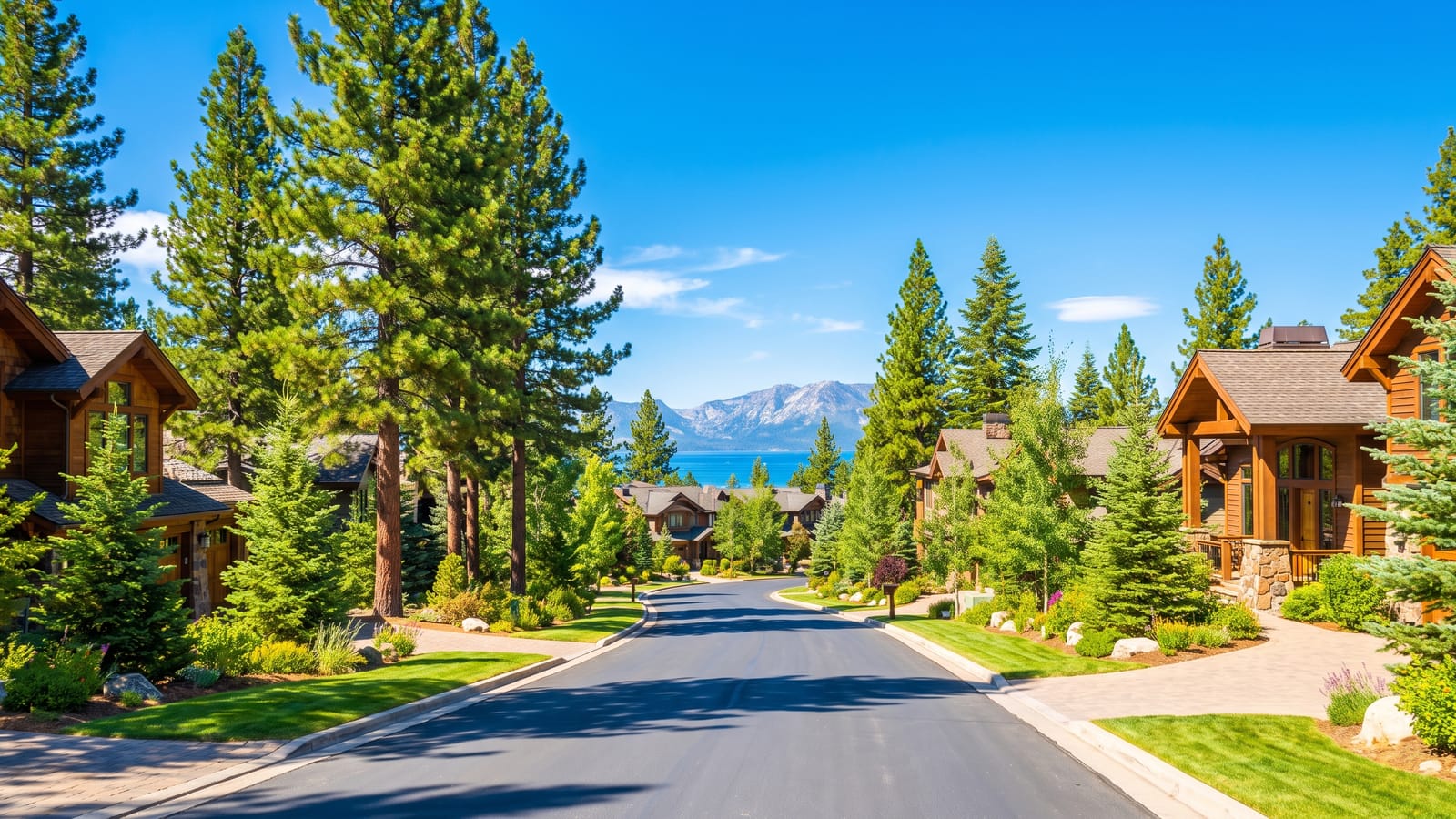
The Tahoe purchase process follows the normal Nevada arc — offer, escrow, inspection, financing, close — but adds three Tahoe-specific stages that a mainland agent will miss.
- Pre-offer TRPA and coverage read. Before you write, understand the parcel's land coverage, IPES status if it is land, and whether the home you want to build or expand is even feasible. This is the step that prevents overpaying for constrained property.
- BMP and defensible-space verification. Confirm the retrofit certificate and defensible-space status, and price any missing work into the offer as a credit or a reduction.
- Early insurance binding. Get a written quote on the exact address in week one of contract. In a hardened market, this is a genuine deal risk, not a formality.
From there, the mechanics resemble any Nevada closing: earnest money into escrow, a professional inspection (I strongly favor a Tahoe-experienced inspector who understands snow load, decks, and drainage), an appraisal that can be challenging in a thin luxury market, and a title review that should specifically address littoral rights and any pier or buoy easements on lakefront parcels. According to Washoe County and Douglas County — the two counties that hold the Nevada shore — recorded documents, parcel data, and permit history are available to verify what a listing claims. Cash is common at the high end; when financing, a jumbo lender comfortable with Tahoe's price points and seasonality is worth lining up before you shop. Many Nevada-side buyers pair the lake home with a valley base near Carson City, the gateway just down the hill.
Before an offer depends on a large mortgage, review jumbo financing in Lake Tahoe and Incline Village with the lender and property details in hand.
When you are ready to see property or run the numbers on a specific parcel, contact our Northern Nevada team and we will build the TRPA, BMP, and insurance file before you ever write an offer. Prefer to browse first? Run the whole Nevada search or estimate what your current home is worth with our home value tool before you trade up to the lake.
Which Nevada-Side Communities Should Tahoe Buyers Consider?
Each Nevada-side enclave has its own personality, price band, and buyer profile. The right one depends on whether you are optimizing for value, exclusivity, lake access, or residency.
- Incline Village (Washoe County): the largest and most complete Nevada-side community, with amenities operated through the improvement district, two golf courses, private beaches, and the deepest inventory on the Nevada shore. It is where most buyers start. Browse Incline Village homes for sale or the luxury tier.
- Crystal Bay (Washoe County): small, dramatic, and lakefront-heavy — a $7,947,500 median across just six actives tells you it skews trophy.
- Zephyr Cove (Douglas County): a $2,195,000-median stretch of forested lakefront and lake-view homes on the southeast shore, popular with buyers who want lake access with a bit more space.
- Glenbrook (Douglas County): the most exclusive gate on the lake — historic, gated, and lakefront, with a $4,522,500 median.
- Cave Rock and Stateline (Douglas County): Cave Rock offers iconic lakefront and boat access, while Stateline's condos provide the most accessible entry to the Nevada shore. See the broader Lake Tahoe community hub and the Crystal Bay enclave for the full picture.
Across all of them, the diligence stays the same — TRPA, BMP, wildfire, and (on the water) pier and buoy rights. The community you choose sets the price and the vibe; the diligence protects the check you write.
Why Do Tahoe Buyers Work With Nevada Real Estate Group?
Because the Nevada-side Tahoe purchase punishes generalists. The TRPA coverage math that decides whether you can build, the BMP retrofit that shifts to your ledger at closing, the pier that is not permittable, the insurance quote that arrives too late, the residency plan that needs a CPA — each is routine for a Tahoe-fluent team and a landmine for an agent who visits the lake twice a year.
Nevada Real Estate Group is the #1-ranked real estate team in Nevada, with more than $4.85 billion in career sales volume, 9,600+ closed transactions, and 789 closings in 2025 alone. You can meet the team behind those numbers before you ever pick up the phone. We work the Northern Nevada luxury market every month, we pull the live NNRMLS data that anchors this guide, and we bring the inspector, insurance, lender, and CPA introductions that make a Tahoe deal close clean. And when the time comes to move on, the same team handles the sell side of your Tahoe home. We serve buyers statewide — Las Vegas (702) 637-1759 · Reno and Tahoe (775) 277-2120 — with the Northern Nevada team leading every Lake Tahoe transaction.
Thinking about the Nevada side of the lake? Call or text (775) 277-2120, start with our buyer team, or tell us what you're looking for and we will send eligible Nevada-side inventory the moment it hits the market — with the TRPA and BMP homework already done.
Frequently Asked Questions
What is TRPA and how does it affect buying a home at Lake Tahoe?
TRPA is the Tahoe Regional Planning Agency, the bi-state body that regulates building, land coverage, water quality, and shorezone use across the entire Lake Tahoe Basin. For a buyer, it means a second, stricter layer of rules sits on top of county zoning — controlling how much you can build, whether you can build at all, and what you must retrofit before you sell. Always verify a parcel's current TRPA status before writing an offer; this is market commentary, not legal advice.
What is a BMP retrofit and is it required when I buy at Lake Tahoe?
A BMP (Best Management Practices) retrofit is the drainage and erosion-control package TRPA requires on Basin parcels to protect lake clarity — think infiltration trenches, paved or graveled bare soil, and roof runoff directed onto your own lot. A certificate of completion is generally expected at or near sale, and if the seller has not done it, the cost and obligation pass to you. Budget roughly $3,000 to $15,000-plus depending on the lot, and make it a negotiating point.
Can I build or remodel on a Lake Tahoe lot under IPES and land coverage rules?
Sometimes, and it depends on TRPA math rather than your budget. Vacant lots are scored through the Individual Parcel Evaluation System (IPES); a low score can keep a "buildable" lot un-buildable for years. Existing homes are constrained by land coverage and development-rights rules that can limit additions, garages, or rebuilds. Verify feasibility with TRPA and a Tahoe-experienced architect before you buy if your plan depends on adding square footage.
Do I automatically get a pier or buoy when I buy a lakefront Tahoe home?
No. Piers and buoys are separately permitted under TRPA's shorezone rules, and a shoreline lot may have no permitted structure and no realistic path to one. An existing pier or buoy is only an asset if its permits are current and transferable; new piers are tightly constrained and heavily scrutinized. Confirm pier and buoy permit status in writing before removing contingencies on any lakefront purchase.
How hard is it to insure a home at Lake Tahoe against wildfire?
Harder than it was a few years ago. Tahoe is a wildland-urban interface, and some carriers have pulled back while premiums have risen. The two best protections are documented defensible space around the structure and hardened construction such as a Class A roof and ember-resistant vents. Get a written insurance quote on the specific address in the first week of contract and treat it as a diligence item on par with the inspection.
Why buy on the Nevada side of Lake Tahoe instead of the California side?
Taxes. Nevada has no state income tax and no state capital-gains tax, while California's rates are among the nation's highest — a difference that compounds at Tahoe price points. That is why so much California equity crosses to Incline Village, Zephyr Cove, and Glenbrook. TRPA rules apply identically on both shores, so the environmental diligence is the same; the after-tax math is what favors the Nevada side. Plan any residency change deliberately with a CPA.
What does a lakefront home cost on the Nevada side of Lake Tahoe?
The trophy tier starts around $5 million and runs to eight figures — on July 12, 2026 the top Incline Village listing was $47,500,000, Crystal Bay's median was $7,947,500, and Glenbrook's was $4,522,500. True lakefront with pier or buoy potential is scarce; the $5 million-plus segment held just 11 active Incline listings. Lake-view homes run roughly $2 million to $5 million, and the core Incline single-family median sits at $1,199,000.
Which Sources Inform This Lake Tahoe Nevada Buying Guide?
Live inventory and pricing figures come from Nevada Real Estate Group's NNRMLS feed, pulled July 12, 2026 (Incline Village 101 actives at a $1,199,000 median and 26 solds at $1,054,500 over 90 days; Zephyr Cove 31 at $2,195,000; Glenbrook 18 at $4,522,500; Crystal Bay 6 at $7,947,500; Stateline 87 at $849,000; the $5M-plus Incline tier at 11 actives). Regulatory, tax, and market context draws on these authorities:
- Tahoe Regional Planning Agency — land coverage, IPES, BMP, and shorezone regulation across the Basin
- TRPA Development Rights and Coverage — how coverage and development rights are allocated and transferred
- Nevada Division of Forestry — defensible space and wildfire-mitigation standards
- Nevada Division of Insurance — homeowners insurance availability and consumer resources
- Nevada Department of Taxation — Nevada's no-income-tax framework
- Internal Revenue Service — residency, domicile, and capital-gains basics
- Washoe County — parcel, permit, and recorded-document data for Incline Village and Crystal Bay
- Douglas County — parcel and permit data for Zephyr Cove, Glenbrook, Cave Rock, and Stateline
- Nevada Revised Statutes — Nevada water, property, and disclosure law
- Incline Village General Improvement District — Nevada-side amenities, beaches, and utilities
- USDA Forest Service — Lake Tahoe Basin Management Unit — public-land and forest-health context
- Freddie Mac Primary Mortgage Market Survey — weekly mortgage-rate benchmarks
- U.S. Census Bureau — Nevada housing and population baselines
Ready to buy on the Nevada side of the lake? Call or text Nevada Real Estate Group at (775) 277-2120 — the Northern Nevada and Lake Tahoe specialists — or reach our statewide desk at Las Vegas (702) 637-1759 · Reno (775) 277-2120. Start with our buyer team, explore Incline Village, or browse Nevada-side lakefront homes.