
The first question almost every Henderson buyer asks me is not "Green Valley or Anthem?" or "how many bedrooms?" — it is some version of "how much money do I actually need to make this happen?" And the honest answer is that the sticker price of a house is only the opening line of the conversation. To buy a home in Henderson in 2026 you need three separate pools of money working together — the down payment, the closing costs, and a cushion of cash reserves — and behind all of it, an income high enough that a lender will approve the loan in the first place. Confuse those pools, or forget one of them, and a deal that looked affordable on the listing page falls apart at the closing table. Henderson also runs pricier than Las Vegas proper, so the numbers here sit a notch higher than the valley-wide baseline — which makes getting them right even more important. This is the plain-English, real-numbers breakdown of exactly how much cash and how much income it takes to buy a house in Nevada's largest suburb, built around the price a typical Henderson buyer is actually shopping.
To buy a median-priced Henderson home near $540,000 in 2026, plan on roughly $45,000 to $55,000 in total cash with a 5% conventional loan — about $27,000 down, $10,800 to $16,200 in closing costs, plus a couple months of reserves. An FHA 3.5%-down path runs closer to $35,000 to $45,000. To qualify, most households need income of about $130,000 to $150,000.
- Henderson's median home is near $540,000 in 2026 (Las Vegas REALTORS) — about 14% above the valley average.
- Total cash to close typically runs $45,000 to $55,000 at 5% down, or $35,000 to $45,000 via FHA.
- Closing costs add about 2% to 3% — roughly $10,800 to $16,200 on the median.
- Qualifying income commonly lands between $130,000 and $150,000, set by 43% to 45% DTI limits.
- VA loans allow 0% down for eligible veterans (USDA's map excludes Henderson); Home Is Possible can cut the cash needed.
What Exactly Do You Need to Buy a House in Henderson?
Buying a home is really four financial hurdles stacked on top of each other, and "how much money" only makes sense once you separate them. The first is the down payment — the slice of the purchase price you pay in cash so the lender finances the rest. The second is closing costs — the fees, taxes, and prepaid items that fund the loan and transfer the title, entirely separate from the down payment. The third is cash reserves — money left in your account after closing that proves you can keep paying the mortgage if life throws a curveball. And the fourth, invisible but decisive, is income: the paycheck a lender uses to decide whether you can carry the monthly payment at all.
According to Las Vegas REALTORS, Henderson's median home price sits near $540,000 in 2026 — roughly 14% above the valley-wide figure of about $472,000 — so that is the number I will run every calculation against. Your specific price will move the dollars up or down, but the structure never changes, and neighboring corners of the metro like Las Vegas proper or North Las Vegas will stretch the same cash further. Across our 9,600 closings since 2011, the buyers who stall out are almost never the ones who misjudged the price — they are the ones who budgeted for the down payment and forgot that closing costs and reserves are real, separate money. Get all four pools right and the rest of the process is mechanical. If you want to run your own numbers as you read, the Henderson mortgage calculator lets you plug in a price and a down payment on the fly.
Why Does Henderson Cost More Than the Valley Average?
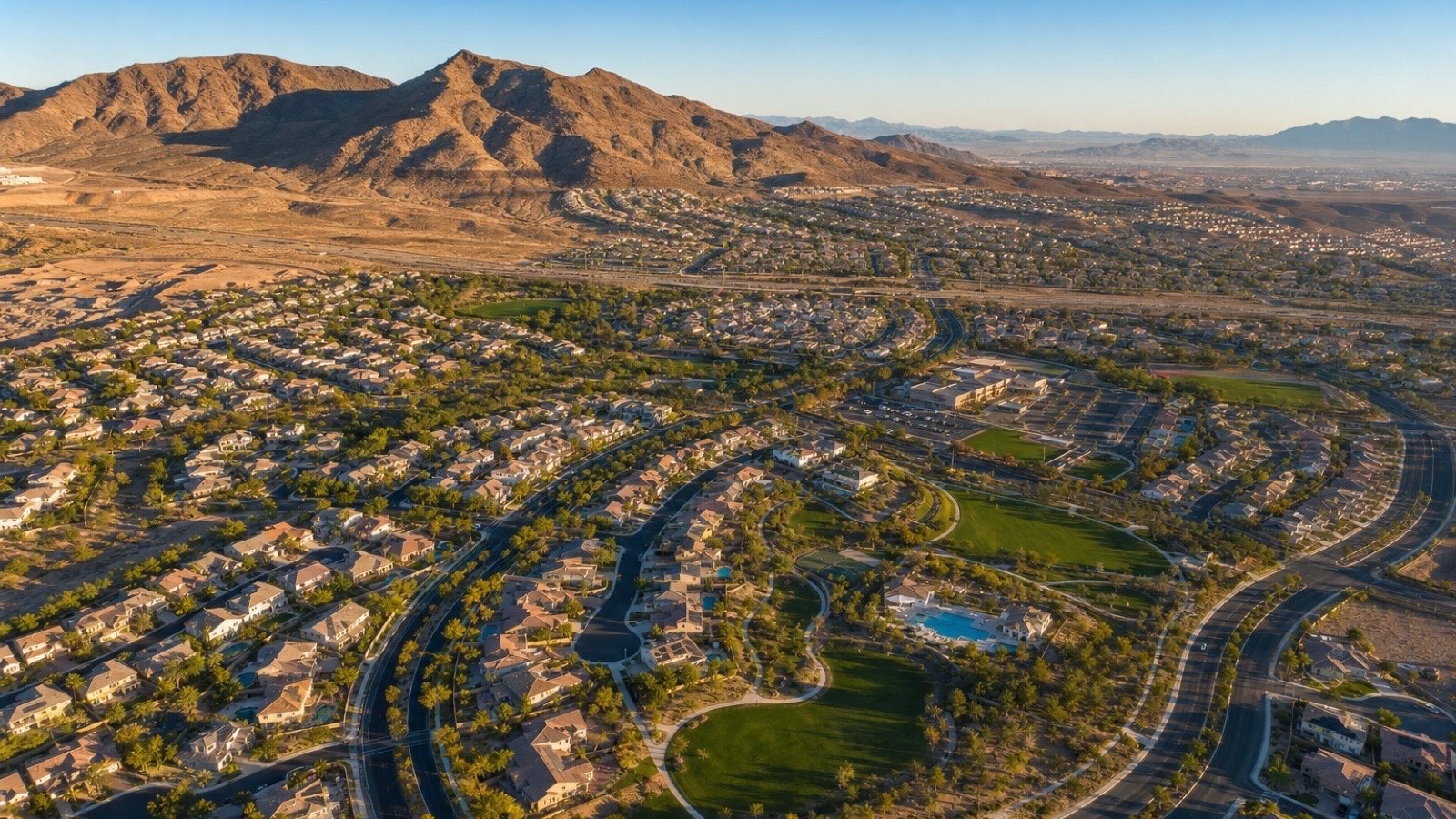
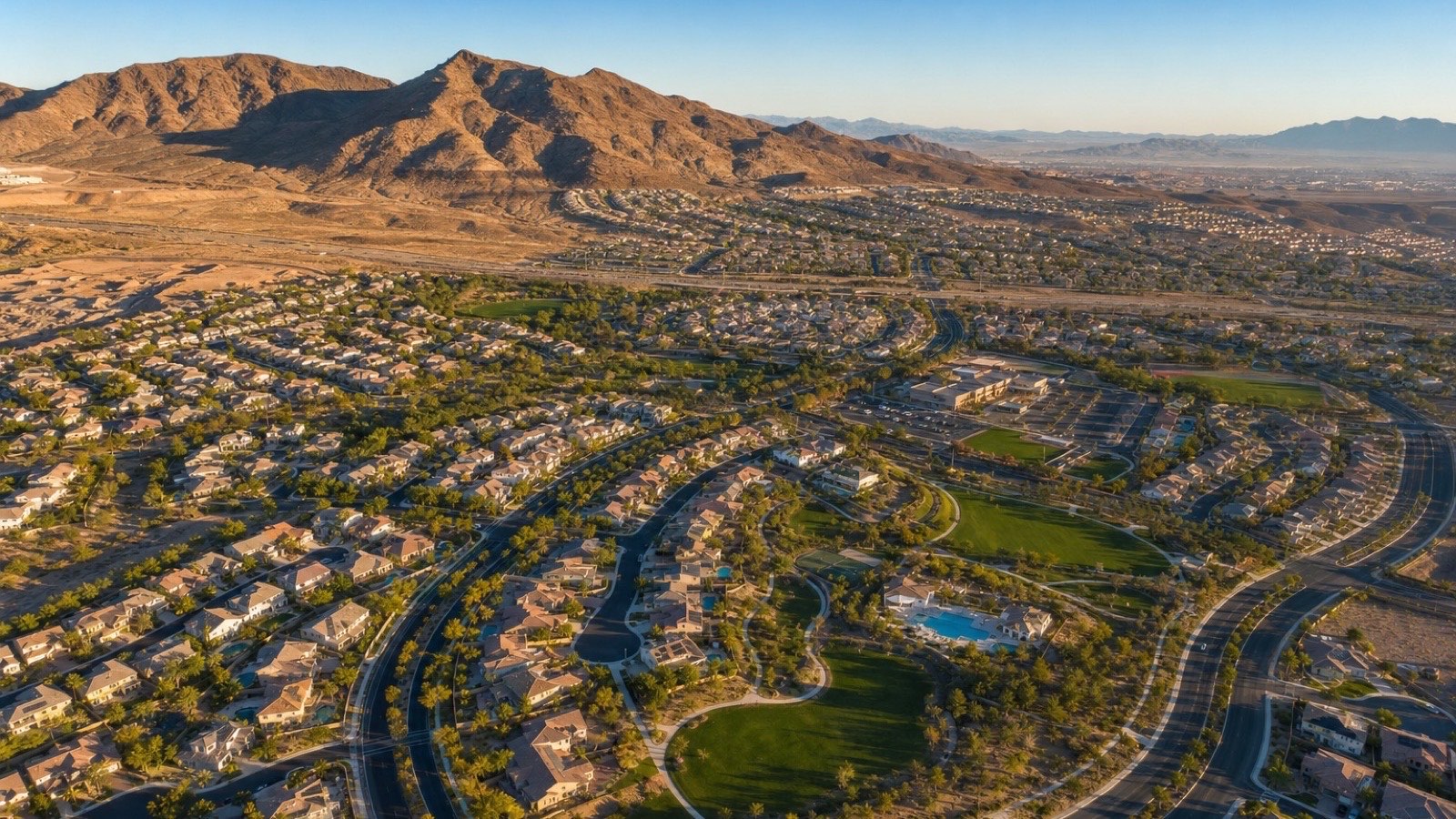
Before the calculations, it helps to understand why Henderson carries a premium, because that premium is exactly what pushes the cash and income numbers above the Las Vegas baseline. Henderson is Nevada's largest suburb and its second-largest city, and it has spent years cultivating a reputation as one of the safest cities in the country. That reputation, paired with top-rated schools, sprawling regional parks, and a lineup of polished master plans — Green Valley, Anthem, Inspirada, Cadence, and the guard-gated luxury of MacDonald Highlands — is what buyers are paying for when they choose Henderson over a comparable home a few miles north.
According to Las Vegas REALTORS, that demand shows up in the median: a Henderson buyer pays roughly $68,000 more than the valley average for the equivalent-sized home, and the gap widens fast in the marquee communities. A starter home in an older Green Valley neighborhood might still sit near the mid-$400,000s, while a newer Inspirada or Cadence house lands in the $500,000s and $600,000s, and a MacDonald Highlands estate runs into the millions. In our experience, the smartest Henderson buyers pick their sub-market to match their cash, not the other way around — the same $50,000 down payment buys very different homes in different corners of the city. Browse the range of active listings on Henderson homes for sale to see how wide that spread runs before you set a target price.
How Much Is the Down Payment on a Henderson Home?
The down payment is the single largest chunk of cash for most buyers, and it swings more than any other line depending on the loan you choose. The old myth that you need 20% down is exactly that — a myth that keeps qualified buyers renting for years longer than they need to. On the $540,000 median, a 20% down payment is about $108,000, and while that number does let you skip mortgage insurance, it is not the price of admission. According to Fannie Mae, conventional loans go as low as 3% down for many buyers, which on the median works out to roughly $16,200.
Step through the realistic menu. A 3% conventional down payment is about $16,200; a 5% conventional is about $27,000; an FHA loan at 3.5% down is roughly $18,900; and the full 20% to avoid private mortgage insurance is about $108,000. According to the U.S. Department of Veterans Affairs, eligible veterans and active-duty service members can buy with 0% down, and according to USDA Rural Development's Nevada notice, Henderson is outside USDA's eligible area (USDA map checked October 12, 2026), so its zero-down loan applies only in rural Clark County towns such as Logandale, Overton and Sandy Valley. The right choice is not automatically the smallest one — a bigger down payment lowers your monthly payment and can erase mortgage insurance — but knowing the real floor is what turns "someday" into "this year." Because Henderson's median runs above the valley figure, each percentage point of down payment costs more here than it does in Boulder City or North Las Vegas, so the loan choice matters even more.
| Loan type | Down payment % | Cash on $540,000 | Mortgage insurance? |
|---|---|---|---|
| Conventional (minimum) | 3% | About $16,200 | Yes, until 20% equity |
| Conventional (common) | 5% | About $27,000 | Yes, until 20% equity |
| FHA | 3.5% | About $18,900 | Yes, for the loan life on most FHA |
| VA (eligible service) | 0% | $0 | No monthly PMI |
| USDA (rural areas only) | 0% | Not available: Henderson is outside USDA's eligible area | Guarantee fee applies |
| Conventional (no PMI) | 20% | About $108,000 | No |
What Are the Closing Costs When Buying in Henderson?
Closing costs are the money most first-time buyers forget, and they are entirely separate from the down payment. These are the fees that fund your loan, verify the property, and transfer ownership — lender origination and underwriting charges, the appraisal, title insurance and the escrow company's fee, recording fees, and prepaid items like the first slice of property taxes and a year of homeowners insurance placed in your escrow account. According to the Consumer Financial Protection Bureau, buyer closing costs generally run in the low single-digit percentages of the purchase price, and in our market that lands at roughly 2% to 3%.
On the $540,000 median, 2% is about $10,800 and 3% is about $16,200 — so budget somewhere in the $10,800 to $16,200 band and treat the higher end as the safe assumption. A few of those line items are worth naming: lender origination might run $1,500 to $4,500, the appraisal typically costs $600 to $900, and title and escrow together often land between $2,200 and $3,800 depending on the price. In our experience, the single most powerful lever a buyer has here is the seller credit. In a balanced 2026 market, we regularly negotiate the seller into covering $5,000, $10,000, or more of the buyer's closing costs — money that comes straight off the cash you have to bring. That is not a guarantee on every deal, but it is the difference between a $16,000 closing bill and a $6,000 one, and it is exactly why you want an agent working the offer.

How Much Should You Keep in Cash Reserves?
Reserves are the pool nobody talks about until the loan officer asks for them. After you have paid the down payment and the closing costs, lenders want to see money still sitting in your accounts — proof that a job hiccup or a broken air conditioner will not immediately sink the mortgage. According to Fannie Mae, reserve requirements are measured in months of housing payments, and the amount varies with the loan type, the property, and the strength of the rest of your file. For a primary residence, lenders commonly want to see roughly 2 to 6 months of the full housing payment in reserve after closing.
Put a dollar figure on it. If your total monthly housing payment on the median Henderson home lands around $4,000, then 2 months of reserves is about $8,000 and 6 months is about $24,000. Many buyers using low-down-payment loans clear the minimum easily because retirement accounts and other assets can often count toward reserves even when you never touch them. The reason I push clients to hold reserves even when the loan does not strictly demand them is simple: the first year of ownership always surprises you. A water heater fails, the HOA levies a special assessment, or the property tax bill arrives larger than expected. Across our 789 closings in the past year alone, the buyers who kept a cushion slept better than the ones who scraped every last dollar into the down payment to hit a bigger number.
It helps to think of reserves in two layers. The first layer is the lender's requirement, which is a hard gate — miss it and the loan does not fund. The second layer is your own safety margin, which is a judgment call but arguably more important. On a $540,000 Henderson home I like to see buyers close with at least $12,000 to $18,000 still in the bank on top of whatever the lender counted, because moving costs, immediate repairs, new appliances, and window coverings for an empty house add up faster than anyone expects — commonly $5,000 to $12,000 in the first ninety days. Many Henderson master plans carry HOA dues, and a buyer in an older community should budget extra for the reality that special assessments can run into the thousands with little warning. The goal is never to arrive at closing financially empty; the goal is to arrive with room to breathe.
What Is the Total Cash to Close on a Median Henderson Home?
Now stack the pools and you get the real answer to "how much money." This is the number that belongs on your savings goal, not the down payment alone. Take the $540,000 median, put 5% down at about $27,000, add roughly 2.5% in closing costs at about $13,500, and hold a couple months of reserves at roughly $8,000, and the total lands right around $48,500 — call it $45,000 to $55,000 as a working range once you account for how any particular deal shakes out. That is the honest cash-to-close figure for a conventional buyer on a typical Henderson home.
The FHA path costs less cash up front, which is exactly why it is so popular with first-time buyers here. With 3.5% down at about $18,900, similar closing costs near $13,500, and a smaller reserve cushion, an FHA buyer commonly gets in the door for roughly $35,000 to $45,000 in total cash. Layer a seller credit on top and that number drops further. Treat these as examples, not promises — your rate, your credit, your reserves, and the concessions your agent wins all move the total. The point is to save toward the all-in figure, because the buyer who saves $27,000 for "the down payment" and shows up needing $48,000 is the buyer who does not close. This is the same lesson we drive home in the valley-wide companion guide on how much money to buy a house in Las Vegas — the structure is identical, but Henderson's higher median pushes every figure up.
| Cash component | Conventional 5% down | FHA 3.5% down |
|---|---|---|
| Down payment | About $27,000 | About $18,900 |
| Closing costs (about 2.5%) | About $13,500 | About $13,500 |
| Reserves (about 2 months) | About $8,000 | About $8,000 |
| Working total range | $45,000 – $55,000 | $35,000 – $45,000 |
How Much Income Do You Need to Qualify for a Henderson Mortgage?
Cash gets you to the closing table; income is what lets the lender write the loan in the first place. Underwriters measure affordability with two ratios. The first is the housing, or "front-end," ratio — your total monthly housing payment as a share of your gross monthly income, generally kept near 28% to 36%. The second is the total debt-to-income, or "back-end," ratio — every monthly debt payment including the mortgage, car loans, student loans, and credit-card minimums — which lenders generally cap near 43% to 45%. According to the Consumer Financial Protection Bureau, it is that back-end DTI that usually decides how much house a lender will actually approve.
Run it on the median. If the full monthly housing payment on a $540,000 Henderson home lands somewhere between $3,800 and $4,300, and a lender wants that to be no more than about a third of your gross income, you back into a household income commonly in the $130,000 to $150,000 range to qualify comfortably — before accounting for car payments and other debt that eat into the same 43% ceiling. Carry a $500 car payment and a couple hundred in student loans and you need to be at the higher end, or reduce the loan size with more down. That income requirement is meaningfully higher than what the valley-wide median demands, which is the direct consequence of Henderson's price premium. This is exactly where "how much money to buy" and "how much house you can afford" diverge, and we treat the price-and-affordability side in the companion piece on how much house you can afford in Nevada.
What Will Your Monthly Payment Actually Be?
The monthly payment is where a lot of buyers get an unpleasant surprise, because the number is bigger than principal and interest alone. According to Freddie Mac, a 30-year fixed mortgage rate near 6.7% is a fair 2026 planning assumption. On a $540,000 home with 10% down — a loan of about $486,000 — that rate pencils out to principal and interest of roughly $3,050 to $3,250 a month. But that is only the "PI" in what lenders call PITI. You then add the property taxes, the homeowners insurance, any HOA dues, and private mortgage insurance if you put down less than 20%.
Stack the full payment. Property taxes in Clark County run at an effective rate roughly in the 0.5% to 0.8% band, which on the Henderson median works out to about $2,700 to $4,300 a year, or roughly $225 to $360 a month. Homeowners insurance commonly adds $110 to $220 a month. An HOA — and most Henderson master plans have one — can run anywhere from $40 to $175 a month for a single-family home, more in guard-gated or luxury communities. PMI on a low-down-payment conventional loan might add $170 to $340 a month until you reach 20% equity. Put it together and the total monthly housing payment, the PITI figure lenders actually underwrite, commonly lands between $3,800 and $4,300 on the median home. Model your own scenario with the mortgage calculator before you assume the principal-and-interest number is the whole story.
| Payment component | Estimated monthly range | Notes |
|---|---|---|
| Principal and interest | $3,050 – $3,250 | About $486,000 loan at 6.7% |
| Property taxes | $225 – $360 | Roughly 0.5% to 0.8% effective |
| Homeowners insurance | $110 – $220 | Varies with coverage and home |
| HOA (if any) | $40 – $175 | Higher for condos and guard-gated |
| PMI (under 20% down) | $170 – $340 | Drops off at 20% equity |
| Total PITI | $3,800 – $4,300 | The number lenders underwrite |
How Do Nevada Taxes Change the Money You Need?
Here is where Henderson quietly beats most of the country, and it changes the income math in your favor. Nevada has no state income tax. According to the U.S. Census Bureau, it is one of a handful of states with zero personal income tax, and that means every dollar of your paycheck that would have gone to Sacramento or Phoenix stays in your pocket to qualify for and carry a mortgage. A household earning $140,000 in Henderson takes home meaningfully more than the same household in California, which is the same as saying your income stretches to a larger payment here — a real advantage when you are shopping in a suburb that already carries a price premium.
Property taxes lean the same direction. According to the Clark County Assessor, the effective property-tax rate across the valley runs comparatively low — roughly 0.5% to 0.8% of value in practice, thanks in part to Nevada's assessment caps that limit how fast the taxable value on an owner-occupied home can rise year to year. On a $540,000 Henderson home, that is roughly $2,700 to $4,300 annually, well below what an owner would pay on an identically priced home in Texas or Illinois. In my experience, buyers relocating from high-tax states routinely find that the same income qualifies them for a larger, nicer home in Henderson than they could touch back home — the tax structure is a genuine budget multiplier, not a marketing line.
The caps are worth understanding because they compound over time. Nevada limits the annual increase in taxable value on an owner-occupied primary residence, which means your tax bill grows slowly and predictably even in a fast-appreciating market — a stark contrast to states where a rising assessment can add hundreds of dollars to a monthly payment overnight. That predictability matters for the money question because it protects the affordability you lock in at purchase. A buyer who qualifies at a $4,000 payment today is not going to be surprised by a $4,700 payment in three years because the county reassessed the neighborhood upward. When you run the true cost of ownership over five or ten years rather than just the closing statement, Nevada's tax structure quietly saves the typical Henderson buyer tens of thousands of dollars compared with a high-tax state — money that stays available for reserves, improvements, or the next move.
Can Down-Payment Assistance Lower the Cash You Need?
For many buyers, the answer is yes, and it can shrink the biggest pool of cash meaningfully. According to the Nevada Housing Division, the state's "Home Is Possible" program offers down-payment and closing-cost assistance to eligible buyers, structured as a no-interest, no-payment second mortgage that is never forgiven, worth up to 4% of the total loan amount for first-time buyers or up to 5% on its repeat-buyer track. For a household that has the income to carry the payment but is still building the cash — a common situation in Henderson, where the higher median means a bigger down payment — that assistance can be the bridge that turns a two-year savings timeline into a this-year purchase.
The tradeoffs are real and worth understanding before you lean on it. Assistance programs come with eligibility rules — income caps, purchase-price limits, homebuyer-education requirements, and sometimes a minimum credit score — and the assistance is not free money in every structure; some versions must be repaid or carry their own terms. According to the U.S. Department of Housing and Urban Development, HUD-approved housing counseling agencies can walk you through the local programs at no cost, which is a smart first stop. The buyers who benefit most are the ones who pair assistance with an FHA loan's low 3.5% down and a negotiated seller credit — stack all three and the cash needed to buy the median Henderson home can fall well below the $35,000 to $45,000 baseline. First-time buyers especially should read our first-time home buyer guide alongside this one, and the Henderson insider guide for a neighborhood-by-neighborhood look at where those dollars go furthest.
How Does This Differ From How Much House You Can Afford?
These two questions get tangled constantly, and keeping them separate is what makes your budget honest. "How much money do I need to buy?" — the question this guide answers — is about the upfront cash and the qualifying income for a given price. "How much house can I afford?" is the mirror image: given your income, your cash, and your debts, what is the highest price you can responsibly buy? One starts from the home and works back to the money; the other starts from the money and works forward to the home. You need both to shop intelligently, and in a tiered market like Henderson — where a Green Valley starter and a MacDonald Highlands estate can differ by seven figures — the distinction matters even more.
In practice, most buyers should run them in sequence. Start with the affordability question to set your price ceiling — that is the work we lay out in how much house you can afford in Nevada — then use this guide to confirm you have the cash to close on a home at that price. A buyer might learn they can afford up to $580,000 on income, only to discover the cash-to-close on a $580,000 Henderson home is $54,000 rather than the $44,000 they saved, and the smart move is to shop at $510,000 instead. That is not a failure; it is exactly the kind of clarity that keeps a purchase from collapsing three weeks before closing. Browse current Henderson homes for sale with both numbers — your price ceiling and your cash floor — in hand.
Which Loan Program Needs the Least Cash Up Front?
If minimizing upfront cash is the goal, the ranking is clear, but the cheapest door is not always the smartest. According to the U.S. Department of Veterans Affairs, a VA loan is the strongest low-cash option available: eligible veterans and service members can buy with 0% down and no monthly mortgage insurance, so on the median Henderson home the only real cash is closing costs, which a seller can often help cover. That is as close to a no-cash purchase as this market offers, and it is a benefit earned through service that too few eligible buyers use — a notable point in a metro with a large veteran population.
USDA's 0%-down loan does not apply in Henderson, which sits inside the ineligible area on USDA's eligibility map; it fits buyers shopping rural Clark County towns instead. So the next rung is FHA at 3.5% down, the workhorse for first-time buyers, needing roughly $18,900 down on the Henderson median. Conventional 3% down needs about $16,200 and is often the better long-term math because its mortgage insurance drops off at 20% equity while FHA's typically does not. The right answer weighs upfront cash against the monthly payment and the long-run cost, and it is different for a veteran, a first-timer, and a move-up buyer. That comparison — cash today versus cost over time — is the conversation we have on every buyer call at (702) 637-1759.
How Should You Save and Prepare Your Cash Before Buying?
The buyers who close smoothly are the ones who prepare the money, not just the amount. Start by saving toward the all-in cash-to-close figure — $45,000 to $55,000 for a conventional median Henderson purchase, or $35,000 to $45,000 on an FHA path — rather than the down payment alone, and keep it liquid. Lenders will want to "source and season" your funds, meaning they need to see the money sitting in your accounts for a couple of months and be able to trace any large deposits. A $12,000 transfer from a relative the week before closing without a documented gift letter can stall a loan, so move money early and keep the paper trail clean.
Then protect the file that qualifies you. In the months before you buy, do not open new credit cards, finance a car, or let your balances spike — every one of those moves your debt-to-income ratio and can shrink your approval. Get a full pre-approval, not just a pre-qualification, so you know your real numbers and can move decisively when the right home appears. In our experience, the difference between a stressful purchase and a smooth one is almost always preparation done 60 to 90 days ahead — and we've seen that preparation matter most in competitive Henderson master plans where the best listings move quickly. When you are ready to translate these numbers into a specific price range and a real shopping list across Henderson and Summerlin — or the builder-incentive deals in new construction and the guard-gated luxury communities up in the hills — call Nevada Real Estate Group at (702) 637-1759 and we will build the plan around your actual cash and income.
Frequently Asked Questions
How much cash do I really need to buy a house in Henderson in 2026?
On the $540,000 median home, plan on roughly $45,000 to $55,000 in total cash with a 5% conventional loan — about $27,000 down, $10,800 to $16,200 in closing costs, and a couple months of reserves. An FHA 3.5%-down path runs lower, closer to $35,000 to $45,000, and a negotiated seller credit or down-payment assistance can reduce those numbers further. Save toward the all-in figure, not the down payment alone.
What income do I need to qualify for a mortgage in Henderson?
Most households need income in the $130,000 to $150,000 range to comfortably carry the median Henderson home, based on lenders capping total debt-to-income near 43% to 45% and housing costs near 28% to 36% of gross income. That is higher than the valley-wide figure because Henderson's median runs about 14% above the metro average. Your exact number depends on the interest rate, your down payment, and existing debts like car and student loans.
Why does it cost more to buy in Henderson than in Las Vegas?
Henderson's median home price sits near $540,000 in 2026, roughly 14% above the valley average of about $472,000, according to Las Vegas REALTORS. Buyers pay that premium for Henderson's safety reputation, top-rated schools, regional parks, and polished master plans like Green Valley, Anthem, Inspirada, and Cadence. The higher price lifts the down payment, closing costs, and qualifying income above what a comparable Las Vegas purchase requires.
Can I buy a house in Henderson with no money down?
Yes, if you qualify for a VA loan. According to the U.S. Department of Veterans Affairs, eligible veterans and service members can buy with 0% down. USDA's zero-down loan is not an option in Henderson, which is outside USDA's eligible area. You will still owe closing costs, but a seller credit can often cover much of those, so the true cash needed can be very low for eligible buyers even in a pricier suburb like Henderson.
How much are closing costs on a Henderson home?
Buyer closing costs generally run about 2% to 3% of the purchase price — roughly $10,800 to $16,200 on the $540,000 median. That covers lender fees, the appraisal, title insurance, escrow, recording, and prepaid taxes and insurance. It is entirely separate from your down payment. In a balanced 2026 market we frequently negotiate a seller credit of $5,000 to $10,000 or more toward these costs, which directly lowers the cash you bring to closing.
What will my monthly payment be on a median Henderson home?
At a 6.7% rate on a $540,000 home with 10% down, principal and interest run roughly $3,050 to $3,250 a month. Adding property taxes, homeowners insurance, any HOA dues, and PMI if you are under 20% down brings the full monthly housing payment (PITI) to commonly $3,800 to $4,300. Nevada's low property taxes and no state income tax help that payment stretch further than in most high-tax states.
How much should I keep in cash reserves after buying?
Lenders typically want to see about 2 to 6 months of your full housing payment in reserve after closing — roughly $8,000 to $24,000 if your payment is near $4,000. Retirement and other accounts can often count toward reserves even if you never touch them. Beyond the lender's requirement, holding a cushion protects you against the first-year surprises every new owner faces, from a failed water heater to an HOA special assessment in an older Henderson community.
Which Sources Inform This Cost Breakdown?
This breakdown draws on local market data, federal loan-program guidelines, mortgage-rate figures, and Nevada tax and assistance resources. According to the sources below, every figure cited is accurate as of mid-2026; rates, prices, and program rules change, so confirm current specifics with a lender and your agent before making a transaction. All dollar amounts are illustrative examples on Henderson's median-priced home, not guarantees for any individual purchase.
- Las Vegas REALTORS — local median price and market statistics
- Freddie Mac — Primary Mortgage Market Survey (mortgage rates)
- U.S. Department of Housing and Urban Development / FHA
- U.S. Department of Veterans Affairs — VA home loans
- USDA Rural Development — Nevada eligible-area map changes notice (2023)
- USDA Rural Development — property eligibility map
- Nevada Housing Division — Home Is Possible assistance
- Consumer Financial Protection Bureau — closing costs and DTI
- Fannie Mae — conventional loan and reserve guidelines
- Clark County Assessor — property tax rates and assessment caps
- U.S. Census Bureau — Nevada QuickFacts
- Bureau of Labor Statistics — Las Vegas metro employment and income