
If you are relocating from the Midwest, the Northeast or the Mountain West, one of the first things you notice touring homes in the Las Vegas Valley is the missing staircase. There is no basement door off the kitchen, usually no crawlspace either, just a concrete slab under the main floor. It is one of the questions relocating buyers ask most, and the usual answer online is a single word: caliche. That answer is half right. Caliche is real, it is common in valley soils, and it makes digging expensive. But it is not the whole story, and it does not mean basements are impossible here.
This update replaces the estimates in our July edition with sourced facts. I went to the soil scientists for what caliche actually is, to Clark County's adopted building code for what a below-grade room has to meet, and to our own pull of Las Vegas MLS data through Repliers on October 8, 2026 for how many homes really have one, what they cost and where they cluster. The short version: basements are rare, they are concentrated in a handful of neighborhoods and price tiers, and a buyer who wants one needs a different search method and a few extra checks before writing an offer.
Most Las Vegas homes do not have basements. Our own pull of Las Vegas MLS data through Repliers on October 8, 2026 found 110 of 12,419 active and pending residential listings (0.9%) with one, at a $1,499,500 median list price. Shallow caliche hardpan, a 1-foot frost line and soils-engineering rules keep builders on slabs, so search specific neighborhoods and verify the space before you offer.
- Our October 8, 2026 pull found 110 basement listings among 12,419 active and pending residential listings.
- Clark County's adopted code sets a 1-foot frost line below 5,000 feet, so footings stay shallow.
- ZIP 89141, home to Southern Highlands, led with 12 active basement listings and 19 recorded sales.
- Fannie Mae counts any partly below-grade level outside above-grade living area, finished walkouts included.
- Check basement square footage on the Clark County Assessor record and test radon in the lowest lived-in level.
How Many Las Vegas Homes Actually Have Basements?
The honest number is small, and it is smaller than the figure we published in July. On October 8, 2026, I pulled every active and pending residential listing in Las Vegas, Henderson, North Las Vegas and Boulder City from the Las Vegas MLS through Repliers: 12,419 homes, condos and townhomes. I then looked for basements two ways. The first was the MLS basement field, a yes-or-no box the listing agent fills in. The second was a keyword search of the public remarks for the word "basement," and I read every one of those remarks rather than trusting the match.
That reading mattered. Keyword hits over-count. In this pull the word turned up in a listing whose first floor "almost resembles" a basement, in a den described as having a "basement-like feel," in a condo whose storage unit sits on the building's basement level, and on a vacant lot sold with plans for a future basement. I removed those, a four-home package that repeated two separately listed homes, and a multi-parcel sale. What remained was 110 active and pending listings, 0.9% of the residential market, or about 1 in 113. Of the 110, 95 carry the MLS basement flag and 15 describe a basement only in the remarks.
I ran the same method on recorded sales with MLS sold dates from September 1, 2025 through August 31, 2026 (provisional; late closings still posting). It found 134 basement sales out of 27,540 residential sales, or 0.5%. Four homes sold twice inside that window, so the 134 sales cover 130 different houses.
| Measure | Active and pending, as of October 8, 2026 | Recorded sales, September 1, 2025 through August 31, 2026 |
|---|---|---|
| All residential records | 12,419 | 27,540 |
| Records with a confirmed basement | 110 | 134 (130 homes) |
| Share of the market | 0.9% | 0.5% |
| Median price, basement homes | $1,499,500 list | $1,045,000 sold |
| Median price, all residential | $468,038 list | $444,105 sold |
| Flagged in the MLS basement field | 95 | 112 |
| Described only in the remarks | 15 | 22 |
Two caveats belong next to those numbers. First, a basement that the agent never flagged and never mentioned, or described only as a "lower level," will not appear, so the true count may be somewhat higher. Second, the MLS basement field is the listing agent's entry, not an inspection; 37 active listings carry the flag without describing the space in the remarks. Treat the counts as a well-documented floor, not a census.
What Is Caliche, According to the Soil Scientists?
Caliche is the everyday name for a layer of soil that has been cemented by calcium carbonate. Soil scientists call the hardened version a petrocalcic horizon. According to the USDA Natural Resources Conservation Service's Keys to Soil Taxonomy (13th edition, 2022), a petrocalcic horizon is "an illuvial horizon in which secondary calcium carbonate or other carbonates have accumulated to the extent that the horizon is cemented or indurated." The same manual describes it as an advanced-stage calcic horizon in which so much carbonate has built up that "the pores have become plugged and the grains cemented," and notes that these horizons are commonly found in arid and semiarid places where rain never leaches the carbonate away.
The Las Vegas Valley is the textbook case. The NRCS keeps an official description for a soil literally named after the city. According to the Official Series Description of the Las Vegas soil series, first established in Clark County in 1923, these are shallow soils with a petrocalcic horizon starting 3 to 14 inches below the surface. The typical profile ends in a white, indurated lime hardpan described as "extremely hard, extremely firm," and the description puts the hardpan at more than 36 inches thick. The rock fragments in the soil are "mostly gravel size caliche fragments." The series sits at elevations of 1,600 to 2,800 feet with about 5 inches of precipitation a year.
The same NRCS description also explains why caliche is a lot-by-lot problem rather than a valley-wide wall. It lists neighbouring soil series, including the Glendale, Land and Spring soils, that "lack a petrocalcic horizon." In other words, one parcel can sit on a thick cemented shelf a foot down while another a short distance away has none. Nobody can tell you which one you are buying from a listing photo. The only reliable way to know is to drill, which is exactly what the local building code requires before a new foundation goes in.
Why Does Caliche Make Basements Rare Here?
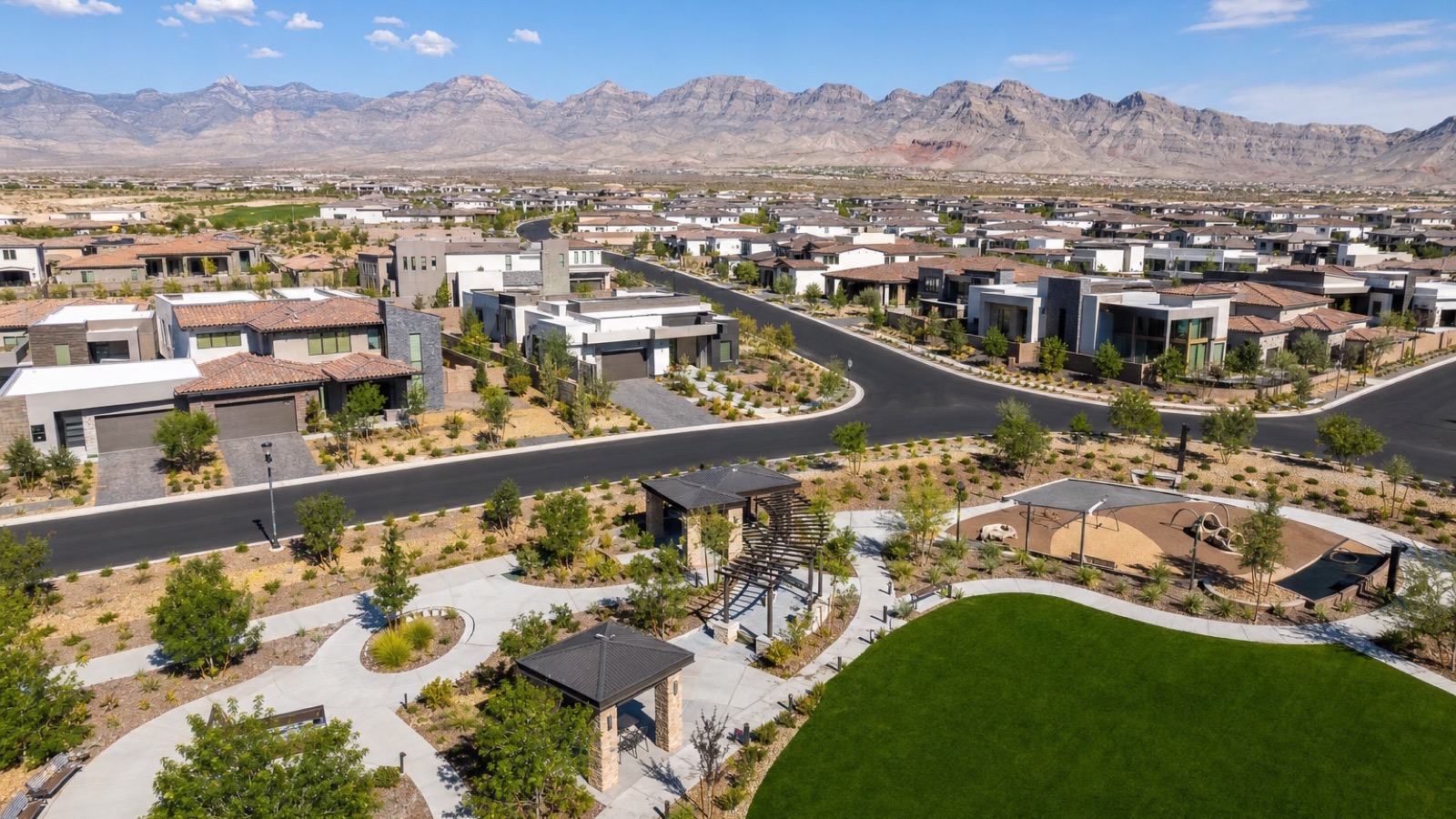
Think about what a basement asks of a building site. A slab needs a shallow, level, compacted pad. A basement needs a hole roughly a story deep across much of the house's footprint, retaining walls that hold back the soil around it, waterproofing, drainage and a way out in an emergency. Where the ground is loose alluvium, that hole is routine earthwork. Where it is an indurated hardpan more than three feet thick, the crew is no longer digging dirt; it is breaking something closer to weak rock, and the equipment, time and haul-off all change.
Clark County's code acknowledges this directly. According to the 2024 International Building Code Southern Nevada Amendments as adopted by Clark County, the geotechnical report filed with a permit must cover "Caliche and cemented soils considerations, if encountered," including "Recommendations for the removal of caliche and cemented soils and/or the preparation and grading for foundations on caliche and cemented soils" (Section 1803.6, item 12). Caliche is common enough here that the region wrote it into the permit paperwork.
Now add the business reality. A production builder pricing hundreds of homes needs a foundation it can repeat and budget on every lot. Because caliche depth and thickness change from parcel to parcel, a basement option carries an unknown excavation cost on each lot, and the builder cannot know that cost until the soils work is done. Building out or up on a slab avoids that risk entirely. That is why our sister post on the Toll Brothers Grey Crest at Glenrock calls basement rarity "an economics story, not a regulatory one": the code allows below-grade rooms, it just makes you engineer them.
I did not find a published, sourced local cost per square foot for basement excavation in caliche, and I removed the range our July edition quoted. A buyer or owner who needs a number should get it the only reliable way: a geotechnical report on the actual lot and bids from contractors who have read it.
Why Don't Las Vegas Homes Need Deep Footings?
In cold climates, foundations have to go below the frost line, the depth to which the ground freezes in winter, so that freeze-thaw cycles do not heave the footings. Where that depth is several feet, builders are already excavating a deep trench around the house, and turning that dig into a full basement is a smaller step. That is one reason basements are standard across much of the northern United States.
Southern Nevada removes that push. According to the 2024 International Residential Code Southern Nevada Amendments adopted by Clark County, the local climatic and geographic design table (Table R301.2) sets the frost line depth at 1 foot for sites below 5,000 feet of elevation and 3 feet above 5,000 feet. The Clark County Commission adopted those amendments on July 15, 2025, and they took effect with the 2024 codes on January 11, 2026, a date the county's building codes page confirms. With a 1-foot frost line, a builder in the valley has no code reason to dig deep, and a basement becomes entirely additional excavation rather than an extension of a trench already required.
The same design table puts the valley in Seismic Design Category D0, which matters for anyone engineering below-grade walls, as the next sections explain. Put the shallow frost line together with caliche and you get the core of the answer: in a cold-climate city, the code makes you dig and a basement is the bonus; in Las Vegas, the code lets you stay shallow, and the ground often makes digging expensive.
One more practical consequence for buyers: because almost every resale home in the valley is slab-on-grade, the lenders, appraisers and buyers who set prices here are used to valuing homes by above-grade square footage. That shapes how a basement is valued at resale, which I cover in the verification section below.
What Does Clark County's Code Require Before Anyone Digs?
A Las Vegas basement is permitted, but it is an engineered project with a paper trail. The table below collects the provisions in Clark County's adopted Southern Nevada amendments that a below-grade room runs into. The amendments document itself notes that its contents "are not code unless adopted and codified by governmental jurisdictions," so the cities of Las Vegas, Henderson and North Las Vegas adopt their own versions; confirm the exact text with the building department for your address.
| Provision | Code section | What it requires |
|---|---|---|
| Frost line depth | IRC Table R301.2 | 1 foot below 5,000 feet of elevation; 3 feet above |
| Soils report | IRC R401.4 | All structures or additions need a geotechnical report complying with IBC Chapter 18, with listed exceptions |
| When a report is required | IBC 1803.2 | All projects needing new foundations; the building official may exempt single-story structures, additions or remodels under 600 square feet |
| How deep the borings go | IBC 1803.3.2 | At least 15 feet; at least two explorations on a site of 1 acre or less |
| What the report must cover | IBC 1803.6 | Water table depth if encountered; collapsible, expansive, soluble and corrosive soils; caliche removal |
| Waterproofing | IRC R406.2 | Required on below-grade walls when the report shows a high water table or severe soil-water conditions |
| Soil pressure on walls | IBC 1610.1 and 1610.1.1 | Below-grade walls resist lateral soil loads and, for basement walls, seismic earth pressure |
| Backfill inspection | IBC 1705.6.1 | Special inspection of backfill behind basement walls, full depth |
According to the amended IRC, Section R401.4, "All structures or additions shall have a soils geotechnical report complying with the 2024 IBC Chapter 18," with the exceptions listed in the IBC amendments. Those IBC amendments, Section 1803.3.2, set a minimum exploration depth of 15 feet and at least two explorations for a site of one acre or less. Where a wall is engineered under the amended IBC, Section 1610.1 requires below-grade structures to resist lateral soil loads and to carry the full hydrostatic pressure of undrained backfill unless a drainage system is installed, and Section 1610.1.1 adds a seismic earth-pressure check for "All basement, foundation, and retaining walls." Section 1705.6.1 then requires special inspection of backfill "for all basement and foundation walls directly supporting structures," for the full depth.
None of that bans a basement. It does mean the cost and the timeline are set by engineering, which is one more reason the valley's builders default to slabs.
What Other Soil Problems Does a Las Vegas Basement Face?
Caliche gets the attention, but the code's own checklist shows it is one of several soil conditions a valley foundation has to handle. Section 1803.6 of the amended IBC requires the geotechnical report to address "the potential negative impacts of the following adverse soil conditions including, but not limited to: collapsible soils, expansive soils (swell), soluble soils, corrosive soils (including sulfates and chlorides), chemical heave, and uncontrolled fill." The county's special-inspection table (Table 1705.6) requires continuous inspection during fill placement when "Moderately, highly or critically expansive soils, hydrocollapsible soils, soluble soils" are encountered.
Those conditions matter more for a basement than for a slab, because a basement puts more of the house in contact with more of the soil. Expansive clays swell when wet and push on walls. Collapsible and soluble soils can lose volume when water reaches them. A slab sits on a prepared pad and sheds water away; a basement wall sits inside the soil profile and has to resist whatever that soil does over decades.
Water is the other variable. The amended IRC's drainage rule (Section R401.3) requires the ground next to a foundation to slope away at 5% for at least 10 feet, and the waterproofing rule (R406.2) is triggered when the soils report shows a high water table or severe soil-water conditions. The geotechnical report must record the depth to the water table if the borings reach it. The valley's groundwater history is also unusual. According to the Nevada Bureau of Mines and Geology's subsidence page, large groundwater withdrawals from the alluvial sediments under Las Vegas caused "surface subsidence of locally as much as 6 feet since the 1930s" and "local fissuring of the ground."
For a buyer, the takeaway is not that a basement is unsafe. It is that a basement home's soils report, drainage and waterproofing are worth reading, and that our guide to desert home-inspection issues applies with extra force below grade.
Where Do Las Vegas Basements Actually Exist?
The pull answers this better than any rule of thumb. Basements are not spread evenly; they cluster by city, by ZIP and by era. By city, 75 of the 110 active basement listings were in Las Vegas, 25 in Henderson, 8 in Boulder City and 2 in North Las Vegas. The sales side looked similar, with no North Las Vegas basement sales recorded in the 12-month window.
| City | Active and pending | Median list price | Recorded sales | Median sale price |
|---|---|---|---|---|
| Las Vegas | 75 | $1,375,000 | 90 | $1,045,000 |
| Henderson | 25 | $1,999,000 | 38 | $1,391,000 |
| Boulder City | 8 | $1,643,900 | 6 | $391,500 |
| North Las Vegas | 2 | $597,450 | 0 | None recorded |
| All four cities | 110 | $1,499,500 | 134 | $1,045,000 |
The era pattern is the surprise. Nearly half of the active basement homes, 51 of 110, were built between 2000 and 2009, and the median year built was 2002. Another 31 were built from 1980 through 1999, 14 before 1980 and only 14 in 2010 or later. Lot size is the other signal: the median active basement listing sat on 0.425 acres, and 58 of the 110 were on lots of 0.4 acres or more. Forty-two of the 110 were listed with no homeowners association, which points to the semi-rural custom-home pockets of the northwest, southwest and east valley, and to older Henderson custom lots.
In practice that means three kinds of basement homes: early-2000s gated subdivisions where the same streets show up again and again, hillside custom estates where a lower level steps down the grade, and one-off custom homes on large lots where an owner chose to dig. If you are relocating and a basement is on your list, our moving to Las Vegas guide is a good companion to this one.
Which Neighborhoods Show Up Most Often in the Data?
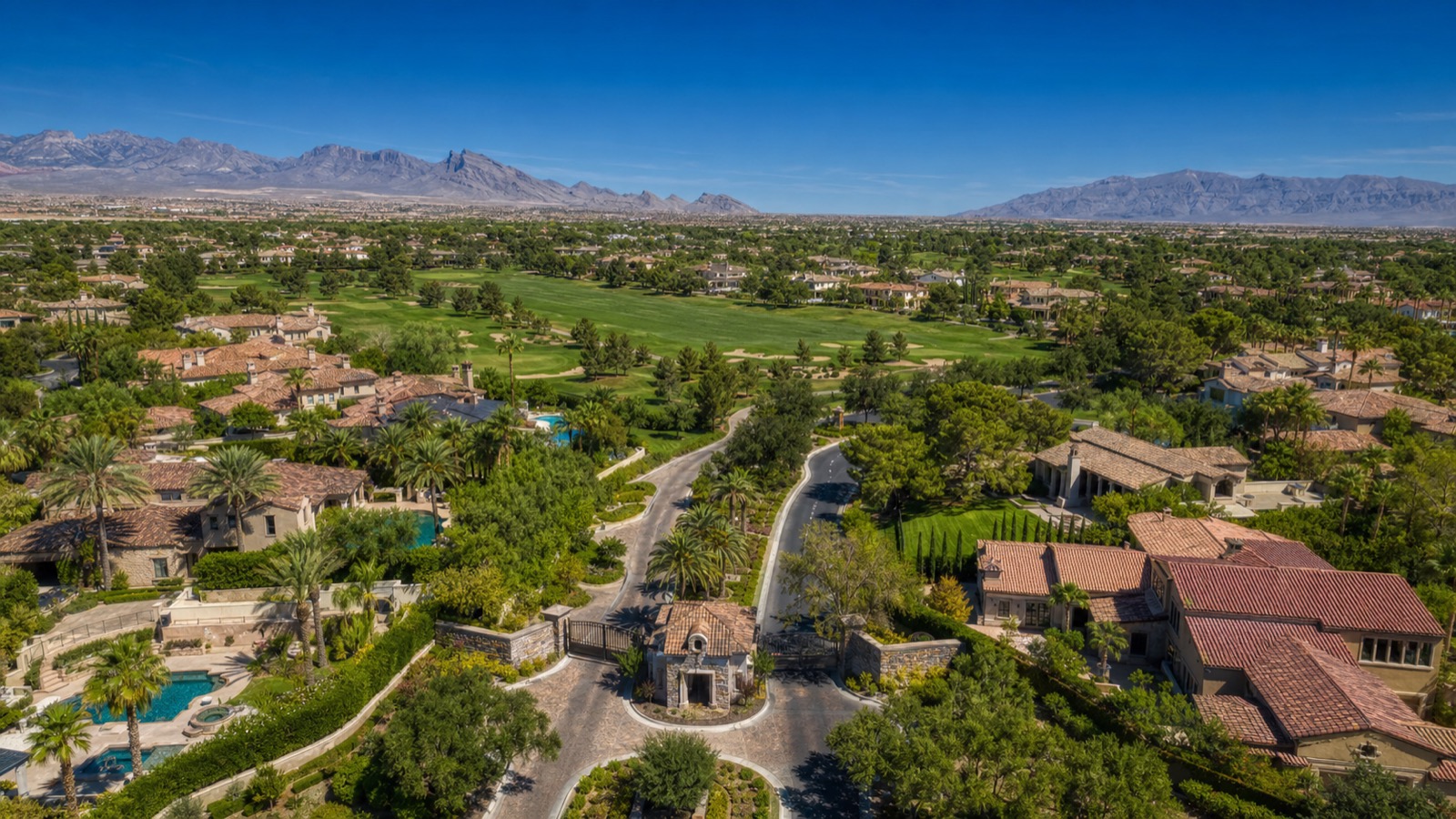
A few names repeat often enough to be worth a targeted search. The leader is Southern Highlands in ZIP 89141: 12 active basement listings at a $1,337,500 median and 19 recorded sales at a $1,150,000 median. Most of those were in the Royal Highlands plats, built from 2004 to 2007, with 8 active listings priced from $950,000 to $1,375,000 and 14 sales. Most of the rest were estate homes in the Estates at Southern Highlands and Tuscan Cliffs plats, where prices run into the millions.
Second is a group of plats recorded as Pinnacle Peaks in ZIP 89139, in the southwest valley: 9 active listings from $758,000 to $1,290,000 and 11 sales from $720,000 to $1,300,000, all built from 2001 to 2006. Repeat appearances in the same plats suggest the original builder offered a plan or option with a basement, but I have not confirmed that with the builder. If you are shopping there, ask for the original floor plan and the permit record so you know whether the space was built with the house or added later.
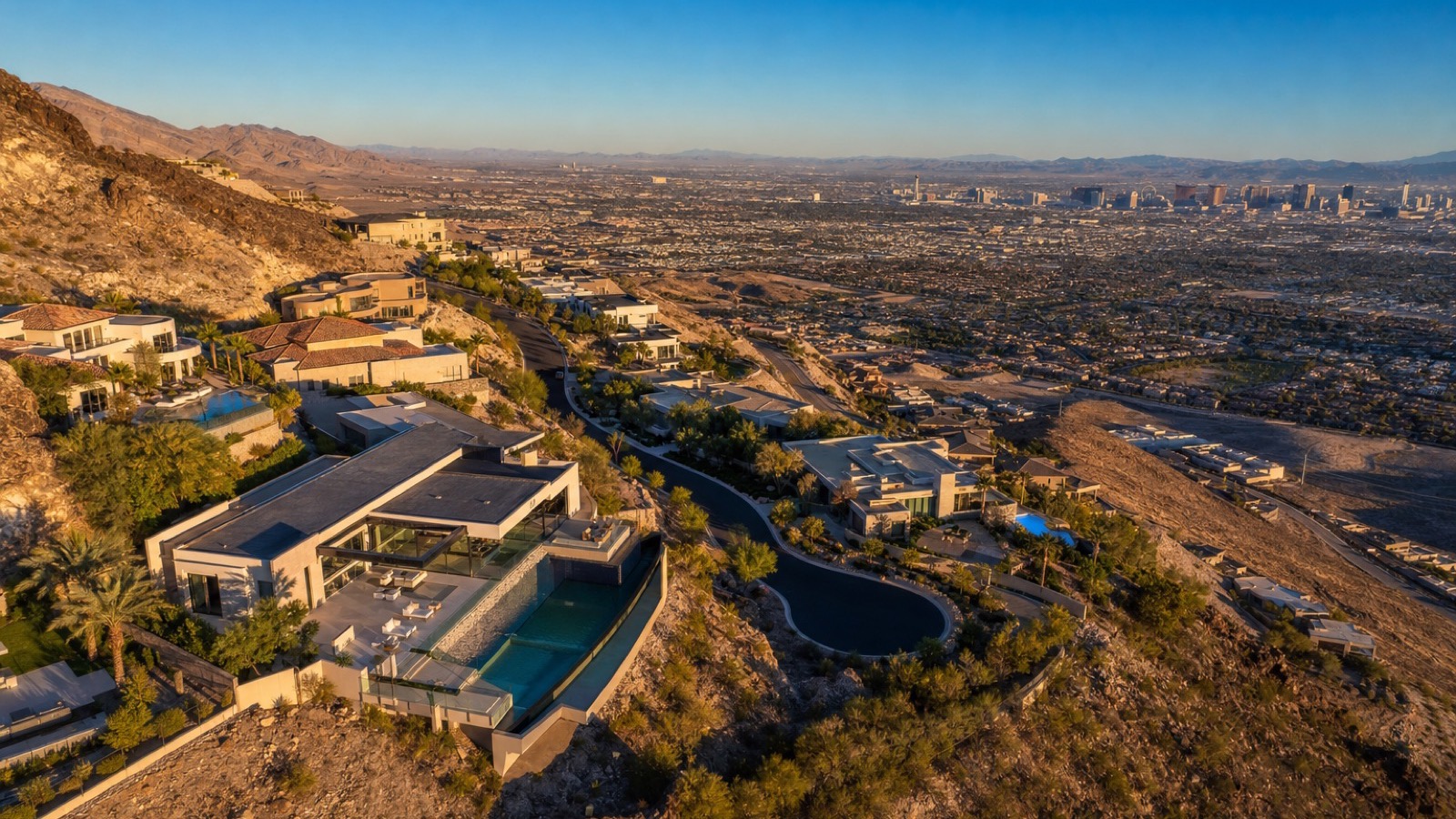
In Henderson, the hillside estates of MacDonald Highlands and MacDonald Ranch (ZIP 89012) produced 6 active listings at a $5,349,500 median and 7 sales, and Anthem Country Club produced 5 sales at a $4,645,000 median. Older Henderson custom pockets show up too: ZIP 89002, including Mission Hills, had 7 active listings, and enclaves in ZIPs 89014 and 89074 around Green Valley had 4. At the other end of the price scale, older plats in ZIP 89015 such as the original Henderson Townsite had 3 active listings and 5 sales, all homes built from 1942 to 1954 and priced under $450,000.
In Summerlin, basements are almost entirely an ultra-luxury feature. The 8 active basement listings in ZIPs 89134, 89135 and 89144 carried a $14,375,000 median, and 6 of them were around The Ridges in ZIP 89135. Newer Summerlin West lower levels, like the Toll Brothers plan covered in our sister post, sit on lots where the grade does part of the digging.
What Do Basement Homes Cost Compared With the Rest of the Market?
Basement homes are not a separate market, but they skew heavily toward the top of it. The median active basement listing was $1,499,500 as of October 8, 2026, against $468,038 for all 12,419 active and pending residential listings in the same four cities. On the sales side, the median basement sale was $1,045,000 against $444,105 for all residential sales from September 1, 2025 through August 31, 2026. For context, according to Las Vegas REALTORS, as reported by VEGAS INC on September 9, 2026, the valley's median single-family sale price was $475,000 in August 2026. That figure covers single-family homes only, while our all-residential medians include condos and townhomes, which is why they run lower.
| Price band | Active and pending listings | Recorded sales, September 1, 2025 through August 31, 2026 |
|---|---|---|
| Under $500,000 | 8 | 20 |
| $500,000 to $999,999 | 27 | 40 |
| $1,000,000 to $1,999,999 | 32 | 42 |
| $2,000,000 to $4,999,999 | 26 | 20 |
| $5,000,000 and up | 17 | 12 |
Two things stand out. First, a basement under $1 million is possible but scarce: 35 active listings and 60 recorded sales, most of them in the early-2000s gated plats and older custom homes described above. Second, financing becomes part of the plan. According to the Federal Housing Finance Agency's announcement of 2026 conforming loan limits, the baseline limit for a one-unit property is $832,750, and 89 of the 110 active basement listings were priced above it. Most buyers in this niche will be looking at jumbo financing or a larger down payment, so get pre-approved for the right loan type before you start touring. If your search is above $1 million anyway, our homes over $1 million and luxury communities pages are the natural starting points.
How Do You Search the MLS for a Home With a Basement?
Because the feature is rare and inconsistently recorded, a single checkbox filter will miss homes, and a single keyword will catch homes that do not qualify. In our pull, 15 of the 110 confirmed active listings described a basement in the remarks without the MLS basement flag, and 37 carried the flag without mentioning the space in the remarks. A search that used only one signal would have missed between 14% and a third of the inventory.
Here is the method I use for clients. Start with geography rather than the whole valley: the Southern Highlands and Pinnacle Peaks plats in the southwest, the Henderson hillsides and older custom lots, Boulder City, The Ridges, and the large-lot custom pockets in the northwest and east. Then search both signals: the basement field, plus remarks containing "basement," "walkout," "walk-out" or "lower level." Wording matters. In our pull, only 11 of the 110 active listings used "walkout" or "walk-out," and several hillside estates that the agent flagged as having a basement called the space a "lower level" in the remarks.
Then read the remarks yourself. The false positives I removed this time were a den with a "basement-like feel," a first floor that "almost resembles" a basement, a condo storage unit on the building's basement level, and a vacant lot sold with plans for one. A sunken family room or a split-level home can also get described loosely. You can start a search on our live Las Vegas homes for sale and Henderson homes for sale pages or the full listing search, and we can set up a saved search that watches both the field and the remarks.
Last, be patient. With 110 basement listings across four cities and a median price near $1.5 million, the right home in your price band may not exist this month. Expect to wait for inventory, and decide ahead of time which alternatives you would accept if the basement search runs long.
How Should You Verify a Basement Before You Make an Offer?
A basement is the kind of feature that can be described generously in a listing and differently on paper. Four checks protect you.
First, the county record. Search the address on the Clark County Assessor's parcel search; the parcel record it returns lists "Unfinished Basement SQ. FT.," "FINISHED BASEMENT SQ. FT." and "BASEMENT GARAGE SQ. FT." alongside the floor-by-floor square footage. On one active listing in our pull, the remarks gave a basement size less than half the finished-basement figure on the Assessor's record. Neither number is automatically right, but a mismatch is a question for the seller and the appraiser before you are under contract. Ask for the building permits too; our appraisal guide explains how unpermitted space is treated.
Second, the appraisal. According to Fannie Mae's Selling Guide, B4-1.3-05, "Fannie Mae considers a level to be below-grade if any portion of it is below-grade, regardless of the quality of its finish or the window area of any room," so "a walk-out partially below-grade area with finished rooms would not be included in the above-grade square footage or room count." The guide adds that such rooms "may add substantially to the value of a property," and appraisers report them on a separate below-grade line. Several listings in our pull quoted total square footage across every level, basement included, so compare like with like.
Third, radon. According to the U.S. Environmental Protection Agency's A Citizen's Guide to Radon, a test kit "should be placed in the lowest lived-in level of the home (for example, the basement if it is frequently used, otherwise the first floor)," and buyers "might want to know the radon levels in areas of the home," such as a basement they plan to finish. According to the EPA's action level guidance, "The EPA recommends homes be fixed if the radon level is 4 pCi/L" or more. Put a radon test in the inspection period.
Fourth, flood coverage. According to FloodSmart's article on owning real estate and basement flooding, National Flood Insurance Program policies cover basement items such as furnaces, water heaters and sump pumps when connected to power, but not "Finished basements and home improvements." Look up the address on FEMA's Flood Map Service Center and read our Nevada flood zones and insurance guide before you budget.
Can You Add a Basement to an Existing Las Vegas Home?
Buyers who love a slab home sometimes ask whether they can dig a basement later. Legally, the answer is usually yes with permits; practically, it is one of the hardest projects in residential construction. You would be excavating next to, or underneath, a foundation that was designed to sit on a shallow pad, in soil that may include an indurated hardpan, while keeping the existing house supported.
The code path is clear even if the cost is not. Under Clark County's amended IRC, Section R401.4, additions need a soils geotechnical report that complies with IBC Chapter 18. The amended IBC (Section 1803.2) lets the building official exempt single-story structures, additions or remodels with a footprint under 600 square feet, but a basement large enough to matter will usually exceed that, and the report will need borings at least 15 feet deep. The amended IRC also adds Section R401.5, requiring a grading plan "prepared, stamped, and signed by a registered design professional" for projects that require grading. Any engineered basement wall then has to meet the lateral soil, seismic earth-pressure and backfill-inspection provisions in the code table above, and the lot's drainage has to slope away at 5% for 10 feet.
I could not find a published, sourced local figure for what a retrofit costs per square foot here, so I will not give you one. What I can tell you is the order of operations: a geotechnical report on your specific lot first, a structural engineer second, contractor bids third, and only then a decision. Weigh those bids against the simpler options: buying a home that already has the space, or adding space above grade.
If you are building new rather than retrofitting, the calculation is different, because the soils work happens once and the basement is designed with the house. Our guide to building a custom home from scratch walks through permitting and soils timing, and our look at half-acre lots in southwest Las Vegas covers the kind of large parcels where basement homes in our pull concentrated.
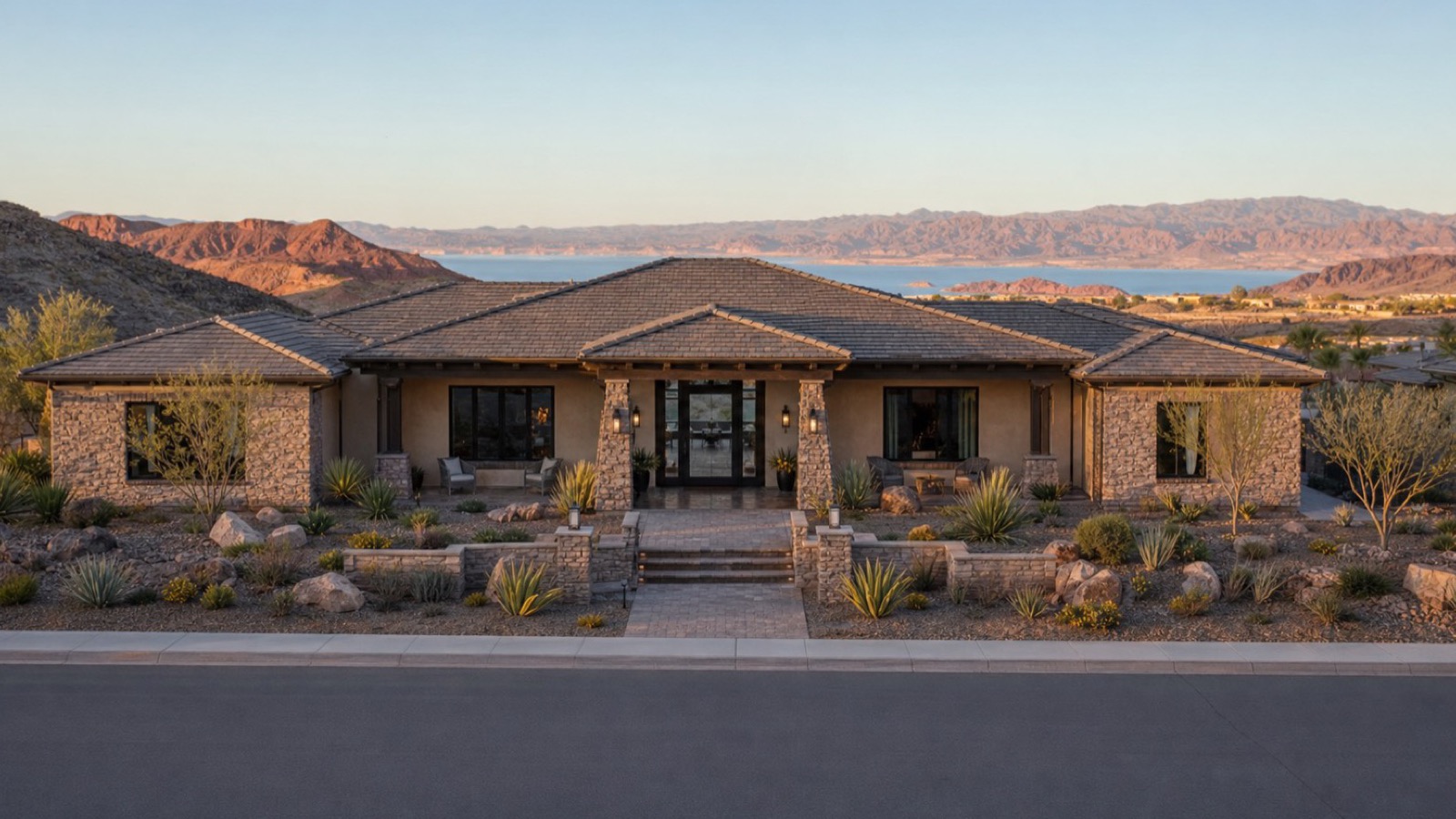
What Are the Practical Alternatives to a Basement in Las Vegas?
Most of what people use a basement for, a guest suite, a media room, a gym, a hobby room or storage, can be found above grade in the valley without digging. Las Vegas floor plans evolved around slab construction, and the common substitutes are well established.
The casita is the closest substitute for a basement guest suite: a detached or attached room, often with its own entrance and bath, set off a courtyard or the side of the house. Our casitas and mother-in-law suites guide covers how they are listed and valued, our Clark County ADU and casita rules guide covers what you can build, and you can browse current homes with casitas. Two-story production homes commonly include an upstairs loft or bonus room that does the work of a finished basement rec room, and many new-construction plans offer one. For storage and workshops, a larger lot, a three-car or RV garage, or a detached shop often does more than a basement would.
| Dimension | Basement | Casita | Loft or bonus room | Larger lot or RV garage |
|---|---|---|---|---|
| Digging below grade | Yes, often into caliche | No | No | No |
| Code items to plan for | Soils report, retaining walls, waterproofing if triggered | Standard permit for an addition or ADU | Part of the original plan | Standard permit for a structure |
| How appraisers report it | Separate below-grade line (Fannie Mae) | Depends on attachment and access | Above-grade living area | Lot and garage features |
| What to verify | Assessor basement fields, permits, radon, drainage | Permits and HOA rules | Floor plan | HOA and zoning rules |
| Where to look | Luxury communities | Summerlin | New construction | Las Vegas |
The point is not that a basement is a bad choice. It is that in a market where under 1% of homes have one, you should decide whether you want the room or the specific experience of a below-grade level. If it is the room, the alternatives widen your search dramatically.
Should a Basement Home Be on Your Must-Have List?
If you are coming from a basement market, it is worth separating two different wishes. Some buyers want the specific things a basement does well: a cool, quiet, windowless media room, a gym on a concrete floor, or a guest level separated from the main living area by a full flight of stairs. Others simply want more room. The first group has a real but narrow search in Las Vegas; the second group has the whole market.
For the first group, the data points to a short list. Start with the Southern Highlands and Pinnacle Peaks plats if your budget is roughly $750,000 to $1.4 million, the Henderson hillsides and The Ridges if it is well into seven figures, and Boulder City and the large-lot custom pockets if you want something one-of-a-kind. Budget for a longer search, plan for jumbo financing above $832,750, and build the four verification steps into your offer timeline: Assessor record and permits, appraisal treatment, radon, and flood coverage. If you are also weighing who to hire for a search this narrow, our take on who the best Las Vegas real estate agents are explains what to ask.
For the second group, a home with a casita, a loft or a bigger lot will usually give you the space at a lower price and with fewer below-grade questions. Either way, our team can map your list to real inventory. Browse the live Las Vegas homes for sale, check what your current home might be worth with our home value estimator, review first-time buyer resources if this is your first purchase here, or see our seller resources if you are trading up. Across the 9,600+ closings we've represented, one habit helps every narrow search: settle the must-haves before the first tour. When you are ready, reach the team or call (702) 637-1759, and we will set up a basement search that watches both the MLS field and the remarks.
Frequently Asked Questions
Do Las Vegas homes have basements?
Very few do. In our own pull of Las Vegas MLS data through Repliers on October 8, 2026, 110 of 12,419 active and pending residential listings in Las Vegas, Henderson, North Las Vegas and Boulder City had a confirmed basement, about 0.9%. Recorded sales from September 1, 2025 through August 31, 2026 showed 134 basement sales out of 27,540, or 0.5%. Nearly every other home in the valley is built on a concrete slab, so a basement is something you search for specifically rather than a feature you can assume.
What is caliche?
Caliche is soil cemented by calcium carbonate. The USDA Natural Resources Conservation Service calls the hardened form a petrocalcic horizon, a layer in which carbonates have accumulated until it is "cemented or indurated." The NRCS description of the Las Vegas soil series puts the hardpan 3 to 14 inches below the surface, describes it as "extremely hard, extremely firm," and says it is typically thicker than 36 inches. Not every valley soil has it, which is why it varies from lot to lot.
Why don't more Las Vegas homes have basements?
Three things work together. Caliche makes excavation slow and unpredictable on many lots. Clark County's adopted code sets a frost line of only 1 foot below 5,000 feet of elevation, so builders have no code reason to dig deep. And a basement triggers engineering work, from a geotechnical report with borings at least 15 feet deep to retaining-wall design and backfill inspection. For a builder pricing hundreds of homes, a slab is simpler and more predictable.
Where can I find a home with a basement in Las Vegas?
In our October 8, 2026 pull, the leading ZIP was 89141, where Southern Highlands plats had 12 active basement listings and 19 recorded sales. The Pinnacle Peaks plats in ZIP 89139 had 9 active listings, the MacDonald Highlands area in ZIP 89012 had 6, Boulder City had 8, and Summerlin's 8 were mostly around The Ridges. Large-lot custom homes in the northwest, southwest and east valley and older Henderson custom lots make up much of the rest.
How much do basement homes cost in Las Vegas?
The median active basement listing was $1,499,500 as of October 8, 2026, against $468,038 for all active and pending residential listings. The median recorded basement sale from September 1, 2025 through August 31, 2026 was $1,045,000, against $444,105 for all residential sales. Thirty-five active basement listings were under $1 million and eight were under $500,000, so lower-priced options exist but are scarce.
Does a basement count as living area in an appraisal?
Not as above-grade living area. Fannie Mae's Selling Guide treats a level as below-grade "if any portion of it is below-grade," so even a finished walkout level is left out of above-grade square footage and room count. Appraisers report it on a separate below-grade line, and the guide notes that such rooms "may add substantially to the value of a property." Compare listings on the same basis, because some quote total square footage across every level.
Can I add a basement to my existing Las Vegas home?
It can be permitted, but it is a major engineered project. Clark County's amended code requires a soils geotechnical report for additions, with an exemption the building official may grant for single-story structures, additions or remodels under 600 square feet, plus a stamped grading plan where grading is needed. Basement walls must be designed for soil and seismic earth pressure, with backfill inspected. No sourced local per-square-foot cost is published, so get a geotechnical report and engineered bids first.
What should I check before buying a home with a basement?
Run four checks. Compare the basement square footage on the Clark County Assessor's parcel record with the listing and ask for permits. Confirm how the appraiser will report the below-grade area. Test for radon in the lowest lived-in level, since the EPA recommends fixing homes at 4 pCi/L or more. Finally, check the flood zone and read your policy, because National Flood Insurance Program coverage excludes finished basements and home improvements.
Which Sources Inform This Las Vegas Basements Guide?
Listing counts, prices, ZIPs, plats, years built and lot sizes come from our own pull of Las Vegas MLS data through Repliers on October 8, 2026, covering Las Vegas, Henderson, North Las Vegas and Boulder City. "Basement" means the listing carried the MLS basement field or its public remarks described a basement in the home; I read every keyword match and removed records where the word did not describe a basement, a duplicate package and a multi-parcel sale. Sales use MLS recorded sold dates from September 1, 2025 through August 31, 2026; the feed's sold date is usually the contract date and sometimes the closing date, August 2026 is provisional, and the feed under-reports August and September 2025 and over-reports January 2026, so treat counts by month with care. These are not official Las Vegas REALTORS statistics.
- USDA NRCS, Keys to Soil Taxonomy, 13th edition (2022): definition of the petrocalcic horizon
- USDA NRCS, Official Series Description: Las Vegas series: hardpan depth, hardness, thickness and associated soils
- Clark County, 2024 IRC Southern Nevada Amendments: frost line, soils report, drainage, grading plan and waterproofing
- Clark County, 2024 IBC Southern Nevada Amendments: geotechnical investigations, caliche, lateral and seismic soil loads, backfill inspection
- Clark County Building and Fire Prevention, codes page: adoption of the 2024 codes effective January 11, 2026
- Nevada Bureau of Mines and Geology, Subsidence: Las Vegas Valley subsidence and fissuring
- Clark County Assessor, parcel search: finished and unfinished basement square footage on parcel records
- Fannie Mae Selling Guide, B4-1.3-05: below-grade area in appraisals
- U.S. EPA, A Citizen's Guide to Radon and EPA action level guidance: where to test and when to fix
- FloodSmart, Owning Real Estate and Basement Flooding and FEMA Flood Map Service Center: basement flood coverage and flood-zone lookup
- Federal Housing Finance Agency, 2026 conforming loan limits: $832,750 one-unit baseline
- VEGAS INC, September 9, 2026 reporting Las Vegas REALTORS August 2026 figures: valley single-family median
Nevada Real Estate Group is Nevada's #1-ranked real estate team (#44 nationally), with 9,600+ career closings, 789 homes sold in 2025, and 9,146+ verified five-star reviews at 4.9 stars. Licensed in Nevada, S.181401. Chasing a rare Las Vegas basement home, or want the smarter desert alternative? Call (702) 637-1759 or reach the team.