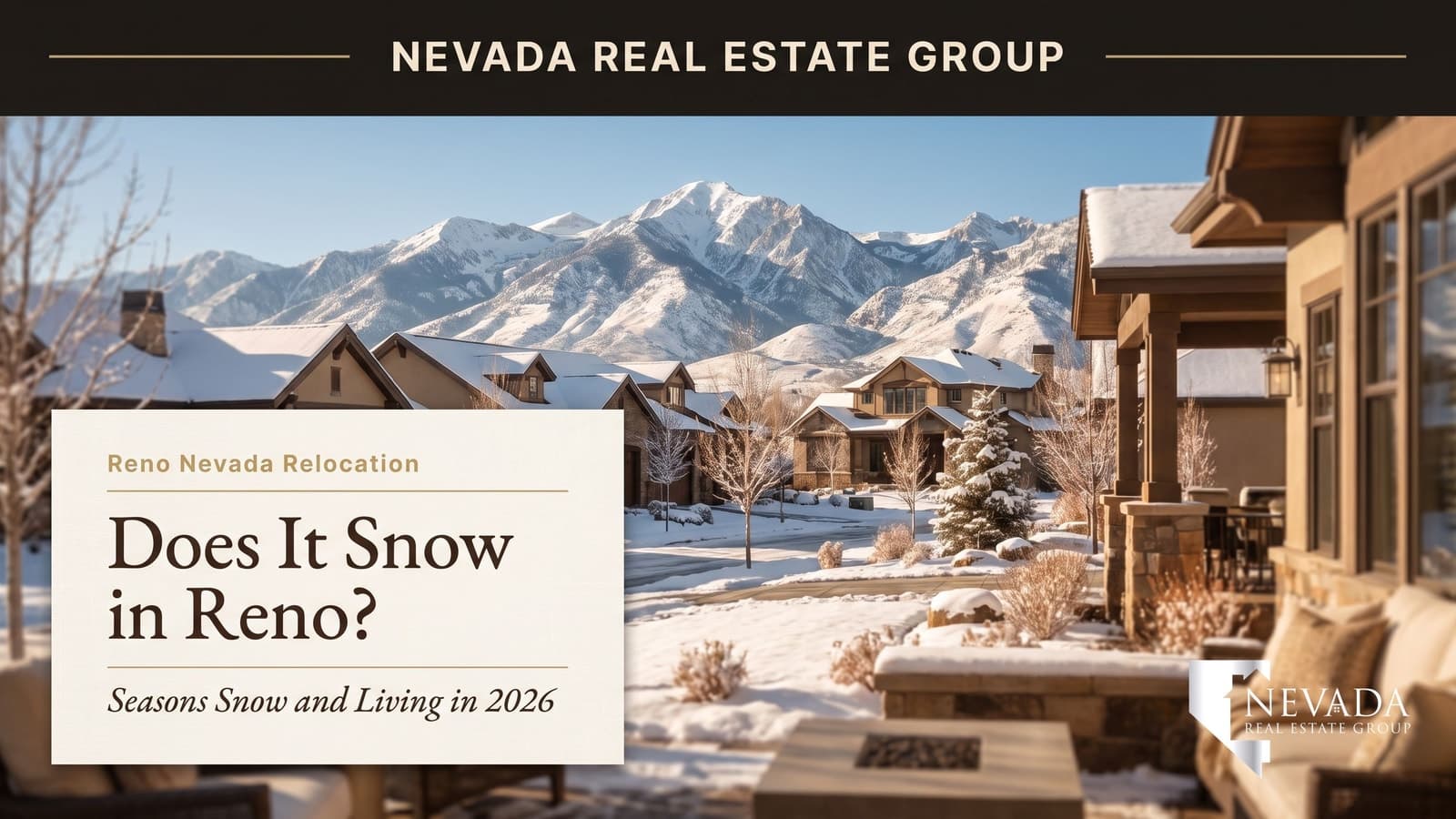

Does it snow in Reno, Nevada? Yes — and it is one of the first questions every relocating buyer asks me. Reno averages about 22 inches of snow a year, but the real answer is more interesting: how much snow you actually live with depends heavily on which neighborhood you choose, because elevation across the Reno area swings snowfall dramatically. This guide covers Reno's four seasons, snowfall by elevation, and exactly what winter means for buying a home and settling into the Biggest Little City in 2026.
Yes, it snows in Reno — about 22 inches a year on the valley floor, with higher-elevation neighborhoods getting two to three times more. At 4,500 feet against the Sierra Nevada, Reno has a true four-season climate: snowy winters, hot dry summers, and over 3,400 hours of sunshine a year. How much snow you live with depends heavily on which neighborhood you choose, which makes elevation a key home-buying factor for anyone relocating to Reno.
- Reno averages about 22 inches of snow a year on the valley floor — moderate, not extreme.
- Higher-elevation neighborhoods like Galena Forest can get two to three times more snow.
- At 4,500 feet, Reno has four real seasons plus 3,400-plus hours of sunshine a year.
- Elevation, not ZIP code, decides your winter — choose your neighborhood accordingly.
- Reno sits 30 to 45 minutes from Tahoe skiing while keeping milder valley winters.
Does It Snow in Reno, Nevada?
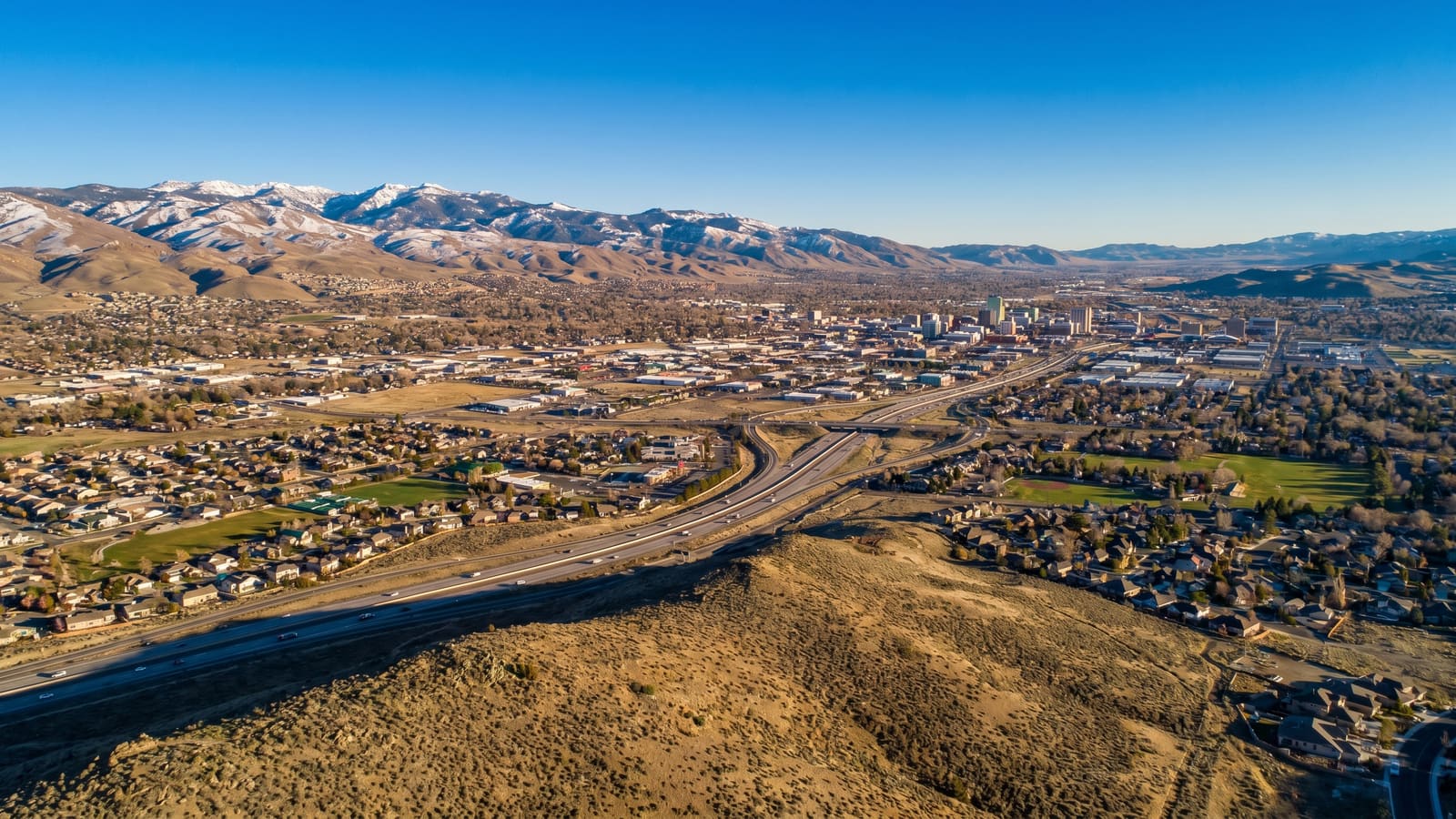
Yes, Reno gets real snow — but far less than its Sierra Nevada backdrop might suggest. According to U.S. Climate Data, Reno sits at 4,500 feet in a high-desert basin pressed against the mountains, which gives it a cold semi-arid climate: cold, snowy winters and hot, dry summers. The mountains actually shield the city, wringing most of the moisture out of Pacific storms before they reach the valley floor — a "rain shadow" effect that keeps Reno's snowfall moderate compared to Lake Tahoe just over the ridge.
So the cartoon image of Reno buried under snowdrifts is wrong. The reality is a four-season high-desert city with crisp, snowy stretches in winter and abundant sunshine the rest of the year. For relocating buyers — especially Californians used to mild coastal weather — the key insight is that Reno's winter is real but manageable, and how much of it you experience is largely your choice when you pick a neighborhood.
How Much Snow Does Reno Get Each Year?
The headline number is about 22 inches of snow per year, but averages hide the story. According to climate records summarized by the Western Regional Climate Center, the lower-lying parts of Reno receive roughly 19 to 23 inches annually, while higher-elevation neighborhoods can get two to three times as much.
| Season | Typical highs | What to expect |
|---|---|---|
| Winter (Dec-Feb) | Around 40°F to 45°F | Most snow; melts fast on valley floor |
| Spring (Mar-May) | 50s to 70s | Occasional late snowstorm, then mild |
| Summer (Jun-Aug) | 85°F to low 90s | Hot, dry, rarely triple digits |
| Fall (Sep-Nov) | 60s to 70s | Mild, sunny, crisp evenings |
For perspective, 22 inches is far less than snow-belt cities like Denver, Salt Lake City, or the Northeast, and most valley snow melts within a day or two because the abundant sunshine returns quickly. According to the National Weather Service, Reno enjoys over 3,400 hours of sunshine a year — so even after a storm, you are rarely looking at gray skies for long. The snow that sticks around is up in the foothills, which is exactly where the neighborhood-by-neighborhood differences begin.
What Is Winter Actually Like in Reno?
Reno winters are crisp and bright rather than bleak. Daytime highs in the heart of winter average in the low-to-mid 40s, dropping into the 20s overnight, with the temperature rarely falling below 13°F. Storms roll through in bursts — a snowy day or two followed by sunshine that clears the roads — rather than the weeks-long gray of true snow-belt cities.
What surprises newcomers most is how usable winter is. Because the valley floor sees rain or quick-melting snow more often than deep accumulation, daily life rarely shuts down. You will want a coat, a snow brush, and good tires, but you are not snowed in for months. In my experience helping Californians relocate north, the winter reality lands far easier than they feared — and many end up loving the genuine change of seasons after decades of sameness. The trade-off they happily accept is a few cold months in exchange for fall colors, spring blooms, and quick access to renowned Sierra skiing.
Does Reno Really Have Four Seasons?
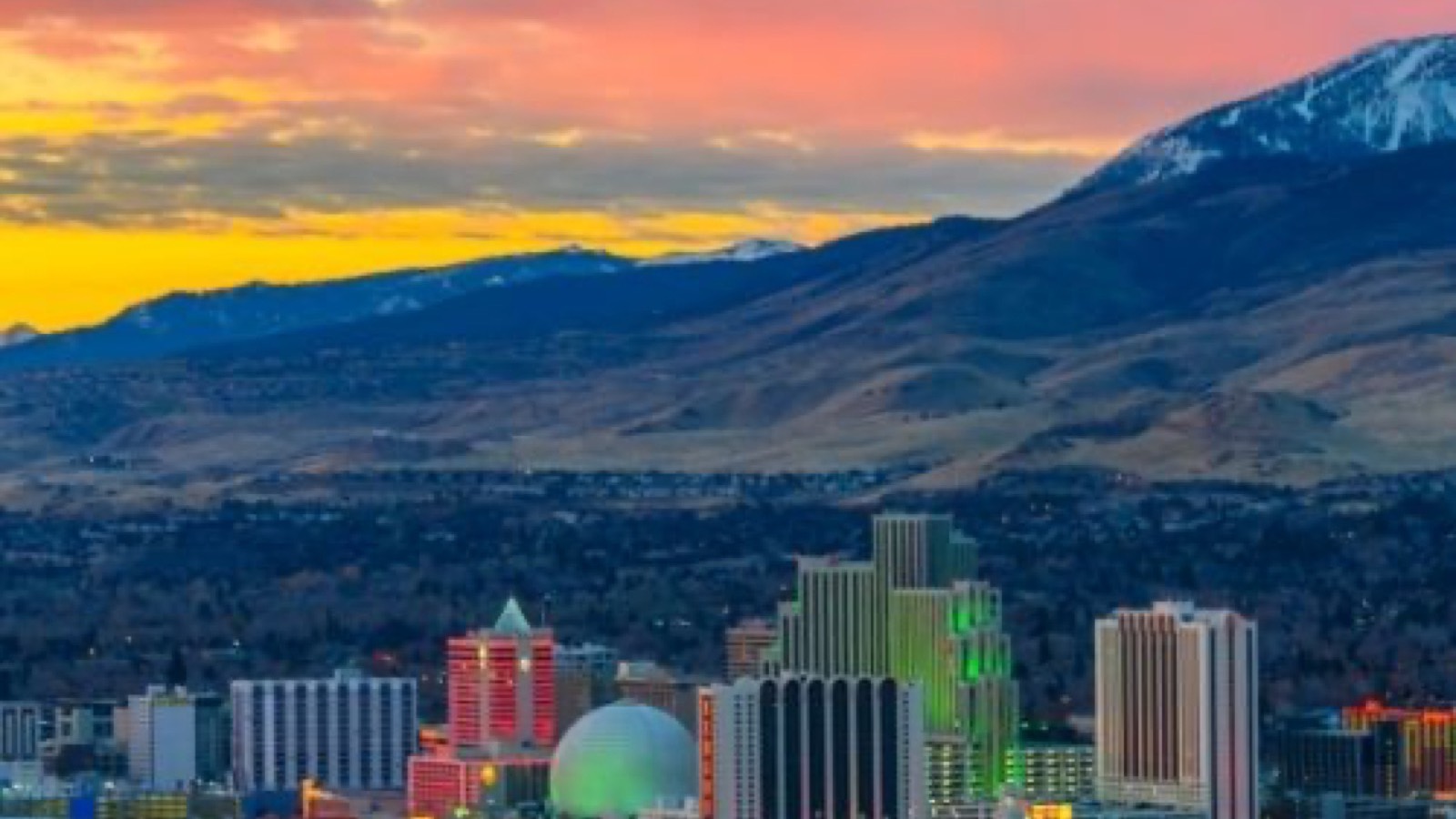
Yes, and it is one of the biggest draws for relocating buyers. Unlike Las Vegas, which runs hot for most of the year, Reno delivers four distinct seasons. According to Visit Reno Tahoe, residents get snowy winters, blooming springs, warm-but-dry summers, and crisp, colorful falls — all with the high-desert bonus of low humidity and big sunshine totals.
Summers are hot, with July highs averaging around 85°F and only occasional triple-digit days, but the dry air and cool nights make them far more comfortable than humid climates. Fall is arguably the best season — mild 70s, golden cottonwoods, and clear skies. For buyers leaving California's monotonous coastal weather, the four-season rhythm is a genuine lifestyle upgrade, and it is a major reason we see so much California-to-Reno migration alongside the tax savings. The seasons also shape the real-estate calendar, which we will get to below.
How Does Elevation Change Snow Across Reno Neighborhoods?
This is the single most important thing a relocating buyer needs to understand: in the Reno area, your snowfall is set by your elevation, not just your address. The valley floor sits around 4,500 feet, but residential neighborhoods climb well above 5,000 and even near 6,000 feet in the foothills — and that elevation gradient produces dramatically different winters within a 20-minute drive.
A single storm can deliver cold rain or a quick rain-snow mix in Midtown and downtown while dropping several inches of accumulating snow in the western and southern foothills. Above roughly 5,000 feet, storms fall far more often as snow that sticks. That means two homes at the same price can come with completely different winter realities — one needs only a coat and a snow brush, the other realistically needs all-wheel drive, snow tires, and a higher tolerance for shoveling. Elevation is a home-buying variable in Reno the way flood zones are elsewhere, and it belongs on your checklist before you fall in love with a view.
Which Reno Neighborhoods Get the Most Snow?
The high-elevation western and southern communities get the most snow — and the most dramatic mountain living. Browse current Reno homes for sale with elevation in mind, because the differences are stark.
| Neighborhood | Approx. elevation | Winter reality |
|---|---|---|
| Galena Forest | Near 6,000 ft | Most snow; alpine; AWD essential |
| Somersett / ArrowCreek | Above 5,000 ft | Frequent snow, wind; AWD recommended |
| Caughlin Ranch | About 4,900 ft | A bit more snow than central Reno |
| Valley floor / Sparks | Around 4,500 ft | Rain or quick-melt snow; easiest |
According to local elevation analyses, Galena Forest near 6,000 feet is the snowiest residential area — true alpine living with significantly more snow, stronger winter winds, and cooler year-round temperatures, with homes that often run well past $1,000,000 for the forested mountain setting. Somersett and ArrowCreek, perched above 5,000 feet, see frequent snowfall and wind, with homes commonly in the $600,000 to $900,000 range. These are the neighborhoods for buyers who want snow as a feature, not a nuisance.
Which Reno Neighborhoods Are Easiest in Winter?
If you want the mildest winters and the easiest driving, stay lower and more central. The valley-floor neighborhoods — Midtown, downtown, much of Sparks, and master plans like Rancharrah — see storms arrive more often as rain or a quick-melting mix, so roads clear fast and snow tires are optional rather than essential.
Caughlin Ranch is the classic middle ground: a sought-after established community at about 4,900 feet that gets a touch more snow and cooler temperatures than central Reno, but nothing like the foothills, with homes frequently in the $700,000s and up. For relocating buyers who want four seasons without a demanding winter, the sweet spot is often a valley-floor or low-foothill home around the mid-$500,000s where you get a few pretty snowfalls a year and easy access to the rest of life. Across the 9,600-plus closings Nevada Real Estate Group has handled, the buyers who match their elevation to their true winter tolerance are the ones who never regret the move.
How Do Reno Home Prices Vary by Elevation and Snow?
Elevation does not just change your snowfall — it changes your price tag. According to local Reno-Sparks REALTORS market data, the area's overall median home price sits in the mid-to-high $500,000s in 2026, but the spread across elevation tiers is wide.
On the valley floor and in Sparks, well-kept single-family homes commonly run from the $450,000s to the $550,000s — the most attainable, easiest-winter option. Established mid-elevation favorites like Caughlin Ranch frequently list in the $700,000s and up, trading a bit more snow for mature landscaping and views. The higher, snowier communities command the top prices for their alpine settings: Somersett and ArrowCreek homes commonly fall in the $600,000 to $900,000 range, while Galena Forest near 6,000 feet routinely exceeds $1,000,000 for forested mountain estates.
Run the monthly math and the elevation choice gets concrete. A $540,000 valley home with 20% down of $108,000 pencils to roughly $2,590 a month in principal and interest at a 6% rate, with light winter costs of maybe $500 across the season. An $850,000 foothill home with 20% down of $170,000 runs closer to $4,075 a month, plus $1,000 or more in winter heating, tires, and snow removal. That is a meaningful gap — buyers trading up for snow and views should budget for both the higher price and the higher winter carrying cost.
Property taxes follow the price but stay low statewide. According to the Washoe County Assessor, Nevada's effective property tax rates run well under 1% of value, so even an $850,000 foothill home carries a tax bill near $5,000 to $6,000 a year — far below the $10,000-plus the same home would owe in many states. Compare active new-construction Reno homes and lower-maintenance Reno condos to dial in your winter exposure and budget, and weigh nearby Gardnerville in the Carson Valley for a lower-elevation, lower-cost alternative.
How Does Reno's Snow Compare to Lake Tahoe and the Rest of Nevada?
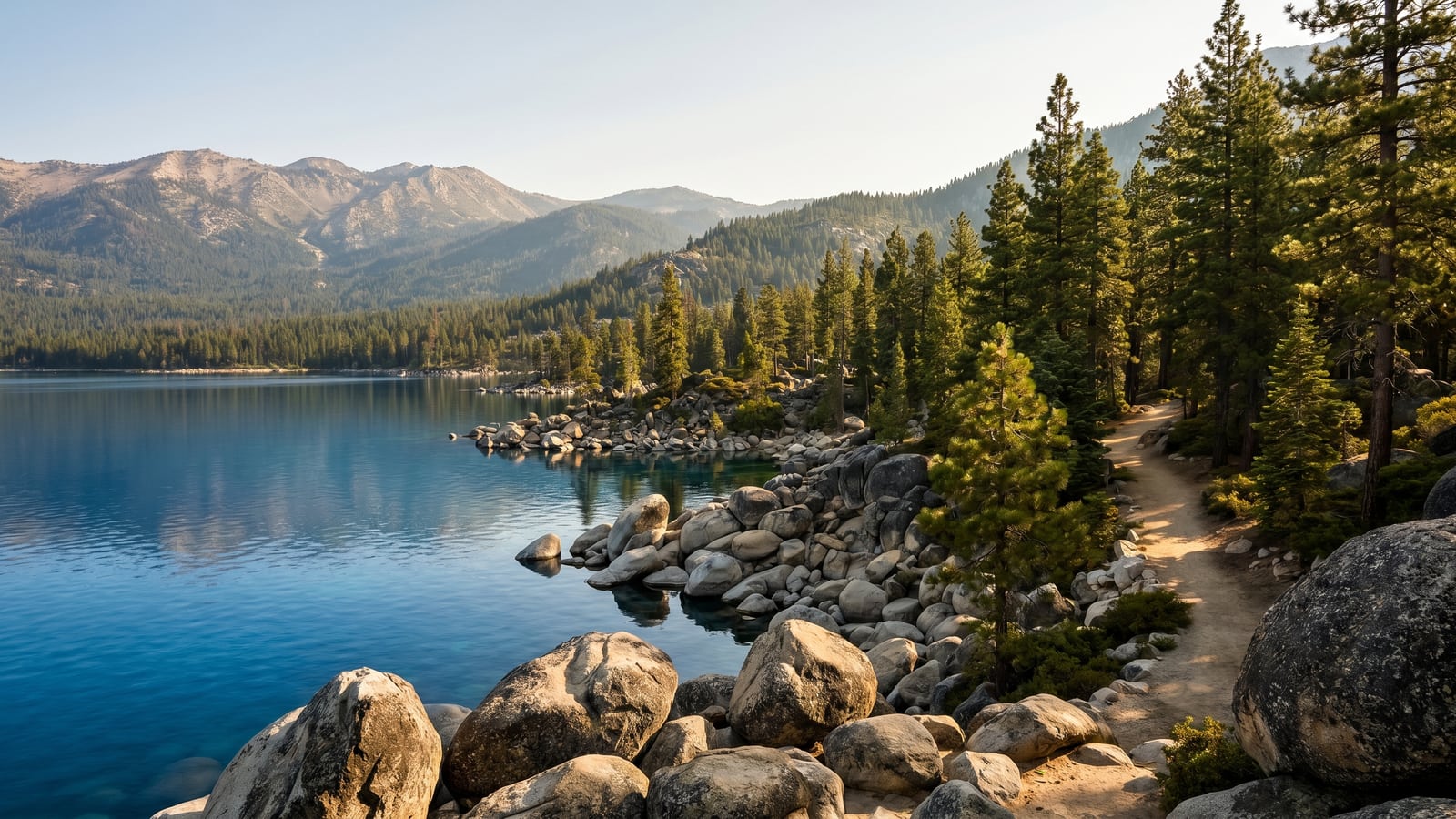
Reno is the mild middle of a dramatic snowfall gradient. Lake Tahoe and the surrounding Sierra resorts, just 30 to 45 minutes up the hill, can get hundreds of inches of snow a year — which is exactly why they are renowned ski destinations. Reno's roughly 22 inches on the valley floor is a tiny fraction of that, giving residents the best of both worlds: live in a manageable-winter city and drive to legendary powder in under an hour.
| Location | Approx. annual snow | Climate |
|---|---|---|
| Las Vegas / Henderson | Near zero | Hot desert, two seasons |
| Reno (valley floor) | About 22 inches | High desert, four seasons |
| Reno foothills | 40 to 60+ inches | Cooler, alpine-influenced |
| Lake Tahoe / Sierra | Several hundred inches | True alpine, ski country |
Compared to Las Vegas and Henderson in the south — which see essentially no snow and run hot most of the year — Reno offers genuine seasons, and compared to nearby Carson City it is broadly similar. This is the pitch that wins over so many relocators: a four-season Nevada lifestyle with no state income tax and Tahoe in the backyard.
What Should You Look for in a Reno Home for Winter?
Smart Reno buyers shop with winter in mind, and a few features pay for themselves. First, heating: confirm the home has efficient, well-maintained heating, because at 4,500-plus feet your winter gas or electric bill matters — budget perhaps $150 to $250 a month in the coldest months, more in the foothills. Second, the driveway: steep, north-facing, or unshaded driveways hold ice and snow far longer, so a flatter or sun-exposed approach is a real winter convenience.
Third, consider garage space and storage for snow gear, and check whether the community handles snow removal on private roads. Fourth, if you are buying in the foothills, factor in all-wheel-drive vehicles and snow tires — a good set of winter tires runs roughly $800 to $1,200, and many high-elevation households keep an AWD vehicle specifically for the season. None of this is expensive relative to the home, but it is the kind of detail that separates a smooth first winter from a frustrating one. We've represented enough relocating buyers to know the winter-feature conversation is the one Californians most appreciate having before they buy, not after.
How Much Does Winter Add to the Cost of Living in Reno?
Winter is a modest line item, not a budget-breaker. The main seasonal costs are heating, winter tires, and the occasional snow-removal service or equipment. A valley-floor household might spend an extra $400 to $700 across the whole winter on heating above its summer baseline, while a foothill home with more snow and bigger square footage could see $1,000 or more.
One-time setup costs are small too: a quality snow shovel and ice melt run under $100, and winter tires (if you buy in higher elevations) add the $800 to $1,200 noted above, amortized over several seasons. For most relocators, these winter costs are dwarfed by Nevada's tax advantages — no state income tax means a household earning $100,000 keeps $6,000 to $10,000 more than it would in California, which buys a lot of heating bills and snow tires. For the full picture, see our Reno cost-of-living breakdown; winter is a real but small part of a total cost of living that still beats most West Coast metros.
Is Reno's Climate Good for Relocating From California?
For most California transplants, Reno's climate is a feature, not a drawback. Californians come for the absence of state income tax and lower housing costs, and they discover that the four-season climate is a genuine bonus after years of weather that barely changes. The dry, sunny high-desert air, the manageable winters, and the proximity to Tahoe recreation consistently rank among the things relocators say they love most.
The adjustment is real but small: you will own a winter coat and learn to brush snow off the car a handful of mornings a year. Compared to the wildfire smoke, high taxes, and crowding many are leaving behind, a little snow is an easy trade. According to the U.S. Census Bureau, Reno and the broader Washoe County area have grown steadily on exactly this in-migration. If you are weighing the move, our honest Reno relocation guide walks through the full pros and cons beyond the weather.
What Are the Downsides of Reno's Winters?
In fairness, Reno's winters do come with real considerations. The biggest is elevation surprise: buyers who do not account for it can end up in a foothill home with far more snow and tougher driving than they expected, which is precisely why this guide exists. Cold snaps can dip into the teens overnight, and pipes in older or poorly insulated homes need freeze protection.
Beyond temperature, the dry winter air can be hard on skin and sinuses, and the same Sierra storms that dust Reno can occasionally close mountain passes to Tahoe and California. Wind is a factor in exposed high communities like Somersett and ArrowCreek. And while valley snow melts fast, the freeze-thaw cycle can be hard on driveways and landscaping over time. None of these are dealbreakers — they are simply the realities of a genuine four-season climate that buyers from no-winter regions should weigh honestly before choosing their elevation and their home.
How Does the Climate Affect When to Buy or Sell in Reno?
The seasons shape the Reno real-estate calendar in ways savvy buyers and sellers exploit. Spring and summer are the busiest market — more listings, more competition, and homes showing at their best with green landscaping and clear roads. Sellers typically get the deepest buyer pool from April through August, while buyers face the most competition then.
Winter, by contrast, is the quiet season — fewer listings, but also fewer buyers, which can mean better negotiating leverage for those willing to shop in the cold. A home that has sat through a snowy December often comes with a more motivated seller. Winter showings also have a hidden advantage: you see exactly how a property and its driveway handle snow, and whether the heating keeps up — information spring buyers never get. In my experience, the relocating buyers who shop Reno in winter often find the best values precisely because they are willing to look when others are not. If you are flexible on timing, the off-season can be the smart play.
What Should You Know Before Relocating to Reno?
Match your home's elevation to your true winter tolerance, and the rest of Reno is an easy yes. Decide honestly whether you want snow as a feature — in which case the foothills of Somersett, ArrowCreek, or Galena Forest deliver it — or as a minor occasional event, in which case the valley floor, central Reno, or Sparks keep winter light. That single decision shapes your driving, your utility bills, and your daily lifestyle more than almost anything else.
Then build a real budget that includes the modest winter costs, get pre-approved so you know your price ceiling, and lean on local expertise about which streets and communities handle snow well. I've seen relocating families thrive in both the snowy foothills and the mild valley — the regret cases are almost always the ones who did not know about the elevation gradient before they bought. When you are ready to translate Reno's seasons into the right neighborhood for your household, call Nevada Real Estate Group's Northern Nevada team at (775) 277-2120, and we will match your winter tolerance to the right home. For nearby alternatives, buyers also weigh Carson City and the Tahoe-basin communities of Incline Village before deciding.
First-time buyers especially should map the winter-cost math into their pre-approval rather than discovering it after closing; our first-time buyer resources help model the heating, tire, and AWD line items right alongside the mortgage payment. And value-focused relocators increasingly look beyond Reno proper to the Carson Valley towns like Minden, where lower elevation means lighter winters and noticeably lower prices than the Reno foothills. It is the same lesson that runs through this entire guide: in Northern Nevada, a 20-minute change in where you plant your home can reshape both your annual snow total and your monthly budget. Get the elevation right, and Reno's four seasons become the best part of the move rather than the surprise.
Frequently Asked Questions
Does it snow in Reno, Nevada?
Yes. Reno averages about 22 inches of snow a year on the valley floor, with higher-elevation neighborhoods receiving two to three times more. At 4,500 feet against the Sierra Nevada, Reno has a true four-season climate with snowy winters and hot, dry summers. Most valley snow melts within a day or two thanks to over 3,400 hours of annual sunshine, so it is far milder than true snow-belt cities.
How much snow does Reno get compared to Lake Tahoe?
Far less. Reno's valley floor gets roughly 22 inches a year, while Lake Tahoe and the surrounding Sierra resorts just 30 to 45 minutes away can receive several hundred inches. That gap is the whole appeal: Reno residents enjoy manageable winters in the city and drive to renowned Sierra skiing in under an hour. Reno's own foothills fall in between, often seeing 40 to 60 inches or more.
Which Reno neighborhoods get the most snow?
The highest-elevation western and southern communities. Galena Forest, near 6,000 feet, is the snowiest residential area with true alpine conditions, followed by Somersett and ArrowCreek above 5,000 feet. Caughlin Ranch at about 4,900 feet gets a bit more than central Reno. The valley floor, downtown, Midtown, and Sparks get the least, often seeing rain or quick-melting snow instead of deep accumulation.
Do you need all-wheel drive to live in Reno?
It depends entirely on elevation. On the valley floor and in central Reno or Sparks, all-wheel drive is optional and most people manage fine with good all-season tires. In the higher foothills — Somersett, ArrowCreek, and especially Galena Forest — AWD and a set of winter tires (roughly $800 to $1,200) are strongly recommended because those areas see frequent accumulating snow and steeper roads.
Is Reno cold in the winter?
Reno winters are crisp but not severe. Daytime highs average in the low-to-mid 40s, dropping into the 20s overnight, and temperatures rarely fall below 13°F. Storms come in short bursts followed by sunshine, so it is far from the weeks-long gray of true snow-belt cities. You will want a coat and a snow brush, but daily life rarely shuts down on the valley floor.
Does Reno really have four seasons?
Yes, and it is a major draw for relocating buyers. Reno gets snowy winters, blooming springs, hot but dry summers in the 80s and low 90s, and crisp, colorful falls — all with low humidity and abundant sunshine. For Californians used to monotonous coastal weather, the genuine change of seasons is consistently one of the things they love most about moving to Reno.
How does winter affect buying a home in Reno?
Two ways. First, elevation should guide your neighborhood choice, since it determines how much snow and winter driving you will face. Second, the off-season can favor buyers: winter brings fewer listings but also fewer competing buyers and more motivated sellers, and winter showings reveal how a home and its driveway actually handle snow. Flexible buyers often find the best values shopping Reno in the colder months.
Which Sources Inform This Reno Climate and Relocation Guide?
This guide draws on federal and regional climate data, tourism and elevation references, local market knowledge, and census figures. According to the sources below, every figure cited is verifiable as of June 2026. Snowfall and temperatures are long-term averages that vary year to year; confirm a specific property's elevation and exposure before buying.
- U.S. Climate Data — Reno, Nevada climate averages
- Western Regional Climate Center (DRI) — Nevada climate narrative
- National Weather Service — Reno forecast office
- Visit Reno Tahoe — Reno and Tahoe weather
- NOAA — climate of Reno, Nevada
- U.S. Census Bureau — Reno and Washoe County data
- Nevada Department of Transportation — winter road conditions
- Washoe County Assessor — property data
- GreatSchools — Reno school ratings
- Freddie Mac Primary Mortgage Market Survey — mortgage rates
- U.S. Bureau of Labor Statistics — Reno metro data