
Summerlin and Scottsdale get compared constantly, and the comparison is fair: both are affluent, master-planned, desert-foothill communities with serious golf, red-rock scenery and school systems that families relocate for. Buyers leaving California, Chicago or Seattle often narrow their shortlist to exactly these two. What is not fair is most of what gets written about them, which tends to be a hometown pitch dressed up as analysis. I sell homes in Summerlin, and I have no interest in pretending Scottsdale is anything other than a superb place to live.
So this guide does something simpler: it puts the two side by side with sourced numbers and dated windows, and lets you weigh them. In the 12 months ending September 18, 2026, Summerlin closed 1,936 MLS homes at a $630,000 median, according to Las Vegas MLS data pulled through Repliers on September 19, 2026. Scottsdale's single-family median over June through August 2026 was $1.23 million, according to a third-party report built on Arizona Regional MLS data. From there we go through taxes, climate, water, HOAs, golf, airports, schools and jobs, and end with who should pick which.
Neither is better; they are priced for different buyers. Summerlin's $630,000 MLS median for the 12 months ending September 18, 2026 sits far below Scottsdale's $1.23 million single-family median for June through August 2026, and Nevada levies no income tax where Arizona charges a flat 2.5%. Scottsdale answers with an A-rated school district, 51 golf courses and a larger, higher-wage job market. Run your own income, commute and school numbers before choosing.
- Summerlin's $630,000 median is roughly half Scottsdale's $1.23 million single-family median for summer 2026.
- Nevada has no state income tax; Arizona's flat 2.5% costs a $200,000 household about $5,000 yearly.
- Phoenix's July normal high is 106.5 degrees and its monsoon brings 7.22 inches of rain versus 4.18.
- Both communities drink Colorado River water; the 2027 rules cut Arizona 760,000 acre-feet and Nevada 50,000.
- Scottsdale Unified is A-rated with 22 of 30 schools at A; Palo Verde and Rogich are 5-star.
How Do Summerlin and Scottsdale Compare at a Glance?
The table below is the whole guide in one place, with the source and window for every row spelled out in the sections that follow. Two cautions before you read it. First, Summerlin is a community inside the City of Las Vegas and Scottsdale is a city of its own, so the Scottsdale figures cover a broader mix of neighborhoods, from Old Town condos to Silverleaf estates, than a single master plan would. Second, the two housing medians are built differently: the Summerlin figure includes condos and townhomes, which were 16% to 34% of closings in the Summerlin ZIPs, while the Scottsdale figure is single-family only. A Scottsdale all-property median for August 2026 was $945,000, and I use both below.
| Dimension | Summerlin, Nevada | Scottsdale, Arizona |
|---|---|---|
| Median home price | $630,000 all homes, 12 months ending September 18, 2026 (Las Vegas MLS via Repliers) | $1.23 million single-family, June to August 2026; $945,000 all types, August 2026 (ARMLS-based reports) |
| Price per square foot | $319 | $459 single-family; $452 all types |
| Median days on market | 34 | 64 single-family; 70 all types |
| State income tax | None | 2.5% flat |
| Combined sales tax | 8.375% (Clark County) | 8.0% (city rate 1.7% since July 1, 2025) |
| Property tax basis | 35% of taxable value; 3% annual cap on primary residences | 10% of limited property value; LPV growth capped at 5% a year |
| July normal high (NOAA 1991-2020) | 104.5 degrees (Las Vegas) | 106.5 degrees (Phoenix Sky Harbor) |
| Annual precipitation normal | 4.18 inches | 7.22 inches |
| Water source | About 90% Colorado River via Lake Mead | About 90% surface water: two-thirds CAP (Colorado River), rest Salt River Project |
| Golf | 10 courses inside the master plan | 51 courses and 1,223 holes citywide |
| 2025 airport passengers | Nearly 55 million at Harry Reid (LAS) | More than 51.6 million at Sky Harbor (PHX) |
| Metro unemployment, July 2026 (BLS) | 5.4% Las Vegas metro | 4.8% Phoenix metro |
| Average weekly wage, Q1 2026 (BLS) | $1,345 | $1,557 |
Read as a whole, the table says something specific. Scottsdale is the more expensive, better-paid, wetter and slightly hotter place with a bigger golf card and an A-rated school district. Summerlin is the cheaper, tax-lighter, drier place with a smaller job market and a 5-star school pipeline of its own. Neither column is a loser. The sections below explain each row, and the honest answer to "which is better" is that a household that fills in its own income, commute and school needs will find the columns sort themselves out fast.
What Do Homes Cost in Summerlin vs Scottsdale in 2026?
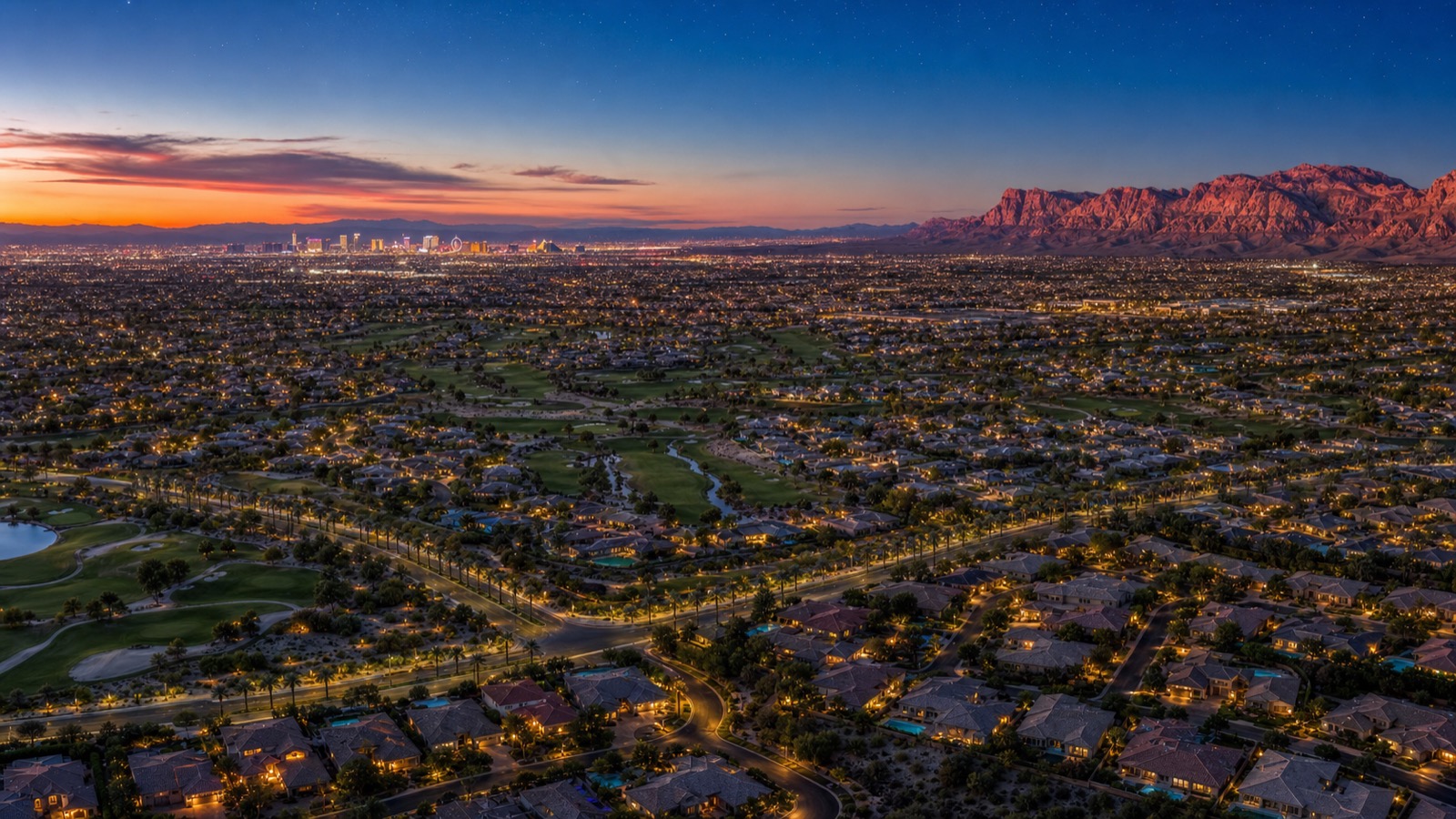
Summerlin's number is the easier one to pin down because I can pull it myself. Across all villages, Summerlin closed 1,936 MLS homes between September 19, 2025 and September 18, 2026 at a $630,000 median, $319 per square foot and a 34-day median time to contract, with 880 active listings on September 18, 2026, or 5.5 months of supply. The spread inside that median is wide. The Summerlin West ZIP 89138, home to Kestrel, Redpoint and Stonebridge, closed at $769,750 and $335 per foot; 89135, which holds The Ridges, Red Rock Country Club and The Cliffs, closed at $840,000 and $363; and the older northern and eastern ZIPs closed between $397,000 and $560,000. At the top, The Ridges closed 55 homes at a $2,799,000 median and $650 per foot, and Red Rock Country Club closed 73 at $2,050,000.
Scottsdale's number depends on the source and the product. According to a Scottsdale market report built on Arizona Regional MLS data, 1,054 single-family homes closed in Scottsdale from June through August 2026 at a $1.23 million median, $459 per square foot and 64 days on market. According to a second ARMLS-based August 2026 report, the all-property median for August was $945,000 at $452 per foot, 70 days on market, 3,150 active listings and 3.7 months of supply, with 660 homes sold in the month. Neither figure is an official ARMLS release, and I would not present them as one; they are the best public, non-restricted windows into a market I do not have direct MLS access to. Realtor.com's Scottsdale page is another public check.
Put the two together carefully and the gap is still large. Against Scottsdale's all-property $945,000, Summerlin's all-property $630,000 is about a third lower; against the single-family $1.23 million, Summerlin's premium ZIPs at $770,000 to $840,000 are still a third lower, and only the guard-gated enclaves match Scottsdale's citywide single-family median. On price per foot, $319 against $452 to $459 is a 30% discount. Days on market run the other way: Summerlin sells about twice as fast. What that means in practice is that the same household budget buys a newer, larger or better-located home in Summerlin, or a comparable home with a smaller mortgage. Our Summerlin premium analysis explains why Summerlin is expensive relative to Las Vegas; Scottsdale is expensive relative to Summerlin.
How Do Property Taxes Work in Nevada vs Arizona?
The two systems are built differently, and both are more owner-friendly than most relocating buyers expect. In Nevada, according to the Clark County Assessor, taxable value is the market value of the land plus the replacement cost of the improvements less depreciation of 1.5% a year for up to 50 years, and assessed value is 35% of that. According to the Clark County Treasurer, tax District 200, Las Vegas City, which covers Summerlin, carries a total rate of $3.2782 per $100 of assessed value for fiscal 2025-26. On a $630,000 taxable value, that is $220,500 assessed and about $7,228 a year before abatement. The abatement matters: Nevada caps the annual increase on an owner-occupied primary residence's bill at 3%, which the assessor's page references as the 3% abatement, so a long-held home's bill drifts up slowly regardless of what the market does.
Arizona uses a limited property value. According to the Maricopa County Assessor's FAQ, Class 3 primary residences are assessed at a 10% ratio, Proposition 117 limits the increase in limited property value to 5% a year, the LPV can never exceed full cash value, and the tax is the assessed value divided by 100 times the rate set each August. The rate is where Scottsdale gets complicated: the bill stacks the county, the school district, the community college, the city and any special districts. According to the City of Scottsdale, the city's own share for 2025-26 is $0.9124 per $100 of assessed value, split into a $0.4891 primary rate and a $0.4233 secondary rate for voter-approved bonds. On a $945,000 LPV that city share alone is about $862; the full bill depends on which school district and special districts the parcel sits in, so the only reliable number is the one on the treasurer's parcel record.
| Element | Nevada, Clark County District 200 | Arizona, Maricopa County |
|---|---|---|
| Value used | Taxable value: land at market plus improvements at replacement cost less 1.5% a year depreciation | Limited property value (LPV), capped at 5% annual growth under Prop 117 and never above full cash value |
| Assessment ratio | 35% of taxable value | 10% of LPV for Class 3 primary residences |
| Rate | $3.2782 per $100 assessed (fiscal 2025-26) | Sum of county, school, college, city ($0.9124) and special-district rates per $100 assessed |
| Growth limit | 3% annual cap on the bill for an owner-occupied primary residence | 5% annual cap on LPV; the rate itself can move |
| Illustration | $630,000 taxable value: $220,500 assessed, about $7,228 before abatement | $945,000 LPV: $94,500 assessed; city share about $862 plus other jurisdictions |
The structural difference is what gets capped. Nevada caps the bill; Arizona caps the value. For a buyer who plans to hold for a decade, Nevada's 3% bill cap is the cleaner promise, because it holds regardless of what the rate does. Arizona's 5% LPV cap still leaves the bill exposed to rate changes, though in practice Arizona's rates and effective burdens have been moderate. Neither state is a high-property-tax state, and for most relocating buyers the property-tax line is a rounding error next to the income-tax line, which is the next section.
What Does Arizona's 2.5% Income Tax Cost Compared With Nevada's Zero, and How Do Sales Taxes Compare?
This is the line that decides it for high earners. According to the Tax Foundation's 2025 state individual income tax table, Nevada has no individual income tax at all, one of eight states without one, while Arizona levies a flat 2.5% on all taxable income. Arizona's rate is the lowest flat income tax in the country, which is worth saying plainly; a household leaving California's top brackets will feel enormous relief in either state. But 2.5% of a large income is still real money every year. At $150,000 of taxable income the Arizona tax is about $3,750; at $200,000, about $5,000; at $300,000, about $7,500. Over a ten-year hold, a $200,000 household keeps roughly $50,000 more in Summerlin before any raises or investment income, and the gap grows for anyone selling appreciated assets or drawing large retirement distributions, which Arizona also taxes at 2.5%.
Sales tax runs the other way, slightly. According to Avalara's 2026 Clark County rate table, the minimum combined rate in Clark County is 8.375%, made up of the 4.6% Nevada state rate and 3.775% in county and local rates. According to the City of Scottsdale, the combined rate in Scottsdale is 8.0%: 5.6% state, 0.7% county and a 1.7% city transaction privilege tax effective July 1, 2025. On $40,000 a year of taxable purchases the difference is $3,350 against $3,200, or $150 a year in Scottsdale's favor, small enough that it should not move anyone's decision.
| Taxable income | Nevada income tax | Arizona income tax at 2.5% | Sales tax on $40,000 of purchases, NV 8.375% | Sales tax on $40,000, Scottsdale 8.0% |
|---|---|---|---|---|
| $100,000 | $0 | $2,500 | $3,350 | $3,200 |
| $150,000 | $0 | $3,750 | $3,350 | $3,200 |
| $200,000 | $0 | $5,000 | $3,350 | $3,200 |
| $300,000 | $0 | $7,500 | $3,350 | $3,200 |
The illustration applies the flat rate to taxable income before Arizona's own deductions and credits, so a real Arizona bill will be somewhat lower; it is a scale, not a return. Our Las Vegas versus Phoenix relocation guide runs the same math at the metro level, and our cost of living in Las Vegas guide covers the rest of the household budget. The fair summary: for a household under about $100,000, the income-tax gap is a few thousand dollars and lifestyle should decide; above $200,000, the gap is large enough to fund a meaningfully bigger mortgage in Summerlin, and above $500,000 it is the whole conversation.
Which Climate Is Hotter, and What Does Monsoon Season Change?
Both are hot desert cities, and the differences are smaller than the rivalry suggests, but they are measurable. According to NOAA's 1991-2020 monthly climate normals for Las Vegas, the July normal high at Harry Reid International Airport is 104.5 degrees with a 82.0-degree low, June is 99.4, August 102.8 and September 94.9, and the annual precipitation normal sums to 4.18 inches. According to NOAA's normals for Phoenix Sky Harbor, the July normal high is 106.5 with an 84.5 low, June is 104.2, August 105.1 and September 100.4, and annual precipitation sums to 7.22 inches. Phoenix is two to five degrees hotter in every summer month and stays above 100 degrees into September, where Las Vegas drops into the mid-90s.
The monsoon is the bigger lifestyle difference. Phoenix's normals show 0.91 inches in July, 0.93 in August and 0.57 in September, a 2.41-inch summer season that arrives as humid afternoons, dust storms and evening thunderstorms. Las Vegas gets 1.02 inches across the same three months and stays dry the rest of the summer. The trade-off cuts both ways: monsoon humidity makes a 106-degree Phoenix afternoon feel heavier than a 104-degree Las Vegas one, but the storms also cool Phoenix evenings and green the Sonoran Desert in a way the Mojave never manages. Winter favors Phoenix: its January normal high is 67.6 against Las Vegas's 58.5, and December is 66.2 against 56.9. Scottsdale golfers wear shorts in January; Summerlin golfers wear a pullover.
| Month | Las Vegas high / low (degrees F) | Phoenix high / low (degrees F) | Las Vegas precipitation (inches) | Phoenix precipitation (inches) |
|---|---|---|---|---|
| January | 58.5 / 40.5 | 67.6 / 46.0 | 0.56 | 0.87 |
| April | 78.5 / 56.9 | 85.5 / 60.8 | 0.20 | 0.22 |
| June | 99.4 / 75.8 | 104.2 / 78.6 | 0.04 | 0.02 |
| July | 104.5 / 82.0 | 106.5 / 84.5 | 0.38 | 0.91 |
| August | 102.8 / 80.6 | 105.1 / 83.6 | 0.32 | 0.93 |
| September | 94.9 / 72.4 | 100.4 / 78.1 | 0.32 | 0.57 |
| December | 56.9 / 39.6 | 66.2 / 45.3 | 0.45 | 0.74 |
| Annual precipitation | 4.18 | 7.22 |
One elevation note that the airport normals miss. Summerlin sits well above the Las Vegas airport station: according to Howard Hughes' village pages, Kestrel is perched above the valley at over 3,000 feet, and Summerlin West tops 4,550 feet at its highest point. North Scottsdale likewise climbs into the McDowell foothills above the Sky Harbor station. Both communities run a few degrees cooler than their airport numbers on summer evenings, so treat the table as the metro baseline rather than the reading on your patio.
Where Does Each Community's Water Come From, and What Changes in 2027?
Both drink from the same river, and buyers in both places should understand that before they understand anything else about water. According to the Southern Nevada Water Authority, Southern Nevada gets about 90% of its water supply from the Colorado River through Lake Mead and about 10% from Las Vegas Valley groundwater, Nevada has the right to consumptively use 300,000 acre-feet a year, and every gallon returned to the river through return-flow credits lets the region take another gallon out. According to the City of Scottsdale, about 90% of Scottsdale's drinking water comes from two surface sources, the Central Arizona Project and the Salt River Project, with roughly two-thirds from CAP, which is Colorado River water, a CAP allocation of approximately 81,000 acre-feet as of 2015, and less than 10% from groundwater. Scottsdale, in other words, is about 60% Colorado River; Summerlin is about 90%.
The rules governing that river change on January 1, 2027, and the change hits the two states very differently. The 2007 Interim Guidelines expire at the end of 2026; on August 21, 2026 the Department of the Interior signed the Record of Decision that replaces them through 2036, and the first two-year operating guidelines require the Lower Basin to reduce use by 1.25 million acre-feet in each of 2027 and 2028, split 760,000 acre-feet to Arizona, 440,000 to California and 50,000 to Nevada. Nevada's share falls from 300,000 to 250,000 acre-feet, and Southern Nevada consumed about 198,000 acre-feet in 2025, so the region keeps roughly 52,000 acre-feet of headroom even after the cut. Nevada sued anyway, over what 2029 might bring. Our Colorado River 2036 plan guide carries the full accounting, including Lake Mead's 1,038-foot September elevation and the buyer checklist.
Arizona's 760,000-acre-foot obligation is more than fifteen times Nevada's, and the CAP is the junior-priority water that absorbs Arizona cuts first, which is why Scottsdale watches the river more nervously than Las Vegas does. According to the City of Scottsdale's Colorado River update, a Tier 1 shortage is in effect for 2026, it does not reduce Scottsdale's municipal Colorado River supply under the current rules, and there are no immediate changes to residential service; the city also notes that the operating guidelines expire at the end of 2026 and that new rules beginning in 2027 could affect future allocations. Scottsdale has invested in aquifer recharge and a drought management plan for exactly that reason. For a homeowner the practical difference is turf rules: Southern Nevada's non-functional-turf ban and pool-size cap are in state law, while Scottsdale's restrictions are stage-based. Neither city's supply situation has moved home prices, and I do not expect it to in 2027.
How Are the Master Plans and HOAs Structured: Howard Hughes vs DC Ranch?
Summerlin is one master plan with one developer. According to Howard Hughes, Summerlin spans 22,500 acres with approximately 5,000 gross acres reserved for future growth, holds 132,000 residents and 300-plus parks, and centers on Downtown Summerlin, a 400-acre walkable core with more than 800,000 square feet of retail, the Las Vegas Ballpark and City National Arena. Governance runs through three master associations, Summerlin North, South and West, plus the Summerlin Council that funds parks and programming. In our Summerlin HOA fee guide we documented the 2026 Summerlin West master assessment at $69 a month, which includes the $37 Council portion, with villages and gated enclaves adding their own layer: the blended median on active listings was about $109 a month, while The Ridges posted a median $520 and Red Rock Country Club about $330, and club membership is separate.
Scottsdale is a city of master plans rather than a single one, and the two most often compared with Summerlin are DC Ranch and McDowell Mountain Ranch. According to DC Ranch, the community covers 4,400 acres adjacent to the McDowell Sonoran Preserve with 2,800 homes and about 7,000 residents across 26 neighborhoods in four villages, Country Club, Desert Camp, Silverleaf and Desert Parks; its first home was completed in 1997, and it runs a layered governance structure of a Community Council, a Ranch Association, a Covenant Commission and sub-associations, with two community centers, Desert Camp and The Homestead. According to the McDowell Mountain Ranch Community Association, that community sits within 3,200 acres of preserve setting, bills its assessments quarterly, and maintains two developed parks, a Community Center and a Recreation Center, with pools, courts and splash pads plus extensive hiking trails. Silverleaf, DC Ranch's estate village, layers a private golf club on top, and the club's initiation and dues are a separate, substantial line that buyers should get in writing from the club.
The structural contrast is scale versus intimacy. Summerlin's 132,000 residents and 300-plus parks make it larger than most Arizona cities; DC Ranch's 2,800 homes make it a village. Summerlin's master dues are low because the base is enormous; DC Ranch and Silverleaf dues are higher because fewer households fund the gates, the trails and the two centers. A buyer who wants a small, guard-gated, club-centered community will find more of them in North Scottsdale; a buyer who wants a big, open, amenity-rich master plan with a downtown will find it in Summerlin, and can still buy behind a gate at The Ridges or in the valley's other guard-gated communities. Both approaches work; they simply attract different households.
Which Offers Better Golf and Outdoor Lifestyle?
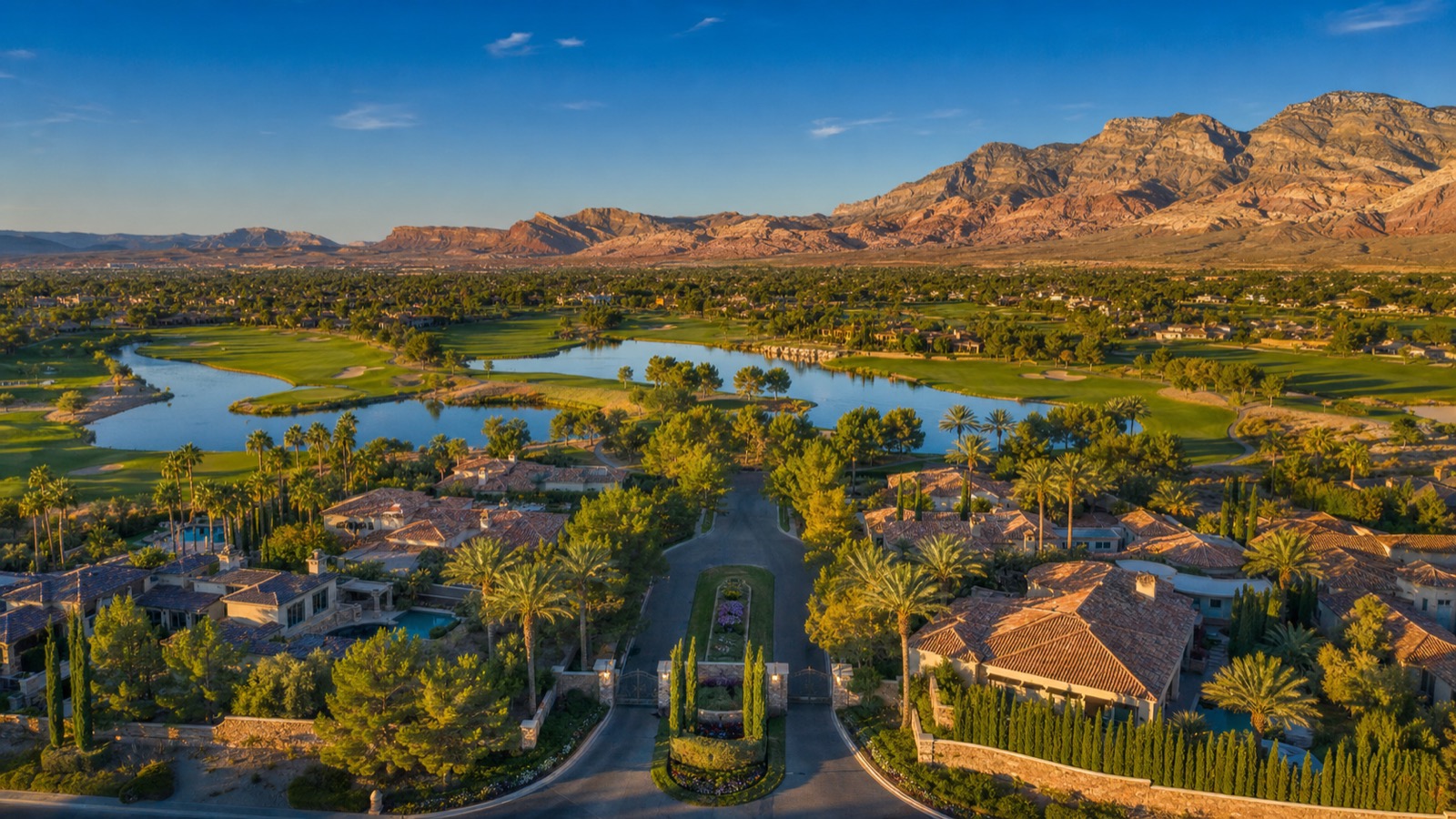
On golf, Scottsdale wins on volume and Summerlin wins on convenience, and both have a PGA Tour stop. According to Experience Scottsdale's golf fact sheet, Scottsdale has 51 golf courses and 1,223 holes, with another 200 courses across its Valley of the Sun neighbors, and TPC Scottsdale's Stadium Course hosts the WM Phoenix Open, which draws more than 700,000 spectators a year and is the most highly attended tournament on the tour. According to Howard Hughes' year-end 2025 release, Summerlin has 10 golf courses inside the master plan, including TPC Summerlin, the host of the Shriners Children's Open, and Red Rock Country Club's two courses. No Las Vegas neighborhood matches Scottsdale's card, but no Scottsdale neighborhood puts 10 courses inside a single HOA boundary.
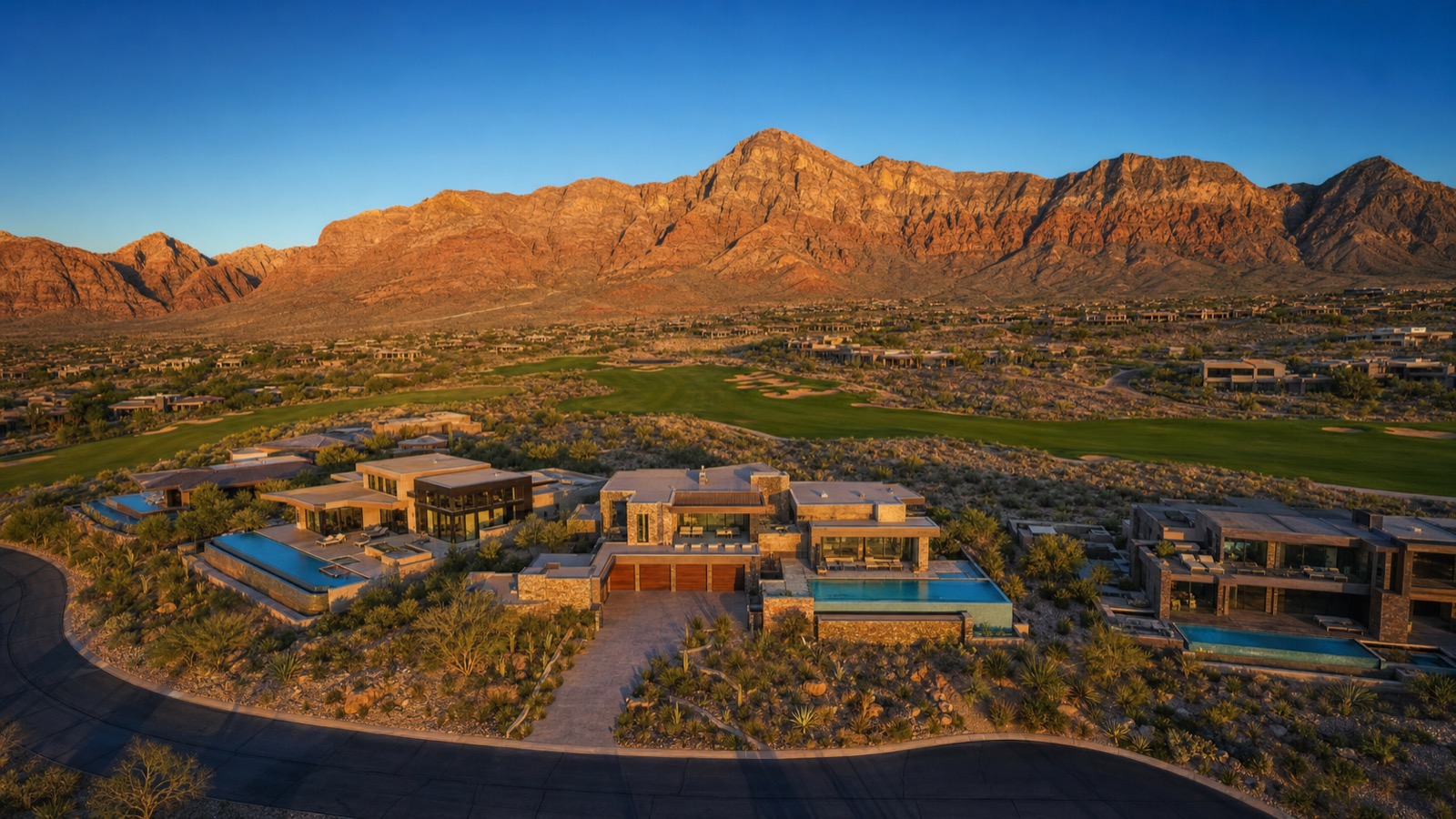
Outdoors beyond golf, the comparison is Red Rock against the McDowells, and it is close. According to the Bureau of Land Management, Red Rock Canyon National Conservation Area, which borders Summerlin's western edge, draws more than three million visitors a year to its 13-mile scenic drive, climbing routes and trails. According to the City of Scottsdale, the McDowell Sonoran Preserve covers more than 30,500 acres with over 230 miles of multi-use trails and 10 trailheads, and DC Ranch and McDowell Mountain Ranch back directly onto it. Summerlin's answer inside the master plan is its own trail system, which the developer puts at more than 200 miles, plus 300-plus parks; Scottsdale's answer is the preserve itself. Summerlin adds the Spring Mountains, where Mount Charleston and Lee Canyon offer alpine hiking and winter skiing within an hour; Scottsdale adds the preserve's 230-plus miles of trail at the back gate.
For daily life the two produce different habits. Summerlin residents walk and bike the trail network to parks, schools and Downtown Summerlin, then drive to Red Rock on weekends. Scottsdale residents drive to a preserve trailhead, then hike or ride for hours. Cactus League spring training and the WM Phoenix Open give Scottsdale a bigger annual event calendar; the Las Vegas Ballpark, the Golden Knights' practice rink and the Strip's arenas give Summerlin a shorter drive to professional sports and shows year-round. In our experience, retirees and golf-first households lean Scottsdale, and families with school-age kids who want to walk somewhere lean Summerlin.
How Do the Airports and Commutes Compare?
Both communities are served by a top-ten U.S. airport, and both airports had a strong 2025. According to Harry Reid International Airport, LAS served nearly 55 million passengers in 2025, its third-highest annual total, with direct connectivity to more than 170 markets and Air France's seasonal Paris nonstop beginning April 15, 2026. According to the City of Phoenix, more than 51.6 million passengers traveled through Sky Harbor in 2025, and March 2026 set a monthly record at 5,128,429. Both are large hubs with deep domestic schedules, and frequent flyers do well in either.
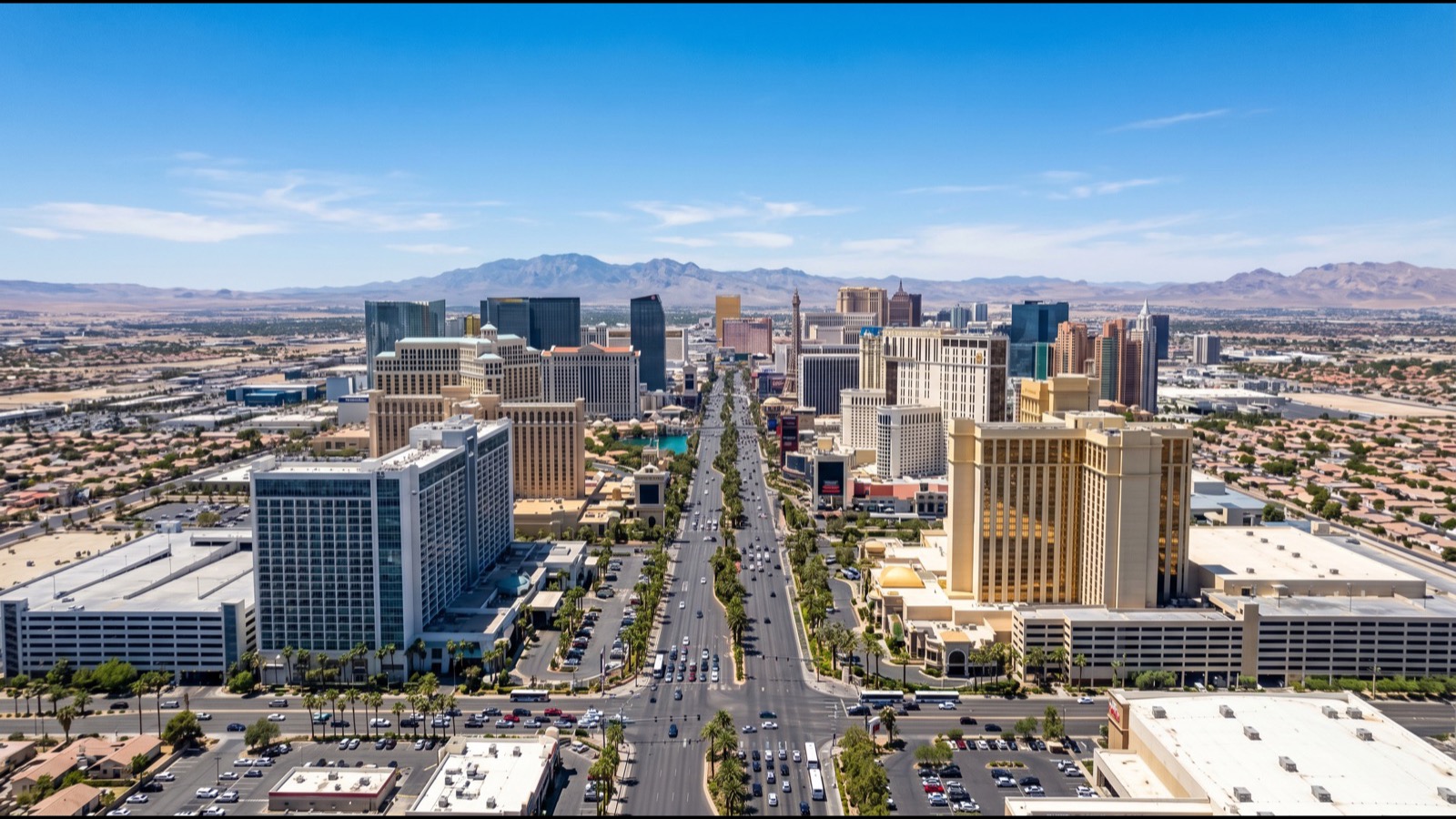
The drive to the airport is where Summerlin's geography helps. According to Howard Hughes, Summerlin sits nine miles west of the Strip, and in our Summerlin commute guide we measured the airport run at about 15 miles and 20 to 30 minutes via the CC-215 Beltway off-peak, with downtown at about 13 miles and 20 minutes via Summerlin Parkway and US-95. Summerlin has two limited-access routes, Summerlin Parkway and the 215, and a Strip commute of 20 to 30 minutes. Scottsdale's road network is largely arterial, with the Loop 101 as its main freeway, and Sky Harbor sits southwest of the city, so an airport run from North Scottsdale or DC Ranch is a longer drive than from Summerlin, and a downtown Phoenix commute from the McDowell foothills is longer still. Old Town and South Scottsdale are the exception, sitting much closer to the airport.
For remote workers none of this matters much, and for anyone commuting daily it matters a lot. Phoenix's larger, more spread-out metro means longer average drives to its employment centers in downtown Phoenix, Tempe and Chandler, while Las Vegas's compact valley keeps most jobs within 30 minutes of Summerlin. If your work is on the Strip, in the medical district or at the airport, Summerlin's commute is one of the shortest in the west valley; if your work is in Scottsdale's own office corridor, a Scottsdale address is the shorter drive. Our moving to Las Vegas guide runs the commute test we ask relocating buyers to drive at 7:30 a.m. before they commit to any neighborhood.
How Do the Schools Compare: Clark County vs Scottsdale Unified?
Scottsdale Unified is one of Arizona's strongest districts by the state's own measure. According to the Scottsdale Unified School District's October 30, 2025 release, SUSD is an A-rated district, 22 of its 30 schools earned an A on the 2025 state letter grades with six B's and two C's, and the district posted the highest overall performance in Maricopa County on the spring 2025 state assessments in both English language arts and math, ranking first among all Arizona districts and charters serving more than 10,000 students. Desert Mountain High School and Desert Canyon Elementary are among the A schools. That is a compact, well-funded suburban district with a consistent record, and it is a legitimate reason families choose Scottsdale.
Summerlin sits inside the Clark County School District, one of the largest districts in the country, which makes district-level averages nearly useless; the school-level ratings are what matter. According to the Nevada Department of Education's 2024-25 Nevada School Performance Framework star ratings, Palo Verde High School, the comprehensive high school for Summerlin West, earned 5 stars, Sig Rogich Middle School earned 5 stars, the Billy and Rosemary Vassiliadis and John W. Bonner elementary schools earned 5 stars, William Lummis and Linda Rankin Givens earned 4, and West Career and Technical Academy, the magnet many Summerlin families apply to, earned 5. Summerlin also holds 26 public, private and charter schools inside the master plan, according to Howard Hughes, including the 5-star Doral Academy Red Rock charter and private options such as Faith Lutheran and Alexander Dawson.
The honest comparison is that Scottsdale offers a strong district by default, while Summerlin offers a strong set of schools within a district that is uneven elsewhere. For a family that will buy inside the Palo Verde and Rogich zone, the outcome is comparable to Scottsdale's A schools; for a family that buys on the edge of Summerlin or is later rezoned, the risk is higher than in SUSD. Both districts redraw boundaries as new villages build out, so the school named in the listing is not a guarantee in either place. Verify the address with the district before contract, and if a specific school is the reason for the move, buy inside its established zone rather than in a new village where the boundary is still being drawn.
Which Job Market Is Stronger?
Phoenix is larger, better paid and more diversified, and there is no point pretending otherwise. According to the Bureau of Labor Statistics' Phoenix area economic summary updated September 2, 2026, total nonfarm employment in the Phoenix metro was 2,439,400 in July 2026, up 29,600 or 1.2% over the year, with trade, transportation and utilities at 477,500, education and health services at 423,200 and growing 3.7%, professional and business services at 387,400, financial activities at 208,100 and manufacturing at 147,600. Average weekly wages in the Phoenix metro were $1,557 in the first quarter of 2026. The metro unemployment rate was 4.8% in July 2026, up from 4.3% a year earlier, and Maricopa County's was 4.7%. Scottsdale itself anchors finance, health care and corporate headquarters within that metro.
Las Vegas is smaller and more concentrated, but it is growing faster in the sectors that matter to relocating professionals. According to the BLS Las Vegas area economic summary updated September 2, 2026, total nonfarm employment was 1,172,200 in July 2026, up 16,400 or 1.4% over the year, slightly faster than Phoenix's 1.2%. Leisure and hospitality remains the largest sector at 302,200 jobs, down 0.6%, but professional and business services grew 5.7% to 181,500 and education and health services grew 5.4% to 141,400, both well ahead of Phoenix's growth rates in the same sectors. Average weekly wages were $1,345 in the first quarter of 2026, about 14% below Phoenix, and the metro unemployment rate was 5.4% in July 2026, down from 5.9% a year earlier.
What this means for a household is straightforward. If your career depends on a deep local market in semiconductors, finance, aerospace or corporate management, Phoenix and Scottsdale offer more employers and higher average pay, and the 2.5% income tax is a modest price for that breadth. If you are a remote worker, a business owner, a physician, a hospitality executive or anyone whose income is portable, Summerlin's zero income tax and lower home prices leave more of that income in your pocket, and the valley's fastest-growing sectors, health care and professional services, are the ones most likely to hire you. Across the 9,600+ closings we have represented, the relocations that worked best were the ones where the job was settled before the house was chosen.
What Does the Monthly Payment Look Like in Each Place?
The price gap turns into a payment gap that most buyers can feel. According to Freddie Mac's Primary Mortgage Market Survey, the average 30-year fixed rate was 6.95% for the week of September 17, 2026, with the 15-year at 6.26%. The table applies the 30-year rate to the medians above with 20% down, principal and interest only, and leaves out property tax, insurance and HOA on purpose, because those layers depend on the parcel and the point is to isolate the price. Treat it as a scale, not a quote, and run your own numbers with a lender in whichever state you choose.
| Purchase | Median price | Loan at 80% | Monthly P and I | Cash down at 20% |
|---|---|---|---|---|
| Summerlin, all homes (12 months ending September 18, 2026) | $630,000 | $504,000 | $3,336 | $126,000 |
| Summerlin West ZIP 89138 | $769,750 | $615,800 | $4,076 | $153,950 |
| Scottsdale, all types (August 2026) | $945,000 | $756,000 | $5,004 | $189,000 |
| Scottsdale, single-family (June to August 2026) | $1,230,000 | $984,000 | $6,514 | $246,000 |
The all-homes gap is about $1,668 a month and $63,000 in cash at closing; the single-family gap against Summerlin's overall median is about $3,178 a month and $120,000 in cash. Stack the income tax on top and a $200,000 household in Summerlin has roughly $416 more a month than the same household in Scottsdale before the mortgage is even paid, which is why so many of our relocating clients describe the Summerlin decision as buying the same house with a smaller loan. The counterweight is wages: the Phoenix metro's $1,557 average weekly wage is $212 above Las Vegas's, or about $11,000 a year, which for a two-earner household employed locally can offset the income tax entirely. That is why the job question comes before the house question.
There is also a fairness point on the Summerlin side of the ledger. The $630,000 median includes 1990s villages and age-restricted Sun City Summerlin, which closed 518 homes at $450,000 in the window; a relocating buyer shopping the newer Summerlin West villages or a guard-gated enclave is closer to the $770,000 to $2.8 million range, and the new construction page shows what the active builders are asking today. The Las Vegas homes for sale search lets you filter by village, year built and price per foot so you are comparing the Summerlin you would actually buy against the Scottsdale you would actually buy.
Who Should Pick Summerlin, and Who Should Pick Scottsdale?
Pick Scottsdale if the job is there or the golf is the point. A household with two local careers in finance, health care, aerospace or corporate management will earn more in the Phoenix metro, and the 2.5% income tax is a fair trade for that breadth. Golf-first retirees who want 51 courses within the city limits, a January high of 67.6 degrees and a Cactus League spring will not find that combination in Nevada. Families who want an A-rated district by default rather than a strong zone inside a large district should weight Scottsdale Unified heavily. And buyers who want a small, guard-gated, club-centered community with the McDowell Sonoran Preserve at the back gate have more of them to choose from in North Scottsdale than in all of Las Vegas.
Pick Summerlin if the income is portable, the budget is finite, or the summer matters. A remote worker, business owner or retiree drawing large distributions keeps 2.5% of every dollar in Nevada, which at $200,000 is $5,000 a year and at $500,000 is $12,500, every year, on top of a home that costs a third less at the median and sells twice as fast. Families who buy inside the Palo Verde and Sig Rogich zone get a 5-star pipeline that matches Scottsdale's A schools. Anyone who dreads monsoon humidity gets a drier, two-to-five-degree-cooler summer and a shorter airport run. And buyers who want a big, open master plan with a downtown, 300-plus parks and Red Rock Canyon at the western edge will not find a Scottsdale equivalent at Summerlin's price.
The households in the middle, with portable income but a golf habit, or local jobs but a tight budget, should tour both in the same month. In our experience the tie usually breaks on one of three things: the specific school, the specific commute, or the specific guard-gated enclave a buyer falls for. Summerlin has The Ridges, Red Rock Country Club and The Summit Club; Scottsdale has Silverleaf and the other DC Ranch villages. Both lists are excellent. The Las Vegas side of that comparison is what our team does every day, and we will tell you honestly when Scottsdale is the better answer for your household.
Frequently Asked Questions
Is Summerlin cheaper than Scottsdale?
Yes, by a wide margin at the median. Summerlin closed 1,936 MLS homes at a $630,000 median and $319 per square foot in the 12 months ending September 18, 2026, according to Las Vegas MLS data pulled through Repliers on September 19, 2026. Scottsdale's single-family median was $1.23 million at $459 per foot for June through August 2026, and its all-property median was $945,000 in August 2026, according to third-party reports built on Arizona Regional MLS data. Summerlin's guard-gated enclaves, at $2 million to $2.8 million medians, are the only tier that prices like Scottsdale's citywide single-family market.
How much does Arizona's income tax cost compared with Nevada?
Nevada has no individual income tax; Arizona levies a flat 2.5% on taxable income, according to the Tax Foundation's 2025 state table. At $100,000 of taxable income the Arizona tax is about $2,500; at $200,000 about $5,000; at $300,000 about $7,500, before Arizona's own deductions and credits. Over ten years a $200,000 household keeps roughly $50,000 more in Summerlin. Arizona's rate is the lowest flat income tax in the country, so relocators from high-tax states get relief in either place; the difference is whether the relief is complete.
Are property taxes higher in Scottsdale or Summerlin?
The systems differ more than the burden does. Nevada assesses 35% of taxable value and applies Summerlin's District 200 rate of $3.2782 per $100 for fiscal 2025-26, about $7,228 on a $630,000 taxable value before the 3% primary-residence bill cap. Arizona assesses 10% of limited property value, capped at 5% annual growth under Proposition 117, and stacks county, school, college, city and special-district rates; Scottsdale's city share alone is $0.9124 per $100 assessed. Because Nevada caps the bill and Arizona caps the value, Nevada's long-hold outcome is more predictable; the actual dollars depend on the parcel.
Is Scottsdale hotter than Summerlin?
Slightly, and wetter. NOAA's 1991-2020 normals put Phoenix Sky Harbor's July high at 106.5 degrees against Las Vegas's 104.5, with Phoenix two to five degrees hotter in every summer month and still at 100.4 in September, when Las Vegas is 94.9. Phoenix also gets a monsoon: 2.41 inches of rain across July through September and 7.22 inches a year, against 1.02 inches and 4.18 for Las Vegas. Winter favors Scottsdale, with a January high of 67.6 against 58.5. Both Summerlin and North Scottsdale sit above their airport stations and run a few degrees cooler on summer evenings.
Do Summerlin and Scottsdale have water problems?
Both rely on the Colorado River, and both are managing it. Southern Nevada gets about 90% of its supply from the river, has a 300,000 acre-foot right that drops to 250,000 for 2027 and 2028 under the August 21, 2026 Record of Decision, and used about 198,000 acre-feet in 2025, leaving headroom. Scottsdale gets about 90% of its water from the Central Arizona Project and the Salt River Project, roughly two-thirds from CAP, and Arizona must cut 760,000 acre-feet in each of 2027 and 2028. Scottsdale's own update says the current Tier 1 shortage does not reduce its municipal supply and residential service is unchanged.
Which has better schools, Summerlin or Scottsdale?
Scottsdale Unified is an A-rated district in which 22 of 30 schools earned an A on the 2025 Arizona letter grades, and it ranked first in ELA and math among Arizona districts serving more than 10,000 students on the spring 2025 assessments. Summerlin's zoned schools inside the Clark County School District rate comparably at the school level: Palo Verde High School, Sig Rogich Middle School and the Vassiliadis and Bonner elementaries all earned 5 stars on Nevada's 2024-25 framework. The difference is consistency: Scottsdale is strong district-wide, while Summerlin is strong zone by zone inside a very large district.
Is the job market better in Scottsdale or Summerlin?
The Phoenix metro is larger and better paid: 2,439,400 nonfarm jobs in July 2026, a $1,557 average weekly wage in the first quarter of 2026 and 4.8% unemployment, according to the Bureau of Labor Statistics. The Las Vegas metro had 1,172,200 jobs, a $1,345 weekly wage and 5.4% unemployment, but grew faster over the year, 1.4% against 1.2%, with professional and business services up 5.7% and education and health up 5.4%. Households with two local careers usually earn more in Scottsdale; households with portable income keep more in Summerlin.
Ready to Compare Summerlin and Scottsdale With Nevada Real Estate Group?
The most useful thing we do for buyers weighing these two communities is refuse to sell them on either one. We start with a worksheet: gross household income, where each earner's job will be, the school each child would attend, the airport frequency, the golf habit and the budget for a down payment. Then we fill in the Summerlin column with live numbers, the last 90 days of closings for the specific villages that fit, the current HOA and any SID for the specific parcel, the District 200 tax bill, and the Freddie Mac rate applied to the actual price, and we leave the Scottsdale column for you to fill in with a Scottsdale agent, using the same categories. Across the 9,600+ closings and $4.85 billion-plus in volume our 150-plus agents have handled over 16-plus years, the buyers who ran that worksheet before they toured were the ones who never second-guessed the move.
If Summerlin wins on paper, we make the visit efficient. A one-day tour covers the Summerlin West villages, a built-out village in Summerlin North or South, and one guard-gated enclave, in the order you would live them, including a 7:30 a.m. drive of the commute you would actually make. For relocating buyers we handle the Nevada side of the paperwork, from the primary-residence tax abatement claim to the HOA resale package under NRS 116, and we coordinate with your lender on the state-specific pieces of the file. If Scottsdale wins on paper, we will say so, and we are happy to point you toward the questions to ask there.
When you are ready to compare, the moving to Las Vegas guide covers the tax, water and cost-of-living questions in more depth, and the market report tracks Summerlin's prices monthly. Then call Nevada Real Estate Group at (702) 637-1759, or visit us at 8945 W Russell Rd, Suite 170, Las Vegas, NV 89148. Chris Nevada, LPT Realty, license S.181401.
Which Sources Inform This Summerlin vs Scottsdale Guide?
- Las Vegas MLS data pulled through Repliers on September 19, 2026: Summerlin closings from September 19, 2025 through September 18, 2026 and actives as of September 18, 2026, grouped by recorded subdivision and ZIP. MLS closings only; not an official Las Vegas REALTORS statistic.
- Scottsdale Home Data, ARMLS-based market report and Arizona Homes and Condos, Scottsdale August 2026 report: Scottsdale single-family and all-property medians, price per foot, days on market and supply. Third-party compilations, not official ARMLS releases.
- Tax Foundation, state individual income tax rates: Nevada none, Arizona 2.5% flat.
- City of Scottsdale, taxes: 1.7% city transaction privilege tax effective July 1, 2025, 8.0% combined rate, and 2025-26 city property tax rates of $0.4891 primary and $0.4233 secondary.
- Avalara, Clark County sales tax: 8.375% minimum combined rate, 4.6% state and 3.775% county and local.
- Maricopa County Assessor FAQ: Class 3 primary residence 10% assessment ratio, Proposition 117's 5% LPV cap and the tax computation.
- Clark County Assessor, real property and Clark County Treasurer, District 200 rate: the 35% assessment ratio, taxable-value method, 3% abatement and the $3.2782 rate.
- NOAA NCEI 1991-2020 monthly normals, Las Vegas and Phoenix Sky Harbor: every temperature and precipitation figure in the climate table.
- Southern Nevada Water Authority, where our water comes from: 90% Colorado River, 10% groundwater, the 300,000 acre-foot right and return-flow credits.
- City of Scottsdale, water supply and Colorado River update: CAP and SRP shares, the 81,000 acre-foot CAP allocation, groundwater share and Tier 1 shortage status.
- Howard Hughes, Summerlin overview, Summerlin year-end 2025 release and Summerlin village pages: acreage, residents, parks, Downtown Summerlin, golf course and school counts, and Kestrel's elevation.
- DC Ranch, about and McDowell Mountain Ranch Community Association: acreage, homes, villages, governance layers and amenities.
- City of Scottsdale, McDowell Sonoran Preserve, Bureau of Land Management, Red Rock Canyon, Experience Scottsdale golf fact sheet and TPC Summerlin: preserve acreage and trails, Red Rock visitation, golf course counts and tournaments.
- Harry Reid International Airport, 2025 passengers and City of Phoenix, Sky Harbor passenger records: 2025 passenger totals.
- Scottsdale Unified School District, October 30, 2025 release and Nevada Department of Education, 2024-25 star ratings: district letter grades and school star ratings.
- Bureau of Labor Statistics, Las Vegas area economic summary and Phoenix area economic summary, both updated September 2, 2026: employment, sector growth, wages and unemployment.
- Freddie Mac Primary Mortgage Market Survey: 6.95% 30-year and 6.26% 15-year averages for the week of September 17, 2026.
Tax rates, home prices, water rules, school boundaries and employment figures change; confirm current figures for your household and the specific property before relocating. Nevada Real Estate Group is licensed in Nevada and does not represent buyers in Arizona.