

Ask a Midwest transplant what almost stopped them from moving to Las Vegas and you'll hear the same word surprisingly often: scorpions. The fear is real; the problem, for most of the valley, is not — or rather, it's a manageable maintenance line item that certain neighborhoods budget for the way coastal owners budget for termites and Minnesotans budget for ice dams. But because the topic lives on fear-forum threads instead of practical guides, buyers either overweight it (walking away from great houses) or ignore it (buying at the desert edge with no sealing budget and a barefoot toddler).
This is the practical version, from a team that has walked thousands of buyers through these exact conversations. Across the 9,600+ closings Nevada Real Estate Group has represented, scorpion questions cluster around the same handful of decisions — which neighborhoods, what prevention costs, what to check in escrow — and every one of them has a concrete answer. Here's the full desert-pest briefing: scorpions first, then the rest of the roster nobody warns you about (spoiler: pigeons cost Las Vegas homeowners more than scorpions do).
Scorpions are present but manageable in Las Vegas: the Arizona bark scorpion is the only medically significant species, pressure concentrates at desert-edge and foothill neighborhoods, and prevention is routine — home sealing runs $400-1,500 one-time, monthly pest service $40-80, and stings are painful but rarely dangerous. Buyers should ask about scorpion history in escrow, budget sealing on desert-edge homes, and treat the topic as a maintenance line, not a dealbreaker.
- The Arizona bark scorpion is the only medically significant local species — painful sting, rarely dangerous for healthy adults.
- Pressure maps to geography: foothill and desert-edge neighborhoods in Henderson and Summerlin see the most activity.
- Prevention is a budget line: $400-1,500 for professional home sealing, $40-80 a month for a pest service.
- Ask the seller about pest history in escrow — and blacklight the yard at night during your due-diligence window.
- The full desert roster (pigeons, crickets, black widows, roof rats) costs owners more collectively than scorpions do.
Are Scorpions Actually a Big Problem in Las Vegas?
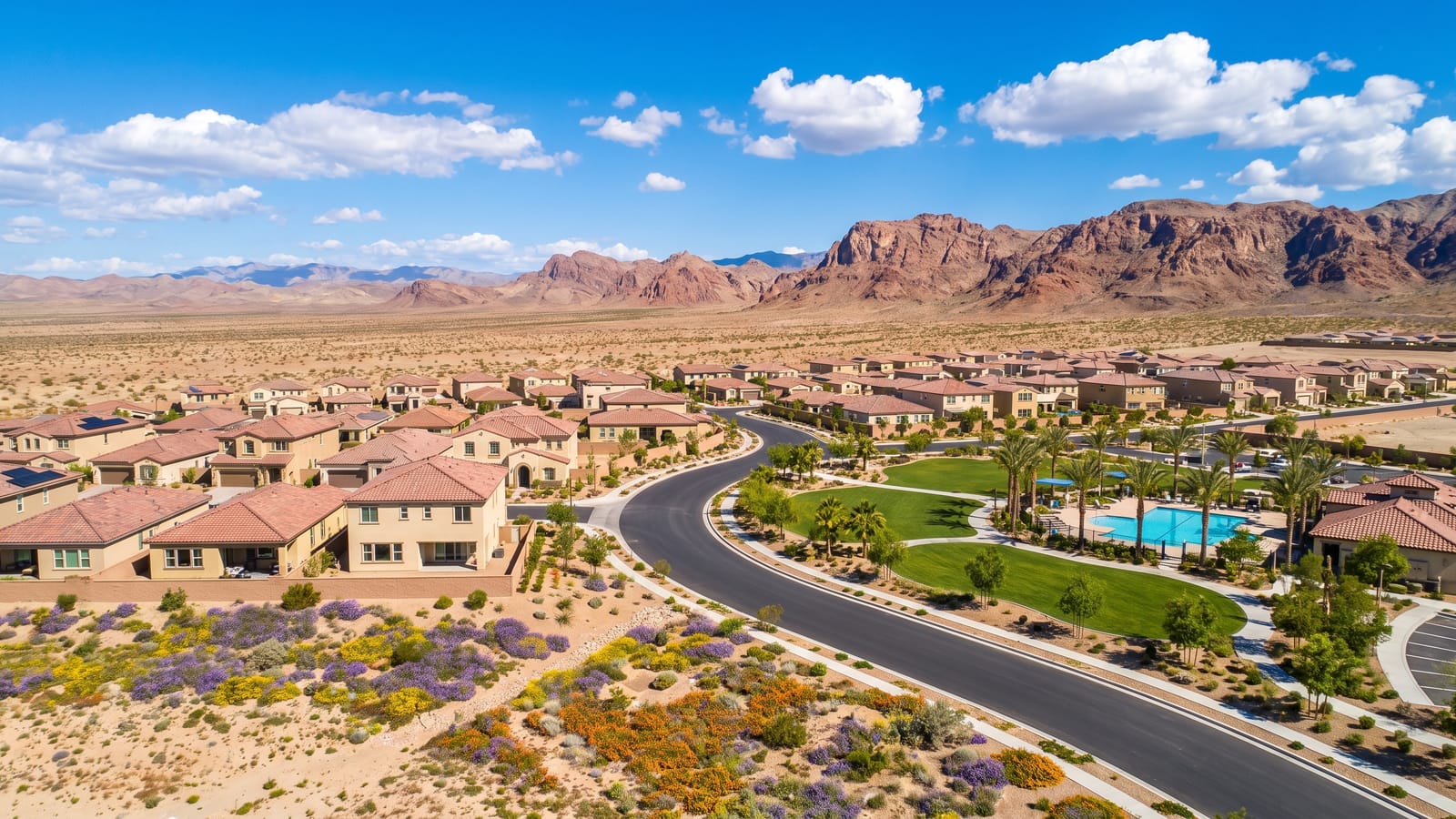
Honest answer: they're a real presence and a small problem. The valley sits in the Mojave Desert, scorpions predate every subdivision here, and construction at the desert edge stirs them into adjacent neighborhoods. But scale matters. According to the University of Nevada, Reno Extension, of the roughly two dozen scorpion species in Nevada, only one — the Arizona bark scorpion — carries venom of real medical significance, and even its sting sends healthy adults to the medicine cabinet, not the hospital, in the overwhelming majority of cases.
The practical translation for homeowners: most of the valley's interior neighborhoods can go years without a single sighting, desert-edge and foothill zones see seasonal activity that a sealing-plus-service routine reduces to near zero, and the truly scorpion-heavy pockets are known, mapped by every local pest company, and — this is the part the fear-threads skip — full of happy families who spend $50 a month on the problem and forget it exists. In our experience, the buyers who walk away from a right-fit house over scorpion anxiety almost always regret it more than the buyers who priced in a $1,000 sealing job.
Which Scorpions Live in Las Vegas — and Which One Matters?
The three you'll actually encounter:
| Species | Size | Sting severity | Behavior that matters |
|---|---|---|---|
| Arizona bark scorpion | 2–3 inches, slender, tan | The one that matters — intense pain, numbness; medically significant for infants, elderly, allergic individuals | Climbs walls and textured stucco, squeezes through 1/16-inch gaps, enters homes; the target of every sealing job |
| Striped-tail scorpion | 2–2.5 inches, stockier | Comparable to a bee sting | Ground-dweller, rarely enters homes; common under rocks and in gravel yards |
| Desert hairy scorpion | 4–6 inches, the big one | Mild despite terrifying size — bee-sting class | Burrows in open desert; the dramatic photo, not the actual problem |
The bark scorpion's two habits drive the whole playbook: it climbs (walls, stucco, block fences — which is why they turn up in second-floor bathrooms) and it fits through gaps the width of a credit card (which is why sealing works). It also fluoresces under ultraviolet light — every scorpion does — which turns detection into a $15 flashlight errand rather than guesswork.
Which Las Vegas Neighborhoods Have the Most Scorpions?
Geography, not luck. Pressure concentrates where three factors stack: proximity to open desert or washes, mature landscaping with irrigation (which feeds the crickets scorpions eat), and recent construction churning the ground. The practical map our clients ask for:
- Henderson foothills — Anthem, Seven Hills, MacDonald Highlands' desert edges, and the Black Mountain slopes are the valley's best-known scorpion zip codes; Henderson buyers at the hillside edge should assume a sealing budget from day one.
- Summerlin's desert rim — the newest villages pressed against Red Rock's outwash see construction-stirred activity; interior Summerlin villages a mile from open desert see far less.
- Older irrigated neighborhoods — pockets of central Las Vegas and old Henderson with decades-old block walls, mature trees, and flood irrigation history hold stable populations that predate the suburbs around them.
- Anywhere beside an active construction site — grading displaces everything living in the soil into the finished homes next door for a season or two; new-construction buyers on the first finished street of a phase report the most first-year sightings.
- The calm interior — large swaths of the valley floor (much of North Las Vegas, established central neighborhoods away from washes) see so little activity that pest companies sell general service there, not scorpion service.
None of this should redraw your home search by itself — every zone above contains some of the valley's best living, and the buying-in-Henderson calculus weighs schools, equity, and commute far heavier than a $50 monthly line item. It should just set the budget accurately.
One dynamic worth knowing because it changes the answer over time: pressure fades as neighborhoods mature. The desert-edge street that catches construction-displaced scorpions in year one typically settles dramatically by year three or four, once the surrounding phases build out, the disturbed ground stabilizes, and three seasons of sealing and service across the block thin the population. Today's "scorpion street" reputation often describes the neighborhood as it was during build-out, not as it is — which is why we tell buyers to weight a current resident's answer over a five-year-old forum thread, and why an established Anthem resale with a decade of service history frequently carries less real pest pressure than its reputation suggests. The reverse also holds: a calm interior street that suddenly borders a new grading project can see a temporary season of visitors. The land's history, not the ZIP code, writes the pest bill.
How Do You Scorpion-Proof a Las Vegas Home?
The professional playbook, in descending order of effectiveness per dollar:
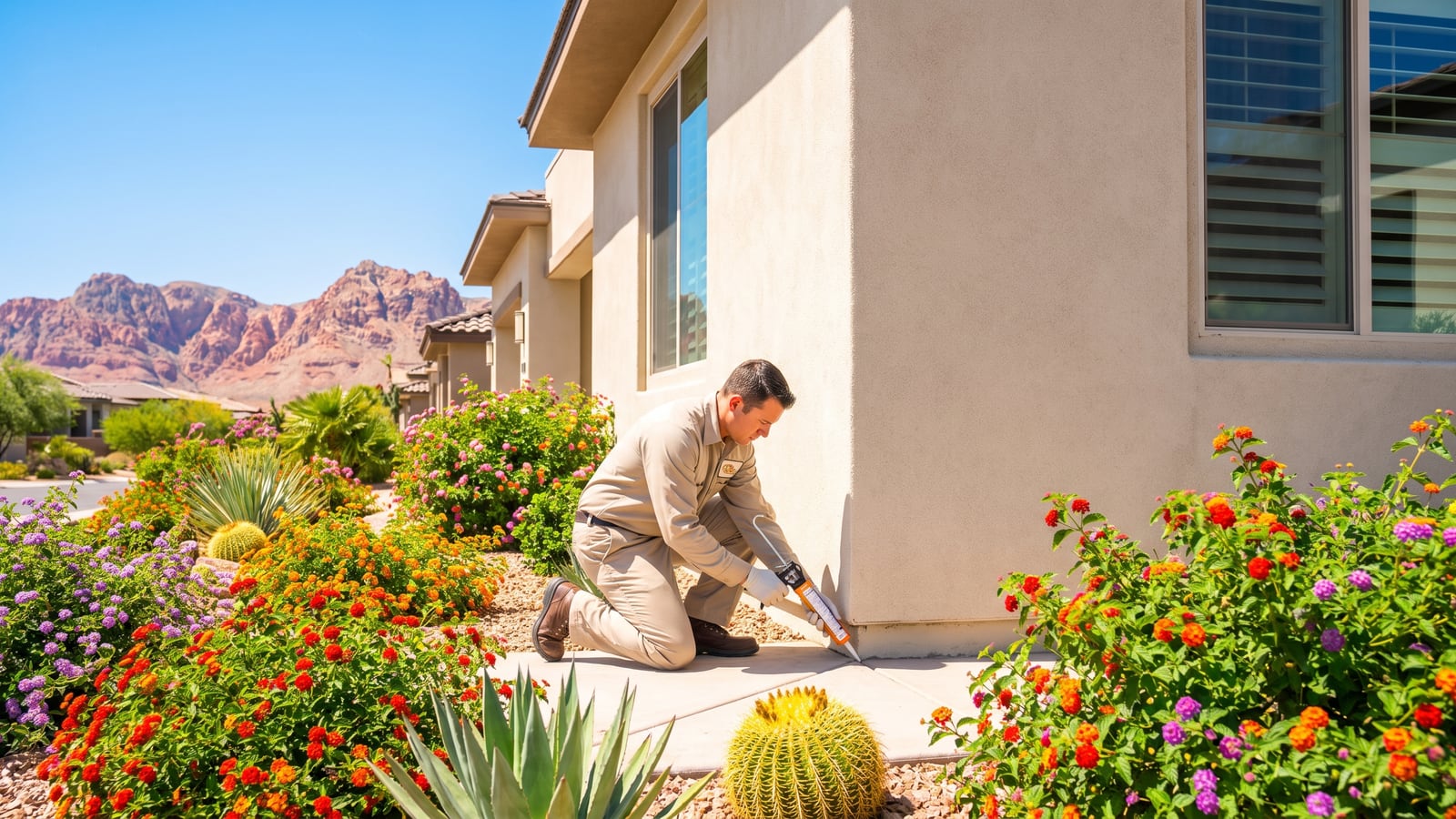
- Seal the envelope — $400-1,500 one-time. Professional home sealing closes the 1/16-inch-plus gaps at the foundation, weep screeds, utility penetrations, door thresholds, and garage — the bark scorpion's actual entrances. On desert-edge homes this is the single highest-value spend in this entire guide.
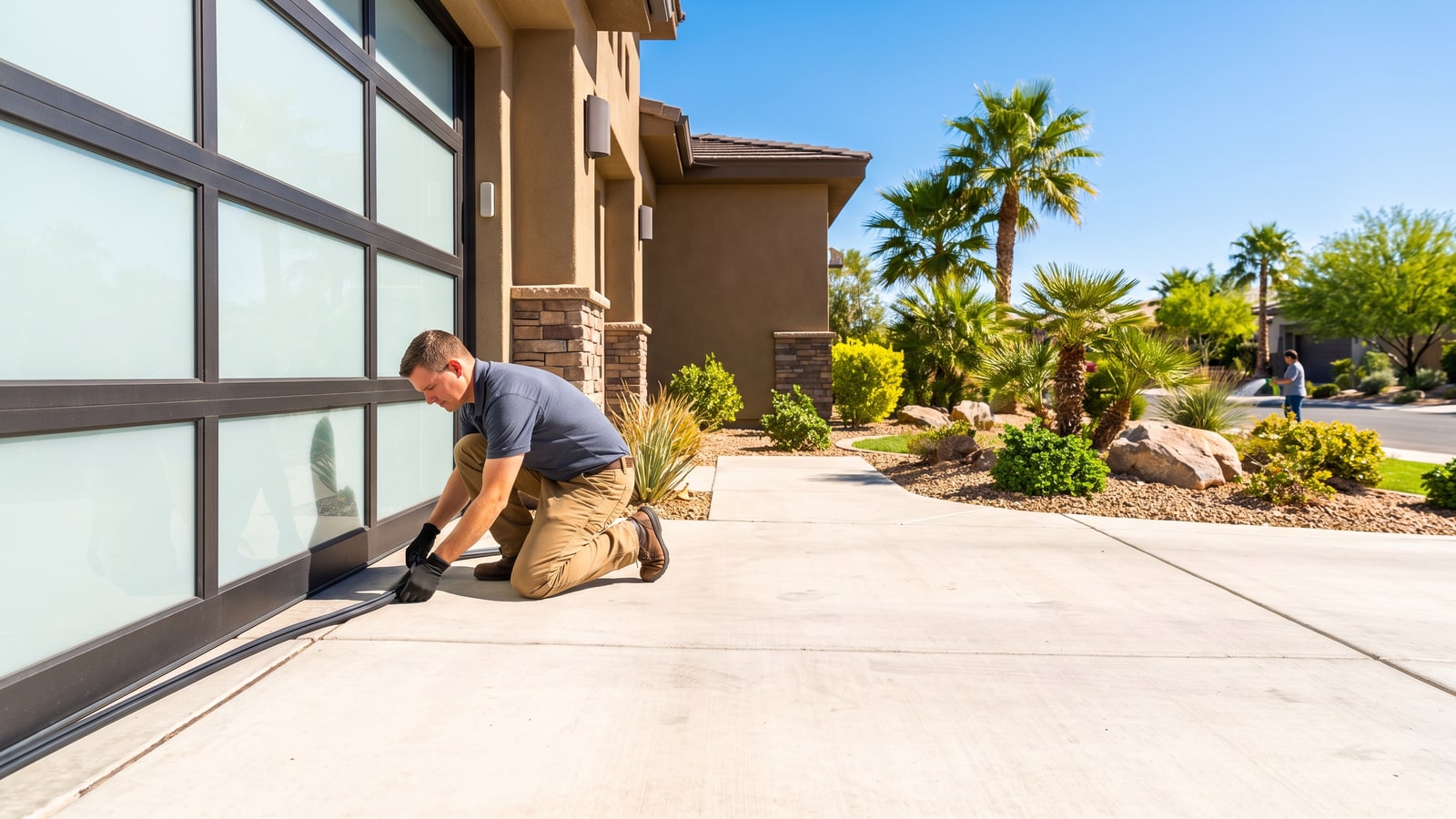
- Weatherstrip the garage and doors — $50-150 DIY. The garage door's bottom seal is the front door for most home entries; fresh rubber and tight thresholds close it.
- Kill the food source — included in service. Scorpions follow crickets and roaches. A pest program that suppresses the prey base starves the predators out; this is why generic monthly service ($40-80) works on scorpions indirectly even before scorpion-specific treatment.
- Fix the landscaping invitations — variable. Wood piles, stacked flagstone, dense ground cover against the foundation, and chronically wet irrigation zones are scorpion housing. Gravel standoff zones and drip-line fixes cost little and matter a lot.
- Blacklight patrols — $15-30 for the flashlight. Summer nights, walk the yard and block walls with UV light; scorpions glow green-white and can be dispatched or relocated. Two weeks of patrols also tells you honestly whether you have a population or a stray.
- Scorpion-specific treatments — $150-300 per application. Standard pesticides work poorly on scorpions themselves; companies that treat block-wall voids, use targeted products, and service at night under UV earn their premium in heavy zones.
What Should Buyers Check for Scorpions Before Closing?
The escrow-window checklist we walk clients through on desert-edge purchases:
- Ask the seller directly. Nevada's Seller's Real Property Disclosure (the NRS 113 form) requires disclosure of known material conditions; pest history questions get honest answers surprisingly often, and the seller's existing pest-service contract (ask for the company and frequency) tells you the real story.
- Blacklight the property at night during due diligence — a $15 flashlight and twenty minutes around the block walls, garage, and foundation is the most honest scorpion inspection money can't otherwise buy.
- Read the yard. Flagstone stacks, wood piles, dense ivy against stucco, and neighboring vacant desert lots are the risk factors visible from the sidewalk.
- Ask the neighbors. Nothing outperforms "do you guys see scorpions?" asked on an evening dog-walk street. Pest pressure is block-level truth.
- Price the mitigation, don't fear it. If the answers come back "yes, it's a scorpion street," the correct response is a $1,000-1,500 sealing job and $50-70 monthly service in your ownership budget — roughly $2,100 in year one — not a canceled escrow on an otherwise-right house.
Your inspector's standard report covers wood-destroying pests if you order that inspection ($75-150, often bundled) but does not assess scorpions — that one is on you and your agent, which is why our buyer representation bakes these questions into every desert-edge escrow we run.
What Does a Scorpion Sting Actually Mean for Your Family?
The calm version, because this is where the fear lives. A bark scorpion sting hurts — sharp pain, numbness, tingling that can radiate for hours — and for healthy adults it resolves with cold compresses, an antihistamine, and an unpleasant day. According to the Centers for Disease Control and Prevention, serious outcomes concentrate in small children, the elderly, and rare allergic reactions; nationally, deaths are extraordinarily rare. Poison Control (1-800-222-1222) triages stings by phone around the clock, and an antivenom (Anascorp) exists at valley hospitals for the severe pediatric cases — part of why the healthcare-establishment errand belongs in month one for arriving families.
Household protocol worth teaching: shake out shoes left in the garage, don't walk the yard barefoot on summer nights, keep beds a few inches off walls in known-activity homes (bark scorpions climb), and treat any sting on a child under five as a Poison Control call, not a wait-and-see. That's the entire family playbook — four habits, not a lifestyle.
Pets, since every family asks: dogs and cats handle stings about the way adults do — pain, localized swelling, a rough afternoon — and most veterinary visits end with antihistamines and observation. Small dogs and curious cats at desert-edge homes are the higher-contact cases; an emergency vet visit for a sting typically runs $150-400, and the same yard hygiene that protects kids protects the retriever who noses the flagstone pile.
When Are Scorpions Most Active in Las Vegas?
Scorpions run on a thermostat. According to the National Park Service's Mojave Desert guidance, they're nocturnal hunters most active in the warm months — in the valley that means roughly April through October, with the peak pressure landing in the June-through-September window when overnight lows stay above 70°F and the monsoon's humidity pushes both the scorpions and their cricket prey toward irrigated yards. Winter isn't absence, it's dormancy: they overwinter in block-wall voids, under flagstone, and inside the very foundation gaps a sealing job closes, which is why the smart calendar seals in spring, before the season opens, rather than reacting to an August sighting.
The daily rhythm matters too. Sightings cluster in the first hours after full dark and again near dawn; a bark scorpion found indoors at noon usually means it came in the night before and got stranded. The seasonal homeowner rhythm that follows: start or tighten the service cadence in March-April ($40-80 a month buys the prey-base suppression before it matters), run your UV-flashlight patrols on June and July nights when a population would be visible, shake out garage-stored shoes from Memorial Day to Halloween, and let the November-February window be the cheap season it is. Companies sell year-round contracts for good reason — winter service holds the roach and rodent lines — but the scorpion-specific spend earns its keep in exactly one half of the calendar.
What Should Sellers Know About Pests and Disclosure?
The selling side has its own playbook, and it's shorter than sellers fear. Nevada's Seller's Real Property Disclosure asks about conditions you actually know of — a scorpion sighting three summers ago isn't a defect, but a known, ongoing infestation or a past termite treatment belongs on the form, and the sellers who disclose cleanly close cleanly. In our experience, a desert-edge listing with a documented pest-service history is a stronger listing, not a weaker one: the service contract answers the buyer's scariest question with an invoice instead of an unknown, and the $40-80 monthly line reads as diligent ownership in the same folder as HVAC service records.
Pre-listing moves that pay: keep (or briefly start) a pest service so the answer to "who services the home?" is a name and not a shrug, fix the visible invitations — the wood pile, the flagstone stack, the torn garage seal — for less than $200 of weekend work, and if your street has a reputation, meet it head-on with the sealing receipt rather than hoping the buyer's agent doesn't ask. Ours will. Our seller representation preps desert-edge listings for exactly these questions, because the escrow that survives is the one where the pest conversation happened at listing, not at the eleventh hour of due diligence with a spooked first-time buyer.
What Other Pests Do Las Vegas Homeowners Actually Deal With?
Here's the roster nobody briefs transplants on — ranked by what they actually cost owners:
| Pest | Typical annual/one-time cost | The reality |
|---|---|---|
| Pigeons | $300–$1,500+ exclusion | The valley's most expensive pest: nesting under solar panels and tile roofs; mesh exclusion is near-mandatory with rooftop solar |
| Termites (subterranean) | $800–$2,500 treatment | Yes, the desert has them; slab homes get them through expansion joints; inspections $75–$150 |
| Roof rats | $300–$1,200 exclusion | Established in mature fruit-tree neighborhoods; attic exclusion plus tree hygiene |
| Crickets + cockroaches | $480–$960/yr service | The baseline monthly-service driver — and the scorpion food source |
| Black widows | Covered by service | Common in block-wall voids and garage corners; more medically relevant than most scorpions |
| Africanized bees | $150–$800 removal | Swarm removals from walls and irrigation boxes; never DIY a wall colony |
| Ants | Covered by service | Seasonal surges after monsoon rain; nuisance class |
The line every solar-curious buyer should hear: pigeon exclusion belongs in the solar budget. Panel arrays create ideal nesting shade, droppings damage roofs and void tile warranties, and retrofitting mesh after a colony establishes costs multiples of installing it with the array. Scorpions get the headlines; pigeons send the invoices.
How Much Should You Budget for Pest Control in Las Vegas?
The honest annual math by home profile:
| Line item | Interior valley home | Desert-edge / foothill home | Mature-landscaping older home |
|---|---|---|---|
| Monthly service | $40–$55 (or quarterly ~ $100-130/visit) | $55–$80 with scorpion focus | $45–$65 |
| One-time sealing | Usually skippable | $400–$1,500 — do it | $300–$900 targeted |
| Year-one total | $500–$700 | $1,100–$2,500 | $700–$1,600 |
| Ongoing annual | $480–$660 | $660–$960 | $540–$780 |
| Wild-card add-ons | Bee removal $150–$800 | Scorpion treatments $150–$300 each | Roof-rat exclusion $300–$1,200; termites $800–$2,500 |
Context for those numbers: even the heavy desert-edge scenario — call it $2,000 in year one — is roughly what a Midwest owner spends on a single ice-dam repair or a coastal owner on one year of termite bond and moisture management. According to the National Pest Management Association, regular professional service is the norm for a majority of Sun Belt homeowners; Las Vegas isn't an outlier, it just has a more photogenic mascot. When you're comparing ownership costs across metros, the pest line barely moves the needle next to the tax and insurance math that favors Nevada.
One licensing note: Nevada pest-control operators are licensed through the Nevada Department of Agriculture — verify a license and ask specifically how a company treats scorpions (night UV service and void treatment are the tells of a real program) before signing a desert-edge contract.
Do New-Construction Homes Have More Scorpions?
For the first season or two at the desert edge — often yes, and it surprises buyers who assumed "new" meant "sealed." Grading and trenching displace the resident desert population into whatever finished structures stand nearby, so the first occupied streets of a new phase catch the diaspora. According to the University of Nevada Cooperative Extension's urban-pest guidance, that construction-displacement effect fades as phases build out and the prey base stabilizes.
The new-build playbook differs from resale in two useful ways: builders will sometimes add sealing-adjacent items (garage-threshold upgrades, weep-screed detailing) to the punch list if you ask before your blue-tape walk, and warranty visits are the moment to document any gap a flashlight finds. Our new-construction clients at the desert edge get the same advice every time — take the $400-800 third-party sealing job in month one instead of waiting to see, because the cost of being wrong is a summer of blacklight patrols with a newborn in the house. The move-in playbook slots pest setup into arrival week for exactly this reason.
Should Scorpions Change Where You Buy in Las Vegas?
Our honest take after years of these conversations: almost never — but they should change how you budget and inspect. The neighborhoods with the most scorpion pressure (the Henderson foothills, Summerlin's rim, the desert-edge new phases) are the same neighborhoods with the valley's best views, strongest appreciation stories, and highest buyer demand; the families there did not misprice the trade, they spent $50-80 a month and moved on. Meanwhile the interior-valley buyer who chose a lesser house specifically to dodge scorpions bought a real downgrade to avoid a mostly-imaginary cost.
The decision framework that actually serves buyers: pick the neighborhood on schools, commute, equity, and lifestyle; then let the pest reality set a line item, not a location. Ask the disclosure questions, blacklight during due diligence, price the sealing job into your offer math on desert-edge homes, and start service before the boxes are unpacked. That's the entire scorpion strategy — an afternoon of diligence and a modest budget line protecting a decision that should be made on the things that compound.
How Do You Get Local Help With the Pest Question?
If you're weighing specific neighborhoods against each other — "is this Anthem street a scorpion street?" is a question with a real, block-level answer — bring it to people who walk these escrows weekly. Nevada Real Estate Group (150+ agents, 9,061+ verified five-star reviews, and the 9,600+ closings behind every claim in this guide) folds pest diligence into desert-edge purchases as a standard step: disclosure review, service-history pulls, and the blacklight-night suggestion your inspector won't make. Browse Las Vegas homes, start a search with desert-edge filters in mind, call (702) 637-1759, or send us the street you're debating — we'll tell you what the block actually says.
Frequently Asked Questions
Are scorpions in every Las Vegas neighborhood?
No — pressure is strongly geographic. Foothill and desert-edge zones (Henderson's Anthem and Seven Hills, Summerlin's rim, streets beside active construction) see regular seasonal activity, while large interior swaths of the valley go years between sightings. Every local pest company can tell you the block-level truth before you buy.
How dangerous is a bark scorpion sting?
Painful but rarely dangerous: healthy adults typically manage stings with cold compresses and an antihistamine, and serious outcomes concentrate in infants, the elderly, and allergic reactions. Poison Control (1-800-222-1222) triages by phone, and valley hospitals stock antivenom for the rare severe pediatric case.
How much does scorpion-proofing a home cost?
Professional home sealing runs $400-1,500 one-time and is the highest-value spend on desert-edge homes; monthly pest service adds $40-80, scorpion-specific treatments $150-300 per application, and DIY basics (garage seal, UV flashlight) under $200. A heavy desert-edge year-one budget lands around $1,100-2,500 total.
Do scorpions mean I should avoid buying near the desert edge?
In our experience, no — the desert-edge neighborhoods carry the valley's best views and strongest demand, and their owners handle scorpions with a modest service budget. Let pest reality set a line item in your offer math, not your location; walking away from a right-fit house over a $50 monthly cost is the mistake we see most.
What pest actually costs Las Vegas homeowners the most?
Pigeons — especially with rooftop solar, where nesting colonies under panels force $300-1,500+ exclusion jobs and threaten tile roofs. Termites (yes, the desert has them) and roof-rat exclusions in mature neighborhoods also out-invoice scorpions, which are cheap to manage once sealed against.
How do I check a house for scorpions before closing?
Ask the seller about pest history and their service contract (the NRS 113 disclosure covers known material conditions), blacklight the yard and block walls at night during due diligence — every scorpion fluoresces under UV — read the yard for wood piles and flagstone stacks, and ask the neighbors directly. Twenty minutes of diligence answers it honestly.
Does monthly pest control actually stop scorpions?
Indirectly yes, directly only partly: standard sprays suppress the crickets and roaches scorpions eat, which starves the population, while scorpion-specific programs (night UV service, block-wall void treatment) target the animals themselves. The full fix is sealing plus service — the seal keeps them out while the service shrinks the yard population.
Which Sources Inform This Las Vegas Pest Guide?
Species identification and urban-pest guidance are from the University of Nevada, Reno Extension; sting-risk framing from the Centers for Disease Control and Prevention and the national Poison Control network; industry cost norms from the National Pest Management Association; operator licensing from the Nevada Department of Agriculture; seller-disclosure requirements from Nevada Revised Statutes Chapter 113; desert-ecology context from the National Park Service's Mojave guidance; regional housing-stock and growth context from the U.S. Census Bureau and Clark County. Cost ranges reflect 2025-26 Las Vegas-area service quotes gathered across NREG client transactions; neighborhood pressure observations reflect team experience across 9,600+ closings — verify current pricing with licensed local operators.