

We all do it. You are sitting on the couch, scrolling through your phone, and you check an online estimate to see what your home is worth. It is fun to watch the number climb, especially after the wild appreciation the valley saw a few years ago. But if you are seriously considering selling your home in Las Vegas or Henderson in 2026, treating that "instant" figure as gospel can be a five-figure mistake.
The reality is that algorithms struggle with the Las Vegas market. They do not know if your primary bedroom frames the Strip skyline, whether your solar panels are paid off or leased, or if you are carrying a remaining balance in a Special Improvement District (SID). Here is the number that matters most, and it is one no online estimate will hand you: across the trailing twelve months, Las Vegas homes closed at a $438,437 median in a median of 31 days — while the taxable value the county mails you each year usually sits far below that. Getting your valuation right starts with knowing which number actually applies to your street.
Your Las Vegas home's true value comes from a comparative market analysis (CMA) built on recent closed sales — not an online estimate or your tax bill. Over the trailing twelve months, Las Vegas homes closed at a $438,437 median in about 31 days, while the Clark County Assessor's taxable value sits far below that. Price against verified comps, adjust for view, pool, and lot, then confirm with a licensed appraiser once you are under contract.
- Las Vegas homes closed at a $438,437 median in a median 31 days (18,867 sales, GLVAR MLS).
- Three values rarely match: Clark County taxable value, a lender's appraisal, and market value (the CMA).
- Online AVMs miss by 5% to 10%+ — they cannot price a Strip view, a paid-off pool, or an unpaid SID balance.
- Henderson ($487,588) and Summerlin (about $713,750) top the valley median; North Las Vegas ($421,644) sells fastest at 25 days.
- Get a free NREG home-value estimate, then a professional CMA, before you list or refinance.
How Do You Actually Value a Home in Las Vegas?
Accurate valuation is a process of narrowing, not a single lookup. You start wide with a market-level baseline, then filter down to your ZIP and subdivision, then to homes that genuinely match yours, and finally you adjust for the specific attributes buyers pay premiums for. An online estimate skips every one of those steps and hands you an average.
In our experience pricing homes across the Las Vegas valley, the four-step method our team runs on every listing beats the algorithm because it treats your house as a specific property, not a statistical blob. First, establish the true submarket — a 2,400-square-foot home in Summerlin and the identical floor plan in North Las Vegas are not comparable, even though software treats them as near-twins. Second, pull genuine comparable sales ("comps") — homes that closed in the last three to six months within roughly half a mile and within about 20% of your square footage. Third, adjust each comp for the differences that matter: a view, an extra garage bay, a pool, a corner lot, a remodeled kitchen. Fourth, pressure-test the result against active competition, because you are not just pricing against what sold — you are pricing against what a buyer can choose instead of your home today.
How we sourced these numbers: Every market figure in this guide reflects GLVAR (Las Vegas REALTORS) MLS sold-and-active data pulled live through our Repliers feed on July 13, 2026, across the trailing twelve months (July 2025 – July 2026). City medians use each city's own closed sales. This is the same data foundation Nevada Real Estate Group applies across the 9,600+ transactions our team has represented statewide, including 789 closings in 2025 alone.
That proprietary discipline matters because pricing precision is the single highest-leverage decision a seller makes. Set the number right in the first two weeks and buyers compete; set it 5% high in a rising-inventory market and your home becomes the comp that sells the house down the street.
What Are the Three Numbers Every Las Vegas Seller Must Separate?
One of the biggest sources of confusion for homeowners is the gap between what the tax office says a home is worth, what a bank will lend against, and what a buyer will actually pay. There are three distinct values, and they rarely line up.
1. Taxable (assessed) value is the number on your postcard from the Clark County Assessor. It is almost always dramatically lower than your sale price. In Clark County, the assessed value is set at 35% of the taxable value — land value plus the depreciated replacement cost of the structure. According to the Clark County Assessor, that figure exists to calculate a tax bill, not a listing price.
2. Appraised value is a formal, retrospective opinion of value produced by a licensed appraiser, almost always for a lender or a court. Banks use it to confirm they are not lending more than the home is worth. You generally do not need one until you are already under contract, or you are settling a divorce, estate, or probate matter.
3. Market value (the CMA) is the number that matters to you right now — what a willing buyer is likely to pay today. We calculate it with a Comparative Market Analysis. Unlike a tax assessment or a bank appraisal, a CMA weighs current buyer psychology, live competition, and the specific features of your home.
Why Do Online Automated Estimates Miss Las Vegas Homes?
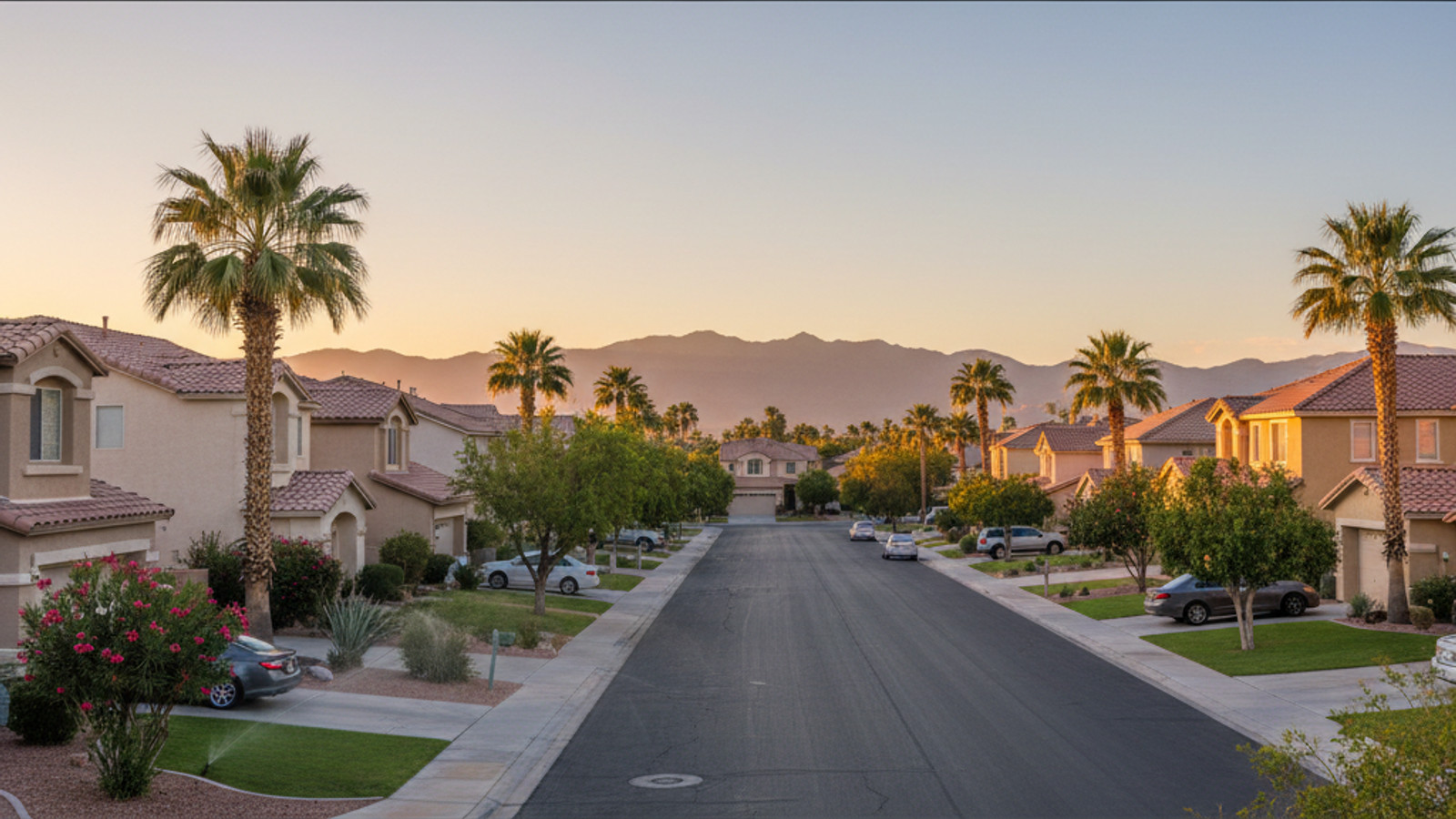
Automated Valuation Models (AVMs) are the instant numbers you see on the big listing portals. They are engineered to average large volumes of transactions, and they perform reasonably well in cookie-cutter subdivisions where every home is nearly identical. Much of Las Vegas is the opposite of that environment, which is exactly why AVMs stumble here.
An algorithm cannot see the things that move value most. It does not know your lot backs a wash with mountain views while the comp it leaned on backs a six-lane arterial. It cannot tell that you spent $45,000 on a resort-style pool and outdoor kitchen, or that your solar is owned outright rather than saddled with a 20-year lease. In custom and semi-custom pockets — think the guard-gated communities of the southwest or the hillside luxury communities of the west valley — AVM error rates balloon, commonly 5% to 10% and sometimes far more on trophy properties. On a $700,000 home, a 10% miss is $70,000 of pure guesswork.
AVMs also lag. They lean on recorded sales that closed 30 to 60 days ago, which were themselves negotiated weeks before that. According to Freddie Mac, mortgage-rate swings ripple into buyer purchasing power within weeks — far faster than any AVM refreshes its foundation. With valley active inventory now near 8,785 homes in the city of Las Vegas alone, a three-month-old data set can be meaningfully stale. Treat the online number as a curiosity, then get a human read on the current tape.
What Does the Current Las Vegas Market Say About Value?
Before you can value a single home, you need the community baseline. Here is where the city of Las Vegas stands right now, pulled live from the GLVAR (Las Vegas REALTORS) MLS via our Repliers feed on July 13, 2026.
According to Las Vegas REALTORS, valley-wide inventory has climbed sharply over the past year, and the numbers bear it out: the city of Las Vegas recorded 18,867 closed sales in the trailing twelve months at a $438,437 median sold price and a $559,249 average, with a median 31 days on market. On the active side, roughly 8,785 homes are listed at a $470,825 median list price. That gap between a $438,437 sold median and a $470,825 list median is the everyday tension of a rebalancing market — sellers are still asking a premium, and buyers are steadily negotiating it back toward the last verified close.
| Metric | Value | What it tells a seller |
|---|---|---|
| Homes sold (12 mo.) | 18,867 | Deep, liquid market — plenty of comps to price against |
| Median sold price | $438,437 | The valley midpoint; your ZIP may sit well above or below |
| Average sold price | $559,249 | Pulled up by luxury closings — the median is the truer middle |
| Median days on market | 31 days | Well-priced homes still move in about a month |
| Active listings | ~8,785 | Rising inventory — sharper pricing wins the buyer |
| Median list price | $470,825 | Asking prices still run ahead of verified closes |
The lesson buried in that table: the median sold price is the anchor, not the list price. Listing prices tell you what sellers hope to get; closed sales tell you what buyers actually paid. A CMA is built almost entirely on the second column.
How Does a Comparative Market Analysis Actually Work?
When you ask a local agent for a valuation, we do not guess — we run a systematic process to pinpoint the right number. Here is how the Comparative Market Analysis works in Southern Nevada.
- We select the right comps. We look for homes that closed in the last three to six months. We generally ignore active listings, because those are asking prices — what a seller hopes to get, not what a buyer paid. According to Fannie Mae, the same closed-sales discipline underpins the Uniform Appraisal Dataset that lenders' appraisers must follow, which is why a well-built CMA and a clean appraisal usually land close.
- We honor the radius rule. Location is hyper-local here. We stay inside your subdivision or within roughly a half-mile radius. A home across a major arterial may feed different schools or a different HOA, which changes the value even if it is a mile away as the crow flies.
- We make adjustments. This is where the art meets the science. If your neighbor sold for $500,000 but had a three-car garage and you have a two-car, we subtract. If you have a full Strip view and they stared at a block wall, we add. We also adjust for lot size, interior upgrades, and condition.
- We analyze absorption. We look at months of supply. With the city of Las Vegas near a balanced-to-buyer footing right now, an overpriced home simply sits while a sharper-priced neighbor closes. Pricing to the current tape — not last spring's peak — is how you actually sell.
Which "Vegas Variables" Move Your Home's Value Most?
Why do online calculators get Las Vegas wrong so often? Because our market has specific quirks — we call them the "Vegas Variables" — that software cannot quantify. When we value a property, we adjust for these local realities.
- The pool premium. In much of the country a pool is a wash. In the Las Vegas heat, especially in the west and southwest, not having a pool can be a negative. You rarely recoup dollar-for-dollar on building one, but a sparkling pool can add roughly 5% to 8% to a median home — about $25,000 to $40,000 — and it moves the home faster.
- Solar: owned vs. leased. This is a critical distinction. Owned panels add value and cut a buyer's future utility bills. A Solar Power Purchase Agreement (PPA) or lease can complicate the sale, because many buyers balk at assuming a 20-year contract. AVMs treat every solar home the same; we read the actual terms.
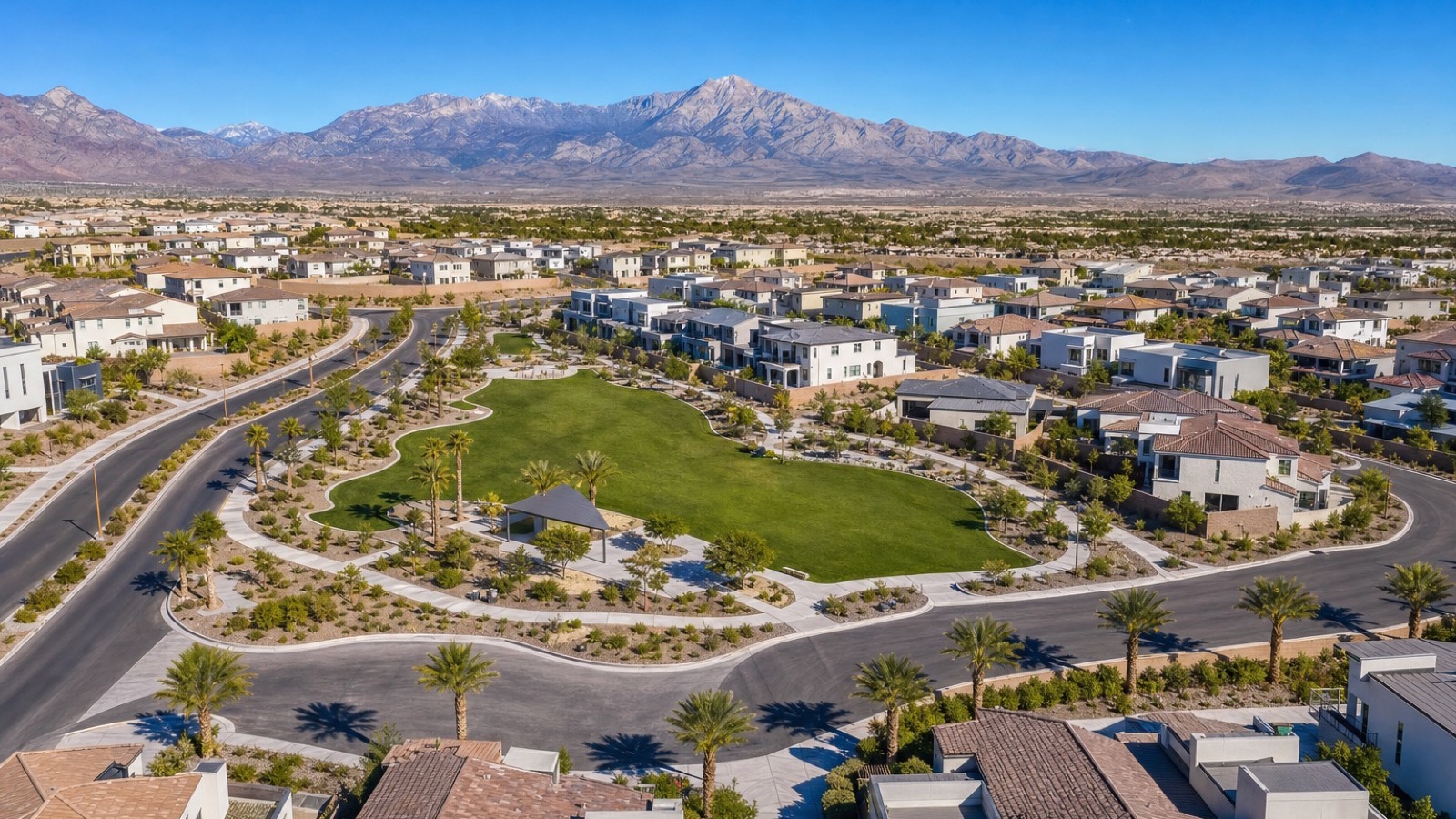
- Master-planned premiums. Homes in master plans like Summerlin or Green Valley trade above standard subdivisions for the parks, trails, and amenities — but they carry HOA dues (sometimes a master and a sub-association fee) that we net against buyer affordability. More on the multi-tier fee stack below.
- SIDs and LIDs. Many newer communities in Las Vegas and North Las Vegas carry a Special Improvement District (SID) or Limited Improvement District (LID) bond on the land for roads and sewers. A remaining SID balance raises the buyer's monthly cost, which can shave the final sale price versus an identical home with the bond paid off.
- View and lot position. A Strip-facing balcony, a golf-course frontage, or an elevated pad with mountain views can add tens of thousands. A home backing a busy road or a commercial pad loses it. No algorithm sees the horizon from your window.
How Do the Master-Planned HOA and Tax Layers Stack on Your Value?
Buyers do not price your home in isolation — they price the total monthly cost of owning it, and in Southern Nevada that number is rarely just principal, interest, taxes, and insurance. Getting valuation right in a master plan means itemizing every layer that lands on the closing statement, not quoting one blended HOA number.
For a closer look at the master-plan and neighborhood factors, see our guide to valuing a home in Summerlin.
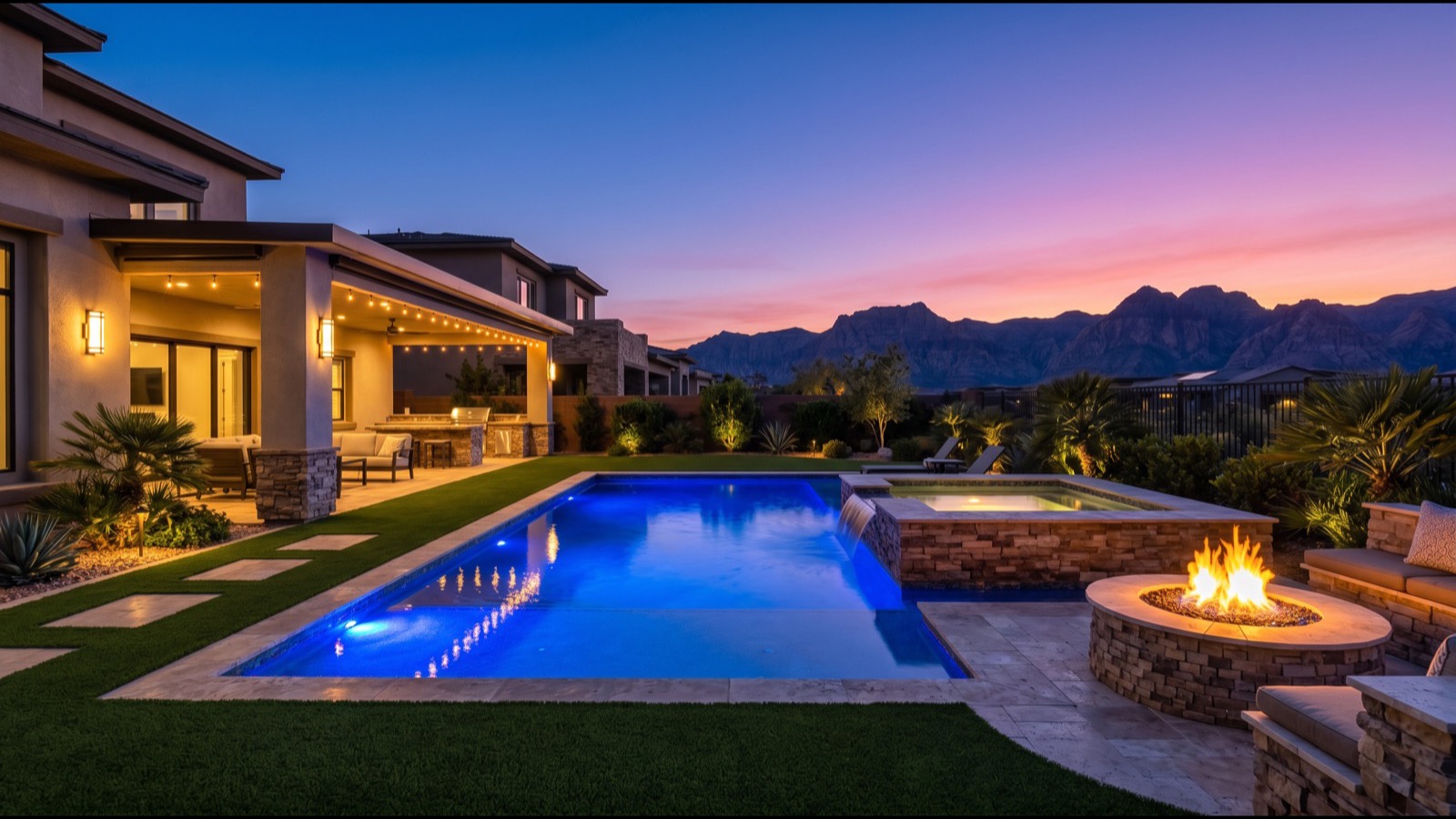
A single Las Vegas or Henderson home can carry as many as three separate assessments: a master-association fee (funding the community trails, parks, and guard gates), a sub-association or village fee (funding your specific enclave's landscaping or private amenity), and a SID/LID bond payment that rides on the property-tax bill until the infrastructure debt is retired. A home advertised with a "$50/month HOA" may actually cost a buyer $180 or more once the sub-association and the bond are added — and that stack directly compresses what a buyer will pay for the house itself. When we run a valuation, we pull the full fee schedule and the assessor's SID/LID balance so the price reflects the real cost of ownership, not a headline dues figure.
How Do Values Differ Across Las Vegas, Henderson, Summerlin, and North Las Vegas?
"Las Vegas" is shorthand for at least four distinct submarkets, and the median swings hard between them. According to Las Vegas REALTORS MLS data pulled July 13, 2026, here is how the core Southern Nevada markets compare over the trailing twelve months.
| Market | Median sold price | Median days on market | Active listings |
|---|---|---|---|
| North Las Vegas | $421,644 | 25 days (fastest) | ~1,777 |
| Las Vegas (city) | $438,437 | 31 days | ~8,785 |
| Boulder City | $450,000 | 37 days | ~157 |
| Henderson | $487,588 | 32 days | ~2,533 |
| Summerlin | about $713,750 | 33 days | ~920 |
North Las Vegas is the valley's affordability and velocity story — a $421,644 median and the fastest 25-day pace, driven by newer entry-level product. Henderson runs a clear premium at $487,588 for its schools and master plans. Summerlin sits highest; per our dedicated Summerlin valuation analysis, the neighborhood-strict median runs near $713,750 because village choice swings value by more than 2x from entry-level to guard-gated. The takeaway: applying the $438,437 valley median to a Summerlin estate — or to a North Las Vegas starter — guarantees a mispriced listing.
What Is the Difference Between Assessed Value and Market Value in Clark County?
This is the single most common valuation question we field, and the confusion is understandable. The two numbers are built for opposite purposes, so they diverge by design. This is the comparison to internalize before you ever look at your tax postcard and panic — or celebrate.
| Dimension | Taxable / assessed value | Appraised value | Market value (CMA) |
|---|---|---|---|
| Who produces it | Clark County Assessor | Licensed appraiser (for a lender/court) | Your real estate agent |
| Purpose | Calculate the property-tax bill | Protect the lender's collateral | Set the listing / offer price |
| Basis | Land + depreciated replacement cost | Closed comps + condition (UAD) | Closed comps + live competition |
| When you need it | Every year, automatically | Under contract, divorce, probate | Before you list or make an offer |
| Typical cost | Free (on your bill) | $500 – $800 (buyer pays) | Free from your agent |
| Relation to sale price | Usually far below market | Should land near the sale price | The best real-time estimate |
There is a second reason your tax number stays low: Nevada's tax-cap law. According to the Nevada Legislature (NRS 361.4723), the property tax on an owner-occupied primary residence can rise no more than 3% per year, regardless of how far the market jumps. That cap is a gift to homeowners, but it means your taxable value drifts further from reality every year the market outruns 3%. Do not use it to price a listing.
When Do You Actually Need a Formal Appraisal Instead of a CMA?
We are often asked whether a seller should pay for an appraisal before listing. The answer depends entirely on your situation.
If you are simply selling, the answer is generally no. A CMA from a real estate professional is free and is purpose-built to set a listing price. A formal appraisal is meant for lenders, and the buyer's bank will order — and the buyer will pay for — its own appraisal once you are under contract. Spending $500 to $800 on a pre-listing appraisal usually duplicates work the buyer's lender will redo anyway.
If you are dealing with divorce, estate planning, or probate, the answer flips to yes. In legal matters you need a neutral, third-party report that stands up in court. A CMA is an opinion of price for marketing; it is not a legal valuation. According to the Appraisal Institute, a defensible appraisal follows the Uniform Standards of Professional Appraisal Practice, which is exactly the rigor a judge expects. For the deeper mechanics of how appraisers handle low valuations and gaps, see our Las Vegas home appraisal guide.
How Should You Price a Las Vegas Home in a Rising-Inventory Market?
With active inventory up sharply and roughly 8,785 homes competing in the city of Las Vegas alone, pricing strategy has swung back toward precision. The peak-market habit of "list high and let a bidding war find the ceiling" no longer works when buyers have dozens of alternatives.
The data is blunt on this. A home priced correctly in its first week draws the most showings, the most competing offers, and — counterintuitively — often the highest final price, because urgency compresses the negotiation. A home priced 5% to 10% over the last verified comp typically sits, generates a price cut within three to four weeks, and ultimately closes below what an accurate initial price would have captured. According to Freddie Mac, buyer affordability is already stretched by rates, so overpricing simply removes your home from the pool of payments buyers can qualify for. Price to the tape, stage the first two weeks hard, and let live demand — not an aspirational number — set the ceiling. If you want the full framework, our Las Vegas home pricing seller playbook walks through it step by step.
What Do Buyers and Appraisers Reward or Penalize in a Las Vegas Home?
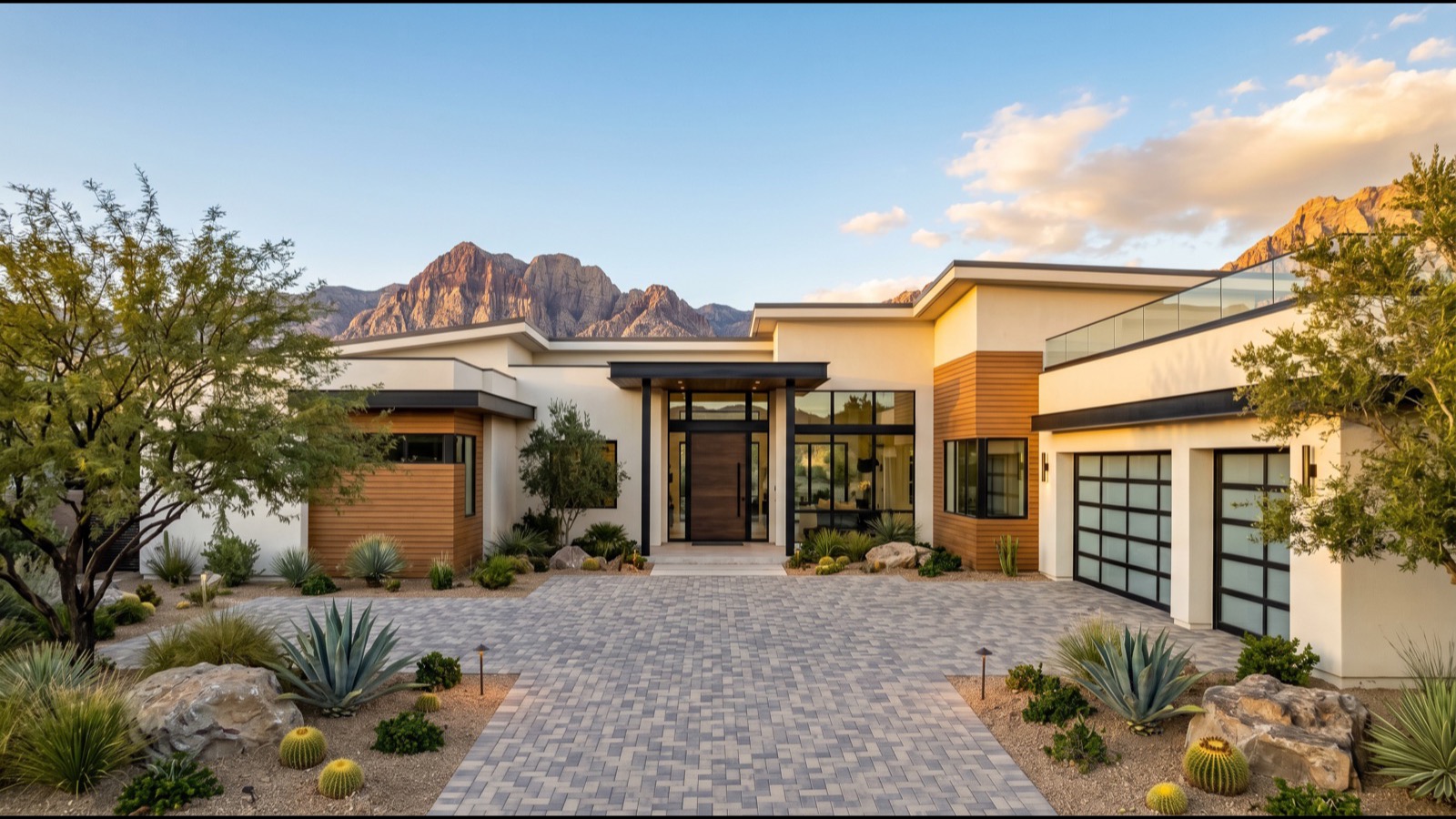
Adjustments are where a CMA earns its keep. Two homes on the same street can be worth $60,000 apart because of features an algorithm flattens to zero. Here are the adjustments we see move value most in the current market — directional ranges, not promises, because every comp set is specific.
| Feature | Typical value impact | Why it moves the number |
|---|---|---|
| Private pool (desert climate) | +$25,000 to $40,000 | Lifestyle necessity in summer; speeds the sale |
| Owned solar (paid off) | +$10,000 to $20,000 | Cuts the buyer's future utility bills |
| Leased solar (PPA) | -$5,000 to neutral | Buyer must assume a 20-year contract |
| Third garage bay | +$10,000 to $15,000 | Scarce in tract product; toy/EV storage demand |
| Strip or golf-course view | +$20,000 to $75,000+ | Irreplaceable; scales with price tier |
| Backs a busy arterial road | -$10,000 to $25,000 | Noise and traffic shrink the buyer pool |
| Unpaid SID/LID bond balance | -$5,000 to $20,000+ | Raises the buyer's true monthly payment |
| Updated kitchen / flooring | +$15,000 to $35,000 | Move-in-ready condition commands a premium |
Notice that several of these are negative. Sellers love to add features to the plus column, but an honest valuation subtracts for the busy road, the leased panels, and the outstanding bond — which is precisely why an inflated online estimate feels good and lists badly. Whether you are valuing a resale or weighing a new-construction purchase, the adjustment math is the same.
How Can You Get an Accurate Las Vegas Home Valuation Today?
In a shifting market where inventory is rising, precision is everything. An algorithm cannot see your new quartz counters, it does not know you just installed luxury vinyl plank throughout, and it certainly does not understand your ZIP's demand curve this month. Choosing the right agent to run those numbers matters, too — our guide to the best real estate agent in Las Vegas explains what separates a data-driven CMA from a listing-appointment guess.
Two fast, free steps get you a real number. Start with our home value estimator for an instant data-backed range, then request a full CMA and we will layer in the view, the upgrades, and the live competition an algorithm cannot. If you are also weighing a purchase, our buyer's team can run the same comp discipline on the offer side. Call (702) 637-1759 or contact us to get started — Nevada Real Estate Group, license S.181401.
Before using an automated number to set an asking price, review the limits of online home-value estimates and compare it with property-specific evidence.
Frequently Asked Questions
How accurate are online home value estimates for Las Vegas properties?
Online estimates are useful starting points, but their margins of error run high — commonly 5% to 10% and sometimes far more on custom homes. They miss local data points like SID/LID balances, Strip views, lot premiums, and the difference between owned and leased solar. On a $438,437 median home a 7% miss is over $30,000. Use them to get in the ballpark, never to set a final listing price.
Does a pool increase home value in Las Vegas?
Yes. In Southern Nevada's climate a pool typically adds about 5% to 8% of value — roughly $25,000 to $40,000 on a median home — and it usually sells the home faster. You rarely recoup 100% of construction cost, but pools are highly desirable, especially above the median price point and in master-planned communities where buyers expect resort-style outdoor living.
How much does a home appraisal cost in Las Vegas?
For a standard single-family home, a professional appraisal generally costs $500 to $800, and the buyer's lender orders it once you are under contract. Larger custom homes, acreage, or complex estates cost more because they take more time to analyze. If you are only selling, you usually do not need to pay for one — a CMA from your agent is free.
What is the difference between taxable value and market value in Clark County?
Taxable value is used strictly to calculate your property-tax bill, with the assessed value fixed at 35% of the taxable amount. Market value is what a buyer will actually pay. Because of depreciation rules and Nevada's 3% annual tax cap under NRS 361.4723, your taxable value is almost always far below your home's real market value.
How is a CMA different from a Zestimate-style online estimate?
A CMA is built by a local agent from closed comps within about half a mile and three to six months, then hand-adjusted for view, lot, condition, and upgrades. An automated estimate applies a national model to public records and lagging sales. The CMA reflects live competition and your home's specific features; the algorithm reflects an average of the neighborhood.
Why did my home appraise lower than my agent's CMA?
It happens, usually because the appraiser used a slightly different comp set, the market moved between contract and appraisal, or your upgrades were not fully credited. In Las Vegas you can request a Reconsideration of Value with better comps. A strong CMA and a defensible appraisal should land close; when they do not, the gap is usually negotiable rather than fatal.
How current is the Las Vegas market data in this guide?
Every market figure here was pulled live from the GLVAR (Las Vegas REALTORS) MLS through our Repliers feed on July 13, 2026, covering the trailing twelve months. Real estate data moves monthly, so before you list or make an offer, ask us for a fresh CMA — we requery the MLS for your exact ZIP and subdivision the week you go to market.
Which Sources Inform This Las Vegas Home-Valuation Guide?
Valuation is only as good as its data. The figures above draw on live GLVAR MLS data and the following authorities:
- Las Vegas REALTORS (GLVAR) — median price, inventory, and days-on-market (MLS, pulled July 13, 2026)
- Clark County Assessor — taxable and assessed value methodology
- Nevada Legislature — NRS Chapter 361 — property-tax cap (NRS 361.4723)
- Nevada Department of Taxation — statewide property-tax administration
- U.S. Census Bureau — Las Vegas QuickFacts — housing and demographic context
- Fannie Mae — Uniform Appraisal Dataset and appraisal standards
- Appraisal Institute — USPAP appraisal practice
- U.S. Department of Housing and Urban Development (FHA) — FHA appraisal requirements
- Freddie Mac — Primary Mortgage Market Survey — mortgage-rate and affordability trends
- Federal Housing Finance Agency — House Price Index — long-run appreciation data
- Consumer Financial Protection Bureau — buyer disclosure and closing guidance
Methodology: Market figures reflect GLVAR MLS sold-and-active data queried through the Repliers API on July 13, 2026, across July 2025 – July 2026. City medians use each city's own closed sales. Adjustment ranges are directional and reflect Nevada Real Estate Group's experience across 9,600+ statewide transactions; your home's actual value requires a property-specific CMA. This article is educational and not an appraisal or a guarantee of value.