

Every conversation about buying new in Las Vegas eventually needs the same map: which master-planned communities are actually selling right now, which are breaking ground next, and which beloved names are quietly down to their final phases. That map changes quarterly — villages open, builders close out, new ground gets graded — and most of what ranks online describes the valley of two years ago.
So this is the living version: the mid-2026 pipeline edition, built the way Nevada Real Estate Group tracks it internally — corridor by corridor, with price bands, buildout status, and the buyer strategy each stage rewards. We'll update this page as the map moves — the same running-edition format as our top-luxury-sales ledger — because a pipeline guide that doesn't update is just a history post. Across the 9,600+ closings our team has represented — hundreds of them inside these master plans — the buildout stage a community is in changes the right offer strategy more than any other single fact. Here's the whole board.
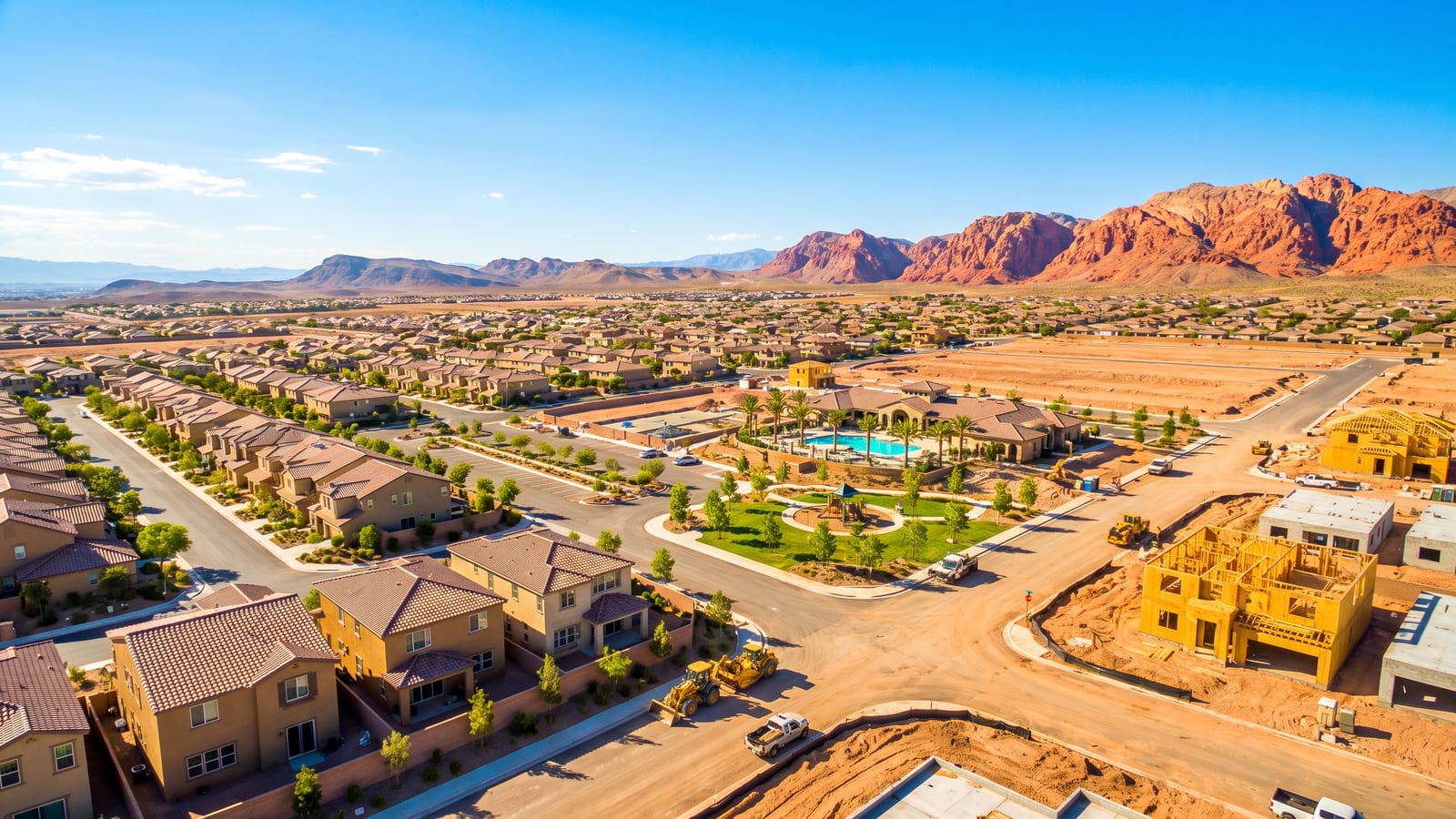
The mid-2026 Las Vegas master-plan pipeline runs on four fronts: Summerlin West's newest villages (Kestrel, Redpoint, the emerging Grand Park district), Henderson's Cadence plus closing-out Inspirada and the new Meriden by KB Home, Lake Las Vegas's expansion, and the northwest's Skye Canyon-Skye Hills corridor with Villages at Tule Springs in North Las Vegas. Entry pricing spans roughly $320,000 to $1M+ — and buildout stage should drive strategy as much as location.
- Summerlin West's Kestrel and Redpoint villages lead the premium pipeline, with homes roughly $500,000 to $1.5M+.
- Cadence in Henderson ranked among America's top-selling master plans in 2025 and keeps opening neighborhoods from the $300s.
- Inspirada is in its final phases — closeout windows reward decisive buyers and then the door shuts.
- Live MLS check: 216 new-build (2025-26) actives and 442 closings of 2025+-built homes so far in 2026.
- Buildout stage sets strategy: early phases trade incentives for construction living; closeouts trade selection for maturity.
What Counts as the Master-Plan Pipeline — and Why Track It?
A master-planned community is a developer-controlled canvas — hundreds to thousands of acres where parks, schools, trails, and retail get planned before the first model opens, then sold builder by builder, village by village, over a decade or more. The pipeline is every plan currently in motion: land newly graded, villages actively selling, and buildouts entering their final phases. Tracking it matters because stage is strategy. The same master plan rewards completely different buyer behavior at year one (incentives are rich, amenities are renderings), year six (the sweet years — amenities real, selection still broad), and year eleven (closeout scarcity, resale-only future).
According to the U.S. Census Bureau, Clark County keeps absorbing tens of thousands of net new residents a year, and master plans are where the growth physically lands — which is why the valley consistently places multiple communities on the national top-seller rankings. According to RCLCO's master-planned community rankings, Las Vegas-area plans have held multiple top-20 national slots for years running, with Henderson's Cadence placing among the very best-selling communities in America in 2025. The pipeline below is where the next five years of that story is already visible on graded dirt.
What Does the Mid-2026 Pipeline Scoreboard Look Like?
The whole board, one table — this is the section we'll keep current as the year moves:
| Community | Corridor | Stage (mid-2026) | Rough price band |
|---|---|---|---|
| Summerlin West (Kestrel, Redpoint, Grand Park district) | West valley / Red Rock rim | Actively opening villages | $500,000–$1.5M+ |
| Ascension Peaks (Toll Brothers, Summerlin) | West valley | Selling — luxury tier | $1M+ |
| Cadence | East Henderson | Mid-buildout, momentum leader | $300s–$600s+ |
| Inspirada | South Henderson | Final phases — closeout | $400s–$800s |
| Meriden by KB Home | West Henderson | New — early phases | From the low $400s |
| Lake Las Vegas | Far-east Henderson | Expansion phase — new villages | $400s–$2M+ |
| Skye Canyon + Skye Hills | Northwest Las Vegas | Skye Canyon maturing; Skye Hills opening | $400s–$700s |
| Villages at Tule Springs (incl. Heartland by D.R. Horton) | North Las Vegas | Actively building — value corridor | $300s–$500s |
| Trilogy Sunstone (55+) | Northwest Las Vegas | Selling — age-qualified | $400s–$700s |
Bands are intentionally rough — phase releases reprice monthly and builder incentives move real cost more than list prices do. The corridor sections below carry the strategy.
Two reading notes before the corridors. First, the scoreboard deliberately excludes the rumored layer — land assemblages and pre-entitlement deals we hear about weekly but that haven't broken ground; when one crosses from rumor to grading permit, it joins the table in the next edition. Second, "stage" describes the master plan, not every builder inside it: a mid-buildout community like Cadence contains individual neighborhoods at opening weekend and others at closeout simultaneously, which is why the neighborhood-level release sheet — not this valley-level table — is the document an actual offer gets written from. This page is the map; the release sheets are the terrain.
What Is Happening in Summerlin West?
The premium front of the entire pipeline. Howard Hughes keeps opening Summerlin West ground west of the 215 toward Red Rock's rim, and according to the Howard Hughes Corporation's own reporting, Summerlin remains one of its flagship growth engines — decades of remaining land at the valley's most protected scenery. The mid-2026 read: Kestrel and Kestrel Commons carry the family-village momentum, Redpoint and Redpoint Square layer in density and walkability experiments, and the emerging Grand Park district is the one to watch — the next major village concentration, with early grading visible now. At the luxury tier, Ascension Peaks gives Toll Brothers buyers a $1M+ new-build path that competes directly with custom-lot math. Our village-by-village comparison breaks down the Cliffs-Kestrel-Redpoint decision in detail.
Strategy for this corridor: Summerlin West is the pipeline's safest appreciation story — the masterplan premium is real and durable — but it prices that safety in. Expect $500,000 as a realistic townhome-and-small-lot floor, $700,000-900,000 for the family village core, and seven figures at the view lines. The buyer this stage rewards: the one who accepts construction-zone living for two or three years in exchange for buying the village before its amenities finish — historically the cheapest any Summerlin village ever is.
What Is Happening in Henderson's Master Plans?
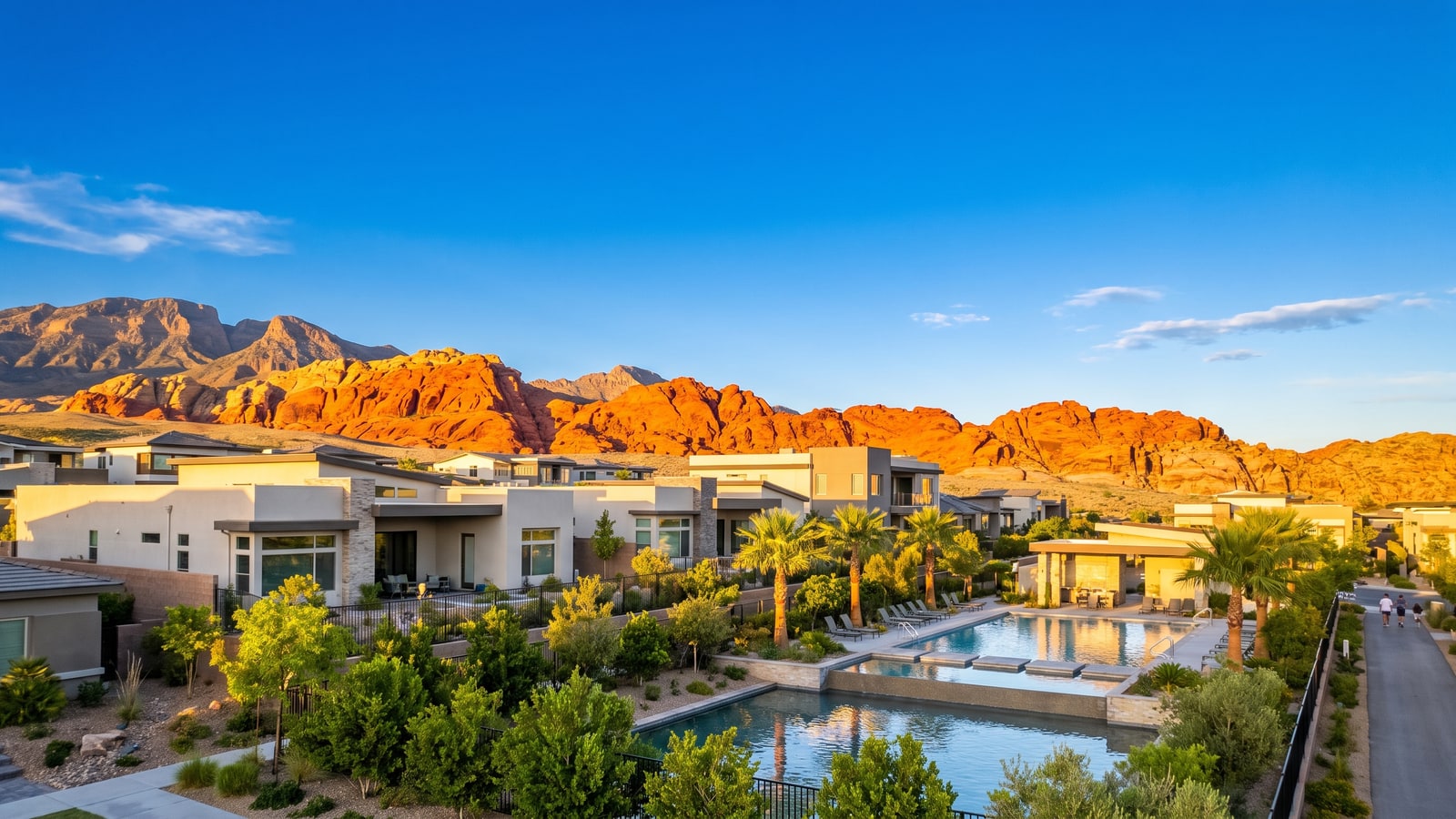
The valley's deepest pipeline corridor, running three distinct plays at once:
- Cadence — east Henderson's momentum machine: roughly 2,200 acres, a central park system, and neighborhood openings that haven't slowed. According to RCLCO's 2025 rankings it placed among America's top-three-selling master plans, and the formula is visible on the ground — attainable bands from the $300s (with townhomes near the bottom of it), a genuine amenity spine already built, and builder variety from Century, Heritage (Lennar's 55+ entry), KB, Richmond American, and more. Our Cadence buildout-status deep dive carries the neighborhood-level detail.
- Inspirada — south Henderson's decade-long success story is in its final phases: the last neighborhoods are selling now, and when they close out, the only way in is resale. Closeout stage flips the strategy — selection shrinks weekly, but you're buying a finished community: parks built, schools open, HOA mature. For the right buyer that trade beats any incentive package.
- Meriden by KB Home — the new name: KB's west Henderson master plan opening from the low $400s, the corridor's answer to "I want new Henderson under $500,000 without a waitlist." Early-phase rules apply: rich incentives, rendered amenities, and the buyers who move first get the pick of the lot map.
- Lake Las Vegas — the far-east resort plan keeps expanding: new villages from the $400s to waterfront and golf product past $2M, in the valley's only genuinely waterside setting.
Add west Henderson's broader boom — the corridor around the M Resort and the Raiders-practice-facility spine keeps attracting builder land buys — and Henderson alone offers a first-time buyer, a move-up family, a 55+ downsizer, and a lakefront retiree four different pipelines simultaneously. The current Henderson inventory shows how the resale layer prices against every one of these new-build options.
What Is Happening in North Las Vegas and the Northwest?
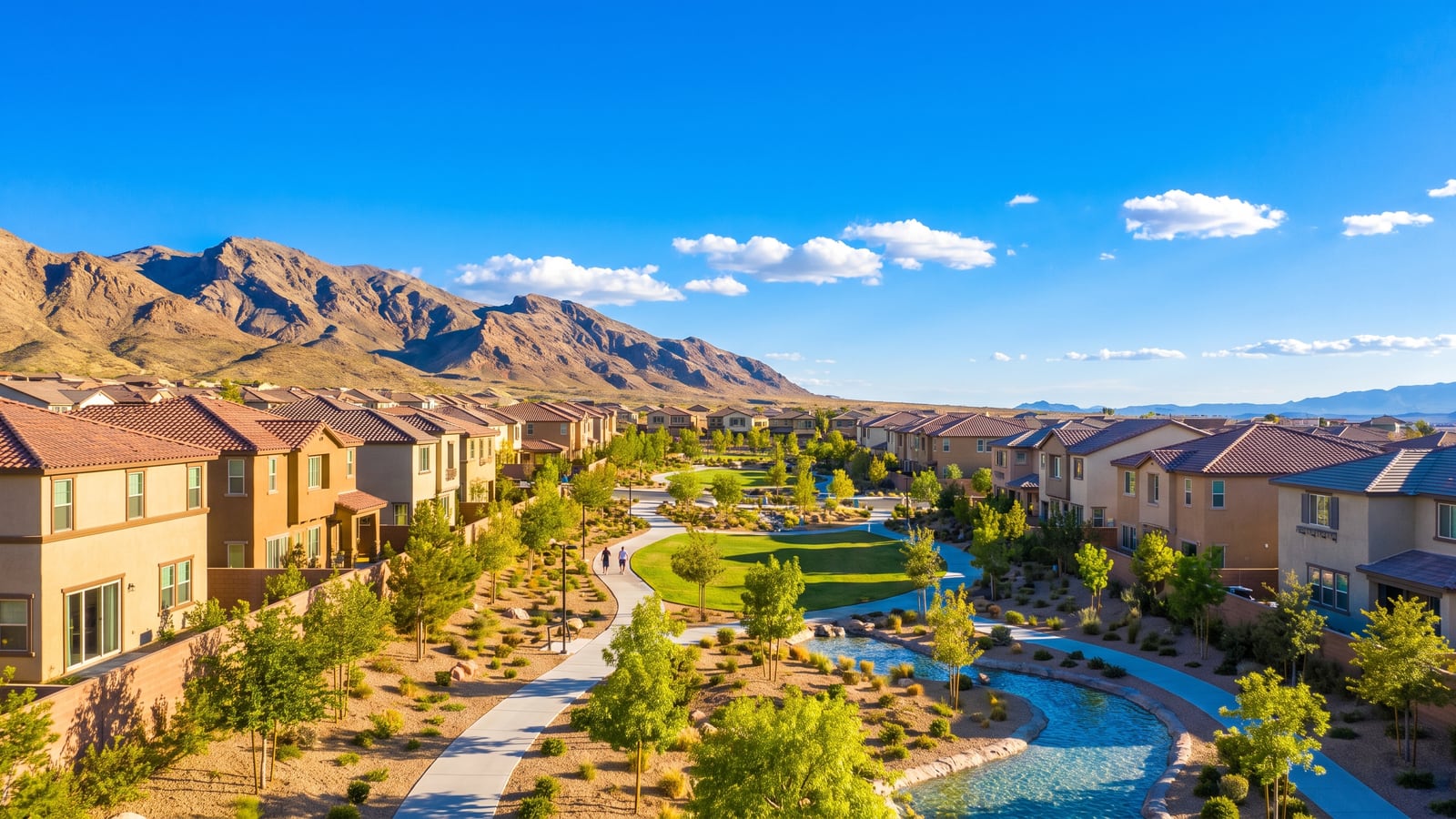
The value front, and quietly the pipeline's best price-per-square-foot story:
- Villages at Tule Springs — North Las Vegas's headline master plan, with D.R. Horton's Heartland anchoring the buildout: single-family from the $300s to low $500s beside Floyd Lamb Park's improbable greenery. This is where the valley's entry-level new-construction demand actually clears — the corridor for buyers priced out of the Henderson and Summerlin equivalents by $150,000-250,000 on comparable floor plans.
- Skye Canyon — the US-95 northwest plan is maturing gracefully (fitness-centered amenities built, schools open) while its sibling Skye Hills opens the next ground — the classic hand-off where the original plan's success de-risks the sequel. Bands run the $400s-$700s with elevation and Mount Charleston proximity as the lifestyle hook.
- Trilogy Sunstone — the northwest's dedicated 55+ resort plan, $400s-$700s, competing for the downsizer wave that Henderson's Heritage collections also court.
Strategy for the value corridors: incentives concentrate here — when national builders need volume, the $300s-$500s communities are where rate buydowns worth $15,000-30,000 and closing-cost credits appear first. Run the 2-1 buydown math against these price points; financed correctly, a Tule Springs or Skye Hills purchase in 2026 can carry like a rental payment.
What Does the Live MLS Data Say About New Construction Right Now?
Our GLVAR feed adds the texture the brochures skip. As of this writing, just 216 homes built in 2025-2026 sit active on the MLS — about 3% of the valley's roughly 7,200 residential actives — while 442 homes built 2025 or later have already closed in 2026. Read those two numbers together: new construction turns over faster than it accumulates, because most builder product never reaches the open MLS at all — it sells from the sales office, off the lot map, before a listing exists.
The second signal hiding in the feed: the median list price on those 216 MLS-visible new builds sits near $312,000 — far below the valley's roughly $490,000 overall median. That's not because new homes are cheap; it's because builders MLS-list mostly their attached and quick-move-in slice while the family-detached core sells direct. The practical translation for buyers is the thesis of our whole builders-compared guide: the MLS shows you a corner of the new-construction market, the sales offices hold the rest, and unrepresented buyers see neither clearly. Registration rules mean your agent must accompany or register you on the first visit — walk in alone and you may forfeit representation on the largest purchase of your life.
How Should Buildout Stage Drive Your Buying Strategy?
The framework we run clients through, whatever the corridor:
| Dimension | Early phase (Meriden, Grand Park, Skye Hills) | Mid-buildout (Cadence, Kestrel, Tule Springs) | Closeout (Inspirada) |
|---|---|---|---|
| Pricing posture | Lowest the plan will ever be; incentives richest | Established premium, still negotiable phase-to-phase | Scarcity pricing; incentives thin |
| What you live with | Construction traffic, rendered amenities, 2-4 years of dust | Amenity core built; edges still building | Finished community from day one |
| Selection | Full lot map, every floor plan | Broad but the best lots go early each release | Whatever remains — weeks, not months |
| Risk profile | Execution risk: will the plan deliver its promises? | Lowest overall — promises verifiable, runway remains | None on delivery; opportunity cost on price |
| Historically rewards | Patient early movers who hold 5+ years | The widest range of buyers | Decisive buyers who want finished, now |
The pattern across every Las Vegas master plan we've transacted in: the village is never cheaper than opening weekend, and never more livable than closeout — everything else is picking your point on that curve. Mid-buildout is the honest default recommendation because both risks shrink at once; early phase is the wealth-builder for buyers with patience; closeout is underrated for anyone allergic to construction living.
How Do Schools and Infrastructure Keep Up With the Pipeline?
The question underneath every family's pipeline decision, and the honest answer is: unevenly, by design, and the master plans handle it best. According to the Clark County School District, one of the nation's largest districts, new-school siting follows rooftops — which means master plans that dedicate school parcels up front (Summerlin's model for three decades, Cadence and Inspirada's in Henderson, Skye Canyon's in the northwest) get campuses built inside the community on a predictable lag, while scattered subdivisions wait on the district's broader capital calendar. The buyer's diligence version: ask not just "what school is this zoned for today" but "what parcels in this plan are dedicated for schools and what's the trigger" — the sales office has that map, and zoning today at a distant campus with a dedicated parcel two blocks away is a very different fact than zoning today with no parcel at all.
Roads and retail follow the same rooftops-first physics. Early-phase buyers should expect the arterial widenings, signal installations, and grocery anchors to trail occupancy by two to four years — Inspirada's residents watched exactly this sequence complete over its buildout, and Cadence's retail spine has filled in the same way. The compensations are real, though: in some plans, special-improvement districts fund much of that infrastructure (that's the SID line in the mistakes list below). Inspirada repays City of Henderson LID T-18 until June 1, 2035, according to the Assessment Management Group schedule, while Cadence has no SID or LID at all, according to the Cadence FAQ. Where a district exists, you're literally paying for the roads on a separate assessment bill, not the property-tax bill, so know the payoff date and remaining balance, which buyers can pay off or assume. And the master developers front-load the amenity spine precisely because parks sell lots faster than promises do. The rule of thumb from our files: in a well-run plan, the community feels 80% finished about four years after your early-phase purchase — and the equity earned in those four years is what the construction dust was for.
How Do Builder Incentives Work Across the Pipeline?
Incentives are where the advertised price and the real price part ways, and they move with the corridor, the quarter, and the builder's standing-inventory count. The mid-2026 menu:
| Incentive | Typical value | Where it concentrates |
|---|---|---|
| Rate buydowns (permanent or 2-1) | $15,000–$40,000 of lender-credit value | Value corridors + standing inventory; the workhorse incentive |
| Closing-cost credits | $5,000–$15,000 | Nearly universal when using the builder's lender |
| Design-center credits | $10,000–$50,000 | To-be-built contracts in mid-buildout communities |
| Lot-premium waivers | $10,000–$60,000 | Phase-end pushes and slower-moving lot types |
| Price reductions on specs | $10,000–$75,000+ | Quick-move-in homes aging past 60-90 days |
Three rules make the menu usable. First, incentives are usually tied to the builder's affiliated lender — the credit is real, but so is the obligation to compare that lender's rate sheet against outside financing; according to Freddie Mac's Primary Mortgage Market Survey, 2026 rates have hovered in the mid-6s, and a builder buydown that lands you meaningfully below that is genuine money. Second, incentives track the builder's calendar, not yours — fiscal quarter-ends and year-ends (many national builders close their books in September or December) reliably loosen the sales office's authority by five figures. Third, incentives are corridor-cyclical: when the value corridors are running hot, the money shifts to premium standing inventory, and vice versa — which is exactly the intel a builder-desk agent trades in weekly.
When in 2026 Should You Actually Buy Into the Pipeline?
The timing layer, since the pipeline question is really a when-question wearing a where-costume. According to Las Vegas REALTORS reporting, the resale market's 2026 story has been a record $490,000 June median with inventory finally loosening — and new construction competes against that backdrop, which is why builders have kept incentive budgets funded even as base prices held. The seasonal rhythm that follows: late summer through early fall is historically the buyer's window (families locked into school calendars thin the traffic, and September fiscal-year-end builders get flexible), the December push rewards buyers who can close inside the builder's year, and spring releases carry the thinnest incentives because the sales offices don't need them.
Overlay the buildout logic and the 2026 playbook writes itself. If your target is an early-phase plan (Meriden, Grand Park's first releases, Skye Hills), the release calendar outranks the season — get on the interest list now, because the first two or three releases are the cheapest that community will ever be regardless of month. If your target is mid-buildout (Cadence, Kestrel, Tule Springs), hunt the quarter-ends and aging spec inventory, where $20,000-50,000 of combined incentive value is a normal outcome of a well-timed, well-represented contract. If your target is Inspirada's closeout, the calendar is simply "before it's gone" — final-phase scarcity doesn't do seasonal discounts, and the south Henderson buyers who hesitated on the last two closeouts we worked are shopping resale today. And whatever the corridor: the pre-approval, not the tour, starts the clock — releases sell to the buyers who can sign that weekend.
What Mistakes Do Master-Plan Buyers Keep Making?
- Touring models unrepresented. Builder registration rules assign you to the sales office on first contact; bring your agent from visit one or lose the advocate the builder's own contract assumes you'll have.
- Comparing base prices instead of finished prices. Lot premiums ($10,000-100,000+), design-center spends (commonly $40,000-90,000 on family product), and rate-buydown values move the real number more than the advertised "from" price.
- Ignoring the buildout calendar. Buying the last new phase before a five-year construction neighbor, or missing a closeout by touring "someday" — the pipeline's timing IS the deal.
- Assuming the master plan protects every lot equally. Power-line adjacency, arterial backing, and school-drop-off geometry vary lot by lot inside even the best plans; the lot map session is where value is won.
- Skipping the SID/LID line. Several corridors carry special-improvement-district assessments, billed separately from property tax, that brochure payment math conveniently omits. Ask for the full tax-and-assessment stack in writing.
- Treating HOA tiers as interchangeable. Master association plus village association plus gated-enclave association can stack to $300+ monthly in premium corridors versus under $100 in value plans — a $200 monthly delta is $40,000 of price-equivalent over a decade.
How Do You Work This Pipeline With Representation?
Bring the pipeline a strategy, not just a Saturday. Nevada Real Estate Group transacts across every corridor on this board — 150+ agents, 9,061+ verified five-star reviews, and new-construction volume that keeps our builder-desk intel current on releases, incentives, and which sales offices are actually negotiating this month. New-build buyer representation costs you nothing (the builder pays it) and changes everything from lot selection to contract contingencies — the do-you-need-an-agent question has a short answer at a builder's sales office: yes, from the first visit. Start with the new-construction hub, browse what's live on the MLS, set a pipeline-corridor search, call (702) 637-1759, or tell us your corridor and price band and we'll send the current release sheets before your first tour. This page updates as the board changes — bookmark it for the next edition.
Frequently Asked Questions
What new master-planned communities are being built in Las Vegas right now?
The mid-2026 board: Summerlin West's newest villages (Kestrel, Redpoint, the emerging Grand Park district), Henderson's Cadence in full momentum plus the new Meriden by KB Home and Lake Las Vegas's expansion, Inspirada selling its final phases, and the northwest-north front of Skye Canyon, Skye Hills, Villages at Tule Springs, and Trilogy Sunstone (55+).
What is the cheapest master-planned community in Las Vegas for new homes?
The value corridors: Villages at Tule Springs in North Las Vegas and Cadence in east Henderson both open in the $300s, with Meriden by KB Home starting from the low $400s in west Henderson. Comparable floor plans run $150,000-250,000 more in the Summerlin and premium-Henderson equivalents.
Is it better to buy early in a new master plan or wait for buildout?
Early buys the lowest price the plan will ever offer plus the richest incentives, in exchange for years of construction living and execution risk; closeout buys a finished community at scarcity pricing. Mid-buildout is the honest default — amenities verifiable, selection still broad — and the stage most buyers should target.
Do new-construction homes in Las Vegas show up on the MLS?
Only a slice: as of this writing just 216 homes built in 2025-26 sit active on the MLS (about 3% of inventory), skewing toward attached and quick-move-in product near a $312,000 median, while the detached core sells directly from builder sales offices. That's why working the pipeline requires an agent with builder-desk access, not just a portal search.
What extra costs do master-planned communities have?
Beyond price: lot premiums ($10,000-100,000+), design-center spending (commonly $40,000-90,000), stacked HOA tiers (under $100 to $300+ monthly), and in several corridors special-improvement-district assessments, billed separately from property tax and specific to each parcel. Ask for the full tax-and-assessment stack in writing before comparing communities on payment.
Which Las Vegas master plan is best for families?
It maps to budget and geography: Cadence and Villages at Tule Springs win the attainable-family band with real amenity spines, Inspirada's closeout offers finished-community family life in south Henderson, and Summerlin West's Kestrel-Redpoint villages carry the premium family tier with the valley's deepest school-park-trail infrastructure.
Will this pipeline change during 2026?
Yes — that's the point of the edition format. Villages open and close quarterly, Grand Park's district will firm up, Inspirada's final neighborhoods will sell through, and new land deals keep surfacing in west Henderson and the northwest. We update this page as the board moves; the scoreboard table reflects the most recent edition date above.
Which Sources Inform This Master-Plan Pipeline Guide?
Community rankings reference RCLCO's master-planned community reports; developer reporting from the Howard Hughes Corporation (Summerlin); growth and migration context from the U.S. Census Bureau; market medians from Las Vegas REALTORS reporting including the June 2026 $490,000 valley median; permitting context from the Clark County Department of Building and the City of Henderson; builder licensing from the Nevada State Contractors Board; school context from CCSD; new-home financing structures from Freddie Mac. Live inventory counts (216 new-build actives, 442 closings of 2025+-built homes in 2026, the $312,000 MLS new-build median) are point-in-time queries from NREG's GLVAR MLS feed; price bands are observed ranges from our transaction files and current release sheets — phase pricing changes monthly, so verify current numbers with us before touring.