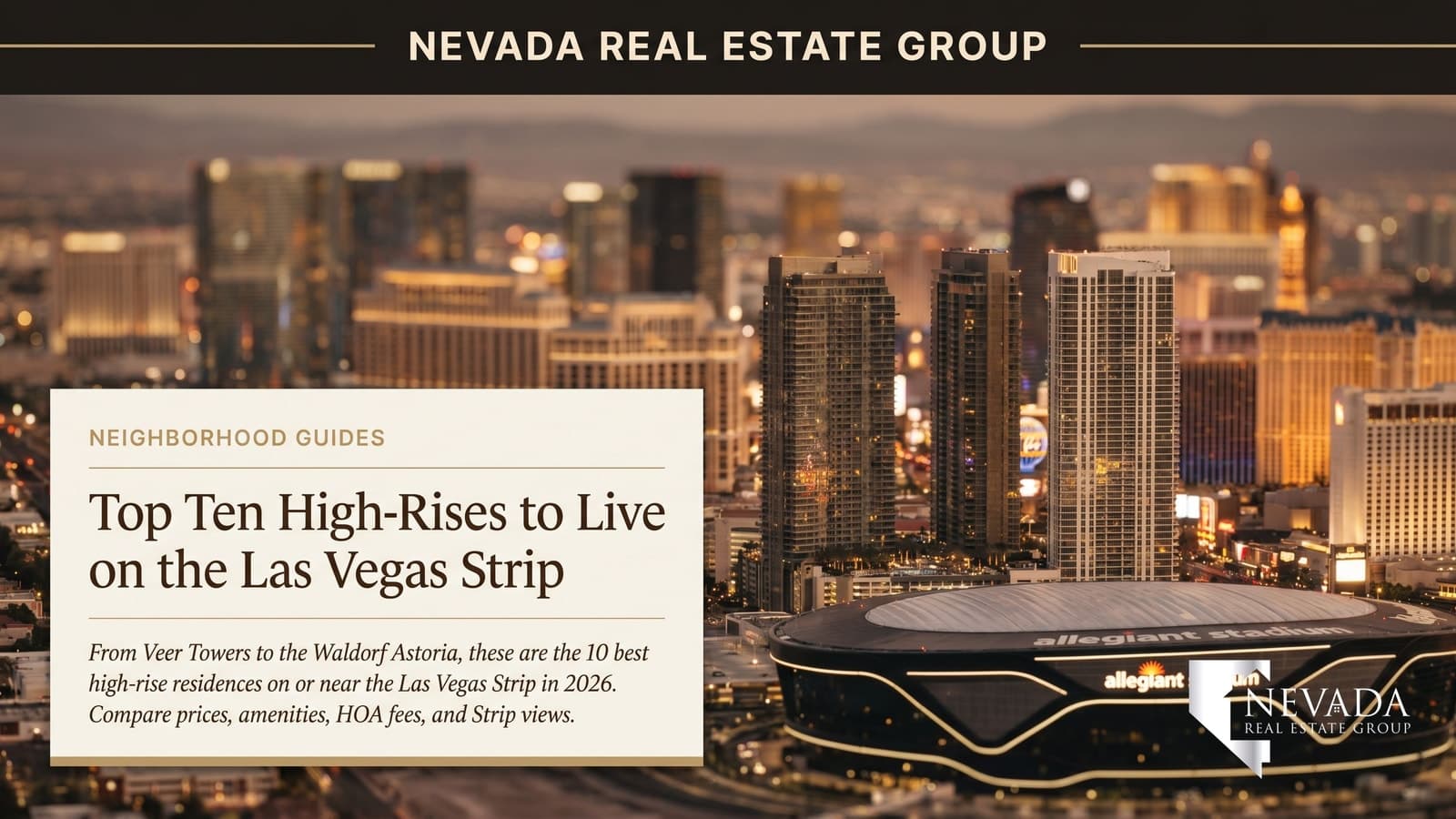

Published April 28, 2026 · Updated September 19, 2026 · By Chris Nevada, Nevada Real Estate Group · NV License S.181401
The Las Vegas Strip corridor holds roughly 20 residential high-rise towers, and in the 12 months ending September 18, 2026 they closed 535 condominium sales at a $478,000 median, according to Las Vegas MLS data pulled through Repliers on September 19, 2026. The spread inside that number is enormous: the median closing at the Waldorf Astoria Residences was $2,922,000, while Allure Las Vegas and Trump International both traded near $300,000. These ten towers represent the best combination of location, build quality, liquidity, and livability for buyers who want a full-time residence or a lock-and-leave second home.
This September 2026 update re-ranks every building on a full year of closings rather than a 90-day snapshot, adds a three-year year-over-year table, and splits The Martin out of the Panorama Towers plat so each building gets its own row. It also pairs each tower with its building page under our high-rise condos directory, where live listings and rentals update daily.
The best Strip high-rises to live in for 2026 are the Waldorf Astoria Residences ($2,922,000 median, 13-day median days on market), One Queensridge Place ($1,900,000 median, up 25% year over year), and Turnberry Place ($775,000 median, 47 closings), followed by Veer, Turnberry Towers, Panorama, The Martin, Sky, Trump, and Allure. All towers closed 535 units in the 12 months ending September 18, 2026, so shop on each building's own supply, not the corridor average.
- Waldorf Astoria Residences led the corridor with a $2,922,000 median and a 13-day median days on market.
- One Queensridge Place's median rose from $1,515,000 to $1,900,000 year over year, the strongest gain on the list.
- Tower closings rose to 535 from 502 the prior year, with 88 sales above $1,000,000 versus 77.
- Trump International and Sky Las Vegas carry 22 months of supply each, so buyers hold real leverage there.
- Read the NRS 116 resale package and reserve study before writing any high-rise offer in 2026.
If one of these buildings catches your eye, its page on our high-rise condos directory goes deeper than a ranking can. The Waldorf Astoria and Veer Towers pages carry each building's live listings, current rentals, and aggregate sold statistics, and the Panorama Towers, Turnberry Place, Turnberry Towers, The Martin, Sky Las Vegas, One Queensridge Place, Allure, and Trump International pages add the building's history, nearby landmarks with drive times, and a buyer's checklist for that specific tower.
What Should Readers Know First About Strip High-Rises in 2026?
Here is the short version of a long year of data, all from Las Vegas MLS data pulled through Repliers on September 19, 2026, covering closings from September 19, 2025 through September 18, 2026 and active listings as of September 18, 2026:
- The Waldorf Astoria Residences lead on price and speed: 16 closings at a $2,922,000 median, $1,446 per square foot, and a 13-day median days on market, the fastest of any tower on this list.
- One Queensridge Place posted the biggest year-over-year move: its median rose from $1,175,000 two years ago to $1,515,000 last year and $1,900,000 in the current window, with 21 of its 23 closings above $1,000,000.
- Turnberry Place is the most liquid luxury tower: 47 closings, a $775,000 median, and 6.4 months of supply, the tightest of the four Paradise Road and CityCenter towers above $500,000.
- The corridor as a whole is loosening slowly in the entry tier. Trump International carried 59 active listings against 32 closings (22.1 months of supply) and Sky Las Vegas carried 22 against 12 (22.0 months). Both are buyer's markets by any definition.
- Total tower closings rose to 535 from 502 in the prior 12-month window, and the count of sales above $1,000,000 rose to 88 from 77, so the luxury tier is doing more of the work in 2026.
- Calendar year to date through September 18, 2026, towers closed 384 sales at a $482,500 median and $292.4 million in volume, versus 345 sales and $280.4 million over the same dates in 2025.
Those six lines explain most of the ranking below. The buildings that rank highest are not simply the most expensive; they are the ones where a full-time owner gets build quality, resale liquidity, and a rental policy that protects residents. For related context, see our coverage of the Las Vegas construction boom and the Las Vegas property tax guide, which explains why the 3% annual abatement cap on a primary residence matters for a condo you plan to hold for a decade.
Why Are Strip High-Rises Attracting More Full-Time Residents in 2026?
The Las Vegas high-rise market has shifted over the past five years from a vacation-condo and investor product toward a genuine full-time residential option. The people I meet at tower showings now are remote workers relocating from California, retirees who no longer want a yard, entertainers and hospitality executives who work on the Strip, and empty-nesters trading a Summerlin or Henderson house for a lock-and-leave home base. The draw is a walkable urban lifestyle that the rest of the valley cannot offer, without the congestion and carrying costs of coastal cities.
Three structural factors support that shift. First, Nevada has no state income tax, which, according to the Nevada Department of Taxation, applies to wages, retirement income, and capital gains alike, so a $300,000-a-year household relocating from a high-tax state keeps a meaningful amount of money that can cover a tower HOA several times over. Second, the Strip corridor has grown the daily-life infrastructure a resident needs: grocery, pharmacies, medical offices, and a sports district anchored by T-Mobile Arena and Allegiant Stadium. Third, the market itself has matured. In the 12 months ending September 18, 2026, tower closings rose 7% year over year to 535, and dollar volume rose to $402.7 million from $380.9 million, according to Las Vegas MLS data pulled through Repliers on September 19, 2026. That is not a speculative spike; the median eased slightly to $478,000 from $485,000 while $1,000,000-plus sales rose to 88 from 77.
I have sold high-rise units across every tower on this list over my 16 years leading Nevada Real Estate Group. The differences between buildings matter far more than most buyers realize: construction, HOA reserve health, rental policies, elevator counts, and view corridors vary dramatically tower to tower, and the rankings below are built on those differences as much as on price.
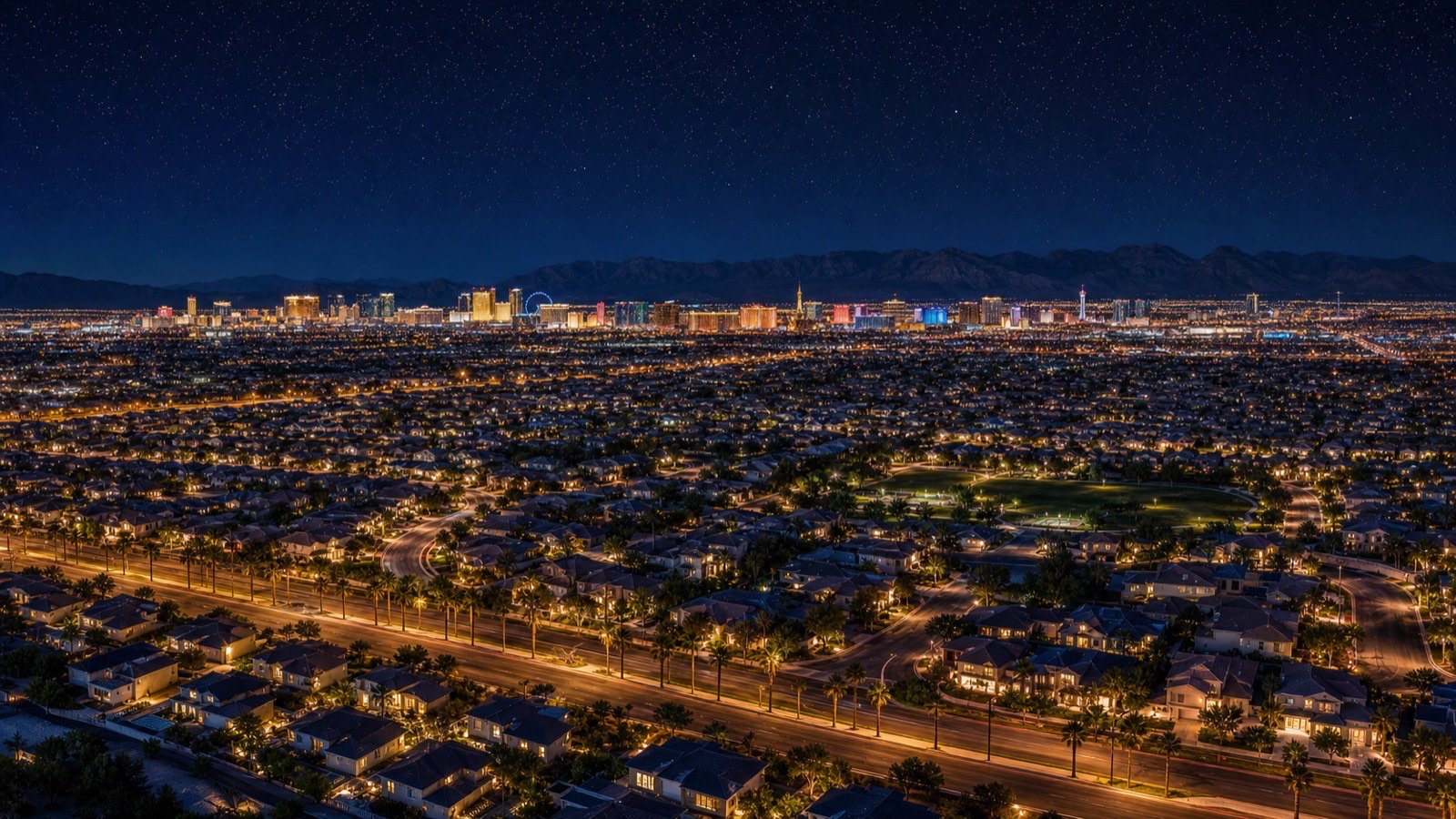
What Does the Strip High-Rise Market Look Like in September 2026?
Before ranking the buildings, here is the corridor-level picture and how it compares to the rest of the valley. According to Las Vegas REALTORS, the median price for condos and townhomes across Southern Nevada was $290,000 in July 2026, down from $292,000 in June, while the single-family median was $480,000, 2% below the $490,000 record set in May and June. According to Freddie Mac, the 30-year fixed rate averaged 6.71% on September 3, 2026, and condo loans typically price 0.125% to 0.25% above that. Against those benchmarks, the tower segment looks like this for the 12 months ending September 18, 2026, per Las Vegas MLS data pulled through Repliers on September 19, 2026:
| Segment | 12-month closings | Median sold price | Median days on market | Sales above $1,000,000 |
|---|---|---|---|---|
| All residential towers (19 tower plats) | 535 | $478,000 | Varies by tower (13 to 142 days) | 88 |
| All condominium closings in the tower ZIP codes | 668 | $215,000 | Not separately reported | 23 (non-tower condos included) |
| All condominium-style closings, four-city market | 2,439 | $225,000 | 41 | Not separately reported |
| All single-family closings, four-city market | 20,966 | $484,990 | 28 | Not separately reported |
Three things stand out. First, the towers are a different market from the rest of the valley's condos: the tower median of $478,000 is more than double the $215,000 median for every condominium sold in the same ZIP codes, because the Strip towers are where the $1,000,000-plus condo sales happen. Second, the towers as a group closed at nearly the single-family median ($484,990) for a fraction of the square footage, which is the price of location and services. Third, days on market is a tower-by-tower story: Waldorf Astoria units closed in a 13-day median, Turnberry Towers in 47, Sky Las Vegas in 88, and Newport Lofts in 142. Sixty days on market is normal in several of these buildings and a warning sign in others, and the next table shows which is which.
Which 10 High-Rises Made the List, and How Did They Trade Over the Past 12 Months?
The ranking below weighs four things: how the building trades (median price, closings, days on market, and months of supply), how it is built and run (construction, elevators, amenities, and reserve health), how it lives day to day (rental policy, owner-use rules, and walkability), and how it holds value through the three-year window in the year-over-year section. Every market figure is from Las Vegas MLS data pulled through Repliers on September 19, 2026, covering closings from September 19, 2025 through September 18, 2026 and active listings as of September 18, 2026. Months of supply is active listings divided by average monthly closings.
| Rank | Tower | 12-month closings | Median sold | Sold price per sq ft | Median days on market | Active listings | Months of supply |
|---|---|---|---|---|---|---|---|
| 1 | Waldorf Astoria Residences | 16 | $2,922,000 | $1,446 | 13 | 10 | 7.5 |
| 2 | One Queensridge Place | 23 | $1,900,000 | $531 | 72 | 11 | 5.7 |
| 3 | Turnberry Place | 47 | $775,000 | $384 | 68 | 25 | 6.4 |
| 4 | Veer Towers | 45 | $570,000 | $678 | 84 | 28 | 7.5 |
| 5 | Turnberry Towers | 42 | $547,000 | $447 | 47 | 32 | 9.1 |
| 6 | Panorama Towers (Towers 1 and 2) | 32 | $587,500 | $397 | 60 | 49 | 18.4 |
| 7 | The Martin (recorded as Panorama Tower Phase III) | 18 | $515,000 | $449 | 45 | 11 | 7.3 |
| 8 | Sky Las Vegas | 12 | $590,000 | $426 | 88 | 22 | 22.0 |
| 9 | Trump International | 32 | $300,000 | $534 | 64 | 59 | 22.1 |
| 10 | Allure Las Vegas | 30 | $295,000 | $266 | 76 | 26 | 10.4 |
A note on the Panorama and Martin rows: the MLS records The Martin under its original plat name, Panorama Tower Phase III, so a combined Panorama query returns 50 closings at a $545,000 median. I split the plats so each building stands on its own. Allure's row combines its condominium and townhome plats, which is why its price per square foot ($266) reads lower than the tower-only buildings.
The order is deliberate. Waldorf Astoria and One Queensridge Place rank first and second because they pair the corridor's highest prices with its tightest supply and, in Waldorf's case, the fastest sales. Turnberry Place ranks above Veer because it is more liquid (47 closings versus 45) with fewer months of supply (6.4 versus 7.5). Panorama Towers drops to sixth on supply alone: 49 active listings against 32 closings is 18.4 months, the loosest of the residential towers. The Martin edges Sky Las Vegas because it sells faster (45 days versus 88) with a third of the supply. Trump International and Allure round out the list as the two sub-$300,000 entries with enough closings (32 and 30) to prove real liquidity at that price.
What Makes Waldorf Astoria the Top Strip High-Rise?
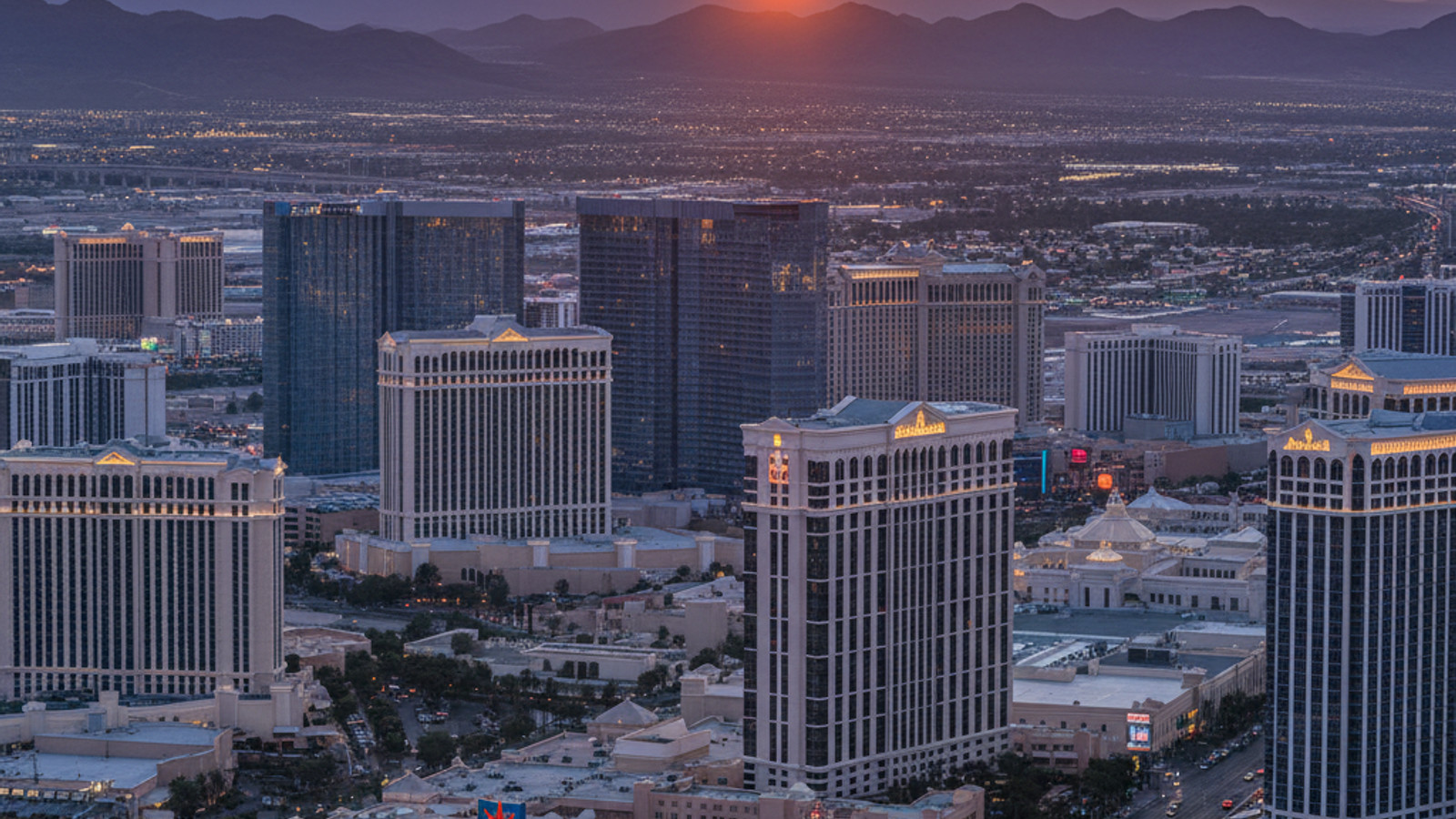
The Waldorf Astoria Residences occupy the upper floors of the 47-story tower at CityCenter that opened in 2009 as the Mandarin Oriental, with 225 residences served by the hotel below. This is the only branded luxury hotel-residence on the Strip where owners get concierge, housekeeping, room service, valet, spa access, and pool service as part of the ownership structure, and the market prices that in. In the 12 months ending September 18, 2026, 16 units closed at a $2,922,000 median and $1,446 per square foot, with a 13-day median days on market, according to Las Vegas MLS data pulled through Repliers on September 19, 2026. Every one of those 16 sales was above $1,000,000.
The top of the building is where Las Vegas high-rise records are set. Unit 4503, a 3,980-square-foot residence, closed at $11,800,000 on April 22, 2026, and unit 4206 (3,922 square feet) closed at $10,100,000 on February 17, 2026. Those two sales are the highest tower closings in the valley in the window, and they work out to roughly $2,965 and $2,575 per square foot. Below the penthouse floors, the building's other closings in the window ranged down to the low seven figures, and as of September 18, 2026 the 10 active listings carried a $3,695,000 median ask, which is 7.5 months of supply at the year's pace.
The year-over-year picture is worth understanding before you buy. The building's median was $3,420,000 in the 12 months ending September 18, 2024, fell to $2,075,000 in the following window, and rebounded to $2,922,000 in the current one. That swing is a mix issue, not a value collapse: a year with several sub-$2,000,000 one-bedroom closings drags the median down, and a year with two $10,000,000-plus penthouses pulls it back up. For buyers, the practical implications are that the building's HOA reflects genuine hotel services, that units here sell in days rather than months when priced correctly, and that a purchase in this tower is the closest thing Las Vegas offers to Manhattan-style serviced living. It is in a category of one, and the penthouse and condo buying guide walks through how the top-floor pricing works.
Why Does One Queensridge Place Rank Second Despite Being Off-Strip?
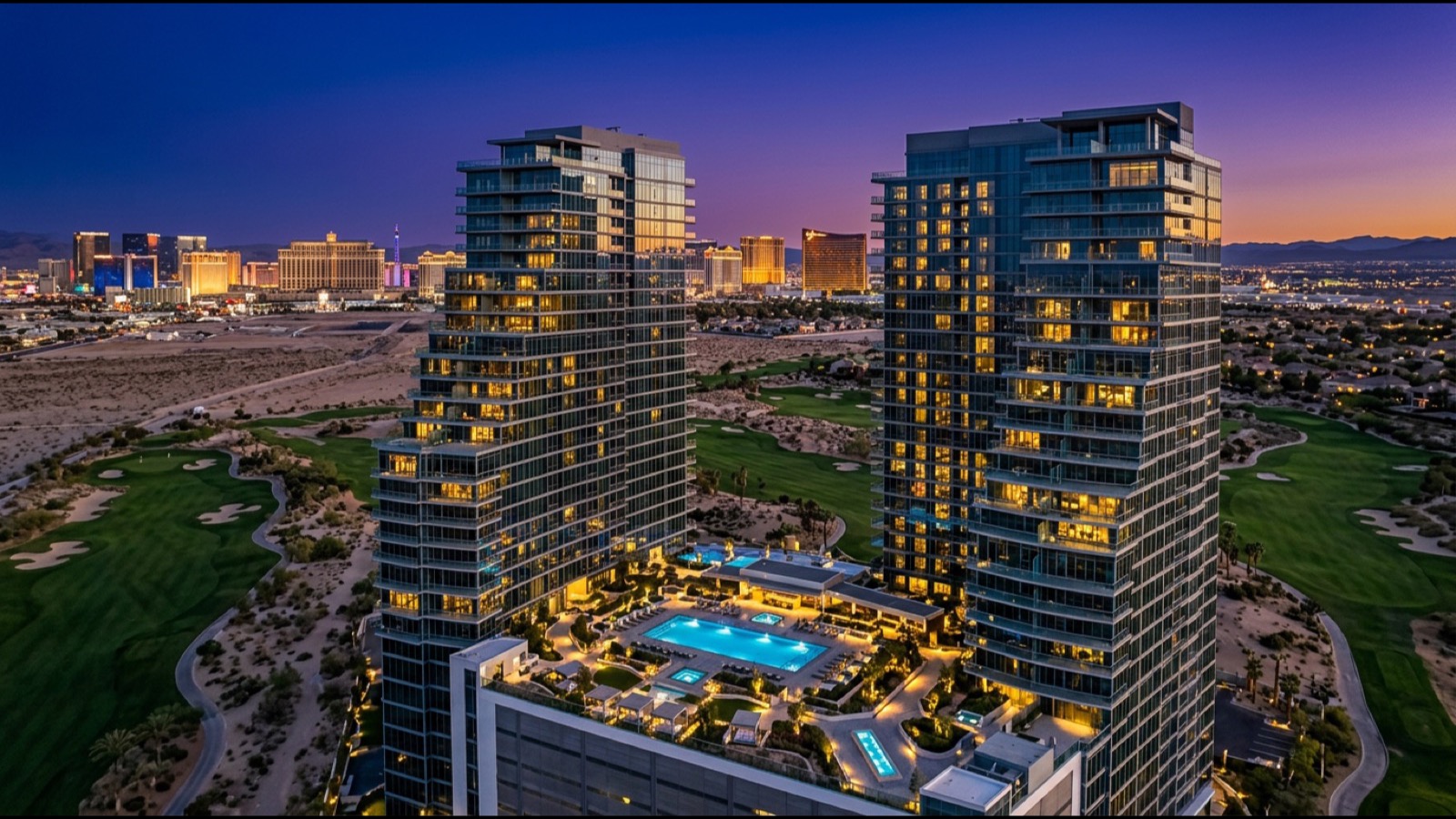
One Queensridge Place breaks the Strip-centric pattern on this list, and it earns second place on numbers alone. The twin 20-story towers on Alta Drive, completed in 2007 with 219 residences, sit in the Queensridge neighborhood near Summerlin, about 15 minutes from the Strip via the 215 Beltway. In the 12 months ending September 18, 2026, 23 units closed at a $1,900,000 median, up from $1,515,000 in the prior window and $1,175,000 the year before that, according to Las Vegas MLS data pulled through Repliers on September 19, 2026. Twenty-one of the 23 closings were above $1,000,000, and the building's top sale, unit 1604 at 6,404 square feet, closed at $9,700,000 on November 7, 2025.
The reason the building trades this way is the product. One Queensridge Place has the largest standard floor plans of any Las Vegas high-rise, private elevator vestibules, and an amenity program that includes a resort pool, tennis, a wine cellar, a theater, and a full concierge. It also has something no Strip tower can offer: a residential neighborhood outside the front door, with Summerlin's parks and retail a few minutes away rather than the Strip's traffic and tourism.
Supply is the other half of the story. As of September 18, 2026 the building had 11 active listings at a $1,200,000 median ask, or 5.7 months of supply, the second-tightest on the list after Turnberry Place. The 72-day median days on market is typical for seven-figure product that draws a narrower buyer pool. For buyers who want high-rise living without the Strip's noise, this is the flagship alternative, and the broader luxury communities picture around Queensridge explains why the surrounding estates hold the tower's value up.
What Should Buyers Know About Turnberry Place and Turnberry Towers?
Turnberry Place (2001, four towers, 720 units) and Turnberry Towers (2007, two towers, 636 units) sit adjacent to each other on Paradise Road behind the Las Vegas Convention Center, and together they form the largest luxury residential enclave near the Strip. They are also the two most liquid buildings above $500,000 on this list: in the 12 months ending September 18, 2026, Turnberry Place closed 47 units at a $775,000 median and Turnberry Towers closed 42 at a $547,000 median, according to Las Vegas MLS data pulled through Repliers on September 19, 2026.
Turnberry Place is the older, larger product, with generous standard floor plans, private elevator foyers, and wraparound terraces in a solid concrete build. The $384 per square foot sold figure is the lowest of any tower above a $500,000 median on this list, which is exactly what buyers who prioritize space are paying for. The building's average sale ($1,179,194) sits well above its median because the upper floors trade in a different league: unit 3801, an 8,205-square-foot penthouse, closed at $6,500,000 on February 11, 2026, and unit 3701 (5,609 square feet) closed at $3,800,000 a week earlier. Fifteen of the building's 47 closings were above $1,000,000. As of September 18, 2026 it carried 25 active listings at a $799,000 median ask, 6.4 months of supply.
Turnberry Towers updated the formula with floor-to-ceiling glass and more efficient layouts, and it sells faster: a 47-day median days on market versus 68 at Turnberry Place, the second-fastest on the list after Waldorf. Its $447 per square foot reflects newer finishes on smaller units, and its median has moved in a narrow band, $540,000 two years ago, $600,000 last year, $547,000 now. With 32 active listings at a $549,000 median ask (9.1 months of supply), it is the one I show first to buyers who do not want a renovation project. Both share the Turnberry amenity campus of resort pool, tennis, spa, and fitness, and both restrict short-term rentals, which is why they live so quietly.
Why Do Buyers Choose Veer Towers Over Other CityCenter Options?
Veer Towers, the twin 37-story leaning towers at CityCenter completed in 2010 with 670 residences, offer the Strip's best combination of location, modern design, and attainable pricing. In the 12 months ending September 18, 2026, 45 units closed at a $570,000 median and $678 per square foot, with the building's top sale at $2,900,000, according to Las Vegas MLS data pulled through Repliers on September 19, 2026. Eight of the 45 closings were above $1,000,000. As of September 18, 2026, 28 units were active at a $799,000 median ask, 7.5 months of supply.
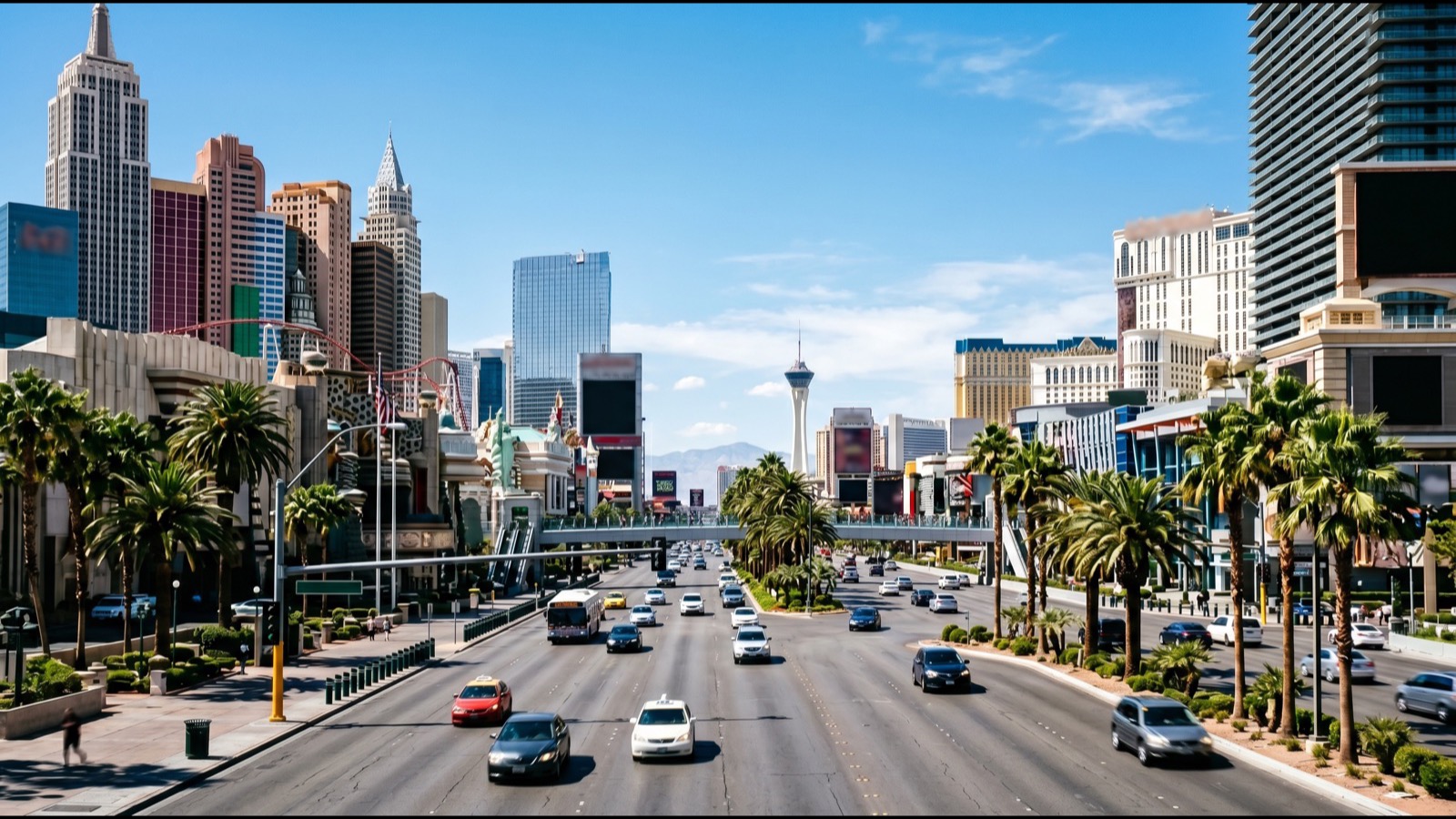
What you are buying at Veer is CityCenter itself. Aria, Crystals, Park MGM, and T-Mobile Arena are a walk away, and the building's floor-to-ceiling glass, rooftop pool decks, and 24-hour concierge are the modern-Strip product that buyers from other cities expect. The trade-off is price per square foot: at $678, Veer is the most expensive non-hotel tower on this list per foot, so a buyer who wants space over address will find more of it at Turnberry Place ($384) or Panorama ($397).
The year-over-year trend is steady rather than spectacular. The median was $595,000 in the 12 months ending September 18, 2024, dipped to $526,750 in the following window, and recovered to $570,000 in the current one, while closings ran 46, 36, and 45. The 84-day median days on market is the longest among the top five, so a listing that has sat for two months here is normal, and a buyer can negotiate from that fact. Our tower page publishes an approximate HOA range of $536 to $1,898 per month for Veer, always with the caveat to confirm the current figure in the resale package, because Veer's dues vary widely by unit size and the building's amenity program.
How Do Panorama Towers and The Martin Compare for Space and Value?
Panorama Towers and The Martin share a block on Dean Martin Drive across Interstate 15 from CityCenter, and they share a plat history: The Martin was built as Panorama Tower Phase III in 2008 and rebranded after the developer changed. The MLS still records its closings under the original name, so most published "Panorama" statistics quietly include The Martin. Split apart, the two buildings tell different stories in the 12 months ending September 18, 2026, according to Las Vegas MLS data pulled through Repliers on September 19, 2026.
Panorama Towers 1 and 2 (2006, 634 units) closed 32 sales at a $587,500 median and $397 per square foot, with four sales above $1,000,000 and a top of $1,395,000. The product is the reason to buy here: the largest standard floor plans of any Strip-facing tower, west-facing units that catch the Spring Mountains sunset, and a resort-style amenity deck. The concern is supply. As of September 18, 2026 the two towers carried 49 active listings at a $609,900 median ask, which is 18.4 months of supply at the year's sales pace, the loosest of any residential tower on this list. For a buyer, that is leverage: a 60-day median days on market and nearly a year and a half of inventory means offers below ask are being taken seriously. For a seller, it means pricing at the median, not above it.
The Martin (372 units, 45 stories) closed 18 sales at a $515,000 median and $449 per square foot, with a 45-day median days on market and a $3,150,000 top sale that is the highest closing on the block. Its 11 active listings at a $494,000 median ask work out to 7.3 months of supply, less than half of Panorama's, which is why it ranks a place ahead despite the lower median. Our tower page publishes an approximate HOA range of $730 to $2,000 per month for The Martin. The building's south-corridor position puts T-Mobile Arena, Park MGM, and the planned ballpark district within walking distance, and its boutique scale (one tower rather than two or four) is a genuine lifestyle difference for owners who want to know their neighbors.
Which Strip Towers Offer the Lowest Entry Price?
For buyers who want high-rise living near $300,000, three towers on this list compete, each with a different compromise. All figures are from Las Vegas MLS data pulled through Repliers on September 19, 2026, for the 12 months ending September 18, 2026.
Sky Las Vegas (2007, 409 units, 45 stories) sits at the north end of the Strip on Las Vegas Boulevard near the Sahara. It is the priciest of the three at a $590,000 median across 12 closings, but its range is the widest: the building's top sale, unit 4306 at 5,293 square feet, closed at $5,510,000 on March 27, 2026, while its smaller units trade well under the median. The problem is pace. Twelve closings against 22 active listings is 22.0 months of supply, and the 88-day median days on market is the longest in the top ten. Closings have fallen from 24 two years ago to 12 now, so buyers here should negotiate hard and sellers should price to the last three comps.
Trump International (2008, 1,282 units, 64 stories) on Fashion Show Drive is a hotel-condo hybrid where owners can place units in the hotel rental program. It closed 32 sales at a $300,000 median and $534 per square foot, with a $850,000 top and no sales above $1,000,000. The building's sheer size creates inventory: 59 active listings at a $300,000 median ask is 22.1 months of supply. Closings have fallen from 61 to 50 to 32 over three windows while the median moved $290,000, $325,000, $300,000, which tells you demand at this price has thinned rather than prices falling. Financing is the other consideration: condo-hotel units generally require larger down payments or portfolio lending, covered in the buyer section below.
Allure Las Vegas (2007, 41 stories) at 200 West Sahara sits at the edge of Downtown Las Vegas rather than on the Strip proper. Its condominium and townhome plats together closed 30 sales at a $295,000 median, with a 76-day median days on market and 26 active listings at a $388,950 median ask (10.4 months of supply). Allure is a fully residential building rather than a hotel program, which makes it the simplest of the three to finance and the one I recommend to buyers who want an actual home at this price rather than an investment unit.
How Did Each Tower's Median Move Year Over Year?
A single year of closings tells you where a building is; three years tell you where it is going. The table below compares the same tower plats across three 12-month windows ending September 18 of 2024, 2025, and 2026, from Las Vegas MLS data pulled through Repliers on September 19, 2026. Vdara and Signature at MGM Grand are omitted because their plats group differently between the two pulls, and Allure appears only in the current window because its plats returned no closings in the earlier ones.
| Tower | Closings 2023-24 | Closings 2024-25 | Closings 2025-26 | Median 2023-24 | Median 2024-25 | Median 2025-26 | Sales above $1,000,000, 2025-26 |
|---|---|---|---|---|---|---|---|
| Waldorf Astoria Residences | 23 | 17 | 16 | $3,420,000 | $2,075,000 | $2,922,000 | 16 |
| One Queensridge Place | 22 | 14 | 23 | $1,175,000 | $1,515,000 | $1,900,000 | 21 |
| Turnberry Place | 56 | 48 | 47 | $800,000 | $850,000 | $775,000 | 15 |
| Veer Towers | 46 | 36 | 45 | $595,000 | $526,750 | $570,000 | 8 |
| Turnberry Towers | 40 | 51 | 42 | $540,000 | $600,000 | $547,000 | 2 |
| Panorama Towers (including The Martin plat) | 52 | 35 | 50 | $555,000 | $560,000 | $545,000 | 7 |
| Sky Las Vegas | 24 | 22 | 12 | $550,000 | $595,000 | $590,000 | 2 |
| Trump International | 61 | 50 | 32 | $290,000 | $325,000 | $300,000 | 0 |
| Allure Las Vegas | Not matched | Not matched | 30 | Not matched | Not matched | $295,000 | 0 |
| All towers | 613 | 502 | 535 | $463,000 | $485,000 | $478,000 | 88 |
Three patterns matter. First, the luxury tier is carrying the market: One Queensridge Place is up 62% over two years on median, and $1,000,000-plus tower sales rose to 88 from 77 even as the overall median eased 1%. Second, the mid-tier towers are flat: Turnberry Place, Turnberry Towers, Veer, and Panorama all sit within a few percent of two years ago, a reasonable result with a 6.71% mortgage rate. Third, the entry tier is losing volume rather than price: Trump International's closings fell by nearly half over two windows while its median held near $300,000. When volume falls and price holds, sellers are waiting rather than cutting, which is the setup where a patient buyer gets a deal. Our companion piece on the Las Vegas high-rise condo market's record pace tracks the monthly rhythm behind these annual numbers, including the May 2026 peak of 53 tower closings at a $598,000 median.
Which Towers Just Missed the List, and Why?
Nine other towers in the same pull deserve a mention, because several of them are the right answer for a specific buyer even if they are not the right answer for a full-time resident. All figures cover the 12 months ending September 18, 2026 and actives as of September 18, 2026, from Las Vegas MLS data pulled through Repliers on September 19, 2026.
The condo-hotel towers are the biggest group. Signature at MGM Grand was the busiest building in the valley with 94 closings at a $305,000 median, $481 per square foot, and 97 active listings (12.4 months of supply). Palms Place closed 41 units at a $213,000 median, the lowest on the corridor, with 69 actives and 20.2 months of supply. Vdara closed five units at an $825,000 median and $1,277 per square foot, second only to Waldorf per foot. All three run hotel rental programs with owner-use limits, and Fannie Mae classifies condo-hotel projects as ineligible for conventional financing, so they are investment products first and residences second. That is why they sit outside a list built for full-time living.
The Hughes Center towers east of the Strip are the opposite case: small, residential, and tight. Park Towers (2001, 84 units) closed seven sales at a $1,450,000 median and $612 per square foot, with a single active listing, or 1.7 months of supply, the tightest of any tower in the pull. Metropolis (2005, 71 units) closed ten at a $990,000 median, up from $750,000 the year before, with five actives (6.0 months). Both are excellent full-time buildings; they miss the top ten because seven and ten closings a year is too thin a sample to rank against buildings that trade forty times a year, and because Hughes Center is a drive, not a walk, from the Strip.
Downtown, Juhl closed 12 units at a $267,300 median with 26 actives (26.0 months of supply), and Regency Towers, the 1974 building beside the Las Vegas Country Club, closed 16 at a $460,000 median and $247 per square foot, the lowest per-foot price of any tower with meaningful volume.
What Should First-Time High-Rise Buyers Check Before Purchasing?
High-rise ownership differs from single-family in ways that show up in the paperwork, and Nevada law gives you the documents to check them. According to the Nevada Real Estate Division, a buyer of a unit in a common-interest community is entitled to a resale package under NRS 116.4109 that includes the association's declaration, bylaws, rules, current budget, reserve study summary, and any pending special assessments, and the buyer may cancel the purchase within five calendar days of receiving it. Read every page. In my experience the resale package is where high-rise deals are saved or killed, and here is what to look for.
Reserves and assessments. According to Nevada Revised Statutes Chapter 116, an association must commission a reserve study at least every five years and fund reserves according to it. A tower with elevators, a pool deck, a curtain wall, and mechanical systems has enormous long-term obligations, and a reserve funded well below its study target is a special assessment waiting to happen. Ask for the percent-funded figure and the date of the last study.
HOA dues. Tower dues vary more than buyers expect, because they fund very different things. Our tower pages publish approximate ranges where we have them, such as $536 to $1,898 per month at Veer Towers and $730 to $2,000 at The Martin, and every range carries the same caveat: confirm the current figure for the specific unit in the resale package. At the Waldorf Astoria, dues include hotel services that a resident would otherwise pay for separately; at a residential tower they cover the building, security, valet, and amenities. Compare what is included, not just the number.
Financing. According to Freddie Mac, the 30-year fixed rate averaged 6.71% on September 3, 2026, and condo loans typically price 0.125% to 0.25% above single-family. According to the U.S. Department of Housing and Urban Development, FHA financing requires the project to be on HUD's approved condominium list or to qualify for a single-unit approval, so check the HUD condominium lookup before assuming a 3.5% down payment is available. According to Fannie Mae, condo-hotel projects are ineligible for conventional financing, which is why Trump International, Signature, Palms Place, and Vdara buyers typically use portfolio lenders with larger down payments. Start with a mortgage pre-approval that names the building.
Insurance and taxes. The association carries the master policy, but you need an HO-6 policy for interior finishes, contents, and liability. According to the Clark County Assessor, the annual property tax increase on a primary residence is capped at 3% under Nevada's abatement law. For buyers new to the market, the buyers guide and the North Las Vegas versus Henderson comparison give context on how condos compare to single-family across the valley.
Which High-Rise Is Best for Investors and Rental Programs?
Rental policy is the variable that decides whether a tower works as an investment, and getting it wrong is expensive. The rules fall into three groups, and each should be confirmed in the resale package for the specific unit before you write an offer.
Hotel rental programs. Trump International, Signature at MGM Grand, Palms Place, and Vdara are condo-hotels: the operator rents the unit to hotel guests when the owner is not in residence and splits the revenue. It is the simplest hands-off model, and it is why Signature was the busiest building in the valley with 94 closings in the 12 months ending September 18, 2026, according to Las Vegas MLS data pulled through Repliers on September 19, 2026. The trade-offs are owner-use limits, program costs that come off the top, and financing restrictions, since Fannie Mae treats condo-hotel projects as ineligible for conventional loans.
Residential towers with lease minimums. Turnberry Place, Turnberry Towers, One Queensridge Place, Panorama Towers, and most other residential buildings restrict leases to longer terms, commonly 30 days or more, and some require six-month or annual leases. According to Clark County, short-term rentals in the unincorporated county, which includes the Strip corridor, require a license under the ordinance adopted in 2022, with distance, occupancy, and owner-presence rules, and a building's HOA can prohibit them outright regardless of the county license.
What the numbers say about investor pricing. Rather than quote a rental yield I cannot verify for your unit, I will point you to the supply table. Trump International (22.1 months of supply), Sky Las Vegas (22.0), Panorama Towers (18.4), and Palms Place (20.2) are the buildings where an investor writing below the median ask is being realistic in September 2026; Turnberry Place (6.4), One Queensridge Place (5.7), and Waldorf Astoria (7.5) are the buildings where a lowball offer will be ignored. Pair the supply figure with the building's actual rent roll, which the high-rise condos directory shows for towers with active rentals.
Which Strip High-Rise Matches Your Buyer Profile?
Ten buildings is a lot to tour, so here is how I match them to the buyers I actually meet, using the 12-month figures from Las Vegas MLS data pulled through Repliers on September 19, 2026.
Ultra-luxury with hotel services (above $2,000,000): the Waldorf Astoria Residences. A $2,922,000 median, $1,446 per square foot, and a 13-day median days on market mean the building is both the top of the market and the most liquid part of it. Nothing else on the Strip delivers branded hotel living at this level.
Space, privacy, and a neighborhood (above $1,000,000): One Queensridge Place. The $1,900,000 median buys the largest standard floor plans in the valley and a residential setting 15 minutes from the Strip, and the building's median has risen two years running.
Established luxury with the most square footage per dollar ($600,000 to $1,500,000): Turnberry Place. At $384 per square foot with 47 closings a year, it is the deepest luxury market on the corridor and the easiest to resell.
Modern CityCenter living ($450,000 to $900,000): Veer Towers for the address and design, or Turnberry Towers for a faster-selling, more efficient product at $447 per square foot with a 47-day median days on market.
Maximum space at a negotiable price ($450,000 to $700,000): Panorama Towers, where 18.4 months of supply gives buyers real leverage on the largest west-facing floor plans across from CityCenter. The Martin is the boutique alternative on the same block at a $515,000 median.
Budget entry (under $350,000): Allure Las Vegas for a fully residential building at a $295,000 median, or Trump International if a hotel rental program suits your plans and your lender can handle a condo-hotel.
Across the 9,600+ closings we've represented, high-rise buyers who toured at least three towers in one day made better decisions than buyers who fell in love with the first view. Elevator wait times, the sound of the Strip from a west-facing balcony, and the feel of the lobby at 10 p.m. only show up in person.
Ready to Tour Las Vegas Strip High-Rises With Nevada Real Estate Group?
The right tower is the one whose numbers, rules, and daily rhythm fit how you will actually live, and that is a conversation, not a spreadsheet. Nevada Real Estate Group is the #1 real estate team in Nevada, with $4.85 billion+ in total sales volume, 150+ agents, 9,600+ closed transactions, and 9,061+ verified five-star reviews; in 2025 alone the team closed 789 transactions and $440 million+ in volume. We sell in every building on this list, and we read the resale packages before our clients do.
Here is how a tower search with us works. We narrow the list to three or four buildings based on your budget, your view priority, and whether you need a rental program or want a rental-restricted building. We pull that building's last 12 months of closings and current actives, the same data behind this article, so you know whether it is a 6-month or a 22-month market before you write. We tour those buildings in a single day, ideally with an evening visit so you hear the Strip from the unit. And we request the resale package the moment you are under contract and walk you through the reserve study, rental rules, and any pending assessments inside the five-day rescission window. For condo-hotel buildings we bring in a portfolio lender who closes them regularly.
Browse every Las Vegas high-rise listing, search the full MLS, or call (702) 637-1759 and contact the team online for a tower-by-tower comparison built around your budget, view, and rental goals. Our office is at 8945 W Russell Rd, Suite 170, Las Vegas, NV 89148, and we will run the same 12-month analysis for any tower in the valley, including the ones that did not make this list.
Frequently Asked Questions
What is the cheapest high-rise condo on the Las Vegas Strip?
Palms Place had the lowest median of any tower in the pull, $213,000 across 41 closings in the 12 months ending September 18, 2026, according to Las Vegas MLS data pulled through Repliers on September 19, 2026, but it is a condo-hotel with owner-use limits. Among fully residential buildings on this list, Allure Las Vegas is the lowest entry at a $295,000 median across 30 closings, and Trump International, a hotel-condo hybrid, closed at a $300,000 median. Both carried heavy inventory as of September 18, 2026, with 26 and 59 active listings respectively, so buyers at this price have room to negotiate.
Are Strip high-rise condos a good investment in 2026?
The answer depends on the tier. The luxury towers are the strongest part of the market: the count of tower sales above $1,000,000 rose to 88 from 77 year over year, and One Queensridge Place's median rose from $1,515,000 to $1,900,000. The mid-tier buildings are flat, with Turnberry Place, Veer, and Panorama within a few percent of two years ago. The entry tier has lost volume, with Trump International closings falling from 61 to 32 over two windows while its median held near $300,000. For an investor, that means buying supply-heavy buildings below ask and underwriting on the building's actual rent roll rather than a corridor average.
What are HOA fees like in Las Vegas high-rises?
They vary more than in any other property type because they fund very different things. Our tower pages publish approximate ranges where we have them, such as $536 to $1,898 per month at Veer Towers and $730 to $2,000 at The Martin, and every range carries the caveat to confirm the current figure in the resale package. Waldorf Astoria dues include hotel services; residential-tower dues cover the building, security, valet, and amenities. Under NRS 116, the seller must provide the association's budget and reserve study summary before your five-day rescission period runs, so compare what the dues include, and how well reserves are funded, not just the monthly number.
Can I do short-term rentals in a Strip high-rise?
It depends on the building, and the HOA's rule controls even if the county would license you. Condo-hotel towers such as Trump International, Signature at MGM Grand, Palms Place, and Vdara run in-house rental programs that rent your unit to hotel guests. Most residential towers, including Turnberry Place, Turnberry Towers, and One Queensridge Place, restrict leases to 30 days or longer, and some require six-month or annual terms. According to Clark County, short-term rentals in the unincorporated county require a license under the 2022 ordinance, with distance and occupancy rules. Always verify the specific building's policy in the resale package before purchasing for investment.
Do I need 20% down to buy a Las Vegas condo?
Not always, but the building decides. FHA financing with 3.5% down is available only in projects on HUD's approved condominium list or through a single-unit approval, so check the HUD lookup for the specific tower. Conventional lenders commonly want 10% to 25% down on a condo and price the loan 0.125% to 0.25% above single-family rates, which against Freddie Mac's 6.71% benchmark on September 3, 2026 means quotes near 6.85% to 7%. Condo-hotel buildings are ineligible for conventional financing under Fannie Mae rules, so Trump International, Signature, Palms Place, and Vdara buyers typically use portfolio lenders with larger down payments.
Which Strip high-rise has the best views?
It depends on the view you want. The Waldorf Astoria Residences sit on the upper floors of a 47-story CityCenter tower, the highest residential vantage point on the central Strip, with the Bellagio fountains below. Veer Towers look directly across CityCenter from the twin leaning towers. Sky Las Vegas, at the north end near the Sahara, has 360-degree exposure from its upper floors and a rooftop deck. Panorama Towers and The Martin face the Strip from the west across Interstate 15, so their west-facing units catch the Spring Mountains sunset while the east-facing units catch the skyline. One Queensridge Place trades the Strip view for golf-course and mountain views in a residential setting.
How long does it take to sell a Strip condo?
It is a building-by-building answer. In the 12 months ending September 18, 2026, according to Las Vegas MLS data pulled through Repliers on September 19, 2026, the median days on market ran 13 at the Waldorf Astoria Residences, 45 at The Martin, 47 at Turnberry Towers, 64 at Trump International, 68 at Turnberry Place, 72 at One Queensridge Place, 84 at Veer Towers, and 88 at Sky Las Vegas. Compare that to a 28-day median for single-family homes across the four-city market and a 41-day median for all condominiums. Pricing to the building's last three comparable sales, not to the corridor median, is what shortens the timeline.
Is it better to buy a high-rise condo or a single-family home in Las Vegas?
They serve different goals. Across the four-city market in the 12 months ending September 18, 2026, single-family homes closed at a $484,990 median in a 28-day median days on market, while the towers closed at a $478,000 median for far less square footage, which is the premium for location, services, and a lock-and-leave lifestyle. A house gives you land, lower dues, and a broader resale pool; a tower gives you walkability, security, amenities, and no exterior maintenance. Buyers who travel often, work on the Strip, or are done with yard work tend to be happiest in a tower, and buyers who want space per dollar tend to be happiest in Henderson or Summerlin.
Which Sources Inform This Las Vegas High-Rise Guide?
- Las Vegas MLS data pulled through Repliers on September 19, 2026: closings from September 19, 2025 through September 18, 2026, active listings as of September 18, 2026, and the two prior 12-month windows, grouped by recorded tower plat name
- Las Vegas REALTORS: July 2026 monthly housing report (condo and single-family medians)
- Freddie Mac Primary Mortgage Market Survey: 30-year fixed rate, September 3, 2026
- Clark County: short-term rental licensing ordinance
- Clark County Assessor: parcel data and the 3% primary-residence abatement cap
- Nevada Real Estate Division: common-interest community resale package requirements
- Nevada Revised Statutes Chapter 116: resale package (NRS 116.4109) and reserve study (NRS 116.31152) requirements
- U.S. Department of Housing and Urban Development: FHA condominium project approval rules
- HUD FHA Condominium Approval Lookup: FHA-approved building list
- Fannie Mae Selling Guide: ineligible project types, including condo-hotels
- Nevada Department of Taxation: state tax structure
- National Association of REALTORS: condo financing and investor research
- Federal Housing Finance Agency House Price Index: long-run Las Vegas appreciation context
- Bureau of Labor Statistics, Nevada: tourism and employment data
Market figures are current as of September 18, 2026 and change monthly; MLS figures reflect closings recorded in the Las Vegas MLS and exclude private sales. Tower HOA fees and rental policies change; verify with each association before purchasing. This article is informational and is not legal, financial, or tax advice. Nevada Real Estate Group is brokered by LPT Realty, NV License S.181401.