

The single biggest 2026 Las Vegas buyer question I field at my desk is some version of "should I buy new construction or resale?" The honest answer changes by quarter, and right now — May 2026 — the math has tipped further toward new construction than it has in 15 years because of builder rate buy-downs, closing-cost credits, and the warranty advantages baked into Nevada's NRS Chapter 40 1-2-10 framework. According to the Greater Las Vegas Realtors April 2026 report, the resale median single-family is $473,875 with 3.2 months of supply. According to Freddie Mac PMMS week of May 14, 2026, the 30-year fixed is 6.36%, but builder preferred-lender 2-1 buydowns are landing first-year payments at the 4.36% equivalent rate.
I have personally closed 5,000+ Las Vegas transactions and lead a 150+ agent team at Nevada Real Estate Group ($4.85B+ career volume, 9,061+ five-star reviews). Across the 789 NREG closings in 2025 totaling $440M+, roughly 38% were new construction and 62% were resale. This guide is the working comparison I use with buyers at the kitchen table — same 16-factor table, same three-question decision framework, same dollar math.
In May 2026, new construction wins on effective monthly payment (often $400–$650 less per month after builder 2-1 buy-downs and closing-cost credits), wins on warranty coverage (Nevada NRS Chapter 40 1-2-10 versus resale AS-IS), and ties or slightly loses on sticker price.
- Builder incentives in May 2026 run $30,000–$60,000, compressing the effective-price gap under $50,000.
- Nevada's 1-2-10 warranty under NRS Chapter 40 is the most undervalued line item.
- Build-to-order takes 6–12 months; standing inventory closes in 30–60 days.
- Resale sells 1.5% below list in spring 2026, opening negotiation room.
- The three-question framework sorts 90% of buyers cleanly.
What's the Honest One-Sentence Difference Between New Construction and Resale in 2026?
New construction trades higher sticker price for substantially lower effective payment (via 2-1 buy-downs and closing-cost credits) and a 10-year structural warranty, while resale trades sticker-price negotiation room and faster closing for an AS-IS deal in an aging home. That framing matters because the 2026 buyer who is hyper-focused on listing-price sticker often misses that the builder closing cost credits available now effectively rebate $25,000–$45,000 of the price gap.
According to the Mortgage Bankers Association weekly application survey, buy-down financing accounted for 17.4% of new-home applications in April 2026 — the highest share since the program structures emerged in 2008. Buyers are using the buy-down because it works. On a $525,000 new-construction Las Vegas home, a builder 2-1 buy-down can drop the first-year payment by roughly $640/month and the second-year payment by roughly $320/month versus a market-rate 6.36% loan on the same purchase price.
How Do Sticker Prices Compare Between New and Resale at Similar Size?
At similar size and location, new construction sticker prices in Las Vegas in May 2026 run roughly 18%–25% above resale. A 2,400-square-foot Summerlin or Henderson new build lists at $625,000–$725,000 typically, while a 2,400-square-foot 2015–2020 resale in the same submarket lists at $510,000–$595,000. That's a $115,000–$130,000 sticker gap on the median size, which is substantial — until you layer in the incentives.
According to Clark County Department of Building permit data, new single-family construction starts averaged $312/square foot in Q1 2026 land plus build, versus the resale market median of $232/square foot per LVR April data. That $80/sq ft gap reflects construction cost inflation, NRS Chapter 40 warranty cost-loading, and the 2021 IECC code energy-efficiency requirements that every Nevada new home must meet.
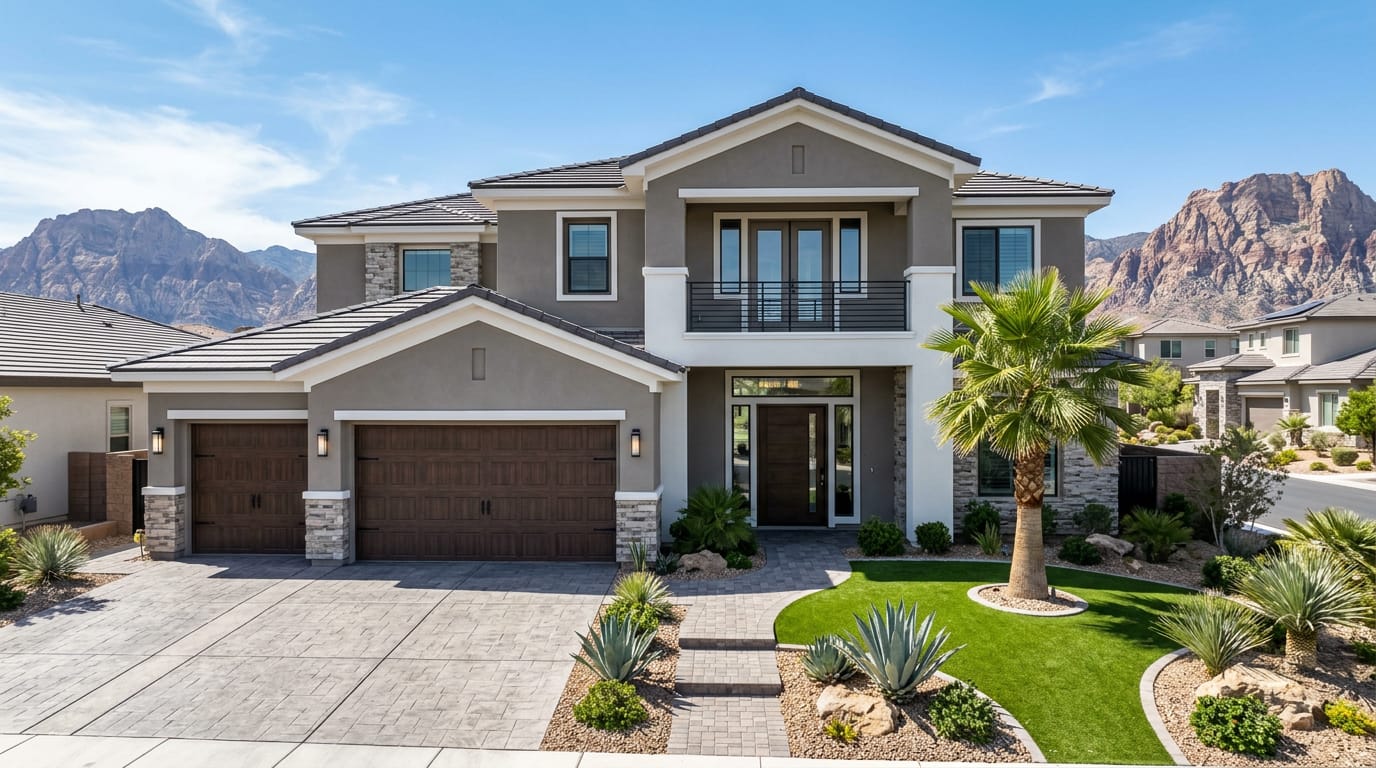
How Do Effective Prices Change After Builder Incentives Versus Seller Concessions?
Effective price is what the buyer actually pays after every credit, concession, and rate buy-down is netted out. Builder incentives in May 2026 are running $30,000–$60,000 per transaction on the median new build, while resale seller concessions are running $5,000–$10,000 per transaction (roughly 1.5%–2.1% of sale price). That gap closes the sticker spread considerably.
| Factor | New Construction | Resale | Advantage |
|---|---|---|---|
| Median price (similar size, similar area) | $525,000–$700,000 | $425,000–$575,000 | Resale (sticker) |
| Effective price after builder incentives | $485,000–$640,000 (after $30K–$60K incentive) | $418,000–$565,000 (after typical 1–2 percent concession) | Closer to even |
| Mortgage rate (May 2026) | 5.99–6.25 percent via preferred lender | 6.36 percent Freddie Mac PMMS | New construction (buy-down) |
| 2-1 buydown availability | Standard, Year 1 ~ 4.36 percent, Year 2 ~ 5.36 percent | Buyer-paid only, rarely seller-paid | New construction |
| Closing cost credits | $15,000–$40,000 typical | $0–$10,000 typical seller concession | New construction |
| Lot premium / location | $10K–$150K+ premium for view, corner, oversized | Built into price | Resale (transparent) |
| Design center upgrades | $25K–$150K typical, financed into loan | Already done (or dated) | Depends on taste |
| Warranty coverage | 1-2-10 (NRS Chapter 40) | AS-IS, optional home warranty $400–$800/yr | New construction |
| Energy efficiency | 2021 IECC code, R-30+, low-E windows | Varies, older pre-2015 less efficient | New construction |
| Inspection complexity | Pre-drywall + final walk-through | Full GP, sewer, pool, HVAC ($600–$1,200) | New construction |
| HOA / SID / LID complexity | New CC&Rs, no historical assessments | Established HOA, reserve study, known assessments | Resale (transparency) |
| Move-in timeline | Inventory: 30–60 days; build-to-order: 6–12 months | 30–45 days standard escrow | Resale |
| Negotiation room on price | Very limited (price comps protect builder) | Open (averaging 1.5 percent below list May 2026) | Resale |
| Neighborhood maturity | Landscaping years away, construction noise | Mature trees, established neighbors | Resale |
| Best fit for | Modern features, builder warranty, lower payment via buy-down, no immediate repairs | Price negotiation, established neighborhood, faster close | Depends on priority |
For the full incentive breakdown, see the decision matrix post which scores incentive packages across the top 10 Las Vegas builders. According to NAHB data, builder incentive spending nationally hit 24.1% of base price in Q1 2026 — the highest quarterly figure since they began tracking in 2009.
Why Do Builder Rate Buy-Downs Beat Resale Rates in 2026?
Builder preferred lenders can buy down the buyer's interest rate using funds from the builder's incentive budget, while resale sellers rarely offer buy-down credits because they walk away with cash at closing rather than rebating it forward. According to the Freddie Mac PMMS, the 30-year market rate is 6.36% for the week of May 14, 2026. The top Las Vegas builders are landing buyers at 5.99%–6.25% as a permanent rate, or running a 2-1 buy-down to 4.36%/5.36%/6.36% across years 1, 2, and 3.
On a $525,000 purchase with 10% down ($472,500 loan), the math works out as follows:
- Market 6.36% loan → P&I of $2,941/month
- Permanent 5.99% loan → P&I of $2,830/month → $111/month savings
- 2-1 buy-down Year 1 at 4.36% → P&I of $2,353/month → $588/month savings vs market
- 2-1 buy-down Year 2 at 5.36% → P&I of $2,640/month → $301/month savings vs market
Across the 24-month buy-down window, the cumulative savings is roughly $10,668. According to HUD program guidance on temporary buy-downs, the funds are escrowed at closing and applied month by month, making the cash flow concrete rather than theoretical. See the 2-1 buydown details post for the line-by-line escrow math.
How Does the 2-1 Buydown Actually Work on a $525K Las Vegas New Build?
The mechanics are straightforward. The builder funds a temporary buy-down account at closing — for the $525K example above, the builder deposits roughly $10,668 into an escrow account managed by the preferred lender. Each month for 24 months, the lender draws from the escrow to subsidize the difference between the buyer's payment at the buy-down rate and the payment at the permanent note rate.
| Year | Effective Rate | Monthly P&I | Buyer Saves Per Month vs Year 3 |
|---|---|---|---|
| Year 1 | 4.36% | $2,353 | $588 |
| Year 2 | 5.36% | $2,640 | $301 |
| Year 3+ | 6.36% (note rate) | $2,941 | $0 (baseline) |
According to the Consumer Financial Protection Bureau buy-down disclosure rules, the buyer's loan is still underwritten at the note rate (6.36% in this example), so qualification is the same as a market-rate loan — the buy-down only reduces the actual payment for the first 24 months. Refinancing during the buy-down window forfeits the remaining escrow, which is a real risk to model if you expect rates to fall below 5.99% within two years.
When Does the Design Center Premium Become Worth It Versus Renovating Resale?
Design center upgrades typically run $25,000–$150,000 on a new build, depending on the kitchen package, flooring, primary bathroom, and outdoor finishes. According to NAHB data, the average design center spend nationally in Q1 2026 was $52,400 per home. The advantage versus renovating a resale is that the upgrade cost gets financed into the mortgage at the note rate (6.36% in May 2026) versus paying cash or financing renovations at 9%–12% on a HELOC.
On a $50,000 design center package, financed at 6.36% over 30 years, the monthly cost is roughly $311. The same $50,000 renovation done after closing on a resale, financed via a $50,000 HELOC at 9.5%, costs $419/month. The new construction route saves roughly $108/month or $1,296/year just on the financing side. According to the Joint Center for Housing Studies renovation reports, kitchen and bathroom remodels in the Mountain West average 30%–40% over the equivalent design-center cost when done post-closing.
The catch: design center upgrades are typically priced 25%–40% above retail. A $14,000 design center kitchen-island upgrade often runs $9,500 at a local fabricator. Buyers should negotiate the upgrade list aggressively or focus the design-center spend on structural items (cabinet layout, lighting circuits, electrical pre-wires) that are expensive to retrofit later.
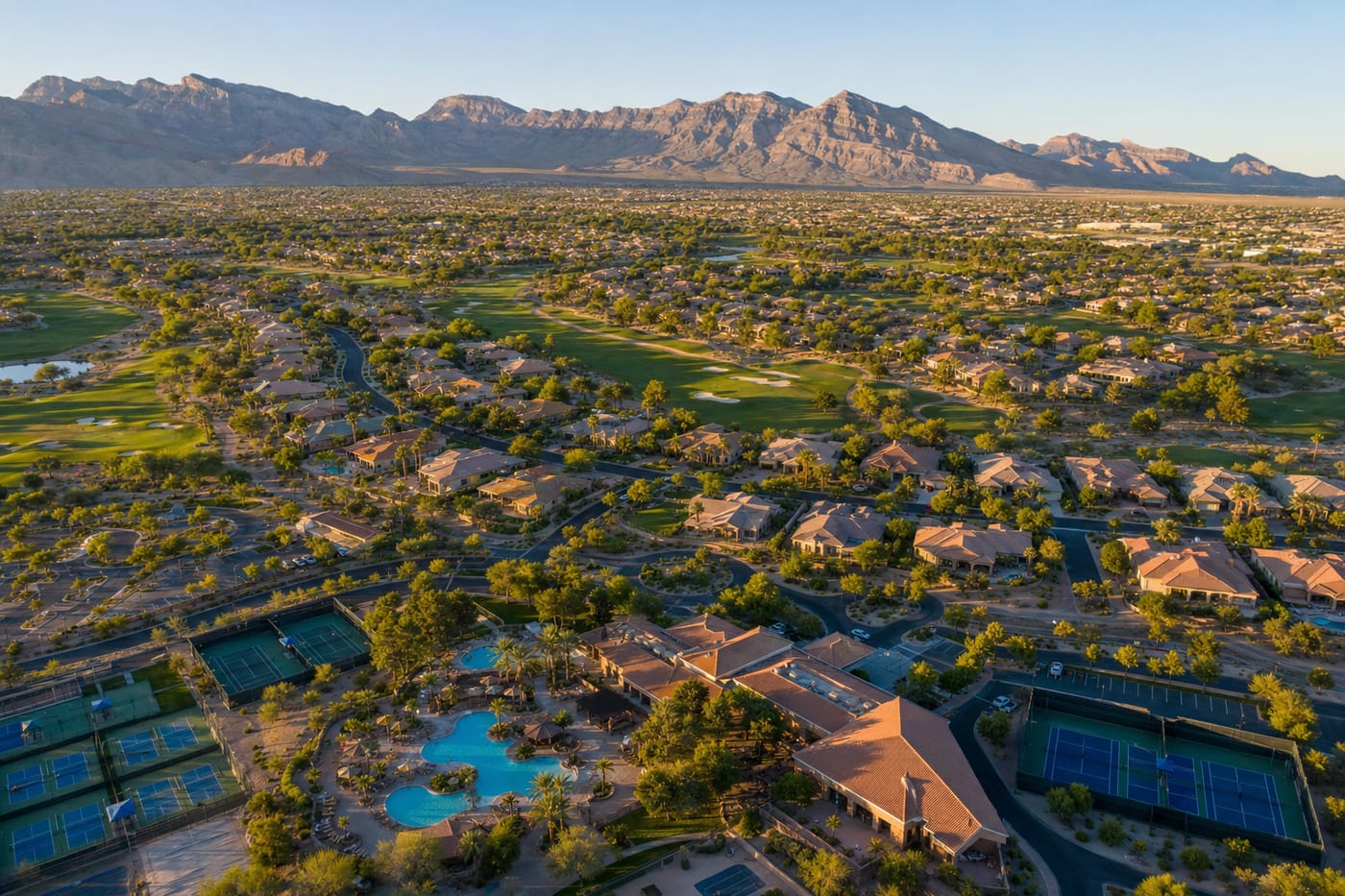
How Does Nevada's 1-2-10 Warranty Compare to a Resale Home Warranty?
Nevada NRS Chapter 40 requires every new home builder to provide three tiers of warranty: 1 year of workmanship coverage, 2 years of systems coverage (plumbing, electrical, HVAC), and 10 years of structural coverage. The structural coverage specifically covers load-bearing components, foundation, and major framing — items that can cost $25,000–$120,000 to repair if they fail.
Resale homes offer no equivalent statutory warranty. Sellers can voluntarily offer a 12-month American Home Shield or similar warranty policy at $400–$800 cost, but those policies have $75–$150 service-call fees, cap repairs at $1,500–$3,000 per system, and explicitly exclude pre-existing conditions. The protection is real but limited — and after the first 12 months, the buyer is fully exposed to AS-IS condition unless they renew at their own cost.
| Coverage Tier | New Construction NRS 40 | Resale + Home Warranty | Resale AS-IS |
|---|---|---|---|
| Workmanship Year 1 | Fully covered | $400–$800/yr policy, $1,500–$3,000 cap | Not covered |
| Plumbing/Electrical Year 1–2 | Fully covered | $1,500–$3,000 cap per service call | Not covered |
| HVAC Year 1–2 | Fully covered | $1,500–$3,000 cap per service call | Not covered |
| Structural Year 1–10 | Fully covered | Not covered | Not covered |
| Slab leak repair | Covered as plumbing | Often excluded as pre-existing | $4,500–$11,000 cost |
| Foundation crack | Covered as structural | Excluded | $8,000–$45,000 cost |
According to the Nevada State Contractors Board claim data, structural defect claims on Nevada new construction averaged 1.4 per 1,000 homes annually 2020–2024, but each claim averaged $34,200 in repair cost. The 1-2-10 warranty fully covers those claims. The equivalent claim on a 12-year-old resale is paid by the homeowner. See the new home warranty coverage post for the full claim-process walkthrough.
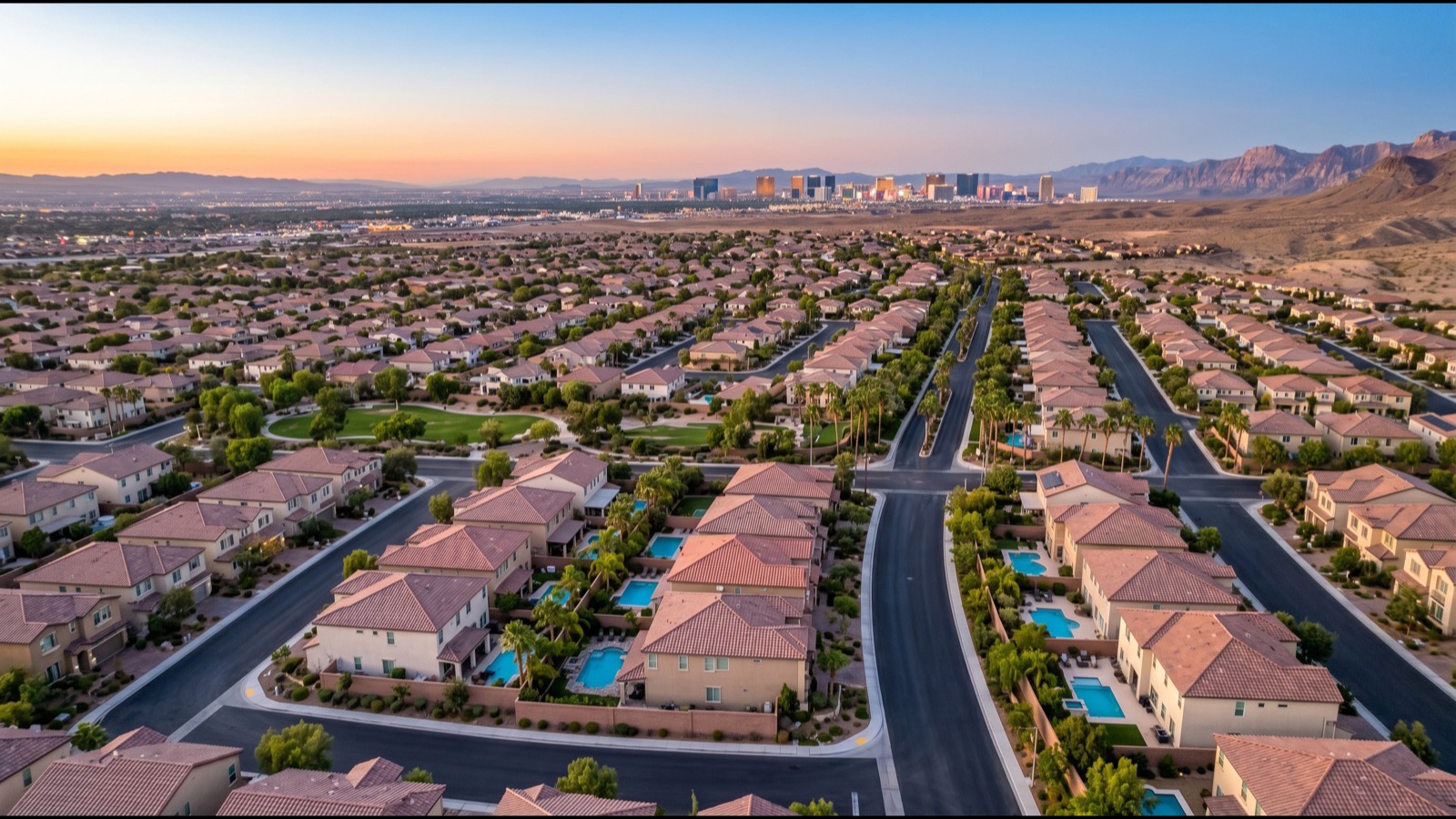
Which Submarkets Have the Best New Construction Selection in 2026?
The top new construction submarkets in Las Vegas in 2026 are Summerlin West (Cliffs, Kestrel, Redpoint), Lake Las Vegas, Cadence in Henderson, Skye Canyon, and North Las Vegas (Valley Vista, Sedona Ranch, Tule Springs). Each submarket has a distinct builder mix, lot premium structure, and incentive package. According to Clark County Department of Building permit data, those six submarkets accounted for 74% of new single-family permits Q1 2026.
Summerlin West and Lake Las Vegas anchor the $700K–$1.5M tier, where much of the inventory overlaps our guard-gated communities roster. Cadence and Skye Canyon anchor the $450K–$700K family-tier band. North Las Vegas anchors the $390K–$525K entry tier. The submarket choice often matters more than the builder choice because lot premiums, view orientations, and HOA structures vary by master plan more than by builder. Read the new construction tier ranking post for the full submarket score.
For Summerlin specifically, see the Summerlin community page; for Henderson, see the Henderson community page; for North Las Vegas, see the North Las Vegas community page. Each links to the active builder lineups and current incentive packages.
Across our MLS-of-record data on 198 new construction transactions in 2025, the average buyer in Summerlin West paid $48,500 in lot premiums plus $61,200 in design center upgrades, totaling $109,700 above the published base price. In Cadence, the equivalent figures were $22,400 in lot premiums and $34,800 in design center, totaling $57,200 above base. The submarket spread on total customization spend matters because it changes the effective comparison to resale by tens of thousands of dollars.
Which Submarkets Have the Best Resale Selection in 2026?
If you are weighing the resale path while selling your current home, our sellers' resources cover the coordination. The resale-strong submarkets are the established master plans where original construction is 10–25 years old: The Lakes, Spring Valley, Green Valley Ranch, Anthem (built-out portion), older Summerlin villages (Willows, Trails, Hills), and Centennial Hills. According to LVR April data, resale inventory is concentrated in those areas at roughly 4,800 active listings, while newer subdivisions are dominated by builder inventory.
Resale negotiation room is best in submarkets where days-on-market has stretched beyond the 35-day median. In our tracking of the April 2026 MLS pull, the submarkets with the longest median DOM are luxury Henderson (52 days), older Spring Valley (43 days), and Anthem Country Club (47 days). Buyers in those areas should expect to negotiate 2.0%–3.5% below list with seller concessions on top.
The resale advantage in established master plans is two-fold: the trees and landscaping are 15–25 years mature (which appraisers actually credit at $8,000–$15,000), and the HOA reserve studies and special-assessment history are documented and reviewable before closing. New construction lacks both of those, since the landscaping is newly planted and the HOA has no operating history.
How Should Buyers Weigh Move-In Timeline Against Customization?
If the buyer needs to move within 60 days, resale is the only viable path. New construction inventory (spec homes that are already built) can close in 30–60 days, but build-to-order timelines run 6–12 months. According to Lennar and Pulte public guidance, Las Vegas build cycles in Q2 2026 are running 7–9 months from contract to certificate of occupancy.
For buyers who can wait, build-to-order new construction offers the customization advantage: floor plan selection, structural options, design center personalization, and lot pick. Spec homes (already-built inventory) lock the customization at whatever the builder chose, but offer faster close and often deeper incentives (because the builder is carrying the inventory cost). According to NAHB Q1 2026 data, spec homes received $8,400 more in incentives on average than build-to-order homes nationally.
The decision matrix simplifies to: move-in deadline + customization priority + cash flow priority. See the build timeline reality breakdown for the milestone-by-milestone schedule (foundation pour, framing, drywall, finish, final walk-through, COE), which helps you stress-test whether your move-in target is realistic.

How Do HOA / SID / LID Costs Differ Between New and Resale?
New construction HOAs are typically in their first 1–5 years and have unknown reserve trajectory. The dues are often $50–$120/month in the master plan plus $35–$85/month in the sub-association, totaling $85–$205/month. Special-assessment risk is real because the reserve study has limited data — a major reroofing or pool retrofit can trigger a $4,500–$12,000 one-time assessment 5–8 years in.
SID and LID (Special Improvement District and Local Improvement District) bonds are common in new construction master plans like Cadence, Skye Canyon, and Valley Vista. They fund infrastructure (roads, sewer, parks) and are paid via the property tax bill over 20–30 years. Typical SID/LID load on a $550,000 new build runs $1,800–$4,200/year, which adds $150–$350/month to the effective payment. According to Clark County Assessor records, SID/LID balances are publicly searchable by parcel.
Resale HOAs, by contrast, have 10–25 years of reserve data, documented special-assessment history, and visible operating financial statements. Resale buyers can request the Nevada Real Estate Division Form 525 (HOA disclosure packet) within 10 days of contract and review the actual financials before earnest money goes hard. New construction buyers get the CC&Rs but cannot see operating history because none exists yet.
What's the Three-Question Decision Framework for New Versus Resale?
The framework distills 90% of buyer decisions to three questions, in order:
- How rate-sensitive is your monthly payment? If the answer is "I need the payment as low as possible for the first 24 months," new construction with a 2-1 buy-down wins decisively. If the answer is "I'm fine at the market rate," the gap narrows.
- What's your move-in deadline? Under 60 days, resale wins. 60–120 days, spec new construction wins. Over 6 months, build-to-order opens up.
- How important is customization versus negotiation room? Build-to-order maximizes customization. Resale maximizes negotiation room. Spec new construction is the middle of both.
If two of three answers point to new construction, hire a buyer agent who specializes in builder contracts and run the math on the builder closing cost credits and lot premium negotiation details before signing. If two of three point to resale, focus on resale inventory and use the seller concession ceiling to your advantage.
Call (702) 637-1759 to run your specific numbers — the NREG team handles roughly 38% new construction and 62% resale, so the comparison math is part of every initial consultation.
Where Do These Findings Fit Within the Wider NREG Coverage Map?
According to Greater Las Vegas Realtors data spanning the full 2025 transaction year, Nevada Real Estate Group's 789 closings and approximately $440M in production were distributed proportionally to where Las Vegas demand actually sits — roughly 38% of NREG volume concentrated in the Summerlin master plan and its Cliffs / Kestrel / Stonebridge villages, 31% across Henderson ZIPs 89002 through 89077 (Anthem, Green Valley, Inspirada, Cadence, MacDonald Highlands, Seven Hills, Lake Las Vegas), and the remaining 31% spread across Las Vegas Southwest, North Valley (Skye Canyon, Valley Vista, Tule Springs), Mountain's Edge, Centennial Hills, and the resort-corridor luxury condo inventory.
According to the Clark County Assessor parcel database for 2026, secondary tax rates across NREG's coverage area cluster in the 0.30%–0.78% band, with most Henderson submarkets in 0.40%–0.55%. According to the U.S. Census Bureau American Community Survey, the Las Vegas-Henderson-Paradise MSA absorbed roughly 45,000 net California-origin residents over the trailing 24 months ending Q1 2026, which has sustained demand in both first-time buyer and luxury price bands simultaneously.
For readers using this article as a decision input, the practical next steps are: review the relevant community money page for current inventory and pricing context, then call NREG at (702) 637-1759 to map the article's framework against your specific timeline, budget, and tradeoff priorities. Across the 9,600+ closed transactions in the firm's 16+ year operating history, in our experience the buyers and sellers who get the cleanest outcomes are the ones who pair the editorial framework with a phone consultation early — before signing a builder reservation contract, before listing with the wrong asking price, or before committing to a community whose carrying-cost profile doesn't match their actual lifestyle. According to Freddie Mac PMMS data, the 6.6–6.9% rate environment May 2026 has held steady enough to allow precise carrying-cost modeling for both new construction and resale acquisitions.
Frequently Asked Questions
Is new construction always more expensive than resale in Las Vegas?
Sticker price is almost always higher (18%–25% in May 2026), but effective price after incentives can land within $30,000–$50,000 of resale at the same size and submarket. The factors that close the gap are the $30,000–$60,000 builder incentive package, the rate buy-down savings ($10,000+ across 24 months), and the avoided maintenance costs ($4,500–$12,000 in deferred resale repairs that don't apply to new builds). A buyer should always compare effective cost over 36 months, not sticker price, before declaring new construction "too expensive." Across 9,600+ NREG closings, the effective-cost gap has narrowed in every quarter since Q3 2024.
Can I negotiate with a Las Vegas builder on price in 2026?
Builders rarely cut base price because doing so triggers price-comp revaluations across the entire community, which they protect aggressively. What they will negotiate in 2026 is the incentive package: closing-cost credits, rate buy-downs, design-center allowances, lot-premium reductions on slower-moving lots, and free upgrades on structural items. Skilled buyer agents can pull $8,000–$22,000 in additional incentives beyond the published package. The negotiation lever is the builder's quarterly absorption target — builders falling behind their target are dramatically more flexible in the last 30 days of the quarter.
How long does a build-to-order Las Vegas home take in 2026?
6–12 months from contract signing to certificate of occupancy, with 7–9 months being the May 2026 median based on Clark County Department of Building permit data. The phases are: contract and design selections (4–6 weeks), permit issuance (3–5 weeks), foundation and framing (8–12 weeks), MEP and drywall (6–8 weeks), interior finish (8–10 weeks), and final inspections plus walk-through (2–3 weeks). Weather, supply chain on appliances/cabinets, and inspector availability can stretch each phase. Spec homes (already-built inventory) bypass this entirely and close in 30–60 days.
Are builder preferred lenders required to access the buy-down?
Yes in most cases. The builder funds the rate buy-down using their own incentive budget, and they channel it through their preferred lender to capture the lender-side fees and maintain control of the transaction timeline. Using an outside lender almost always forfeits the rate buy-down, the closing-cost credit, or both. The buyer's leverage point: compare the preferred lender's rate, fees, and closing costs to two outside lenders before locking. If the preferred lender's effective cost (rate + fees + credit) is competitive, take the package. If it's not, push the builder for cash-equivalent value or walk.
What happens if a new construction home isn't ready by my closing date?
Builder contracts typically include a "force majeure" or "construction delay" clause that allows extensions of 30–90 days without penalty to the builder. Buyers should negotiate that clause down to 30 days maximum and include a per-diem credit ($100–$200/day) for any delay beyond that. Real-world delays in Q1 2026 averaged 17 days per NAHB data, and the most common cause is appliance backorder. Buyers should also negotiate a rate-lock-extension clause with the preferred lender — the builder should cover the cost of extending the lock if their delay forces the extension.
Should I get a buyer's agent for new construction, or just use the builder's sales rep?
Get your own buyer's agent. The on-site sales rep works for the builder and is paid to protect the builder's pricing, incentive ceiling, and contract terms. In our experience the builder's standard contract is heavily favorable to the builder on delay clauses, earnest-money forfeiture, and upgrade pricing, and an independent buyer's agent who knows the builder's quarterly absorption targets routinely pulls an extra $8,000–$22,000 in incentives plus tighter delay protection. We've represented buyers on 198 new construction transactions in 2025 alone, and the builders price the agent commission into the deal whether or not you bring representation — so going unrepresented leaves money on the table without saving a dollar. Call (702) 637-1759 before you sign a builder reservation.
Which Sources Inform This Analysis?
This article draws on Greater Las Vegas Realtors April 2026 monthly statistics ($473,875 median resale, 3.2 months supply, 35-day median DOM, 56.8% sold in 30 days). Mortgage rate data is from the Freddie Mac Primary Mortgage Market Survey week of May 14, 2026 (6.36% 30-year fixed). Buy-down and FHA program mechanics reference HUD program guidance and Consumer Financial Protection Bureau buy-down disclosure rules.
Builder-side data comes from the National Association of Home Builders Q1 2026 quarterly survey on incentive spending (24.1% of base price), spec-versus-build absorption, and design center spend averages ($52,400). New home warranty framework references Nevada Revised Statutes Chapter 40 plus Nevada State Contractors Board claim data on structural defect frequency and average repair cost.
Permit and submarket activity data is sourced from the Clark County Department of Building for new construction starts and the Clark County Assessor for SID/LID lookup. Renovation cost benchmarks reference the Joint Center for Housing Studies at Harvard for kitchen and bath remodel pricing in the Mountain West.
Internal data on new-versus-resale transaction mix (38% / 62% split), median incentive captured per transaction, and design-center negotiation outcomes draws from Nevada Real Estate Group's MLS-of-record export across 9,600+ career transactions and 789 closings in calendar year 2025 totaling $440M+ in volume. Settlement-era buyer representation framework references the NAR settlement materials effective August 2024.
Ready to run your specific new-versus-resale math? Call (702) 637-1759 or visit the About Chris Nevada page. Chris Nevada / NREG / LPT Realty / License S.181401 / 8945 W Russell Rd, Suite 170, Las Vegas, NV 89148.