

Some of the most affordable, well-located homes in the Las Vegas valley share one thing that never appears in a listing photo or a Saturday-afternoon showing: they sit directly under a flight path. Harry Reid International Airport (LAS) moves roughly 60 million passengers a year on runways that point straight into dense residential neighborhoods, and Nellis Air Force Base runs fighter operations over the northeast valley. A home that shows beautifully at 2 p.m. on a quiet weekday can be a very different property at 6:45 a.m. when the departure bank rolls off Runway 26, or at 10 p.m. when the red-eyes stack up on approach. The good news for a prepared buyer: flight-path noise is one of the few home risks you can verify precisely, in advance, from public data — before you write an offer. This is the diligence guide, with live GLVAR pricing pulled from today's feed for the exact neighborhoods that sit under the corridors.
The uncomfortable truth is that flight-path exposure is often why a home is priced the way it is. A 1,800-square-foot single-story in the east valley under the approach path can list $60,000 to $120,000 below the same house two miles laterally, and that gap is not a bargain — it is the market pricing a permanent condition. The question is never "is it loud?" in the abstract. It is: how loud, how often, at what hours, is it disclosed, is there an avigation easement on the title, and could the vacant parcel next door become something worse. Answer those six questions and flight-path exposure becomes a negotiating lever instead of a nasty surprise.
Before buying under a Las Vegas flight path, verify six things: which runway corridor the home sits under, its noise-contour (DNL) band, whether an avigation easement is recorded on the title, the seller's disclosure, Nellis operations in the northeast valley, and the zoning of adjacent vacant land. Homes under the LAS approach in ZIP 89119 run a $465,000 median versus $489,998 valley-wide — the discount is the condition, not a deal.
- Homes under the LAS approach (ZIP 89119) run a $465,000 median versus $489,998 valley-wide — priced-in noise, not a bargain.
- An avigation easement is a permanent recorded right for aircraft to overfly your lot — it cannot be removed.
- The northeast valley (89110, 89115, 89156) sits under Nellis AFB operations; medians run $400,000–$430,000.
- Nevada's NRS 113 disclosure covers "known" noise — the loophole is "known," so verify independently.
- Check the zoning of adjacent vacant land before closing, so a future warehouse or road can't surprise you.
How Do You Check a Las Vegas Flight Path Before You Buy?
Start before you ever tour the house, because the internet answers most of the question for free. Pull up a live flight-tracking view of Harry Reid International and watch the arrivals and departures fan out over the address you are considering — do it at 7 a.m., at 8 p.m., and again on a windy day, because Las Vegas swaps runway direction with the prevailing wind and the corridor over your future backyard can flip 180 degrees. According to the Clark County Department of Aviation, LAS operates parallel east-west runways (7L/25R, 7R/25L) and crossing north-south runways (1L/19R, 1R/19L), and which set is "active" depends on the wind that hour. A home that is quiet under an east-flow morning can sit under the departure bank in an afternoon west-flow.
The single most efficient move is to visit the property at the worst realistic time, not the most convenient one. Ask the seller — or your agent asks theirs — what the noise is like at 6 a.m. and after 10 p.m., and then go verify it yourself standing in the backyard. In our experience across the flight-path-adjacent closings Nevada Real Estate Group has represented, the buyers who later regretted a purchase almost always toured once, mid-day, mid-week. The ones who were happy went back at 7 a.m. on a Monday. The airport data is public; the only variable is whether you use it before or after you own the house. For the broader neighborhood-by-neighborhood picture, our guide to the best neighborhoods to buy a home in Las Vegas frames where these corridors fall in the overall map.
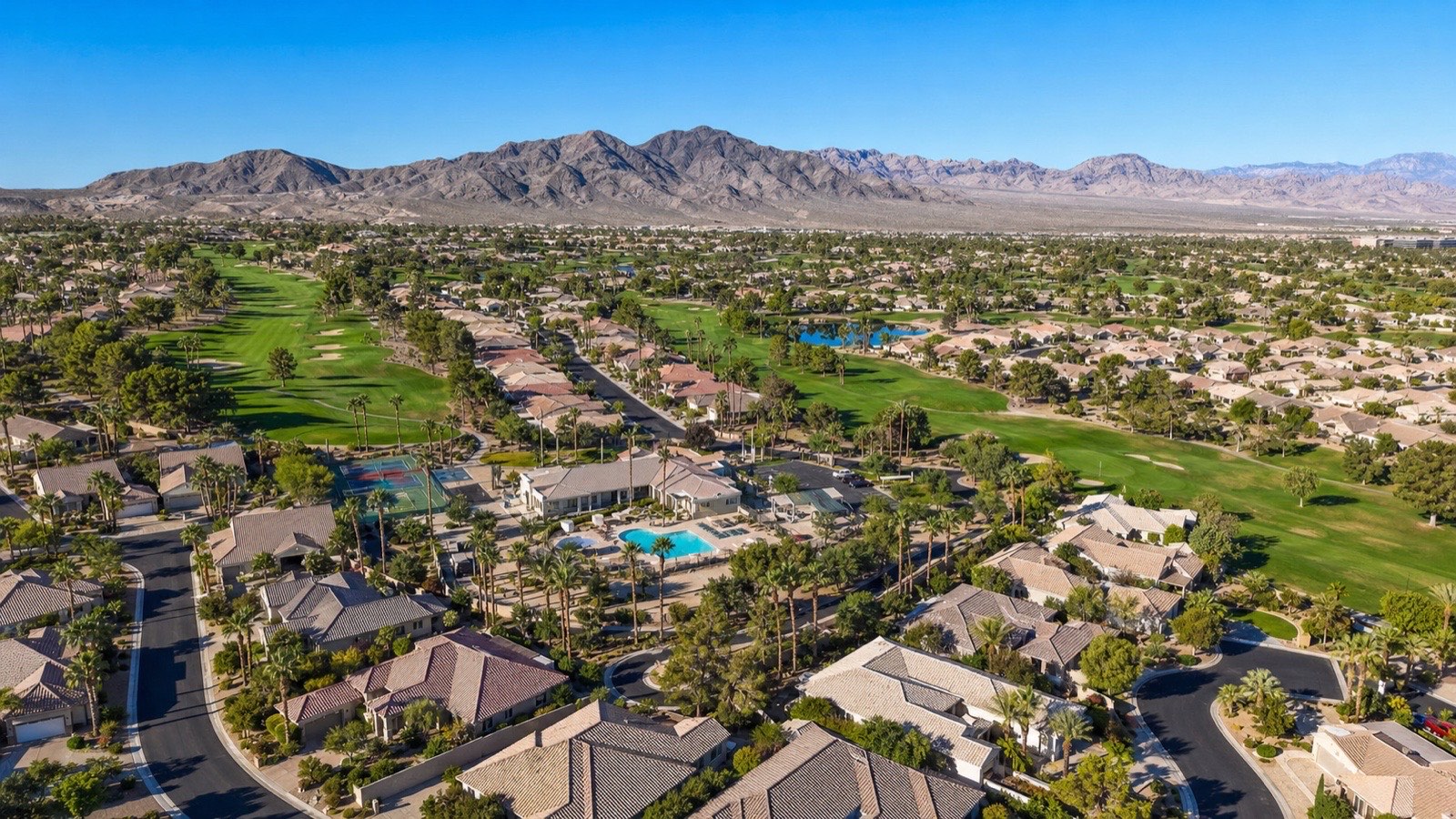
Across the flight-path-adjacent transactions Nevada Real Estate Group has represented as part of 9,600+ career closings and 789 homes sold in 2025, the pattern is consistent: the discount on a home under an approach or departure corridor typically runs $40,000 to $120,000 versus a comparable home two miles off-corridor. Buyers who treat that gap as a negotiating fact — verifying the noise, the easement, and the disclosure up front — do fine. Buyers who treat it as a "steal" and skip the diligence are the ones who list again within three years. The exposure is permanent; the discount is only worth it if you priced the condition, not ignored it.
Which Las Vegas Neighborhoods Sit Under the LAS Flight Paths?
Harry Reid International sits at the south end of the resort corridor, so its corridors run over the east, southeast, and near-Strip parts of the valley. The east-west runways send arrivals and departures over Paradise, Winchester, the eastern edge of the Strip, and the established east-valley neighborhoods; the north-south runways add a component over the near-Strip and southeast pockets. In practical ZIP terms, the most flight-path-exposed residential areas are 89119 (east of the Strip, immediately north of the airport), 89120 (Paradise, east of LAS), 89121 (east valley), and parts of 89123 (southeast valley, south of the runways). These are not bad neighborhoods — Paradise is one of the valley's most central, walkable-to-work townships — but overflight is a fact of life in specific pockets within them.
It is worth being precise, because "under the flight path" is a spectrum, not a yes/no. A home in central Paradise may get heavy overflight; a home three-quarters of a mile off the extended centerline in the same ZIP may get almost none. The corridor is a cone that widens as aircraft climb or descend, so proximity to the extended runway centerline matters more than proximity to the airport fence. According to the Federal Aviation Administration, the highest sustained noise occurs directly beneath the final approach and initial departure segments — the straight-line extensions off each runway end — which is exactly the geometry you can trace on a flight tracker in ten minutes. For a wider read on how these ZIPs price out relative to the rest of the metro, our top Las Vegas ZIP codes to buy a home breakdown pairs directly with the corridor map. Buyers focused on the east Las Vegas and Paradise submarkets should treat corridor position as a core comp adjustment, not a footnote.
What Do Homes Under the Flight Path Actually Cost in 2026?
Here is the scoreboard, pulled live from the GLVAR feed on the publication date. The pattern is unmistakable: the ZIPs directly under the corridors trade below the valley-wide median, and the ones under Nellis operations in the northeast valley trade lowest of all. Read these as directional medians for single-family homes — corridor position varies house-by-house within every ZIP.
| ZIP / area | Flight exposure | Median active list | 12-mo median sold | Median days on market |
|---|---|---|---|---|
| 89119 (E of Strip, N of LAS) | LAS approach/departure | $465,000 | $406,500 | 26 |
| 89120 (Paradise, E of LAS) | LAS overflight (varies) | $599,900 | $464,500 | 18 |
| 89121 (East valley) | LAS overflight (partial) | $460,000 | $425,000 | 21 |
| 89123 (SE valley, S of LAS) | LAS departure (partial) | $670,300 | $520,000 | 22 |
| 89110 (Sunrise Manor) | Nellis approach corridor | $410,000 | $380,000 | 19 |
| 89115 (NE valley) | Nellis operations | $429,900 | $350,000 | 22 |
| 89156 (NE valley) | Nellis operations | $400,000 | $350,000 | 18 |
| Las Vegas citywide (SF) | Reference baseline | $489,998 | $413,930 | 21 |
The reference line is the point. Valley-wide, single-family homes carry a median active list of $489,998 and a trailing-12-month median sold of $413,930, moving in a median of 21 days. The heavily overflown 89119 sits at a $465,000 active median and a $406,500 sold median; the Nellis-adjacent northeast ZIPs run $400,000 to $430,000 active and close nearer $350,000. According to Las Vegas REALTORS, the metro's overall median has been broadly flat-to-firm through 2026, so these below-baseline ZIPs are not "falling" markets — they are permanently discounted for condition. Paradise's 89120 is the interesting outlier: at a $599,900 active median it prices above baseline, because much of the ZIP is off-corridor golf-course and near-Strip product, and only specific streets take the overflight. That is the whole lesson in one number — the discount attaches to the street, not the ZIP.
What Is an Avigation Easement and How Does It Affect Your Title?
This is the item most buyers have never heard of, and it is the one that can actually bind you. An avigation easement (sometimes "aviation easement" or "overflight easement") is a recorded property right that grants the airport authority the legal ability to fly aircraft through the airspace over your lot — including the noise, vibration, and light that come with it — and typically waives your right to sue over that overflight. It is recorded against the parcel, it runs with the land, and you cannot remove it. If it exists on the home you are buying, it transfers to you at closing whether or not anyone points it out.
Avigation easements show up in two ways in the Las Vegas market. Some are recorded directly on parcels near LAS and Nellis as a condition of past development approvals; others appear as noise or overflight disclosures tied to the subdivision. According to the Clark County Department of Aviation, the airport participates in the FAA-guided land-use compatibility framework that governs where these easements and disclosures apply. The practical steps: (1) order a preliminary title report early and read Schedule B for any avigation, overflight, or noise easement; (2) ask the title officer directly, "is there an avigation easement recorded against this parcel?"; and (3) if there is, treat it as a permanent condition and price it in. According to the Nevada Revised Statutes, Nevada's seller real-property disclosure obligations (NRS Chapter 113) require sellers to disclose known defects and conditions — but an easement you can only find by reading the title report is exactly why you order the report. The Clark County Assessor parcel record is a useful cross-check for what is recorded on the land.

How Do Airport Noise Contours (DNL) Work?
Airport noise is measured and mapped using a metric called DNL — Day-Night Average Sound Level — which averages noise over a 24-hour period and adds a 10-decibel penalty to nighttime events (10 p.m. to 7 a.m.) to reflect how much more disruptive late flights are. Airports publish DNL contour maps that draw lines at 65, 70, and 75 dB DNL around the runways, and those contours are the backbone of land-use compatibility rules. According to the Federal Aviation Administration, the 65 dB DNL contour is the federal threshold above which residential land use is generally considered "not compatible" without sound insulation — meaning if a home sits inside the 65 dB line, the airport's own planning documents flag it.
The nuance that trips buyers up: DNL is an average, not a peak. A single departure directly overhead can hit 85 to 95 dB at ground level for a few seconds, even in an area whose 24-hour DNL average sits comfortably under 65. So a home can be "outside the 65 dB contour" on paper and still rattle your windows twice an hour during the morning bank. That is why the contour map is step one and the standing-in-the-backyard test is step two — neither replaces the other. According to the U.S. Department of Housing and Urban Development, HUD's own noise standards (24 CFR Part 51) treat 65 dB DNL as the line above which a site is "normally unacceptable" for HUD-assisted housing, which matters if you are using certain financing. The table below translates the bands into plain English.
| DNL band | Federal land-use view | What you'll actually notice | Buyer action |
|---|---|---|---|
| Under 60 dB | Compatible | Occasional distant aircraft | Standard diligence |
| 60–65 dB | Generally compatible | Noticeable overflights, not constant | Visit at peak hours |
| 65–70 dB | Not compatible without insulation | Regular loud overflights; conversation pauses | Verify insulation; price the condition |
| 70–75 dB | Not compatible | Frequent, intrusive; sleep impact | Heavy discount; check easement |
| Over 75 dB | Not compatible | Severe, near-continuous during banks | Rarely residential; deep diligence |
Where Are Harry Reid's Approach and Departure Corridors?
The corridor geometry follows the runways, so learn the runways and you have learned the map. LAS is dominated by its two parallel east-west runways, which point roughly toward the eastern neighborhoods on one end and toward the southwest on the other. In an east flow, aircraft land from the west and depart to the east, throwing arrival noise over the near-Strip and departure noise over Paradise and the east valley. In a west flow — common with a west wind — the pattern reverses, with departures climbing out over the west/southwest and arrivals descending over the east. The north-south runways add a secondary corridor used in specific wind and traffic conditions, sending some operations over the near-Strip and the southeast valley toward Henderson.
For a buyer, the actionable version is this: find the extended centerline of each runway on a map, and note how close your target home is to those lines. A home within a half-mile of an extended centerline, in line with a runway end, will take the most overflight; a home well off the centerline gets far less even in the same neighborhood. According to the Federal Aviation Administration, noise abatement procedures at busy airports route departures along preferred tracks, but arrivals on final approach must line up straight with the runway — so approach-end homes have the least "route flexibility" protecting them. The Clark County Department of Aviation publishes the airport's runway configuration and noise program materials, and a live flight tracker fills in the day-to-day reality. If your search spans the corridor-heavy east side and the quieter southwest, comparing live inventory on the Las Vegas homes for sale map with a flight tracker open in the next tab is the fastest way to separate the two.
How Loud Is Nellis Air Force Base in the Northeast Valley?
Nellis Air Force Base, in the northeast valley, is a different animal from commercial airline noise — and for some buyers, louder. Nellis is home to fighter training and the USAF Weapons School, so its operations include military jets whose departure and arrival noise is sharper and less predictable than an airliner's. The affected residential areas are the northeast-valley ZIPs — 89110 (Sunrise Manor, under the approach), 89115, and 89156 — which is a large part of why those ZIPs post the lowest medians in the flight-path table above, at $400,000 to $430,000 active and closing near $350,000. According to the Nellis Air Force Base public affairs materials, the installation participates in the Department of Defense's Air Installation Compatible Use Zone (AICUZ) program, which — like the FAA's civilian framework — maps noise contours and accident-potential zones around the base to guide compatible land use.
Two things make Nellis diligence distinct from LAS diligence. First, military schedules are less publicly trackable than commercial flights, so the "visit at the worst time" test matters even more; go in the late morning on a training day if you can. Second, the AICUZ maps include Accident Potential Zones (APZ) near the runway ends — areas where the base recommends against dense residential development — which is a land-use consideration beyond noise. Buyers in the Sunrise Manor and North Las Vegas submarkets should ask specifically whether a parcel falls within a Nellis noise contour or APZ, and factor it into both price and long-term resale. The northeast-valley discount is real and, for a buyer who genuinely does not mind jet noise, it can buy meaningfully more square footage than the same budget in the southwest.

What About Resort-Corridor and Helicopter Noise Near the Strip?
If you are buying a condo or a near-Strip home in the resort corridor, add a noise source most valley buyers never think about: tour helicopters. The Strip and the Grand Canyon tour operators run a heavy daily helicopter schedule out of terminals near the airport, and their routes cross the near-Strip and southeast valley. It is a lighter, higher-pitched, more constant sound than jet noise, and for some residents it is more grating precisely because it is persistent rather than episodic. Near-Strip condo inventory is deep — the valley's active condo count runs nearly 7,000 units at a $463,873 median list — so a buyer has room to be selective about which tower and which exposure they take. Our Las Vegas high-rise and condo context is worth a read if the resort corridor is your target.
The resort corridor also layers in event and traffic noise, so treat aircraft as one input among several rather than the whole picture. According to the Federal Aviation Administration, air-tour operations are governed by their own route and altitude rules, but those routes still pass over residential airspace, so the "visit at peak hours" rule applies to helicopters too — and their peak is mid-day and sunset, not the airline morning bank. For buyers weighing a central, walkable location against the noise trade-off, the honest framing is that the resort corridor is a lifestyle choice: you are trading quiet for proximity to everything, and the discount (or premium) reflects it. If quiet is non-negotiable, the master-planned new construction on the valley's outer edges is the cleaner path.
How Do You Verify Flight Paths and Noise Contours Yourself?
Everything in this guide is verifiable from public sources in under an hour, and you should do it before you write an offer, not during your inspection period. Here is the checklist Nevada Real Estate Group walks corridor-area buyers through, in order.
| Step | What to check | Where |
|---|---|---|
| 1. Live overflight | Watch arrivals/departures over the address at 7 a.m., 8 p.m., and on a windy day | Any public flight tracker (LAS) |
| 2. Runway geometry | Find the extended centerline of each runway; note distance from the home | Clark County Dept. of Aviation runway diagram |
| 3. Noise contour | Locate the home relative to the 65/70/75 dB DNL lines | Airport / FAA noise program materials |
| 4. Nellis zones | If NE valley, check AICUZ noise contour and Accident Potential Zone | Nellis AFB AICUZ study |
| 5. Title / easement | Read Schedule B of the preliminary title report for avigation/overflight easements | Title company; Clark County recorder |
| 6. Seller disclosure | Read the NRS 113 disclosure for noted noise/overflight conditions | Seller's Real Property Disclosure Form |
| 7. Adjacent zoning | Check zoning + entitlements on nearby vacant parcels | Clark County Comprehensive Planning / GIS |
| 8. In-person test | Stand in the backyard at the worst realistic hour | The property itself |
The discipline is doing all eight, in order, before you are emotionally committed. According to the Clark County comprehensive planning resources, the county maintains public GIS and zoning tools that cover both the airport overlay areas and adjacent parcels, so steps 2, 3, and 7 are one browser session. A buyer who completes this checklist walks into the negotiation knowing more about the home's noise profile than the seller does — which is exactly the position you want. If you would rather have the team run this for a specific address, reach out or start from live inventory on search.
Why Should You Check Zoning on Adjacent Vacant Land?
Flight-path noise is the risk buyers think about; the vacant lot next door is the one that ambushes them. Las Vegas still has infill parcels scattered through even its established neighborhoods, and a quiet dirt lot behind your future backyard can be entitled for something you would never choose to live next to — a self-storage facility, an apartment block, a commercial strip, a road widening, or a warehouse. None of that shows up in a home inspection, and a seller is under no obligation to speculate about it. The only defense is to check the zoning and any pending entitlements on adjacent and nearby parcels yourself, before you close.
The process is straightforward. According to Clark County comprehensive planning, every parcel carries a zoning designation and a land-use plan category, both searchable through the county's public GIS. Pull the parcels adjacent to your target home, note their zoning, and — critically — check whether any zone-change or special-use-permit applications are pending, because entitlements in process are the early warning that a change is coming. In flight-path areas this matters double: land near an airport is often zoned for the industrial and commercial uses that airport-adjacent land attracts, so the "quiet" parcel behind a corridor home is statistically more likely to become something noisy than a lot in a fully built-out master plan. According to the U.S. Census Bureau, Clark County remains one of the nation's fastest-growing large counties, and infill development pressure is real. Buyers who want the certainty of a built-out neighborhood should weigh a mature master plan or an established pocket in Spring Valley or Henderson against a corridor home backing to raw land. The home value estimator is a useful gut-check on whether a specific home's price already reflects these adjacencies.
How Much Does Flight-Path Noise Affect Home Value and Resale?
Two ways, and they pull in opposite directions. On the buy side, flight-path exposure is a discount — the live data shows corridor ZIPs trading $20,000 to $90,000 below the valley-wide median, and heavily overflown streets can run further under. On the resale side, that same discount is your exit reality: when you sell, your buyer will run this exact checklist and price the condition the same way you did. So the value question is not "does noise hurt value" — it clearly caps it — but "did I buy the discount correctly." If you paid a genuinely corridor-adjusted price, the home holds its relative position and you sell into the same discounted-but-liquid market. If you overpaid because the listing photos were great and you toured at noon, you eat the gap on the way out.
The liquidity data is actually reassuring for a disciplined corridor buyer. The flight-path ZIPs are not slow markets: 89120 moves in a median 18 days, 89121 in 21 days, and even the Nellis-adjacent 89156 in 18 days — right in line with the valley's 21-day median. According to Freddie Mac's Primary Mortgage Market Survey, the 2026 rate environment has kept payment-sensitive buyers hunting for value, and corridor homes are where that value concentrates, so demand for the discount is steady. According to the U.S. Bureau of Labor Statistics, the Las Vegas metro's employment base keeps in-migration and entry-level buyer demand firm, which supports the lower price bands where most corridor inventory sits. The takeaway: flight-path homes are a legitimate value play if you buy the condition at the right number and hold long enough to let appreciation work — and a trap if you treat the low price as a free lunch. For sellers of corridor homes, our seller resources cover pricing to the corridor-adjusted comps rather than the wishful ones.
How Should You Structure an Offer on a Home Under the Flight Path?
Match the offer to your honest tolerance and the verified condition. If you completed the eight-step checklist, you know more than the average competing buyer, and that knowledge is leverage. The comparison below lays out the three buyer types we see in corridor deals and how each should approach the same house — use it to place yourself before you write.
| Dimension | Noise-tolerant value buyer | Cautious owner-occupant | Investor / landlord |
|---|---|---|---|
| Best target | Heavy-corridor, deep discount | Off-centerline, light overflight | Nellis-adjacent, low basis |
| Price stance | Buy the full discount | Pay near-baseline for quiet | Lowest $/sq ft available |
| Easement view | Acceptable if priced | Prefer none recorded | Acceptable; affects rent, not use |
| Must-verify | Backyard noise test | Contour + centerline distance | Rent comps vs. corridor discount |
| Exit expectation | Sell into same discount | Resells to quiet-seekers | Cash-flow hold, not flip |
Whatever profile fits you, three offer mechanics apply to every corridor deal. First, make the offer contingent on your independent review of the title report and seller disclosure, so an avigation easement or noise disclosure surfaces inside the contingency window and you can renegotiate or walk. Second, price to the corridor-adjusted comps — a first-time buyer working through our first-time buyer resources should ask specifically for closed sales on the same corridor, not the neighborhood average. Third, if the diligence turns up something the seller's price did not reflect, use it — a recorded easement the seller never mentioned is a legitimate basis to renegotiate. Picking an agent who actually pulls the title report and reads Schedule B, rather than one who shrugs at "some airport noise," is the difference; that is the entire argument in our guide to who the best Las Vegas real estate agent is. When you are ready to move on a specific corridor home, call the team at (702) 637-1759 and we will run the eight-step check with you.
Frequently Asked Questions
Is it a bad idea to buy a home under a Las Vegas flight path?
Not necessarily — it depends on your noise tolerance and whether you buy the discount correctly. Corridor homes trade below the valley-wide median (89119 runs a $465,000 active median versus $489,998 citywide), and for a buyer who genuinely does not mind overflight, that gap buys more house. The mistake is treating the low price as a bargain rather than as the market pricing a permanent condition. Verify the noise, the easement, the disclosure, and the adjacent zoning, price to corridor comps, and it is a legitimate value play.
What is an avigation easement and can I remove it?
An avigation easement is a recorded property right that lets the airport authority fly aircraft through the airspace over your lot and typically waives your right to sue over the noise, vibration, or light. It runs with the land, transfers to you at closing, and you cannot remove it. Find it by ordering a preliminary title report early and reading Schedule B, or by asking the title officer directly whether one is recorded against the parcel. If it exists, treat it as permanent and price the home accordingly.
Which Las Vegas ZIP codes are most affected by airport noise?
For Harry Reid International (LAS), the most flight-path-exposed residential ZIPs are 89119 (east of the Strip, north of the airport), 89120 (Paradise), 89121 (east valley), and parts of 89123 (southeast). For Nellis Air Force Base, the northeast-valley ZIPs 89110, 89115, and 89156 sit under military operations. Corridor position varies house-by-house within every ZIP — proximity to a runway's extended centerline matters more than proximity to the airport itself.
How do I check the flight path over a specific address?
Open a live flight tracker for LAS and watch the arrivals and departures over the address at multiple times — 7 a.m., 8 p.m., and on a windy day, since Las Vegas swaps runway direction with the wind. Then find each runway's extended centerline on the Clark County Department of Aviation's runway diagram and note how close the home sits to those lines. Finally, locate the home relative to the published 65/70/75 dB DNL noise contours. The whole check takes under an hour of public data.
Does Nevada law require sellers to disclose airport noise?
Nevada's Seller's Real Property Disclosure Form, governed by NRS Chapter 113, requires sellers to disclose known conditions and defects, which can include known noise issues. The limitation is the word "known" — a seller who has never been bothered by overflight may not disclose it, and an avigation easement lives in the title report, not the disclosure form. That is why independent verification (flight tracker, contour map, and title report) is essential rather than relying on the disclosure alone.
Why should I check zoning on the empty lot next to a home?
Because a vacant parcel near an airport is often zoned for the commercial or industrial uses that airport-adjacent land attracts, and a future warehouse, storage facility, apartment block, or road widening can materially change the home without appearing in any inspection. Pull the adjacent parcels' zoning and any pending zone-change or special-use-permit applications through Clark County's public GIS before you close. Entitlements already in process are your early warning that a change is coming.
Are homes near Nellis Air Force Base worth buying?
They can be, for the right buyer. The Nellis-adjacent northeast ZIPs (89110, 89115, 89156) post the valley's lowest medians — $400,000 to $430,000 active, closing near $350,000 — so the same budget buys more square footage. The trade-off is military jet noise, which is sharper and less predictable than airline noise, plus AICUZ accident-potential zones near the runway ends. Visit on a training day, check whether the parcel falls in a noise contour or APZ, and price the condition. For a noise-tolerant buyer or an investor, the discount is real.
Which Sources Inform This Las Vegas Flight-Path Buying Guide?
Live active-list, sold, and days-on-market figures were pulled from the GLVAR MLS via Repliers on the publication date and reflect single-family listings by ZIP code across the flight-path-affected areas of the Las Vegas valley. ZIP-level medians are directional given corridor position varies within each ZIP. Supporting authorities:
- Clark County Department of Aviation (Harry Reid International) — runway configuration, noise program, land-use compatibility
- Federal Aviation Administration — Airport Noise — DNL contours, 65 dB compatibility threshold, approach/departure geometry
- Federal Aviation Administration — air-tour and operations rules
- Nellis Air Force Base — AICUZ program, military operations, accident potential zones
- Clark County — Comprehensive Planning & GIS — zoning, land-use, and parcel tools
- Clark County Assessor — parcel records and recorded interests
- Nevada Revised Statutes (NRS Chapter 113) — seller real-property disclosure obligations
- Las Vegas REALTORS (GLVAR) — regional median and market context
- U.S. Department of Housing and Urban Development (HUD) — 24 CFR Part 51 noise standards
- U.S. Census Bureau — Clark County growth and housing data
- Freddie Mac Primary Mortgage Market Survey — 2026 mortgage-rate environment
- U.S. Bureau of Labor Statistics — Las Vegas metro employment backdrop
Nevada Real Estate Group is Nevada's #1-ranked real estate team (#44 nationally), with $4.85B+ in career volume, 9,600+ career closings, 789 homes sold in 2025, and 9,146+ verified five-star reviews at 4.9 stars. Licensed in Nevada, S.181401. Questions about a specific home under a Las Vegas flight path? Call (702) 637-1759 or reach the team.