

Published January 23, 2026 · Updated July 14, 2026 · By Chris Nevada, Nevada Real Estate Group · NV License S.181401
Selling a home in Las Vegas is not the same process it was in 2021 or even 2023. The frenzy is over, inventory has climbed, and buyers are doing real math before they sign anything. That said, the Clark County market remains fundamentally healthy — well-prepared homes that are priced correctly are still moving fast and selling within a point of list price.
Here is the proprietary anchor most online guides can't give you. Across the 3,343 Las Vegas–area homes that closed in the 90 days ending July 2026 — the live GLVAR dataset our team tracks — the median sale price was $440,050, the median home sold in just 26 days, and the typical sale landed at roughly 99% of list price (median list $444,322). About 59% of those closings settled just below list and 18% closed above it — the signature of a disciplined market where correctly priced, well-presented homes move quickly and overpriced ones sit. Across the 9,600+ Nevada homes our team has sold ($4.85B+ in volume, including 789 homes and $440M+ in 2025 alone), pricing discipline is the single biggest lever on your net proceeds.
To sell a home in Las Vegas in 2026, price it from a 90-day sold CMA, prep and stage before listing, and market it hard on the MLS. Across the 3,343 Las Vegas–area homes that closed over the past 90 days, the median sold at $440,050 in 26 days — about 99% of list. Budget 7% to 9% for total closing costs, and plan on roughly 55 to 70 days from list to close.
- The median Las Vegas–area home sold for $440,050 in 26 days — about 99% of list — in the 90 days ending July 2026 (GLVAR).
- Budget 7% to 9% of the price for total closing costs: roughly $31,000 to $40,000 on a $440,000 sale.
- Spring and fall deliver the fastest sales and highest list-to-sale ratios in the valley.
- Homes priced right from day one sell about three weeks faster than overpriced listings.
- Call (702) 637-1759 for a free CMA and net sheet specific to your address.
How Do You Sell a Home in Las Vegas?
Selling a home in Las Vegas follows eight core phases: pricing, preparation, professional marketing, listing launch, offer negotiation, inspection and appraisal, escrow, and closing. Each phase has specific nuances driven by Nevada law, Clark County customs, and local market dynamics that differ from what sellers experience in California, Texas, or Florida.
Here is the eight-phase roadmap I walk every Las Vegas seller through before we sign the listing agreement:
- Price — a 90-day sold CMA from your subdivision, not an online estimate
- Prep and stage — repairs, desert curb appeal, and professional photography before launch
- Market — MLS syndication plus video, virtual tour, and paid social
- List — a Thursday or Friday launch timed to the first full weekend of showings
- Negotiate — evaluate every offer on its net-sheet value, not the headline number
- Inspection and appraisal — manage repair requests and protect the appraised value
- Escrow — a 30 to 45 day Clark County escrow (10 to 14 days on cash)
- Close — sign, record, and receive your proceeds wire the same or next business day
According to the Las Vegas REALTORS (LVR), well-priced homes are still moving briskly in mid-2026 even as inventory has climbed. Our own read of the live GLVAR feed puts the median time on market at just 26 days, with the average pulled up to the mid-40s by a minority of stale, overpriced listings. That timeline tightens further for homes priced at or slightly below comparable sales, and it stretches to 90-plus days for homes that launch overpriced and require price reductions to find a buyer. With roughly seven to eight months of single-family supply on the market — up sharply from the sub-two-month frenzy of 2021 — this is a balanced market that rewards pricing discipline, not a rising tide that lifts every listing.
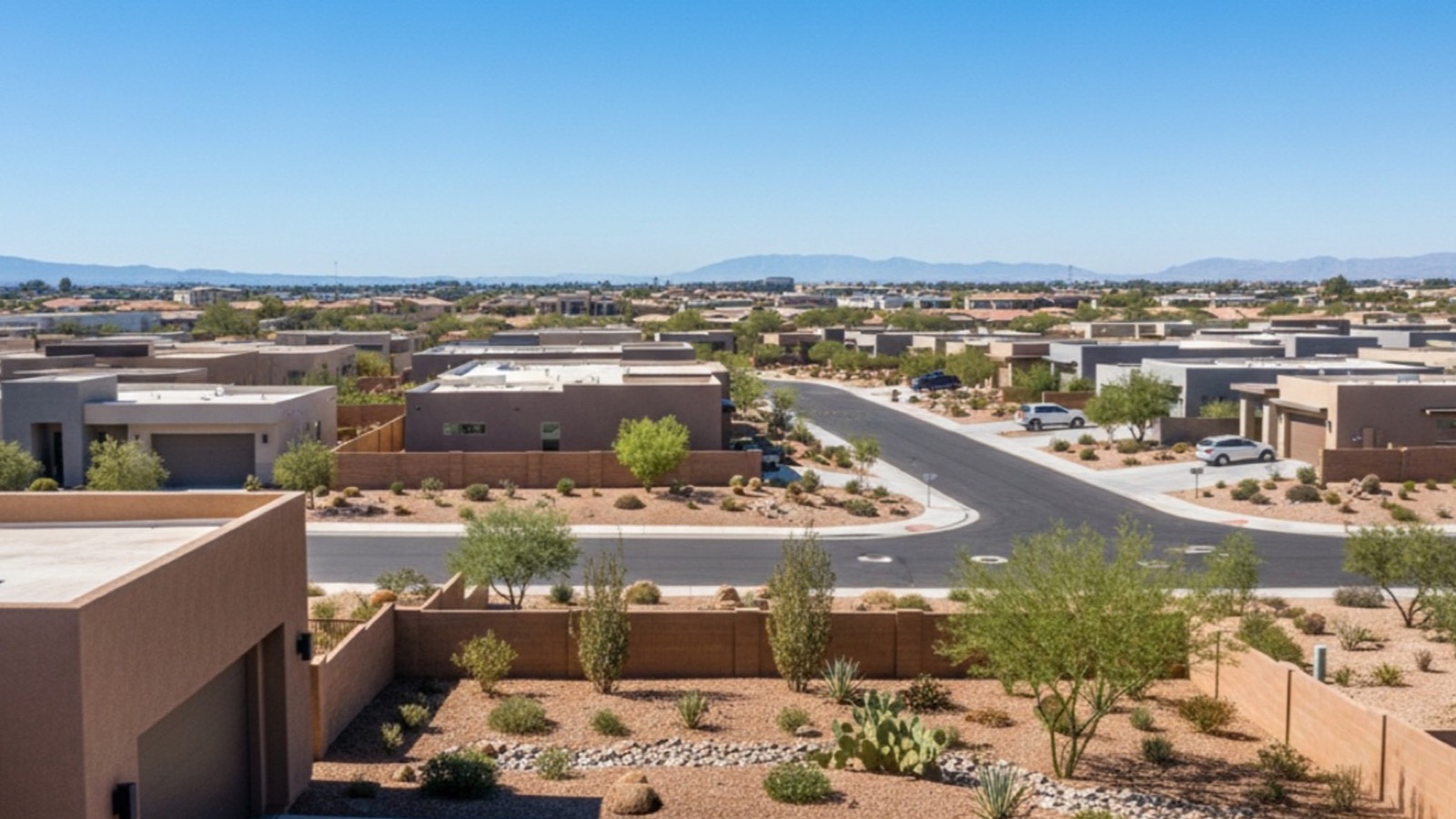
How Do You Price a Las Vegas Home to Sell?
Pricing is the single most consequential decision in the selling process. Get it right and the home sells quickly at or near full value. Get it wrong and you end up chasing the market with reductions that signal desperation to buyers.
The Comparative Market Analysis (CMA)
A CMA is not an automated online estimate, an AVM, or a county tax assessment. It is a human-built analysis of what comparable homes in your specific neighborhood and subdivision have actually sold for in the last 60 to 90 days. I pull three categories of comps: active listings (your direct competition, which set buyer expectations), pending sales (the price the market is currently willing to accept), and sold comparables — the gold standard, because they reflect what lenders will appraise and what buyers actually paid.
According to LVR's monthly statistics, the valley's median sale price has held in the mid-$400,000s through the first half of 2026 — our live GLVAR pull put the median Las Vegas–area closing at $440,050 over the trailing 90 days. But that median is an aggregate across 300-plus distinct communities. A 1,600-square-foot home in a North Las Vegas tract community and a 1,600-square-foot home in a guard-gated Summerlin village with mountain views are not the same comp — the latter might command $50,000 to $80,000 more.
Las Vegas is not one market — it is a collection of submarkets that move at different speeds and price points, so always price against your neighborhood rather than the citywide median. Here is the live GLVAR picture across the valley's three largest submarkets over the 90 days ending July 2026.
| Metric | Las Vegas | Henderson | North Las Vegas |
|---|---|---|---|
| Median sold price | $440,050 | $499,999 | $425,000 |
| Median days on market | 26 days | 28 days | 22 days |
| Sold-to-list ratio | ~99% | ~100% | ~100% |
| Homes closed (90 days) | 3,343 | 993 | 495 |
| Median $/sq ft | $272 | $284 | $234 |
Henderson — Green Valley, Anthem, Inspirada — draws strong family demand and competitive school zoning, which shows in its higher median. North Las Vegas is the value submarket where entry-level and investor demand is strongest; price tight to the most recent comp set. Boulder City is a niche market — 45 sales in the same window at a $399,000 median and a slower 43-day pace — where pricing precision and patience both matter more.
Pricing Psychology and the First-14-Days Window
Buyers and their agents track new listings obsessively. The first 14 days are peak visibility — the listing reads "new" in MLS filters and the agent network is alerting active buyers browsing the Las Vegas listings feed — and if no offer lands in that window, perception shifts to "what's wrong with it?" According to the National Association of REALTORS (NAR), homes that draw an offer in the first two weeks sell within 2% to 3% of list on average, while homes past 30 days without an offer typically sell 4% to 7% below original list once reductions and carrying costs (mortgage, taxes, HOA) stack up.
Overpricing Costs More Than It Saves
Across the 9,600-plus closings my team at Nevada Real Estate Group has handled, I have never seen a seller come out ahead by testing the market high. The typical overpriced home in a balanced Las Vegas market sits 30 to 60 extra days before the first reduction, needs one or two more cuts to find the market ($10,000 to $25,000 cumulative), invites lowball offers because buyers assume something is wrong, and risks an appraisal gap. The $5,000 or $10,000 you hoped to extract by listing high almost always costs $15,000 to $30,000 in carrying costs, reductions, and concessions.
Las Vegas-Specific Premium Adjustments
In markets like Summerlin and Henderson, micro-location premiums matter as much as square footage. Red Rock Canyon or Strip views command $15,000 to $40,000 over an identical plan facing a block wall; single-story homes in active-adult communities run 8% to 12% above equivalent two-story plans; owned (not leased) solar adds $10,000 to $20,000 in buyer value; and a well-kept pool adds $20,000 to $35,000. A well-built CMA accounts for all of these — automated valuations do not.
How Do You Prepare and Stage Your Home for Sale?
In a balanced market with rising inventory, preparation is where you earn your list-to-sale ratio. Buyers in 2026 have options and will walk away from a home that shows poorly even when the price is reasonable.
The Cool Factor: Service Your AC First
This is the most Las Vegas-specific advice I give every seller: before you paint a wall or replace a faucet, have your HVAC serviced. When a buyer walks in from 105-degree heat and feels a cool, even blast of air, that is their first emotional connection to the home; a rattling AC or musty air says "future expense" immediately. According to the U.S. Census Bureau QuickFacts for Clark County, roughly 90% of Clark County homes have central air — but age and condition vary widely. Budget $150 to $300 for a pre-listing tune-up on a system over 10 years old, and disclose the age and service history of any system over 15 years in the SRPD.
Desert Curb Appeal
Curb appeal in Las Vegas is different from the rest of the country — green lawns are rare and drought-tolerant xeriscaping is the norm. Done well it looks intentional and low-maintenance; done poorly it looks abandoned. Before your listing goes live:
- Pull every weed from rock beds and rake rock surfaces clean — even small weeds look aggressive in photos
- Trim or replace dead or dormant plants (desert plants should look healthy, not skeletal)
- Keep any pool sparkling blue — a green or cloudy pool is a deal-killer buyers price as a $3,000 to $8,000 remediation
- Power wash the driveway and walkway, and paint or refresh the front door — the most-photographed part of the exterior
Declutter and Depersonalize
Las Vegas draws a large share of out-of-state relocation buyers from California, Arizona, and the Pacific Northwest who shop remotely via photos and virtual tours before visiting — heavy, distinctive decor makes it hard for them to picture their own life in the space. Remove family photos, religious or political items, oversized furniture, counter clutter, and collections. The goal is a hotel-lobby feeling: clean, warm, and neutral.
Professional Photography and Staging
Dark, cell-phone listing photos are the fastest way to lose clicks on the MLS — in a market where buyers scroll 30 to 50 listings on their phones during lunch, photos are your first showing. Professional real estate photographers charge $200 to $500 for a full shoot, and for homes with a pool, landscape lighting, or a Strip or mountain view, request twilight shots that make those features come alive in ways daytime frames cannot.
Full staging (furniture and decor) typically runs $1,500 to $4,000 and is worth it for empty or dated homes; virtual staging runs $50 to $150 per room as a minimum. Staged homes sell faster and higher, according to NAR's staging impact data. When your resale is competing directly against new-construction inventory and other move-in-ready listings, staging is not a luxury — it is a marketing cost.

What Marketing Sells Las Vegas Homes Fastest?
Once the home is prepared and priced, the marketing launch determines how fast and at what price you sell. A sign in the yard and an MLS entry is 2005 marketing. In 2026, the buyer is online, often out of state, and comparing your home to 20 others simultaneously.
MLS Listing with Maximum Distribution
Your listing enters the GLVAR (Greater Las Vegas Association of REALTORS) MLS, which syndicates automatically to hundreds of downstream portals. The MLS entry is not the marketing — it is the pipeline; what matters is the quality of what goes into it: photos, video, virtual tour, description, and accurate data. According to LVR statistics, over 90% of Clark County buyers use online search as a primary discovery tool, so your description should sell the lifestyle, not just the specs. "4 bed / 2 bath / 1,800 sf" tells the buyer nothing; "single-story on a quiet cul-de-sac, 10 minutes from the 215 beltway, HVAC replaced 2023" sells.
Virtual Tours for Relocation Buyers
Many 2026 Las Vegas buyers are relocating from California, Illinois, or the Pacific Northwest and want to narrow their short list before flying out, so a 3D Matterport tour that lets them walk the home on any device drives more in-person showings and remote offers. Across the 789 homes we closed in 2025, listings with 3D tours received 28% more showing requests than identical photo-only listings, and above $600,000 the tour is essential. Pair it with geo-targeted Facebook and Instagram ads — a $200 to $500 campaign over the first two weeks reaches valley residents already showing buying intent, standard for homes above $450,000.
Agent Network and Open Houses
Buyer agents control which homes their clients tour, so a well-attended broker open — typically Tuesday or Wednesday morning — can generate three to five extra buyer-agent tours in the first week. Sunday open houses still work in Las Vegas too, drawing online browsers who want to walk through before committing to a private showing and creating the competitive-pressure environment that makes hesitant buyers act. We activate most listings Thursday or Friday so the first full day of syndication and the opening weekend of showings land together, when buyer traffic peaks.
When Is the Best Time to Sell in Las Vegas?
Las Vegas does not follow the national spring-school-year pattern as rigidly as most markets — our desert climate and heavy out-of-state migration drive different seasonal rhythms.
Spring and Fall — Peak Windows
Spring (late March through mid-May) is the consensus best time to sell: weather is ideal, snowbirds are still in residence, and buyers want to close before summer heat, so listings launched then historically sell faster and at higher list-to-sale ratios than any other window. Fall brings a distinct second surge once triple-digit temperatures break in late September — local buyers who paused for the heat return, and relocation buyers compress timelines to close before the holidays. November occasionally shows premiums over October, driven by buyers establishing Nevada residency before December 31.
Summer and Winter — Thinner but Still Workable
Summer (June through August) is genuinely tough: showing a home in 110-degree heat is uncomfortable and listing traffic drops, so homes listed then sit longer and lean harder on virtual tours to reach remote buyers. Winter (December through February) is slow but not dead — the buyers out during the holidays tend to be motivated relocation or tax-year closers who write clean, low-contingency offers. A correctly priced home sells in any season, and lower winter inventory means less competition. For a month-by-month breakdown, see our dedicated guide on the best time to sell a house in Las Vegas.
How Do You Handle Offers and Negotiation?
Receiving an offer is exciting — but do not evaluate it on headline price alone. The net sheet is what matters.
Reading a Las Vegas Purchase Offer
A standard Nevada residential purchase agreement covers the purchase price, financing contingency, inspection contingency, and appraisal contingency, plus any closing-cost concession request, the closing date (typically 30 to 45 days from acceptance in Clark County), and the earnest money deposit (usually $5,000 to $10,000). Read all of those terms together — not just the top-line price.
The Net Sheet Is the Real Price
An offer of $495,000 with a $10,000 closing cost concession is effectively a $485,000 offer. An all-cash offer at $475,000 with no contingencies may net you more than a $490,000 financed offer with a $7,500 credit request and a 60-day close date.
According to the Consumer Financial Protection Bureau (CFPB), buyers can request seller concessions of 3% to 6% of the purchase price depending on loan type — increasingly common in 2026 as buyers offset higher rates with upfront credits. You are not obligated to grant them, but refusing in a soft-demand ZIP code can kill a deal.
Multiple Offer Situations
In well-priced homes in desirable ZIP codes — especially in Summerlin villages, Henderson master plans like Anthem and Inspirada, and the northwest — first-week multiple offers still happen in 2026. When they come in, I run a structured "highest and best" process: notify all buyers of competing offers (without disclosing terms), set a 24-to-48-hour deadline, evaluate on net proceeds plus contingency structure, financing strength, and timeline, then counter the strongest or accept. Do not take the highest number if it carries weak financing, excessive contingencies, or a 60-day close when you need 30 — the best offer is the one most likely to close on time at the agreed price.
Counter-Offers and Negotiation Strategy
Nevada is an "as-is" state by practice, though sellers must still disclose known defects, and buyers routinely use the inspection period to negotiate repairs or credits — often $2,000 to $8,000 on a typical resale. In a multiple-offer situation you have leverage to counter with a "credit in lieu of repairs"; in a single-offer situation, handle the safety items (GFCI outlets, water-heater straps, broken window seals) and offer a credit for cosmetics rather than doing everything on the inspector's list. Never perform mid-escrow repairs without written approval of scope and cost. If you are also buying your next home, coordinate both sides — our Las Vegas buyer resources and active homes-for-sale listings run in tandem with the sell side so you are not stranded between transactions.
What Are the Closing Steps and Costs in Las Vegas?
Once you have an accepted offer, escrow opens and the formal closing timeline begins. Here is the standard flow for a 30 to 45 day Clark County escrow:
Week 1: Escrow Opens and Inspections Begin
The buyer deposits earnest money (typically $5,000 to $10,000) with the escrow company and schedules a general home inspection, which in Las Vegas runs $350 to $500 and takes 3 to 4 hours; pool, HVAC, or roof inspections may follow. You will receive a repair request or "as-is acceptance" notice within 10 days.
Weeks 2-3: Appraisal, Repairs, HOA, and Underwriting
The lender orders an appraisal (typically $450 to $600, 7 to 14 days). If the home appraises below contract price, you have four options: reduce to the appraised value, ask the buyer to bring cash, split the gap, or cancel. Simultaneously you negotiate the inspection repair request, aiming to resolve it inside the 10-day inspection period. If your home is in an HOA — as most newer Las Vegas communities are — order the resale package the day escrow opens; Nevada law (NRS 116.4109) requires it be delivered to the buyer before closing, it costs about $150 to $185, and it takes 5 to 10 business days. Meanwhile the buyer's lender runs underwriting, usually 15 to 21 days on a standard transaction.
Weeks 4-5: Signing, Funding, and Recording
You sign your closing documents — grant deed, transfer tax form, payoff authorization — at the title company or via mobile notary 1 to 3 days before recording. Review the preliminary Closing Disclosure line by line against your net sheet, and question any item that differs by more than $200. Once the deed records, your proceeds wire the same or next business day.
Closing Costs You Will Pay
For a detailed breakdown, see our complete guide to seller closing costs in Las Vegas. The summary version:
- Agent commission: 5% to 6% of the sale price (typically your largest cost)
- Nevada Real Property Transfer Tax (RPTT): $5.10 per $1,000 of sale price — $2,244 on a $440,000 sale
- Owner's Title Insurance Policy: $1,800 to $2,500 by Clark County custom, paid by seller
- Escrow fees: split 50/50 with buyer, typically $400 to $750 for your half
- HOA resale package: $150 to $185 (mandatory, non-negotiable)
- Recording, wire, and miscellaneous: $250 to $400 combined
On a $440,000 sale at 5.5% commission, total closing costs typically land around $28,000 to $32,000 — roughly 6.5% to 7.3% of the sale price. Call (702) 637-1759 for a precise net sheet for your home.
| Phase | Typical Duration | Key Actions |
|---|---|---|
| Pre-listing Preparation | 1 to 3 weeks | HVAC service, repairs, staging, professional photography |
| Active Marketing / Listing Live | 7 to 30 days | MLS launch, open houses, agent tours, offer collection |
| Offer Negotiation | 1 to 5 days | Counter-offers, concession negotiation, acceptance |
| Inspection Period | 10 days (standard) | General inspection, repair request, seller response |
| Appraisal | 7 to 14 days | Lender-ordered appraisal, value confirmation or renegotiation |
| HOA Documents and Underwriting | 10 to 21 days | HOA resale package delivery, loan underwriting, contingency removal |
| Closing and Funding | 1 to 3 days | Pre-signing, recording, proceeds wire to seller |
| Total List to Close | 55 to 70 days (typical) | Full process from MLS launch to key handover |
Should You List, Sell to an iBuyer, or Go FSBO in Las Vegas?
Once you decide to sell, you have three real paths: list on the open market with an agent, accept an iBuyer or cash offer, or go "For Sale By Owner." The decision comes down to a single trade-off — convenience versus net proceeds.
Selling FSBO is legal in Nevada and eliminates the listing-side commission — typically 2.5% to 3% of the sale price, or roughly $11,000 to $13,200 on a $440,000 home. But the real question is whether you net more or less after price, days on market, and transaction risk. According to NAR's 2025 Profile of Home Buyers and Sellers, FSBO homes sold for a median of $380,000 in 2024 versus $435,000 for agent-represented homes — a $55,000 national gap, a significant share of it real. In Las Vegas specifically, the FSBO seller still faces:
- Buyer's agent compensation: roughly 90% of buyers use an agent; skip buyer-agent compensation and most agents will not show your home, shrinking your buyer pool.
- MLS access: FSBO sellers cannot list on the GLVAR MLS without a licensed agent or flat-fee service — and without MLS presence your home is invisible to the dominant buyer-search infrastructure.
- Legal exposure: a missed or incorrectly completed SRPD under NRS 113 can trigger post-close litigation that far exceeds any commission savings.
- Negotiation disadvantage: buyer's agents negotiate hundreds of deals a year; most FSBO sellers negotiate one or two in a lifetime, and that asymmetry shows up in the final price.
iBuyer and cash-offer pitches sit at the opposite end. For a small share of sellers who value certainty and speed over price they are a legitimate tool, but they typically net 10% to 18% below an open-market sale once "service fees" and repair deductions are counted. Given the fast 26-day median and near-full price realization in 2026, most sellers with six to ten weeks net meaningfully more on the MLS. Weighing a specific cash offer? Get an open-market number first with our Las Vegas home value estimator so you know exactly what you are trading away.
| Dimension | Open-market listing | iBuyer / cash offer | For sale by owner |
|---|---|---|---|
| Typical net vs market | Highest (full market) | 10%–18% below market after fees | Variable; often below agent-marketed |
| Time to close | ~26-day median + escrow | 7 to 21 days | Unpredictable; often 60-plus days |
| Certainty of close | High with a strong buyer | Very high | Lower; financing can fall through |
| Cost / fees | 5%–6% commission | 5%–8% service fee + repair deductions | No commission, but you buy the marketing |
| Buyer pool | Full market including buyer agents | Single institutional buyer | Reduced — many agents skip unrepresented sellers |
| Negotiation / disclosure risk | Agent-managed through NRS 113 | Take-it-or-leave-it | All on you (NRS 113 liability) |
FSBO can work for off-market sales to neighbors, family, or pre-identified buyers, where the relationship limits risk. For a standard market sale the numbers rarely support it — which is why the vast majority of the 3,343 homes that closed last quarter did so on the MLS, not through an instant-offer platform.
| Strategy | Price at Market | Price 5% Above Market | Price 5% Below Market |
|---|---|---|---|
| First 14-Day Offer Rate | High (60%+ of correctly priced homes) | Low — most buyers skip overpriced listings | Very high — generates multiple offers |
| Likely Sale Price | 98%–100% of list | 93%–96% after reductions (market corrects) | 100%–104% of list (competition bid up) |
| Days on Market | 20 to 45 days | 60 to 120 days with 1 to 3 reductions | 7 to 21 days |
| Carrying Cost Risk | Low | High — each extra month costs $2,000 to $3,500 | Minimal |
| Appraisal Risk | Low — comps support price | High — may not appraise, kills deal | Low-moderate — comps easily support |
| Best For | Most sellers in balanced inventory zones | Only works in extremely low-inventory pockets | Sellers who prioritize speed over maximum price |
How Do You Choose a Las Vegas Listing Agent Without a Mistake?
The listing team you hire is the single largest controllable variable in your days on market and final net proceeds, so interview two or three and ask the questions that separate a marketing team from a transaction processor:
- How many homes did you list and close in this ZIP code in the last 12 months? Citywide numbers do not predict neighborhood performance.
- What is included in your marketing package, and is anything an upcharge? Real teams bundle HDR photography, drone, twilight, a property website, and paid social; a-la-carte models are a yellow flag.
- Who is my point of contact at listing, inspection, and closing? A dedicated transaction coordinator is where balls stop getting dropped.
- Walk me through exactly how you price. "I run comps" is the floor — you want live market velocity and current showing-to-offer ratios.
- What does my weekly seller report look like? Showings, traffic, and comp shifts should arrive automatically, not on request.
For a deeper look at how to vet a listing team, read our guide to the best real estate agent in Las Vegas, and review the terms in our 7-day listing agreement — you are not locked in for six months if we underperform. If you are selling here but own elsewhere in the state, our statewide Nevada selling guide covers the county-by-county differences.
What Are the Nevada Disclosure Requirements for Sellers?
Nevada has among the most detailed seller disclosure laws in the Western United States. The Seller's Real Property Disclosure (SRPD) is a mandatory form on which you must list all known material defects, whether or not they have been repaired.
According to Nevada Revised Statutes Chapter 113 and Clark County practice, sellers must disclose:
- Past water intrusion or flooding — even if the cause was repaired years ago
- Solar leases vs. owned systems — a leased system is a contractual obligation that transfers to the buyer
- Construction-defect litigation — common in homes built 2000 to 2007; a past class-action must be disclosed
- HOA special assessments — any pending or approved assessment charged against the property after closing
- Neighborhood nuisances and any known material defect — roofing, foundation, HVAC, electrical, plumbing
The SRPD is due within about 5 days of acceptance and at least 10 days before closing. An incomplete or inaccurate SRPD is the single leading cause of post-close seller litigation in Las Vegas — answer every question honestly and attach documentation for repaired defects. "As-is" language does not erase the statutory duty to disclose.
Is 2026 a Good Time to Sell a Home in Las Vegas?
For sellers with equity, 2026 is a favorable time to sell — not the frenzied peak of 2021, but a healthy market with sustained demand and strong values relative to five years ago. According to the Federal Housing Finance Agency (FHFA) House Price Index, Nevada ranked in the top 10 states nationally for home price appreciation from 2019 to 2024. A Las Vegas home bought in 2018 at $280,000 is worth $430,000 to $460,000 today — a $150,000 to $180,000 gain before mortgage paydown. The sellers who face headwinds are those who bought in 2022 at peak prices with minimal down payments and now sit on thin equity after selling costs; for owners of four-plus years, the equity is there and the market is ready to absorb well-priced inventory. Demand at the top end holds too — luxury communities and guard-gated communities in Summerlin and Henderson keep drawing move-up and out-of-state buyers.
Nevada's tax advantages compound the appeal. According to the Nevada Department of Taxation, Nevada has no state income tax and no state capital gains tax. On a $200,000 gain, a California seller would owe up to $26,600 in state capital gains tax; a Nevada seller owes $0 at the state level. Federal capital gains rules still apply — the $250,000/$500,000 primary-residence exclusion under IRS Section 121 is your first line of defense, and our companion guide on capital gains when selling a home walks through the math.

Frequently Asked Questions About Selling a Home in Las Vegas
How much does it cost to sell a house in Las Vegas?
Budget 7% to 9% of the final sale price for total selling costs. On a $440,000 home, that is approximately $30,800 to $39,600 coming off your proceeds. The largest line item is agent commission (5% to 6%), followed by the Nevada Real Property Transfer Tax ($5.10 per $1,000 — $2,244 on a $440,000 sale), Owner's Title Insurance ($1,800 to $2,500), escrow fees ($400 to $700), and HOA-related charges if applicable. These are deducted from your proceeds wire — you do not write a check at the closing table.
How long does it take to sell a house in Las Vegas in 2026?
From listing launch to close of escrow, expect 55 to 70 days in the current balanced market. That breaks down as 7 to 30 days to receive an accepted offer (depending on price and condition), plus a standard 30 to 45 day escrow period. Well-priced, well-presented homes in high-demand neighborhoods like Summerlin and Henderson can close in as few as 35 to 40 days total. Overpriced homes or those needing significant repairs can stretch to 90 to 120 days.
What taxes do I pay when selling a house in Nevada?
Nevada sellers pay the Real Property Transfer Tax at closing — $5.10 per $1,000 of the sale price in Clark County ($2,244 on a $440,000 sale). At the state level, Nevada has no income tax and no capital gains tax, which is a significant advantage over California or Oregon. Federal capital gains tax may apply if your profit exceeds the IRS exclusion: $250,000 for single filers, $500,000 for married filing jointly (IRS Section 121, primary residence exclusion, 2-of-5-year ownership and use requirement). Consult a CPA for your specific situation.
Should I make repairs before listing my Las Vegas home?
In most cases, yes — but be strategic about which repairs to complete. Safety items (GFCI outlets, garage door openers, water heater earthquake straps) should always be done, as inspectors flag them universally and buyers request credits for them. Cosmetic updates (fresh interior paint in neutral tones, updated light fixtures, refinished cabinet hardware) reliably deliver returns of $2 to $4 for every $1 spent in Las Vegas. Major renovations (full kitchen remodels, bathroom overhauls) rarely return their cost in a sale scenario — budget for targeted improvements, not full renovations.
What is the best price range to sell in Las Vegas right now?
Homes priced between $400,000 and $600,000 are moving fastest in Clark County in 2026 — that bracket represents the sweet spot of first-time and move-up buyer affordability given current interest rates. Homes in the $600,000 to $900,000 range have a wider buyer pool than luxury, but take somewhat longer. The luxury segment (above $1,000,000) remains active in Summerlin guard-gated communities, MacDonald Highlands, and Seven Hills, but days on market are longer and the buyer pool is thinner.
Do I need a real estate attorney to sell a home in Las Vegas?
Nevada is not an attorney-state — escrow and title companies handle the settlement process without requiring an attorney. A real estate attorney is advisable for a short sale, title complications (liens, disputed boundaries, probate), a trust sale, or a construction-defect disclosure situation. For a standard arm's-length residential sale, a licensed escrow company and an experienced agent provide all the protection you need.
How do I handle a low appraisal on my Las Vegas home?
If the appraisal comes in below the contract price, you have four options: reduce to the appraised value, ask the buyer to cover the gap in cash, split the difference, or cancel if the buyer exercises the appraisal contingency. Splitting is usually the path of least resistance in a balanced market. To reduce the risk up front, give your listing agent a CMA packet to share with the appraiser — comps they may not find independently, especially in newer subdivisions with limited recent sales.
Which Sources Inform This Las Vegas Home Selling Guide?
The figures and timelines above are estimates based on current market data and Nevada law — your specific transaction will vary.
This guide draws on the following authoritative sources for Clark County market data, Nevada real estate law, and seller transaction best practices:
- Las Vegas REALTORS (LVR / GLVAR) — Clark County median sale prices, days-on-market statistics, and local market trend data for 2026
- Nevada Revised Statutes Chapter 375 — Real Property Transfer Tax — statutory basis for the RPTT rate, Clark County surcharge, and seller payment obligation
- Clark County, Nevada Official Website — county recorder procedures, HOA law references, recording fees, and local government resources
- Consumer Financial Protection Bureau (CFPB) — Closing Disclosure requirements, buyer concession rules, and seller rights at settlement
- National Association of REALTORS (NAR) — 2025 Profile of Home Buyers and Sellers, FSBO vs agent-represented sale data, staging impact studies
- U.S. Census Bureau QuickFacts — Clark County, NV — homeownership rates, demographic data, and housing unit context for Clark County
- Nevada Department of Taxation — confirmation of no state income tax or state capital gains tax; RPTT rate structure
- U.S. Department of Housing and Urban Development (HUD) — RESPA settlement requirements, seller disclosure rights, and HUD settlement booklet guidance
- Bureau of Labor Statistics — Nevada — Nevada employment data and economic context informing housing demand in Clark County
- Federal Trade Commission (FTC) — Real Estate Resources — buyer and seller rights in residential real estate transactions
- Federal Housing Finance Agency (FHFA) House Price Index — Nevada appreciation rankings and equity accumulation data for context on seller proceeds
Ready to see your exact net proceeds number? Request a private listing consult or call (702) 637-1759. I'm Chris Nevada — across 9,600-plus closings and $440M-plus in 2025 volume alone, my team has guided thousands of Las Vegas sellers from listing prep to closing wire. We pull live GLVAR comps for your address and hand you a free CMA and written net sheet before you sign anything.