

If Reno is where Northern Nevada renters window-shop, Sparks is where they actually become owners. I watch it happen every month: a couple starts their search scrolling Reno listings at a $599,000 median, feels the air go out of the room, then discovers that one city line to the east, the same commute, the same airport, and the same Sierra weekends cost meaningfully less. As of July 12, 2026, Sparks carries 562 active listings on our live feed, and 153 of them — better than one in four — are priced under $450,000.
I'm Chris Nevada, and Nevada Real Estate Group has represented more than 9,600 closings across the state, hundreds of them first purchases in the Truckee Meadows. This guide is the Sparks-specific version of the kitchen-table talk I give every first-time buyer: why the numbers favor this city, where each budget actually lands, which loan program fits which paycheck, and the cold-climate homework that separates a good first buy from an expensive lesson.
Sparks is the most realistic first-home city in the Truckee Meadows. As of July 12, 2026, 153 of its 562 active listings are priced under $450,000 — a deeper entry tier than Reno's — and Sparks homes close about $55,000 below Reno on the same market pace. FHA's 3.5% minimum means roughly $12,110 down at the entry segment's $345,999 median. Start with pre-approval: call or text (775) 277-2120.
- 153 of 562 Sparks actives are priced under $450,000 (live NNRMLS feed, July 12, 2026).
- Sparks closes about $55,000 under Reno on the identical 47-day market pace.
- FHA 3.5% down is about $12,110 at the $345,999 entry-segment median.
- Nevada's Home Is Possible program adds up to 5% of the loan amount.
- Older central Sparks buys yards; Spanish Springs buys newer stock near the TRIC commute.
- Pre-approval comes first — call or text (775) 277-2120.
What Does the Sparks Starter Market Actually Look Like in July 2026?
Every number in this section comes from Nevada Real Estate Group's live NNRMLS feed, pulled July 12, 2026 — the same data behind our Sparks listing search. Methodology in one line: counts and medians across every active and recently closed sale listing in the city of Sparks on the Northern Nevada Regional MLS, segmented by price and year built, no sampling.
| Segment | Listings | Median price |
|---|---|---|
| Sparks — all actives | 562 | $579,000 list |
| Sparks — priced under $450,000 | 153 | $345,999 list |
| Sparks — built 2024 or newer | 57 | $700,000 list |
| Sparks — sold, last 90 days | 305 closings | $550,000 sold |
Three readings worth pausing on. First, the entry tier is real: 153 sub-$450,000 listings is the deepest affordable segment in the Truckee Meadows, and its $345,999 median tells you it contains genuine detached houses, not just condos. Second, 305 closings in 90 days against 562 actives means roughly five and a half months of supply — a functioning, balanced market where a priced-right starter home still sells in its first two or three weekends. Third, the new-construction line is not starter-priced at the median, but the entry end of the builder market tells a friendlier story I'll get to shortly.
For the full market picture — neighborhood price bands, the forecast, and the seller's side — my Sparks housing market guide is this article's evergreen companion. Here, we stay locked on one mission: getting you from renter to owner.
Why Is Sparks the Entry Path Into the Truckee Meadows?
Because the discount is measurable and the trade-offs are small. On the same live feed, Sparks' trailing-90-day median sold price runs about $55,000 under Reno's — roughly a 9% discount on close prices, on the identical 47-day market pace. Both cities sit on one MLS, share one job market, one airport, and one ski corridor, which makes that spread one of the cleanest arbitrage opportunities in Nevada housing.
The composition of the affordable tier matters even more than the headline. Reno's under-$450,000 segment medians at $279,900 because it is loaded with condos and manufactured homes; Sparks' equivalent segment medians at $345,999 precisely because it holds proportionally more detached single-family houses. Translated out of statistics: at the same starter budget, Sparks is far more likely to hand you a driveway, a garage, and a yard. Across the 9,600+ closings our team has represented, the most repeated Truckee Meadows story is the buyer who starts out browsing Reno homes for sale and closes in Sparks — and banks the difference as a rate buydown or a remodel fund.
What do you give up? The university district, Midtown's bar-and-restaurant walkability, and the storybook streets of Reno's Old Southwest. If those are must-haves, read my Reno first-time homebuyer guide — it is this article's twin. If a quieter street, a shorter industrial-corridor commute, and more house per dollar sound like the actual goal, keep reading. For the broader lifestyle question — schools, parks, safety, the Nugget and the marina — my is Sparks a good place to live guide covers everything this one skips.
How Much Cash Do You Really Need for a First Sparks Home?
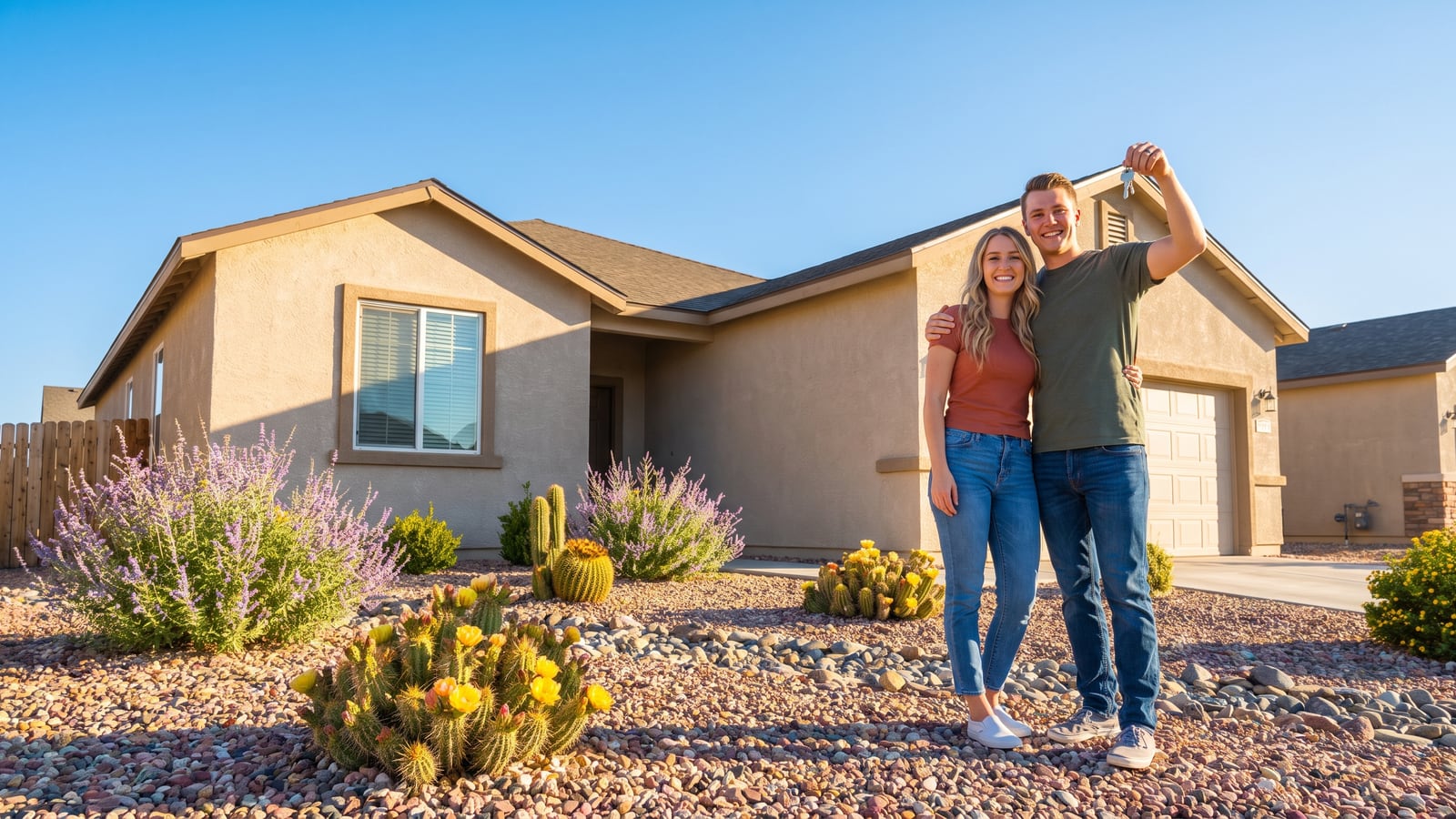
Far less than the 20%-down folklore suggests. In my experience, most first-time buyers we represent close with somewhere between 0% and 5% down. Here is the honest cash stack on a $425,000 purchase — a realistic detached-starter price point among today's Sparks homes for sale:
- Down payment: $14,875 at FHA's 3.5% minimum, $12,750 at conventional 3%, or $0 with VA eligibility.
- Closing costs: typically 2% to 3% in Washoe County — roughly $8,500 to $12,750 for lender fees, title, escrow, and prepaid taxes and insurance. Seller credits can absorb much of this in today's balanced market.
- Earnest money: commonly $3,000 to $5,000 in Sparks, credited back toward your down payment at closing — it is not an extra expense.
- Inspections and appraisal: budget $1,100 to $1,500 total for a general inspection, a sewer scope on older homes, and the lender's appraisal.
Realistic all-in: about $24,000 to $29,000 at FHA minimums on $425,000 — and often thousands less once seller credits and state assistance are layered in. Drop to the entry segment's $345,999 median and FHA's 3.5% is $12,110; a VA buyer at that price can genuinely close with under $10,000 out of pocket. The number that should drive your decision is not the savings balance — it is the monthly payment, which we'll build line by line below.
Which Loan Wins in Sparks: FHA, VA, or Conventional 3% Down?
The right program follows your credit score, your service record, and your holding horizon — not internet consensus. According to HUD, FHA financing allows 3.5% down with credit scores as low as 580, which keeps it the default first-timer instrument. Default is not the same as optimal:
| Dimension | FHA | VA | Conventional 3% |
|---|---|---|---|
| Down payment on $425,000 | $14,875 (3.5%) | $0 | $12,750 (3%) |
| Realistic credit floor | 580 (10% down below that) | No statutory floor; lenders want about 580-620 | 620; pricing improves sharply past 680 |
| Mortgage insurance | 1.75% upfront plus 0.55% yearly, typically for the loan's life | None — one-time funding fee, waived for disabled veterans | Private MI that cancels at 20% equity |
| Strongest fit | Thin credit, higher debt loads, smaller savings | Every eligible veteran — nearly always the winner | 700+ credit buyers planning a long hold |
| Sparks-specific watch-out | Permanent MIP means a future refinance to shed it | Attached condo projects need VA approval | HomeReady income caps bite in some census tracts |
As a 16-year Navy veteran, I make every service member and veteran price the VA loan first: zero down, no monthly mortgage insurance, and rates that routinely beat conventional. The U.S. Department of Veterans Affairs backs the loan, and between Naval Air Station Fallon down the highway and Washoe County's large veteran population, a surprising share of Sparks buyers hold unused eligibility.
For everyone else the fork is credit-driven. Below roughly 680, FHA's rate advantage usually outruns its insurance drag. Above 720, Fannie Mae's HomeReady and its 3%-down siblings typically win on total payment — and their private mortgage insurance disappears at 20% equity, which arrives faster in an appreciating market like this one.
What Does Nevada's Home Is Possible Program Add for Sparks Buyers?
Potentially more than your entire down payment. According to the Nevada Housing Division, the state's Home Is Possible program layers down payment and closing-cost assistance of up to 5% of the loan amount onto an FHA, VA, USDA, or conventional first mortgage. On the $410,125 base loan behind a $425,000 FHA purchase, 5% is about $20,500 — against a $14,875 down payment requirement.
The published guardrails, which adjust periodically and deserve a fresh check with your lender:
- Credit minimum: 640 for most structures.
- Income cap: a statewide household limit of $105,000.
- Education: a required homebuyer course, usually one evening online.
- Occupancy: primary residences only — this is owner-occupant money, not investor money.
- Home Is Possible For Heroes: a below-market-rate companion for veterans that stacks with VA financing.
The honest trade: assistance-backed loans carry a modestly higher rate than the best open-market pricing — that is how the help gets funded. The math tends to favor the classic Sparks renter paying $1,850 a month with $10,000 saved, and disfavor a buyer already sitting on 5%-plus in cash. Have your lender price both paths side by side; ten minutes of arithmetic protects a six-figure decision. Our first-time buyer resource hub keeps a plain-English rundown of every program layer that works in Washoe County.
Where Does Starter Money Go in Older Central Sparks?
The neighborhoods that built this city — the grid between Victorian Square, Oddie Boulevard, and Pyramid Way, plus the streets around Sparks Marina — are where the entry tier actually lives. Housing stock here runs 1950s through 1980s: single-story three-bedrooms of 1,000 to 1,500 square feet, commonly trading between $340,000 and $430,000, frequently with no HOA at all. That last detail is quietly enormous — skipping a $200 monthly HOA preserves roughly $40,000 of loan qualification for a payment-capped buyer.
What central Sparks gives a first-timer: real yards, mature trees, garages, walkable access to Victorian Square's redeveloping restaurant row, and the shortest possible hop onto I-80. What it asks in return: 40-to-70-year-old systems. Original galvanized plumbing, aging roofs, mid-century electrical panels, and clay sewer laterals are all live possibilities, which is why the inspection section below is not optional reading. Budget mentally for $10,000 to $25,000 of nearer-term system work on the oldest stock, and negotiate accordingly — in this market you often can.
One cautionary lane: Sun Valley, just north of the city, posts the area's lowest stickers — frequently under $300,000 — but much of that inventory is manufactured housing, where financing is tighter and long-run appreciation has historically trailed site-built homes. It can be the right call with eyes open; it is a poor surprise. In my experience, a stretched budget does better in a smaller site-built house in the central grid than in a larger manufactured home, purely on resale math. Single-income buyers priced under the detached tier should also weigh the Sparks condo and townhome market, where marina-adjacent units regularly list in the high $200,000s to mid $300,000s.
What Does Spanish Springs Offer a First-Time Buyer?
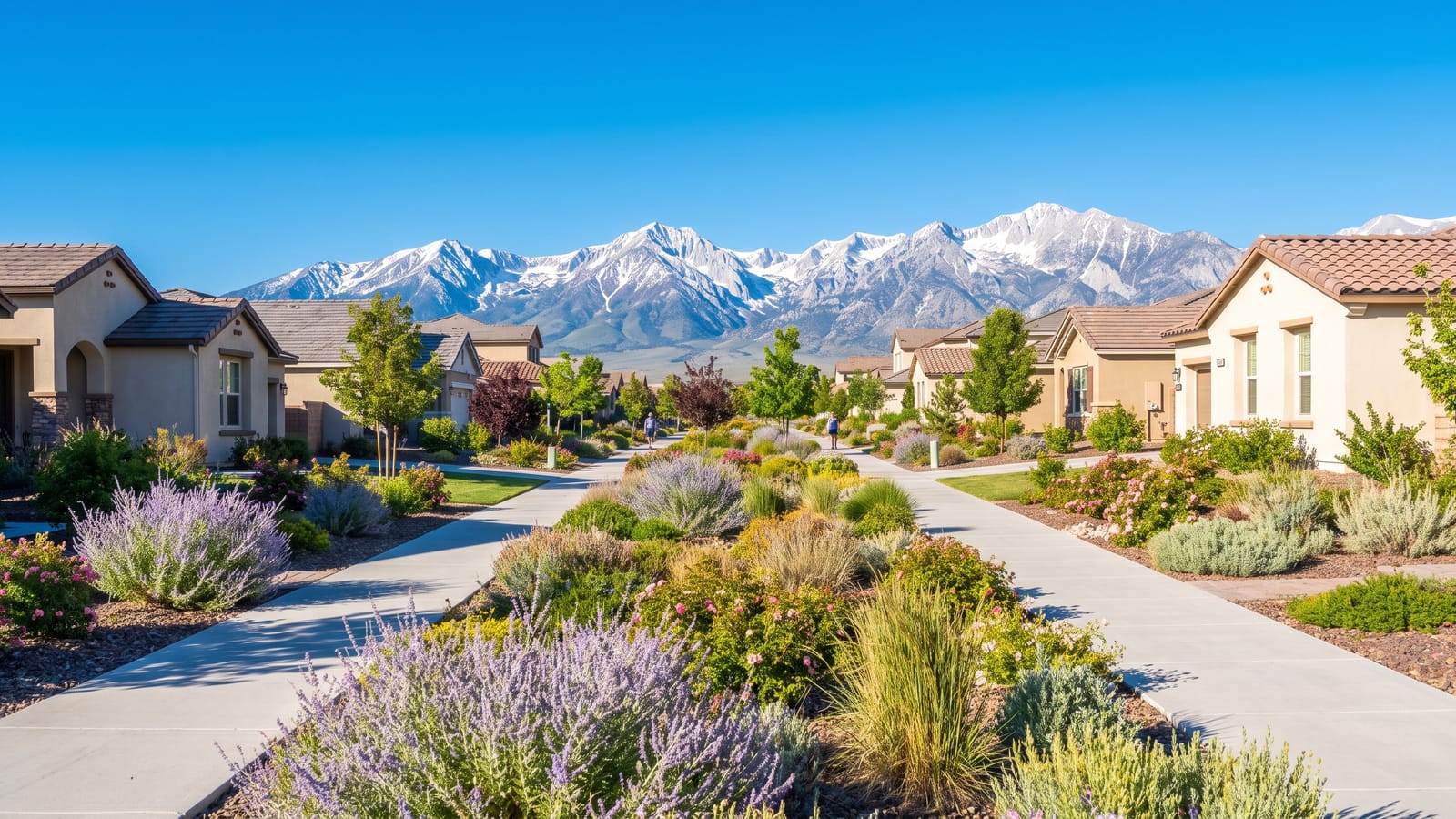
The other half of the Sparks story sits up Pyramid Way. Spanish Springs is the valley the city grew into from the 1990s onward — planned subdivisions, newer schools, parks, and the family product that dominates Sparks' mid-market. Core Spanish Springs detached homes cluster around $550,000, above starter budgets — and golf-and-lake enclaves like Wingfield Springs run higher still — but the first-timer entry points are real: townhomes and compact detached plans in Pioneer Meadows and the newer phases trade from the high $300,000s into the mid $400,000s, and the Spanish Springs west-side listings page tracks the most affordable slice of the valley daily.
| Dimension | Older central Sparks | Spanish Springs | New construction |
|---|---|---|---|
| Typical entry price | $340,000-$430,000 detached | High $300,000s-$460,000 (attached/compact) | Low $500,000s and up |
| Stock age | 1950s-1980s | 1990s-2020s | Brand new |
| HOA reality | Often none | Common, roughly $50-$250 monthly | Nearly always, plus possible lot premiums |
| Biggest watch-out | Aging roofs, plumbing, panels | Wind exposure, HOA stacking | Landscaping and window-covering budget |
| Best for | Yard, no HOA, negotiability | Newer systems, schools, TRIC commute | Warranty, incentives, zero deferred maintenance |
My rule of thumb after years of Truckee Meadows tours: buyers who prioritize weekends-off ownership lean Spanish Springs and pay for newer systems; buyers who prioritize price and land lean the central grid and budget for wrenches. Both are correct answers to different questions.
Should Your First Sparks Home Be New Construction or Resale?
The median says resale — the 57 active Sparks listings built 2024 or newer carry a $700,000 median, which is move-up money, concentrated in Stonebrook, Kiley Ranch, and the newest Spanish Springs phases. But medians hide the doorway: attached and compact detached plans in those same communities start in the high $400,000s to low $500,000s, and the incentive stack can close the gap on an honest monthly-payment comparison.
Builders in mid-2026 routinely offer financed rate buydowns worth $15,000 to $30,000, closing-cost credits, and appliance packages — concessions a resale seller rarely matches dollar for dollar. A 2-1 buydown alone can trim the first year's payment by $300 to $500 a month while your income grows into the note — the same incentive logic that runs across our new construction hub. The counterweights: base prices exclude landscaping and window coverings (set aside $10,000 to $20,000), HOAs are near-universal, and you live inside a construction zone for a season or two. Two non-negotiables if you go this route: get third-party inspections at pre-drywall and pre-closing anyway, and bring your own representation — the friendly on-site agent works for the builder, while our team represents buyers at builder sales offices at no cost to the buyer. Current inventory lives on our Sparks new construction page.
How Does the TRIC Commute Shape What Sparks Buyers Afford?
Sparks' first-time buyer economy is welded to the Tahoe-Reno Industrial Center. According to EDAWN, the industrial corridor east of town — Tesla's Gigafactory and its $3.6 billion expansion, Panasonic, Redwood Materials, and the logistics campuses around them — has been the region's dominant job engine for a decade, and Sparks is the closest full-service city to all of it. Fifteen to twenty-five minutes down I-80 against light traffic beats every comparable commute in the metro, which is exactly why so many TRIC paychecks land on Sparks porches. According to the U.S. Bureau of Labor Statistics, the Reno-Sparks metro job base has kept growing through the mid-2020s across manufacturing, logistics, and healthcare — the demand floor under this entire market.
Now the mortgage math those jobs support. Entry production roles along the corridor commonly advertise in the low-to-mid $20s per hour; technicians reach the $30s. Two $25-an-hour earners gross about $104,000 a year — enough at standard ratios to carry roughly a $3,300 monthly payment, which comfortably covers the $425,000 tier below. A single $32-an-hour technician at about $66,600 supports closer to $2,200 a month: that is condo-and-townhome territory, or the lowest band of the central grid. This is why the archetypal 2026 Sparks first buyer is a dual-income TRIC or healthcare household — and why the budget escape valves further east matter. Fernley, thirty minutes along I-80, still lists detached homes in the $300,000s with a shorter TRIC commute than most of Reno, and Carson City offers a genuine tier discount for anyone whose work points south. Every one of those markets sits in our Northern Nevada communities directory, and the Sparks new-homes listings track builder inventory across all of them.
What Does a $425,000 Sparks Home Cost Every Month?
Here is the full payment anatomy, line by line, with nothing hidden. I'm illustrating at 6.5%; according to Freddie Mac's Primary Mortgage Market Survey, the 30-year average has held the mid-6s through 2026, and your quote will move with the market and your credit tier.
| Line item | Monthly amount | Notes |
|---|---|---|
| Principal & interest | $2,638 | $410,125 base loan with 1.75% upfront MIP financed |
| FHA mortgage insurance | $188 | 0.55% annual MIP |
| Property taxes | about $200 | Washoe County effective rates run roughly 0.5%-0.6% |
| Homeowners insurance | $110-$140 | Verify flood-zone status near the Truckee corridor |
| HOA (if any) | $0-$200 | Often zero in the central grid; standard in Spanish Springs |
| Realistic total | $3,140-$3,360 | Supports at roughly $88,000+ household income |
Two Washoe-specific footnotes that favor owners. According to the Washoe County Assessor, Nevada caps annual property-tax increases on owner-occupied primary homes at 3% — no reassessment shock after a hot market. And Nevada levies no state income tax, which quietly widens every debt-to-income calculation in this guide. Against a typical $1,850-$2,200 Sparks three-bedroom rent, a $3,200 payment is a real first-year premium — but roughly $460 of month one goes straight to principal and grows from there, and the payment never receives a renewal increase again. To watch how the medians behind this math move month to month, our Reno-Sparks market data desk publishes locked closing figures that never restate after publication.

What Winter Inspection Gotchas Catch Sparks First-Timers?
Sparks sits at 4,400 feet in a high-desert climate that freezes hard most winters, and its oldest housing stock predates the moon landing. Buyers arriving from milder climates — and renters who have never owned a roof — should put five items on every inspection:
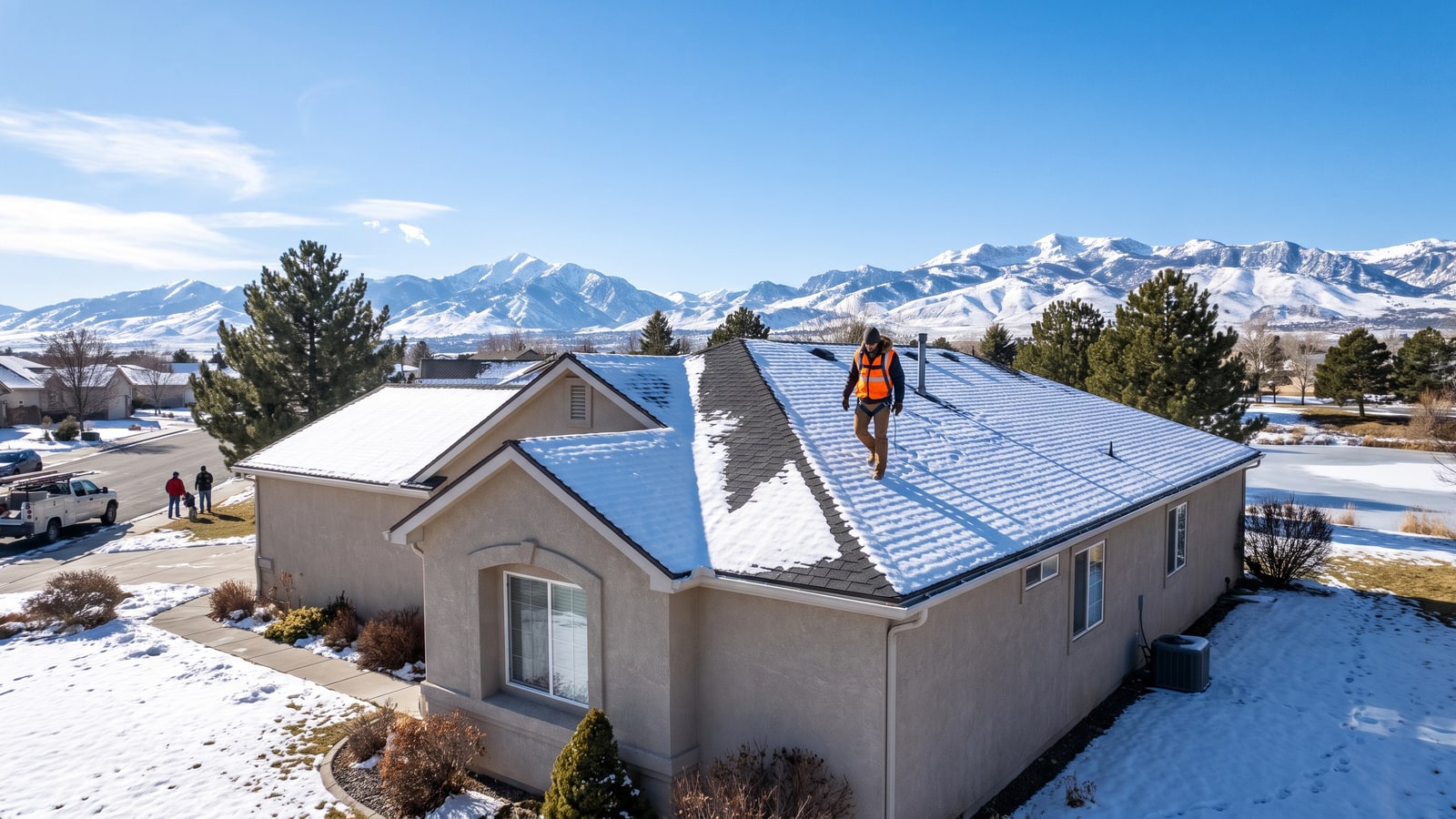
- Roof age and freeze-thaw wear. Composition shingles at this altitude take UV and ice abuse; a roof past year 20 of a 25-year rating is a looming $12,000-$20,000 line item. Ask specifically about ice damming, flashing, and any sag over the garage.
- Galvanized plumbing and clay sewer laterals. Pre-1970s central Sparks homes may carry both. A $150-$300 sewer scope is the highest-ROI inspection dollar in the old grid — lateral replacement runs $8,000-$15,000.
- Furnace age and duct condition. Winters here are real. A furnace past 20 years is a $6,000-$9,000 replacement conversation that belongs in your repair negotiation, not your first February.
- Freeze protection and past bursts. Exposed hose bibs, uninsulated crawl-space runs, and sprinkler backflows all burst here; evidence of old water damage hints at broader deferred maintenance.
- Wind, drainage, and flood zones. Spanish Springs' open valley catches serious wind — check fences and shingle edges. Spring snowmelt exposes bad grading fast, and for anything near the Truckee River industrial corridor, verify the FEMA flood map status before you fall in love; flood insurance can add $600-$2,000 a year.
In my experience, roughly one older-Sparks purchase in three returns real money from a thorough inspection — repairs negotiated, credits collected, or disasters dodged. New builds get inspected too; builder punch lists miss things, and documentation makes the warranty conversation easy.
How Do You Win Your First Offer in Sparks?
With 305 closings in the last 90 days against 562 actives, Sparks in mid-2026 rewards preparation over desperation. Well-priced starter homes still collect multiple offers in weekend one — everyone reading this hunts the same 153 sub-$450,000 listings — but nobody sane is waiving inspections anymore. What actually wins:
- An underwritten pre-approval. Verified income and assets, not a five-minute pre-qualification. It lets you shorten the financing contingency, and listing agents can hear the difference in one call.
- Speed with structure. Tour new listings within 48 hours — set alerts on the live Sparks search — and decide fast, but keep your inspection rights on anything older than 1990. Shorten timelines; never delete protections.
- Chase credits, not just price. A $10,000 seller credit aimed at a 2-1 rate buydown usually helps your monthly payment three to four times more than a $10,000 price cut. In a balanced market, credits are very gettable.
- Escalate with a ceiling. On the genuinely hot listing, an escalation clause with a hard cap keeps you in the fight without overpaying the second-best offer by $20,000.
- Hire local relationships. After 789 closings statewide in 2025 alone, our agents usually know the listing side personally — and clean files between agents who trust each other close on time.
Why Do First-Time Buyers Choose Nevada Real Estate Group?
Because the first purchase is the one where representation changes the outcome most — and before you tour, your agent's compensation is set in a written buyer agreement, with any seller contribution confirmed in writing (see how buyer-broker agreements work in Nevada). Nevada Real Estate Group is the #1-ranked real estate team in Nevada with 9,600+ closings and $4.85B+ in career volume (more about our team), and our Northern Nevada agents live this market street by street, from the Victorian Square grid to the newest Stonebrook phase. We build the budget before the tour, price FHA, VA, conventional, and Home Is Possible against each other, wire up your listing alerts, and negotiate the credits first-timers routinely leave on the table. And when the starter home eventually becomes the springboard, the home value estimator shows you the equity you built by buying right today, and our sellers hub maps the move up when you're ready.
Start the easy way: call or text (775) 277-2120, or tell us what you're looking for and we'll respond the same day. We represent buyers statewide — Las Vegas (702) 637-1759 · Reno (775) 277-2120 — and the buyer's guide hub is free whether or not we ever meet. When you're ready to compare the two anchor cities in person, Sparks and Reno tours fit in a single Saturday.
Frequently Asked Questions
How much money do you need to buy a first home in Sparks?
Plan on roughly $24,000-$29,000 all-in for a $425,000 purchase at FHA's 3.5% minimum — down payment, closing costs, earnest money, and inspections combined. At the entry segment's $345,999 median, the down payment alone drops to $12,110. VA-eligible buyers can close with under $10,000 total, and Nevada's Home Is Possible assistance can contribute up to 5% of the loan amount, which often exceeds the whole down payment.
What does $425,000 actually buy in Sparks right now?
As of July 12, 2026, that budget buys a 1,000-1,500 square foot detached three-bedroom in the central Sparks grid — often with no HOA — or a newer townhome or compact detached plan in Spanish Springs and Pioneer Meadows. There are 153 active Sparks listings under $450,000, better than one in four homes on the market, and the segment medians $345,999, so $425,000 shops the upper half of the entry tier with room to negotiate.
Is Sparks or Reno better for a first-time buyer?
On pure numbers, Sparks: homes close about $55,000 under Reno on the same 47-day pace, the sub-$450,000 tier holds more detached houses, and the TRIC commute is the region's shortest. Reno answers back with the university, Midtown walkability, and stronger long-run appreciation in its character neighborhoods. My honest pattern after years of tours: Sparks wins the spreadsheet, Reno wins the nightlife — pick by paycheck location and weekend habits.
What down payment assistance can Sparks buyers use?
The Nevada Housing Division's Home Is Possible program offers up to 5% of the loan amount for down payment and closing costs as a forgivable second loan — about $20,500 on a $425,000 FHA purchase. Requirements include a 640 minimum credit score, a $105,000 statewide household income cap, a homebuyer course, and owner occupancy. Home Is Possible For Heroes adds a below-market rate for veterans. The assistance carries a slightly higher first-loan rate, so price it both ways.
What credit score do you need to buy in Sparks?
FHA lends at 580 with 3.5% down (500-579 requires 10% down), conventional 3%-down programs start around 620, and Home Is Possible assistance requires 640. Every 20-point improvement moves your pricing; the jump from 620 to 680 can save more than $100 a month on a $410,000 loan. If you sit in the low 600s, three to six months of deliberate credit work usually beats rushing.
What winter gotchas should a Sparks home inspection cover?
Roof wear from freeze-thaw cycles, furnaces past 20 years, galvanized supply plumbing and clay sewer laterals in pre-1970s central Sparks, burst-prone hose bibs and crawl-space pipes, wind damage in the open Spanish Springs valley, and flood-zone status near the Truckee corridor. Add a $150-$300 sewer scope on anything older than 1975 — the failures it catches cost $8,000-$15,000 to repair.
Should a first-time buyer choose a new build or a resale in Sparks?
New construction buys warranties, current code, and incentive stacks — builders are offering rate buydowns worth $15,000-$30,000 — but entry pricing starts in the high $400,000s and HOAs are standard. Resale in the central grid starts around $340,000 with no HOA and negotiable sellers, at the cost of aging systems. Run both as monthly payments after incentives rather than comparing stickers; the answer usually reveals itself.
Which Sources Inform This Sparks First-Time Homebuyer Guide?
Inventory counts, medians, and sold figures come from Nevada Real Estate Group's live NNRMLS feed, pulled July 12, 2026 (562 Sparks actives at a $579,000 median list; 153 under $450,000 at $345,999; 57 built 2024+ at $700,000; 305 closings in 90 days at a $550,000 median). Program, tax, and economic context draws on these authorities:
- Nevada Housing Division — Home Is Possible administration and parameters
- Home Is Possible — assistance amounts and eligibility
- HUD — FHA loans — FHA down payment and credit standards
- U.S. Department of Veterans Affairs — VA loan guaranty program
- Fannie Mae HomeReady — conventional 3%-down terms
- Freddie Mac Primary Mortgage Market Survey — weekly 30-year rate benchmarks
- FHFA — conforming loan limits and house price index
- Washoe County Assessor — property-tax rates and Nevada's 3% primary-residence cap
- FEMA Flood Map Service Center — Truckee-corridor flood-zone verification
- EDAWN — TRIC employers and regional economic development
- U.S. Bureau of Labor Statistics — Reno MSA — metro employment series
- U.S. Census Bureau — Sparks — population, income, and housing baselines
- Washoe County School District — school zoning for neighborhood choices
- City of Sparks — Victorian Square redevelopment and municipal planning
Ready for the kitchen-table conversation? Call or text Nevada Real Estate Group at (775) 277-2120 and let's map your path from Sparks renter to Sparks owner.