

Every Las Vegas home buyer I work with in 2026 eventually lands on the same solar question: "The listing says it has panels — is that a good thing?" The short answer is: it depends entirely on how those panels are financed. An owned system (paid in full or with a paid-off loan) conveys with the home, can add roughly $3 to $4 per watt in appraised value according to Lawrence Berkeley National Laboratory research, and costs the buyer nothing extra at closing. A solar loan secured by a UCC-1 financing statement must be paid off at closing or formally assumed — typically $15,000 to $28,000 — or the deal stalls. A lease or Power Purchase Agreement (PPA) requires the buyer to qualify for and assume the lease, adds no appraised value, can carry a 20-year escalator clause, and is one of the top five reasons solar-home deals fall apart in my experience.
Las Vegas is the best large-city solar market in the United States. According to the U.S. Department of Energy / EERE, the Las Vegas valley averages roughly 290 to 300 sunny days per year, delivering among the highest photovoltaic irradiance of any major metro. A typical residential system here runs 6 to 9 kilowatts — sized up from the national average because summer air conditioning loads are aggressive. At $2.50 to $3.50 per installed watt, that means a new system runs $15,000 to $31,500 before incentives. The federal Residential Clean Energy Credit, which had covered 30 percent of that cost, was modified by recent federal legislation — verify current eligibility with your tax professional, as systems placed in service in 2026 may no longer qualify at the full rate. Nevada state incentives and NV Energy's net-metering program remain in place but have evolved, which is why I always review the utility interconnection agreement before we write an offer.
This guide covers every solar scenario a buyer or seller encounters in the 2026 Las Vegas market: owned versus leased versus PPA, what the federal tax credit situation means for buyers, how NV Energy's current net-metering tiers change the economics, what appraised value solar panels actually add, how to protect yourself during due diligence, what Nevada law says about HOA restrictions, and the five due-diligence steps that separate a smooth solar closing from a nightmare. Call me directly at (702) 637-1759 — Nevada Real Estate Group closes more Las Vegas homes than any other Nevada team, and solar-panel disclosures are a standard part of every transaction we handle.
Buying a Las Vegas home with solar panels in 2026 depends on one factor above all others: who owns the system. An owned or paid-off system conveys with the home and may add $3–$4 per watt in appraised value. A solar loan carries a UCC-1 lien that must be resolved at closing — typically $15,000–$28,000. A lease or PPA requires buyer qualification and assumption of contract terms, often including a 20-year escalator, and adds no appraised value. Request system documentation in your initial due-diligence list and verify with your lender before making an offer.
- Las Vegas averages 290–300 sunny days per year — the best large-city solar resource in the U.S. — making owned solar panels a genuine value-add for buyers who understand the closing mechanics.
- Owned solar (cash-purchased or paid-off loan) conveys with the home; Lawrence Berkeley National Laboratory found buyers pay roughly $3–$4 per watt of installed capacity as a premium for owned systems.
- Solar loans secured by UCC-1 filings must be paid off or formally assumed at closing — a $15,000–$28,000 lien surprise that derails deals when buyers discover it late in escrow.
- Lease and PPA systems require buyer credit qualification and assumption of contract terms — no appraised value added — and are one of the top five causes of solar-home closing failures in Las Vegas.
- Request the system documentation (ownership type, loan payoff, lease contract with escalator/buyout terms, NV Energy interconnection agreement) in your first due-diligence request, not at the end of escrow.
Why Does Las Vegas Have So Many Homes With Solar Panels?
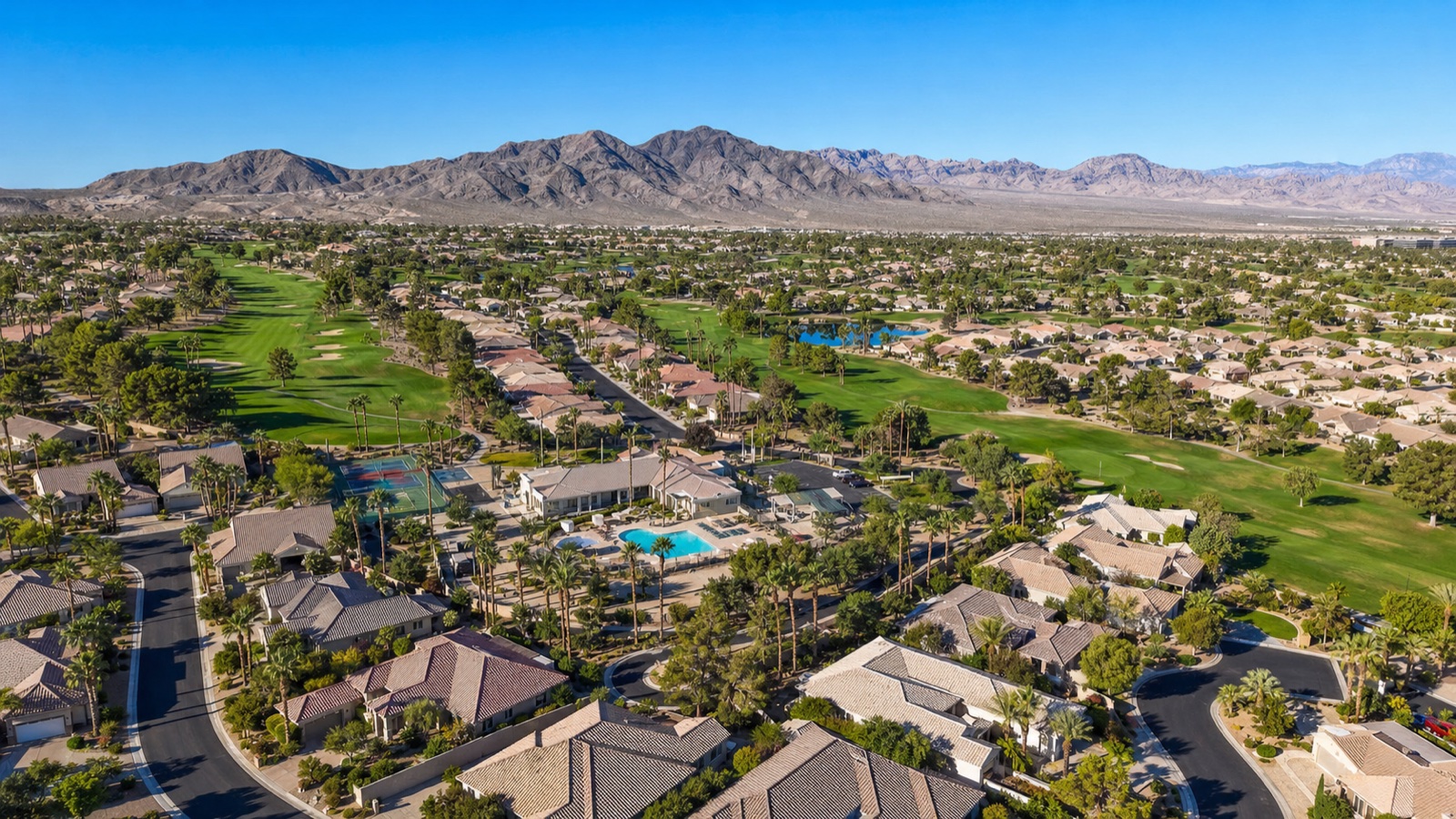
Las Vegas leads major U.S. metros in residential solar adoption for one straightforward reason: the sun almost never stops shining here. According to the National Renewable Energy Laboratory (NREL), the Las Vegas valley receives approximately 5.75 to 6.25 peak sun hours per day on average across all seasons — substantially above the U.S. national average of roughly 4.5 peak sun hours. That irradiance level means a 7-kilowatt system in Las Vegas produces approximately 10,200 to 15,900 kilowatt-hours annually, which covers most or all of the electricity consumption of a typical 2,400-square-foot Las Vegas home.
The combination of high solar production, aggressive summer utility bills (summer cooling loads push monthly NV Energy bills to $200 to $450 for mid-sized homes without solar), and a decade of solar installer competition in the valley drove rapid adoption from approximately 2012 through 2022. According to the Nevada Governor's Office of Energy, Nevada ranked among the top 10 U.S. states by per-capita solar installations as of the most recent reporting year. Across our 9,600+ closings at Nevada Real Estate Group, we estimate that roughly one in four Las Vegas resale listings in established neighborhoods now includes a solar system of some kind — owned, leased, or under a PPA — making this a standard due-diligence item rather than a specialty transaction.
What Is the Difference Between Owned Solar, a Solar Loan, and a Lease or PPA?
The three solar ownership structures produce completely different closing outcomes. An owned system (purchased outright with cash or with a loan that has since been paid off) is real property — it conveys with the home automatically at closing, just like the HVAC system or the roof. A solar loan is a debt instrument, usually secured by either a UCC-1 financing statement filed with the Nevada Secretary of State or a deed-of-trust lien on the property — the system generates power for the homeowner, but the loan balance follows the transaction. A lease or PPA is a service contract with the solar company: the homeowner agreed to purchase power from panels the solar company actually owns, typically for 20 to 25 years, with an escalating annual rate.
According to NREL solar market research, approximately 40 to 50 percent of residential solar systems installed through 2020 in the Southwest were financed via lease or PPA rather than purchased outright. That proportion has shifted since — loan-financed purchases have grown in share — but a substantial portion of existing Las Vegas solar homes still carry lease or PPA agreements. The buyer's job in due diligence is to identify which structure applies within the first week of escrow, not the week before closing.
| Dimension | Owned / Paid Off | Solar Loan (Active) | Lease or PPA |
|---|---|---|---|
| Conveys with home? | Yes — automatically | Yes, but lien must close or assume | Contract must be assumed or bought out |
| Closing impact | None — clean title | UCC-1 or lien payoff $15K–$28K+ or formal assumption | Buyer must qualify and assume; can delay/kill deal |
| Appraised value add | $3–$4/watt (Lawrence Berkeley Lab) | Partial — lender may net out loan balance | $0 — appraiser does not credit leased equipment |
| Ongoing buyer cost | $0 — electricity savings only | Monthly loan payment (or paid at close) | Monthly lease/PPA payment, typically escalating 1–3%/yr |
| Federal tax credit | Available to original purchaser (verify 2026 eligibility) | Available to original purchaser | NOT available to homeowner (solar company claims it) |
| Buyer risk level | Low — biggest risk is inverter age | Medium — verify lien payoff amount early | High — contract terms, escalator, buyout cost, creditqualification |
How Does the Federal Residential Clean Energy Credit Affect a 2026 Purchase?
The federal tax credit situation in 2026 requires careful handling — verify details with your tax professional. The Residential Clean Energy Credit historically allowed homeowners who purchased and installed a new solar system to claim 30 percent of the total installed cost as a federal tax credit, potentially worth $4,500 to $9,450 on a typical Las Vegas system. Recent federal legislation modified the credit's schedule; systems placed in service in 2026 may face a reduced rate or expiration depending on final Congressional action.
According to IRS Publication guidance on the Residential Clean Energy Credit, the credit applies to the taxpayer who purchases and installs the system — meaning a buyer purchasing a home with an existing owned system does not receive the credit for that existing system. The credit was already claimed by the original seller when they installed it. Where a buyer's tax planning matters is if they plan to add a battery storage system or if they are purchasing a new construction home where the builder installs solar as part of the package and the credit passes to the buyer. According to the Nevada Governor's Office of Energy, Nevada does not have a state-level solar tax credit currently, but there are sales-tax exemptions and property-tax abatements for solar equipment under Nevada Revised Statutes — verify current availability at closing.
The key buyer takeaways on the tax credit: don't count on it for an existing resale system, and if you are considering adding batteries or upgrading a system post-purchase, talk to a CPA about the current 2026 credit eligibility before you close escrow.
How Does NV Energy Net Metering Work in 2026 and Why Does It Matter at Closing?
NV Energy's net-metering program governs what happens when solar panels produce more electricity than the home consumes — the excess flows back to the grid, and the homeowner receives a credit on their bill. According to NV Energy's current tariff schedules, the utility uses a tiered net-metering structure (NEM 3.0 as modified by Nevada regulation) where export credits are applied at below-retail rates for most residential customers on newer interconnection agreements.
This is a critical point for buyers: a solar system that was interconnected before certain regulatory cutoff dates may be grandfathered on more favorable NEM rates, while systems connected after those dates earn lower export credits. According to the Public Utilities Commission of Nevada, the specific export credit rate depends on the customer's interconnection date, their rate class, and the size of the system. A system with favorable legacy NEM rates is worth more than an identical system with a current NEM rate — and that rate status can transfer with the home if the buyer keeps the same interconnection agreement. At closing, I always request the current NV Energy interconnection agreement alongside the system documentation — it tells us exactly what export rate the buyer will inherit.
The practical implication: solar economics in Las Vegas have shifted toward self-consumption and battery storage rather than the simple "spin the meter backward" model that drove the original adoption wave. A 2026 buyer evaluating a solar home should model the economics on the current NEM rate, not the rate the seller was receiving if they installed 5 or more years ago.
What Resale Value Do Solar Panels Actually Add in Las Vegas?
Owned solar panels add measurable resale value in Las Vegas — but the amount depends on system size, age, condition, and whether the appraiser follows the correct methodology. According to Lawrence Berkeley National Laboratory's landmark "Selling Into the Sun" study, buyers in high-irradiance markets (which includes Las Vegas) pay a premium for owned solar of approximately $3 to $4 per watt of installed capacity. For a typical 7-kilowatt Las Vegas system, that translates to a premium of roughly $21,000 to $28,000 over an otherwise comparable home without solar.
That premium is not guaranteed and is not automatic. Several factors reduce it or eliminate it entirely. First, the appraiser must use the Income Approach (valuing the energy savings stream) or the Comparable Sales Approach (using sales pairs of solar vs. non-solar homes). According to NREL guidelines for solar valuation, some appraisers in markets with limited solar-home comparable sales default to depreciated cost, which undervalues the system — particularly for older panels that have depreciated on paper but still produce well. Second, panel age matters significantly: solar panels degrade at approximately 0.5 percent per year in output, meaning a 10-year-old system in Las Vegas is producing at roughly 95 percent of original capacity, but the equipment is also 10 years into its useful life and closer to inverter replacement. Third, panel and inverter warranties affect value — most tier-1 manufacturer panels carry 25-year production warranties, but inverters (the more frequently replaced component) typically carry 10-to-12-year warranties; an inverter approaching end-of-warranty is a negotiation point.
Leased and PPA systems add zero appraised value by FNMA/Fannie Mae guidelines. The Uniform Residential Appraisal Report does not credit equipment the homeowner does not own, and lenders will not include lease payments as a cost reduction for mortgage qualification purposes.
Use our explanation of online home-value estimate limits before assuming an automated value captures the solar system's ownership terms.
How Does a Solar Loan or UCC-1 Lien Affect the Closing?
A solar loan that is still active at the time of sale creates a lien that must be resolved before or at closing — this is the single most common solar-related closing complication I see in Las Vegas. The most frequent form is a UCC-1 financing statement filed with the Nevada Secretary of State's office, which encumbers the solar equipment as personal property. Some solar lenders also file a deed-of-trust lien on the real property itself, which is more serious and appears on a standard title search. Either way, the title company will find it, and the lender will require it to be cleared before funding.
According to Nevada Revised Statutes Chapter 104A (UCC Article 9), a UCC-1 financing statement on personal property is valid for five years and must be renewed. If the lien is there, you have three options: the seller pays off the loan at or before closing (most common), the buyer assumes the loan if the lender allows formal assumption, or the loan payoff is escrowed and paid out of seller proceeds at closing. The amount varies: typical solar loan balances for a recent Las Vegas system run $15,000 to $28,000 depending on system size, original price, and how much has been paid down.
The practical advice: ask your agent to run a UCC search at the Nevada Secretary of State and request a preliminary title report as early as possible in escrow. Finding a $22,000 solar lien in week two gives you time to negotiate. Finding it in week six creates a scramble — or a cancellation.
| Scenario | Resolution | Timing | Buyer risk |
|---|---|---|---|
| Seller pays off loan at closing | Loan payoff wired from seller proceeds; UCC-1 released | Standard 30–45 day escrow | Low — standard title clearance |
| Buyer assumes solar loan | Lender approval + credit qualification required; new account opened | Can add 2–3 weeks | Medium — lender may reject assumption or rate may not transfer |
| Payoff dispute / seller shortage | Escrow holds until resolved; may extend closing or kill deal | Unpredictable | High — most common cause of solar-related deal failure |
The guide to how Nevada escrow works provides context for coordinating title, payoff and lender questions.
How Does a Solar Lease or PPA Transfer to the Buyer?
A solar lease or PPA is a long-term service contract — typically 20 to 25 years — between the homeowner and a third-party solar company. The solar company owns the panels; the homeowner pays monthly for the electricity produced. When the home sells, the contract must either be assumed by the buyer or bought out by the seller. In practice, there are two paths: the buyer qualifies and assumes the lease (credit check, contract review, signed transfer documents from the solar company — typically a 2-to-4-week process), or the seller buys out the contract at the lease's stated buyout price (which varies by contract and can range from $8,000 to $30,000+ for a mid-life lease).
According to standard lease transfer requirements from major Las Vegas solar providers, the buyer must meet the company's minimum credit score threshold (typically 680 to 720 FICO) and the solar company must formally approve the transfer before closing. If the buyer does not qualify or declines to assume the lease, the seller must buy out the contract — and if the seller cannot or will not, the deal can fail. I have personally seen transactions in Las Vegas fall apart over exactly this scenario, where the buyer's lender also raised concerns about the monthly lease payment as a recurring obligation affecting debt-to-income ratios.
The other critical lease variable is the escalator clause: most solar leases include an annual payment increase of 1 to 3 percent per year. A buyer assuming a 2022 lease with a 2.9 percent annual escalator will be paying meaningfully more in year 10 than the seller is paying today. Run the full contract term through a calculator before assuming.
What Do Nevada Law and HOAs Say About Solar Panels?
Nevada law is strongly pro-solar on HOA restrictions. According to Nevada Revised Statutes 278C.450 and NRS 116.2111, a homeowners association may not prohibit or unreasonably restrict the installation of solar energy systems. HOAs can impose reasonable aesthetic and placement requirements — for example, requiring panels to be mounted flush with the roof or restricting highly visible front-facing installations — but they cannot block solar installation outright or impose requirements that make installation economically unreasonable.
For buyers in Summerlin or other master-planned communities with active architectural review committees, it is worth reviewing the specific HOA rules before installing new panels after purchase. The rules will be enforceable as long as they are "reasonable" under Nevada's standard — but "reasonable" in practice allows the HOA to require architectural approval and limit panel placement to maximize aesthetics. According to the Nevada Real Estate Division, disclosure of solar systems and their ownership structure is required in the Seller's Real Property Disclosure form (SRPD) — sellers must disclose whether panels are owned, leased, or under a PPA, and must provide the relevant documentation.

Should Buyers of New Construction Homes Consider Adding Solar?
New construction in Las Vegas is an interesting solar scenario — and increasingly a mainstream one. According to the Nevada Energy Code and Clark County Department of Building, many 2024–2026 production builder floor plans in the valley now include solar as a standard feature or a low-cost builder-add option, integrated into the purchase price. Builders like Pulte, Lennar, KB Home, and Taylor Morrison have rolled out solar packages ranging from $8,000 to $18,000 when added at contract, often at a lower installed price than the homeowner can achieve post-purchase.
The key advantage of builder solar: the buyer may qualify for the federal Residential Clean Energy Credit on the equipment if the credit is still available for systems placed in service in 2026 (verify with a CPA, as recent legislation has modified eligibility). The key risk: builder solar packages are typically sized for base electrical load without battery storage, and the interconnection agreement terms depend on NV Energy's current NEM tariff. I always recommend that buyers reviewing builder solar packages in Las Vegas new construction request the production estimate in kilowatt-hours per year, the NEM tariff class they will be placed on at interconnection, and the warranty terms for panels versus inverter before signing. According to our Las Vegas closing cost analysis, builder-installed solar typically adds to the mortgage balance rather than being paid out of pocket — factor the monthly payment into your total housing cost model.
How Should Sellers Price and Disclose a Home With Solar Panels?
Sellers with owned solar panels in good condition should treat the system as a genuine selling feature — and price it accordingly. According to the Lawrence Berkeley National Laboratory research cited above, the market evidence supports a premium of $3 to $4 per watt in high-irradiance markets like Las Vegas. For a 7-kilowatt system in good working order, that is a $21,000 to $28,000 premium relative to a comparable non-solar home. That said, not every appraiser will give full credit — and not every buyer will pay the full premium if they are unfamiliar with solar economics. The practical listing approach is to include a one-page solar fact sheet in the listing disclosures: system size in watts, age and warranty status, annual production history from the utility portal, current NV Energy interconnection rate, and monthly average bill for the past 12 months. Buyers can quickly calculate their energy-cost savings, and the negotiation starts from facts rather than uncertainty.
Sellers with leased systems or PPA agreements face a different calculus. The solar company must be contacted early in the listing preparation process to get a current buyout quote and transfer requirements. If the buyout cost is significant (over $15,000 to $20,000), the seller should model whether buying out the lease to clean the title is better than passing the assumption requirement to the buyer. In my experience, listings that proactively resolve the lease issue before going to market close faster and with fewer contingencies than listings where the lease surprise surfaces mid-escrow.
What Are the Five Due-Diligence Steps for Buying a Las Vegas Solar Home?
The five steps that protect buyers in every Las Vegas solar home purchase are: confirm ownership, quantify the lien, request production data, review the NV Energy agreement, and model the economics. Each step has a timing target — all five should be initiated in the first five business days of escrow.
According to Nevada contract practice, the standard Residential Purchase Agreement allows a buyer inspection period (typically 10 days) during which material defects — including undisclosed solar liens — can be used as grounds for cancellation without penalty. That window is your protection. Use it proactively, not reactively.
| Step | Action | Timing | Protects against |
|---|---|---|---|
| 1. Confirm ownership type | Request SRPD solar disclosure + system documentation from seller | Day 1–2 of escrow | Lease/PPA surprise late in escrow |
| 2. Quantify lien or payoff | UCC search at NV SOS + preliminary title report | Day 2–5 of escrow | Hidden solar loan lien at closing |
| 3. Request production data | Ask seller for 12-month NV Energy production history | Day 3–5 of escrow | Underperforming or damaged system |
| 4. Review NV Energy agreement | Confirm interconnection date, NEM rate tier, export credit rate | Day 3–7 of escrow | Inherited legacy rate vs. current tariff mismatch |
| 5. Model the economics | Compare annual production × export credit vs. monthly payment (if any) | Before offer or day 1–5 | Lease assumption with negative ROI for buyer |
In my experience, buyers who run all five steps before releasing contingencies avoid 95 percent of the solar-related closing complications I see. The buyers who skip the UCC search in step 2 because "the seller said they own it outright" are the ones calling me at midnight two days before closing asking what we do about a $19,000 lien that just showed up on the HUD.

Include solar-related questions within the broader Las Vegas home inspection and obtain qualified advice for the particular system.
What Should Buyers Know About Solar Battery Storage in Las Vegas?
Battery storage is the fastest-growing add-on in the Las Vegas solar market in 2026. According to NREL's residential storage market data, battery attachment rates with new solar installations in high-irradiance Southwest markets have risen significantly as NV Energy's net-metering export credit rates have stepped down. The logic is straightforward: if excess solar energy exported to the grid now earns a below-retail credit, storing that energy in a battery and consuming it at night is worth more than exporting it.
The most common battery system in Las Vegas resale homes is the Tesla Powerwall (13.5 kWh usable capacity, approximately $12,000 to $16,000 installed in 2026 including electrical work) or the Enphase IQ Battery (10 kWh usable, similar price range). A battery paired with a 7-to-9-kW solar system in Las Vegas can provide meaningful bill reduction and also provides backup power during the valley's occasional grid outages — a feature that resonates strongly with buyers relocating from hurricane-prone states.
For buyers evaluating a home with an existing battery: confirm that the battery is owned outright (not on a separate lease), check the battery's state of health (most systems report this via an app), and confirm that the battery is wired for backup (some installations are grid-tied only and do not provide backup during an outage). According to Lawrence Berkeley National Laboratory, battery backup functionality is an emerging positive in resale value — though the premium is not yet as well-documented as for panels alone. As battery systems age and more comparable sales accumulate, expect appraisers to begin crediting battery storage more explicitly over the next three to five years.
Our new-construction smart-home guide offers additional features to verify when comparing equipment and written specifications.
Frequently Asked Questions
Do solar panels increase property taxes in Nevada?
Nevada provides a property-tax abatement for residential solar systems under Nevada Revised Statutes 361.079. The added value of a solar energy system (both real-property components and personal-property components) is partially or fully exempt from property tax assessment, depending on the system's assessed value and the applicable abatement threshold. In practice, most residential solar systems in Las Vegas do not produce a meaningful increase in your annual property tax bill even if they add $20,000 to $28,000 in appraised value — a significant financial benefit over the system's 25-year life.
Can my lender count solar lease payments against my debt-to-income ratio?
According to Fannie Mae Selling Guide guidelines for solar leases, lenders must count monthly solar lease or PPA payments as a recurring debt obligation if the buyer is assuming the lease at closing. This means if the monthly lease payment is $120 per month, that $120 adds to your monthly debt load for qualification purposes — potentially reducing the loan amount you qualify for. Buyers assuming a solar lease should disclose it to their lender early in the process, before pre-approval, so the payment is factored into the debt-to-income calculation upfront rather than discovered during underwriting.
What happens if the seller's solar company goes out of business?
Panel and inverter warranties are backed by the manufacturer, not the installer — so a bankrupt installer does not void the equipment warranty. However, if the system is under a lease or PPA with a company that goes bankrupt, the outcome depends on whether a successor company assumes the contracts (which often happens in solar company acquisitions) or whether the contracts are discharged in bankruptcy proceedings (which can leave the homeowner with panels they do not own and no service agreement). According to the Federal Trade Commission, most solar lease contracts include assignment provisions, and panels are typically acquired by another solar company in bankruptcy — but there is no guarantee, and this is one of the underappreciated risks of a long-term lease commitment.
How long do solar panels last and when do inverters need replacement in Las Vegas?
According to DOE/EERE panel longevity data, tier-1 solar panels are warranted for 25 years of production and typically last 30 or more years before meaningful degradation. The inverter — the component that converts DC from the panels to AC for home use — has a shorter lifespan of approximately 10 to 12 years for string inverters. Las Vegas's heat accelerates inverter wear; inverters in the valley typically run at or above 110°F for extended periods during summer. A home with a 10-to-12-year-old system may be approaching its first inverter replacement, which costs approximately $1,500 to $4,000 for a residential string inverter. Microinverter systems (Enphase, SolarEdge) replace individual units per panel and typically cost $200 to $350 per microinverter — more expensive per unit but simpler to service.
Do Las Vegas new construction builders guarantee solar production?
Builders do not generally guarantee annual solar production — the panels carry a manufacturer production warranty (typically 80 to 90 percent of rated output at 25 years), and the builder installs them to code, but actual annual production depends on local shading, soiling (dust on panels), inverter efficiency, and your household consumption pattern. According to NREL PVWatts modeling, a 7-kW system in Las Vegas ZIP code 89102 is expected to produce approximately 11,700 to 12,100 kWh annually under standard assumptions — but that is a modeled estimate, not a guarantee. Request the builder's estimated production figure and compare it to a PVWatts independent estimate before signing.
How do I find out if a Las Vegas home's solar loan has been paid off?
Request a UCC lien search from the Nevada Secretary of State's office (searchable at sos.nv.gov) under the seller's full legal name and the property address. Your title company will also perform this search as part of a standard preliminary title report. If a UCC-1 financing statement is active, it will appear in both searches. A solar loan secured by a deed-of-trust lien on real property will appear on the title search. If neither appears and the seller provides a paid-in-full invoice or loan satisfaction letter, the system is owned free and clear. When in doubt, call our team at (702) 637-1759 — we pull preliminary title on every listing we write to avoid exactly this surprise.
Which Sources Inform This Las Vegas Solar Home Buying Guide?
This guide draws on federal energy agency research, Nevada regulatory filings, national laboratory studies, and current Las Vegas market closing data to give buyers and sellers an accurate picture of solar home transactions in 2026. All statistics are sourced from the authoritative references below — not from solar installer marketing materials or portal estimates.
The primary sources: U.S. Department of Energy / EERE — Homeowner's Guide to Solar Tax Credits, National Renewable Energy Laboratory (NREL) — Residential Solar Cost and Market Data, Lawrence Berkeley National Laboratory — "Selling Into the Sun" solar premium study, IRS — Residential Clean Energy Credit guidance, NV Energy — Solar and Net Metering Programs, Nevada Governor's Office of Energy, Public Utilities Commission of Nevada, Nevada Revised Statutes — NRS 278C.450, NRS 116, NRS 361.079, Las Vegas REALTORS (LVR/GLVAR) — Closing and MLS data, Clark County Assessor — Property records, NREL PVWatts Calculator — Production modeling for Las Vegas, Fannie Mae Selling Guide — Solar lease qualification requirements, Nevada Secretary of State — UCC lien search, and U.S. Bureau of Labor Statistics — Nevada energy cost data.