

Henderson is where many Las Vegas valley investors end up when they stop chasing the highest yield on paper and start asking who the tenant will be. The city has 353,289 residents by the Census Bureau's July 2025 estimate, household incomes well above its neighbor's, and much of its housing in master-planned communities. It prices accordingly, which means the landlord math here works differently than it does a few freeway exits north.
Out-of-state buyers often pull up a spreadsheet, see a Henderson yield that trails Las Vegas, and cross the city off the list, while others buy Green Valley houses for the tenant base and hold them for a decade. This guide lays out the numbers so you can make that call with current data: what Henderson homes actually lease for, what they sell for, how the gross yield compares with Las Vegas, what taxes and association dues take out, and which short-term rental rules apply. Every market figure carries its date, and none of it is a forecast.
Henderson rentals trade a little gross yield for stronger fundamentals. In July 2026, Henderson single-family homes leased at a $2,400 median on $525,000 sales, a 5.5% gross yield, versus 5.7% in Las Vegas. Henderson's tax rate is 2.9613 per $100 assessed, against 3.2782 inside Las Vegas city limits (many Las Vegas-address homes sit in Paradise at 2.9328 or Enterprise at 2.7081). Underwrite real leases, dues and the up-to-8% cap.
- Henderson single-family homes leased at a $2,400 median in July 2026, across 228 MLS leases.
- At a $525,000 median sale, that is a 5.5% gross yield, against 5.7% in Las Vegas.
- Henderson's fiscal 2026-27 tax rate is 2.9613 per $100 assessed, below the City of Las Vegas's 3.2782.
- About 84% of Henderson's July single-family sales listed HOA dues, at a $100 median fee.
- A rental does not get the 3% owner-occupied tax cap; plan on the general cap of up to 8%.
Why Do Rental Investors Keep Choosing Henderson?
Because the fundamentals that predict a steady tenancy are measurably stronger here, even though the entry price is higher. According to the U.S. Census Bureau's QuickFacts for Henderson and Las Vegas, Henderson's median household income for 2020 to 2024 was $90,138 against $73,877 in the City of Las Vegas, and 9.0% of Henderson residents lived in poverty against 14.0%. Household income is not a guarantee of anything, but it is the first thing a landlord's screening is really measuring.
The same Census table shows the flip side. Henderson's owner-occupied rate was 66.1%, compared with 56.6% in Las Vegas, so roughly 34% of Henderson's occupied homes are rented against about 43% in Las Vegas. A smaller renter share means a smaller pool of competing rentals and, in our experience, a tenant base that includes many households renting for a year or two while they learn the city before buying. That "trial year" renter is one of the most common profiles we see on Henderson single-family leases, because they chose the neighborhood before they chose the house.
What Henderson does not offer is a bargain. The city's settled July 2026 single-family median was $525,000, about 9% above Las Vegas's $480,000, while its July single-family median lease of $2,400 was only about 5% above Las Vegas's $2,295. That is the whole Henderson trade in two numbers: higher rents, but not higher by as much as prices.
The rest of this guide quantifies that trade with dated data. If you are weighing the city from a distance, our Henderson city guide covers the master plans, and our relocation hub covers the valley as a whole.
What Does the Henderson Market Look Like in September 2026?
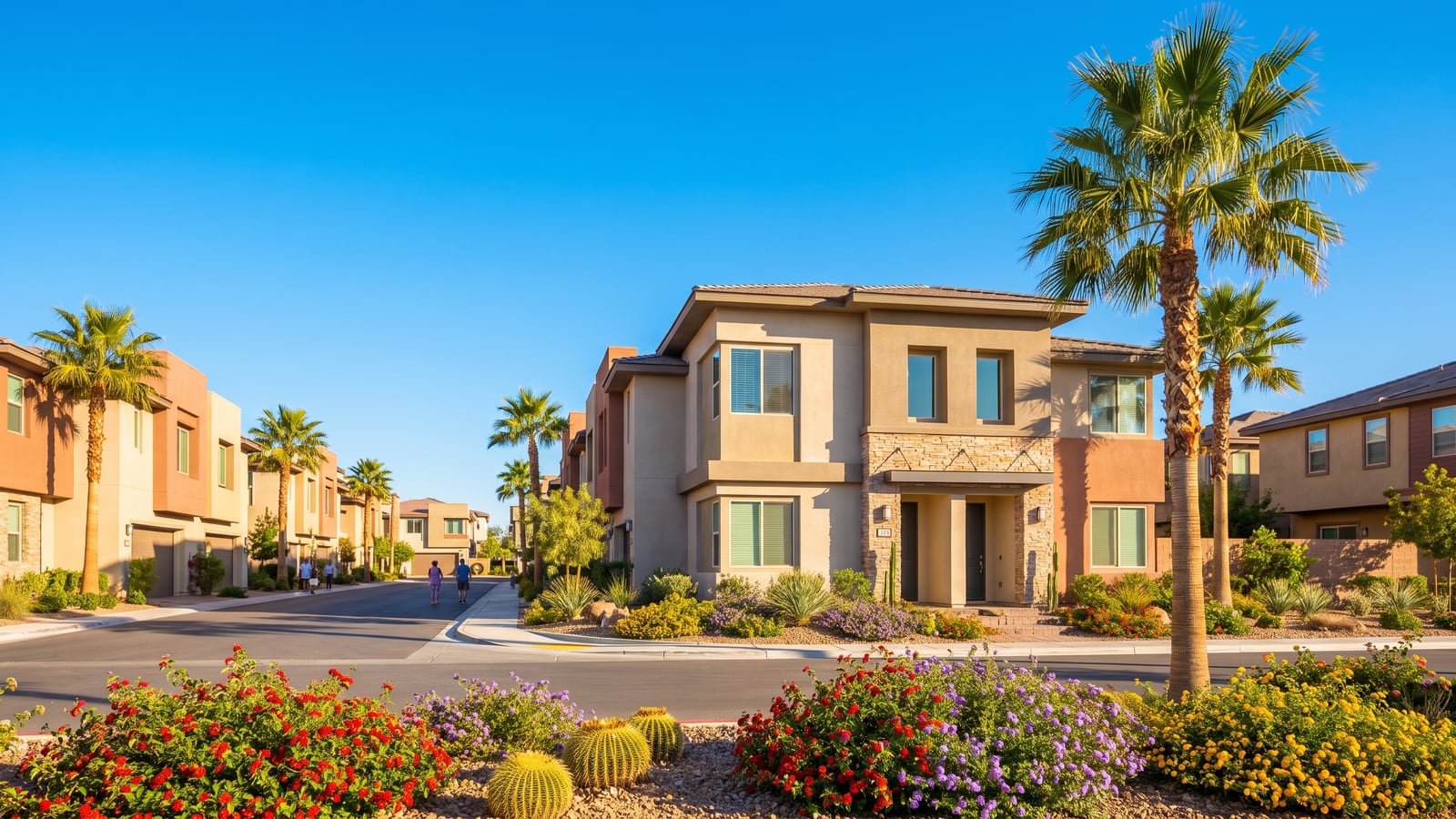
A market with real selection and sellers who are negotiating. The figures below come from our Henderson market report for September 2026, which counted every active listing on September 15, 2026 and every July closing once the month had fully posted, plus the rental figures I pulled from the MLS on September 27, 2026.
| Metric | Figure | Investor read |
|---|---|---|
| Active listings, September 15, 2026 | 2,367 | Real selection |
| Share of actives with a price cut | 44.0% | Sellers are reaching toward the closings |
| Median asking price, all types | $535,000 | $599,990 single-family; $364,900 condo and townhome |
| July 2026 closings | 476 at a $490,000 median | 98.8% of list; 60.5% closed below asking |
| July single-family closings | 371 at a $525,000 median | The detached-home benchmark |
| July condo and townhome closings | 93 at a $330,000 median | The cheapest door in the city |
| July median days on market (closed) | 38 | Priced right still moves in about five weeks |
| July leases, all types | 355 at a $2,125 median | Median 26 days to lease |
| Actives under $400,000 | 526 (22.2% of the board) | The entry band is genuinely shoppable |
Two readings matter for an investor. First, the gap between the $599,990 single-family median ask and the $525,000 settled single-family closing is where your negotiation happens. The September report found that much of that gap is mix, with larger Anthem and MacDonald Ranch homes stacking the active board, but it also found 44.0% of listings had already cut price. An investor offer built from recent closings on the same street is normal in this market, not aggressive.
Second, the entry band is real. With 526 listings under $400,000 on September 15, 2026, a first-time landlord has more to choose from than the citywide median suggests. For valley-wide context, according to Las Vegas REALTORS' August 2026 report as covered by Vegas Inc, the Southern Nevada single-family median was $475,000 in August, down 1% from a year earlier and below the record $490,000 set in May and June, with just over four and a half months of supply. The live version of these numbers sits on our Henderson market report page.
What Do Henderson Rentals Actually Lease For?
About $2,400 for a house and $1,800 for a condo or townhome, and more than in Las Vegas. On September 27, 2026 I pulled every lease that closed through the MLS in Henderson during July 2026, the most recent month that has fully posted. Here is what landlords actually signed.
All 355 Henderson leases closed at a median of $2,125 a month, after a median of 26 days on the market. The 228 single-family homes among them leased at a median of $2,400 after 24 days, and the 116 three-bedroom single-family homes at a median of $2,234 after 23 days. The 120 condos and townhomes leased at a median of $1,800 after 35 days. June was consistent: 236 single-family leases at a $2,423 median, so July is not an outlier month.
Those figures come from MLS leases, which cover agent-listed homes rather than every rental in the city, so treat them as the going rate for a marketed rental rather than a citywide average. For a longer-run view, the Census Bureau's 2020-to-2024 median gross rent for Henderson was $1,824, a figure that covers every rented unit, apartments included. Our average rent in Henderson guide breaks rents down by neighborhood and bedroom count, and the July MLS medians above are the most current closed figures we have.
Two underwriting rules follow. First, underwrite rent from signed leases on comparable homes nearby, not from asking prices, and let the market surprise you upward rather than the reverse. Second, remember what Henderson tenants are paying for. In our experience, a modest kitchen in a sought-after school zone leases faster than a renovated one in a less popular location, which has direct consequences for where your renovation dollars should go.
Days on market are part of the yield. A single-family home that takes the 24-day median to lease costs you most of a month of rent on every turnover; one that is priced above the comps and sits for 60 days costs you two. Budgeting a realistic vacancy allowance, rather than assuming twelve full months, is the first line of an honest pro forma.

Which Returns More for a Rental Investor, Henderson or Las Vegas?
On gross yield, Las Vegas, by about a quarter of a point on single-family homes and more across all property types. On the lines that follow gross yield, Henderson gives some of that back. The table uses the same month, July 2026, the same MLS and the same definitions for both cities.
| Measure | Henderson | Las Vegas |
|---|---|---|
| Median single-family sale price, July 2026 (settled) | $525,000 | $480,000 |
| Median single-family lease, July 2026 | $2,400 (228 leases) | $2,295 (932 leases) |
| Gross rent yield, single-family | 5.5% | 5.7% |
| Price-to-annual-rent ratio, single-family | 18.2 | 17.4 |
| Median three-bedroom single-family lease | $2,234 (116 leases) | $2,100 (464 leases) |
| Median days to lease, single-family | 24 | 20 |
| All property types: median sale, median lease, gross yield | $490,000; $2,125; 5.2% | $430,000; $2,050; 5.7% |
| Tax rate per $100 of assessed value, fiscal 2026-27 | 2.9613 (district 500) | 3.2782 inside city limits (district 200) |
| Annual tax per $100,000 of taxable value | About $1,036 | About $1,147 inside city limits |
| Median gross rent, Census 2020-2024 | $1,824 | $1,563 |
| Renter-occupied share of occupied homes, Census 2020-2024 | About 34% | About 43% |
| Median household income, Census 2020-2024 | $90,138 | $73,877 |
| Short-term rentals | Annual city registration; 1,000 feet from other rentals and 2,500 feet from resort hotels; barred in HOA communities unless the documents expressly allow it | City license only for owner-occupied homes; county licensing closed |
The yield formula is simple: gross rent yield equals the median monthly lease times 12, divided by the median sale price. For Henderson single-family homes that is $2,400 × 12 = $28,800, divided by $525,000, or 5.49%. For Las Vegas it is $2,295 × 12 = $27,540, divided by $480,000, or 5.74%. Across all property types the gap widens, to 5.2% against 5.7%, partly because Henderson's condos and townhomes are priced closer to its houses ($330,000 against $525,000) than Las Vegas's are ($261,500 against $480,000).
Two caveats keep this honest. A ratio of two medians is not the median yield of any one property, and the homes that leased are not the same homes that sold. Treat the table as a market-level comparison, then underwrite the specific house. And "Las Vegas" in the MLS is a postal city: many of its closings sit in unincorporated towns such as Paradise, Spring Valley and Enterprise, where the rates differ. According to the Clark County Treasurer's tax rates by district, the base unincorporated district is 2.5017, Paradise is 2.9328 and Enterprise is 2.7081, so a Las Vegas-address rental can carry a lower rate than a Henderson one.
The per-$100,000 figures follow from Nevada's 35% assessment ratio. Under NRS 361.225, property is assessed at 35% of its taxable value, so $100,000 of taxable value is $35,000 of assessed value, which costs about $1,036 a year at Henderson's rate and about $1,147 inside Las Vegas city limits.
So which returns more? On gross rent per dollar invested, Las Vegas does, by roughly a quarter point on houses. Henderson answers with a lower city tax rate, higher household incomes and a smaller renter share. Which of those matters more depends on the specific house, your financing and how long you plan to hold, which is why I show investors both columns rather than a verdict. If small multifamily is on your list, our Las Vegas duplex house-hack guide runs the same numbers on two-to-four-unit buildings, and our Las Vegas market report carries the city's settled July detail.
What Do Cap Rates Look Like After Expenses at Henderson Prices?
Low, and lower than many pro formas admit. A cap rate is net operating income divided by price, so it depends on the expenses you choose to count. Here is the median Henderson house run with every sourced input I have and every assumption labeled.
| Line | Annual amount | Source or assumption |
|---|---|---|
| Gross scheduled rent | $28,800 | July 2026 median single-family lease, $2,400 a month |
| Vacancy and credit loss | minus $1,440 | Assumption: 5% of rent |
| Property tax | minus $2,971 | Median MLS tax figure on July 2026 Henderson single-family sales |
| HOA dues | minus $1,200 | Median listed fee of $100, assumed monthly |
| Maintenance and capital reserves | minus $2,880 | Assumption: 10% of gross rent |
| Professional management | minus $2,189 | Assumption: 8% of collected rent |
| Net operating income before insurance | $18,120 | Cap rate about 3.5%; about 3.9% if self-managed |
Association dues are close to universal at this price point. Of the 378 July 2026 Henderson single-family sales in the MLS feed on September 27, 319 (84.4%) listed HOA dues, at a median of $100; the MLS field does not always state the billing period, so confirm it in the resale package. The September market report counted 371 July single-family sales on September 15; seven more had posted by September 27, at essentially the same median ($524,995 against $525,000), because closings keep posting after a month ends. I did not pull Las Vegas listing-level HOA data, so this guide makes no dues comparison between the cities. Insurance is left out on purpose because it has to be quoted on the specific house. Each $100 a month of premium lowers the cap rate by about 0.23 of a point on this price. Every assumption can be argued, which is the point: change the vacancy, reserve and management lines to your own and the table recomputes in a minute. What does not change is the shape of the answer. At July 2026 prices and rents, an honestly counted median Henderson single-family rental caps in the mid-3s before insurance, and a pro forma showing roughly double that is usually missing an expense line.
Leverage makes year one harder, not easier. According to Freddie Mac's Primary Mortgage Market Survey, the 30-year fixed averaged 7.03% in the week ending September 24, 2026, after running between 6.43% and 6.69% in July and August. At 7.03% with 25% down on $525,000, principal and interest on the $393,750 loan come to about $2,627 a month, or about $31,530 a year, well above the $18,120 of income before insurance. An investor quote may differ from the survey average, but the direction holds: a financed median-priced Henderson rental runs negative cash flow in year one on these terms, and buyers who proceed are underwriting for equity, tax treatment and a longer hold rather than monthly income.
Two ways the math improves are both on the purchase side. Buying below asking, as 60.5% of July's buyers did, lowers the denominator. And buying a home whose rent sits at the top of its comparable set, rather than one that needs a renovation to get there, lifts the numerator without new capital. For buyers who prefer to qualify on the property's income rather than personal income, our DSCR loan guide explains that route.

Should You Buy a Condo, Townhome or Single-Family Rental in Henderson?
Each product solves a different problem, and the July 2026 data makes the trade clearer than any rule of thumb.
| Dimension | Condo and townhome | Single-family |
|---|---|---|
| July 2026 closings and median sale | 93 at $330,000 | 371 at $525,000 |
| Median asking price, September 15, 2026 | $364,900 | $599,990 |
| July 2026 leases and median rent | 120 at $1,800 | 228 at $2,400 |
| Gross rent yield | 6.5% | 5.5% |
| Median days to lease | 35 | 24 |
| Biggest cost line to check | Association dues and the association's budget | Roof, HVAC and landscaping reserves |
| Financing check before you offer | Confirm the project qualifies for your loan | Standard investment loan review |
The attached product wins on gross yield: $1,800 × 12 = $21,600 on a $330,000 median is 6.5%, a full point above the house. It also needs less capital, which makes it the natural first Henderson door for many buyers. The costs are the ones the gross number hides. Association dues on attached homes are set by what the association maintains, and they come straight out of the yield, so read the budget, the reserve study and the rental rules before you write. Condos also took longer to lease in July, 35 days against 24, which means more vacancy per turnover.
The single-family house is the opposite trade: a bigger check, a lower gross yield, faster leasing and a tenant who usually stays longer because they are renting a whole home. It is also the asset that owns land, which is what the long-run appreciation record discussed below is really measuring.
A practical financing note: before you offer on a condominium, ask your lender to confirm the project is eligible for the loan you plan to use. Discovering a project problem late in escrow is expensive and avoidable, and the same question is worth asking for any attached community before you write.
Which Henderson ZIP Codes Offer the Best Entry Points?
The cheapest doors sit in east Henderson and the older Green Valley ZIPs, and the September market report maps them precisely. The table reuses its ZIP-level figures, all residential types combined.
| ZIP (area) | Active listings | Median ask | July closings | July median sold | Sale-to-list |
|---|---|---|---|---|---|
| 89015 (East Henderson and Aries) | 270 | $430,950 | 62 | $391,688 | 100.0% |
| 89074 (Green Valley) | 229 | $499,900 | 51 | $430,000 | 98.6% |
| 89014 (Green Valley North) | 161 | $439,750 | 31 | $442,000 | 98.7% |
| 89002 (Black Mountain and Mission Hills) | 159 | $510,000 | 38 | $442,500 | 100.0% |
| 89011 (Cadence and Lake Las Vegas) | 658 | $534,999 | 94 | $459,535 | 100.0% |
| 89044 (Inspirada) | 244 | $543,415 | 81 | $520,000 | 98.8% |
| 89012 (MacDonald Ranch and Green Valley) | 313 | $799,000 | 49 | $610,000 | 98.4% |
| 89052 (Green Valley South and Anthem) | 332 | $682,400 | 69 | $640,000 | 98.2% |
East Henderson's 89015 is the entry point by price, with a $391,688 July median and sales at 100% of list, which says demand there is keeping up with supply. The older Green Valley ZIPs, 89074 and 89014, sit in the $430,000s and $440,000s at the median. That is where 1990s neighborhoods such as Whitney Ranch sit, and where a first-time landlord often finds a detached house near the city's entry price. Expect more capital work at that age: roofs, air conditioning and water heaters are all on the clock, and some buyers deliberately shop the Henderson fixer-upper listings to buy the work at a discount.
The newer master plans are a different trade. ZIP 89044, home to Inspirada, closed 81 homes at $520,000 in July 2026, and ZIP 89011, home to Cadence and Lake Las Vegas, carried the biggest active board in the city at 658 listings on September 15. New systems mean little capital work in the early years, but association structures and a large supply of competing new homes both belong in the underwriting. At the top, the 89052 and 89012 ZIPs, which take in Anthem and Green Valley Ranch, carry the city's highest July medians, and a rental's yield there depends on landing an executive-level lease. Parts of both ZIPs sit within the valley's guard-gated communities and luxury communities, where association rules on leasing are worth reading first.
Across all of them, the September report found July 2026 sale-to-list ratios between 98.2% and 100%, so the negotiating room is a point or two on price rather than a dramatic discount. Start your screen on the Henderson homes-for-sale page with a price cap and filter by ZIP.
How Do Property Taxes and Nevada's Tax Rules Change the Landlord Math?
Nevada's tax structure helps landlords in two places and surprises them in one.
The first help is the rate. Henderson's fiscal 2026-27 rate is 2.9613 per $100 of assessed value (district 500) against 3.2782 inside Las Vegas city limits, and assessed value is 35% of taxable value. On the ground, the bills on Henderson rentals are modest relative to price: the median MLS tax figure on the 378 July 2026 single-family sales in the feed on September 27 was $2,971 a year, and the median ratio of tax to sale price was about 0.51%.
The surprise is the cap. According to Clark County's tax abatement information, the 3% cap on annual tax-bill increases applies to an owner's primary residence, a cap of up to 8% applies to residences that are not owner-occupied, and any recorded ownership document removes the owner-occupied 3% abatement until the new owner claims it. A sale does not reset the bill to market; the cap is still measured against the prior year's tax. What changes is which cap applies. An investor who buys a house that had the 3% cap should expect it to move to the general cap, which NRS 361.4722 sets by formula and limits at 8%. The county also sends rental affidavits each spring to owners of multi-unit rentals (duplexes, triplexes, fourplexes and apartments), and units rented at or below HUD's maximum rents, $2,139 a month for a three-bedroom in the 2026/27 tax year, can qualify for the 3% cap. A Henderson house leasing at the $2,400 single-family median would sit above that line. Our 3% versus 8% tax cap guide walks through the details.
The second help is income tax. According to the Nevada Constitution, Article 10, Section 1, no income tax may be levied on the wages or personal income of natural persons, so a Nevada resident's net rental income is taxed federally only. If you live in a state with an income tax, that state may still tax your Henderson rental income, which is a question for your CPA before you buy rather than after.
The federal toolkit applies wherever you live. According to IRS Publication 527, residential rental buildings are depreciated over 27.5 years under the general depreciation system, and ordinary operating expenses such as management fees are deductible rental expenses. Depreciation is one reason an investor with a 3.5% cap rate on paper can have a different after-tax result, and the Nevada 1031 exchange guide covers how gains can be rolled forward when you sell.
Should Henderson Landlords Go Long-Term or Short-Term Rental?
For most Henderson owners, long-term leasing is the structurally simpler choice, and the city's code explains why. According to Henderson's Development Code, HMC 19.9.4.F, last amended by Ordinance 4171 effective August 21, 2026, a short-term vacation rental (a stay under 30 consecutive days) needs a city registration renewed every year, a State of Nevada business license and general liability insurance of at least $1 million per occurrence, and one owner may hold no more than five registrations per business license. The rental must sit at least 1,000 feet from another registered short-term rental and 2,500 feet from a resort hotel, bookings carry a two-night minimum (one night if the owner lives there), and no more than 10% of the units in a multi-unit building may be registered. A sale or other change in record ownership ends the registration, so a buyer registers again under the rules in force that day.
The rule that decides most Henderson addresses is the association rule. The code bars short-term rentals in any common-interest community unless its governing documents expressly authorize transient lodging; the only exemption is a rental registered by February 18, 2022 and owned by the same owner ever since. With 84.4% of Henderson's July 2026 single-family sales listing HOA dues, that rule takes most Henderson homes out of the short-term market unless their CC&Rs expressly allow it. The history explains the layering: Henderson began registering short-term rentals in 2019, according to Avalara's November 2020 summary, and the code's own grandfathering dates put the 1,000-foot spacing at November 17, 2020 and the resort-hotel, building-cap and common-interest-community rules at February 18, 2022. Our Henderson short-term rental rules and permits guide covers the application process.
The rest of the valley is stricter for investors. According to the City of Las Vegas short-term rental instructions for 2026, a city license requires the owner to live on the property while renting it, 660 feet from any other short-term rental and 2,500 feet from a resort hotel, with written HOA permission where applicable and a $500 annual license fee. In unincorporated Clark County, according to the county's short-term rental licensing page, the application period closed after August 21, 2023, and operating without a license is unlawful. Our Las Vegas short-term rental rules guide tracks the county's litigation and current status.
So the valley's three main jurisdictions run three different systems, and none of them is a simple path to nightly income. Even where a permit is available, the question is whether the location supports the rates. Henderson is a residential suburb away from the resort corridor, while its long-term rents run above Las Vegas's. For most owners, the steady 12-month lease to a relocating household, renewed as long as they will sign, is the structure that fits the city. Investors who want the short-term model usually compare sites across the valley first, as our guide to why investors choose Las Vegas rental property describes.
What Does the Appreciation Record Show for the Henderson Area?
A long rise with one real dip, and nothing that promises the next decade. According to the Federal Housing Finance Agency's House Price Index, the all-transactions index for the Las Vegas-Henderson-North Las Vegas metro area rose from 170.31 in the second quarter of 2016 to 384.82 in the second quarter of 2026, an increase of about 126% over ten years. The same series fell about 4.8% from its third-quarter 2022 level to the first quarter of 2023 as rates jumped, then recovered, and it was up about 2.8% in the year to the second quarter of 2026.
That index covers the whole metro, not Henderson alone, and past appreciation is not a forecast. What the local data does show is a persistent price premium: Henderson's settled July 2026 median was $490,000 against $430,000 in Las Vegas, and its single-family median was $525,000 against $480,000. Buyers who cross-shop Henderson against Summerlin will find our reports tracking the same kind of premium on the other side of the valley.
For a landlord, appreciation grows equity, and a higher-priced city has also carried a higher rent: the Census data shows Henderson's median gross rent above Las Vegas's, as its prices are. Neither relationship is guaranteed. The way to use the record is as context for a hold of many years, not as a line in year-one cash flow. If you already own in Henderson and want to know where your house stands today, our home value estimator is a starting point, and a comparative market analysis from an agent who pulls the recent closings on your street is the finish.
How Do Out-of-State Landlords Run Henderson Rentals Smoothly?
If you will own from another state and visit rarely, the approach that keeps a Henderson rental uneventful has four parts.
Price management in from the start. Even if you plan to self-manage, underwrite with a management fee so the numbers still work if you change your mind. A remote landlord needs someone local for the emergency repair, the Nevada-compliant notices and a lease renewal timed to the market.
Learn Nevada's landlord-tenant rules. According to NRS Chapter 118A, section 118A.242 caps a security deposit, including any last month's rent, at three months of periodic rent, and section 118A.300 requires written notice of a rent increase at least 60 days before the first increased payment, or 30 days on a tenancy shorter than a month. That section sets notice, not a limit on the size of the increase. Our guide to how much a landlord can raise rent in Las Vegas applies the same statute to renewals.
Structure and insure the asset. Many out-of-state owners hold rentals in an entity with a landlord insurance policy and an umbrella policy above it. Whether an entity makes sense for you is a question for your CPA and attorney, and the insurance quote belongs in underwriting, not closing week.
Do the work before the offer. The difference between a good Henderson purchase and a mediocre one is usually made before you write: rent verified against signed leases on comparable homes, the HOA's rental rules and budget read in full, a capital inspection on 1990s systems, and an offer calibrated to the settled closings rather than the asking price. You can start with our buyer services or search live inventory anytime on our home search.
Frequently Asked Questions
Is Henderson a good place to buy rental property in 2026?
It depends on what you are optimizing for. Henderson single-family homes leased at a $2,400 median in July 2026 against a $525,000 median sale, a 5.5% gross yield, slightly below Las Vegas's 5.7%. In exchange, Henderson has higher household incomes ($90,138 against $73,877 in the Census 2020-2024 data), a smaller renter share and a lower city tax rate. Investors chasing the highest immediate gross yield tend to look at Las Vegas; investors prioritizing the tenant base often choose Henderson. Neither city guarantees a return.
What do rental properties in Henderson rent for?
In July 2026, the 355 Henderson leases that closed through the MLS had a median rent of $2,125 a month. Single-family homes leased at a $2,400 median across 228 leases, three-bedroom single-family homes at $2,234, and condos and townhomes at $1,800 across 120 leases. Single-family homes took a median of 24 days to lease and condos 35. June was similar, at $2,423 for single-family homes. These are closed MLS leases of agent-listed homes, not every rental in the city.
What is a realistic cap rate for a Henderson rental?
On July 2026 medians, a $525,000 house leasing at $2,400 produces about $18,120 of net operating income before insurance once you allow 5% vacancy, the median $2,971 tax bill, $100 a month of HOA dues, 10% of rent for reserves and 8% management. That is a cap rate of about 3.5%, or about 3.9% self-managed, and each $100 a month of insurance lowers it by about 0.23 of a point. Treat any Henderson pro forma far above that as a sign that an expense is missing.
Which returns more, Henderson or Las Vegas rental property?
On gross rent yield, Las Vegas, by a small margin. Using July 2026 medians, Henderson single-family homes yield 5.5% ($2,400 × 12 ÷ $525,000) and Las Vegas homes 5.7% ($2,295 × 12 ÷ $480,000); across all property types the figures are 5.2% and 5.7%. Henderson narrows the gap with a tax rate of 2.9613 per $100 of assessed value against 3.2782 inside Las Vegas city limits (many Las Vegas-address homes sit in Paradise at 2.9328 or Enterprise at 2.7081), and with higher incomes and a smaller renter share. Check the parcel's tax district either way.
Should my first Henderson rental be a condo or a single-family home?
Budget usually decides. Henderson condos and townhomes closed at a $330,000 median in July 2026 and leased at $1,800, a 6.5% gross yield, against 5.5% for single-family homes. The attached product needs less capital, but association dues come straight out of the yield, it took 35 days to lease against 24, and a condominium project must be eligible for the loan you use. A house costs more and yields less on paper, but it leases faster, owns its land and usually keeps tenants longer.
Can I run a short-term rental in Henderson instead?
Only if the home clears both the city code and its association. Henderson's Development Code (HMC 19.9.4.F) requires an annual city registration, a state business license, $1 million of liability insurance, 1,000 feet from another registered rental, 2,500 feet from a resort hotel and a two-night minimum stay. It also bars short-term rentals in any common-interest community unless the governing documents expressly authorize transient lodging, and 84.4% of July 2026 single-family sales listed HOA dues. A sale ends the registration. Henderson has registered rentals since 2019; the spacing rule dates to November 2020 and the HOA and resort-hotel rules to February 2022. Most owners find long-term leasing simpler.
Do I pay state income tax on Henderson rental income?
Not to Nevada. The Nevada Constitution bars an income tax on the wages or personal income of natural persons, so a Nevada resident's net rental income is taxed federally only. If you live in a state with an income tax, that state may still tax income from your Henderson property, which is a question for your CPA. Federally, residential rental buildings are depreciated over 27.5 years under IRS Publication 527, and operating expenses such as management fees are deductible.
Does buying a Henderson rental reset the property tax?
No, but it changes the cap. Clark County says any recorded ownership document removes the owner-occupied 3% abatement until a new owner claims it, and residences that are not owner-occupied fall under a cap of up to 8% a year. The cap is still measured against the prior year's bill, so a sale does not jump the tax to a market-based figure. The median MLS tax figure on Henderson's July 2026 single-family sales was $2,971 a year, about 0.51% of the sale price.
How Do You Start a Henderson Rental Purchase With Our Team?
Start with the numbers, then the house. Before you tour anything, decide what you are optimizing for: gross yield, tenant stability, appreciation over a long hold, or a mix. The July 2026 data in this guide says Henderson will not win on gross yield alone, so if that is your only goal, we will show you the Las Vegas side of the comparison as well.
Next, get financing that fits a rental. An investment loan, a DSCR loan or an owner-occupied purchase you will later rent out each change the down payment and the cash flow, and the rate on each can differ from the survey average. Have the lender price the loan at today's rate, not last quarter's, because the week-ending September 24, 2026 average of 7.03% is higher than the summer range.
Then let the data narrow the search. Before an offer, ask for the signed leases on comparable homes, the settled closings on the same street, the association's rental rules and budget, and the tax history, so the offer is built from what the house will actually earn and cost; that is the file our agents assemble with investor clients. Nevada Real Estate Group is the #1 real estate team in Nevada, with more than $4.85 billion in sales volume, 9,600+ closed transactions and 789 closings in 2025; you can meet the team here. If you already own a Henderson rental and are weighing a sale, our seller services cover the other side of the trade.
Call or text (702) 637-1759, or tell us what you are trying to build, and we can walk you through the same comparison for the ZIP codes you are considering, using the data sources you have seen here.
Which Sources Inform This Henderson Rental Property Guide?
Sale figures come from our September 2026 Henderson and Las Vegas market reports, which counted every active listing on September 15, 2026 and every July 2026 closing once the month had settled. Lease figures, the Henderson single-family tax and HOA fields, and the June lease check are MLS data pulled through Repliers on September 27, 2026 (Las Vegas REALTORS' MLS), covering leases that closed in June and July 2026 and all 378 Henderson single-family sales from July 2026 in the feed that day; the September report's count of 371 was taken on September 15, before seven late-posting sales appeared. These are our own counts, not official Las Vegas REALTORS statistics; current versions live on our market report.
- U.S. Census Bureau QuickFacts, Henderson and Las Vegas: population, income, poverty, owner-occupied rate and median gross rent
- Clark County Treasurer tax rates by district: fiscal 2026-27 rates for Henderson, Las Vegas and unincorporated districts
- Clark County tax abatement information: the 3% and up-to-8% caps and the effect of a recorded deed
- NRS Chapter 361: the 35% assessment ratio (361.225) and the abatement caps (361.4722 and 361.4723)
- NRS Chapter 118A: security deposits (118A.242) and rent-increase notice (118A.300)
- Nevada Constitution, Article 10: the prohibition on a personal income tax
- IRS Publication 527: residential rental depreciation and deductible expenses
- Freddie Mac Primary Mortgage Market Survey: weekly 30-year averages, including 7.03% for the week ending September 24, 2026
- Federal Housing Finance Agency House Price Index datasets: the metro all-transactions index
- Las Vegas REALTORS' August 2026 report, via Vegas Inc: valley-wide August median, record and supply
- City of Las Vegas short-term rental instructions, 2026: owner occupancy, separation and fee
- Clark County short-term rental licensing: the closed application period
- Henderson Development Code, HMC 19.9.4.F: short-term vacation rental registration, spacing, minimum stay, common-interest-community rule, insurance and termination on sale (Ordinance 4171, effective August 21, 2026)
- Avalara summary of Henderson's November 2020 ordinance: the 2019 start of city registration
The worked cap-rate example labels every assumption and excludes insurance, which must be quoted on the specific house. For current rents by neighborhood, see our average rent in Las Vegas guide alongside the Henderson rent guide linked above, and for live inventory on the other side of the valley, the Las Vegas homes-for-sale page.