

Ask a Reno investor about short-term rental rules and the honest answer is that Lake Tahoe is a different planet. The rules that govern a rental in Reno or Sparks do not follow the property up the hill. On Nevada's shore of Lake Tahoe, two separate county governments run two completely different short-term rental programs, and the invisible line between them — roughly at the edge of the Carson Range where Washoe County ends and Douglas County begins — decides whether a home can be permitted at all, how many guests it can hold, and how much the permit is worth at resale.
Nevada Real Estate Group has closed more than 9,600 transactions across the state, and our Northern Nevada team works the Tahoe basin every week. This guide walks the Nevada-side rules county by county — Washoe County's occupancy-tier ordinance covering Incline Village and Crystal Bay on the north shore, and Douglas County's hard-capped Vacation Home Rental program covering Zephyr Cove, Stateline, and Glenbrook on the south shore. It starts with the number that reframes the entire Tahoe STR conversation: on the Douglas County side, the permits are running out.
Short-term rentals are legal on Nevada's Lake Tahoe shore in 2026, but two counties run two different rulebooks. Washoe County permits Incline Village and Crystal Bay rentals under an occupancy-tier ordinance; Douglas County caps its entire Tahoe Township at 600 Vacation Home Rental permits — with just 556 issued as of May 2026. Neither permit transfers at sale. Verify the parcel's county and permit availability before you offer — call (775) 277-2120 first.
- Two rulebooks: Washoe governs Incline Village and Crystal Bay; Douglas governs Zephyr Cove, Stateline, and Glenbrook.
- Douglas caps its Tahoe Township at 600 VHR permits — 556 issued by May 2026, roughly 44 left.
- Permits are non-transferable in both counties — they die at sale, so buyers re-apply from zero.
- Incline Village shows 101 actives at a $1,199,000 median; only 18 are furnished (live NNRMLS, July 2026).
- A 13% transient lodging tax applies on both Nevada shores.
- Call Nevada Real Estate Group at (775) 277-2120 before buying or listing a Tahoe rental.
Why Does the Nevada Side of Lake Tahoe Have Two Different Short-Term Rental Rulebooks?
Because two different counties own the shoreline. The Nevada shore of Lake Tahoe is split down the middle: the north shore — Incline Village and Crystal Bay — sits in unincorporated Washoe County, while the south shore — Zephyr Cove, Stateline, Glenbrook, and the Kingsbury grade above them — sits in Douglas County. Each county wrote its own short-term rental ordinance on its own timeline, and the two programs are structurally different animals.
The reason the rules are home-grown rather than dictated by the state matters. According to the Nevada Legislature, Assembly Bill 363 of 2021 forced statewide STR legalization and regulation only in counties above 700,000 population — which in practice meant Clark County and Southern Nevada. Both Washoe and Douglas sit far below that threshold, so each Tahoe county built its own framework and has amended it repeatedly since. That is exactly why every specific figure in this guide carries the same caveat: verify the current ordinance for the exact parcel and neighborhood before you rely on it. This article is market commentary from a real estate team, not legal advice.
The practical consequence is blunt. A cabin in Incline Village and a cabin in Zephyr Cove are 25 minutes apart on the same lake, but they live under different permit programs, different occupancy math, different fire authorities, and — most consequentially — a completely different scarcity picture. On one side there is a hard numeric cap that is nearly full. On the other there is not. Jurisdiction is the first thing my team checks on any Tahoe purchase, before price and before the booking projections, because the wrong side of a line can turn a rental thesis into a very expensive second home. For the metro version of this same three-rulebook problem down in the valley, see our companion guide to Reno and Washoe County STR rules.
If the rental plan centers on a cabin, review what a Lake Tahoe cabin purchase involves alongside the jurisdiction's rental rules.
What Does the Live Nevada-Tahoe Market Look Like for STR Buyers in 2026?
Here is the current picture, pulled from Nevada Real Estate Group's live NNRMLS feed on July 12, 2026 (methodology: active for-sale counts, median list prices, and keyword scans across listing remarks, using the same data feed that powers our site search):
- Incline Village: 101 active listings at a $1,199,000 median list price — with an average of roughly $3.04 million pulled up by trophy inventory, from a $499,990 floor to a $47,500,000 lakefront at the top
- Crystal Bay: 6 actives at a $7,947,500 median — the tightest, highest-end micro-market on the Nevada shore
- Zephyr Cove: 31 actives at a $2,195,000 median (Douglas County south shore), ranging from $559,900 to $11,500,000
- Stateline: 87 actives at an $849,000 median — the most attainable Douglas-side entry point, condo-heavy near the casino corridor
- Glenbrook: 18 actives at a $4,522,500 median — the guard-gated south-shore enclave
- Only 18 of the 101 Incline Village actives — about 18% — describe themselves as furnished, and just 2 mention "Airbnb" at all; over the trailing 90 days 26 Incline homes closed at a $1,054,500 median after a 91-day median marketing time
Two things jump out of that data. First, turnkey furnished supply is thin even in the lake's densest rental territory — a furnished, operating, permitted property is a genuinely scarce asset here. Second, the price step from the south shore's attainable Stateline condos to the north shore's Crystal Bay estates spans nearly $7 million in medians, which means the "right" Tahoe STR strategy looks radically different depending on which shore and which price band you underwrite. Browse the live board on our Incline Village homes for sale hub, or start with the broader Lake Tahoe market picture.
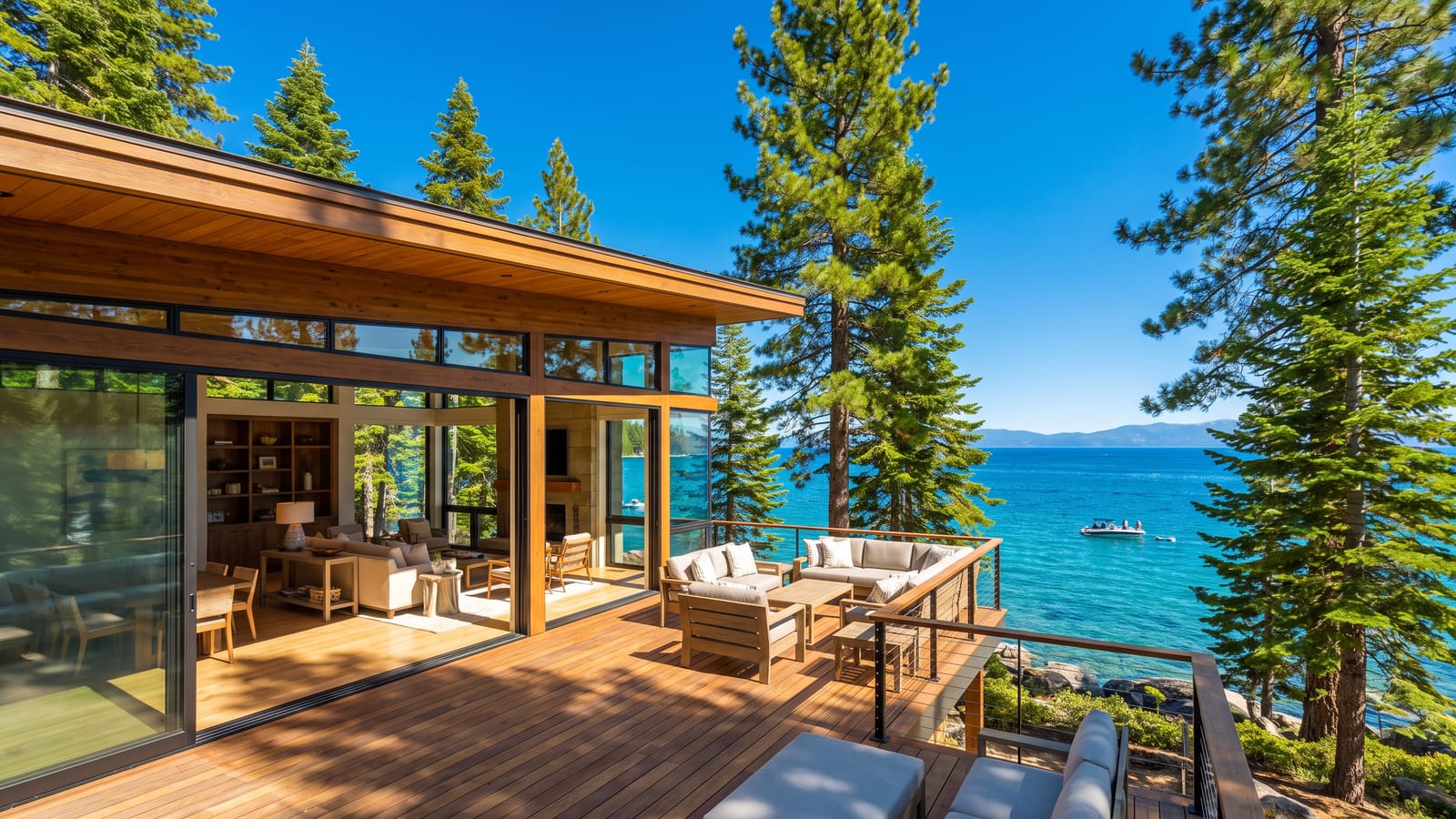
How Does Washoe County Regulate Short-Term Rentals in Incline Village and Crystal Bay?
According to Washoe County, short-term rentals across unincorporated Washoe — which includes all of Incline Village and Crystal Bay on the Tahoe north shore — operate under the county's short-term rental ordinance, the 8-A lineage first adopted in 2021 and amended several times since. The program is built around occupancy-based tiers rather than a single flat rule: a smaller, owner-occupied operation renting only a handful of nights sits in the lightest tier, while a non-owner-occupied whole-home rental carries the fuller compliance load — safety inspection, permit, annual renewal, and the full good-neighbor rule set.
The occupancy math is the piece that surprises buyers, because it is not a simple "two per bedroom" rule. According to Washoe County's published STR materials, the permitted occupant load is calculated at roughly one occupant per 200 square feet of habitable space — so a 2,000-square-foot cabin pencils very differently than its bedroom count alone would suggest, and advertising above your permitted number is itself a violation. Layered on top are the Tahoe-basin specifics that flatlanders never see coming: one on-site parking space for every four occupants, mandatory bear-proof trash enclosures, snow-season parking rules, and quiet hours built to answer the complaint every one of these programs was really written to solve — the party house.
Unlike its south-shore neighbor, Washoe County does not run a fixed numeric cap on Incline Village and Crystal Bay permits — the tier system and the physical constraints (parking, septic, defensible space) do the limiting instead. That is a real distinction from Douglas County, and I walk buyers through it constantly, because "Tahoe is capped" is true on one shore and misleading on the other. Still, the county has tightened the program repeatedly, so treat every threshold here as a snapshot and verify the current ordinance with the county's Community Services Department before you underwrite.
What Fire, Parking, and Inspection Rules Apply in the Tahoe Basin?
This is wildfire country on a lake with a fragile clarity mandate, so the safety layer is heavier than anywhere in the valley. According to the North Lake Tahoe Fire Protection District, every short-term rental application in Incline Village and Crystal Bay triggers a defensible-space inspection — the fire district physically evaluates vegetation clearance, ember-resistant zones, and access before the county will issue or renew a permit. Fail the defensible-space review and there is no permit, full stop, which means the wildfire-hardening work belongs in your acquisition budget, not your someday list.
Down on the Douglas County south shore, the Tahoe Douglas Fire Protection District plays the parallel role, folding fire and life-safety inspection into the Vacation Home Rental permitting process at Zephyr Cove, Stateline, and Glenbrook. Both districts also enforce the environmental overlay administered by the Tahoe Regional Planning Agency, whose coverage, grading, and best-management-practice rules constrain what you can build, pave, and clear on a Tahoe parcel regardless of what the county STR ordinance allows. In my experience, the safety and TRPA layers are where deferred maintenance turns into a permit denial — a house that "shows beautifully" can still fail the inspection that stands between the buyer and legal operation. If you are shopping the north shore, filter the Incline Village homes for sale board for updated, inspection-ready inventory rather than fixer cabins that carry hidden compliance cost.
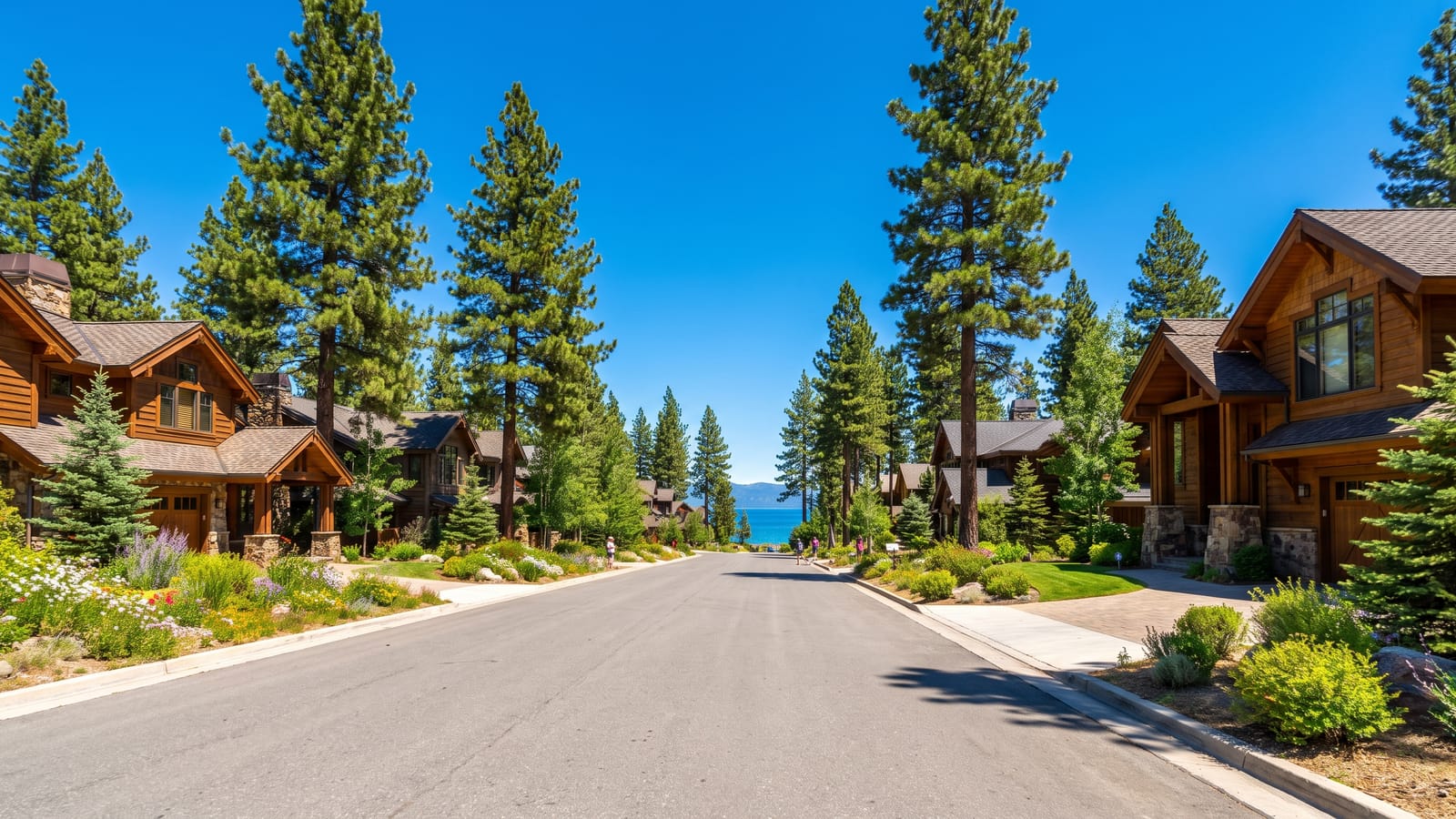
How Does Douglas County's Vacation Home Rental (VHR) Program Work?
The south shore is a different world, and the difference is a hard number. According to Douglas County, short-term rentals in the Tahoe Township — Zephyr Cove, Stateline, Glenbrook, and the surrounding Kingsbury area — operate as Vacation Home Rentals (VHRs) under a dedicated permit program, and that program is capped at 600 total permits across the entire township. This is the single most important fact on the Nevada south shore: the county is not issuing permits toward an open horizon; it is issuing them toward a ceiling.
The VHR permit stack rhymes with Washoe's on the compliance side — application, fire and life-safety inspection, occupancy limits, a certified local contact who can respond around the clock, parking minimums, noise and trash standards, posted permit information, and annual renewal. But Douglas layers two constraints Washoe does not. First, the 600-permit township cap. Second, a per-neighborhood density limit — the county caps the percentage of homes in each neighborhood area that may hold a VHR, so a specific street can be "full" even while the countywide count still has room. According to Douglas County's VHR materials, neighborhoods are classified as constrained (full) or unconstrained, and the two classes have entirely different application paths.
Here is how the two Nevada-shore programs compare on the dimensions that decide deals:
| Rule dimension | Washoe County (north shore) | Douglas County (south shore) |
|---|---|---|
| Covers | Incline Village, Crystal Bay | Zephyr Cove, Stateline, Glenbrook |
| Program name | Short-Term Rental (Ordinance 8-A lineage) | Vacation Home Rental (VHR) |
| Hard permit cap? | No fixed number — occupancy-tier limited | Yes — 600 township cap, 556 issued (May 2026) |
| Neighborhood density limit? | Not a fixed percentage — verify current rule | Yes — constrained vs unconstrained by area |
| Occupancy framework | About 1 occupant per 200 sq ft habitable | Set by permit conditions — verify per parcel |
| Fire authority | North Lake Tahoe Fire — defensible-space review | Tahoe Douglas Fire — VHR safety inspection |
| Permit transfers at sale? | No — buyer re-applies | No — permit becomes void, buyer re-applies |
Why Is the Douglas County 600-Permit Cap the Most Important Number in Nevada-Tahoe STR?
Because scarcity changes everything about how you underwrite a purchase. According to Douglas County's published VHR permit status, 556 of the 600 township permits were issued as of May 11, 2026 — meaning roughly 44 permits remained available countywide, and only in the neighborhoods still classified as unconstrained. In the constrained neighborhoods, no new permit is available at any price; the only path is a waitlist, which carries an annual fee to hold your place and, when a slot eventually opens, a 60-day window to satisfy every permit condition and pay the fees.
Run that logic through a purchase and the consequence is stark. If you buy a Zephyr Cove or Stateline home in a full neighborhood intending to rent it, and the seller's permit dies at closing (it will — more on that next), you may not be able to re-permit the property at all. You would own a beautiful south-shore home and a rental thesis you cannot legally execute, waiting on a list. Meanwhile a home in an unconstrained neighborhood, or one where the neighborhood density still has headroom, carries a permit path that a full-neighborhood twin does not — and that difference can be worth six or seven figures in enterprise value on otherwise identical houses. This is the entire ballgame on the Douglas side, and it is why "verify permit availability by neighborhood" is not boilerplate. That single confirmation call to the county has kept more than one of our buyers from a very expensive mistake.

Do Short-Term Rental Permits Transfer When a Tahoe Property Sells?
No — and on the Nevada shore this is the rule that reprices deals. According to Douglas County, a VHR permit is tied to the owner, not the parcel: when the property sells, the permit becomes null and void, and the new owner must apply fresh. Washoe County works the same way for Incline Village and Crystal Bay — the permit does not ride along with the deed. In both counties the buyer re-applies from zero, pays fresh fees, passes a fresh inspection, and must satisfy the rules in force on the day of application, not the rules that existed when the seller was first permitted.
That is manageable on the Washoe north shore, where there is no numeric cap and re-permitting is largely a compliance exercise. It is potentially fatal on the Douglas south shore, where the permit dying at sale plus a full neighborhood equals a property that legally cannot be re-permitted by its new owner. The cruel irony is that a seller's active, revenue-producing permit — the very thing that makes the listing attractive — evaporates at closing, and whether the buyer can replace it depends entirely on the neighborhood's constraint status on that day.
That reshapes both sides of the transaction:
- Sellers: you cannot sell your permit, but you can sell everything that made it valuable — the booking history, the reviews, the furnishings, the local-contact relationship, and a documented profile showing the neighborhood still supports a permit. A seller who assembles that package markets a small hospitality business; a seller who does not markets an empty house. Start with a free home value estimate that prices both lenses, then talk to our listing team.
- Buyers: never pay an operating-business premium for revenue you may not legally be able to reproduce. Build the eligibility file first — county, neighborhood constraint status, current ordinance, HOA and CC&R review, permit availability — and write the offer with your eyes open. Our buyer's team runs this checklist before clients write on any Tahoe STR candidate.
Why Is an Available Permit Slot the Most Coveted Asset on the Lake?
Because on the capped south shore, the slot is the scarce thing — not the house. There are always more beautiful Tahoe cabins than there are permits to rent them, and in a full Douglas County neighborhood the ratio is fixed by ordinance. So the real asset an investor is chasing is not the granite countertops; it is a parcel whose neighborhood still has permit headroom, or a credible path to one through the waitlist. In my experience, buyers routinely fixate on the finishes and skip the one question that actually determines whether the property can produce income at all.
There is a nuance worth stating plainly, because it is exactly the kind of thing that gets garbled at the closing table: the permit itself does not transfer, but the practical value of buying in a still-open neighborhood — or of the county maintaining the neighborhood's existing density when a permitted home turns over — is real, and it is precisely what you should be verifying rather than assuming. Do not assume a permitted seller means a permittable buyer; and do not assume a full neighborhood is a dead end until you have confirmed the waitlist mechanics with Douglas County directly. The right agent turns "the permit conveys, right?" into a written answer from the county before you remove contingencies. Across the 9,600+ closings our team has represented, the deals that go sideways are almost always the ones where someone assumed a regulatory fact instead of confirming it.
What Lodging and Transient Taxes Do Nevada-Tahoe Hosts Owe?
Both Nevada shores levy transient lodging (occupancy) tax on short stays, and the operator is responsible for collecting and remitting it even when a platform advertises the booking. On the Tahoe basin, the combined transient occupancy rate on both the Washoe and Douglas sides runs at roughly 13% of nightly revenue — collected from the guest, but registered and remitted by you. According to the Nevada Department of Taxation, state-level tax obligations for lodging operators apply regardless of which platform booked the stay, and the county and township administer the local lodging tax on top of that.
The revenue those taxes fund is also the reason Tahoe demand is durable. According to Travel Nevada, Lake Tahoe is one of the state's marquee year-round destinations — summer beach and boating weeks, winter ski demand at Diamond Peak and the Heavenly corridor above Stateline, and shoulder-season events keep the calendar full in a way few markets match. Here is the tax and fee picture hosts should budget for on the Nevada shore:
| Obligation | What it typically involves | Who pays / why it matters |
|---|---|---|
| Transient occupancy (lodging) tax | Roughly 13% of nightly revenue, both shores | Collected from guest; you register and remit |
| Permit and license fees | Application, inspection, and annual renewal | Several hundred dollars a year — a rounding error on gross |
| Waitlist fee (Douglas, full areas) | Annual fee to hold a waitlist position | The price of admission where the cap is full |
| Fire / defensible-space work | Vegetation clearance, ember zones, access | No inspection pass, no permit — budget it upfront |
| Federal income tax on rental | Depreciation, furnishings, short-stay rules | IRS Pub 527 governs; involve your CPA before closing |
| Bear-proof trash and TRPA compliance | Enclosures, coverage, best-management practices | Environmental overlay applies regardless of STR rules |
On the federal side, according to IRS Publication 527, residential rental property carries its own depreciation and reporting rules, and short-stay operations with substantial services can be treated differently than a passive rental — a distinction your CPA should sort before you close, not after your first tax season.
What Do Neighbor-Notice, Noise, and Good-Neighbor Rules Require?
Every one of these programs was written to answer the same complaint: the party house that turns a quiet lakeshore street into a rotating event venue. So both counties lean on a common set of livability rules. The core requirements cluster around occupancy caps tied to square footage or permit conditions, a certified local contact reachable 24/7 (an out-of-state owner self-managing by phone usually fails this test), off-street parking minimums scaled to occupancy, enforced quiet hours, restrictions on weddings and large events, and posted permit information inside the unit.
Enforcement leans heavily on the local-contact requirement because it is the mechanism that actually resolves complaints. When a neighbor calls at 11 p.m. about noise or illegal parking, the county expects a real person to respond quickly — and a pattern of unresolved complaints is what puts a permit at risk of non-renewal or revocation. According to Washoe County, the north-shore program pairs those good-neighbor standards with the defensible-space and parking rules unique to the Tahoe basin; Douglas County's VHR program does the same on the south shore, with the added weight of the density cap behind every enforcement decision. The through-line is simple: these are hospitality businesses operating in residential neighborhoods, and the rules exist to keep them from behaving like anything else. Our buyer's team reviews the good-neighbor and local-contact requirements against the actual parcel before a client writes, because a management plan that fails the 24/7-response test can sink an otherwise clean Lake Tahoe purchase.
What Happens If You Operate a Tahoe STR Without a Permit?
Enforcement on the Nevada shore is real and it has teeth, and the stakes are higher here than in the valley precisely because of the caps. The general architecture in both counties: an unpermitted operation draws a complaint or is flagged through platform monitoring, a notice follows, and continued operation stacks administrative penalties that in some scenarios can reach four figures per day — with a violation history that follows the address into any future application. In a capped, density-managed jurisdiction like Douglas County, an enforcement history is especially poisonous, because it can compromise the very permit path the property depends on.
Run the math on why cutting corners fails. A permitted operator might spend a few hundred to fifteen hundred dollars a year across permit, license, and inspection. An unpermitted operator grossing $60,000 or $80,000 on a premium Tahoe cabin risks penalties that can consume weeks of revenue in days, platform delisting mid-season, and — the part investors underrate — a compromised exit, because a buyer's agent doing diligence will find the enforcement history and reprice the property accordingly. Across the closings our team has represented, the discount on a property with a regulatory cloud always exceeds whatever the seller saved by skipping the process. Permits are cheap. Enforcement histories are expensive, and on a capped lake they can be permanent. If you are weighing a listing with a murky compliance past, start with a candid home value estimate so the regulatory discount is priced in before you go to market — our listing team can pressure-test it against comparable Douglas and Washoe sales.
Is a Nevada-Tahoe Short-Term Rental Still Worth It Given the Caps?
It depends on the shore, the neighborhood, and — more than anything — on whether you can secure a permit path at all. Where you can, the economics on the Nevada shore are genuinely different from the valley, because Tahoe's nightly rates and the absence of Nevada state income tax on the income both work in the operator's favor. Here is an honest modeled comparison on a hypothetical $1,199,000 Incline Village purchase (the current median), framed as an illustrative scenario, not a projection — your actuals will differ, and tools like AirDNA's Lake Tahoe market data can pressure-test nightly-rate assumptions for a specific address:
| Line item | Short-term rental | Long-term rental |
|---|---|---|
| Gross annual revenue | About $95,000 (modeled $650 nightly at 40% occupancy) | About $54,000 (modeled $4,500 monthly) |
| Management cost | 20–30% of revenue, or your weekends | 8–10% of revenue |
| Cleaning, supplies, utilities | $14,000–$22,000 owner-paid | Tenant pays most utilities |
| Furnishing (year one) | $30,000–$60,000 upfront | $0 |
| Permits, licenses, inspections | Several hundred to $1,500 per year | None beyond standard requirements |
| Regulatory risk | Permit non-renewal, cap and density limits | Minimal |
| Vacancy behavior | Seasonal swings, ski and summer peaks | Stable with annual leases |
Read that table coldly and the pattern is clear: the STR can gross roughly $40,000 more per year on a premium Incline home, but it spends a large share of that edge on management, cleaning, furnishing amortization, and compliance — and it carries regulatory risk the long-term lease simply does not. The STR wins decisively for owners who self-manage well, who value personal use of a Tahoe home, and who secure a property with a clean permit path. The long-term lease wins for passive investors and for anyone who cannot confirm permit availability. The smartest Tahoe underwriting I see blends the two: buy a home that pencils acceptably as a long-term or seasonal rental first, so the STR upside is a bonus rather than a requirement. Many Incline buyers also blend personal use with limited rental windows — which changes both the permit tier and the tax picture, and is worth reading alongside our guides to Incline Village's Nevada tax advantages and buying a second home in Incline Village.
How Does the Nevada Shore Compare to the California Side and the Reno Metro?
The Nevada shore's whole pitch is regulatory. Across the state line, the California side of Lake Tahoe — the City of South Lake Tahoe and Placer County — runs its own, generally tighter STR regime, and the City of South Lake Tahoe in particular has operated under aggressive caps and phase-downs in residential zones. That California posture is a big part of why Nevada-side inventory commands the premium it does: buyers who want to own and rent on the lake increasingly look to the Nevada shore, where the rules, while real, are more workable and the income is not exposed to California income tax.
Against the Reno metro down the hill, the trade is scale for rate. A Reno STR pencils at a $599,000 median with no numeric cap and event-driven urban demand; an Incline Village STR costs twice as much and lives inside a tighter, more scenic, higher-nightly-rate market where the Reno-Tahoe overflow relationship runs in your favor. Neither is strictly better — they are different businesses, and the right answer depends on capital, appetite for management, and whether you want a lake asset you can also use. For the full metro breakdown, our Reno and Washoe County STR guide covers the three valley rulebooks, and the Northern Nevada communities hub maps how the whole region fits together. If a cabin is the goal, browse Lake Tahoe cabins for sale and Crystal Bay listings to see the north-shore range, or scan the full Lake Tahoe homes for sale board across both shores.

How Should You Buy or Sell a Permitted Tahoe STR in Nevada?
Treat it as a business transaction wearing a cabin costume. The sequence my team runs on the buy side: confirm the county and, on the Douglas south shore, the exact neighborhood constraint status first; pull the current ordinance and confirm permit availability directly with the county; review HOA and CC&R documents, because private covenants can ban short stays regardless of what the county allows; write the offer with diligence room for the permit question; verify any revenue claims against platform payout statements and lodging-tax filings, not screenshots; and price the furniture package explicitly if it conveys. Remember that you are underwriting the right to re-permit, not the seller's existing permit — because that permit will not survive closing.
On the sell side, assemble the eligibility file yourself before listing — county and neighborhood confirmation, your permit history, inspection records, twelve-plus months of payout statements, lodging-tax filings, and a furnishings inventory — and lean on our Lake Tahoe sell-my-house team to package it. A documented operating history marketed to the right buyer pool is how a $1,199,000 Incline home sells like a home plus a business. Undocumented, the same property sells on comps alone. Either direction, the escrow itself has STR-specific pressure points — furniture-and-equipment allocation language, booking-calendar handoffs, prorating future reservations, closing-date timing against peak season — that only an agent who has closed these before will flag in time. Start your own search on our Reno-Tahoe search platform, or tell us what you're targeting and we will flag eligible inventory the moment it lists.
Why Do Nevada-Tahoe Investors Call Nevada Real Estate Group?
Because two capped rulebooks punish generalists. The permit that dies at closing, the Douglas neighborhood that is full while the county still shows headroom, the defensible-space inspection that fails a beautiful cabin, the CC&R clause that overrides the county ordinance — each one is routine for us and a landmine for an agent who touches one Tahoe investment property a year.
Nevada Real Estate Group is the #1-ranked real estate team in Nevada, with $4.85 billion+ in career sales volume, 9,600+ closed transactions, 150+ agents, and 789 closings in 2025 alone — with a Northern Nevada team on the ground in Reno, Sparks, and the Tahoe basin every day. We pull the live NNRMLS data (like the 101-active, $1,199,000-median Incline picture in this guide), run the county-and-neighborhood eligibility checks parcel by parcel, and bring the lender, CPA, and property-management introductions that make Tahoe STR deals close clean. We serve investors statewide — Las Vegas (702) 637-1759 · Reno (775) 277-2120 — with one standard on both ends of the state.
Buying a Tahoe STR candidate? We will confirm the neighborhood's permit path before you write. Selling a permitted rental? We will package the operating history so it sells as a business. Call or text (775) 277-2120, start your property search, or tell us what you're looking for.
Frequently Asked Questions
Does Incline Village allow short-term rentals in 2026?
Yes. Incline Village and Crystal Bay sit in unincorporated Washoe County, which permits short-term rentals under its occupancy-tier ordinance — with a fire-district defensible-space inspection, occupancy limits calculated at roughly one guest per 200 square feet of habitable space, Tahoe-basin parking rules of about one space per four occupants, bear-proof trash requirements, a 24/7 local contact, and annual renewal. Washoe does not run a fixed numeric permit cap the way Douglas County does, but the program has tightened repeatedly, so verify current requirements with the county before you underwrite a purchase.
How does Washoe County's short-term rental cap and tier system work?
Washoe County does not impose a single hard number cap on Incline Village and Crystal Bay permits; instead it uses an occupancy-based tier structure paired with physical constraints — parking, defensible space, septic capacity, and the roughly one-occupant-per-200-square-feet load calculation — to limit intensity. Owner-occupied, low-frequency rentals sit in the lightest tier; non-owner-occupied whole-home rentals carry the fuller compliance load. That is a meaningful contrast with the Douglas County south shore, which does run a hard 600-permit township cap.
What are the Douglas County VHR rules at Zephyr Cove and Stateline?
Douglas County regulates south-shore rentals as Vacation Home Rentals (VHRs) under a program capped at 600 total permits across the Tahoe Township, which covers Zephyr Cove, Stateline, and Glenbrook. As of May 11, 2026, 556 permits were issued, leaving roughly 44 available and only in neighborhoods still classified as unconstrained. Full neighborhoods offer only a paid waitlist. Requirements include fire and life-safety inspection, occupancy and parking limits, a certified 24/7 local contact, transient lodging tax, and annual renewal — verify current neighborhood status directly with the county.
Do Lake Tahoe short-term rental permits transfer when a property sells?
No — in both Washoe and Douglas counties, permits belong to the operator and are extinguished at sale. The buyer applies fresh after closing and must satisfy the rules in force on the day of application. This is especially consequential on the Douglas south shore, where a permit dying at sale in a full, density-capped neighborhood can mean the new owner legally cannot re-permit the property at all. Never pay an operating-business premium until you have independently confirmed the address can realistically be re-permitted under today's rules.
What lodging or transient taxes apply to a Nevada-Tahoe short-term rental?
Both Nevada shores levy transient occupancy (lodging) tax on short stays, running at roughly 13% of nightly revenue in the Tahoe basin. The tax is collected from the guest, but registration and remittance are the operator's responsibility, and the obligation applies regardless of which platform advertised the booking. Unremitted lodging tax surfaces in audits and in buyer due diligence at resale, so register before your first booking and verify current rates and filing procedures with the county and the Nevada Department of Taxation.
What are the fines for running an unpermitted Tahoe vacation rental?
Each county sets its own penalty schedule and has amended it over time, but the architecture is consistent: notices followed by administrative penalties that can stack per day of continued operation, in some scenarios reaching four figures daily, plus platform delisting and a violation history that follows the address. On the capped Douglas south shore an enforcement history is especially damaging, because it can compromise the property's future permit path. Against permit costs of a few hundred to fifteen hundred dollars a year, unpermitted operation is a badly mispriced risk.
Is a Lake Tahoe short-term rental still worth it given the permit caps?
Where you can secure a permit path, a well-located Nevada-shore STR can gross meaningfully more than a long-term lease — our modeled Incline scenario shows about $95,000 versus about $54,000 — helped by premium nightly rates and no Nevada state income tax. But management, cleaning, furnishing, and compliance consume much of the edge, and on the Douglas south shore the binding question is whether the neighborhood even has permit availability. The strongest approach buys a home that pencils as a seasonal or long-term rental first, so the STR upside is a bonus rather than a requirement.
Which Sources Inform This Lake Tahoe Short-Term Rental Guide?
Live inventory and pricing figures come from Nevada Real Estate Group's NNRMLS feed, pulled July 12, 2026 (101 Incline Village actives at a $1,199,000 median with 18 furnished and 26 trailing-90-day sales at a $1,054,500 median; 6 Crystal Bay actives at $7,947,500; 31 Zephyr Cove actives at $2,195,000; 87 Stateline actives at $849,000; 18 Glenbrook actives at $4,522,500). Regulatory, tax, and market context draws on these authorities — and because both county STR programs have been amended since adoption, verify the current ordinance and neighborhood status with each county before acting:
- Washoe County — north-shore short-term rental ordinance, occupancy tiers, and Community Services Department resources
- Douglas County — south-shore Vacation Home Rental program, 600-permit township cap, and neighborhood density limits
- North Lake Tahoe Fire Protection District — defensible-space inspection for Incline Village and Crystal Bay rentals
- Tahoe Douglas Fire Protection District — VHR fire and life-safety inspection on the south shore
- Tahoe Regional Planning Agency — basin-wide environmental, coverage, and best-management-practice rules
- Nevada Legislature — Assembly Bill 363 (2021) — the state STR framework that applied only to counties over 700,000 population
- Nevada Department of Taxation — state tax obligations for lodging operators
- Travel Nevada — Lake Tahoe visitor demand and destination context
- U.S. Census Bureau — Nevada QuickFacts — housing and population baselines
- IRS Publication 527 — residential rental property tax treatment
- Freddie Mac Primary Mortgage Market Survey — mortgage rate benchmarks behind the underwriting math
- AirDNA — Lake Tahoe Market Data — nightly-rate and occupancy verification tooling
Ready to run the numbers on a specific address? Call or text Nevada Real Estate Group at (775) 277-2120 — the short-term rental transaction team for Incline Village, the Lake Tahoe basin, and the Douglas County south shore.