

Every year in Henderson, I watch buyers fall in love with a home — gorgeous community pool, manicured landscaping, guard gate — and then discover three months after closing that the HOA just voted a $12,000 special assessment to replace the aging roofs on common structures. It's not fraud. It's not even uncommon. It's what happens when buyers skip the reserve study during due diligence. Nevada law gives you the tools to catch this before you sign — but you have to know what to look for.
Henderson is one of the most HOA-dense cities in the country. Virtually every community built after 1990 operates under a homeowners association governed by Nevada Revised Statutes Chapter 116 — the Nevada Common-Interest Ownership Act. The law is buyer-friendly on paper: sellers must furnish a resale package within 10 calendar days of request, and you get a 5-calendar-day cancellation window after receiving it. What the law doesn't do is interpret the documents for you. That's this guide's job. (Thinking about other Las Vegas valley communities with HOA structures? Our community search lets you filter by city and master plan.)
Across our 9,600+ closings — including hundreds inside Henderson master plans like Anthem, Green Valley Ranch, Seven Hills, Cadence, and Inspirada — our team has reviewed enough reserve studies to spot the warning patterns immediately. A percent-funded ratio under 30% is a nearly-certain predictor of a special assessment within two to five years. Outstanding litigation against the HOA almost always triggers an insurance deductible that becomes an assessment. And layered communities — where a sub-HOA, master HOA, and Special Improvement District (SID) fees all stack — can push your true annual carrying cost $2,000 to $8,000 higher than the marketed dues. This guide walks you through every checkpoint. If you're a first-time buyer navigating Henderson HOA documents for the first time, bookmark this page — and call us at (702) 637-1759 when you're ready to review a specific package.
Before closing on any Henderson HOA home, review the reserve study and confirm the percent-funded ratio is above 30% (70%+ is strong). Nevada NRS 116.4109 requires sellers to deliver the resale package within 10 days; you then have 5 calendar days to cancel. Special assessments hit when reserves run dry — commonly $5,000 to $30,000+ per owner for roof, road, or pool replacements. Request 12 months of board minutes, the operating budget, dues-increase history, pending litigation, and delinquency rate before you waive due diligence.
- NRS 116.4109 gives buyers 5 calendar days to cancel after receiving the resale package — use every day to review the reserve study.
- Percent-funded under 30% = high special-assessment risk; 70%+ is the financially healthy threshold per CAI standards.
- Anthem, Green Valley Ranch, Cadence, and Inspirada carry layered fee structures — sub-HOA + master HOA + potential SID/LID bonds legally separate from HOA dues.
- Henderson special assessments range from $2,500 (irrigation) to $30,000+ (elevator or major amenity rebuild) per unit.
- Call the Nevada HOA Ombudsman at (702) 486-4480 if the HOA misses the 10-day document delivery deadline.
Curious what's for sale right now? Henderson homes for sale has every live MLS listing with prices and instant filters.
What Is a Henderson HOA Special Assessment and Why Do They Happen?
A special assessment is a one-time fee the HOA board levies on every owner when the reserve fund can't cover a major capital expenditure. Special assessments in Henderson communities typically range from $2,500 to $30,000+ per unit depending on the scale of the project and total number of homes sharing the cost. Common triggers include aging roofs on common structures, road or parking lot resurfacing, pool replastering, elevator replacement in mid-rise condos, paint-and-stucco cycles on common exterior buildings, and HVAC replacement in clubhouses.
The core problem is math: when a community underestimates how fast components depreciate or consistently sets dues too low to fund replacement reserves, the gap compounds for years until a major component reaches the end of its life cycle. According to Community Associations Institute (CAI), roughly 70% of HOAs nationwide are considered underfunded relative to their reserve needs — and Henderson communities built in the 1990s through early 2000s are hitting their first full replacement cycle right now. Roofs installed in 2001 need replacement in 2026. Pools replastered in 2003 need it again. The bills come due whether the reserve fund can cover them or not.
What Does Nevada Law Require HOAs to Disclose Before Closing?
Nevada provides the strongest HOA disclosure framework in the American West. Under NRS 116.4109, a seller must furnish a resale package — formally called a "resale certificate" — within 10 calendar days of a buyer's written request. The resale package must include the current operating budget, the reserve study and funding plan, a statement of the reserve balance and any pending special assessments, the CC&Rs and bylaws, the rules and regulations, copies of the most recent financial statements, and any pending litigation against the association. Once you receive the package, you have 5 calendar days to rescind the purchase contract with no penalty — this is a statutory right, not a contract negotiation point.
According to the Nevada Real Estate Division, the Ombudsman for Common-Interest Communities & Condominium Hotels fields thousands of complaints annually about HOAs failing to deliver required documents. If your seller's HOA misses the 10-day window, call the Ombudsman directly at (702) 486-4480 — non-compliance by the HOA is a statutory violation. NRS 116.31152 separately requires every Nevada HOA to maintain a current reserve study and funding plan, reviewed at least every three years, to estimate the remaining useful life and replacement cost of all major components.
How Do You Read a Henderson HOA Reserve Study?
The reserve study is the single most important document in your resale package. It's a professional engineer's report — typically 40 to 120 pages — that catalogues every major common-area component, estimates its remaining useful life, projects its replacement cost, and models how much money the HOA needs to set aside each month to be ready when the bill comes. The number you want to find immediately is the percent-funded ratio: what percentage of the theoretical reserve balance does the HOA actually hold?
According to CAI reserve study standards, percent-funded ratios break into three risk zones. A ratio above 70% is considered "fully funded" — the HOA has the capital to cover near-term replacements without a special assessment under normal conditions. A ratio between 30% and 70% is "threshold" — moderate risk; dues increases are likely; a single large unexpected repair could trigger a small to mid-size assessment. A ratio under 30% is "significantly underfunded" — high probability of a special assessment in the next two to five years; at under 15%, assessments are essentially guaranteed unless dues increase dramatically. In Across our 9,600+ closings at Nevada Real Estate Group, the most painful buyer surprises came from communities in the 15%–25% funded range where dues hadn't been raised in a decade.
What Are the Red Flags in a Henderson HOA Resale Package?
Beyond percent-funded ratio, five additional red flags appear consistently in the resale packages of communities that later levy assessments. First, check the dues-increase history: if an HOA has held dues flat for five or more years in a row, the reserve contribution almost certainly hasn't kept pace with inflation — components cost 18%–35% more to replace today than they did in 2019, per Bureau of Labor Statistics construction cost indices. Second, review the board-meeting minutes for the last 12 months — any reference to "deferred projects," "contractor estimates," or "special assessment committee" signals a vote is pending.
Third, look for pending litigation: an HOA defending a construction-defect lawsuit or neighbor dispute typically faces insurance deductibles of $25,000 to $100,000+ that get passed directly to owners. Fourth, examine the delinquency rate: if more than 5% of owners are 60+ days past due on dues, the HOA's operating income is impaired and the reserve contribution is likely being shorted to cover day-to-day expenses. Fifth, confirm insurance adequacy: the resale package must disclose the master policy carrier and coverage limits. According to CFPB homeowner guidance, your mortgage lender may require the master policy to cover 100% of replacement cost on all common structures — a gap here can block your financing.
Which Henderson Master Plans Carry the Most Layered Fee Structures?
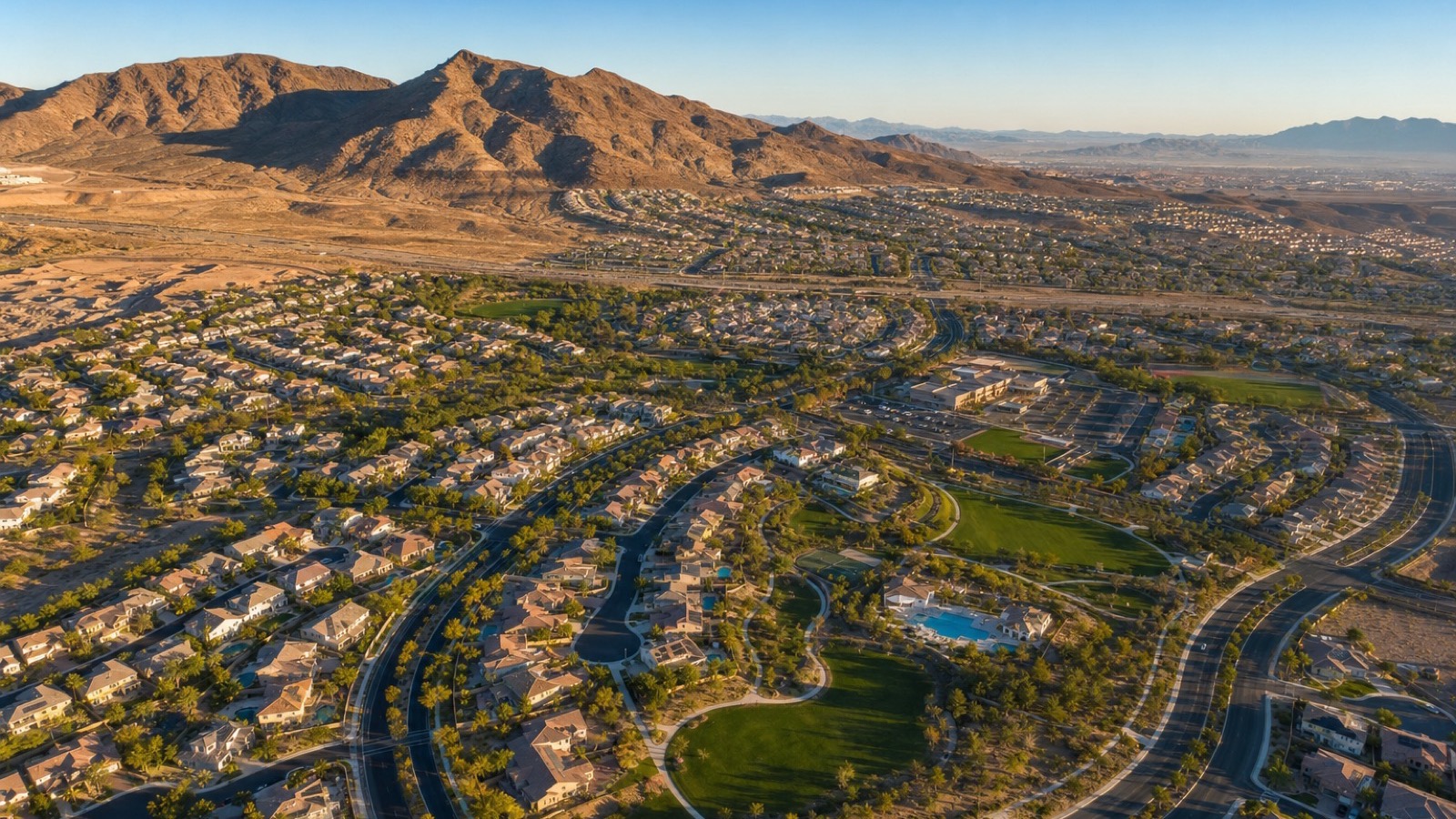
Henderson's major master plans use layered fee structures that can make the true carrying cost significantly higher than the headline HOA dues. The layering typically combines a sub-association (your immediate neighborhood HOA covering your street's private gates, landscaping, and pools), a master association (the broader master plan covering roads, perimeter landscaping, signature entrances, and shared amenities), and in some communities a Special Improvement District (SID) or Local Improvement District (LID) assessment — a government bond repayment that funds original infrastructure and is legally separate from HOA dues but shows up on your property tax bill.
According to City of Henderson finance records, SID bonds in communities like Cadence and Inspirada can add $800 to $2,400 per year per home on top of HOA dues — an obligation that runs for 20 to 30 years from when the bond was issued. For a full breakdown of SID and LID fees in Cadence and Inspirada specifically, see our dedicated guide at /blog/sid-lid-fees-cadence-inspirada-henderson-2026/. The communities below carry the most complex layering in Henderson.
| Dimension | Anthem Country Club | Green Valley Ranch | Cadence / Inspirada | Seven Hills |
|---|---|---|---|---|
| Sub-HOA monthly | $70–$320+ | $45–$175 | $55–$160 | $60–$200 |
| Master HOA monthly | $55–$95 | $30–$55 | $35–$65 | $50–$80 |
| SID/LID annual | None | None | $800–$2,400 | None |
| Guard-gated premium | Yes (CC) | Partial enclaves | No | Yes (enclaves) |
| Reserve study risk (typical) | Moderate (90s build-out) | Moderate–High (oldest stock) | Lower (newer) | Moderate |
| Typical total monthly carry | $125–$415+ | $75–$230 | $90–$225 + SID | $110–$280 |
What Percent-Funded Ratio Should You Require Before Buying?
Our firm's standard recommendation — tested across hundreds of Henderson transactions as the #1 real estate team in Nevada — is to require a percent-funded ratio of at least 50% as a condition of moving forward without negotiating a concession from the seller. Below 50%, we advise buyers to either (a) request a seller concession equal to the estimated assessment liability — typically calculated as your unit's pro-rata share of the funding shortfall — or (b) price the special assessment risk into your offer with a corresponding price reduction.
Below 30%, we advise buyers to seriously consider walking during the 5-day cancellation window unless the community has a documented, board-approved plan to correct the shortfall through a dues increase schedule and the timeline makes sense. According to the Nevada Real Estate Division, boards are legally permitted to levy a special assessment up to 5% of the annual operating budget without a unit-owner vote — above that threshold, a majority of owners must approve. That protection has limits: a community with a $2M operating budget can hit every owner for $100,000 total — or $500 per home in a 200-unit community — without a vote. Large projects routinely require multiple sequential assessments to skirt the vote threshold.
How Should You Negotiate When the Reserve Study Shows Risk?
When the reserve study reveals a below-threshold percent-funded ratio, you have three negotiation levers. Whether you're buying a home in Henderson as a primary residence or investment, the cleanest lever is a seller credit at closing — a dollar amount equal to your unit's pro-rata share of the reserve shortfall. To calculate this: take the theoretical fully-funded reserve balance from the study, subtract the actual current balance, and divide by the total number of units. That's your structural exposure. If the community is $1.5M underfunded across 300 units, your share is $5,000 — a reasonable credit request.
The second lever is a price reduction to absorb the anticipated assessment. This approach makes sense when the shortfall is large enough that a seller credit would exceed 2% of the purchase price (some lenders cap seller credits below the concession amount). The third option — used infrequently but sometimes necessary — is to require the seller to pay any special assessment that has already been voted by the board, even if payment is deferred past closing. This is a negotiation point sellers should understand before listing a home in an underfunded HOA. Under Nevada law, a special assessment is assessed to the unit, not the owner — meaning it transfers with the deed unless explicitly addressed in the purchase agreement. According to Nevada Revised Statutes, the association can record a lien against the property for unpaid assessments, which can affect your title search. Your title company should flag any filed assessment liens, but pending (pre-vote) assessments won't appear on title — only the resale package reveals them.
What Are SID and LID Fees and How Do They Differ from HOA Dues?
Special Improvement Districts (SIDs) and Local Improvement Districts (LIDs) are government-issued revenue bonds used to finance original infrastructure in new developments — roads, sewer lines, water mains, street lighting, and drainage systems. In Henderson, SIDs were extensively used in the buildout of Cadence, Inspirada, and several Seven Hills sub-sections to fund infrastructure the builder didn't want to carry. The bonds are repaid over 20 to 30 years by the homeowners within the district boundary — typically $600 to $2,400 per year per parcel, assessed as a line item on your Clark County property tax bill.
The critical distinction: SID/LID fees are not part of your HOA dues and are not covered by the HOA reserve fund. They're a separate legal obligation that survives the HOA entirely. According to Clark County Assessor records, a home in parts of Cadence may carry both a monthly HOA sub-fee of $80, a master HOA fee of $55, and an annual SID assessment of $1,400 — making the all-in annual HOA/district carry approximately $3,420 before any special assessment. New buyers frequently calculate only the marketed HOA dues and underestimate carrying costs by $1,200 to $2,400 per year. Ask your NREG agent to pull the Clark County Assessor parcel detail — SID/LID obligations appear directly on the tax screen.
What Do HOA Reserve Studies Look Like in Older Henderson Communities?
Green Valley Ranch, Henderson's oldest major master plan (primary build-out 1984–2000), presents the most complex reserve picture of any Henderson community because its common components — pools, clubhouses, road surfaces, perimeter walls — are now 25 to 40 years old and entering or past their first full replacement cycle. According to U.S. Census Bureau data, Green Valley Ranch has a median housing age well above the Henderson average, and a disproportionate share of its common-area components were built in the late 1980s and early 1990s when construction costs were dramatically lower than today's replacement values.
What this means practically: the original reserve studies for Green Valley Ranch sub-HOAs used 1990s component replacement costs. A pool replastering budgeted at $18,000 in 1995 now costs $35,000 to $50,000 — a 94%–178% cost increase per Bureau of Labor Statistics Construction Price Index data. If the reserve contribution was set in the 1990s and never adjusted for inflation, the percent-funded ratio is almost certainly understated against real replacement cost. In our experience reviewing Green Valley Ranch resale packages, we frequently find studies that show adequate funding on paper but are based on cost assumptions 15 to 20 years out of date. Always request the cost-estimate appendix from the reserve study and ask when the component costs were last updated.
Can You Request Additional HOA Documents Beyond the Standard Resale Package?
Yes — and you should. Nevada law sets the minimum disclosure floor; it doesn't cap what you can request. Whether you're working with our team on a Henderson purchase or representing yourself, our due diligence checklist for every HOA transaction includes eight additional document requests beyond the statutory resale package. First, board-meeting minutes for the last 24 months — not just 12. A pending special assessment may have been discussed for 18 months before being formally voted. Second, the reserve specialist's full workpapers, including the component inventory list and cost-estimate assumptions used in the study — the summary page can look fine while the underlying assumptions are badly stale.
Third, the HOA's audited or reviewed financial statements for the last two fiscal years — not just the operating budget. The balance sheet shows you the true reserve fund balance versus the operating fund, and confirms whether the board has been borrowing from reserves to cover operating shortfalls (a significant red flag). Fourth, any pending litigation disclosures beyond what's in the resale certificate — ask specifically whether the HOA has filed or received any legal action, even if it hasn't reached litigation stage. Fifth, the delinquency aging report: what percentage of owners are 30, 60, and 90+ days past due. According to CFPB, lenders reviewing condominium financing specifically look at delinquency rates above 15% of units as a reason to decline HOA approval.
Before assuming a buyer's loan is sufficient, review how HOA reserves and condo financing can interact with the association's finances.
What Is the Nevada HOA Ombudsman and When Should You Call?
The Nevada Ombudsman for Common-Interest Communities & Condominium Hotels is a state office within the Nevada Real Estate Division that mediates disputes between HOA boards and unit owners. This resource is available to any Henderson buyer or owner navigating an HOA compliance dispute. The Ombudsman's number is (702) 486-4480. This office handles complaints about boards that fail to deliver required documents, levy assessments without proper notice or vote procedure, fail to maintain reserve studies, or otherwise violate NRS Chapter 116.
From a buyer's perspective, the Ombudsman is most useful in two scenarios. First, if your seller's HOA misses the 10-day document delivery deadline under NRS 116.4109 — you can file a complaint and the Ombudsman will contact the HOA on your behalf. Second, after closing, if the HOA levies an assessment without following proper notice and voting procedures (NRS 116.31031 requires at least 10 days' notice to owners before an open board meeting where an assessment vote occurs, and assessments above 5% of the annual budget require a unit-owner ballot). According to the Nevada Real Estate Division annual report, the Ombudsman processes approximately 3,000+ inquiries per year related to common-interest community disputes in Clark County alone — the volume confirms how frequently these issues arise in Henderson and the broader Las Vegas valley.
How Does Percent-Funded Ratio Compare Across Community Types?
The percent-funded picture varies significantly by community type and age in Henderson. Guard-gated luxury communities built in the late 1990s and early 2000s (Anthem Country Club, MacDonald Highlands) tend to have higher reserve contributions per home — but also more expensive per-unit component replacement costs due to the elevated amenity set (private golf courses, multiple pools, fitness facilities, perimeter fencing). Newer communities (Cadence's Phase 4 and 5 sections, Inspirada's north quadrant, Ardmore master plan) have lower total reserve balances but also newer components — the funding gap risk is lower in the near term.
According to reserve study analysis from CAI, high-amenity communities need larger per-home reserve contributions because the replacement cost per unit is higher — a single pool serving 50 homes requires a much larger per-home reserve allocation than a pool serving 500 homes. Communities in the $500K–$800K price tier with moderate amenity sets (neighborhood park, small pool, standard perimeter) and 200+ homes tend to show the most stable reserve ratios because the cost-per-home is manageable and dues historically tracked inflation more closely. If you're exploring broader community options across Southern Nevada, our community search lets you filter master plans by city and amenity type.
| Reserve funded % | Risk level | Buyer action | Typical Henderson example |
|---|---|---|---|
| 70%+ | Low | Standard due diligence — verify cost assumptions are current | Newer master plan (post-2015 build-out) |
| 50%–69% | Moderate | Request dues-increase history; confirm no deferred projects | Mid-2000s master plan sub-HOA |
| 30%–49% | Elevated | Request seller credit for shortfall or price reduction | 1990s–2000s community with flat dues |
| 15%–29% | High | Model assessment risk; consider walking during cancellation period | Aging Green Valley Ranch sub-HOA |
| Under 15% | Critical | Assume assessment is near-certain; price accordingly or exit | Underfunded condo HOA, high-rise |
What Should the Due Diligence Timeline Look Like for a Henderson HOA Purchase?
The statutory 5-day cancellation window starts when you physically receive the resale package — which under NRS 116.4109 must be delivered within 10 calendar days of a written request. If you wait until after mutual acceptance to request the package, you could be 7 to 10 days into your overall due diligence period before the clock on the 5-day cancellation right even starts. According to the Nevada Real Estate Division, buyers should submit the HOA document request on the same day as mutual acceptance — or even include it as a seller pre-listing obligation in the purchase agreement. This timeline applies to all Henderson HOA purchases and Las Vegas valley communities governed by NRS Chapter 116.
Our recommended Henderson HOA due diligence timeline runs as follows. Day 0 (mutual acceptance): immediately submit written HOA document request to the listing agent. Days 1–10: seller has 10 calendar days to deliver. Days 10–15: 5-day cancellation window opens on receipt. Within this window: hire a reserve study analyst ($200–$500) if the percent-funded ratio is below 50% and the study is more than 2 years old. Day 15 maximum: cancellation deadline. If you need more time to analyze a complex package — common in layered communities with sub-HOA, master HOA, and SID disclosures — negotiate a due-diligence extension in the original purchase agreement before the 15-day statutory deadline passes. For first-time buyers in particular, these timelines can feel rushed — our team walks you through every document as we receive it.
| Document / check | Where to get it | Red flag threshold |
|---|---|---|
| Reserve study (current) | Resale package (NRS 116.4109) | Percent funded under 30%; cost assumptions older than 3 years |
| Reserve fund balance | Resale package / HOA balance sheet | Below 30% of theoretical reserve requirement |
| Operating budget | Resale package | Reserve contribution under 10% of total budget |
| Board minutes (24 mo) | Request directly from HOA | Any mention of "deferred," "assessment," or "litigation" |
| Dues increase history (5 yr) | HOA manager | Flat or declining dues for 5+ years |
| Pending assessments | Resale package | Any voted-but-unpaid or pending-vote assessment |
| Delinquency rate | HOA financial statement | Over 5% of units 60+ days past due |
| Insurance coverage | Master insurance cert | Coverage below full replacement cost of common structures |
| Pending litigation | Resale package + direct inquiry | Any filed or threatened legal action |
| SID/LID obligations | Clark County Assessor parcel screen | Annual SID exceeds $1,000 not disclosed in marketing |
Frequently Asked Questions
How long does a seller have to provide the HOA resale package in Henderson Nevada?
Under NRS 116.4109, a seller in any Nevada common-interest community — including all Henderson HOA communities — must furnish the resale package within 10 calendar days of a buyer's written request. If the HOA fails to provide the documents within that window, the Nevada Real Estate Division Ombudsman at (702) 486-4480 can intervene. The 10-day clock starts on the date of written request, not mutual acceptance.
Can a Henderson buyer cancel a purchase because of the HOA reserve study?
Yes. After receiving the resale package, you have 5 calendar days under NRS 116.4109 to rescind the purchase contract — for any reason, including dissatisfaction with the reserve study's percent-funded ratio, pending special assessments, or any other HOA financial condition. No penalty applies during this statutory window. This right is in addition to any general due-diligence or inspection contingency period in your purchase contract.
What is a "percent-funded" reserve ratio and what number should I look for?
The percent-funded ratio compares the HOA's current reserve fund balance against the theoretical ideal balance — what the fund would hold if every owner had been contributing perfectly since the community was built. According to CAI reserve study standards, above 70% is considered financially healthy. Between 30% and 70% is moderate risk. Below 30% signals high special-assessment probability in the next two to five years, and below 15% means an assessment is nearly certain unless dues increase dramatically. Request the reserve study directly from the resale package and locate the percent-funded figure in the summary section.
Are SID fees the same as HOA fees in Henderson communities like Cadence and Inspirada?
No — SID (Special Improvement District) fees and HOA dues are legally distinct obligations. HOA dues are collected by the homeowners association and governed by NRS Chapter 116. SID assessments are government bond repayments collected through the Clark County property tax system. In Cadence and Inspirada, SID obligations can add $800 to $2,400 per year on top of HOA dues, running for 20 to 30 years. They appear on the annual property tax bill, not the HOA statement, and do not flow through the HOA reserve fund. Always check the Clark County Assessor parcel screen before closing.
What happens if a Henderson HOA levies a special assessment without a vote?
Under NRS 116.31031, Nevada HOA boards may levy a special assessment up to 5% of the annual operating budget without a unit-owner vote — but must provide at least 10 days' written notice before the open board meeting where the vote occurs. Assessments exceeding 5% of the annual budget require approval by a majority of all owners, not just those who vote. If you believe an HOA levied an assessment improperly, contact the Nevada Real Estate Division Ombudsman at (702) 486-4480. The Ombudsman has authority to investigate procedural violations and can mediate disputes between owners and boards.
Which Henderson communities have the most layered HOA and SID fee structures?
According to City of Henderson records and our transaction experience across Henderson communities, Cadence and Inspirada carry the most complex layering because both communities were partly funded by SID/LID bonds in addition to standard HOA structures. Anthem Country Club is the most expensive monthly-carry community (sub-HOA + master Anthem HOA + guard-gate premium). Green Valley Ranch has the oldest stock and highest near-term reserve replacement risk. Seven Hills has guard-gated enclaves with elevated sub-HOA dues. For a detailed breakdown of which specific parcels carry which SID obligations, see our full guide at /blog/sid-lid-fees-cadence-inspirada-henderson-2026/.
Which Sources Inform This Henderson HOA Reserve Study Guide?
This guide draws on Nevada statutory authority, federal consumer finance guidance, HOA industry standards, and public municipality data to give Henderson buyers the most accurate due-diligence framework available. Every dollar figure and statutory citation is traceable to the sources below. Our team at Nevada Real Estate Group — the #1-ranked real estate team in Nevada with $4.85B+ in career sales volume across 9,600+ closings — reviews HOA resale packages on every Henderson transaction we represent. Call us at (702) 637-1759 to get help analyzing a specific package before your cancellation deadline.
The research behind this post draws on: Nevada Revised Statutes Chapter 116 (Common-Interest Ownership Act) — the governing statute for all Nevada HOA disclosures, reserve requirements, and assessment procedures; Nevada Real Estate Division / HOA Ombudsman — the state oversight office for common-interest community compliance; Community Associations Institute (CAI) — the industry authority on reserve study standards and percent-funded benchmarks; Consumer Financial Protection Bureau (CFPB) — guidance on HOA delinquency rates and lender approval standards for condominium financing; Las Vegas REALTORS (LVR/GLVAR) — regional MLS closing data and market statistics; Clark County Assessor — parcel-level SID/LID obligation records and property tax data; U.S. Census Bureau — housing age and demographic data for Henderson communities; Bureau of Labor Statistics (BLS) — construction cost indices used to evaluate reserve cost-assumption inflation risk; City of Henderson — municipal SID/LID bond records and infrastructure development history; Federal Housing Finance Agency (FHFA) — HOA lending guidelines and condominium approval criteria; and HUD (U.S. Department of Housing and Urban Development) — FHA condominium project approval requirements, including reserve fund minimums.