
Boulder City is the rare Las Vegas–area town where the neighborhood you choose matters more than the city you choose. It is one incorporated city, one ZIP code (89005), and — because of a growth-control ordinance that has capped new construction since 1979 — a genuinely finite supply of homes. That scarcity means a restored 1930s bungalow three blocks from downtown, a 1970s lakeview ranch, and a 2020s hillside custom with a Lake Mead glimpse can all trade in the same town on the same week at wildly different prices. This is the area-by-area guide to which Boulder City neighborhood fits which buyer, ranked the way Nevada Real Estate Group actually compares them, with live medians pulled from today's GLVAR feed.
One framing note before the rankings: Boulder City does not have "master plans" the way Summerlin or Henderson do. It has character districts — the historic core, the established lakeview streets, the custom hillside pockets, and a handful of post-2000 subdivisions the growth ordinance allowed to be built. We rank those districts, because that is how buyers here actually decide. If you want the broader "should I live here at all" case, that is a separate question we answer in our guide to whether Boulder City is a good place to live; this post assumes you have decided on the town and now need to pick the street.
Boulder City's best neighborhoods for 2026, by area: the Historic District (1930s bungalows near downtown, about $400K–$650K) is the signature pick for charm and walkability; the lakeview and Villa Del Prado streets ($300K–$560K) suit value buyers; custom hillside pockets — Lake Mead View, Vista Del Lago, Marina Highland — hold the trophy views from $600K up. Citywide the median active list is $430,000 across just 139 homes.
- Citywide median active list is $430,000 across just 139 homes — among the smallest inventories in the metro.
- The Historic District's 1930s bungalows are the signature neighborhood; most carry no HOA, rare in Nevada.
- Lake Mead View, Vista Del Lago, and Marina Highland hold the hillside trophies — Vista Del Lago's median is about $1.79M.
- The growth-control ordinance caps new permits, so newer subdivisions are few and inventory stays tight.
- Boulder City is a separate incorporated city, not part of Las Vegas or Henderson — schools are CCSD.
How Do Boulder City's Neighborhoods Compare on Live Data?
The scoreboard first. Every figure below is a live GLVAR pull on the publication date — active list medians by character area, not a year-old survey. Because Boulder City's total active inventory is only 139 homes, some areas have thin sample counts; where a count is small, read the median as directional, not statistically bulletproof.
| Area | Median active list | Range (min–max) | Active count | Character |
|---|---|---|---|---|
| Historic District (Old Town core) | $430K–$550K | $300K–$1.2M | 20+ | 1930s bungalows, walkable |
| Villa Del Prado | $530K | $449K–$560K | 4 | Established, mid-century-plus |
| Lakeview / Lakeview Terrace | $309K | $275K–$650K | 5 | Older ranch, lake-adjacent |
| Lake Mead View Estates | $600K | $195K–$4.995M | 9 | View custom, wide spread |
| Vista Del Lago | $1.79M | $280K–$2.3M | 3 | Trophy hillside custom |
| Marina Highland Estate | $840K | $210K–$900K | 3 | Hillside, near marina |
| Lake Mountain Estate | $425K | $356K–$535K | 8 | Newer single-family |
| The Cottages (Sub 112) | $405K | $400K–$410K | 2 | Newer, low-maintenance |
| Spanish Steps | $286K | $210K–$435K | 10 | Entry / townhome tier |
| Boulder City citywide | $430K | $145K–$4.995M | 139 | All 89005 |
Two numbers tell the whole Boulder City story. The median active list is $430,000, but the average is $600,173 — a $170K gap that exists because a handful of lakeview custom estates listed as high as $4,995,000 drag the mean up while the typical home sits far below it. Second, in the trailing twelve months 234 homes closed at a median sold price of $447,500, moving in a median of 38 days, at roughly $282 per square foot. Of the recent sales where list-to-sold spread was recorded, 74 closed below asking versus 11 above — a buyer-leaning market that rewards patience.
Across the Boulder City transactions Nevada Real Estate Group has represented as part of 9,600+ career closings and 789 homes sold in 2025, the pattern is consistent: buyers who lose out here almost always lost on speed of information, not price. With only ~139 active homes and a 38-day median time on market, the right historic bungalow or lakeview ranch clears fast while the overpriced tail sits for months. Neighborhood fit — and being ready to move the week the right listing posts — beats waiting for a citywide "dip" that a supply-capped town rarely delivers.
Is Boulder City Part of Las Vegas or Henderson?
No. Boulder City is its own incorporated city in Clark County, about 26 miles southeast of downtown Las Vegas and roughly 12 miles past the edge of Henderson, sitting at the gateway to Lake Mead National Recreation Area and Hoover Dam. It shares the Las Vegas metropolitan statistical area and CCSD school district, but it is legally, administratively, and culturally distinct — with its own city council, its own municipal electric and water utility, and its own famous ban on casino gambling (Boulder City is one of only two Nevada communities that prohibits gaming). According to the City of Boulder City, the town was federally planned in 1931 to house Hoover Dam workers and did not become self-governing until 1960, which is why its street grid and historic housing stock look nothing like the master-planned suburbs to the west.
This matters for buyers because "Boulder City" is not a Las Vegas neighborhood you can price by proximity to the Strip. It is a standalone small town whose value drivers are lake access, the growth cap, and the historic district — not commute time to a casino corridor. If you are comparing it against the big-city options, the broader Las Vegas and Henderson markets are the right side-by-side. If you want small-town Nevada with a lake, this is the guide.
Why Does Boulder City Have So Few Neighborhoods for Sale?
Because the town legally limits how many homes can be built. According to the City of Boulder City, a controlled-growth ordinance adopted in 1979 caps the number of new residential building permits issued each year through an allotment system — one of the strictest such ordinances in Nevada. The city also controls a finite land base it purchased from the federal government, and any large-scale land sale must go to a public vote. The practical result: while Las Vegas and Henderson add thousands of new homes a year, Boulder City adds a trickle.
That is the single most important fact for a Boulder City buyer. With only 139 active listings citywide and a median time on market of 38 days, the scarcity is structural, not cyclical. According to the U.S. Census Bureau, Boulder City's population has hovered around 15,000–16,000 for years precisely because the housing stock cannot balloon. For buyers this means two things: appreciation tends to be steady rather than boom-bust, and you rarely get to "wait for more inventory" — the inventory is the inventory. It is also why the resale historic and lakeview stock, not new construction, is where most buyers land. If new construction is a must-have, you will be competing for a very short list; browse the current Boulder City homes for sale to see how thin the newer-build column really is.
What Makes the Historic District Boulder City's Signature Neighborhood?
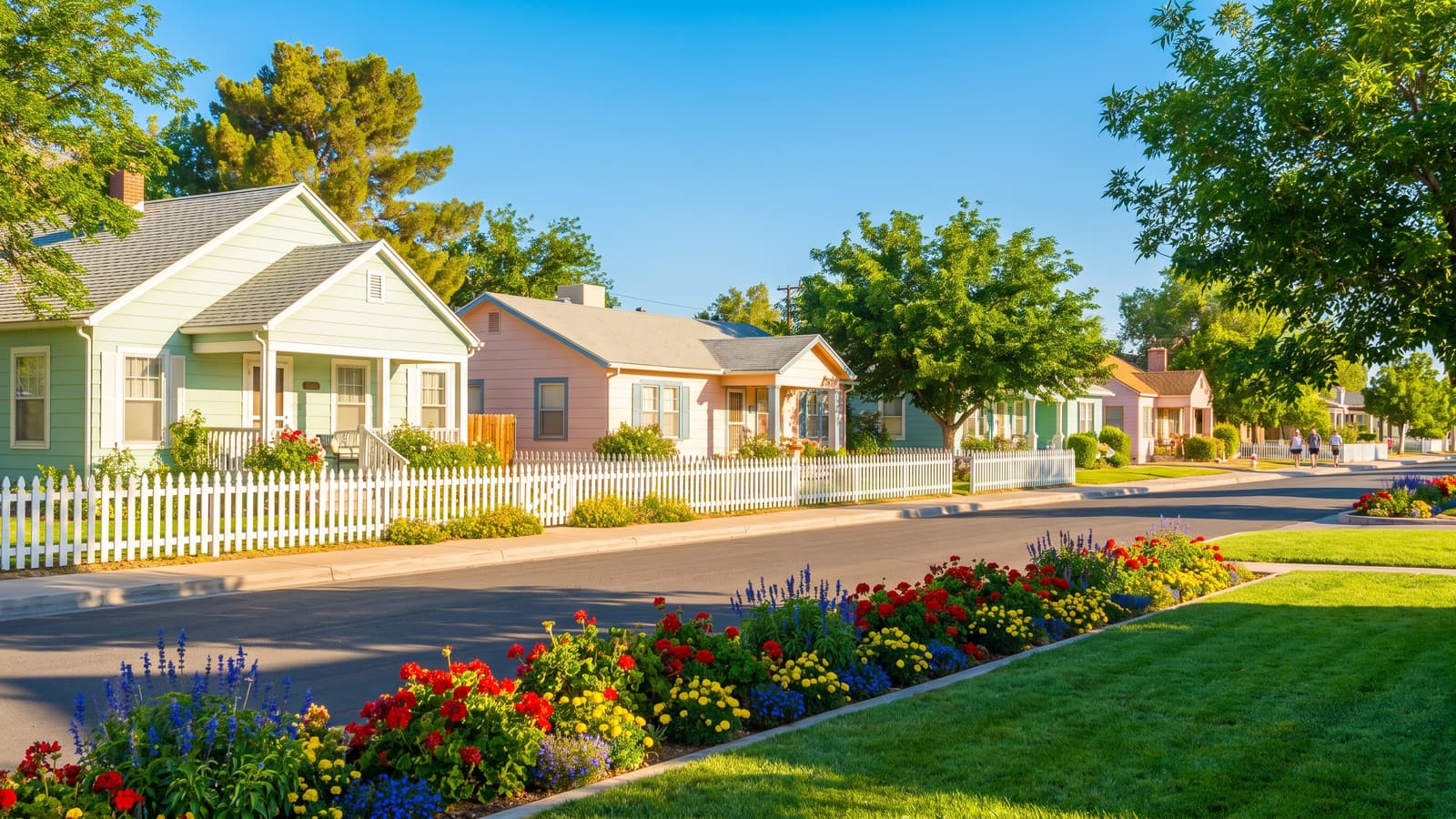
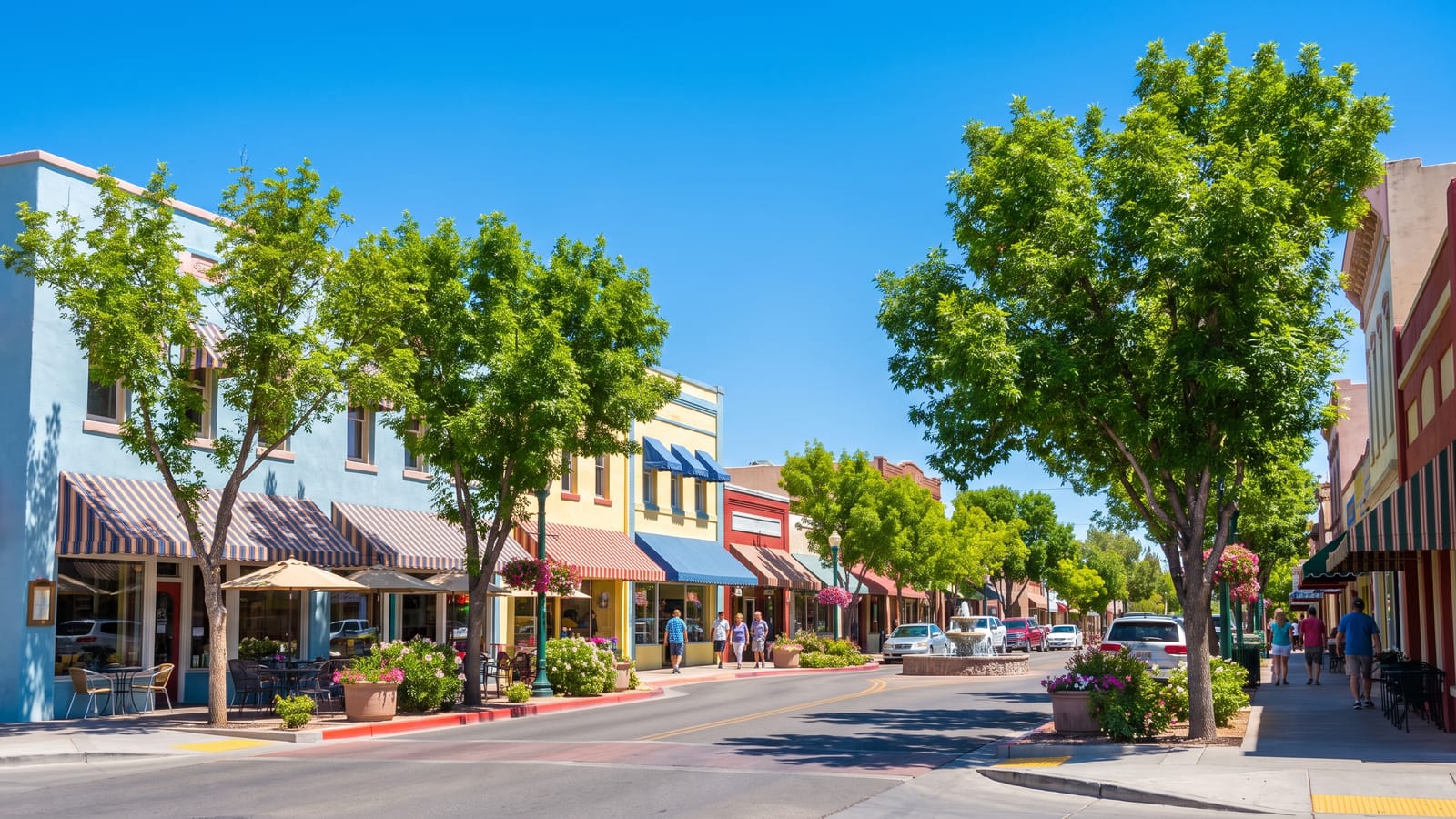
The Historic District — the original 1930s core clustered around Nevada Way and the downtown business row — is Boulder City's calling card and, for most buyers, the reason they fell for the town. These are true period homes: bungalows, cottages, and dam-era worker houses built between 1931 and the 1940s, many with mature landscaping, thick walls, and lot sizes and street trees you cannot replicate in a modern subdivision. Homes here typically run from the low $400s for a modest restored bungalow into the $600Ks and above for larger, fully renovated period houses, with a few landmark properties reaching past $1M.
Two things make the district special beyond charm. First, most historic homes carry no HOA — a genuine rarity in Nevada, where nearly every post-1990 neighborhood is HOA-governed. Second, walkability: you can live here without starting the car, walking to the Boulder Dam Hotel, downtown restaurants, and the weekly events on the historic streets. The trade-offs are real — older systems, smaller closets, occasional foundation and electrical updates, and historic-review considerations on some exterior changes. In our experience, the historic buyers who are happiest went in with a renovation budget and an inspector who knows dam-era construction. But for buyers who want character over square footage, nothing else in the Las Vegas metro compares. The city maintains a dedicated inventory of Boulder City historical homes worth watching, because the good ones clear fast.
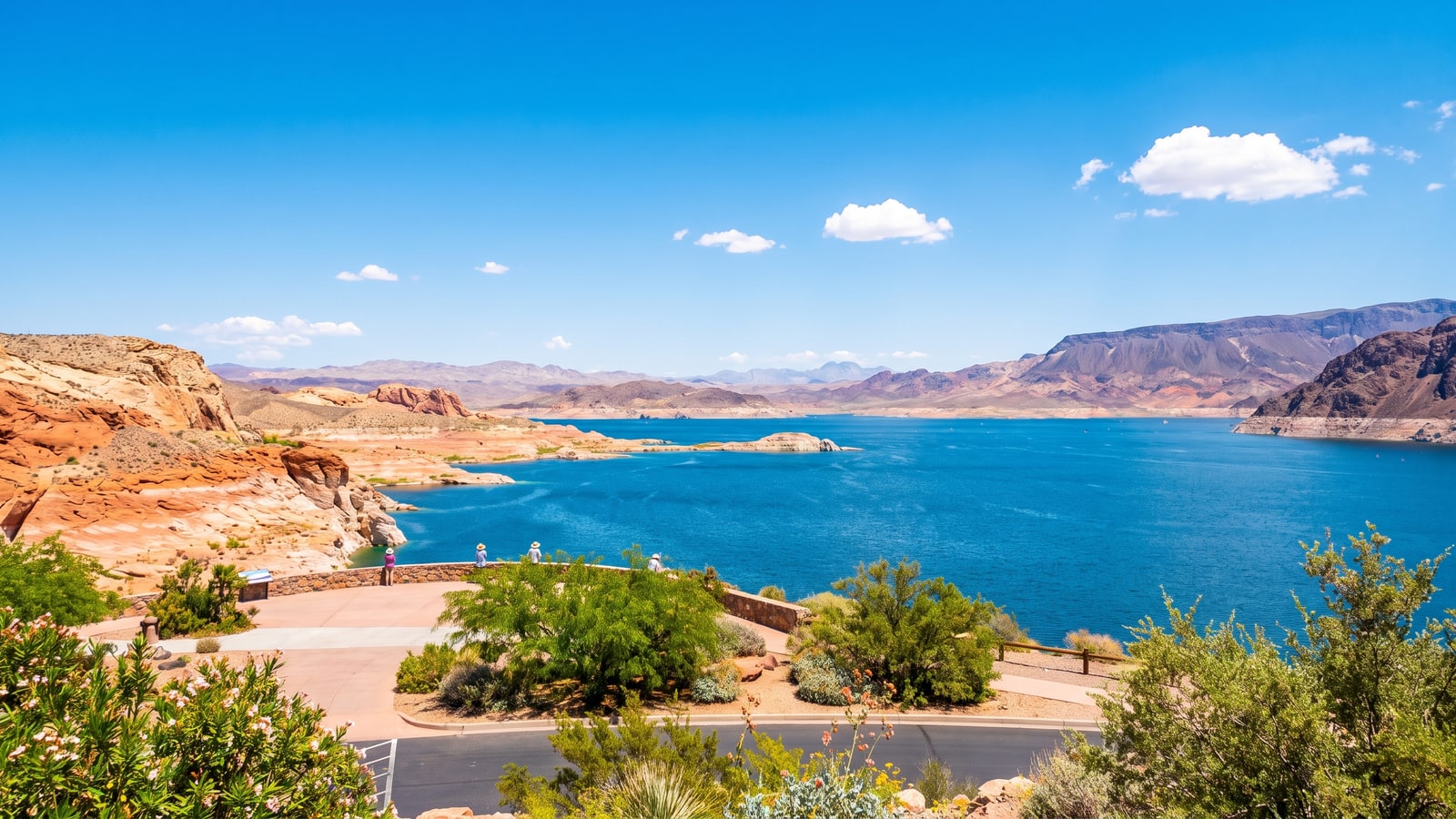
Which Neighborhoods Sit Closest to Lake Mead?
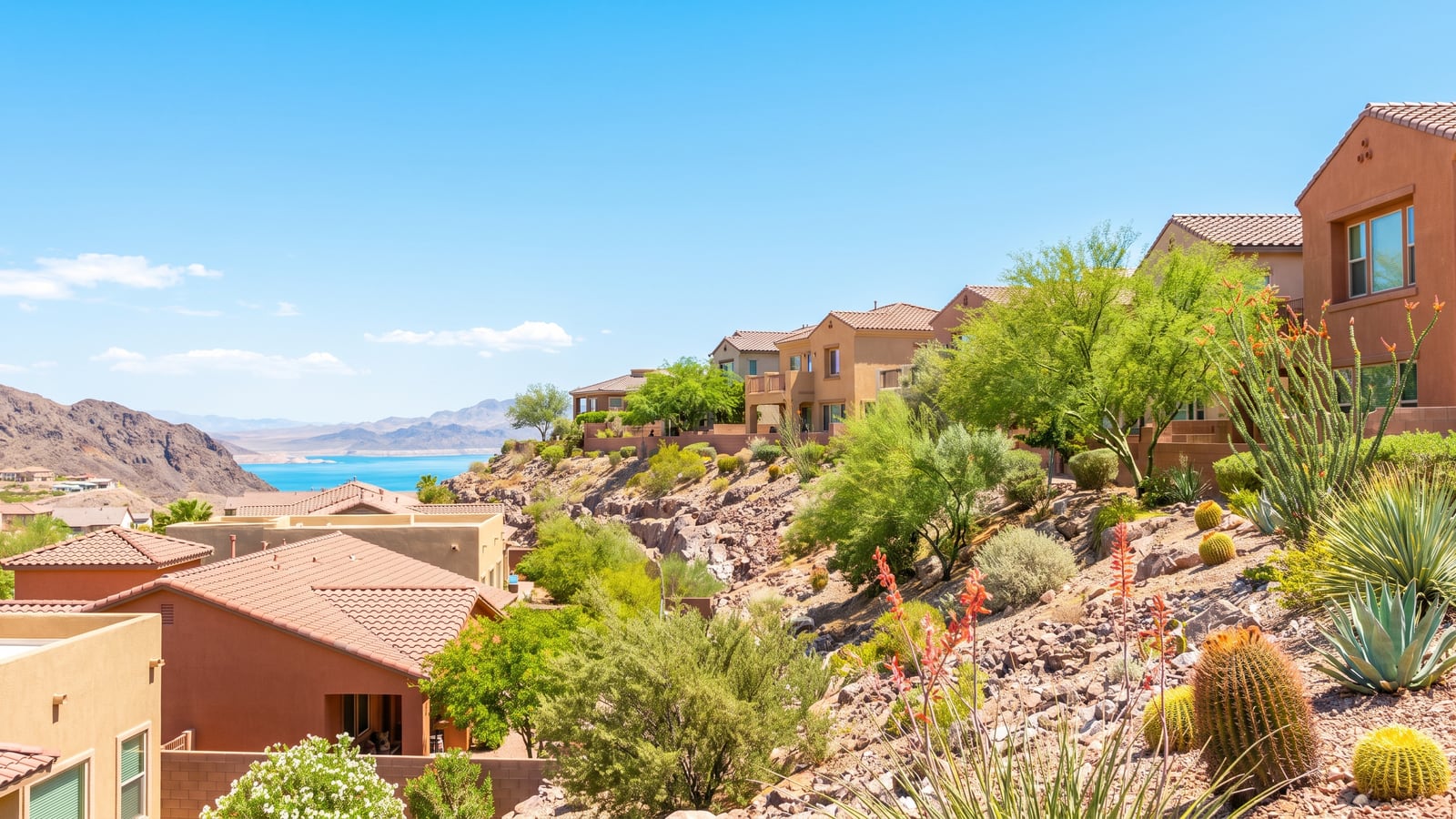
Lake Mead proximity is Boulder City's other premium, and it is concentrated in a handful of areas on the town's southeast and hillside edges. The Lake Mead View Estates pocket is the clearest example of the town's price spread: its active median sits around $600,000, but the range runs from a $195K fixer to a $4,995,000 custom estate, because "view" here spans everything from a distant blue glimpse to a full unobstructed panorama. Vista Del Lago and Blue Lake (active medians of roughly $1.79M and $824K respectively) hold the higher-end view homes, while Regatta Pointe and Bay View offer more attainable lake-adjacent options in the $315K–$480K band.
It is worth being precise about terminology, because listing copy blurs it: almost no Boulder City home is truly "lakefront" in the sense of a private beach — Lake Mead's shoreline is federal recreation-area land. What buyers pay a premium for is elevated view and short drive-to-launch access, not a private dock. According to the National Park Service, the lake's water level fluctuates significantly year to year, which changes the view from view lots over time — a real due-diligence item, not a technicality. If a water view is the whole point of your move, the city's curated Boulder City lakeview homes list is where to start. We've toured enough of these lots to know the listing photo and the standing-in-the-yard reality can diverge sharply, so we walk every client through exactly what "view" a specific lot delivers at current lake levels.
What Should You Know About the Villa Del Prado and Lakeview Established Areas?
Between the historic core and the newer hillside builds sits Boulder City's established middle tier — the mid-century-through-1980s neighborhoods that give the town most of its everyday housing. Villa Del Prado is the anchor here, with an active median around $530,000 and a tight range ($449K–$560K) that signals a consistent, well-kept single-family neighborhood — larger lots than the historic core, more parking, and none of the older-home surprises. It suits buyers who want move-in-ready space without paying hillside-view money.
The broader Lakeview / Lakeview Terrace streets run lower — an active median near $309,000 with homes from the $275Ks — because the housing is older and more varied, from compact ranches to updated three-bedrooms. This is Boulder City's value pocket for a buyer who wants in under the citywide median and is comfortable with a home that may need cosmetic updating. According to Las Vegas REALTORS, value-tier neighborhoods across the metro have seen the steadiest demand in 2026 as buyers prioritize monthly payment over trophy features, and Boulder City's established tier fits that pattern. For the full budget-by-budget breakdown of what each price band buys, our Boulder City home values by budget inventory pairs well with this section.
Where Are Boulder City's Custom Hillside Homes?
The custom hillside homes are Boulder City's luxury column, and they cluster on the elevated ground where the town meets the desert on its northern and eastern edges. The names to know are Lake Mead View Estates, Vista Del Lago, Marina Highland Estate (active median about $840,000), Blue Lake, Alpine Estate ($825K), and Heritage Peak ($900K). These are larger, newer, architect-driven homes — some exceeding 4,000 to 8,000 square feet — with the town's best views, biggest garages, and, in the top tier, resort-grade finishes.
This is where the growth ordinance shows its teeth: because the town builds so little, custom hillside inventory is perpetually scarce, and the best lots trade privately or clear within days of listing. Across our Boulder City closings we've represented buyers on hillside custom homes that never hit the open market at all, which is exactly why relationships beat portals in this pocket. The active spread is enormous — from around $600K for an entry view home to nearly $5M for the flagship estate — so "hillside custom" is less a price point than a category. According to the Clark County Assessor, Boulder City's higher-assessed parcels concentrate in exactly these view pockets, which is worth knowing for property-tax planning at the top of the market. Buyers shopping this tier should treat it like the rest of the Las Vegas luxury communities and guard-gated communities market — relationship-driven, low-inventory, and won on readiness.
Which Are the Newer Subdivisions in Boulder City?
The growth ordinance has allowed a short list of post-2000 subdivisions, and they are the answer for buyers who want a low-maintenance, modern home without the older-home to-do list. The Cottages (Boulder City Subdivision 112, active median around $405,000) and Boulder Hills Estates (Subdivision 113) are the newer single-family pockets, along with Lake Mountain Estate (active median $425,000, a clean $356K–$535K range) and the higher-end Alpine Estate and Heritage Peak at the $825K–$900K level. These homes offer contemporary floor plans, newer systems, and — the trade-off — HOA dues and less of the historic-district character. Buyers set on a genuinely new build should also scan the wider valley's new-construction pipeline, because Boulder City's own allotment cap keeps its new-home column perpetually thin.
Because these subdivisions are so few, they carry a scarcity premium relative to comparable newer builds in Henderson or the far southeast valley. A buyer who insists on new-ish construction in Boulder City should expect a short menu and be ready to move quickly; there is no builder standing by with the next phase. Many of these newer homes also come with the amenities buyers relocate for — filter the Boulder City homes with a pool list if outdoor living is on your must-have sheet. According to Freddie Mac's Primary Mortgage Market Survey, 2026 rate levels have kept payment-sensitive buyers gravitating toward these turnkey newer homes even at a premium, because the alternative — renovating a 1940s bungalow — carries its own carrying cost and timeline. If you want to skip the older-home projects entirely, filter the Boulder City homes for sale list to the newer subdivisions and set an alert.
What Is the Entry-Level Tier for Boulder City Buyers?
Yes, Boulder City has an entry tier, and it is smaller and more specific than in the big-city markets. The clearest example is Spanish Steps, whose active median sits around $286,000 with a $210K–$435K range — a mix of townhomes and smaller attached homes that give a first-time or downsizing buyer a way into the town under the citywide median. Beyond Spanish Steps, the entry tier includes a handful of manufactured-home and age-restricted communities, plus the more modest end of the Lakeview streets and the occasional dated bungalow priced for its condition.
The honest caveat: at a $430,000 citywide median and only 139 active homes, Boulder City is not a budget market, and the sub-$300K options are few and often move fast. According to the U.S. Department of Housing and Urban Development, Clark County's income-to-price ratios have tightened metro-wide, and a supply-capped town like Boulder City feels that acutely. A buyer targeting the entry tier should be pre-approved, alert-driven, and flexible on condition — and should strongly consider whether a slightly higher budget in a nearby Henderson neighborhood buys more home. Our first-time buyer resources walk through that exact math, and the town's no-HOA homes list is worth watching for the rare affordable historic find with no monthly dues.
How Do HOA Costs and City Utilities Differ by Neighborhood?
This is where Boulder City breaks from the rest of the Las Vegas metro, and it is a genuine dollars-and-cents differentiator by neighborhood. Most of the town's older stock — the Historic District, much of Lakeview, and many established streets — carries no HOA at all, which can save a buyer $600 to $2,400 a year versus a comparable HOA-governed home elsewhere in the valley. The newer subdivisions (The Cottages, Boulder Hills, some hillside custom enclaves) do have HOAs, typically modest, and a few gated pockets add access-control dues. The town's gated-community homes and no-HOA homes lists let you shop by exactly this distinction.
Then there is the municipal utility advantage. Boulder City owns and operates its own electric and water utilities, so residents are not on NV Energy — and city power rates have historically run below the regional investor-owned rate. Layer in Nevada's statewide tax profile — no state income tax, per the Nevada Department of Taxation — and the all-in carrying cost of a no-HOA historic bungalow on city power can undercut a same-priced HOA home in a neighboring city. The table below itemizes the tiers.
| Area | Typical HOA | Electric utility | Notable cost factor |
|---|---|---|---|
| Historic District | Usually none | City of Boulder City | Older systems; possible reno budget |
| Lakeview / established | Often none | City of Boulder City | Value tier; cosmetic updating common |
| Villa Del Prado | Low or none | City of Boulder City | Move-in-ready; larger lots |
| Newer subdivisions | Modest monthly | City of Boulder City | Turnkey; scarcity premium |
| Custom hillside / gated | Modest to gated dues | City of Boulder City | Higher assessed value / property tax |
Which Boulder City Schools Serve Each Neighborhood?
All Boulder City students attend Clark County School District (CCSD) schools, and because the town is compact, the assignment map is simple relative to sprawling Las Vegas zoning. According to the Clark County School District, Boulder City is served by neighborhood elementaries (Andrew J. Mitchell and Martha P. King), Garrett Junior High, and Boulder City High School — a small, community-anchored set of campuses that families consistently cite as a reason to buy here. Because there is essentially one high school serving the whole town, your neighborhood choice does not fracture your school options the way it can in a larger city.
That simplicity is a real advantage for relocating families. According to GreatSchools, Boulder City's campuses draw on a stable, small-town enrollment base rather than the churn of a fast-growing suburb. For families weighing Boulder City specifically for schools and pace of life, our companion guide on the best places to retire in Boulder City covers the quieter, lower-turnover end of the same town, and the broader Boulder City hub collects the neighborhood inventory in one place.
Who Should Buy in Each Boulder City Neighborhood?
Here is the side-by-side that ties it together — the character areas as columns, the buyer-fit dimensions as rows. Use it to jump straight to the area that matches your priorities, then pressure-test it against live inventory.
| Dimension | Historic District | Lakeview / Del Prado | Custom Hillside | Newer Subdivisions |
|---|---|---|---|---|
| Typical price band | $400K–$650K+ | $300K–$560K | $600K–$5M | $405K–$900K |
| Home style | 1930s bungalows | Mid-century to 1980s | Architect custom, big | Post-2000 turnkey |
| HOA | Usually none | Often none | Modest to gated | Modest monthly |
| Best for | Character seekers, walkers | Value buyers, downsizers | View/luxury buyers | Low-maintenance buyers |
| Main trade-off | Older systems, reno budget | May need updating | Scarce, premium, tax | Scarcity premium, dues |
| Shop it | Historical homes | Lakeview homes | Luxury homes | All homes |
If you want the shortest version: pick the Historic District for charm and walkability with no HOA; pick Lakeview or Villa Del Prado to get in near or under the citywide median in a move-in-ready home; pick a custom hillside pocket for the view and the space if your budget clears $600K; and pick a newer subdivision for a turnkey modern home if you would rather not renovate a 90-year-old bungalow.
How Should You Approach an Offer in Boulder City's Market?
With discipline on both sides. The data says Boulder City is buyer-leaning in aggregate — 74 of the recent sales with recorded spread closed below list, only 11 above, at a 38-day median — but that citywide average hides the split that actually decides your negotiation. The overpriced tail (custom estates asking $4M+) sits for months and pulls the "below list" count up; meanwhile a correctly priced historic bungalow or Villa Del Prado home in the $400K–$550K sweet spot can draw competing offers within its first week. Your strategy has to match the specific area, not the citywide average.
For buyers, that means being pre-approved and alert-driven so you can move on the right listing the week it posts, and being willing to walk on the stale, aspirationally priced ones — there is usually room. For sellers, it means pricing to the live comps for your specific area rather than the citywide median, because a Lake Mead View estate and a Lakeview ranch are not the same market. According to Freddie Mac, payment-sensitive 2026 buyers reward realistic pricing quickly and punish reaches slowly. If you are selling, our Boulder City sell-my-house resources, the broader seller playbook, and the home value estimator give you a live starting point, and choosing the right local agent — the case we make in who the best Las Vegas real estate agent is — matters more in a thin, area-specific market than in a deep one. When you are ready, reach the team or search live Boulder City listings.
Before choosing representation, use our guide to choosing a Boulder City real estate agent to ask about local property and transaction experience.
Frequently Asked Questions
What is the best neighborhood in Boulder City?
There is no single "best" — it depends on your priority. For charm, walkability, and no HOA, the Historic District's 1930s bungalows are the signature pick ($400K–$650K+). For value and move-in-ready space near the citywide median, Villa Del Prado ($530K) and the Lakeview streets ($309K) win. For views and luxury, the custom hillside pockets — Lake Mead View, Vista Del Lago, Marina Highland — hold the trophies from about $600K into the multi-millions.
How much do homes cost in Boulder City in 2026?
On today's GLVAR feed the median active list price is $430,000 across 139 active homes, with an average of $600,173 (pulled up by luxury estates listed as high as $4,995,000). In the trailing twelve months, 234 homes closed at a $447,500 median sold price, moving in a median of 38 days at roughly $282 per square foot. The lowest active listing is around $145,000; the highest is nearly $5M.
Does Boulder City have new-construction neighborhoods?
Very few, by design. Boulder City's controlled-growth ordinance (adopted 1979) caps new residential building permits each year, so post-2000 subdivisions like The Cottages, Boulder Hills Estates, Lake Mountain Estate, Alpine Estate, and Heritage Peak are a short list — and they carry a scarcity premium. Most buyers here purchase established resale homes rather than new builds. Browse the Boulder City homes for sale list and filter to newer subdivisions to see current supply.
Are Boulder City neighborhoods HOA or non-HOA?
It splits sharply by age. Most of the older stock — the Historic District, much of Lakeview, and many established streets — carries no HOA, which is rare in Nevada and can save $600–$2,400 a year. The newer subdivisions and some gated hillside enclaves do have HOAs, generally modest. Boulder City also runs its own municipal electric and water utility, so residents are not on NV Energy.
Which Boulder City neighborhoods are closest to Lake Mead?
The Lake Mead View Estates, Vista Del Lago, Blue Lake, Marina Highland, Regatta Pointe, and Bay View pockets on the town's southeast and hillside edges are closest to the lake and hold the view premium. Note that almost no home is truly "lakefront" — Lake Mead's shoreline is federal recreation-area land — so buyers pay for elevated view and quick launch access, and lake levels (which fluctuate) affect the view over time.
Is Boulder City part of Las Vegas?
No. Boulder City is a separate incorporated city in Clark County, about 26 miles southeast of Las Vegas and adjacent to Henderson, at the gateway to Lake Mead and Hoover Dam. It has its own city government, its own municipal utilities, its own ban on casino gambling, and — through its growth-control ordinance — its own tightly limited housing supply. Schools are all CCSD.
Is Boulder City a good place to buy in 2026?
For the right buyer, yes. It offers small-town character, lake access, no state income tax, and unusually low HOA exposure, in a supply-capped market where values tend to be steady rather than boom-bust. The catch is inventory: with only ~139 active homes, you have to be pre-approved and ready to move on the right listing. We cover the full case in our guide to whether Boulder City is a good place to live.
Which Sources Inform This Boulder City Neighborhoods Guide?
Live inventory, sold, and median figures were pulled from the GLVAR MLS via Repliers on the publication date and reflect Boulder City (ZIP 89005) active and closed listings. Neighborhood-level medians are directional given small per-area counts. Supporting authorities:
- Las Vegas REALTORS (GLVAR) — regional market context and median trends
- City of Boulder City — growth-control ordinance, municipal utilities, city history
- U.S. Census Bureau — Boulder City QuickFacts — population and housing
- Clark County Assessor — parcel assessment and property-tax data
- Clark County School District (CCSD) — school assignments
- GreatSchools — Boulder City — campus enrollment context
- National Park Service — Lake Mead NRA — shoreline status and lake-level fluctuation
- Nevada Department of Taxation — no state income tax
- U.S. Department of Housing and Urban Development (HUD) — Clark County affordability context
- Freddie Mac Primary Mortgage Market Survey — 2026 mortgage-rate environment
- U.S. Bureau of Labor Statistics — Las Vegas metro economic backdrop
Nevada Real Estate Group is Nevada's #1-ranked real estate team (#44 nationally), with 9,600+ career closings, 789 homes sold in 2025, and 9,146+ verified five-star reviews at 4.9 stars. Licensed in Nevada, S.181401. Questions about a specific Boulder City neighborhood? Call (702) 637-1759 or reach the team.