
Published June 16, 2026 · Updated July 14, 2026 · By Chris Nevada, Nevada Real Estate Group · NV License S.181401
"Which neighborhood should I be in?" is almost always the first real question after a buyer decides Reno is the market. And it's a genuinely good question, because Reno is more diverse than it looks from the outside. In the same metro you have a walkable urban arts district, century-old tree-lined blocks, master-planned golf communities, guard-gated estates above $3 million, and affordable starter suburbs — sometimes within ten miles of each other. The wrong neighborhood is an expensive mistake; the right one is a decision you'll feel good about for years.
I've spent years helping buyers land in the right part of the Truckee Meadows, and this is the breakdown I give every relocating client before they tour a single home. Each of the ten neighborhoods below has a real character, a real price range, and a real buyer profile it fits — and I'll be honest when an area has trade-offs worth knowing. If you want the broader financial context first, pair this with our cost-of-living guide for Reno; if you're still deciding between Northern Nevada and Southern Nevada, our Reno vs Las Vegas comparison covers that side of the choice.
Reno's ten best neighborhoods in 2026 range from Midtown's walkable arts scene (median prices near $450,000) to Montrêux's guard-gated estates (above $1.5 million). Young professionals choose Midtown; families with school-age kids choose Damonte Ranch or Somersett; luxury buyers pick ArrowCreek or Montrêux; value seekers land in South Meadows. Each neighborhood below is matched to the buyer it fits, with real price ranges and honest trade-offs.
- Midtown Reno is the walkable, arts-forward choice — median prices near $450,000 with genuine urban energy.
- Somersett and Caughlin Ranch command $650,000–$1.5M+ for master-planned foothill living near 6,000 acres of open space.
- Damonte Ranch and South Meadows offer family-friendly, school-adjacent living from $550,000 to $850,000.
- ArrowCreek and Montrêux are Reno's guard-gated elite — estates starting above $900,000 and climbing past $3M.
- Spanish Springs in Sparks delivers the most home-per-dollar in the metro, with entry-level inventory starting in the mid-$400,000s.
Want to see real inventory? Explore Reno homes for sale for every active listing, updated from the MLS.
What Makes Reno's Best Neighborhoods Stand Out in 2026?
Before diving into the ten areas, it's worth naming what separates a "best neighborhood" from a good one, because the answer is different for every buyer. When I pulled the NNRMLS feed for this update in July 2026, there were 1,622 active single-family and condo listings inside the City of Reno at a median list price of $579,000, with another 590 active in Sparks at a $563,495 median — the deepest, most negotiable inventory the metro has offered since before the pandemic. According to the Reno/Sparks Association of REALTORS, the Washoe County market has matured significantly over the past five years — inventory has risen from pandemic-era lows, and neighborhoods are differentiating more clearly by lifestyle than by pure price. The days of bidding on anything that hits the market are mostly over; buyers now have the luxury of being selective, and our Northern Nevada communities directory and live home search are the two tools I point clients to first.
The ten neighborhoods below each have a distinct identity, real demand from a specific buyer type, and enough inventory to actually buy in — and I include honest trade-offs, because every area has them. Across the 9,600+ closings our team has represented across Nevada, the Reno buyers who had the sharpest sense of their own priorities — commute, schools, walkability, or privacy — were consistently the most satisfied two years after closing.

According to the U.S. Census Bureau, Reno's population has grown past 270,000, with the broader Reno-Sparks metro approaching 550,000. Much of that in-migration tracks the employment base that has diversified far beyond gaming: Tesla's Gigafactory and Google's data-center campus at the Tahoe-Reno Industrial Center, Switch's technology footprint, and the logistics and advanced-manufacturing operators that the Economic Development Authority of Western Nevada credits for the region's job growth. That growth landed unevenly — some neighborhoods absorbed it gracefully through planned development, others felt it in traffic and price. The neighborhoods that were well-planned before the growth are meaningfully more livable than those that grew too fast without infrastructure to match.
One thing I tell every client: commute drives quality of life more than almost any single factor, and Reno's topography makes some commutes genuinely painful. The I-580 south corridor clogs at peak; the Truckee River Valley running east-west through the center moves more smoothly. Map your commute before you fall in love with a zip code.
How Do Reno's 10 Best Neighborhoods Compare on Price and Lifestyle?
With ten neighborhoods in play, the comparison table is where most buyers start to get clarity — price per square foot and commute flexibility drive most final decisions.
| Neighborhood | Typical Price Range | Character / Vibe | Best Buyer Fit |
|---|---|---|---|
| Midtown Reno | $420,000–$600,000 | Urban, walkable, arts + dining | Remote workers, young professionals |
| Downtown Reno | $280,000–$600,000 (condo) | Urban density, Riverwalk access | Singles, couples, UNR-adjacent buyers |
| Old Southwest | $450,000–$1.2M | Historic, tree-lined, architectural character | UNR-affiliated, character-seekers |
| Somersett | $700,000–$1.5M+ | Master-planned, trail access, Sierra views | Families, retirees, California transplants |
| Caughlin Ranch | $600,000–$1.2M | Established foothill, trail-connected | Families, outdoor-oriented buyers |
| Damonte Ranch | $550,000–$850,000 | Planned, school-focused, South Reno | Families, South Reno commuters |
| South Meadows | $350,000–$800,000 | Convenient, value, South Reno location | First-time buyers, value-focused |
| ArrowCreek | $900,000–$3M+ | Guard-gated, golf community, views | Executives, golf buyers, luxury families |
| Montrêux | $1.5M–$5M+ | Ultra-private, Jack Nicklaus golf, estate | High-net-worth, second-home buyers |
| Spanish Springs (Sparks) | $450,000–$750,000 | Value-first, suburban, family-sized | First-time buyers, budget-focused families |
Is Midtown Reno the Right Neighborhood for Urban Buyers?
Midtown is Reno's answer to every buyer who asks "but is there a neighborhood with some energy?" — and the answer is yes, and it's called Midtown. The stretch along South Virginia Street between downtown and the Mt. Rose corridor has transformed over the past decade into a genuine arts-and-dining district: independent restaurants, breweries, galleries, a weekend farmers market, and a walkable density that feels different from the rest of the metro. In my experience, buyers relocating from Portland or Denver recognize this energy immediately — it's what finally convinces them Reno is a real city, not just a suburb of itself.
The housing stock is a mix of bungalows, craftsman cottages, mid-century ranches, and newer infill condos and townhomes. Prices have climbed to reflect the demand: expect $420,000 to $600,000 for a modest single-family home and $320,000 to $500,000 for a condo or townhome, depending on size and condition. Entry points have risen steadily, and the inventory is thinner than in the more suburban corridors, which means competition for the best properties remains real even as the broader market has softened.
Who Midtown is right for: Remote workers, young professionals, empty nesters who want walkability, and buyers relocating from dense urban markets who need the proof that Reno has a "real" neighborhood feel before they commit. It's also the natural landing spot for buyers who value the arts scene, independent food culture, and the ability to leave the car at home for evening activities.
The trade-off: Lot sizes are small, parking is limited, and the price per square foot is among the highest in the metro. If square footage and storage matter more than walkability, Midtown is the wrong value exchange. And some blocks near the downtown casino corridor have character that requires patience.
Does Downtown Reno Offer Viable Residential Options?
Downtown proper — the core around the casino district, the Truckee River, and the Reno Events Center — has seen meaningful residential reinvestment over the past decade in condo towers, adaptive-reuse projects, and Riverwalk-adjacent housing. It's not a neighborhood in the traditional sense, but it's a real option for buyers who want urban density and the ability to walk to major entertainment. According to the City of Reno's planning department, investment has flowed in through the University of Nevada, Reno's expansion and the city's redevelopment programs, so the core now functions for residents rather than just visitors.
Condo pricing runs $280,000 to $600,000+ depending on building, floor, and finishes, with Riverwalk-adjacent units commanding a view premium; HOA fees of $400 to $800 a month are common in the larger buildings. Who downtown fits: Singles and couples without school-age children who value proximity to UNR and the entertainment district — remote workers benefit most, while families generally prefer the quieter suburban neighborhoods for schools and space.
What Makes Old Southwest Reno Unique Among Established Neighborhoods?
Old Southwest Reno is the neighborhood that makes longtime residents possessive about it — and rightly so. Centered on the University of Nevada, Reno campus to the east and running toward the Sierra foothills to the west, it's Reno's most historically significant residential area, with tree-lined streets, craftsman bungalows, Tudor revivals, and larger estates dating from the 1920s through the 1960s. The architectural variety is genuinely interesting, the mature tree canopy is irreplaceable, and the density feels human-scaled in a way that newer suburban areas don't.
Prices in Old Southwest reflect the scarcity and character: a modest bungalow starts around $450,000, a well-preserved craftsman runs $550,000 to $750,000, and the larger estate-caliber homes on premium lots can top $1.2 million. Condition varies widely in older stock, so inspection due diligence is critical — roof ages, foundation conditions, and electrical/plumbing updates have real budget implications here.
Who Old Southwest is right for: UNR-affiliated buyers, buyers from established older neighborhoods who need architectural character and won't settle for a beige tract home, and long-term residents who know the value. It's also popular with buyers who want walkability to campus, the Truckee River, and Midtown without paying full Midtown prices. The trade-off: Parking is limited near campus, some streets see heavier student foot traffic, and older stock means ongoing maintenance that newer construction avoids — budget for deferred maintenance and a pre-purchase inspection.
Is Somersett the Right Choice for Buyers Who Want Master-Planned Living?
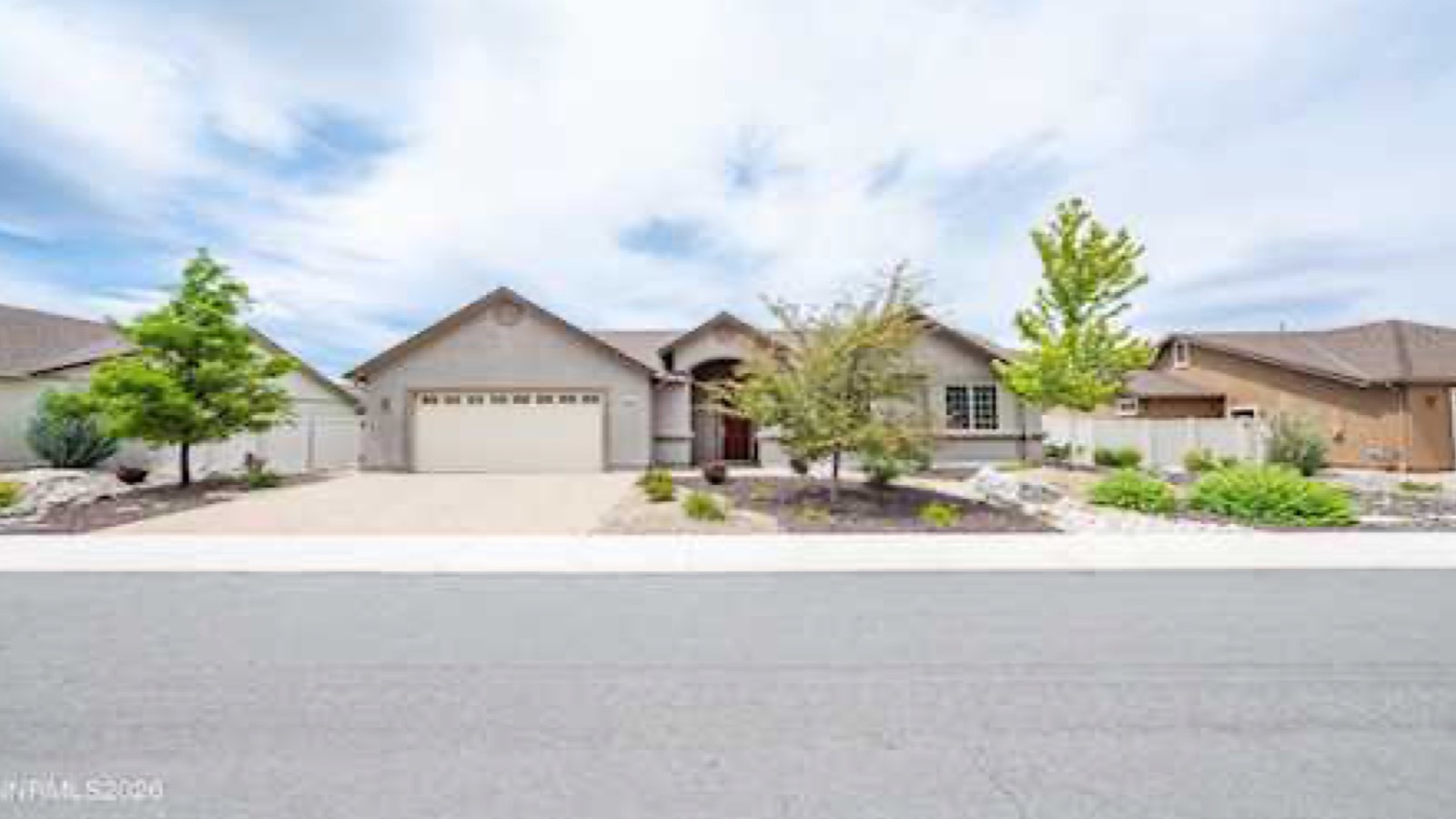
Somersett is Reno's premier master-planned community on the northwest side, built against the Sierra Nevada foothills and designed around outdoor living from the ground up. The community covers roughly 2,100 acres and backs directly to 6,000 acres of open space, which means residents have trail access to the Sierra that most foothill neighborhoods can only approximate. The physical setting is genuinely exceptional, and on a clear morning the Sierra views from the higher streets are the kind that make buyers stop mid-tour and go quiet.
The housing mix runs from attached townhomes in the mid-$500,000s to custom estate homes above $1.5 million, with most of the single-family resale market clustering between $700,000 and $1.1 million. New construction in Somersett's remaining parcels has added inventory at premium prices; builders have been active here through the recent cycle, and the new-construction warranty and energy efficiency often pencils out favorably against older resale at similar price points.
Community amenities include the Town Center with a fitness club, pool, and restaurant, plus the private Sierra at Somersett course for golf-oriented buyers. According to GreatSchools.org, the elementary and middle school attendance zones serving Somersett have consistently strong ratings, which is a meaningful driver of demand from families. HOA fees run in the $200 to $400 range monthly depending on the specific neighborhood within the larger community.
Who Somersett is right for: Families who want top-rated schools, trail access, and the security and maintenance structure of a master-planned community. Also popular with retirees who want an active outdoor lifestyle and buyers relocating from California who are accustomed to the amenity packages of newer master-planned developments. The Northwest Reno location keeps commute times manageable to most employment centers.
The trade-off: Somersett sits on the west side of Reno, which means the commute to South Reno employment corridors (Amazon's distribution network, the Tahoe-Reno Industrial Center) is longer — 30 to 45 minutes in peak traffic. And the premium for the master-plan amenities and setting is real; the same square footage costs meaningfully more here than in South Meadows or Damonte Ranch.
Should Families Consider Caughlin Ranch?
Caughlin Ranch sits just southwest of Somersett and shares the foothill setting without the full master-plan structure. It's an established community of single-family homes built primarily through the 1980s and 1990s, with a mix of architectural styles, mature landscaping, and a neighborhood character that feels settled and permanent in a way that newer developments take decades to achieve. Prices typically range from $600,000 to $1.2 million, with custom homes on larger foothill lots pushing above that ceiling.
What sets Caughlin Ranch apart from most Reno neighborhoods at similar price points is the genuine open-space integration. The Caughlin Ranch Trail system threads through the community and connects to the broader Sierra Nevada foothills trail network, which is a serious asset for outdoor-oriented buyers. According to the Nevada Department of Conservation and Natural Resources, the open space surrounding the community is permanently protected, which means the mountain views and trail access are durable rather than temporary.
Who Caughlin Ranch is right for: Established families who want foothill living, trail access, and a quieter setting without the HOA structure of a master-planned community. Also popular with buyers who want newer amenities nearby (the Somersett Town Center is accessible) but prefer the architectural character and lot sizes of an older established neighborhood. Good public schools serving the area are an additional draw.
The trade-off: The housing stock is older, which means buyers should budget for kitchen and bath updates in many homes. The west-side location carries the same South Reno commute issue as Somersett. And because it's fully built out, resale inventory is limited — when a good home hits the market here, it moves quickly.
What Does Damonte Ranch Offer Families Relocating to South Reno?
Damonte Ranch is one of Reno's best answers for families who need to be in South Reno near the major employment corridors, want newer construction, and are prioritizing school quality. Located in the South Reno/Double Diamond corridor, it's a master-planned community of predominantly 1990s through 2000s construction — newer than Caughlin Ranch or Old Southwest, with the layout advantages of planned infrastructure.
Prices in Damonte Ranch run from roughly $550,000 for a smaller resale home to $850,000 for larger lots with upgrades, with most of the inventory clustered between $600,000 and $750,000. That positions it meaningfully below Somersett and Caughlin Ranch for comparable square footage, which is part of the value calculation for family buyers who are prioritizing school attendance zones over mountain views.
According to GreatSchools.org, the elementary schools serving Damonte Ranch consistently rank among the better options in the Washoe County School District — a real factor for families making this their primary criteria. The community also has quick access to the Virginia Lake / Meadows Village retail corridor, making daily errands genuinely convenient.
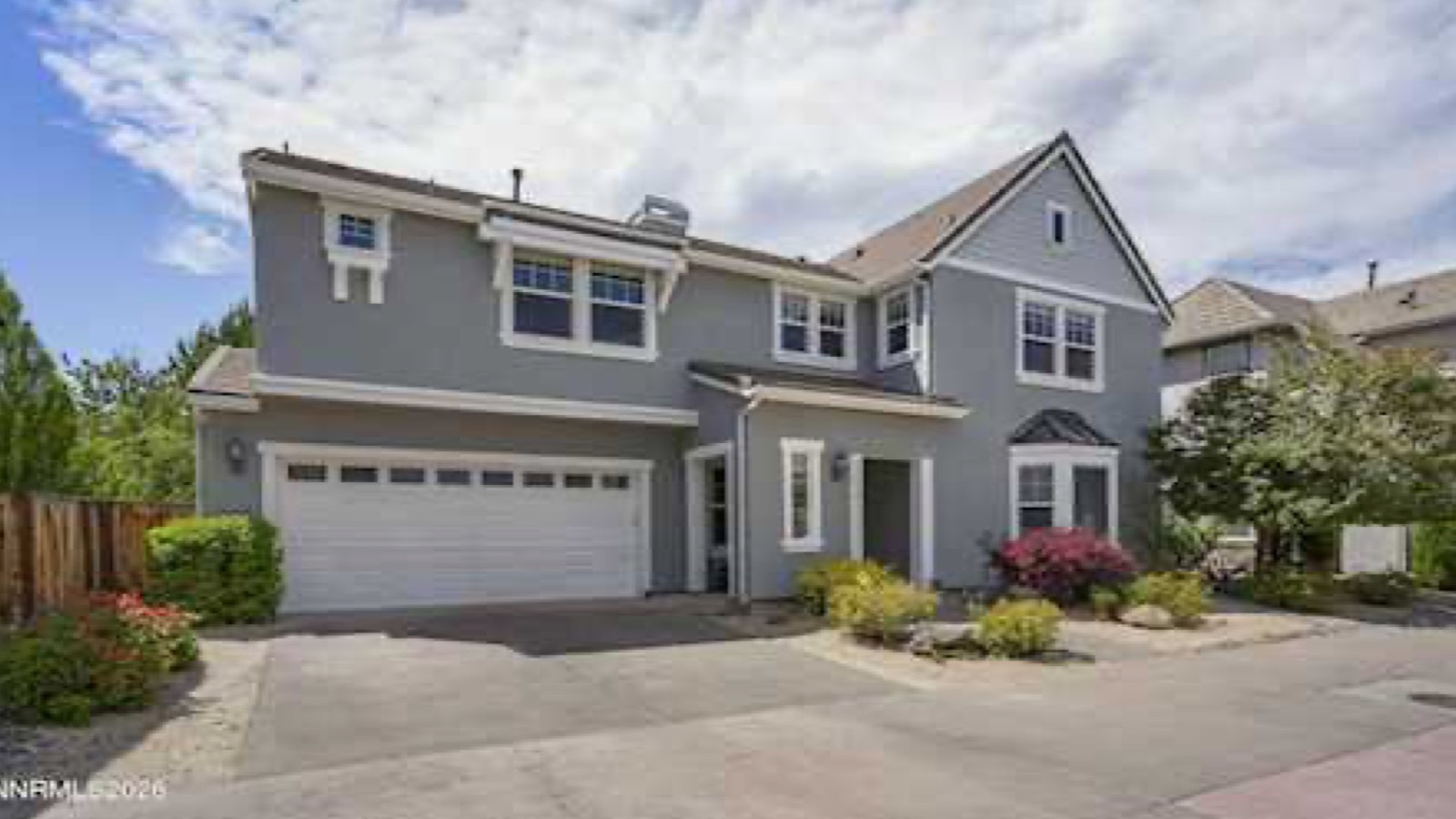
Who Damonte Ranch is right for: Dual-income families where one or both partners work in the South Reno / Double Diamond / Tahoe-Reno Industrial Center corridor. The commute advantage over the northwest neighborhoods is significant — 10 to 15 minutes versus 30 to 45. Buyers prioritizing school quality and master-plan infrastructure over architectural character or trail-system proximity.
The trade-off: Damonte Ranch has less of the organic character of older neighborhoods. The streets are wider, the lots more uniform, and the architecture more consistent — which is an advantage for buyers who want predictability and a disadvantage for buyers who want neighborhood texture. The South Virginia Street retail corridor can be busy on weekends.
Is South Meadows the Best Value Neighborhood in South Reno?
South Meadows runs along the Double Diamond area and the South Meadows Parkway corridor, and it's consistently where I send buyers who want South Reno's location advantages at a lower price point than Damonte Ranch. The housing mix includes townhomes, condos, and single-family homes built through the late 1990s and 2000s, with entry-level condos starting around $350,000 and single-family homes running $500,000 to $800,000.
According to the Washoe County Assessor's office, South Meadows has seen steady price appreciation over the past five years, with the area benefiting from the same South Reno employment proximity as Damonte Ranch at a lower per-square-foot cost. It's a genuine value proposition for first-time buyers or buyers trading down in square footage to get into a better commute location.
The retail and dining options along the South Meadows Parkway and the Summit Sierra mall corridor make South Meadows one of the more convenient neighborhoods for everyday errands in the entire metro. And access to the Nevada Highway 395 south connection to Carson City and Lake Tahoe is straightforward from this corridor.
Who South Meadows is right for: First-time buyers, value-conscious move-up buyers, and commuter-focused buyers who need South Reno's location at a price the Damonte Ranch market doesn't offer. Also a solid entry point for buyers who plan to build equity and move up within the metro after a few years.
The trade-off: Less prestige signaling than Damonte Ranch or Somersett, less architectural character than Old Southwest or Caughlin Ranch, and HOA restrictions in many complexes that limit flexibility. Townhome and condo buyers should vet HOA financials carefully.
What Kind of Buyer Belongs in ArrowCreek?
ArrowCreek is South Reno's guard-gated luxury community, a 24-hour staffed-gate neighborhood with two championship golf courses — The Club at ArrowCreek's Legends and Hills courses — and a physical setting in the high desert above the valley floor that delivers unobstructed Sierra Nevada and valley views. This is one of the most recognizable addresses in the Truckee Meadows for a reason: the combination of setting, security, golf, and custom-home architecture is difficult to replicate elsewhere in the region.
Home prices in ArrowCreek start around $900,000 for smaller production homes near the entry of the community and climb to $3 million and above for the custom estate sites on the ridge lines. The median transaction in ArrowCreek over the past 12 months has run in the $1.2 million to $1.6 million range, with significant variation depending on lot position, home size, and whether the property is on or near the golf courses. According to the Reno/Sparks Association of REALTORS, luxury closings above $1 million in Washoe County have remained active, with ArrowCreek commanding one of the highest volume shares in that bracket.
HOA fees in ArrowCreek cover the guard-gate staffing, common-area maintenance, and amenities but not golf membership, which is a separate expense worth clarifying during due diligence. In the Reno-area luxury sales Nevada Real Estate Group has handled, ArrowCreek buyers overwhelmingly cite the 24-hour gate and valley views as the deciding factors — golf-membership conversion runs closer to 40% among actual purchasers.
Who ArrowCreek is right for: Executive relocations, high-net-worth buyers seeking privacy, golf-oriented buyers who want a private club without the exclusivity barriers of some national clubs, and families who want the security of a gated community in a luxury setting. The South Reno location is a real advantage: proximity to the I-580 and the major employment corridors makes the commute manageable despite the elevated setting.
The trade-off: The guard gate, while a security feature, also means every guest, contractor, and delivery requires coordination — which some buyers find adds friction to daily life. And the lifestyle cost (HOA plus optional golf plus property taxes on a $1M+ home) adds up to a significant monthly overhead.
Is Montrêux the Ultimate Luxury Address in Reno?
Montrêux is the closest thing to Reno's equivalent of Las Vegas's most exclusive guard-gated communities — a 24-hour manned-gate community with a private Jack Nicklaus Signature golf course, a dramatic Sierra Nevada mountain backdrop, and estate homes that represent the top tier of what the Reno market produces. The community sits in the southwest corner of the metro, with the Sierra Nevada rising immediately above the back nine, and the physical setting on a clear day is as dramatic as Nevada residential real estate gets.
Home prices at Montrêux start around $1.5 million and extend above $5 million for the larger custom estates. The community is not large — inventory is genuinely limited — which is part of what maintains its exclusivity and price floor. According to the Reno/Sparks Association of REALTORS, Montrêux consistently logs the highest per-home average prices in the Washoe County market for single-family residential closings, a position it has held through multiple market cycles.
The Montrêux golf course is private and member-only, and membership is a significant additional investment. Many Montrêux buyers who don't golf still purchase here for the setting and security — the golf-course buffer provides exceptional lot privacy even for non-golfers, and the mountain backdrop is permanent.
Who Montrêux is right for: The buyer for whom ArrowCreek is almost right but not quite exclusive enough. High-net-worth buyers, second-home buyers, and executives relocating from markets like Silicon Valley or Scottsdale who want the best Reno has at its absolute top end. Also popular with buyers who prioritize privacy, security, and the prestige of a recognized luxury address — Montrêux carries name recognition that translates to resale liquidity.
The trade-off: At this price level, the depth of the local buyer pool is naturally shallower — a Montrêux home can sit longer on market than a South Meadows townhome when conditions shift. And the southwest Reno location, while spectacular, puts the most common employment corridors 20 to 35 minutes away.
What Does Northwest Reno Offer Mid-Market Buyers?
Northwest Reno is the broad arc of neighborhoods running north and west from Somersett through the Panther Valley and Verdi areas, with a mix of established suburban streets, semi-rural lots, and newer infill. It's a diverse area in terms of both housing type and price — you'll find $400,000 starter homes and $900,000 custom ranches within the same zip code, which is both an opportunity and a complexity for buyers.

According to the Regional Transportation Commission of Washoe County, the corridor has received meaningful infrastructure investment as the region grew, including expanded capacity on the I-80 west corridor. The Verdi area specifically attracts buyers who want larger lots or horse property at a price below the established foothill communities. For mid-market buyers — roughly $500,000 to $800,000 — Northwest Reno delivers more land per dollar than Somersett or Caughlin Ranch, the trade-off being less master-plan structure and a longer commute to South Reno employers. The proximity to Lake Tahoe via I-80 is a genuine lifestyle asset: Truckee is 35 to 40 minutes west, and Incline Village on the North Shore is under an hour.
Who Northwest Reno is right for: Buyers who want acreage, horse property, or a rural feel without moving to Carson City, and buyers who value Tahoe proximity as a primary lifestyle factor. The trade-off: Schools in the outer areas vary — verify specific assignments before committing, and the distance to South Reno employment is real.
Does Spanish Springs in Sparks Offer the Metro's Best Value?
Spanish Springs in Sparks is where the value-per-dollar calculation tips most favorably in the current Reno-Sparks market. This north Sparks neighborhood sprawls across a broad valley basin northeast of the city center, with a mix of entry-level production homes, move-up single-family neighborhoods, and newer master-planned sections that have brought community amenities to what was once purely a bedroom suburb.
Prices in Spanish Springs run from the mid-$400,000s for a well-maintained entry-level home to $750,000 for a larger production home with upgrades. That lower entry point is the story — for the same $600,000 budget that buys a townhome in Somersett or a modest resale in Damonte Ranch, Spanish Springs delivers a four-bedroom single-family home with a real yard and a garage.
According to the U.S. Census Bureau, Sparks has grown consistently alongside Reno in population and now functions as an integrated part of the Reno-Sparks metro rather than a satellite suburb. The Spanish Springs area in particular has matured with the addition of retail, dining, parks, and the Spanish Springs Town Square, which gives the community a genuine gathering place that older, more sprawling Sparks neighborhoods lack.
According to GreatSchools.org, several elementary and middle schools serving Spanish Springs score well within the Washoe County School District, which has helped the neighborhood attract families who might otherwise pay the Damonte Ranch premium. The Sparks schools situation has improved substantially as the population base matured.
Who Spanish Springs is right for: First-time buyers, growing families on a budget, and buyers who prioritize square footage and yard space over neighborhood prestige or walkability. Also a solid choice for buyers whose employment is on the east side of the metro — the I-80 access makes downtown Reno and east-corridor employers equally accessible.
The trade-off: Spanish Springs lacks the foothill views and outdoor-recreation proximity of the west-side neighborhoods, and the scale of the area can feel suburban-sprawl to buyers from denser markets. The distance from Midtown and the UNR campus is meaningful for buyers who value those amenities.
Where Can First-Time Buyers Actually Start in Reno and Sparks in 2026?
A question we hear weekly deserves its own section: which of these neighborhoods — or which alternatives — actually work on a first-time buyer's budget? With the Reno-Sparks median well into the $500,000s, the honest first-purchase band runs roughly $400,000 to $500,000, and it maps to a specific set of areas:
| Area | Typical entry range | What you get | Watch-item |
|---|---|---|---|
| Older Sparks core | Roughly $430K–$480K | Established streets, real yards, I-80 access | 1970s–80s systems — budget for updates |
| Sun Valley | Roughly $380K–$430K | The metro's lowest single-family entry | Mixed housing stock; comp carefully |
| Cold Springs | Roughly $420K–$470K | Newer production homes, commuter valley | 15–20 min north of most jobs |
| North Valleys (Stead/Lemmon Valley) | Roughly $410K–$460K | New-build communities with incentives | Growing but service-thin; verify insurance |
| Golden Valley | Roughly $440K–$490K | Half-acre-feel lots between Reno and Sparks | Wells/septic on some parcels |
| Spanish Springs entry product | Mid-$400Ks up | The best schools-per-dollar on this list | Entry inventory moves fast |
The payment math anchor: at prevailing 2026 rates, a $440,000 purchase with FHA's 3.5% down ($15,400) carries an all-in monthly payment of approximately $3,000 — against Reno-Sparks single-family rents that commonly run $2,200 to $2,700. Nevada Housing Division assistance programs apply on this side of the state exactly as they do in the south, and layered help can reach $50,000 for income-qualified buyers, which closes most of the down-payment gap at these price points.
Our Northern Nevada agents run the same playbook here that works in every entry market: pick two finalist areas, pull the last 90 days of closings in your band, and negotiate with a genuine second option in your pocket. For buyers who can flex geography, the Carson City and Dayton corridors trade commute minutes for another $30,000–$50,000 of house — worth the drive math if your work is remote or flexible. Start from live inventory on our Reno search, or browse the Northern Nevada communities directory to compare areas side by side; our Northern team walks first-timers through program qualification at (775) 277-2120.
Which Specific Reno Subdivisions Are Buyers Asking About in 2026?
Beyond the ten headline neighborhoods, relocating buyers keep asking about a handful of named subdivisions — the gated golf enclaves, the alpine-forest pockets, and the newer-construction villages tucked inside the larger areas above. These are the ones our Northern Nevada team fields the most calls on, and the ones worth weighing a new-construction build against resale. The medians below are live NNRMLS active-listing figures pulled when I refreshed this guide in July 2026; where active supply was too thin to compute a reliable median, I've noted the recent trading band instead.
| Subdivision | Area / Character | Active Median (or Recent Band) | Best Buyer Fit |
|---|---|---|---|
| Saddlehorn | South Reno, off ArrowCreek Parkway, Mt. Rose views | $1,665,000 | Luxury buyers, golf-adjacent |
| Galena Forest Estates | Mt. Rose Hwy, alpine pine, acreage privacy | $1,104,500 | Nature lovers, work-from-home |
| Fairways at Fieldcreek | Southeast Reno, gated championship golf, lots to 2.9 ac | $1,037,500 (avg near $1.5M) | Ultra-luxury, retirees, privacy |
| Caramella Ranch / Copper View | South Reno, gated newer construction, community pool | $1,028,000 | Move-up families |
| Estates at Mt. Rose | South Reno, upscale, half-acre lots | Thin supply; recent $1.2M–$1.3M | Families, nature lovers |
| Mayberry Ranch Estates | Northwest Reno, Truckee River access | $724,450 | Families, anglers |
| Copper Knolls | Northwest Reno, near Somersett, mountain views | Thin supply; recent near $610,000 | Families, value + views |
| Belsara | Southwest Reno, Lakeridge golf, Bartley Ranch park | Thin supply; recent $899K–$1.17M | Outdoor enthusiasts, golf |
Several of these sit inside neighborhoods already profiled above — Saddlehorn and Galena Forest Estates fold into the greater ArrowCreek and Mt. Rose corridor — but buyers search them by name, so it's worth knowing where each lands. Our buyer team can pull the exact active list and last-90-day closings for any of them.
How Do These Neighborhoods Compare on Schools and Commute?
Schools and commute are the two factors buyers most consistently underweigh at first and most regret later. According to the Washoe County School District, schools are assigned by attendance boundaries that shift as the district adjusts capacity — so a home's current assignment should always be verified directly, not assumed from neighborhood reputation.
| Neighborhood | School Tier (GreatSchools) | Commute to South Reno (peak) | Commute to Downtown (peak) |
|---|---|---|---|
| Midtown / Downtown | Mixed (urban proximity) | 20–30 min | Under 10 min or walkable |
| Old Southwest | Moderate to strong | 25–35 min | 10–15 min |
| Somersett | Strong | 30–45 min (peak I-580) | 20–30 min |
| Caughlin Ranch | Strong | 30–40 min | 20–25 min |
| Damonte Ranch | Strong | 10–20 min | 20–30 min |
| South Meadows | Moderate to strong | 10–15 min | 20–30 min |
| ArrowCreek | Strong | 15–25 min | 25–35 min |
| Montrêux | Strong | 20–35 min | 25–35 min |
| Northwest Reno | Moderate (varies by area) | 30–50 min | 20–30 min |
| Spanish Springs (Sparks) | Moderate to strong | 25–35 min | 20–30 min |
Those commute times reflect peak-hour drives to the South Reno / Double Diamond employment cluster (Tahoe-Reno Industrial Center, distribution, and healthcare) and the downtown core. According to the Regional Transportation Commission of Washoe County, the I-580 south corridor is the metro's most congested segment at peak, which is why South Reno neighborhoods carry a compounding commute advantage for anyone working there.
What Should Buyers Know About Reno's Market Conditions in 2026?
The Reno market in 2026 is the most favorable buying environment the metro has seen since before the pandemic surge. According to the Reno/Sparks Association of REALTORS, inventory has risen from the one-month panic of 2021 to a balanced two-to-three-month supply in most segments, negotiating room has returned, and the days of waiving inspections and appraisals are largely behind us. Exercising that leverage well requires knowing which neighborhoods carry more of it than others.
The luxury segment (above $1 million) has been the most volatile — the narrower buyer pool means homes can sit longer, and motivated sellers in ArrowCreek and Montrêux have accepted meaningful concessions. The entry-level segment (below $550,000) remains competitive because inventory is still tight; there are more first-time buyers and investors chasing a limited pool of affordable homes. The middle market — $600,000 to $900,000 — is where buyers have the most negotiating room right now. We've consistently seen buyers in the Damonte Ranch and Caughlin Ranch price bands secure 2–4% below asking when the listing has sat more than 30 days.
According to the Nevada Department of Taxation, property taxes on a $700,000 Reno home run lower than most California and Pacific Northwest markets charge on a comparable property, and the no-income-tax structure compounds the edge for high earners — for a household earning $200,000, the annual savings versus California can reach $20,000 or more.
The one market risk worth naming honestly: Nevada's growth-dependent housing markets have historically run more volatile than most, and the 2007-2012 cycle hit Reno hard. Today's environment is materially different — driven by genuine in-migration and employment diversification rather than the speculation of that era — but buyers should hold a realistic long-term horizon rather than assuming short-term flips.
Which Neighborhood Has the Best Long-Term Appreciation Outlook?
According to the Federal Housing Finance Agency, Nevada markets have historically delivered strong appreciation over multi-decade hold periods, driven by tax-structure migration and employment diversification. Within the Reno market, neighborhoods with limited supply and durable demand drivers have the clearest long-term cases.
The guard-gated luxury communities — ArrowCreek and Montrêux — benefit from supply scarcity: there's no more raw land to build comparable communities in their locations. Somersett and Caughlin Ranch share a similar advantage at the mid-luxury level. Old Southwest benefits from its irreplaceable architectural stock, UNR adjacency, and the organic densification of Midtown spilling into neighboring blocks.
The value-oriented neighborhoods — South Meadows and Spanish Springs — appreciate on the metro's overall growth and the affordability-ceiling effect that pushes buyers into lower tiers as the mid-market rises; the appreciation is real but generally trails the trophy neighborhoods over full cycles. For buyers who pair this with our moving to Reno guide, the neighborhood choice locks in which appreciation tier you're in for the hold period.
| Neighborhood | HOA Monthly (est.) | Guard Gate | Golf Access | Entry Home Price |
|---|---|---|---|---|
| Midtown / Downtown | $0–$800 (condo) | No | None on-site | about $280,000 (condo) |
| Old Southwest | $0–$100 | No | None on-site | about $450,000 |
| Somersett | $200–$400 | No | Private (Sierra at Somersett) | about $600,000 |
| Caughlin Ranch | $50–$200 | No | None on-site | about $600,000 |
| Damonte Ranch | $100–$300 | No | None on-site | about $550,000 |
| South Meadows | $100–$350 (condo/TH) | No | None on-site | about $350,000 (condo) |
| ArrowCreek | $300–$600 | Yes — 24-hr staffed | Private (2 courses) | about $900,000 |
| Montrêux | $400–$800 | Yes — 24-hr staffed | Private (Jack Nicklaus) | about $1,500,000 |
| Northwest Reno | $0–$200 | No | None on-site | about $450,000 |
| Spanish Springs (Sparks) | $50–$250 | No | None on-site | about $450,000 |
What Questions Should You Ask Before Choosing a Reno Neighborhood?
Not every neighborhood suits every buyer, and the most common regret I hear from clients who picked wrong is that they didn't ask themselves these questions honestly before falling for a house:
Where is my employer, and what does peak-hour traffic actually look like on that route? Where do I want to be in five years — more space, more walkability, more schools? Am I buying a neighborhood or a house? (The neighborhood stays constant when the house changes.) What are the HOA restrictions, and do they match how I actually live? And what's the school assignment at this specific address — has it been verified with the district, given how often a growing district redistricts?
And if you're relocating from California, the adjustment most buyers don't anticipate is space: Reno homes in the same price band are often larger and on a larger lot, and the garage, yard, and storage that opens up changes how you use a home in ways that are hard to predict from a distance.
If a detached home is not the right fit, the Reno condo and townhome buying guide explains how to compare associations, maintenance responsibilities and financing.
Frequently Asked Questions
What is the best neighborhood in Reno, Nevada?
The best neighborhood depends on your buyer profile. Midtown is best for walkability and urban energy; Somersett and Caughlin Ranch for families with trail-access priorities; Damonte Ranch and South Meadows for South Reno commuters with school-age kids; ArrowCreek and Montrêux for luxury and privacy; and Spanish Springs for the best value per square foot in the metro. There is no single best — only the best fit for your priorities.
What are the most affordable neighborhoods in Reno?
Spanish Springs in Sparks delivers the lowest entry point for single-family homes in the metro, with good inventory starting in the mid-$400,000s. South Meadows and the outer Northwest Reno corridors are the next tier. Downtown Reno condos can entry-price below $300,000, but HOA fees and urban trade-offs are real factors to weigh alongside the purchase price.
Are there any guard-gated neighborhoods in Reno?
Yes — ArrowCreek and Montrêux are both 24-hour staffed guard-gated communities with private golf courses. ArrowCreek prices start around $900,000; Montrêux starts near $1.5 million. Both offer genuine security, privacy, and luxury amenity packages in the South and Southwest Reno foothill corridors.
How is the school quality in Reno neighborhoods?
According to the Washoe County School District, school quality varies significantly by attendance zone. Somersett, Caughlin Ranch, Damonte Ranch, ArrowCreek, and Spanish Springs consistently draw strong ratings from GreatSchools. Always verify the specific school assigned to an address — boundary lines are not always intuitive, and redistricting happens in a growing district.
Is Reno a good place to buy a home in 2026?
For buyers with a medium-to-long hold horizon, yes — the Reno market has rebalanced from the 2021 frenzy into a more rational environment with real negotiating room, Nevada's structural tax advantages remain in place, and the employment base has diversified substantially beyond gaming and tourism. According to the Economic Development Authority of Western Nevada, tech, advanced manufacturing, and healthcare employers have strengthened the local economy considerably.
How far is Reno from Lake Tahoe?
The South Shore of Lake Tahoe is approximately 55 to 60 miles from downtown Reno via Highway 395 south and US-50 — about an hour in normal conditions, longer in winter with chain control in place. The North Shore and Truckee are approximately 35 to 40 miles via I-80 west, generally a 35-to-45-minute drive. Northwest Reno neighborhoods have a meaningful proximity advantage for Tahoe access compared to the South Reno or Spanish Springs corridors.
Which specific Reno subdivisions are best for luxury and golf buyers?
Inside the broader luxury neighborhoods, buyers search several subdivisions by name. Saddlehorn off ArrowCreek Parkway runs a $1,665,000 active median with Mt. Rose views; Fairways at Fieldcreek in southeast Reno logs a $1,037,500 active median (averaging closer to $1.5 million) on gated lots up to 2.9 acres; and Galena Forest Estates on the Mt. Rose Highway sits near a $1,104,500 median amid alpine pine. All three pair private or semi-private golf with genuine acreage, which is why they draw executive and second-home buyers. If you're selling a current home before trading up, our sellers team can time the two transactions so you aren't carrying both.
Where Should You Start Your Reno Neighborhood Search?
Every buyer I work with gets a version of the same advice: resist the pull of the first neighborhood you see online and spend a weekend driving the city instead. Midtown feels completely different at 10 a.m. on a Saturday than it does at 6 p.m. on a Tuesday. ArrowCreek's drive up the hill from the gate puts the valley views in context in a way no photo replicates. Old Southwest's mature trees make the street feel like a different city. The physical experience of a neighborhood is irreplaceable, and the buyers who skip it are the ones who call back six months after closing to talk about what they wish they'd known. Touring with a top Reno agent who reads the streets this way is how you avoid that call.
We've helped buyers land in every neighborhood on this list — from a first home in South Meadows to an estate in Montrêux — and the pattern we see in happy clients is always the same: they were honest with themselves about what mattered most. If you're serious about Reno and ready to get into specifics — what's actually active at the price point you want, what's negotiable right now, and which neighborhood matches your actual commute and school priorities — call (775) 277-2120 or reach out directly. Nevada Real Estate Group is the #1 real estate team in Nevada, with 150+ agents and $4.85B+ in total sales volume, and the Northern Nevada team is ready to put your priorities first before showing you a single door.
Which Sources Inform This Reno Neighborhoods Guide?
This guide draws on current market data, publicly available demographic and school sources, and Nevada Real Estate Group's transaction experience in the Reno-Sparks metro. Prices, school ratings, and market conditions change — verify current figures directly with the sources below before making any decisions.
- Reno/Sparks Association of REALTORS (RSAR) — local MLS sales data and market statistics
- U.S. Census Bureau — Reno City QuickFacts — population, demographics, and housing data
- U.S. Census Bureau — Sparks City QuickFacts — Sparks population and household data
- Washoe County School District — school attendance boundaries, enrollment, and district information
- GreatSchools.org — Nevada — school ratings by neighborhood
- Washoe County Assessor — property records, assessed values, and tax data
- Nevada Department of Taxation — no-income-tax structure, property tax rates and abatements
- Regional Transportation Commission of Washoe County — transit, road capacity, and commute infrastructure
- Economic Development Authority of Western Nevada (EDAWN) — employment growth, major employers, and economic base
- Federal Housing Finance Agency — Nevada home price appreciation data by metro
- Nevada Department of Conservation and Natural Resources — open-space protection status for foothill corridors
- City of Reno Community Development — downtown redevelopment, planning and zoning
- U.S. Bureau of Labor Statistics — Western Region — wage growth and regional employment data
- Freddie Mac Primary Mortgage Market Survey — mortgage rate context for affordability calculations
This article is general information, not legal, tax, or financial advice. Home prices, school assignments, and market conditions change — confirm current figures with the sources above and a qualified local professional before acting.