

If you own a home in Summerlin and you want to repaint the exterior, install a pool, convert your lawn to drought-tolerant landscaping, or build an addition, you cannot simply hire a contractor and start. Summerlin is a master-planned community governed by the Summerlin Council — the overarching master association created by the Howard Hughes Corporation — plus one or more village sub-associations, each with its own Architectural Review Committee (ARC). Every exterior change must receive written ARC approval before work begins, full stop. In Las Vegas real estate, Summerlin's layered CC&R structure is among the most comprehensive in the valley, and the owners who run into the most expensive problems — forced removals, fines of $25 to $200 per day, disclosure issues at resale — are almost always the ones who skipped the approval step.
Across our 9,600+ closings at Nevada Real Estate Group, I've seen ARC violations show up in resale packages and kill deals in the final week. Unapproved paint colors, unpermitted pergolas, pool expansions done without sign-off — buyers see them in the CC&R compliance certificate, ask for cure before close, and sellers scramble to reverse work that cost them $40,000 to $80,000. The ARC process is not bureaucratic friction for its own sake: it preserves the design cohesion that makes Summerlin's resale market outperform the broader Las Vegas metro year after year. According to Las Vegas REALTORS (LVR/GLVAR), Summerlin home values have held a consistent 8–12% premium over comparable non-HOA Las Vegas product through 2024 and into 2026.
This guide is the owner-side playbook: what triggers an ARC submittal, what the process looks like from application to approval, how review windows differ by village, what Nevada law protects you on (solar, water-wise landscaping, flags, security cameras), what happens when you skip the process, and how to structure your application for a first-pass approval rather than a round of revisions. For any specific project, call us at (702) 637-1759 — we work with Summerlin owners on pre-listing ARC compliance every week.
Every exterior change in Summerlin requires written ARC approval before work begins. Submit an architectural application with site plan, material/color samples, and contractor info to your village sub-association; the review window is typically 30–45 days. Covered projects include paint, roofing, landscaping, pools, patios, pergolas, solar panels, additions, driveways, and exterior lighting. Skipping approval risks fines of $25–$200 per day, forced removal at your cost, and disclosure problems at resale. Nevada law (NRS 116.330, NRS 116.2111) limits what HOAs can restrict on water-wise landscaping and solar — use those rights strategically.
- Summerlin operates a two-tier HOA structure: the Summerlin Council (master) plus individual village sub-associations, each with its own ARC and design guidelines.
- ARC approval is required BEFORE work begins — retroactive approval is rare and never guaranteed, and unapproved work discovered at resale can tank a deal in the final week.
- Review windows run 30–45 days in most villages; premium villages like The Ridges and Stonebridge can run 45–60 days for custom submittals.
- Nevada law protects your right to install drought-tolerant landscaping (NRS 116.330), solar panels (NRS 116.2111), and certain flags and security devices — HOAs cannot unreasonably deny these.
- Application fees range from $50 for a simple color change to refundable design-review deposits of $2,500–$5,000+ for pools and additions; have your plans, plot plan, and material samples ready before submitting.
Want to see real inventory? Explore Summerlin homes for sale for every active listing, updated from the MLS.
How Is Summerlin's HOA Structure Organized?
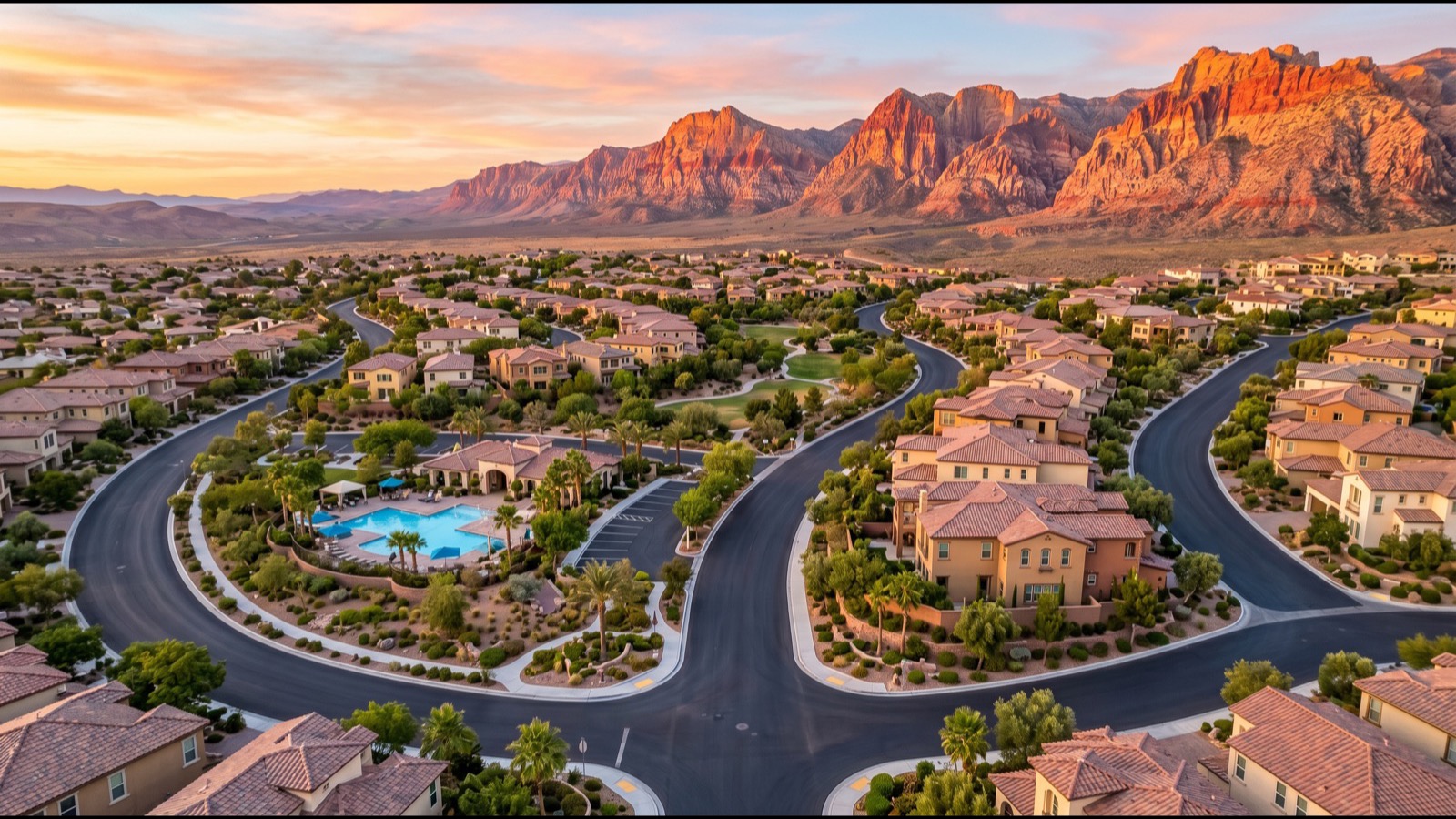
Summerlin runs on a two-tier governance model that surprises many owners accustomed to a single-HOA neighborhood. At the top sits the Summerlin Council, the master community association created by Howard Hughes Corporation when the master plan launched in the early 1990s. The Summerlin Council governs the community-wide CC&Rs, maintains the Summerlin trail system and community parks, and enforces sitewide covenants that apply to every home in every village. Below the Summerlin Council sit approximately 23 village sub-associations, each covering a defined geographic village — The Ridges, Stonebridge, The Cliffs, The Hills, The Paseos, The Trails, The Mesa, Summerlin Centre, Tournament Hills, and others — each with its own CC&Rs, design guidelines, assessment structure, and ARC.
Most owners pay two HOA assessments: one to the master Summerlin Council and one to their village sub-association. The village sub-association's ARC is the primary body that reviews and approves exterior modification applications. The Summerlin Council's broader design guidelines set the floor — no village ARC can approve something the master guidelines prohibit — but individual village ARCs can be, and often are, significantly more restrictive than the master. According to Howard Hughes Corporation / Summerlin, the master design standards were last updated in 2022 and set sitewide standards for architectural character, materials, color palette families, and landscape types. Village-level guidelines layer additional specifics on top.
What Exterior Projects Require ARC Approval in Summerlin?
The practical rule is: if it changes the exterior appearance of your home or lot, it requires ARC approval. Summerlin's CC&Rs are deliberately broad on this point because the whole purpose of the ARC process is to maintain design cohesion across the master plan. The following categories consistently require written approval before work begins across all Summerlin villages — this list is not exhaustive, and when in doubt, submit:
Paint and exterior finish: Any change to exterior paint color, stucco color, trim color, garage door color, or front door color. Even repainting with the same color technically requires submittal in most villages. The Summerlin Council maintains an approved color palette; many villages have their own approved palettes that are subsets of or additions to the master list. Submitting a paint chip or manufacturer color card with your application speeds review significantly.
Roofing: Replacement of roof tile or roofing material, change in roof color, or addition of rooftop features. The Ridges and Stonebridge villages have strict custom-home roof guidelines governing tile profiles, color families, and pitch. Per-square-foot replacement projects that match the existing approved material typically receive expedited review.
Landscaping changes: Any significant change to front-yard or visible side-yard landscaping — removal of lawn/turf, planting of new trees or shrubs, installation of hardscape (pavers, decomposed granite, boulders), addition of water features, or installation of artificial turf. Turf removal for drought-tolerant xeriscape is protected under Nevada law (see NRS section below) but you still submit to document the conversion meets ARC landscape standards.
Walls, fencing, and gates: Addition of any perimeter wall, courtyard wall, garden wall, gate, or fence — including replacement of an existing structure with a different material, height, or color. Block wall color, cap style, pilaster placement, and gate hardware are all governed.
Patios, pergolas, ramadas, and shade structures: Any permanent or semi-permanent addition to the rear or side yard visible from common areas, neighboring lots at grade, or the street. Pergola dimensions, materials, finishes, and setbacks from property lines are typically specified in village design guidelines.
Pools, spas, and water features: Installation or expansion of a pool, spa, water feature, or combination. ARC pool submittals require full engineering plans, equipment pad location, coping material/color samples, deck material/color, fence/barrier design, and often a landscape plan for the disturbed area. According to Clark County Department of Building, a pool permit in Clark County unincorporated (where much of Summerlin sits) requires separate Building Department approval in addition to ARC approval — you need both before breaking ground.
Solar panels: Installation of rooftop or ground-mounted solar. HOAs cannot unreasonably restrict solar under NRS 116.2111, but they can regulate placement (front-facing vs. rear), flush-mount requirements, and color of racking. Summerlin village ARCs typically approve rear-facing flush-mount systems within one review cycle; front-facing arrays visible from the street require more documentation.
Additions and structural changes: Any addition of square footage, room expansion, enclosed patio conversion, garage expansion, or attached structure. These projects require full architectural plans, site plan showing setbacks, and often engineer-stamped drawings before ARC will accept the submittal.
Driveways and hardscape: Widening a driveway, changing driveway material (pavers vs. concrete vs. stamped concrete), adding a side apron, or installing decorative hardscape visible from the street. Paver color and pattern are often specified in village guidelines.
Satellite dishes, antennae, and exterior equipment: Placement of satellite dishes, TV antennae, HVAC equipment, generators, tankless water heaters, and similar mechanical equipment visible from outside the home. Federal law limits HOA restrictions on OTARD (Over-the-Air Reception Devices) dishes under 1 meter, but placement to minimize visibility is still negotiated with the ARC.
Exterior lighting: Addition of landscape lighting, wall sconces, path lights, string lights on pergolas, or uplighting on trees or architectural features. Light color temperature, fixture style, and cutoff angles (to prevent light trespass onto neighboring lots) are commonly specified.
Security cameras: Nevada law protects your right to install security cameras on your own property, but ARC guidelines govern placement that would be conspicuously visible from the street.
What Is the ARC Application Process Step by Step?
The Summerlin ARC process follows a consistent sequence across all villages, though timelines and specific requirements vary by sub-association. Understanding the sequence — and front-loading your application with complete materials — is the single most effective way to get a first-pass approval rather than a request for additional information (RAI) that restarts your clock.
Step 1: Obtain the application form. Contact your village sub-association management company — most Summerlin villages are managed by FirstService Residential, Nevada Management Group, or Associa Nevada. The architectural application form is available through your community's resident portal, by email request, or in some villages in hard copy at the management office. The Summerlin Council's master application is available at summerlin.com, but your village sub-association's form is the one you'll actually submit for most projects.
Step 2: Assemble your submittal package. A complete package includes: (a) the completed application form with project description, start date, and estimated completion date; (b) a plot/site plan showing your property boundaries, the existing home footprint, and the proposed work location — a parcel map from the Clark County Assessor works as a base; (c) material and color samples (paint chips, tile samples, paver samples, landscape plant list); (d) contractor information including license number; (e) for pools, additions, and structural work, engineer-stamped or architect-drawn plans. Incomplete submittals are the primary cause of delayed review — most ARCs will return an incomplete package rather than begin review.
Step 3: Submit and pay the application fee. Application fees in Summerlin villages range from approximately $50 for a simple landscape or paint change to $250–$500 for pool and addition submittals, with some villages requiring a refundable design-review deposit of $2,500–$5,000 for large additions or custom home projects. Confirm your specific village's fee schedule with your management company before submitting.
Step 4: ARC review. The ARC committee — typically 3–5 volunteer homeowners and/or board-appointed members — reviews your application in scheduled meetings or on a rolling basis, depending on your village. The review window per Summerlin CC&Rs is typically 30 calendar days from the date of receipt of a complete submittal; many villages target 45 days for complex projects. During review, the ARC may conduct a site visit.
Step 5: Decision — approval, conditional approval, or denial. The ARC returns one of three decisions: (a) Approval — proceed as submitted, with confirmation letter; (b) Conditional Approval — proceed with specified modifications (change this color, reduce this height, add this screening element); (c) Denial — application does not conform to CC&Rs or guidelines. Conditional approvals are the most common outcome for complex projects; accepting conditions in writing and modifying your plans accordingly gets you to a full approval quickly. Denials can be appealed to the sub-association board within the time window specified in your CC&Rs.
Step 6: Execute the approved work. Once you have written approval in hand, your contractor can begin. Keep the approval letter on file at the jobsite — if the ARC or a board member conducts a site visit during construction, they will ask to see it.
Step 7: Completion inspection. Some Summerlin villages require a post-completion ARC inspection or owner-submitted photos confirming the work matches the approved plans. If a deposit was collected, completion and final inspection are often conditions of deposit refund.

How Do ARC Standards Differ Across Summerlin Villages?
Not all Summerlin villages are equal in ARC rigor. The review timeline, palette restrictions, plan requirements, and overall strictness vary significantly by village tier. Understanding where your village falls on the spectrum is important for setting realistic expectations.
| Dimension | Premium Custom Villages (The Ridges, Stonebridge, The Cliffs) | Mid-Tier Villages (The Paseos, The Hills, Tournament Hills) | Established Villages (The Trails, Summerlin Centre) |
|---|---|---|---|
| Typical ARC review window | 45–60 days | 30–45 days | 21–30 days |
| Color palette | Restricted custom palette per village; strict earth tones | Approved palette list with limited accent options | Approved palette families; somewhat more flexibility |
| Plan requirements for additions | Architect-stamped drawings required; engineer letter for structural | Detailed contractor plans; engineer stamp for structural | Detailed contractor drawings typically sufficient |
| Pool submittal complexity | Full engineering plans, landscape plan, board-level approval often required | Engineering plans + ARC-level approval | ARC-level approval with basic plans |
| Application fee range | $250–$5,000+ (deposits for large projects) | $100–$2,500 | $50–$500 |
| Front-yard solar restrictions | Rear-facing only; flush-mount required; may require board approval | Rear-facing preferred; flush-mount required | Rear-facing preferred; flush-mount required |
| Typical violation fine | $100–$200/day after cure period | $50–$150/day after cure period | $25–$100/day after cure period |
The Ridges: Summerlin's flagship luxury village — 855 acres of custom and semi-custom lots priced from approximately $1.2 million to over $10 million — operates the most rigorous ARC in the entire master plan. The Ridges requires architect-stamped plans for any addition or structural change, has a highly specific approved palette of earth tones and naturalistic materials, and often routes major exterior projects to a board-level design review beyond the ARC committee. Budget 45–60 days for review and be prepared for multiple revision rounds on non-standard projects.
Stonebridge: A premium guard-gated village with contemporary-leaning design guidelines and some of Summerlin's most dramatic Red Rock Canyon views. Stonebridge's ARC is similarly rigorous to The Ridges for custom and semi-custom product; production-home sections have faster ARC tracks. Home prices run approximately $850,000 to $4 million+.
The Cliffs: Positioned in the southern Summerlin area with a mix of production and custom product, The Cliffs has developed village-specific design guidelines that reflect the natural desert environment — native or desert-adapted landscaping is not just permitted but encouraged, and the color palette leans toward desert naturals. ARC timelines typically run 30–45 days.
Mid-tier villages (The Paseos, The Hills, Tournament Hills, The Mesa): These established villages represent the core of Summerlin's family production-home market — prices from approximately $550,000 to $1.5 million — and operate reasonably efficient ARCs with 30–45 day review windows, well-documented approved palettes, and contractor-plan-level submittal requirements for most projects. The majority of Summerlin homeowners making standard improvements operate in this tier.
Established villages (The Trails, Summerlin Centre): Among Summerlin's original villages — some dating to the early-to-mid 1990s — these areas have mature CC&R frameworks with somewhat more established precedent and somewhat less complex submittal requirements for routine projects. The Trails community, for instance, has decades of approved project precedent that makes routine landscape and paint approvals fairly predictable.
What Does Nevada Law Protect Homeowners From?
Nevada law places meaningful limits on what HOAs — including Summerlin's — can restrict. These protections are often underused by homeowners who assume the HOA has unlimited authority. According to Nevada Revised Statutes, three areas of NRS Chapter 116 are most relevant to Summerlin remodel projects:
NRS 116.330 — Drought-tolerant landscaping: A homeowners association may not prohibit a unit's owner from installing drought-tolerant plants or ground cover to replace existing grass or turf. This is a significant protection given that the Southern Nevada Water Authority (SNWA) actively pays cash rebates — currently $5 per square foot under the Water Smart Landscapes program — for turf removal and replacement with drought-tolerant landscaping. Your Summerlin HOA ARC can regulate the design, materials, and plant palette of your turf conversion, but it cannot prohibit the conversion outright. Submit your xeriscape landscape plan for ARC review and reference NRS 116.330 in your application notes if you anticipate resistance.
NRS 116.2111 — Solar and renewable energy: An HOA may not prohibit or unreasonably restrict a unit's owner from installing solar energy systems on the owner's separate property. The statute defines "unreasonable restriction" as anything that would increase the cost of the system by more than 15% or decrease efficiency by more than 10%. According to Nevada's NRS solar provisions, HOAs can still require flush-mount installation, placement on rear-facing roof sections, and color coordination of racking with the roofline — but outright denial of a conforming rear-mount solar system is impermissible. If your ARC denies a conforming system, escalate to the Nevada Real Estate Division Ombudsman (see contacts in the Sources section).
Flags and political/religious displays: Nevada law (NRS 116.325) provides homeowners with specific rights to display the U.S. flag, Nevada state flag, POW/MIA flag, and certain political or religious items — HOAs cannot prohibit these within the protections of the statute.
Security cameras: Nevada law protects your right to install security devices on your own property. HOAs can regulate visibility from the street but cannot prohibit security camera installation outright.
The practical takeaway: before accepting a denial on a solar, xeriscape, flag, or security device project, consult the NRS directly (available free at leg.state.nv.us) and consider filing a complaint with the Nevada Real Estate Division Ombudsman's office if you believe the denial violates NRS Chapter 116.
What Happens If You Start Work Without ARC Approval?
Skipping ARC approval is the single most common and most expensive HOA mistake Summerlin owners make. The consequences are layered and can follow the property — and the seller — for years.
Fines: Once an ARC violation is documented, your HOA will send a cure notice specifying a period (typically 14–30 days) to either complete the approval process or remove the unapproved work. If the cure period lapses without resolution, daily fines begin — ranging from $25 to $200 per day depending on your village and the nature of the violation. A pool installed without approval that takes 90 days to resolve can accumulate $4,500 to $18,000 in fines alone before cure is complete.
Forced removal: HOAs in Nevada have the authority to compel the removal of unapproved improvements and to place a lien on your property to recover the cost of enforcement. For a pool or addition, forced removal can cost the owner $25,000 to $60,000+ — not including the cost of the original installation, which may need to be redone to meet ARC specifications after approval.
Resale complications: Every Summerlin property sale involves a resale disclosure package — a CC&R compliance certificate issued by your HOA. Open violations are disclosed in this package and are visible to the buyer's attorney and agent. According to our experience across 9,600+ Nevada closings, buyers routinely demand that open ARC violations be cured as a condition of closing. If you cannot quickly demonstrate retroactive approval or cure the violation, you will be forced to either drop your price to cover the buyer's risk or pull the listing. In competitive markets, this disclosure is a deal-killer. Retroactive approval — applying for approval after the work is done — is considered by some village ARCs but is not guaranteed and often comes with additional conditions or fines.
Mortgage and insurance issues: Unapproved structural additions may not be covered by your homeowner's insurance policy and may affect your lender's view of the collateral on a refinance.

How Should You Prepare a First-Pass Winning ARC Application?
A well-prepared application is the difference between a 30-day approval and a 90-day back-and-forth. Across our work with Summerlin sellers preparing for listing — many of whom are resolving ARC approvals as part of pre-listing prep — I've observed what works consistently.
Front-load completeness. The most common cause of delay is an incomplete submittal package. Before you submit, confirm with your management company exactly what documents are required for your specific project type. Call them; don't guess from the generic application form.
Use the approved palette proactively. Before choosing a paint color or landscape material, obtain the approved palette list from your village sub-association. Many villages post these on their resident portals; some require a phone call. Starting with palette-approved colors eliminates the most common conditional-approval scenario.
Include a site plan every time. Even for simple projects like a garden wall or pergola, a sketch showing property boundaries, the home footprint, setbacks, and the proposed improvement location dramatically reduces ARC questions. A Clark County Assessor parcel map costs nothing and provides a clean base.
Show your contractor's license. Nevada requires contractors to be licensed. Including your contractor's Nevada State Contractors Board license number in the application demonstrates professionalism and pre-answers an ARC question. According to Nevada State Contractors Board, you can verify any contractor's license status online — doing so and including the confirmation with your application is a small detail that signals seriousness.
For pools and additions, hire an architect for the plan set. Yes, this costs money — plan sets for Summerlin ARC purposes typically run $500 to $3,500 depending on project complexity. But it buys you two things: a submittal that meets the plan-quality threshold ARCs expect for complex projects, and a liability backstop if the work later has a structural issue. For a $60,000 to $120,000 pool or addition project, this is not an optional line item.
Reference Nevada law where applicable. If your project involves turf conversion, solar, or other NRS-protected categories, include a brief note in your application citing the applicable statute. This is not adversarial — it's informational, and it puts the ARC on notice that you know your rights, which often accelerates approval for protected project types.
Communicate proactively. If your review window is approaching 30 days without a decision, a polite follow-up call to the management company is appropriate. Ask if the application is complete and whether additional information would help the committee. This is not pressure — it's project management.
How Do Pool Projects Work Through the ARC?
Pool projects are the most complex ARC submittal category in Summerlin and deserve their own treatment. A Summerlin pool project involves two parallel approval tracks: ARC approval from your village sub-association and a building permit from Clark County (most of Summerlin sits in unincorporated Clark County). You need both, and they run on different timelines.
ARC submittal for a pool typically requires: full pool engineering plans (drawn by a licensed pool contractor or structural engineer), a site plan showing pool placement relative to property boundaries and the home, equipment pad location and screening plan, coping material and color samples, deck material and color, fence/barrier design meeting Clark County's 60-inch barrier requirement for pool enclosures, and a landscape plan for the area disturbed during installation. Some Summerlin villages additionally require water feature details, lighting plan, and a spa engineering sheet if a spa is included.
Typical pool project cost in Summerlin in 2026 ranges from approximately $65,000 for a basic rectangular pool up to $180,000 to $300,000+ for custom-shaped pools with grotto features, waterfalls, baja shelves, fire features, and integrated spa — before deck, landscaping, and equipment enclosure. The ARC application fee for a pool in most Summerlin villages runs $200–$500, with some villages requiring a $2,500–$5,000 refundable design deposit.
Clark County Building permit for a pool in unincorporated Clark County runs approximately $800–$1,500 in permit fees and requires submission of pool engineering plans, site plan, electrical plans for pool equipment, and demonstration of barrier/fence compliance. According to Clark County Department of Building, standard pool permit processing currently runs 3–6 weeks for residential applications. Plan your pool project timeline to accommodate both ARC (30–45 days) and County permit (3–6 weeks) running simultaneously, not sequentially — a well-organized project manager submits both in parallel.
How Does Landscaping and Turf Conversion Work Under Summerlin ARCs?
Turf removal has become one of the most common ARC submittal types in Summerlin over the past three years, driven by SNWA turf rebates and Nevada's mandatory water conservation requirements. The Southern Nevada Water Authority's Water Smart Landscapes program currently pays $5 per square foot (on the first 10,000 square feet for residential properties, then $2.50 per square foot) for converting irrigated grass to water-efficient landscaping — on a typical Summerlin front yard of 400–800 square feet, that's a $1,200 to $2,400 rebate check from SNWA directly.
NRS 116.330 prohibits Summerlin (and any Nevada HOA) from forbidding this conversion. But the ARC can and does regulate the design: approved plant species lists, minimum plant coverage percentages, decomposed granite color and depth standards, boulder size and placement, and prohibition of certain materials (pure pea gravel without plants, for example, may be rejected as visually unattractive). According to SNWA's conservation guidelines, Southern Nevada has removed more than 200 million square feet of ornamental grass since mandatory conservation programs began — Summerlin has been one of the most active conversion areas in the valley.
Prepare a landscape plan for any significant turf-to-xeriscape conversion: a to-scale drawing showing existing conditions, proposed plant locations with species and mature-size notes, hardscape (decomposed granite, pavers, boulders) layout, and irrigation system changes. SNWA's website provides plant palette recommendations that are also generally accepted by Summerlin ARCs — starting from their approved desert-adapted plant list gives you a palette your ARC is familiar with.
For artificial turf: many Summerlin villages permit artificial turf in rear and side yards; front-yard artificial turf is more restricted and some villages prohibit it in the front yard entirely (where it would be visible from the street). Confirm your village's specific position before purchasing materials.
What Are the Costs of the ARC Process From Start to Finish?
Understanding the full cost structure of the ARC process helps owners budget realistically before committing to a project. According to our experience working with Summerlin sellers and owners on pre-listing ARC compliance, the cost picture breaks down across several categories:
| Project Type | ARC Application Fee | Design-Review Deposit (refundable) | Plan/Architect Cost | Typical Total Project Cost |
|---|---|---|---|---|
| Exterior paint change | $50–$150 | None typically | None (paint chip submittal) | $3,000–$8,000 (paint + labor) |
| Turf/landscape conversion | $75–$250 | $500–$1,000 in some villages | $200–$800 (landscape plan) | $5,000–$20,000+ (minus SNWA rebate) |
| Pergola/patio cover | $100–$300 | $500–$1,500 | $300–$1,500 (contractor drawings) | $15,000–$45,000 |
| Pool (standard) | $200–$500 | $2,500–$5,000 | $800–$2,500 (pool engineering) | $65,000–$120,000 |
| Pool (custom/luxury) | $250–$500 | $2,500–$5,000 | $2,000–$5,000 | $120,000–$300,000+ |
| Addition (1,000 sq ft) | $200–$500 | $2,500–$5,000 | $3,000–$8,000 (architect) | $200,000–$400,000+ |
| Solar panels (roof-mount) | $100–$300 | None typically | Included in installer package | $18,000–$40,000 (before incentives) |
The SNWA turf rebate can significantly offset landscape conversion costs. A 600 square foot front-yard conversion at $5/sq ft yields a $3,000 rebate deposited directly into the owner's bank account after SNWA inspects and verifies the conversion. Stack the rebate against your ARC application cost and landscape plan cost and the net out-of-pocket on a basic conversion drops materially.
How Does ARC Compliance Affect Summerlin Home Sales?
This is the section I tell every Summerlin seller to read. According to our pipeline data across 9,600+ Nevada closings, ARC compliance issues are the most common non-title, non-lender problem that delays or kills Summerlin transactions in the final two weeks of escrow. Here is why: Nevada law requires that sellers provide buyers with a complete resale disclosure package from the HOA — this package includes current assessments, budget, reserve study, meeting minutes, and a CC&R compliance certificate noting any open violations. Buyers and their agents receive this package during the inspection period, and buyers have the right to back out or renegotiate based on disclosed HOA issues.
Open ARC violations in the compliance certificate — unapproved paint, an unpermitted pergola, a pool expansion done without sign-off — give buyers leverage. Most buyers don't want to inherit a violation; they demand cure before close. Sellers either agree to cure (removing or modifying the unapproved work, or completing a retroactive approval process if the ARC will entertain it), negotiate a price reduction to account for the buyer's estimated cure cost, or lose the buyer. According to Las Vegas REALTORS (LVR) member feedback cited in our transaction experience, ARC-violation-related renegotiations in Summerlin cost sellers an average of $5,000 to $25,000 in price adjustments or repair credits when not cured before listing — and those are the deals that close. Some buyers walk entirely.
The pre-listing ARC audit is now standard practice for our Summerlin listings at NREG. Before we list any Summerlin home, we request a current CC&R compliance status from the HOA management company and walk the exterior with the seller. Any work completed without documentation — even if it was done years ago and blends in perfectly — gets documented and, where possible, retroactively approved before the listing goes live. This protects the seller's list price and eliminates the disclosure risk. The same dynamic applies in Henderson HOA communities, where CC&R compliance certificates are equally scrutinized by buyers — if you're comparing Summerlin vs. Henderson, our guide on buying a home in Summerlin vs. Henderson covers HOA tier differences by neighborhood. Call us at (702) 637-1759 if you're preparing a Summerlin home for sale and want a pre-listing ARC consultation.
Which Summerlin Villages Have the Strictest ARC Standards?
According to our transaction experience across Summerlin villages and feedback from village management companies, the ranking of ARC rigor from most to least complex follows the property value tiers fairly closely — higher-value villages have more complex guidelines because the financial stakes of design-standard deviation are higher and buyers in those tiers pay specifically for the uniformity.
| Village | ARC Tier | Typical Price Range (2026) | Typical Review Timeline | Notable Guideline Specifics |
|---|---|---|---|---|
| The Ridges | Highest | $1.2M–$10M+ | 45–60 days | Board-level approval for major projects; architect-stamped plans required |
| Stonebridge | Very High | $850K–$4M+ | 45–60 days | Contemporary design guidelines; strong palette restrictions |
| The Cliffs | High | $700K–$2.5M | 30–45 days | Desert naturalistic palette; native landscape encouraged |
| Tournament Hills | High-Mid | $650K–$2M | 30–45 days | Golf-adjacent sensitivity; strong landscape standards |
| The Paseos | Mid | $550K–$1.5M | 30–45 days | Well-documented palette; efficient ARC process |
| The Hills | Mid | $500K–$1.3M | 30–45 days | Established precedent library; predictable approvals |
| The Mesa | Mid | $500K–$1.2M | 30–40 days | Newer village with modern design guidelines |
| The Trails | Established | $450K–$1.1M | 21–35 days | Among Summerlin's oldest villages; extensive precedent |
| Summerlin Centre | Established | $430K–$950K | 21–30 days | Original village; lower complexity for routine projects |
Frequently Asked Questions
Can a Summerlin HOA reject my turf removal project?
No — under Nevada Revised Statutes NRS 116.330, a Nevada HOA cannot prohibit drought-tolerant landscaping or turf replacement with water-efficient ground cover. Your Summerlin ARC can regulate the design — plant species, coverage percentages, material colors — but it cannot outright deny a conforming xeriscape project. Submit a landscape plan referencing NRS 116.330, use SNWA-approved plant species, and confirm approved DG color and boulder sizing with your village management company before ordering materials.
How long does ARC approval take for a standard Summerlin paint project?
Paint projects are the fastest ARC category in Summerlin. Most villages process paint applications within 21–30 days of receipt of a complete submittal (completed application form plus paint chip or manufacturer color card). The key variable is whether your chosen color is on the village's pre-approved palette — palette colors typically receive faster review than off-palette colors, which may require committee deliberation. Choosing from the approved palette and submitting a clear, color-accurate chip dramatically reduces the chance of a revision request.
What happens to my ARC deposit if my project is denied?
Design-review deposits are refundable in most Summerlin villages regardless of the outcome — they are held against the cost of ARC administrative review and site inspection, not as a penalty. Confirm the specific deposit refund terms for your village with your management company before submitting; some villages retain a portion of the deposit to cover administrative costs even if the project is denied.
Can I start demolition before ARC approval if I have a County building permit?
No. ARC approval and the Clark County building permit are parallel requirements, not sequential — and in Summerlin, ARC approval is required BEFORE work begins regardless of permit status. Starting work with only a county permit and no ARC approval is an HOA violation that triggers the cure-and-fine process. The county permit does not substitute for or supersede ARC approval.
Does buying a new-construction Summerlin home exempt me from future ARC requirements?
No. New construction homes in Summerlin are built to the builder's approved plans and ARC standards, but once you close and own the home, all future exterior modifications require your own ARC approval. The builder's construction approval does not transfer to modifications made by a subsequent owner. Builders like Taylor Morrison, Toll Brothers, and Woodside Homes build to village ARC standards; you must follow the same process for any change you make after purchase.
What should I do if my ARC application is denied?
First, request the specific written reason for denial from your management company. Most Summerlin CC&Rs require the ARC to provide a specific written reason. Review the denial against your village design guidelines to determine whether the denial is valid or whether the ARC misapplied the guidelines. If valid, modify your plans to address the specified issue and resubmit. If you believe the denial is incorrect or violates NRS Chapter 116, appeal to the sub-association board per the appeal procedures in your CC&Rs. For NRS-protected projects (solar, xeriscape), contact the Nevada Real Estate Division Ombudsman's office for HOA dispute guidance.
Which Sources Inform This Summerlin HOA Remodel Approval Guide?
This guide draws on our transaction experience across 9,600+ Nevada closings, direct working knowledge of Summerlin village sub-association processes, and the following primary sources — all authoritative for the claims made in this post:
Howard Hughes Corporation / Summerlin is the master developer and original source of the Summerlin Council's master CC&Rs and design guidelines. Nevada Revised Statutes Chapter 116 governs all common-interest communities in Nevada, including HOA authority limits on solar (NRS 116.2111), drought-tolerant landscaping (NRS 116.330), and flags and security devices. The Nevada Real Estate Division Ombudsman for HOAs handles homeowner complaints and dispute resolution for Nevada HOA matters. The Clark County Department of Building issues pool, addition, and structural improvement permits for unincorporated Clark County, where most of Summerlin sits. The Clark County Assessor provides parcel maps and property record data used as site-plan bases for ARC submittals. Southern Nevada Water Authority (SNWA) administers the Water Smart Landscapes turf-removal rebate program (currently $5/sq ft) and maintains approved plant and landscape material guidance. Las Vegas REALTORS (LVR / GLVAR) provides closed-transaction data underpinning Summerlin price-premium and market analysis. Nevada State Contractors Board verifies contractor license status for all construction projects — include the NSCB number in every ARC submittal. NV Energy and the U.S. Department of Energy provide guidance on solar interconnection and the 30% federal investment tax credit for residential solar installation. U.S. Census Bureau provides demographic and housing-unit data for the Las Vegas-Henderson-Paradise MSA. Bureau of Labor Statistics provides Las Vegas metro employment and wage data cited in market context. HUD / Federal Fair Housing governs fair housing protections applicable to HOA enforcement. The Federal Communications Commission (FCC) OTARD rules govern HOA restrictions on satellite dishes and antennas.