

Reno HOA fees are the line item buyers most often guess at, and the guesses are usually wrong because the numbers are hard to find. When I checked eight of the best-known associations in Reno and Sparks on October 8, 2026, none posted a per-home assessment on a public page. Somersett and Sierra Canyon keep account details behind owner logins, ArrowCreek and Double Diamond route owners to their managers' portals, Caughlin Ranch publishes its whole budget but not a per-home rate, and Damonte Ranch's master site lists its associations without listing dues. So for this update I went to the closings themselves: what listing agents reported to the Northern Nevada Regional MLS on closings in the major plats over the last year.
Across the more than 9,600 transactions Nevada Real Estate Group — the #1 real estate team in the state — has closed, the HOA questions that matter are the same ones: what will I pay each month, to how many associations, what does it cost to get the documents, and what can I still walk away from after I read them. This guide answers those with named communities, Nevada statutes quoted by section, the Real Estate Division's 2026 fee caps, and the associations' own budgets, fee schedules and rules where they publish them. It is written for Reno and Sparks buyers, and it replaces the generic dues ranges that ran in the first version of this post.
Reno HOA dues depend on the plat, and none of the eight associations I checked posts a per-home rate publicly. In our pull of Northern Nevada Regional MLS sales that went under contract in the 12 months ending August 31, 2026, median monthly dues ran $40 in Double Diamond, $75 in Wingfield Springs, $265 in Somersett, $383 in ArrowCreek and $533 in Montrêux. Nevada caps resale charges at $809.15 per association; read the package within five days.
- Median monthly dues ran $40 in Double Diamond to $533 in Montrêux in our October 2026 MLS pull.
- Many Reno homes pay two associations; Sierra Canyon closings reported $114 to Somersett plus $148 to $151.
- Nevada's Form 910 caps 2026 resale charges at $809.15 per association, and master and sub-associations may both charge.
- NRS 116.4109 gives buyers until midnight of the fifth calendar day after receiving the package to cancel.
- Before closing, read the reserve study, budget, rental rules and parking limits, then confirm every association's charges.
How Much Are HOA Dues in Reno and Sparks Master Plans?
The short answer is that dues in the big Reno and Sparks master plans run from about $40 to more than $500 a month, and the spread inside a single master plan can be almost as wide as the spread between them. Because the associations do not publish per-home rates, the most complete public record is the MLS. Northern Nevada MLS listings carry fields for each association charge the listing agent enters, with how often it is billed, and that is what the table below summarizes.
The method matters, so here it is. This is our own pull of Northern Nevada Regional MLS data through Repliers on October 8, 2026, covering residential sales that went under contract from September 1, 2025 through August 31, 2026 and had closed by October 8, 2026, so a few late-window contracts that had not yet closed are missing. I kept plats whose recorded subdivision name contains the community's name, converted every association charge to a monthly figure using the billing frequency the agent entered, and added the charges together when a home belongs to more than one association. The figures are agent-entered, not association-published, so treat them as a strong starting point and confirm the exact number in the resale package.
| Community | Closings with a dues entry | Most common charge as listed | Median monthly, all associations | Middle half of closings |
|---|---|---|---|---|
| Double Diamond | 92 | $120 a quarter (62 closings) | $40 | $40 to $120 |
| Wingfield Springs | 161 | $75 a month (60); $45 a month (38); $190 a quarter (27) | $75 | $63 to $75 |
| Caughlin Ranch | 33 | $281.05 or $300.72 a quarter; $841 to $843 a quarter in Caughlin Creek | $100 | $94 to $281 |
| Damonte Ranch | 166 | Landscape and drainage charges, often $43.50 to $99 a quarter each, plus a sub-association on many homes | $116 | $50 to $242 |
| Somersett (outside Sierra Canyon) | 73 | $265 a month (31); $206 a month (19) | $265 | $206 to $265 |
| Sierra Canyon at Somersett | 35 | $114 Somersett plus $148 or $151 Sierra Canyon, monthly | $265 | $262 to $265 |
| ArrowCreek | 55 | $392 a month (21); $382.25 a month (10) | $383 | $382 to $392 |
| Montrêux | 27 | $1,600 a quarter (22); $1,500 a quarter (4) | $533 | $533 in most; up to $1,400 with a second association |
Two notes keep the table honest. Wingfield Springs had 238 matching records and the pull returned 200 of them, and Double Diamond returned 100 of 102, because I stayed inside a ten-request budget; the medians come from the records returned. And frequency is where most published "Reno HOA" numbers go wrong. Montrêux's $1,600 and Double Diamond's $120 are quarterly charges, so the monthly equivalents are about $533 and $40. If you see either figure quoted as a monthly fee, it has been misread. For the wider price picture in each area, our South Reno vs Spanish Springs vs Northwest Reno comparison covers closings and supply, and the Somersett, ArrowCreek, Damonte Ranch, Double Diamond, Caughlin Ranch, Montrêux and Wingfield Springs pages carry live listings.

Which Reno Associations Publish Their Dues, and Which Don't?
Nevada law makes an association hand its budget and fee statement to a seller for the resale package, but nothing requires it to post a per-home rate on the open web. That is why buyers end up relying on secondhand ranges. I read each association's public pages on October 8, 2026 to see what a buyer can verify before writing an offer, and the answer varies a great deal.
According to the Somersett Owners Association's resale page, the association charges a $340 new-home set-up fee at sale and a capital contribution of 0.1% of the sales price on resales, or $1,000 on new-home sales. It orders resale documents through HomeWiseDocs, and the page notes that a home in a Somersett sub-association needs "two sets of documents, one for the master association and the other for the sub-association." Its account-balance and assessment pages require an owner login. Caughlin Ranch is the most transparent of the group: its financial reports page posts the 2026 budget, audited 2025 statements and fiscal 2026 reserve studies, but not a per-home dues schedule.
| Association | Per-home dues posted publicly? | What a buyer can read before an offer |
|---|---|---|
| Somersett Owners Association | No, owner login | Resale fees: $340 set-up, 0.1% capital contribution on resales; two document sets in a sub-association |
| Sierra Canyon (inside Somersett) | No, owner login | Documents are behind the resident login |
| ArrowCreek HOA | No, paid through the resident portal | CC&Rs, rules revised August 12, 2025, architectural fee table effective August 30, 2026 |
| Caughlin Ranch HOA | No per-home rate | 2026 budget, resale fee schedule, reserve studies, audited financials |
| Damonte Ranch LMA and drainage district | No | Association structure, CC&Rs, design standards, manager contact |
| Double Diamond Ranch Master Association | No, manager's portal | Governing documents on a volunteer-run site |
| Wingfield Springs Community Association | No public rate found | No association page with an assessment schedule found |
| Montrêux Golf and Country Club HOA | Not readable | Its site stopped our reader at a browser check |
The practical lesson is that the dues number in a listing is a claim by the seller's agent, and the binding number arrives later. Ask the listing agent which associations the home belongs to before you offer, then compare the MLS entry with the association's statement when the resale package arrives. When those two disagree, the association's figure controls what you will owe.
Why Do Two Homes in the Same Master Plan Pay Different Dues?
Most Reno master plans are layered, and the layer a home sits in drives its dues more than the master plan's name does. A master association maintains the shared landscaping, trails and amenities; a village or neighborhood association inside it may add gates, private streets, front-yard maintenance or a clubhouse of its own. A buyer comparing two homes a mile apart in the same master plan can be comparing one association against two.
Damonte Ranch shows the pattern most clearly. According to Damonte Ranch's homeowner page, every owner belongs to two entities, the Landscape Maintenance Association and the Damonte Ranch Drainage District, and some homes also sit in a sub-association: New Editions HOA, Toll Brothers at Damonte, Dorado HOA, Esplanade at Damonte Ranch or Saddle Ridge Owners Association, each with "its own board of directors, architectural process, budget, governing documents, rules, assessments." In our pull, 161 of the 166 Damonte Ranch closings with a dues entry listed two or more association charges and 90 listed three, and the monthly total ran from $50 at the lower quartile to $242 at the upper quartile, so ask which layers a specific address pays.
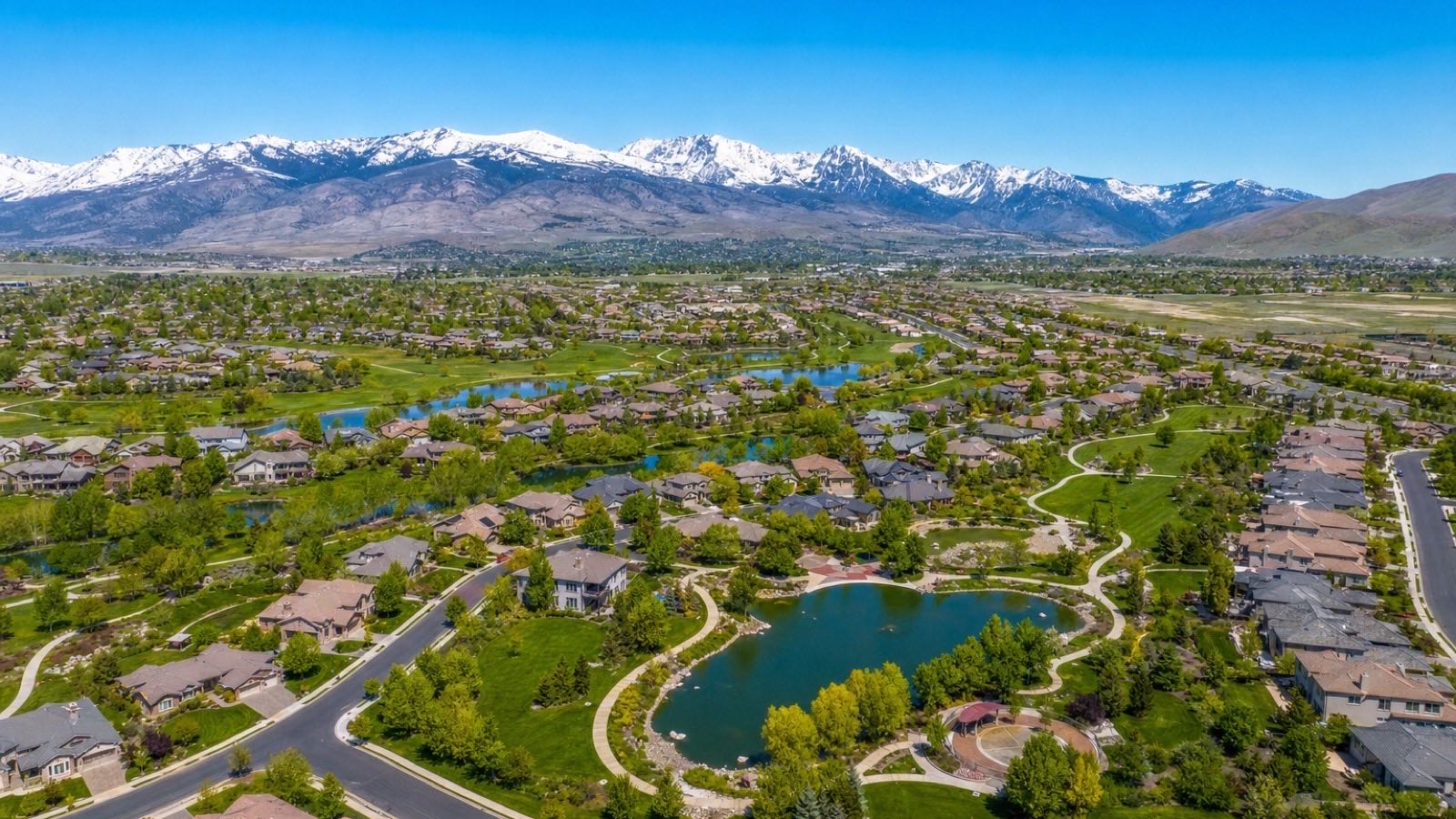
Somersett works the same way. Most homes on the Sierra Canyon plats inside Somersett reported a $114 monthly Somersett charge plus $148 or $151 a month to Sierra Canyon, for totals of $262 to $265, while most homes elsewhere in Somersett reported a charge of $265 or $206; 20 of the 76 closings outside Sierra Canyon also reported a village association. In Double Diamond, 62 closings listed $120 a quarter as their first association charge, and 26 of 92 added a second association. Caughlin Ranch's charges fall into tiers by neighborhood, from $93.68 a quarter in Caughlin Glen to $841 to $933 a quarter in Caughlin Creek, whose gated streets carry their own reserve fund in the association budget. In Montrêux, four of 27 closings reported a second association of $2,150 to $2,600 a quarter on top of the base charge. Ask which associations a specific address belongs to; the master plan's name will not tell you.
What Do Reno HOA Dues Actually Pay For?
Dues pay for whatever the association owns or has agreed to maintain, and the clearest way to see that is a real budget. Caughlin Ranch publishes one. According to the Caughlin Ranch 2026 budget, ratified November 19, 2025, the association expects $3,497,583 in member assessments for 2026. The biggest uses are payroll for its office and landscape crews at $1,935,903, operating costs at $648,503, repairs and maintenance at $398,500, and utilities at $334,800, of which irrigation alone is $260,000. It also transfers $435,385 into its main reserve fund and smaller amounts into the separate reserves of three neighborhoods: Caughlin Creek and Deer Creek, Mountainshyre and Whispering Canyon.
That budget is a useful reality check on what "landscaping" means in a Reno master plan. Caughlin's FAQ page describes 2,300 acres with 24 miles of walking trails and a common area system that "will ultimately consist of approximately 525 acres," and the budget carries lines for weed abatement ($62,000), tree removal and pruning ($25,000), fire mitigation landscaping ($10,000), patrol service ($57,900) and insurance ($132,327). A buyer who wonders why dues rise when the amenities have not changed is usually looking at water, labor and insurance.
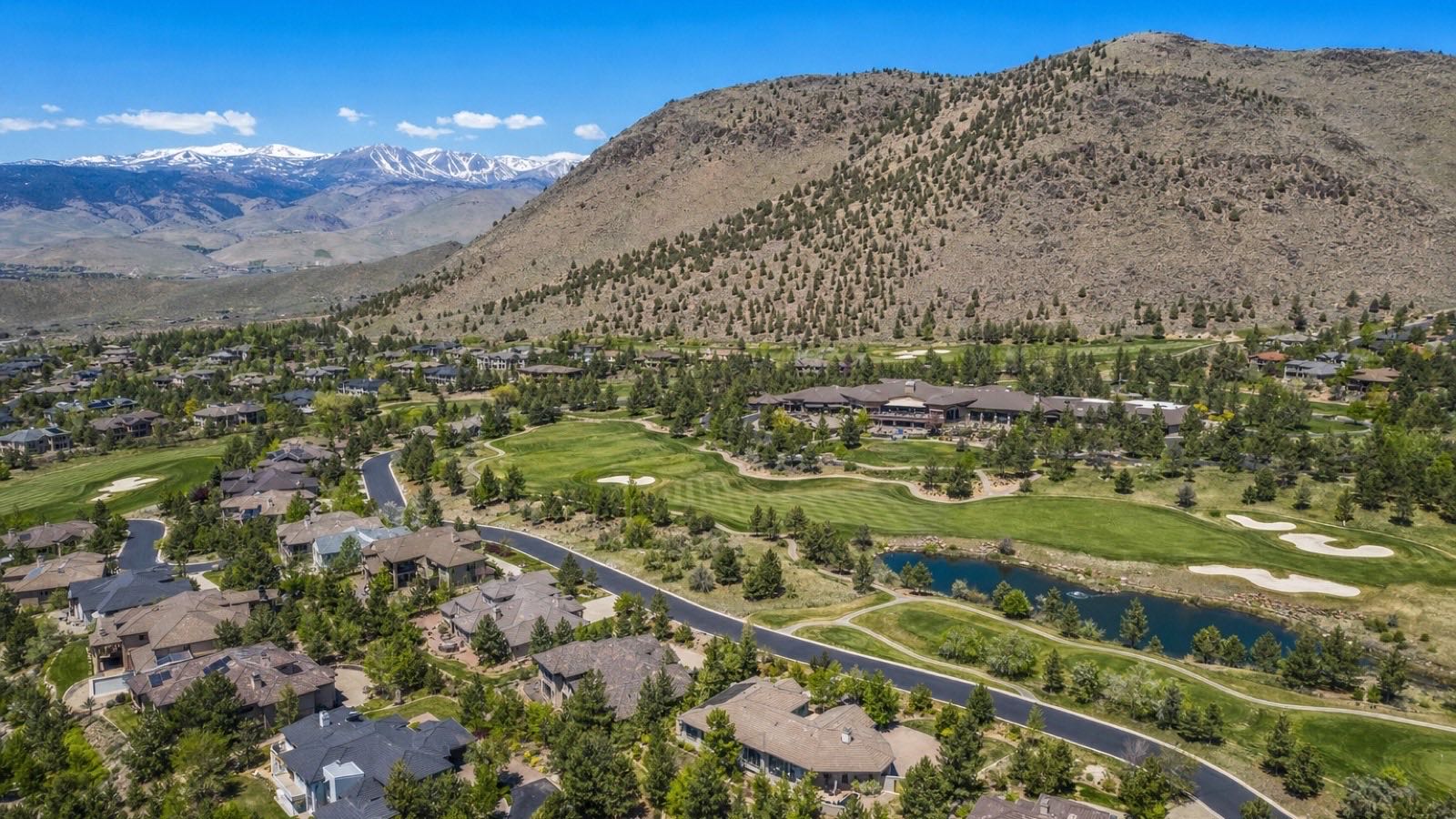
Amenity-heavy plans spend differently. The Somersett Owners Association's home page describes 2,391 acres with "two golf courses, two clubhouses, and over 27 miles of hiking and biking trails," and new owners get access to The Club at Town Center through the association. In ArrowCreek, the MLS amenity fields on recent closings list a gate and security, pools, a spa, tennis courts, a fitness center and a clubhouse, and agents most often listed snow removal (41 of 56 closings) and security (26) as included in the dues. A golf course outside your window does not tell you whether your dues pay for golf, so ask whether any club membership is separate. The resale package's budget is where you confirm what yours covers.
What Does Nevada's Resale Package Include, and How Long Can You Cancel?
Nevada puts the cost and the delivery of HOA documents on the seller. According to NRS 116.4109, a unit's owner "shall, at the expense of the unit's owner, furnish to a purchaser a resale package." Under subsection 1, the package must contain the declaration (without plats), bylaws, rules and the state information statement; a statement of the monthly assessment and any unpaid obligation; the current operating budget and year-to-date financial statement with a reserve summary; any unsatisfied judgments or pending lawsuits; any transfer or resale fees; a statement of all current and expected fees, fines and charges; and proof of the association's required insurance. Chapter 116 defines a unit as a "physical portion of the common-interest community designated for separate ownership or occupancy" (NRS 116.093), so this applies to detached homes in Somersett or Damonte Ranch, not just condos.
The clocks run like this. Under subsection 3, the association has 10 calendar days after a written request to furnish its documents and certificate. Under subsection 5, the buyer is not liable for any unpaid assessment larger than the certificate shows, and the package stays effective for 90 calendar days. Subsection 6 gives you the right to inspect the association's entire reserve study on request, not just the summary.
The cancellation right is the part to calendar. Subsection 2 says the purchaser may cancel "until midnight of the fifth calendar day following the date of receipt of the resale package," by hand delivery, prepaid mail or electronic transmission to the seller or the seller's agent, without penalty and with a prompt refund of payments. The right ends once you accept conveyance. According to the Nevada Real Estate Division's Residential Disclosure Guide, revised May 2026, the information statement is part of the resale package and "A buyer has 5 calendar days to cancel the contract after receipt of the resale package." That statement, set out in NRS 116.41095, opens with the words "BEFORE YOU PURCHASE PROPERTY IN A COMMON-INTEREST COMMUNITY DID YOU KNOW," and its first item is the five-day right. If a home sits in a master and a sub-association, you are reading two packages, so ask for both at once.
How Much Can a Reno HOA Charge for Resale Documents in 2026?
The statute sets base caps that rise with inflation, and the Real Estate Division publishes the current figures. NRS 116.4109(4)(b) caps the certificate fee at $185 plus up to $100 to deliver it in under 3 business days, with increases tied to the Consumer Price Index of no more than 3% a year; NRS 116.4109(7) caps the statement of demand at $165 plus $100 to expedite on the same terms. NRS 116.3102(1)(o) caps the fee for opening or closing a file at $350, CPI-adjusted from January 1, 2022, and says it "must not be charged to both the seller and the purchaser."
According to the Nevada Real Estate Division's Resale Package Overcharge Form 910, effective January 2026, an association may not charge more than $213.84 for the resale certificate (plus $100 to expedite), $190.73 for the demand statement (plus $100 to expedite) and $404.58 for opening or closing a file, a total of $809.15, or $200 more if both statements are expedited. The form says the file fee "may only include fees authorized by the governing documents, including transfer fees, inspection fees, processing fees, and any OTHER fees used to cover association resale costs," that "Prepaid assessments do not fall under this cap," and that "Both a sub-association and Master association (if applicable) have the authority to charge these fees." Under NRS 116.4109(4)(c), the other documents must be provided electronically, and an association may charge copying fees only if it cannot do that.
| Charge | Statute base | Form 910 cap, January 2026 | Caughlin Ranch, revised October 1, 2025 |
|---|---|---|---|
| Resale certificate or package | $185, NRS 116.4109(4)(b) | $213.84 | $169.58 |
| Expedite, under 3 business days | $100 | $100 | $100 |
| Statement of demand | $165, NRS 116.4109(7) | $190.73 | $158.98 |
| Opening or closing a file | $350, NRS 116.3102(1)(o) | $404.58 | Not listed on the schedule |
| Documents sent electronically | No charge, NRS 116.4109(4)(c) | No charge | No charge |
| Total per association | Not stated | $809.15, or $1,009.15 with both expedites | Depends on the file and transfer charges |
According to Caughlin Ranch's fee schedule, revised October 1, 2025, it charges $169.58 for the resale package, $158.98 for a statement of demand, $79.49 for an updated demand and $105.99 for a lender questionnaire, processes orders within 10 calendar days, and does not refund a processed order even if the sale is cancelled. Those figures sit under the 2026 caps, which is the point: the caps are ceilings, not prices. If an association charges more, Form 910 is how the owner who paid complains to the Division, by mail or walk-in, with the itemized receipt attached.
What Transfer, Setup and Capital-Contribution Fees Should a Reno Buyer Expect?
Dues are monthly; transfer-related charges hit once, at closing, and in our pull they often rival or exceed the document fees. There are three different things hiding under the word "transfer." One is the association's file-opening or setup charge, which Form 910 caps at $404.58 per association in 2026 and which NRS 116.3102(1)(o) bars from being charged to both sides. Another is a capital contribution or working-capital charge set by the declaration, like Somersett's 0.1% of the resale price; NRS 116.4109(1)(e) requires it to be disclosed in the package. The third is not an HOA charge at all: Washoe County's real property transfer tax.
The MLS shows what agents expected buyers or sellers to pay in each plat. The medians below are of the closings in our pull that listed a nonzero amount, and they are totals across every association the home belongs to.
| Community | Median setup fee reported | Median transfer fee reported | What the association publishes |
|---|---|---|---|
| Somersett (all plats) | $340 (103 closings) | $475 (72) | $340 set-up; 0.1% of price capital contribution on resales |
| ArrowCreek | $350 (43) | $350 (35) | Not published |
| Damonte Ranch | $500 (162) | $500 (161) | Not published |
| Double Diamond | $393.27 (74) | $350 (69) | Not published |
| Wingfield Springs | $350 (147) | $250 (97) | Not published |
| Caughlin Ranch | $200 (14) | $300 (29) | Resale and demand fees only |
| Montrêux | $290 (27) | $3,000 (25) | Not readable |
Somersett is the one place the MLS can be checked against the association: the $340 median setup entry matches the $340 set-up fee on its resale page, and on an $800,000 resale the 0.1% capital contribution is $800. Elsewhere, read the entries as questions. Where an MLS listing shows a setup fee and a transfer fee that together exceed $404.58 for one association, or a single "transfer fee" of $3,000 as in Montrêux, ask the association to name each charge in writing: a capped file fee, a capital contribution under the declaration, and a prepaid assessment are treated differently under Form 910. Who pays each one is set by your purchase agreement, not by the association.
The county tax is separate and predictable. According to the Washoe County Recorder's fee schedule, the real property transfer tax is "$2.05 per $500 of value," or $2,460 on a $600,000 sale, and under NRS 375.030 buyer and seller are jointly liable for it while the contract decides who actually pays. Our Reno buyer closing costs guide puts these HOA items in the full settlement-statement context.
How Are Reno HOA Budgets Set and Raised?
Dues change because the budget changes, and Nevada gives owners a vote that is easy to miss. According to NRS 116.31151, the board must send each owner the proposed operating budget and reserve budget "not less than 30 days or more than 60 days before the beginning of the fiscal year." The reserve budget has to show the estimated replacement cost and remaining life of each major component, the cash reserves needed and on hand, and "a statement as to whether the executive board has determined or anticipates that the levy of one or more special assessments will be necessary."
Ratification works in the board's favor. Within 60 days after adopting a proposed budget, the board sends owners a summary and sets a meeting 14 to 30 days after mailing. "Unless at that meeting a majority of all units' owners, or any larger vote specified in the declaration, reject the proposed budget, the proposed budget is ratified, whether or not a quorum is present." A majority of all owners, not of those who show up, is a high bar in a community of thousands of homes. If owners do reject a budget, the last ratified one stays in force. NRS 116.3115 then requires assessments "at least annually, based on a budget adopted at least annually," and it lets an assessment that is 60 days or more past due carry interest at the prime rate plus 2%.
Caughlin Ranch's published budget shows how that plays out. Its 2026 column is labeled a 7% increase, and member assessments rise from $3,268,769 in the 2025 budget to $3,497,583, after a 20% increase the year before, from $2,723,993 in audited 2024 assessments. That history is exactly what a buyer should look for in the budget pages of the resale package, because a home's dues are set by the next ratification, not by the figure in the listing. If you are buying in the weeks before an association's fiscal year starts (January 1 for Caughlin Ranch), ask whether a new budget has been mailed, since a newly ratified rate may take effect soon after your closing.
What Does a Reserve Study Tell You About Special Assessment Risk?
A special assessment is a charge beyond regular dues, and the reserve study is the best evidence of whether one is coming. According to NRS 116.31152, the board must have a reserve study done "at least once every 5 years," review it at least annually, and adjust the funding plan as needed. The study must be prepared by a person holding a Chapter 116A permit, must list every major component with a remaining useful life under 30 years and its estimated cost, and must estimate the total annual assessment needed to fund them. A summary goes to the Real Estate Division within 45 days after the board adopts the results.
The statute also gives boards real power. Under NRS 116.3115(2)(b), the board may, "without seeking or obtaining the approval of the units' owners, impose any necessary and reasonable assessments" to fund adequate reserves, as long as they are based on the reserve study. For a capital improvement, NRS 116.3115(9) requires written notice of the meeting at least 21 calendar days in advance.
Caughlin Ranch's study shows what to read for. According to the Caughlin Ranch reserve study for fiscal 2026, prepared by Browning Reserve Group on August 16, 2025 for 2,293 lots, the reserve contribution is $435,385 a year, or $15.82 per lot per month, and the reserves were projected at 22.9% funded at the end of 2026, up from 15.4%. The study's plan schedules contributions to climb to $30.36 per lot per month in 2030 because "Large increases in the funding plan are needed until the paving work is completed on the paths," and the board "does not anticipate any special reserve assessment will be required during the current 30-year life of the reserve study." It also notes that "Nevada statute imposes no reserve funding level requirements," so a low percentage alone is not a violation.
The MLS adds a warning light. In our pull, 9 of 112 Somersett-plat closings were flagged with an association special assessment, with entries from $499 to $2,850; 2 of 27 Montrêux closings listed $1,000 and $2,000; and 5 of 167 Damonte Ranch closings answered yes. Those are agent entries without explanations, so ask what each one funds and whether it transfers to you at closing.
Not every assessment on a Reno home comes from an HOA. Cities and counties can finance streets, sewers and other infrastructure through local improvement districts under NRS Chapter 271, and according to NRS 271.420 the amount assessed, "including each installment thereof, the interest thereon, and any penalties and collection costs, is secured by an assessment lien upon the tract assessed," with the final assessment roll recorded with the county recorder. The residential MLS records in our pull carried no populated field for those district assessments, so check the preliminary title report and escrow payoffs instead, and on new homes in Sparks or elsewhere ask the builder in writing; our Reno new construction listings are a place to compare plans.
Are Damonte Ranch's Limited-Purpose Associations Treated Differently?
Yes, and it is worth knowing before you buy in South Reno. Damonte Ranch's master layer is not a conventional HOA. Its homeowner page describes the Landscape Maintenance Association as "a Limited Purpose Association" that "is not required to follow the majority of NRS Chapter 116," and quotes the CC&Rs: "the LMA shall not have the power to enforce any use restriction(s)." The Damonte Ranch Drainage District is a limited-purpose association too, responsible for "the wetlands/flood control facilities and trail and pathway network."
The statute confirms the outline. According to NRS 116.1201, Chapter 116 does not apply to a limited-purpose association except for a defined list. Among other things, it must pay the per-unit fees under NRS 116.31155, register with the Ombudsman, comply with the reserve-study rules in NRS 116.31152 (unless it serves a rural agricultural community), comply with the lien provisions in NRS 116.3116 through 116.31168, comply with the resale-disclosure sections NRS 116.4101 through 116.412 as the Commission's regulations require, and it "Shall not enforce any restrictions concerning the use of units." An association created to maintain landscaping must also follow NRS 116.31073.
For a buyer, that means two things. First, Chapter 116's lien sections still apply to these associations, and the resale-disclosure sections apply as the regulations require, so expect a Damonte Ranch purchase to involve more than one association's documents and charges. Second, the master layer does not police day-to-day use. Damonte Ranch's page says enforcement of the governing documents "would be handled by the members of the Association (the Owners)," while exterior improvements still need approval from the Village Committee before installation. Rules on parking, rentals and similar uses therefore come mainly from a sub-association if you have one, so read its rules as closely as you would a conventional HOA's. Our Reno master-planned communities comparison describes how the other big plans are organized.
Which HOA Rules Should You Read Before Closing?
The dues tell you what you will pay; the rules tell you what you can do. The information statement in NRS 116.41095 warns buyers in capital letters that "YOU ARE AGREEING TO RESTRICTIONS ON HOW YOU CAN USE YOUR PROPERTY," and in my experience the restrictions that surprise Reno buyers most involve vehicles, rentals and remodeling. ArrowCreek publishes all three, so it makes a good worked example.
According to ArrowCreek's rules and regulations, revised August 12, 2025, trailers, campers, boats and recreational vehicles may be kept on a lot only "in a fully enclosed garage or completely screened from view," loading and unloading in view is limited to "72 consecutive hours or a cumulative 8 days per month," and street parking needs Security's approval. Rentals under 30 days are prohibited as "commercial transient" use, citing NRS 116.340, and longer leases must be filed with Security. That statute allows transient commercial use of a home in a residential planned community only if the governing documents of the association and any master association do not prohibit it, the board approves, and the home is zoned and licensed for it; for local licensing, see our Reno and Washoe County short-term rental rules.
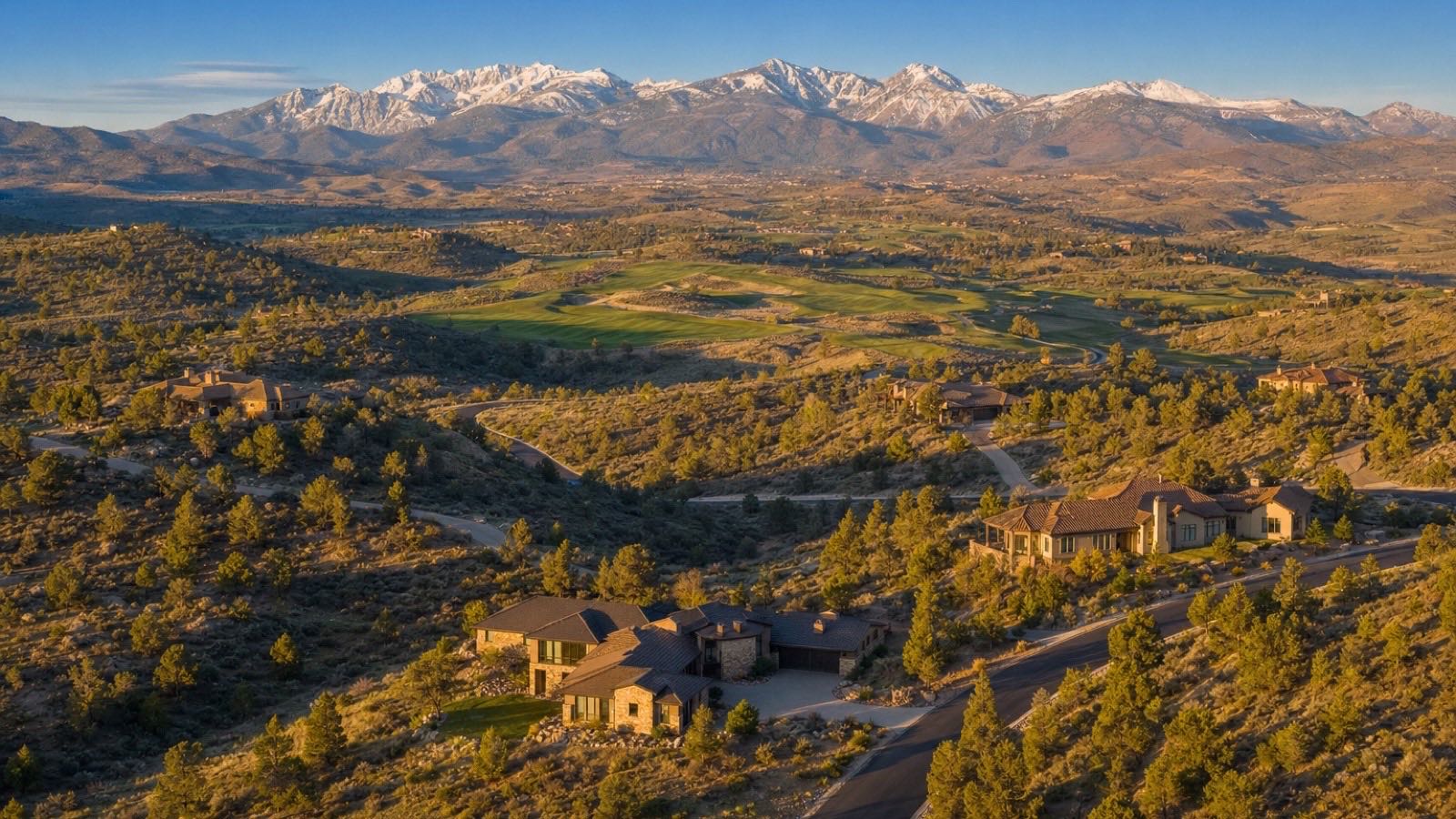
Remodeling has its own price list. According to ArrowCreek's architectural review fee table, effective August 30, 2026, new home construction valued at $500,000 or more pays a $1,500 processing fee for up to three reviews plus a $30,000 refundable deposit, a major remodel or addition valued at $100,000 to $500,000 pays $1,500 plus a $20,000 deposit, a $3,000 to $20,000 project pays $350 plus a $250 deposit, and solar installations, exterior paint changes and swapping grass for artificial turf on the same footprint carry no fee. If you plan to add a garage bay for a trailer or change a façade, price the review into your budget and read the guidelines during your due-diligence period.
How Do HOA Dues Change What You Can Borrow?
Lenders count dues in your housing payment, so every dollar of dues uses up a dollar of the monthly payment you can qualify for. According to Fannie Mae's Selling Guide section B3-6-03, monthly housing expense for the subject property includes principal, interest, taxes and insurance plus "any owners' association dues," and lenders must enter "association/project dues" on the application. A higher HOA uses up the same debt-to-income room a larger mortgage payment would.
To make that concrete I priced each median against the current rate. According to Freddie Mac's Primary Mortgage Market Survey, the 30-year fixed rate averaged 7.40% as of October 8, 2026. At 7.40% over 30 years, each $100 a month of payment supports roughly $14,443 of loan, so the dues below translate into the loan amounts shown.
| Community median | Monthly dues | Dues per year | Loan the same payment would carry |
|---|---|---|---|
| Double Diamond | $40 | $480 | About $5,800 |
| Wingfield Springs | $75 | $900 | About $10,800 |
| Somersett | $265 | $3,180 | About $38,300 |
| ArrowCreek | $383 | $4,596 | About $55,300 |
| Montrêux | $533 | $6,400 | About $77,000 |
The gap is real money. A buyer choosing between a Double Diamond home and an ArrowCreek home at the same price is choosing between dues that use up about $5,800 and about $55,300 of borrowing power, before any golf or club membership. The first version of this guide said a $300 HOA cost "$50,000 to $60,000" of mortgage; at 7.40%, $300 a month carries about $43,300. Whatever your price point, ask your lender to run the payment with the exact dues from the resale package, master and sub-association combined, and run the same check with the property tax, which our Reno property taxes guide covers.
Do Many Reno Neighborhoods Have No HOA at All?
Yes, especially in the older parts of the valley, and the share varies sharply by area. In the 12 months ending September 18, 2026, our own MLS pull for the South Reno vs Spanish Springs vs Northwest Reno guide found that 50% of Northwest Reno closings reported no HOA, against 14% in South Reno and 13% in Spanish Springs. That guide found the Northwest Reno homes without an HOA concentrated in Mogul, Verdi and the older 89503 grid, while the newer master plans on all three sides carried associations.
No-HOA homes trade the monthly charge and the rules for doing the upkeep yourself. There is no association to repave a private road, maintain a common slope, mow a greenbelt or enforce a neighbor's parking, and there is also no architectural review fee or vehicle-storage rule like ArrowCreek's. That can matter for buyers with trailers, boats or work trucks, but check the city or county code too, because parking and setback rules can apply whether or not an HOA exists. A no-HOA listing also skips the resale package, so the documents to read are the title report, the seller's disclosures and any recorded CC&Rs that survive without an active association. Our Reno seller disclosure guide explains what a Washoe County seller must hand you either way.
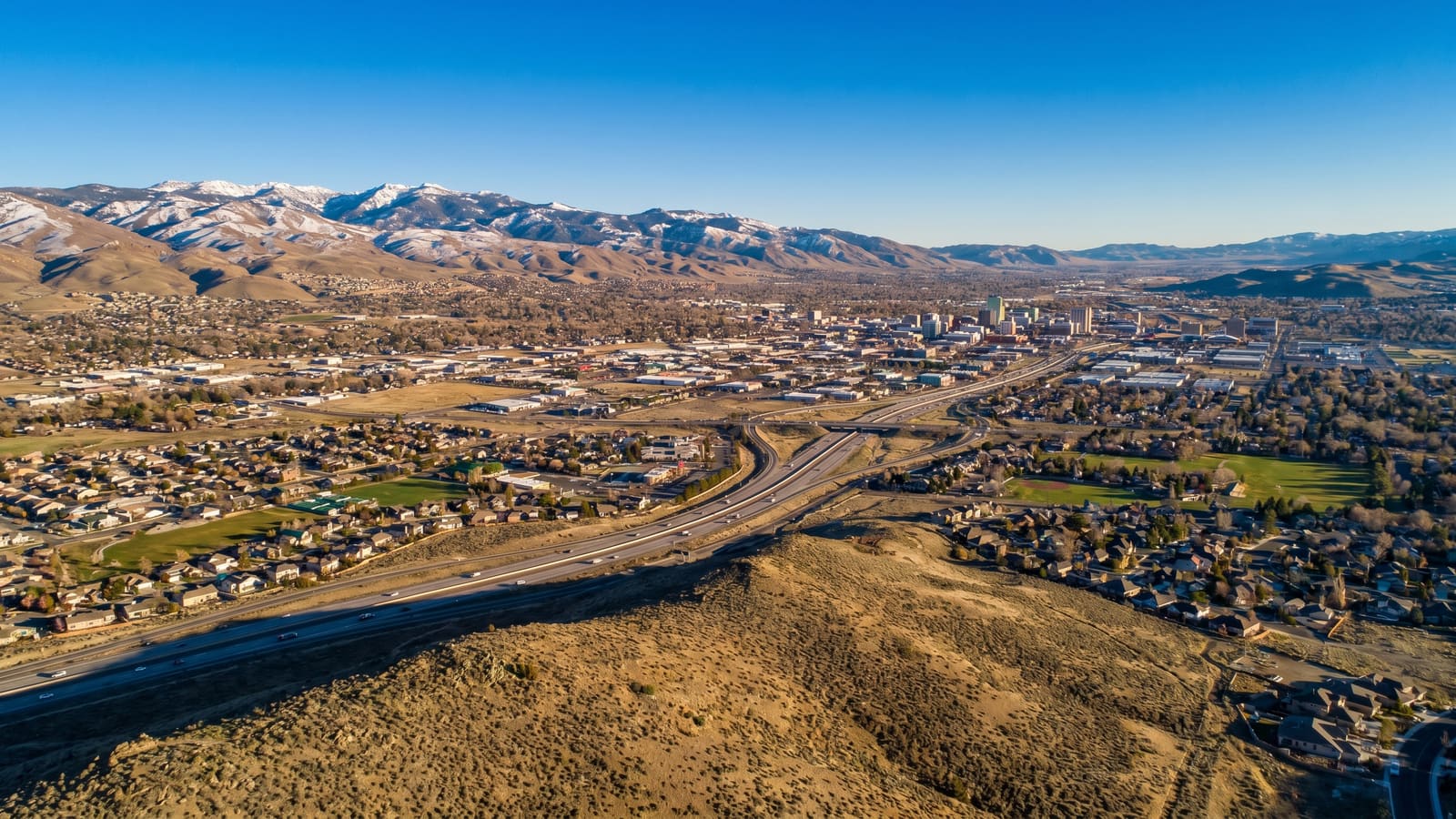
Property tax is not part of the HOA decision, but buyers often mix the two. A sale does not reset Nevada's tax base, and the cap you get depends on use. According to NRS 361.4723, the owner of a single-family home that is the owner's primary residence is entitled to a partial abatement that limits the yearly increase to 3%, claimed on the assessor's form or on the declaration of value at recording; other property falls under NRS 361.4722, where the cap is the lesser of a formula and 8%. Our Washoe County property taxes guide walks through the claim.
Frequently Asked Questions
How much are HOA fees in Reno, NV?
It depends on the master plan and how many associations a home belongs to. In our pull of Northern Nevada Regional MLS sales that went under contract in the 12 months ending August 31, 2026, median monthly dues across all associations ran $40 in Double Diamond, $75 in Wingfield Springs, $100 in Caughlin Ranch, $116 in Damonte Ranch, $265 in Somersett, $383 in ArrowCreek and $533 in Montrêux. Many older neighborhoods have no HOA at all. Confirm the exact charge in the association's statement in the resale package.
Why do I see $1,600 quoted as Montrêux's monthly HOA?
Because $1,600 is a quarterly charge that gets misread. In our pull, 22 of 27 Montrêux closings listed $1,600 a quarter, which is about $533 a month, and four more listed $1,500 a quarter. Four of the 27 also belonged to a second association billing $2,150 to $2,600 a quarter, which pushes the monthly total up to $1,217 to $1,400. Double Diamond has the same problem: its common $120 charge is quarterly, about $40 a month.
Who pays for the HOA resale package in Nevada?
The seller. NRS 116.4109(1) requires the owner to furnish the resale package "at the expense of the unit's owner." The association has 10 calendar days to provide its documents and certificate after a written request, and the package stays effective for 90 calendar days. Under the Real Estate Division's Form 910, effective January 2026, the certificate fee is capped at $213.84 plus $100 to expedite, and the association must send the other documents electronically unless it cannot.
How long do I have to cancel after receiving the HOA documents?
Until midnight of the fifth calendar day after you receive the resale package, under NRS 116.4109(2). You can cancel by hand delivering, mailing by prepaid U.S. mail or electronically sending written notice to the seller or the seller's agent, and every payment you made must be refunded promptly. The right ends once you accept conveyance. If the home is in a master and a sub-association, read both packages inside the window.
What is the most a Reno HOA can charge in resale and transfer fees in 2026?
Per association, Form 910 caps the resale certificate at $213.84, the statement of demand at $190.73 and the opening or closing file fee at $404.58, for $809.15, plus $100 for each expedited statement. The file-fee cap includes transfer, inspection and processing charges, cannot be charged to both seller and buyer, and does not cover prepaid assessments. Capital contributions, such as Somersett's 0.1% of the resale price, are set by the declaration and must be disclosed in the package.
Can a Reno HOA raise dues or levy a special assessment without a vote?
Partly. Under NRS 116.31151, a proposed budget is ratified unless a majority of all owners reject it at the ratification meeting, whether or not a quorum attends. Under NRS 116.3115(2)(b), the board may impose reasonable assessments to fund reserves, based on the reserve study, without owner approval. Owners must get at least 21 calendar days' notice of a meeting on a capital-improvement assessment. Read the budget's statement on whether special assessments are anticipated before you buy.
Do ArrowCreek or Somersett allow short-term rentals?
ArrowCreek does not: its rules, revised August 12, 2025, prohibit rentals of less than 30 days and require longer leases to be filed with Security. Somersett's documents page requires an owner login, so ask for its rules in the resale package. Under NRS 116.340, a home in a residential planned community can be used for stays under 30 days only if the governing documents of the association and any master association allow it, the board approves, and local zoning and licensing are satisfied.
How Can Our Reno Team Help You Vet an HOA Before You Buy?
The work that protects a buyer happens in the first week of escrow, and most of it is reading. On a Reno or Sparks purchase, we can start by naming every association the address belongs to, master and sub, from the MLS entries and the recorded plat, so the resale requests go out for all of them at once. When the packages arrive, we can put each association's statement of assessments next to the MLS figure, flag any charge that looks quarterly but was listed as monthly, and line up the one-time items, setup, transfer and capital contribution, against the Form 910 caps so you know which ones are worth negotiating in the contract.
We can also read the parts that change your budget later: the ratified budget and its statement on special assessments, the reserve study summary and, when the numbers look thin, the full study you are entitled to inspect under NRS 116.4109(6); the rules on parking, rentals and architecture; and the title report for any city or county district assessment. We can calendar the five-day cancellation deadline from the day you receive each package, so a problem in the documents is raised while you can still act on it. If you would rather avoid an association entirely, we can search older no-HOA neighborhoods alongside the master plans so you can compare the trade-offs on real homes, with the dues, the rules and the upkeep side by side.
To start, call our Northern Nevada team at (775) 277-2120, reach us through the contact page, or browse Reno homes for sale, the live home search and our buyer resources. If you have a home to sell first, start with our seller resources, since your own association's resale package will be on you. Our Reno office is at 1755 E Plumb Ln; if you are also looking beyond Reno, browse Carson City, Lake Tahoe and Incline Village. Our best neighborhoods in Reno guide is a good companion to this one when you are still choosing an area. For the rules on fines and hearings once you own, see our guide to Nevada HOA fines under NRS 116, and for the inspection that runs alongside the HOA review, our Northern Nevada home inspection guide.
Which Sources Inform This Reno HOA Fees Guide?
Dues figures come from our own pull of Northern Nevada Regional MLS data through Repliers on October 8, 2026, covering residential sales that went under contract from September 1, 2025 through August 31, 2026 and had closed by October 8, 2026, with each association charge converted to a monthly amount using the billing frequency the listing agent entered. They are agent-entered and should be confirmed with each association. Association pages were read on October 8, 2026. This is general information, not legal or financial advice, and all services are offered in compliance with the Fair Housing Act.
- NRS 116.4109, Resales of units: resale package contents, 10-day delivery, 90-day effectiveness, 5-day cancellation, statement of demand
- NRS 116.41095, Required form of information statement: "Before you purchase property in a common-interest community"
- NRS 116.31151, Budgets and ratification: 30-to-60-day budget delivery and majority-of-all-owners rejection
- NRS 116.31152, Study of reserves: five-year reserve studies and their contents
- NRS 116.3115, Assessments for common expenses: annual assessments, reserve assessments without owner approval, 21-day notice
- NRS 116.1201, Applicability: limited-purpose associations
- NRS 116.340, Transient commercial use: stays under 30 days in planned communities
- Nevada Real Estate Division, Resale Package Overcharge Form 910: fee caps effective January 2026
- Nevada Real Estate Division, Residential Disclosure Guide: information statement and statement of demand, revised May 2026
- Somersett Owners Association, Resales: set-up fee, capital contribution and resale documents
- Caughlin Ranch HOA, Financial Reports: 2026 budget, reserve studies and audited statements
- Caughlin Ranch HOA, 2026 Budget ratified November 19, 2025
- Caughlin Ranch HOA, Fee Schedule revised October 1, 2025
- Caughlin Ranch Reserve Study, fiscal 2026
- Damonte Ranch, Home Owners: LMA, drainage district and sub-associations
- ArrowCreek HOA, Rules and Regulations revised August 12, 2025
- ArrowCreek HOA, Architectural Review Table of Fees effective August 30, 2026
- Fannie Mae Selling Guide B3-6-03, Monthly Housing Expense: association dues in PITIA
- Freddie Mac Primary Mortgage Market Survey: 7.40% 30-year rate as of October 8, 2026
- Washoe County Recorder, Schedule of Fees: transfer tax of $2.05 per $500
- NRS Chapter 375: transfer tax liability (NRS 375.030)
- NRS Chapter 361: property-tax caps (NRS 361.4722 and 361.4723)
- NRS Chapter 271: local improvement district liens (NRS 271.420)
- U.S. Department of Housing and Urban Development, Fair Housing