
Published June 3, 2026 · Updated June 3, 2026 · By Chris Nevada, Nevada Real Estate Group · NV License S.181401
If you're relocating to Northern Nevada, you'll quickly notice the metro is really two cities pressed together in one high-desert valley: Reno and Sparks, divided by little more than a street sign for long stretches of the Truckee Meadows. They share Washoe County, the Washoe County School District, Reno-Tahoe International Airport, the same Sierra Nevada at their backs, and the same unbeatable Nevada tax picture. So buyers reasonably ask: does it actually matter which one I pick?
It does — more than newcomers expect. Across the 9,600-plus closings and 16-plus years our team at Nevada Real Estate Group — the #1 real estate team in the state — has logged across Nevada, the Reno-versus-Sparks decision usually comes down to four things: price, the kind of neighborhood you want, how close you need to be to your job, and which downtown energy fits your life. I'll give you the honest side-by-side I give those clients, with the 2026 numbers behind each call, so you can choose the right side of the valley the first time.
Reno and Sparks are adjacent Truckee Meadows cities sharing Washoe County, one school district, and one airport — and Nevada's zero income tax. Sparks is smaller (110,000), newer, more suburban, more affordable (median around $540,000), and closer to the Tahoe-Reno Industrial Center jobs. Reno is larger (275,000), older and denser, with the university, Midtown, and downtown. Pick Sparks for newer family neighborhoods and value; Reno for urban energy and the university.
- Sparks' median home runs about $540,000 versus roughly $660,000 in the city of Reno.
- Both cities share the Washoe County School District (64,000 students) and Reno-Tahoe airport.
- Sparks sits closer to the Tahoe-Reno Industrial Center and Tesla's Gigafactory — the shorter I-80 commute east.
- Reno brings the university, Midtown, and a denser downtown; Sparks brings the Marina and newer master plans.
- Neither has state income tax, and both sit about 45 minutes from Lake Tahoe.
If you're still deciding whether Northern Nevada is right at all, start with our 10 reasons to live in Reno guide; this comparison is about choosing between the valley's two cities once you're sold on the region.
Want to see real inventory? Explore Reno homes for sale and Sparks homes for sale for every active listing, updated from the MLS.
How Do Reno and Sparks Compare at a Glance?
Before the deep dive, here's the whole comparison in one view:
| Metric | Reno | Sparks |
|---|---|---|
| City population (2024 est.) | 275,000 | 110,000 |
| Median home price (2026) | $660,000 | $540,000 |
| Median household income | $80,800 | $91,500 |
| Vibe | Urban, university town | Suburban, family |
| Signature feature | Midtown / UNR / Riverwalk | Sparks Marina / Victorian Square |
| Closest to TRIC / Gigafactory | Farther west | Closer (east on I-80) |
| State income tax | None | None |
Source: U.S. Census Bureau, Northern Nevada Regional MLS, Reno/Sparks Association of REALTORS, and Nevada Real Estate Group analysis, 2026.

Are Reno and Sparks Really Two Different Cities or One Metro?
Both — and understanding that is the key to the whole decision. According to the U.S. Census Bureau, Reno and Sparks are two separately incorporated cities, but they share a single continuous footprint in the Truckee Meadows, the high-desert basin of Washoe County. Drive east on I-80 from downtown Reno and you're in Sparks' Victorian Square in minutes, with no obvious seam between them. Locals treat "Reno-Sparks" as one metro of roughly 575,000 people.
That one-metro reality also explains the growth pressure shaping both cities. According to the Economic Development Authority of Western Nevada, Greater Reno-Sparks has added tens of thousands of residents over the past decade as companies and Californians moved in, and a regional land study warned the valley is running short on its most developable open land — pushing new subdivisions eastward and northward, largely onto the Sparks and Spanish Springs side. For buyers, that means the newest inventory and the most active master-planned construction increasingly sit in Sparks, while Reno's growth comes more from Midtown infill and downtown redevelopment. Where the cranes are is itself a clue to which city fits a new-construction shopper.
That shared geography means a lot of the relocation questions buyers worry about are actually the same answer in both cities. According to the Reno-Tahoe International Airport, one airport serves the whole valley — it handled close to 4.9 million passengers in 2025 — so flights don't change with your choice. The school district is shared, the Sierra Nevada and Lake Tahoe are equally close, and Nevada's tax structure applies identically. What does change between Reno and Sparks is the texture of daily life: how old your neighborhood is, what you pay for it, how far you drive to work, and what your downtown looks like. The rest of this guide is about those differences.
Is Sparks More Affordable Than Reno?
Usually, yes — and it's the single biggest reason buyers cross from one side to the other. According to Northern Nevada Regional MLS data, the Sparks median single-family sale price sits around $540,000 in 2026, while the city of Reno runs closer to $660,000, with the broader metro median near $600,000. According to the U.S. Census Bureau, Sparks' median owner-occupied home value (a slower-moving measure) lands in the low $500,000s, also below Reno's. For a buyer with a fixed budget, Sparks typically buys newer construction and more square footage than the same dollars fetch in central Reno.
Here's the counterintuitive part I always point out: Sparks households tend to earn more even though homes cost less. According to U.S. Census American Community Survey data, the Sparks median household income is roughly $91,500, versus about $80,800 in the city of Reno. That reflects who lives where — Sparks skews toward newer, dual-income, family-stage households in master-planned subdivisions, while Reno's figure is pulled down by a large student population around the university. The practical upshot: in Sparks, a relocating family often finds a newer home, a lower price, and neighbors in the same life stage. Median rent in Sparks runs about $1,779 a month for those testing the market before buying.
To put the gap in concrete terms: a $600,000 budget that buys a newer four-bedroom in a Spanish Springs or Kiley Ranch master plan often gets you an older or smaller home in central Reno, or pushes you toward Reno's pricier south-suburban tier around Damonte Ranch. A $700,000 budget opens move-up and view homes in Sparks but sits closer to entry-level for Reno's established luxury pockets like ArrowCreek or Caughlin Ranch. That's the lived experience of the median gap — not just a statistic, but a materially different home at the same price.
| Measure | Reno (city) | Sparks |
|---|---|---|
| Median home sale price | $660,000 | $540,000 |
| Median owner-occupied value | Mid-$500,000s+ | Low $500,000s |
| Median household income | $80,800 | $91,500 |
| Median rent | $1,800 | $1,779 |
| Typical inventory | Older + infill + some new | Newer master-planned |
Source: U.S. Census Bureau American Community Survey, Northern Nevada Regional MLS, and Nevada Real Estate Group analysis, 2026.
What Do You Get for the Money in Each City?
The price gap is really a housing-stock gap. Reno is the older city, so its housing runs the full range: historic homes in the Old Southwest and around the university, dense Midtown infill, mid-century neighborhoods, and a smaller share of new construction squeezed into a built-out grid. You're buying character and location, often in an established tree-lined neighborhood, and paying for the central address.
Sparks is the newer city, and it shows. According to the Economic Development Authority of Western Nevada, Washoe County's developable-land constraint has pushed most new-home growth eastward — toward Sparks and Spanish Springs — so that's where you find the bulk of the valley's modern master-planned subdivisions: open floor plans, three-car garages, community parks, and HOAs maintaining it all. In my experience, buyers relocating from California or the Pacific Northwest who want a turnkey, newer home gravitate to Sparks almost reflexively once they tour both sides. Buyers who want walkability, the university, and an established-neighborhood feel lean Reno. Neither is "better" — they're built for different priorities, which is exactly why the price difference exists.
A quick map of where buyers land: on the Reno side, the Old Southwest and the university district hold the historic homes, Midtown and the Wells Avenue corridor draw younger urban buyers, and South Reno — Damonte Ranch, Double Diamond, and the Galena foothills — anchors the newer, pricier suburban tier. On the Sparks side, Spanish Springs, Wingfield Springs, Kiley Ranch, and D'Andrea form a contiguous belt of newer master plans northeast of the Sparks Marina, with Sun Valley and older central Sparks offering the metro's more affordable entry points. Same valley, very different price-per-square-foot maps — which is why I always tour buyers through two or three neighborhoods on each side before they commit.
Which City Has the Better Neighborhoods for Families?
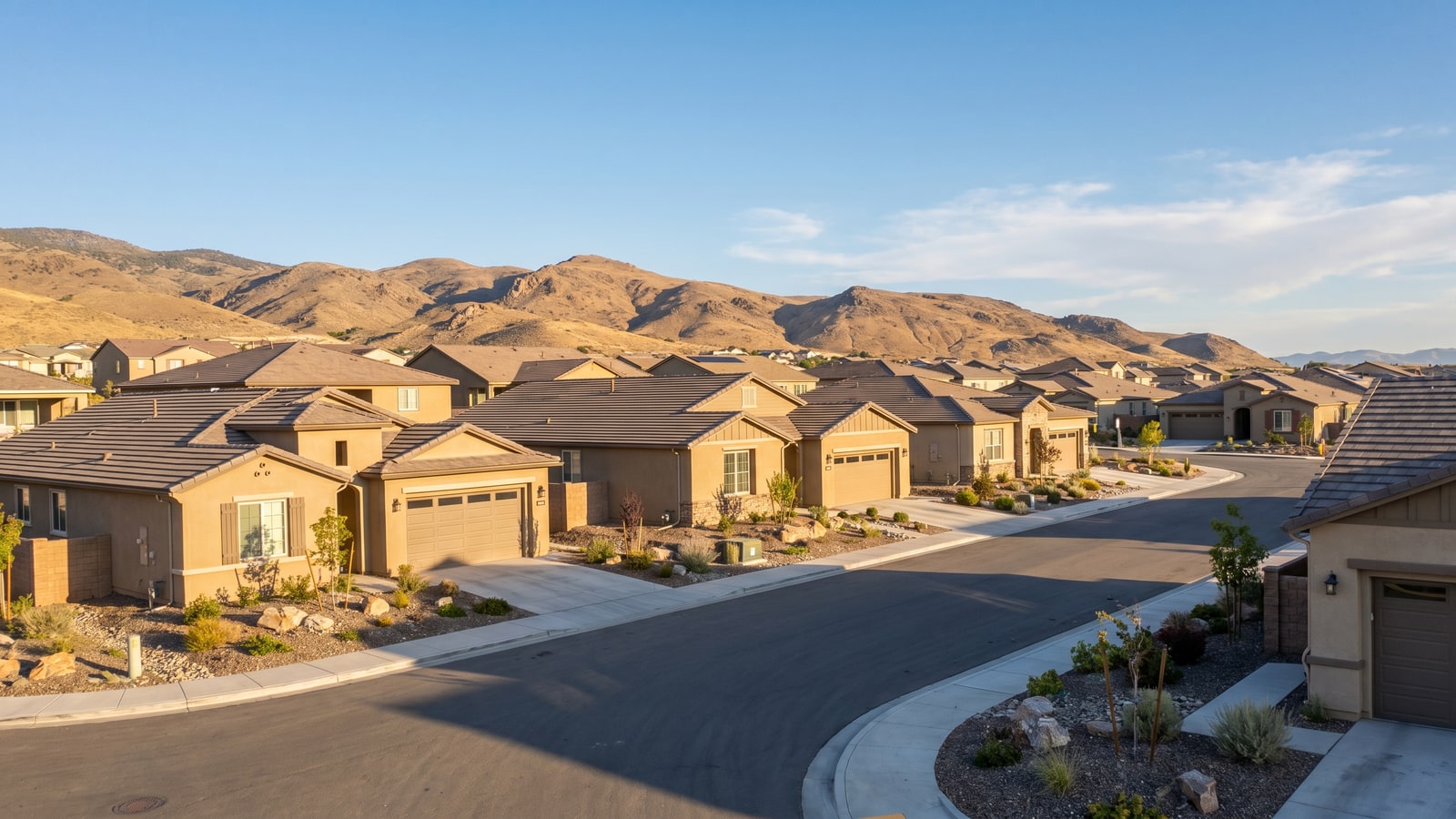
This is where Sparks pulls ahead for a lot of relocating households. The northeastern Sparks growth corridor — anchored by Spanish Springs — is full of newer family-oriented master plans: Wingfield Springs (a 1990s golf-course community with parks and trails), Kiley Ranch (a large planned community slated for several thousand homes alongside schools, parks, and trails), and D'Andrea (a mixed-use master plan off Vista Boulevard that includes a gated 55+ enclave). Prices across these range widely — from the $500,000s into the $1 million-plus tier for golf-course and view lots.
Reno has excellent family neighborhoods too — Caughlin Ranch, Somersett, ArrowCreek, and the south-Reno corridor around Damonte Ranch and Double Diamond — but several of those are themselves priced like premium suburbs, blurring the line with the city's luxury tier. The honest pattern I see: Sparks and Spanish Springs offer the deepest supply of newer, moderately priced family homes in the metro, which is why they consistently rank among Nevada's best suburbs for raising a family. If your shortlist is "newer, four bedrooms, good schools, under $650,000," you'll find more of it on the Sparks side of the valley.
Do Reno and Sparks Share the Same Schools?
Yes — and this surprises buyers who assume a city line means a school-district line. According to the Washoe County School District, one district serves the entire valley — Reno, Sparks, Verdi, Sun Valley, Incline Village, and beyond — making it Nevada's second-largest, with roughly 64,000 students across about 100 campuses. There is no separate "Sparks school district." Your specific zoned schools depend on your street address and attendance zone, not on whether your mailing city says Reno or Sparks.
What that means practically: families choose the home and the zoned schools, then the city label follows. Because the newer Sparks and Spanish Springs subdivisions tend to have newer school facilities built alongside them, some relocating families prefer that side for that reason — but plenty of top-zoned options exist on the Reno side too. As with any metro, this is where a local agent earns their keep: matching your budget to the specific neighborhoods whose zoned schools fit your family, on whichever side of the valley they fall.
Which City Is Closer to the Jobs?
It depends entirely on which jobs — and this is often the deciding factor. The region's biggest single employment magnet is the Tahoe-Reno Industrial Center (TRIC), the 107,000-acre industrial park in Storey County just east of the metro. According to the Tahoe-Reno Industrial Center, it hosts more than 100 companies, including Tesla, Panasonic, Google, Switch, and a Walmart distribution hub. According to Tesla, its Gigafactory Nevada there is one of the largest buildings in the world by footprint and employs thousands. Because TRIC sits east of the valley off the USA Parkway interchange, Sparks is the natural bedroom community for Gigafactory, data-center, and logistics workers — the I-80 commute east is meaningfully shorter from Sparks than from west Reno.
Reno wins the other direction. If your job is at the University of Nevada, Reno, Renown Health's main medical campus, downtown's professional and government offices, or the Midtown small-business scene, you'll want to be on the Reno side. According to EDAWN, the broader Reno-Sparks economy keeps diversifying — in its latest cycle, roughly a dozen relocating companies added close to 600 jobs at an average salary above $76,000 — but the geography of your employer is what should anchor your home search. I tell clients to pin the commute first and choose the city second.
The eastern corridor isn't only Tesla. According to EDAWN, the I-80 and I-580 crossroads, Union Pacific rail, and proximity to the Port of Oakland have made Reno-Sparks a national distribution hub — Amazon, Walmart, Petco, Uline, and ITS Logistics all run major operations along the Sparks-to-TRIC stretch reached via the USA Parkway interchange. For warehouse, manufacturing, and clean-energy roles, a Sparks or Spanish Springs address can shave real minutes off a daily drive. The state capital, Carson City, is also a manageable half-hour south for government and healthcare jobs — see our Carson City area page. On the Reno side, Renown Health's main campus, the University of Nevada, and downtown's professional and government offices keep the western commute anchored there.
How Do the Lifestyles and Downtowns Differ?
This is the most fun difference to describe. Reno's identity is urban and creative: the Midtown District with its restaurants, breweries, and murals; the downtown Riverwalk along the Truckee River; the month-long Artown festival every July; the university's energy and Division I athletics. It's the side for buyers who want nightlife, dining, walkability, and a true small-city downtown.
Sparks plays a different note — more festival-and-family than nightlife. Its heart is Victorian Square, a downtown events district that hosts farmers markets, summer concerts, and the enormous Best in the West Nugget Rib Cook-Off, a Labor Day institution running since 1989 that draws hundreds of thousands of visitors and serves a quarter-million pounds of ribs over six days. Add the Outlets at Legends at Sparks Marina — open-air shopping anchored by Scheels, a Galaxy IMAX, and Legends Bay Casino — and Golden Eagle Regional Park, one of the largest sports-tournament complexes in the West, and Sparks delivers a steady calendar of family-friendly, weekend-anchored events. According to Visit Reno Tahoe, that Marina-and-Victorian-Square combination is what gives Sparks its own distinct draw, separate from Reno's.
There's more to each side than the headliners. Reno fields the Reno Aces (Triple-A baseball at Greater Nevada Field) and the Nevada Wolf Pack, runs the Great Reno Balloon Race, and packs Midtown with independent restaurants and craft breweries. Sparks counters with Golden Eagle Regional Park — one of the largest sports-tournament complexes in the West, drawing travel-team families and an estimated tens of millions in annual visitor spending — plus the Outlets at Legends with its Scheels, Galaxy IMAX, and Legends Bay Casino on the Marina's edge. The honest one-liner I give clients: Reno is the night-out city, Sparks is the all-day-with-the-family city — and most households know within a weekend which one they are.
Is the Outdoor Access Different Between Reno and Sparks?
Barely — and that's good news. Both cities sit in the same valley with the same Sierra Nevada on the western horizon and Lake Tahoe about 45 minutes to an hour away (South Lake Tahoe is roughly 62 miles via US-50; the closer north-shore resorts and Mt. Rose are nearer still). Skiing, paddleboarding, and alpine hiking are an equal-opportunity perk no matter which side you buy on.
Sparks does have one signature water amenity Reno can't match: the Sparks Marina, a 77-acre spring-fed lake roughly 100 feet deep, ringed by an 81-acre park with beaches, a dog park, and walking paths — open for swimming, sailing, paddleboarding, and fishing right in town. According to the Nevada Department of Wildlife, it's a stocked urban fishery. Reno counters with the Truckee River running straight through downtown, including a free whitewater park, plus quick access to the Mt. Rose Wilderness and Galena Creek. The verdict: both cities are outstanding outdoor basecamps; Sparks edges it for in-town water recreation, Reno for river-through-downtown access. Either way, you're 45 minutes from one of the clearest alpine lakes in North America — explore that side of life on our Lake Tahoe area page.

Do Reno and Sparks Have the Same Taxes?
Identically — because tax is a state and county matter, not a city one. According to the Tax Foundation, Nevada has no state individual income tax at all, which applies in both Reno and Sparks (and benefits Gigafactory engineers and retirees alike). Both cities sit in Washoe County, so they share the same combined sales-tax rate and the same property-tax framework, including Nevada's 3% annual cap on tax increases for owner-occupied primary residences.
That's a key thing to internalize: the headline financial advantages of moving to Northern Nevada — no income tax, a property-tax cap, no tax on retirement income — are the same on both sides of the valley. You're not choosing Reno or Sparks for tax reasons; you're choosing for price, neighborhood, commute, and lifestyle, with the tax win baked in either way. We break down the income-tax piece in detail in our Nevada state income tax guide and our Nevada tax advantages guide.

Who Should Choose Sparks Over Reno (and Vice Versa)?
Here's the decision guide I give relocating buyers, laid out by what each side does best:
| If you prioritize… | Reno | Sparks |
|---|---|---|
| Lowest price for newer space | — | ✓ |
| Urban energy + nightlife | ✓ | — |
| University / downtown jobs | ✓ | — |
| Gigafactory / TRIC / logistics commute | — | ✓ |
| Newer master-planned family neighborhoods | — | ✓ |
| Walkability + established character | ✓ | — |
| In-town lake recreation | — | ✓ (Marina) |
Source: Nevada Real Estate Group buyer-relocation analysis, 2026.
In short: choose Sparks if you want the best value on a newer family home, a shorter commute to the Gigafactory and the eastern logistics corridor, and a Marina-and-Victorian-Square lifestyle. Choose Reno if you want urban energy, the university, Midtown, a downtown job, or an established walkable neighborhood with character. Most of our relocating clients can name their priority in one sentence — and that sentence usually picks the city for them. When it's genuinely a coin flip, we tour both sides in a day so the valley itself makes the case.
How Does the Reno-Sparks Metro Compare to Las Vegas or California?
Zooming out helps. Compared with Las Vegas — Nevada's other metro, roughly 2.3 million people — Reno-Sparks is smaller, cooler, four-season, and built around mountains and a lake rather than the Strip, while sharing the same statewide no-income-tax advantage. Compared with California, the contrast is starker: Reno-Sparks home prices sit far below Bay Area and coastal levels, which is why so much of the region's growth comes from Californians cashing out and moving east over the Sierra. For the full southern-Nevada comparison, see our Las Vegas vs Phoenix guide, and because Nevada Real Estate Group works statewide, you can browse every market — north and south — on our community directory, our Henderson page, or our Summerlin page if the south is also on your list.
The bottom line for Northern Nevada buyers: Reno and Sparks give you the same tax win, the same schools, the same airport, and the same Tahoe access — so the choice between them is refreshingly low-stakes. Get the price, neighborhood, and commute right, and you can't really lose the valley.
Before choosing a city, compare what different home budgets buy in Reno, then match the property type and carrying costs to your household.
Frequently Asked Questions
Is Sparks or Reno cheaper to live in?
Sparks is generally more affordable on housing — the median home runs around $540,000 versus roughly $660,000 in the city of Reno in 2026, and Sparks tends to offer newer construction for the money. Everyday costs (taxes, utilities, groceries) are essentially identical because both cities are in Washoe County with no Nevada state income tax. The main savings come from the home price and the newer, more efficient housing stock on the Sparks side.
Is Sparks, Nevada a good place to live?
Yes, particularly for families and value-focused buyers. Sparks pairs a lower median price with newer master-planned neighborhoods (Spanish Springs, Wingfield Springs, Kiley Ranch, D'Andrea), the in-town Sparks Marina, the Victorian Square events district, and a shorter commute to the Tahoe-Reno Industrial Center jobs. It shares the Washoe County School District, Reno-Tahoe airport, and Lake Tahoe access with Reno, so you keep all the Northern Nevada advantages at a lower price point.
What is the difference between Reno and Sparks?
They're adjacent cities in the same Truckee Meadows valley, but Reno is larger (275,000), older, denser, and more urban — home to the University of Nevada, Midtown, and downtown — while Sparks is smaller (110,000), newer, more suburban and family-oriented, and more affordable. They share Washoe County, one school district, one airport, the Sierra Nevada, and Nevada's no-income-tax structure. The practical differences are price, neighborhood age, commute direction, and downtown character.
Is Reno or Sparks closer to the Tesla Gigafactory?
Sparks is closer. The Gigafactory sits at the Tahoe-Reno Industrial Center east of the metro, off the USA Parkway interchange on I-80, so the eastbound commute is meaningfully shorter from Sparks than from west Reno. That proximity is a big reason Sparks has become the primary bedroom community for Gigafactory, data-center, and logistics workers, and why much of the area's newer housing has been built on the eastern, Sparks side of the valley.
Do Reno and Sparks have the same schools?
They share the same district — the Washoe County School District serves both cities (plus Sun Valley, Verdi, Incline Village, and more), with roughly 64,000 students. There is no separate Sparks district. Your specific zoned schools depend on your home's street address and attendance zone rather than the city name, so families typically choose the home and its zoned schools first and let the city label follow.
Should I move to Reno or Sparks?
Choose Sparks for the lowest price on newer family homes, a shorter Gigafactory/TRIC commute, and a Marina-and-Victorian-Square lifestyle. Choose Reno for urban energy, the university, Midtown, downtown jobs, and walkable established neighborhoods. Because both cities share the same taxes, schools, airport, and Tahoe access, it's a low-stakes choice — pin down your commute and your neighborhood priority, and the right side of the valley usually becomes obvious.
Which Sources Inform This Reno vs Sparks Comparison?
This guide combines Nevada Real Estate Group's Northern Nevada relocation experience — drawn from 9,600-plus closings statewide — with primary public sources. Population and income data come from the U.S. Census Bureau; home-price context from Northern Nevada Regional MLS and the Reno/Sparks Association of REALTORS; tax structure from the Tax Foundation and the Nevada Department of Taxation; schools from the Washoe County School District; jobs and economic data from the Economic Development Authority of Western Nevada, the Tahoe-Reno Industrial Center, and Tesla; amenities from the City of Sparks, Visit Reno Tahoe, the Nevada Department of Wildlife, and the Best in the West Nugget Rib Cook-Off; and connectivity from Reno-Tahoe International Airport. Thinking about the move? Call our Northern Nevada team at (775) 277-2120 or explore our Sparks and Reno community pages. Prices and conditions change — verify current figures before relocating.
Information deemed reliable but not guaranteed. This article is educational and is not financial, tax, or legal advice — tax rules and market conditions change and vary by individual situation. Confirm current details with a qualified professional before relocating. Nevada Real Estate Group · (702) 637-1759 · NV License S.181401.