
Published June 15, 2026 · Updated June 15, 2026 · By Chris Nevada, Nevada Real Estate Group · NV License S.181401
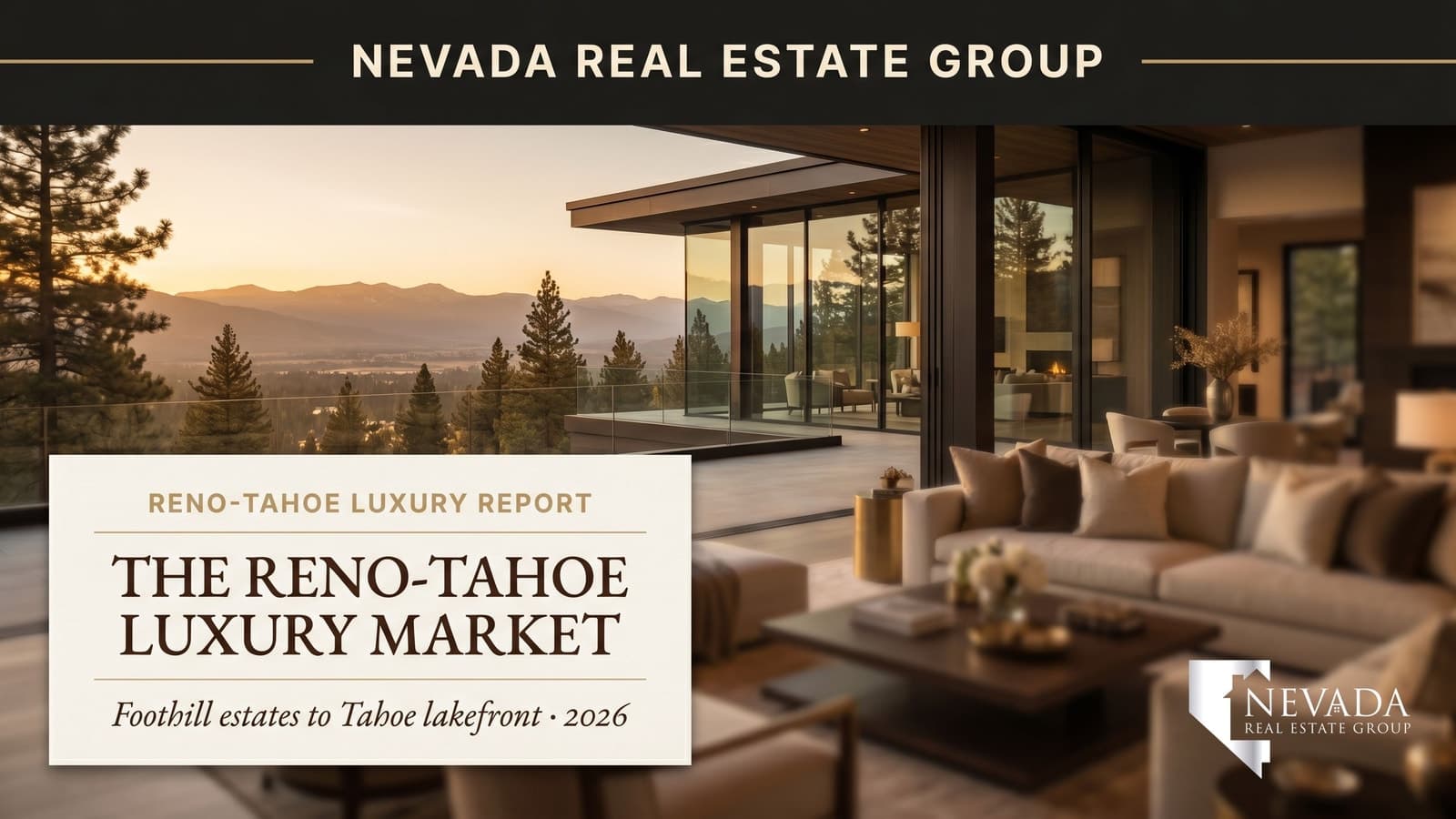
The Reno-Tahoe luxury market has quietly become one of the most consequential high-end real estate stories in the West. A decade of California in-migration, a wave of advanced-manufacturing and data-center investment, and Nevada's no-income-tax structure have pushed the region's top tier from a quiet niche into a genuine luxury market — one where foothill estates trade for several million dollars and Tahoe lakefronts reach into the tens of millions. For buyers and sellers operating above $1 million in 2026, understanding how this market actually behaves is the difference between a smart move and an expensive misread.
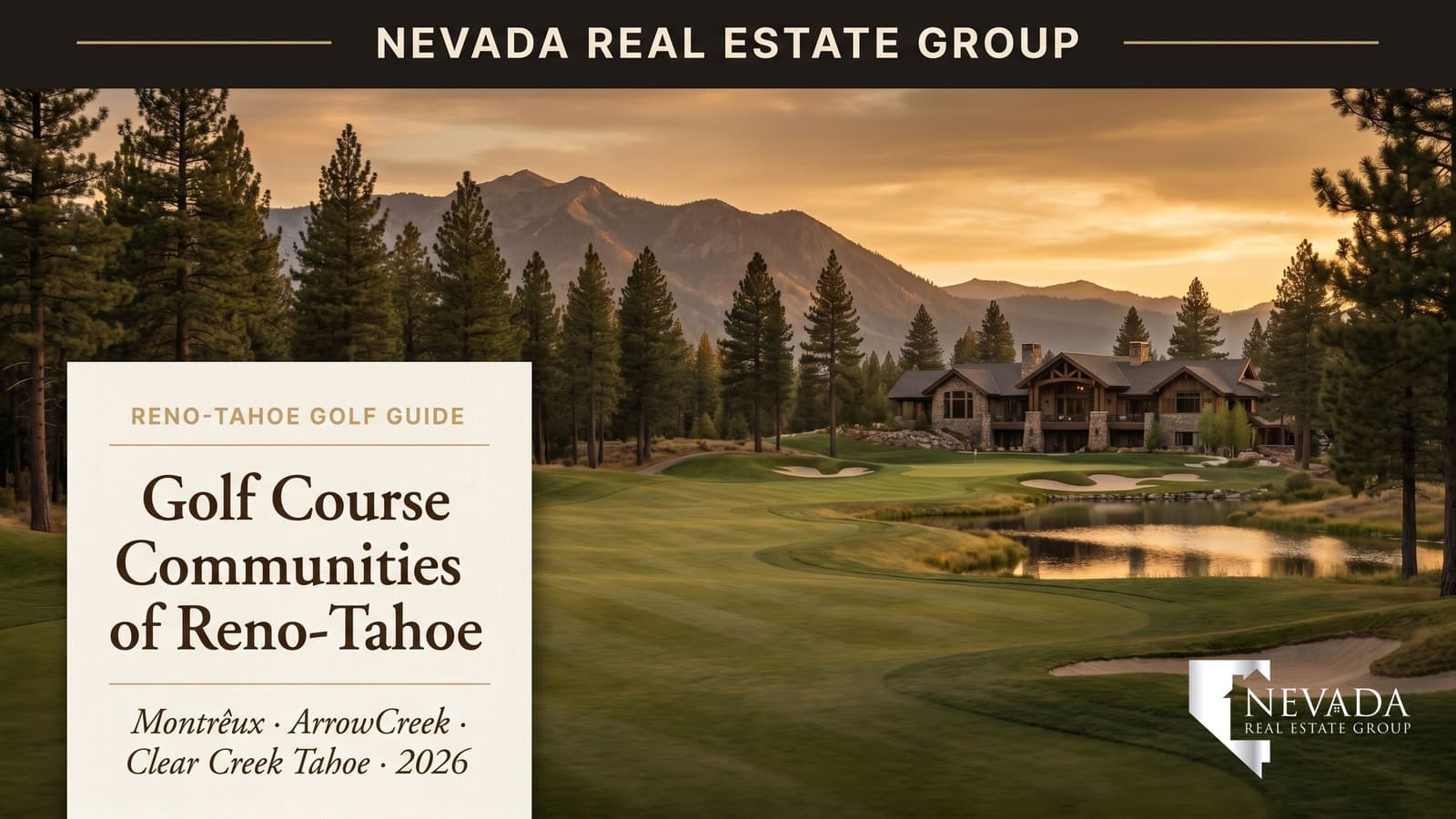
This report breaks down the Reno-Tahoe luxury market for 2026: what counts as luxury, what each price tier buys, which neighborhoods anchor the top end, what's driving demand, and how to approach the year as a buyer or seller. Across the 9,600-plus closings Nevada Real Estate Group — the #1 real estate team in the state — has represented, the luxury segment is where local knowledge matters most, because the comparables are thin and the value drivers are specific. If you're relocating into this market, pair this with our guides on moving to Reno and the region's golf-course communities.
In 2026, the Reno-Tahoe luxury market generally begins around $1 million, with a deep $1M–$3M tier of foothill and golf-community estates, a $3M–$5M-plus custom-home tier, and an ultra-luxury Tahoe-shore segment that reaches $10 million to $40 million-plus. Demand is driven by California in-migration, a strengthening regional economy, and Nevada's no state income tax. Luxury inventory remains tight, which has supported prices.
- Reno-Tahoe luxury starts near $1 million; the ultra-luxury tier is the Tahoe shore at $10M+.
- California migration and Nevada's no income tax are the structural demand drivers.
- Montrêux, ArrowCreek, Galena, and the Tahoe basin anchor the top of the market.
- Luxury inventory is tight, which supports pricing but lengthens the search for buyers.
- Pricing a luxury home correctly is harder here than in big markets — comparables are thin.
Shopping the area? Browse live Reno homes for sale — every active MLS listing with prices, photos, and instant filters.
What Defines the Reno Luxury Market in 2026?
Price, location, and scarcity. In a market where the overall Reno-Sparks median sits well below $1 million, the luxury threshold generally begins around $1 million — a price that buys an upper-tier foothill or golf-community home, not yet a trophy estate. According to the Reno/Sparks Association of REALTORS, the $1 million-plus segment is a small but growing share of total sales, and within it the spread is enormous, running from $1 million foothill homes to Tahoe lakefronts in the tens of millions.
What makes Reno-Tahoe luxury distinct from a coastal market is the breadth of what "luxury" covers geographically. According to the U.S. Census Bureau, the region spans the Truckee Meadows valley, the Sierra foothills, the Carson Valley, and the Nevada shore of Lake Tahoe — and each carries its own luxury character and price ceiling. A $2 million budget is an estate in south Reno but an entry point on the Tahoe shore.
In our experience, the buyers shaping this market are affluent relocators and remote-working professionals from California, business owners and executives drawn by the tax structure, and second-home buyers who want Tahoe-area luxury with a Nevada address. Understanding which of those a property appeals to is central to pricing and positioning it.
How Much Does Luxury Cost in Reno-Tahoe?
It scales across four broad tiers. The entry-luxury tier ($1M–$2M) buys upper-end homes in the foothill and golf communities. The mid-luxury tier ($2M–$3M) buys larger custom estates with views and acreage. The high-luxury tier ($3M–$5M-plus) buys trophy foothill estates and entry-level Tahoe-area homes. And the ultra-luxury tier — almost entirely the Tahoe shore — runs from roughly $5 million into the $40 million-plus range for true lakefront.
| Tier | Price Range | What It Typically Buys |
|---|---|---|
| Entry luxury | $1M–$2M | Upper-tier foothill / golf-community homes |
| Mid luxury | $2M–$3M | Larger custom estates, views, acreage |
| High luxury | $3M–$5M+ | Trophy foothill estates; entry Tahoe-area homes |
| Ultra luxury | $5M–$40M+ | Tahoe-shore and lakefront trophy properties |
According to the Federal Housing Finance Agency, the Reno metro has posted strong long-run home-price appreciation, and the luxury tier has tracked that trend with the added scarcity premium of limited foothill and shoreline supply. These figures are illustrative and move with the market, so treat them as orientation — but the tier structure has held steady for several years.
The practical takeaway: a luxury buyer's budget points to a specific tier and geography. We start every high-end search by mapping the budget to the right tier, because cross-shopping a $2 million south-Reno estate against a $2 million Tahoe condo is comparing very different propositions.

What Is Driving Reno's Luxury Demand?
Three forces, reinforcing each other. First, California in-migration: affluent buyers from the Bay Area and beyond have steadily relocated to the Reno-Tahoe region for lower taxes, more space, and Sierra access. According to the U.S. Census Bureau, Washoe County has grown consistently, and the highest-income slice of that migration lands directly in the luxury market.
Second, the regional economy. According to the Economic Development Authority of Western Nevada, the Reno-Sparks area has attracted major advanced-manufacturing, logistics, and data-center investment — anchored by the Tesla Gigafactory east of Sparks and a cluster of data-center and technology operations — creating high-income jobs and executive relocations that feed luxury demand. According to the U.S. Bureau of Labor Statistics, the metro's employment base has diversified well beyond its gaming-and-tourism roots.
Third, and structurally, the tax advantage. According to the Nevada Department of Taxation, Nevada has no state income tax, no capital gains tax, and no estate tax — a combination that makes the region especially attractive to high-net-worth buyers and business owners. Stack these three forces together and you have a luxury market with durable, multi-source demand rather than a single fragile driver.
Which Reno Neighborhoods Anchor the Luxury Market?
A handful of foothill and golf communities carry most of Reno's luxury inventory. Montrêux sits at the top — a guard-gated, Jack Nicklaus Signature golf community in the Galena Forest. ArrowCreek is the dual-course, panoramic foothills alternative. Galena and the Saint James Village area along the Mount Rose corridor offer large-lot custom estates in the pines. And established luxury master plans like Caughlin Ranch and the upper reaches of Somersett round out the field.
| Community | Area | Character | Luxury Entry |
|---|---|---|---|
| Montrêux | South Reno (Galena) | Guard-gated, Nicklaus golf, forested | $1.5M+ |
| ArrowCreek | South Reno foothills | Guard-gated, dual-course, panoramic | $1M+ |
| Galena / Saint James | Mount Rose corridor | Large-lot custom estates in the pines | $1.5M+ |
| Caughlin Ranch | West Reno | Established luxury master plan | $900K+ |
| Incline Village | Lake Tahoe (north shore) | Tahoe luxury, ultra-luxury lakefront | $1.5M+ |
According to the Washoe County Assessor, the Galena and Mount Rose foothill corridors carry some of the county's highest assessed values, consistent with their custom-estate character. For buyers, the choice among these communities comes down to feel — forested and gated, panoramic and open, or established and central — more than raw price, since their luxury bands overlap.
The Tahoe shore is a category of its own. Incline Village and the Nevada-side enclaves of Crystal Bay, Zephyr Cove, and Glenbrook carry the region's true ultra-luxury inventory, where lakefront defines the top of the market.
What Makes Montrêux the Benchmark Luxury Address?
Montrêux combines the three things luxury buyers prize most: privacy, pedigree, and setting. As a manned-gate community built around a Jack Nicklaus Signature course that hosted the PGA Tour for two decades, it offers security, a tour-credentialed private club, and pine-forest custom-estate lots in the Galena foothills. That package is rare in an inland market, and it's why Montrêux consistently sets the benchmark for Reno luxury.
Pricing reflects the position. Custom estates here generally trade from roughly $1.5 million into the $5 million-plus range depending on lot, view, and finish — and the community's scarcity (a finite number of forested lots behind a gate) supports values over time. According to the Reno/Sparks Association of REALTORS, guard-gated foothill communities have been among the steadier luxury performers in the region.
For the luxury buyer who wants the most established, secure, and credentialed address in Reno proper, Montrêux is the starting point — and it's where many of our relocating executives and business owners begin their search. Its closest peers aren't other Reno neighborhoods but the private Tahoe-area clubs.
How Do ArrowCreek and Galena Compare at the Top End?
They offer the foothill-luxury experience with different personalities. ArrowCreek is guard-gated like Montrêux but more open and panoramic, set higher in the south Reno foothills with two golf courses and sweeping valley views — and a wider price band that starts around $1 million and runs into the $3 million-plus range for premium custom estates. It appeals to buyers who want gate security and big-sky views without Montrêux's forested density.
Galena and the Saint James Village area, along the Mount Rose Highway corridor, trade the golf-club model for large-lot privacy in the pines. These are custom-estate enclaves — often acreage parcels with mountain settings — that draw buyers prioritizing space, trees, and proximity to the Mount Rose ski area over a gated golf community. Luxury entry here generally starts around $1.5 million and climbs well into the millions for trophy estates.
According to the Nevada Department of Taxation, all of these communities sit under the same favorable Nevada tax framework, so the decision is purely about lifestyle and setting. We tour Montrêux, ArrowCreek, and the Galena corridor together with luxury buyers precisely because they occupy similar price bands but deliver very different daily experiences.

Why Is the Tahoe Shore the Ultra-Luxury Tier?
Because lakefront on Lake Tahoe is among the scarcest luxury real estate in the country, and the Nevada side carries a tax advantage the California shore can't match. Incline Village and the neighboring Nevada-side communities hold the region's true ultra-luxury inventory: lakefront and lake-view estates that trade from several million dollars into the $20 million to $40 million-plus range for trophy properties. There is simply no comparable scarcity in the inland Reno market.
The Nevada-side advantage is the differentiator. According to the Nevada Department of Taxation, a buyer who genuinely establishes Nevada residency on the Tahoe shore avoids California's income and capital gains taxes entirely — which, for the ultra-high-net-worth buyers in this segment, can be worth far more than the price difference between a Nevada and California property. We cover the residency mechanics in depth in our Incline Village tax-advantages guide.
For luxury buyers cross-shopping Reno and Tahoe, the honest framing is that they're different products: Reno foothill estates offer space, gates, and value within luxury; the Tahoe shore offers irreplaceable lakefront scarcity at a true ultra-luxury price. Many of our highest-net-worth clients ultimately buy both — a Reno base and a Tahoe trophy.
What Is Happening with Luxury Inventory and Days on Market?
Inventory in the luxury tier remains tight, which has been the defining feature of this market. The region simply doesn't produce many new foothill estates or lakefront properties in a given year, so supply at the top is structurally constrained. According to the Reno/Sparks Association of REALTORS, overall inventory has fluctuated with interest rates, but the luxury segment's scarcity has kept it from the swings seen in entry-level price bands.
| Segment | Inventory | Typical Days on Market | Pricing Pressure |
|---|---|---|---|
| $1M–$2M | Tight | Moderate | Firm |
| $2M–$3M | Limited | Longer | Firm, lot-dependent |
| $3M–$5M+ | Thin | Long | Negotiable on the right home |
| Tahoe ultra-luxury | Very thin | Long, episodic | Scarcity-driven |
Days on market lengthen as you move up the tiers — a $1.5 million foothill home moves faster than a $4 million trophy estate, simply because the buyer pool narrows. The ultra-luxury Tahoe segment trades episodically: a property can sit for months and then sell quickly when the right buyer appears, because the comparable set is so small.
For sellers, this means patience and precise positioning matter more than in the broad market; for buyers, it means the search can take longer and the right property is worth moving on decisively. We model realistic timelines for both sides at the outset so expectations match the segment.
How Does California Migration Shape the Luxury Market?
It is the single largest demand engine. The Reno-Tahoe luxury market has been substantially built on affluent Californians relocating for tax savings, space, and Sierra lifestyle — Bay Area technology wealth, business owners, and remote-working executives among them. According to the U.S. Census Bureau, California consistently leads the states sending new residents to the region, and the high-income slice of that flow lands in the luxury tier.
The tax math is what closes these moves. According to the Nevada Department of Taxation, a high earner or business owner relocating from California to Reno-Tahoe avoids California's top income-tax rate and its capital gains tax — annual savings that, for the buyers in this segment, frequently exceed the carrying cost of a luxury home. That structural arbitrage gives the market a demand floor that purely lifestyle-driven luxury markets lack.
For sellers, understanding the California-relocator buyer is essential: they're often comparing your home not to other Reno properties but to what they left behind in California, where the same money bought far less. Positioning a Reno-Tahoe luxury home against that frame — more home, more land, lower taxes — is central to how we market at the top end.

The luxury map also extends beyond Reno and Tahoe into the Carson Valley. Genoa — Nevada's oldest town — and the broader Minden-Gardnerville corridor draw luxury buyers who want acreage estates and Sierra views at prices that often undercut the Reno foothills, while Carson City, the state capital, and the south-shore Stateline area round out the Nevada-side options. For buyers willing to trade proximity to the Reno-Tahoe job market for space and a quieter pace, these areas offer a distinct luxury value — and for those weighing a custom build, the new construction path is most viable on the remaining large parcels here and in the foothill communities.
What Do Luxury Buyers Get for $1M, $3M, and $5M+?
Meaningfully different homes at each step. At $1 million to $2 million, buyers get upper-tier homes in the foothill and golf communities — strong finishes, good lots, often gated, but generally production or semi-custom rather than trophy estates. This is the deepest, most liquid part of the luxury market and where most relocating professionals land.
At $3 million to $5 million, buyers move into genuine custom estates: larger square footage, premium view or golf lots, high-end finishes, and acreage in the Galena corridor or the top of Montrêux and ArrowCreek. This tier is thinner and more negotiable, since the buyer pool is smaller and each home is more specific. At $5 million-plus, buyers are largely in trophy-estate and Tahoe-area territory, where each property is essentially unique.
According to the Federal Housing Finance Agency, the region's sustained appreciation has lifted all of these tiers over time, but the value drivers differ: at the entry tier it's the community and finish; at the top it's scarcity, land, and — on the Tahoe shore — the lake itself. Knowing which driver governs your target tier is how you avoid overpaying or underpricing.
How Does Nevada's Tax Structure Boost Luxury Demand?
It functions as a permanent discount on the cost of being wealthy in the region. According to the Nevada Department of Taxation, Nevada has no state income tax, no capital gains tax, and no estate or inheritance tax. For a luxury buyer with substantial income or a large investment portfolio, that structure can be worth tens or hundreds of thousands of dollars a year versus a high-tax state — money that effectively subsidizes the cost of a luxury home.
Property taxes reinforce the advantage. According to Nevada Revised Statutes, Nevada's effective property tax rates are low and a cap limits annual increases on owner-occupied homes — so even a multi-million-dollar estate carries a comparatively modest annual tax bill. On a $3 million home, that lower rate alone is a meaningful annual saving versus higher-tax markets.
The estate-planning angle matters at the top of the market too. With no state estate tax and favorable asset-protection statutes, Nevada draws not just high earners but families structuring generational wealth — which is part of why the ultra-luxury Tahoe-shore segment attracts buyers from across the country, not only California. The tax structure is, in short, a core feature of the luxury value proposition.
Is New-Construction Luxury Available in Reno?
Yes, though it's concentrated and constrained. New luxury construction in the Reno-Tahoe region happens primarily as custom builds on remaining lots in the established foothill and golf communities — Montrêux, ArrowCreek, the Galena corridor — and in a limited number of newer luxury developments. The region does not produce large volumes of new luxury inventory, which is part of what keeps the resale market tight.
Build costs and timelines are the practical considerations. According to the U.S. Bureau of Labor Statistics, construction costs across the West have risen substantially in recent years, so a custom luxury build in the Sierra foothills is a significant undertaking in both budget and time — often well over $1 million in construction alone for a true estate, on top of the lot. Buyers weighing build-versus-buy should model both paths carefully.
For most luxury buyers, the faster path is a high-quality resale, with new construction reserved for those who want a specific lot or a fully bespoke home and have the timeline to build. We help luxury clients weigh that trade-off, including sourcing the remaining premium lots in the gated communities. Our full community guides map the new-build options across the region.

How Should Luxury Buyers and Sellers Approach 2026?
For buyers: define your tier and geography first, then be patient and decisive. The luxury search takes longer than the broad market because inventory is thin, so line up financing or proof of funds, get clear on must-haves versus nice-to-haves, and be ready to move quickly when the right property appears. For relocating Californians, coordinate the purchase with the residency and tax planning, since the timing of a move can be worth a great deal.
For sellers: price precisely and market to the right buyer. Luxury comparables are scarce, so pricing is more art than formula — overpricing a thin-pool home means a long, value-eroding listing, while precise pricing and strong presentation draw the relocating-wealth buyer this market runs on. Patience plus positioning beats chasing the market down.
If you're buying or selling in the Reno-Tahoe luxury market, Nevada Real Estate Group's Northern Nevada team brings the local comparables, the relocation expertise, and the luxury marketing this segment requires. Call us at (775) 277-2120, and read our companion guides on moving to Reno and the region's golf-course communities. Buyers comparing the region to Southern Nevada's luxury market — the guard-gated estates around Henderson and the Las Vegas valley — find Reno-Tahoe trades resort-desert glamour for mountain-and-lake scarcity.
What Are the Most Common Questions About the Reno Luxury Market?
What price is considered luxury in Reno?
Luxury in the Reno-Tahoe market generally begins around $1 million, which buys an upper-tier foothill or golf-community home. From there it scales through a $1M–$3M estate tier, a $3M–$5M-plus trophy tier, and an ultra-luxury Tahoe-shore segment that reaches $10 million to $40 million-plus for lakefront. The $1 million threshold is well above the overall Reno-Sparks median.
Where do the wealthy buy in Reno-Tahoe?
The top of the market concentrates in the south Reno foothill communities — Montrêux, ArrowCreek, and the Galena/Saint James corridor — and on the Nevada shore of Lake Tahoe, led by Incline Village and the Crystal Bay, Zephyr Cove, and Glenbrook enclaves. Reno foothills offer gated estates and value within luxury; the Tahoe shore offers ultra-luxury lakefront scarcity.
Why is the Reno luxury market growing?
Three reinforcing forces: steady California in-migration of affluent buyers, a strengthening regional economy anchored by advanced manufacturing and data centers, and Nevada's no state income tax. Together they give the luxury market multi-source, durable demand rather than dependence on a single driver, which has supported prices even as interest rates moved.
How much does a Tahoe lakefront home cost?
Nevada-side Lake Tahoe lakefront and lake-view trophy properties generally trade from several million dollars into the $20 million to $40 million-plus range, depending on frontage, location, and the home itself. Lakefront on Tahoe is among the scarcest luxury real estate in the country, which is what places the Tahoe shore in a tier above the inland Reno market.
Is now a good time to buy luxury in Reno?
For the right buyer, yes — luxury inventory is tight and demand is structurally supported, so well-located estates hold value, and the Nevada tax advantage is a permanent benefit rather than a market-timing bet. The key is buying the right property in the right tier at a defensible price, since luxury comparables are thin and overpaying is the main risk.
How does Nevada's tax structure affect luxury buyers?
Substantially. With no state income tax, no capital gains tax, no estate tax, and low property taxes, a high-net-worth buyer can save tens or hundreds of thousands of dollars a year versus a high-tax state — savings that effectively offset the cost of a luxury home. This tax arbitrage is a core reason California's wealthy relocate to the Reno-Tahoe region.
Which Sources Inform This Reno Luxury Market Report?
This report combines Northern Nevada market, economic, and tax authorities with our own transaction experience. Prices and market conditions change — confirm current figures for any property with the relevant authority and your own professionals; this is general information, not financial, tax, or legal advice.
- Reno/Sparks Association of REALTORS (RSAR)
- U.S. Census Bureau — Washoe County QuickFacts
- Federal Housing Finance Agency — House Price Index
- Nevada Department of Taxation
- Nevada Revised Statutes (property tax)
- Washoe County Assessor
- Economic Development Authority of Western Nevada (EDAWN)
- U.S. Bureau of Labor Statistics
- U.S. Census Bureau — Douglas County QuickFacts
- Reno-Tahoe International Airport
- University of Nevada, Reno
This article is general information, not financial, tax, or legal advice. Home prices, market conditions, and tax treatment are property-specific and subject to change — verify the details for any specific property and your situation with the relevant authority and a qualified professional before acting.