

Published June 30, 2026 · By Chris Nevada, Nevada Real Estate Group · NV License S.181401
Reno property taxes are one of the most pleasant surprises buyers find when they relocate, especially from California. Nevada's effective property-tax rate is low — generally about 0.6% to 0.75% of a home's market value — and a 3% annual cap on owner-occupied homes protects you from the bill spikes that hit owners in other states. On the median Reno home near $560,000, that works out to roughly $2,900 to $4,200 a year, a fraction of what comparable homes cost to carry across the Sierra in California.
I explain this to Northern Nevada buyers constantly, because the mechanics differ from what most newcomers are used to. Across the more than 9,600 transactions Nevada Real Estate Group — the #1 real estate team in the state — has closed, the property-tax conversation is one that consistently tips California buyers toward making the move. This guide explains exactly how Reno property taxes work in 2026: the rate, Nevada's unusual 35% assessment ratio, the 3% and 8% caps, what you will actually pay in Washoe County, the exemptions available, and how Reno compares to California and the rest of Northern Nevada. For help running the numbers on a specific home, call our Northern Nevada team at (775) 277-2120 or browse Reno homes for sale.
Reno's effective property-tax rate runs roughly 0.6%–0.75% of market value — about $2,900–$4,200 a year on the median $560,000 home. Nevada taxes 35% of a home's taxable value, applies a Washoe County rate around $3.20–$3.66 per $100 of assessed value, then caps annual increases at 3% for owner-occupied primary residences (8% for other property). That cap, plus no state income tax, makes Reno one of the most tax-friendly places to own in the West.
- Reno's effective property-tax rate is low — about 0.6%–0.75% of market value.
- Nevada assesses 35% of taxable value, not the full market price — a key difference from California.
- The 3% annual cap on owner-occupied homes protects against bill spikes; other property is capped at 8%.
- On a median $560,000 Reno home, expect roughly $2,900–$4,200 a year in Washoe County.
- File for the owner-occupied cap and any exemptions you qualify for — call (775) 277-2120 to run your numbers.
How do property taxes work in Reno?
Property taxes in Reno follow Nevada's statewide system, administered locally by Washoe County, and it works very favorably for owners. Instead of taxing your home's full market value, Nevada taxes its "assessed value," set at 35% of the taxable value. A combined local tax rate — generally around $3.20 to $3.66 per $100 of assessed value depending on your specific district within Washoe County — is then applied to that assessed figure. The result is an effective rate on market value in the low fractions of a percent.
According to the Washoe County Assessor, the taxable value is based on the land plus the replacement cost of improvements less depreciation, not simply your purchase price — which is why your tax bill does not necessarily jump the moment you buy. Layer on Nevada's abatement caps, and Reno owners enjoy both a low rate and predictable, slow-moving bills. According to the Nevada Department of Taxation, this structure is set in state law, so it applies consistently across Reno, Sparks, and Carson City. The sections below break each piece down.

What is the property tax rate in Reno?
The combined property-tax rate in Reno generally runs about $3.20 to $3.66 per $100 of assessed value, depending on which district your home sits in within Washoe County. That nominal rate sounds high until you remember Nevada only assesses 35% of taxable value — so the effective rate on your home's market value lands around 0.6% to 0.75%. According to the Washoe County Treasurer, the exact rate combines overlapping districts: the state, Washoe County, the City of Reno, the school district, and any special districts that serve your area.
Because the rate varies by district, two Reno homes of identical value can have slightly different bills depending on location. According to the Washoe County Assessor, you can look up the exact rate and assessed value for any parcel on the county's website before you buy — something I always do for clients evaluating a specific home. The key takeaway is that even at the high end of the range, Reno's effective rate is far below the 1% to 2%-plus that owners face in California and many other states. For a sense of how this fits your overall budget, our Reno cost-of-living guide puts it in context.
How is a Reno home's assessed value calculated?
This is the piece that confuses newcomers most. Nevada does not tax your purchase price directly. Instead, the Washoe County Assessor determines a "taxable value" — the market value of the land plus the current replacement cost of the building, minus depreciation of about 1.5% per year (up to 50 years). Your "assessed value," the number the tax rate is actually applied to, is then 35% of that taxable value.
| Step | Example figure | Notes |
|---|---|---|
| Taxable value (land + improvements) | $560,000 | Set by Assessor, not purchase price |
| Assessed value (35% of taxable) | $196,000 | Nevada's 35% ratio |
| Combined tax rate | $3.40 per $100 | Varies by district |
| Gross tax before cap | $6,664 | Before abatement |
| Typical bill after abatement/cap | $2,900–$4,200 | Owner-occupied, capped growth |
According to the Washoe County Assessor, the gap between the "gross" calculation and what owners actually pay comes from the tax-abatement caps, which limit how much your bill can rise each year and effectively hold many long-term owners well below the uncapped figure. This is why a longtime Reno owner often pays noticeably less than a brand-new buyer on an identical street — their capped base has grown slowly for years. Always verify the specific parcel's numbers with the Assessor, since the example above is illustrative, not a quote for any individual home.
What is the 3% property tax cap in Reno?
Nevada's tax-abatement cap is the single most valuable protection for Reno homeowners, and it is something California does not offer in the same way. For owner-occupied primary residences, your property-tax bill cannot increase more than 3% per year, no matter how much your home's value rises. For other property — second homes, rentals, and most commercial — the cap is higher, up to 8% per year. According to the Nevada Department of Taxation, these caps are set in state law (NRS 361.4722 and related statutes) and apply once you are approved for the owner-occupied rate.
The practical impact is enormous, especially for retirees and anyone on a fixed income. In Reno's fast-appreciating market, an uncapped bill could jump double digits in a year; here, your owner-occupied bill is held to 3%. Property taxes are only one line on the settlement statement; our Reno buyer closing-cost guide walks the rest, including the Washoe County transfer tax and title and escrow fees. According to the Washoe County Assessor, you do need to file a claim to receive the lower owner-occupied (primary residence) cap rather than the 8% rate — a simple but important step new buyers sometimes miss. I remind every client to confirm their primary-residence status is on file so they capture the 3% cap from the start. Over years of ownership in an appreciating market like Reno's, that cap can save thousands.
How much are property taxes on a typical Reno home?
On the median Reno home near $560,000, expect a property-tax bill in the range of roughly $2,900 to $4,200 a year for an owner-occupied primary residence, depending on the district and how long the abatement base has been building. Higher-value homes scale up, but the effective rate stays in the same low band. Here is a rough guide across Reno price points.
| Home value | Estimated annual tax | Neighborhood example |
|---|---|---|
| $450,000 | $2,300–$3,400 | Entry-level / North Valleys |
| $560,000 (median) | $2,900–$4,200 | Established Reno |
| $750,000 | $3,900–$5,600 | South Reno / Somersett |
| $1,200,000 | $6,200–$9,000 | ArrowCreek / Montreux |
| $2,500,000 | $13,000–$18,750 | Montreux / luxury foothills |
According to the Washoe County Treasurer, these are directional estimates — your actual bill depends on the parcel's assessed value, district rate, and abatement history. Newer construction tends to start nearer the top of its range because the abatement base resets, while long-held homes sit lower. Even at $2,500,000, the effective rate stays under roughly 0.75%, which is part of why Reno's foothill luxury market attracts high-net-worth owners relocating from high-tax states. Run any specific home with us before you buy via our Reno relocation guide or directly with our team.

How do Reno property taxes compare to California?
This is where Reno's advantage becomes obvious, and it is a primary reason Bay Area and Sacramento buyers cross the Sierra. California's property-tax rate under Proposition 13 is about 1% of assessed value plus local add-ons, but California assesses the full purchase price — so a $560,000 home there is taxed on the whole amount, not 35% of it. Reno's effective 0.6% to 0.75% on market value undercuts that, and that is before you factor in Nevada's lack of a state income tax.
| Factor | Reno, NV | California |
|---|---|---|
| Effective rate (market value) | 0.6%–0.75% | 1.1%–1.3% |
| Assessment basis | 35% of taxable value | Full purchase price |
| Annual increase cap | 3% (owner-occupied) | 2% (Prop 13) |
| State income tax | None | Up to 13.3% |
| Tax on $560,000 home | $2,900–$4,200 | $6,200–$7,300 |
According to the Tax Foundation, Nevada's overall tax burden ranks among the lowest in the nation, and property tax is a big part of that story. The combination of a low effective rate, the 3% cap, and zero state income tax is why so many of my buyers relocating from California see an immediate, recurring improvement in their carrying costs. Our salary needed to live in Reno guide folds these tax savings into the bigger budget picture.
What property tax exemptions are available in Reno?
Nevada offers several property-tax exemptions that can lower your Reno bill, and they are worth claiming if you qualify. The most relevant for most owners is making sure you are on the 3% owner-occupied cap rather than the 8% rate — technically an abatement rather than an exemption, but the biggest money-saver. Beyond that, Nevada provides exemptions for veterans, disabled veterans, surviving spouses, and the blind, each reducing assessed value by a set amount that adjusts annually.
| Exemption | Who qualifies | Benefit |
|---|---|---|
| Owner-occupied cap | Primary-residence owners | Caps annual increase at 3% |
| Veteran | Qualifying Nevada veterans | Reduces assessed value |
| Disabled veteran | Service-connected disability | Larger assessed-value reduction |
| Surviving spouse / blind | Per statute | Reduces assessed value |
According to the Washoe County Assessor, these exemptions require an application and proof of eligibility, and some can be applied to property tax or vehicle registration. Nevada also has a homestead law that protects home equity from certain creditors — separate from property tax but worth filing. According to the Nevada Revised Statutes, the homestead declaration is a simple recorded form. I make sure veteran and retiree clients especially know what they qualify for, since these benefits are easy to overlook and the savings add up year after year. Confirm current amounts and eligibility directly with the Assessor.
When are Reno property taxes due and how do you pay?
Reno property taxes are collected by the Washoe County Treasurer and can be paid in four installments across the fiscal year, or in full. According to the Washoe County Treasurer, the installment due dates fall on the third Monday in August and the first Mondays in October, January, and March, with a short grace period after each before penalties apply. Many owners never write a check directly, though — if you have a mortgage, your lender typically collects property taxes monthly through an escrow (impound) account and pays the county on your behalf.
That escrow setup is worth understanding when you buy. Your monthly mortgage payment quote usually bundles principal, interest, taxes, and insurance, so the property tax is already baked into the number you see — which is why the payment estimates in our budget guides include it. According to the Washoe County Treasurer, you can also pay online, by mail, or in person if you own free and clear or prefer to handle it yourself. The key is not to miss a due date if you pay directly, since delinquencies accrue penalties and interest. For retirees and fixed-income owners especially, the predictable, capped bill makes budgeting straightforward — one more reason Reno appeals to relocating retirees.
How do new construction and special districts affect Reno taxes?
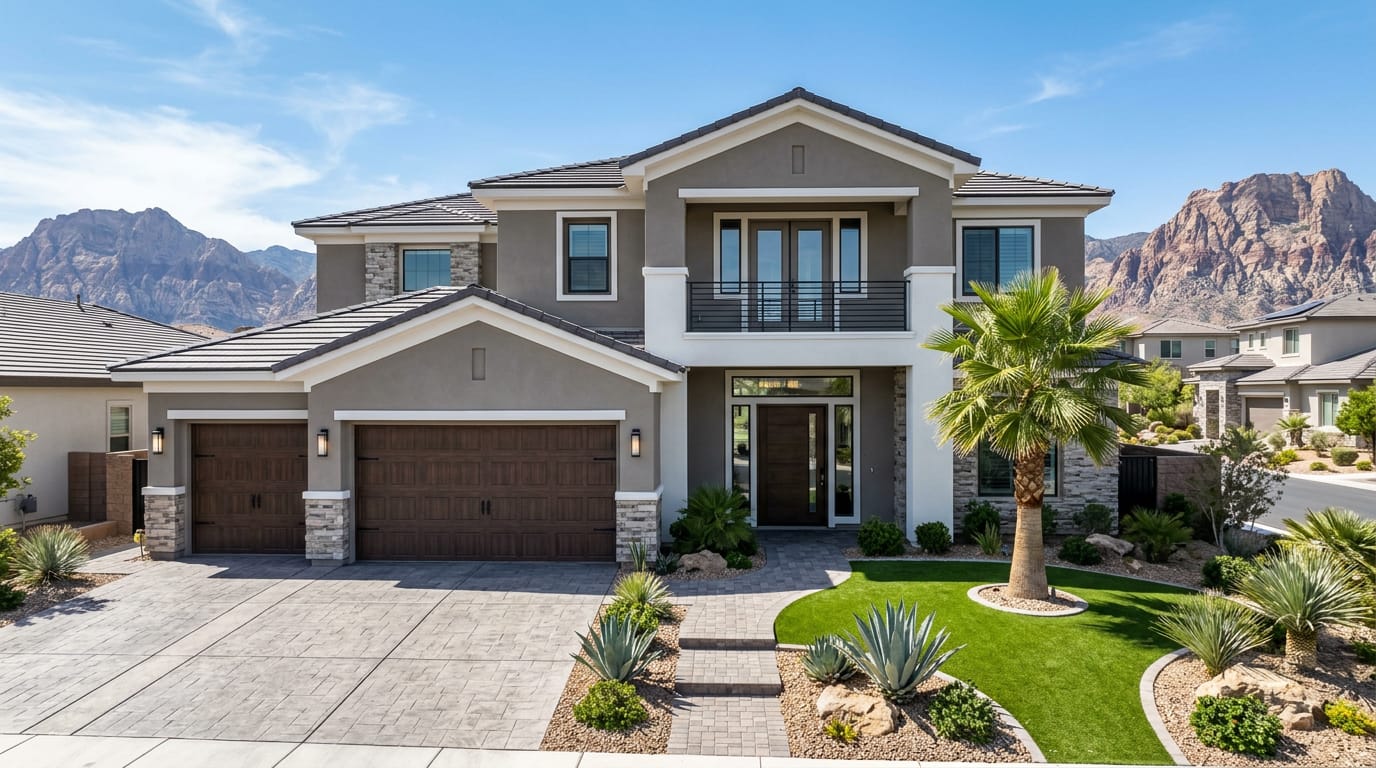
New-construction buyers in Reno should understand two tax wrinkles. First, the abatement cap base resets with new ownership and new construction, so a brand-new home often starts closer to the top of its tax range than a long-held resale — the 3% cap then applies going forward. Second, some newer Reno master plans, particularly in South Reno and growing areas, can carry special assessment districts that fund infrastructure like roads, sewers, and parks, repaid over a set term of years.
These special assessments are separate line items added to your tax bill and can add meaningfully to your annual cost. According to Washoe County and the City of Reno, they are disclosed during the purchase, but newcomers sometimes miss them when budgeting. I always pull the assessment status for any new-construction home a client is considering, because it can be the difference between two otherwise-similar homes. For buyers weighing new versus resale, our new construction hub covers the trade-offs, and factoring these assessments in upfront keeps your budget honest.
It is also worth understanding how a new home's tax bill evolves. In the first year, the county may still be assessing the lot or a partially built structure, so your initial bill can be lower than the eventual stabilized amount once the finished home is fully on the rolls. Many new-construction buyers are caught off guard the following year when the bill rises to reflect the completed home — then the 3% owner-occupied cap kicks in to govern future increases. Budgeting for the stabilized figure from the start, rather than the artificially low first-year bill, prevents an unwelcome surprise. This is exactly the kind of detail we walk new-construction clients through before they commit.
How do Reno property taxes compare to Sparks and Carson City?
Within Northern Nevada, property taxes are broadly similar across Reno, Sparks, and Carson City because they all follow the same Nevada system — 35% assessment ratio, combined district rates, and the 3% owner-occupied cap. Reno and Sparks sit in Washoe County; Carson City is its own consolidated municipality with its own rate, but the structure and effective range are comparable. The small differences come from specific districts and any special assessments.
Where the dollar amounts differ is simply home value: because Reno's median runs above Sparks and Carson City, Reno tax bills tend to be larger even at a similar rate. According to Northern Nevada market data, this is why a Reno buyer often pays more in property tax than a Sparks or Carson City buyer — not because the rate is higher, but because the home costs more. For buyers comparing areas, the property-tax math is roughly a wash on a per-dollar basis; the real decision drivers are price, schools, and lifestyle. Browse the region via Reno homes for sale and the Sparks and Carson City hubs.
For a concrete sense of the spread, a Sparks buyer purchasing the area's roughly $440,000 median home pays meaningfully less in annual property tax than a Reno buyer at the $560,000 median — often $600 to $900 less a year — simply because the assessed value is lower. A Carson City buyer near the $450,000 median is similar. None of this changes the effective rate, which is comparable across all three; it just means your total tax dollars track the price of the home you choose. For budget-focused buyers, that is one more reason to weigh neighboring Sparks or Carson City against Reno proper, since the savings show up on both the mortgage and the tax bill.
How can you lower your Reno property tax bill?
There are a few legitimate ways to keep your Reno property-tax bill as low as possible. First and most important: make sure your home is on the 3% owner-occupied cap, not the 8% rate — file the primary-residence claim with the Washoe County Assessor if you have not. Second, claim any exemptions you qualify for (veteran, disabled veteran, surviving spouse, blind). Third, review your assessed value each year; if the Assessor's taxable value looks too high relative to the market, you have the right to appeal during the designated window.
According to the Washoe County Assessor, the appeal process is straightforward and free to initiate, and a successful appeal lowers your assessed value and therefore your bill. The key is to act within the annual appeal window, which the Assessor publishes. For most owners, simply securing the owner-occupied cap and any exemptions captures the bulk of the available savings. We help clients understand all of this at purchase, and when it is time to sell, our seller resources and buyer resources keep the tax picture front and center. To run the numbers on a specific home, call (775) 277-2120 or scan inventory on the live home search, then start with Reno homes for sale.
What do Reno property taxes fund?
Understanding where your Reno property taxes go helps explain the value behind the bill. The combined rate is split among overlapping taxing entities: the Washoe County School District takes a large share, followed by Washoe County government, the City of Reno, the State of Nevada, and any special districts serving your area. According to the City of Reno, your taxes help fund police and fire, parks and recreation, road maintenance, libraries, and the municipal services that support quality of life across the city.
That funding connection matters: a stable tax base supports the schools, safety, and infrastructure that draw buyers to Reno in the first place. According to the Washoe County School District, school funding is a significant component, which matters to the families who choose Reno's stronger school zones in the south and the foothills. So while no one enjoys a tax bill, Reno owners get a tangible return — and they pay far less for it than they would across the Sierra. For buyers weighing the full value equation, our contact our team page and the Reno hub put the tax dollars in the context of what they buy.
Frequently Asked Questions
What is the property tax rate in Reno, NV?
Reno's combined nominal rate runs roughly $3.20 to $3.66 per $100 of assessed value, but because Nevada only assesses 35% of taxable value, the effective rate on market value is about 0.6% to 0.75%. On the median $560,000 home, that is roughly $2,900 to $4,200 a year for an owner-occupied primary residence. The exact rate depends on your specific district within Washoe County.
How are property taxes calculated in Reno?
Nevada taxes 35% of a home's taxable value (land plus depreciated replacement cost of the structure), not the purchase price. The Washoe County Assessor sets the taxable value, multiplies 35% of it by the combined district rate (around $3.40 per $100), and then applies the abatement cap. The result on a median Reno home is roughly $2,900 to $4,200 a year. Always verify the specific parcel with the Assessor.
What is the 3% property tax cap in Nevada?
Nevada caps annual property-tax increases at 3% for owner-occupied primary residences and up to 8% for other property, under NRS 361.4722 and related statutes. This means your bill cannot spike with the market the way it can in uncapped states. You must have your primary-residence status on file with the Washoe County Assessor to receive the 3% cap rather than the 8% rate, so confirm it when you buy.
Are Reno property taxes higher than California?
No — Reno is significantly cheaper. California's effective rate runs about 1.1% to 1.3% of full purchase price under Prop 13, while Reno's runs about 0.6% to 0.75% because Nevada assesses only 35% of taxable value. On a $560,000 home, that is roughly $2,900 to $4,200 in Reno versus $6,200 to $7,300 in California — before adding Nevada's zero state income tax advantage.
How much are property taxes on a $500,000 home in Reno?
Expect roughly $2,600 to $3,800 a year on a $500,000 owner-occupied Reno home, depending on the district and abatement history. Nevada assesses 35% of taxable value (about $175,000), applies a combined rate near $3.40 per $100, and caps annual increases at 3%. Newer construction starts nearer the top of the range; long-held homes sit lower. Confirm the exact figure with the Washoe County Assessor.
Do Reno new-construction homes have higher taxes?
Often slightly, at least at first. The abatement cap base resets with new construction, so a new home tends to start nearer the top of its tax range, with the 3% cap applying afterward. Some newer South Reno developments also carry special assessment districts that fund infrastructure and add to the bill. These are disclosed at purchase but should be budgeted, so pull the assessment status before you buy.
What property tax exemptions can Reno homeowners claim?
The biggest is the owner-occupied 3% cap (file the primary-residence claim). Beyond that, Nevada offers exemptions for veterans, disabled veterans, surviving spouses, and the blind, each reducing assessed value by a set amount. There is also a homestead declaration that protects home equity from certain creditors, separate from property tax. All require an application with the Washoe County Assessor, so confirm current amounts and eligibility directly.
Which Sources Inform This Reno Property Tax Guide?
This guide draws on Nevada Real Estate Group's direct transaction experience plus public data from government authorities. Tax rates, caps, and exemption amounts change annually — confirm current specifics with the Washoe County Assessor, Treasurer, or a qualified tax professional before acting. This is general educational information, not legal, financial, or tax advice, and all services are offered in compliance with the Fair Housing Act.
- Washoe County Assessor — property records and valuation
- Washoe County Treasurer — tax rates and payments
- Nevada Department of Taxation — property tax
- Nevada Revised Statutes — property tax abatement (NRS 361)
- Tax Foundation — state and property tax rankings
- City of Reno — services and budget
- Washoe County School District
- U.S. Census Bureau — Reno QuickFacts
- Nevada Department of Veterans Services — tax exemptions
- Washoe County — homestead and recorder
- U.S. Department of Housing and Urban Development — Fair Housing Act