

Every Reno seller I sit with asks some version of the same question: if I spend money on the house before listing, do I get it back? The honest answer is that most projects return less than they cost, a few return far more, and the difference has less to do with taste than with what a buyer can see on the first showing and what an inspector can find in the second week. A new garage door and a documented furnace service usually beat a dream kitchen. That is not a hunch. The remodeling cost studies show it, and this year's Reno and Sparks sale prices show buyers paying more for homes in updated condition.
This guide puts three kinds of evidence side by side: the Reno city table from the 2025 Cost vs. Value report, which estimates what 28 projects cost here and how much they add at resale; our own October 1, 2026 pull of Northern Nevada Regional MLS sales, comparing homes listed as remodeled with homes that were not; and the Northern Nevada rulebook that national advice skips, from Washoe County permits and snow-load rules to Truckee Meadows Water Authority watering limits, NV Energy rebates, wildfire defensible space and radon. I report what the data shows, with dates, and flag where it cannot answer the question.
In Reno, small exterior replacements and condition fixes pay back; big additions do not. The 2025 Cost vs. Value report puts a Reno garage door replacement at 295.7% of cost recouped and an upscale primary suite addition at 15.7%. In our pull of 798 pre-2000 Reno and Sparks homes with April to July 2026 MLS sale dates, remodeled listings sold for a median $379 per square foot versus $334 without update wording. Fix and document first.
- Reno's 2025 Cost vs. Value table: garage door 295.7% recouped, steel entry door 282.1%, upscale primary suite 15.7%.
- Pre-2000 Reno and Sparks homes described as remodeled sold for a median $379 per square foot.
- Needs-work listings: median $311 per sq ft, versus $334 for listings with no update wording at all.
- Unincorporated Washoe County exempts painting, countertops and same-size window swaps; re-roofs and water heaters need permits.
- Test for radon early: 32.7% of 89509 tests since 1989 reached 4 pCi/L on Extension's Washoe map.
What Actually Raises a Reno Home's Value Before You Sell?
Value, for a seller, is simply what a buyer will pay on the day you list, and buyers pay for three things you can influence: what they see, what they fear, and what they would otherwise have to do themselves. Most pre-listing spending only touches the first. The projects that move price touch all three: a garage door that changes the photograph, a furnace with a service record that removes an inspection fear, and a refreshed kitchen that spares the buyer a project in their first year.
The second idea is the gap between cost and value. A project can make a home worth more and still lose money. Reno's midrange major kitchen remodel is the example: an estimated $80,500 to build and $41,652 of resale value, so it adds value and still costs the seller about $38,848. Cost recouped, the ratio the studies publish, captures that trade.
The third idea is local. Reno is a high-desert, four-season market where snow loads, frost depth, wildfire codes and a limited water supply shape which upgrades are allowed and which ones buyers notice. A national list of best projects ignores all of that.
Across the 9,600+ closings we've represented, the sellers who come out ahead are rarely the ones who spent the most. They are the ones who spent on the items a buyer's inspector and appraiser would otherwise use to take money back. For the full cost of selling before you decide what to spend, see our Reno home-selling process and costs guide.
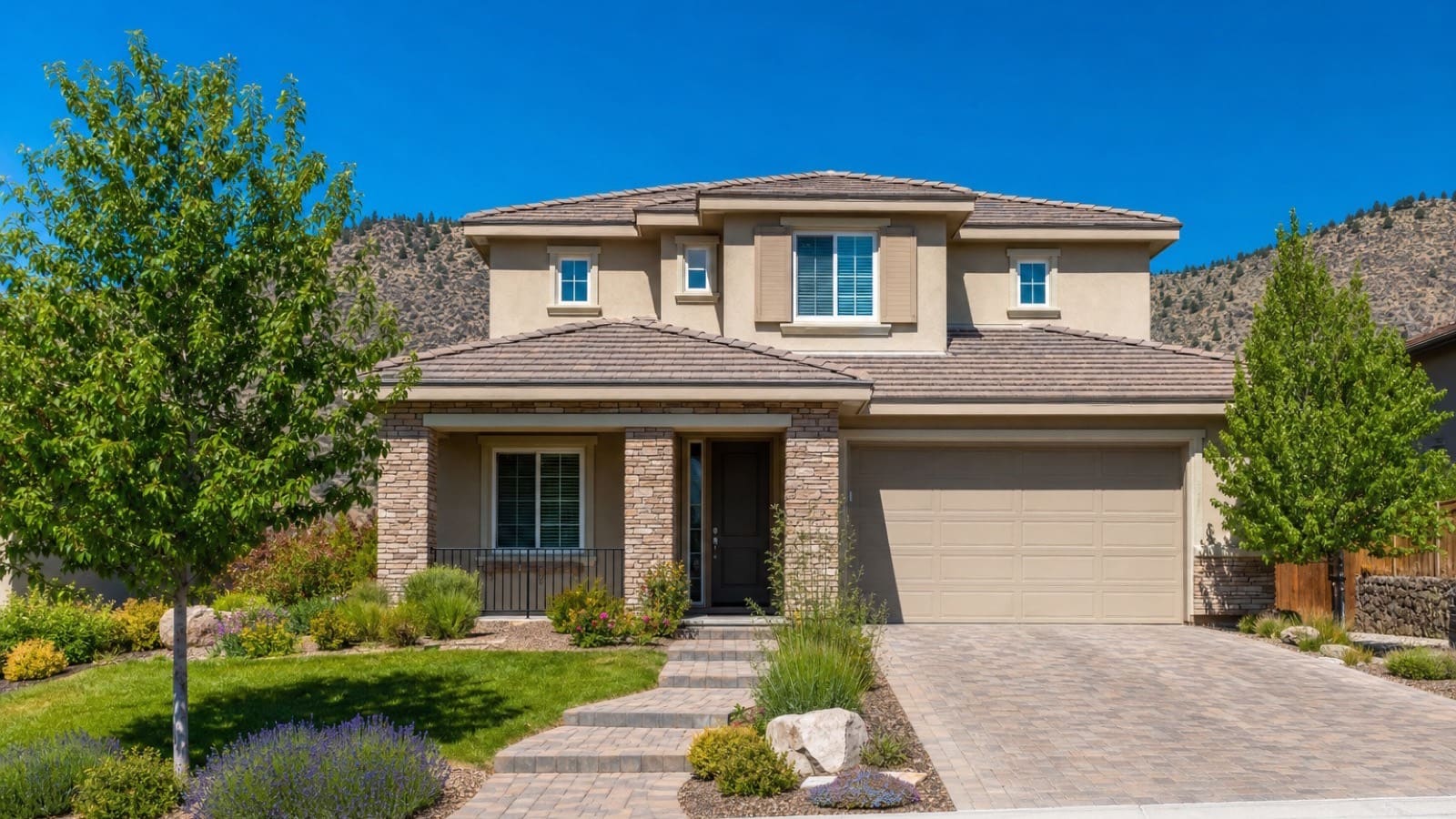
Which Projects Recoup the Most of Their Cost in Reno?
The best published source for project-level returns is Zonda's Cost vs. Value report, now in its 38th edition and published on the Journal of Light Construction (JLC) website; as of October 1, 2026, the 2025 edition is the newest there. One correction to how it is often quoted for this market: Nevada is not in the report's Pacific region, whose city tables are all in California, Oregon and Washington. Nevada sits in the Mountain region, and Reno has its own city table, which is what I use.
According to the 2025 Cost vs. Value report's Reno, Nevada table, a garage door replacement cost an estimated $4,694 in Reno and added an estimated $13,881 at resale, recouping 295.7%. A steel entry door cost $2,410 and recouped 282.1%. Manufactured stone veneer cost $11,022 and recouped 188.4%. At the other end, a midrange primary suite addition cost $166,396 and recouped 26.9%, and an upscale one cost $342,290 and recouped 15.7%.
| Project | Reno job cost | Reno resale value added | Reno cost recouped | Mountain region recouped |
|---|---|---|---|---|
| Garage Door Replacement | $4,694 | $13,881 | 295.7% | 236.1% |
| Entry Door Replacement, Steel | $2,410 | $6,799 | 282.1% | 186.3% |
| Manufactured Stone Veneer | $11,022 | $20,761 | 188.4% | 161.8% |
| Deck Addition, Wood | $18,063 | $21,766 | 120.5% | 97.3% |
| Siding Replacement, Fiber-Cement | $21,178 | $22,214 | 104.9% | 103.9% |
| Siding Replacement, Vinyl | $18,328 | $17,902 | 97.7% | 107.2% |
| Minor Kitchen Remodel, Midrange | $28,271 | $27,105 | 95.9% | 110.3% |
| Window Replacement, Vinyl | $20,975 | $19,357 | 92.3% | 79.6% |
| HVAC Conversion, Electrification | $17,274 | $15,716 | 91% | 79.7% |
| Grand Entrance, Fiberglass | $11,407 | $10,053 | 88.1% | 89.4% |
| Bath Remodel, Midrange | $23,733 | $20,858 | 87.9% | 69.4% |
| Window Replacement, Wood | $26,029 | $22,637 | 87% | 72.2% |
| Roofing Replacement, Asphalt Shingles | $28,799 | $24,437 | 84.9% | 71.7% |
| Basement Remodel | $49,055 | $40,015 | 81.6% | 77.7% |
| Deck Addition, Composite | $26,517 | $21,023 | 79.3% | 82.1% |
| Bath Remodel, Universal Design | $37,511 | $25,897 | 69% | 61.3% |
| Backup Power Generator | $12,677 | $8,397 | 66.2% | 77.1% |
| Roofing Replacement, Metal | $47,122 | $28,086 | 59.6% | 54.3% |
| Major Kitchen Remodel, Midrange | $80,500 | $41,652 | 51.7% | 49.3% |
| Bathroom Addition, Midrange | $57,316 | $27,075 | 47.2% | 47.4% |
| Bath Remodel, Upscale | $75,857 | $32,771 | 43.2% | 36.4% |
| Bathroom Addition, Upscale | $105,672 | $43,394 | 41.1% | 37.5% |
| Accessory Dwelling Unit | $165,295 | $64,311 | 38.9% | 45.5% |
| Major Kitchen Remodel, Upscale | $156,084 | $56,143 | 36% | 34.9% |
| Backyard Patio | $50,146 | $17,645 | 35.2% | 38.3% |
| Solar Power Installation | $51,876 | $17,331 | 33.4% | 28.4% |
| Primary Suite Addition, Midrange | $166,396 | $44,732 | 26.9% | 26.8% |
| Primary Suite Addition, Upscale | $342,290 | $53,903 | 15.7% | 15.6% |
Read the table with its method in mind. According to the report's 2025 methodology, job costs start from a national baseline built on federal price indices, with local variation drawn from Verisk's XactRemodel estimating data, while resale values come from an online survey of more than 6,000 Realtors who were shown each project, its construction cost and the local median home price and asked what it would add to the sale price. So the resale column is an informed opinion, not a measured sale. That is why I pair it with actual Reno and Sparks closings below.
The Reno column also differs from the region in useful ways. Reno's figures for wood decks, vinyl windows, HVAC electrification, midrange bath remodels and asphalt roofs run well above the Mountain average, while the minor kitchen remodel runs below it, at 95.9% against 110.3%. Five of the 28 projects return more than they cost in Reno, and every one of them is an exterior project or a wood deck.
What Do Reno Buyers Actually Pay For in Our NNRMLS Data?
Survey opinions are a start; sale prices are better. On October 1, 2026, I ran our own pull of Northern Nevada Regional MLS data through Repliers: single-family homes in the MLS cities of Reno and Sparks, built in 1999 or earlier, with an MLS sale date from April 1 through July 31, 2026. In this feed that date is usually the contract date; the 798 homes actually closed between April 15 and September 30, 2026, a median of 30 days later. I limited it to older homes because that is where the remodel question is real.
I then sorted each home by the words in its public remarks. Needs-work language, such as as-is, fixer, TLC, needs updating or bring your ideas, came first and overrode everything else. Next came remodeled, renovated, or fully, completely, beautifully, tastefully, recently or newly updated, or updated throughout. Then other update words only, such as updated, upgraded, refreshed, refurbished, modernized, turnkey, move-in ready, or remodel and renovation used as nouns. The rest had no update wording at all.
| What the listing remarks said | Sales | Median sold price per sq ft | Median sold price | Median size (sq ft) | Sold at or above original list |
|---|---|---|---|---|---|
| Remodeled, renovated, or fully, completely, beautifully, tastefully, recently or newly updated | 227 | $379 | $660,000 | 1,886 | 51.1% |
| Other update words only (updated, upgraded, refreshed, turnkey, move-in ready and similar) | 222 | $363 | $560,000 | 1,699 | 56.8% |
| No update wording | 280 | $334 | $561,000 | 1,790 | 48.2% |
| Needs-work, as-is, fixer or TLC wording | 69 | $311 | $467,000 | 1,546 | 49.3% |
| All 798 sales | 798 | $350 | $575,000 | 1,764 | 51.5% |
The spread is real and it runs the way you would expect: $311 per square foot for homes sold as projects, $334 for homes with no update story, $363 for light updates and $379 for remodeled homes. The size column matters here. Smaller homes usually sell for more per square foot, yet the remodeled group was the largest of the four at a median 1,886 square feet, so its premium is not a small-house artifact.
Location is the bigger worry, because a remodeled bungalow near the Truckee River and a dated ranch on the city's edge are not the same product. So I compared the groups inside the same ZIP code. In the 13 ZIP codes with at least three sales in both groups, remodeled listings sold for a median $38 more per square foot than listings with no update wording, an 11.3% gap, and the gap was positive in 9 of the 13. Needs-work listings ran a median 3.0% below in the 9 ZIP codes with enough sales, and below in 6 of those 9.
Now the limits, because they are large. Remarks are marketing text, my word filter is blunt, and this is four months of sale dates. July is also thin, with 175 homes against 194 to 221 in each of the other three months, which may partly reflect July contracts that had not closed by the October 1 pull, so treat July as provisional. The comparison shows association, not cause: remodeled homes may also have better lots, views or floor plans. Note also what did not change much. The share of homes that sold at or above their original list price sat between 48% and 57% in every group. Remodeled homes sold for more, but they sold at about the same ratio to their original asking price as everything else, so the premium was in the asking price from day one. Condition is priced in at listing; it does not rescue an overpriced home. For the market backdrop, see our Reno housing market overview.
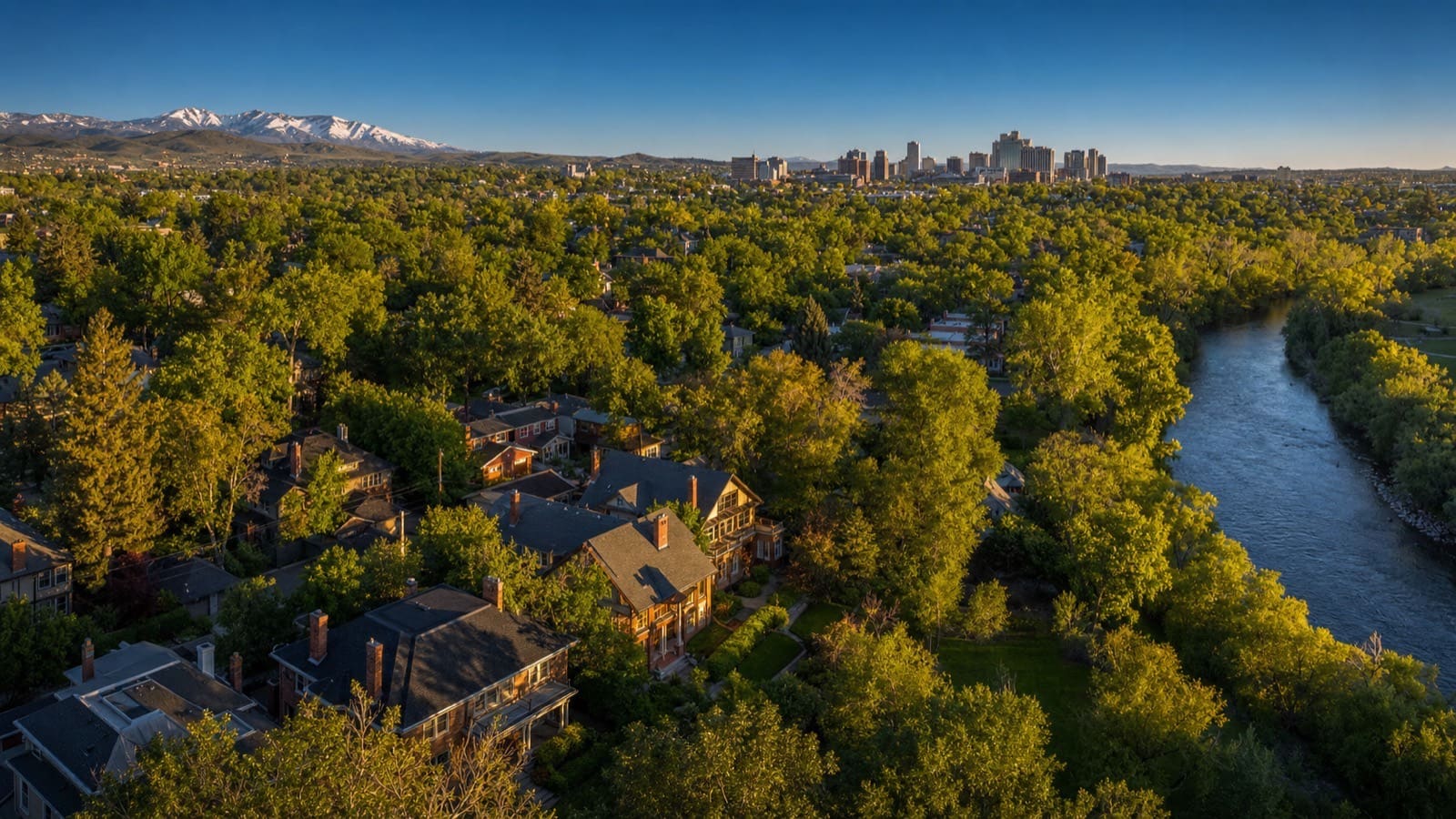
Does the Age of a Reno Home Change Its Price Per Square Foot?
A common assumption is that an older home is worth less per square foot, so updating it simply closes a gap with newer construction. The 12-month numbers say that is too simple. A second, wider pull covers all 4,763 single-family sales in the MLS cities of Reno and Sparks with an MLS sale date in the 12 months ending July 31, 2026, split by year built. The figures are averages of each home's sold price per square foot from the feed's statistics tool; I checked them against my own record-level math for April through July 2026 for the two pre-2000 bands, and they matched.
| Year built | Sales | Median sold price | Average sold price per sq ft |
|---|---|---|---|
| Before 1980 | 1,017 | $495,000 | $353 |
| 1980 to 1999 | 1,144 | $600,000 | $346 |
| 2000 to 2009 | 1,150 | $616,250 | $333 |
| 2010 to 2019 | 554 | $725,000 | $360 |
| 2020 or newer | 898 | $644,975 | $329 |
Average price per square foot barely moves with age, running from $329 to $360 across all five bands, and the oldest band is near the top of that range. What changes with age is the total price, because older homes are smaller: the median pre-1980 home sold for $495,000 against $725,000 for homes built in the 2010s. Many of the oldest homes also sit in established central neighborhoods, a location effect that a per-square-foot average does not separate out.
So the practical lesson for a seller with a 1970s or 1990s home is not that age is a penalty you must erase. It is that, within your age band, condition sets where you land. The remodel table above shows a spread of $311 to $379 per square foot among pre-2000 homes. That $68 spread is the range you are trying to move within, and the cheapest way to move up it is usually to remove the reasons a buyer would describe your home as a project.
Two cautions. Monthly counts look normal through the window, with the usual winter dip, but July 2026 can still rise slightly as late contracts close. And the newest band mixes resales with builder sales entered in the MLS. If you want to see how these bands translate into budgets, our guide to what a Reno budget buys walks through it by price point.
Which Specific Updates Show Up in Higher Reno Sale Prices?
The same 798-home pull lets me look at specific items: I compared homes whose remarks mention each item below with homes whose remarks do not.
| Remarks mention | Homes | Median per sq ft, mentioned | Median per sq ft, not mentioned | Median size, mentioned | Median size, not mentioned |
|---|---|---|---|---|---|
| Updated or remodeled kitchen | 135 | $376 | $345 | 1,773 | 1,763 |
| Updated or remodeled bathroom | 101 | $376 | $349 | 1,802 | 1,752 |
| New or newer roof | 105 | $363 | $349 | 1,542 | 1,786 |
| New furnace, HVAC or water heater | 139 | $356 | $349 | 1,650 | 1,788 |
| New windows | 45 | $367 | $350 | 1,604 | 1,773 |
| Fresh or new paint | 204 | $351 | $349 | 1,677 | 1,814 |
| New flooring | 128 | $350 | $350 | 1,692 | 1,780 |
| Solar | 49 | $347 | $350 | 1,822 | 1,750 |
| Xeriscape or drought-tolerant yard | 25 | $380 | $350 | 1,734 | 1,767 |
The kitchen and bathroom rows are the cleanest signal. Homes that mention an updated kitchen sold for a median $376 per square foot against $345 for homes that do not, and the two groups are almost the same size, so size is not doing the work. Bathrooms show the same pattern at $376 against $349.
The roof, mechanical and window rows need more care. Homes advertising a new roof sold for $363 against $349, but they were also much smaller, at a median 1,542 square feet against 1,786, and smaller homes tend to carry higher prices per square foot. The same size skew applies to the furnace and window rows. My read is that these items protect price more than they raise it: a buyer does not pay a premium for a sound roof, but an old one becomes a credit request after inspection.
Paint and flooring show essentially no difference, at $351 against $349 and $350 against $350. In our experience that is because buyers treat fresh paint and clean floors as the baseline, not a bonus. Solar shows no premium at $347 against $350. Water-wise yards show $380 against $350, but on only 25 homes, which is too few to lean on. Treat every row as a pointer for your own comparable sales, not a price list.
Which Reno Projects Rarely Pay Back at Sale?
The bottom of the Reno table is consistent and blunt. According to the 2025 Cost vs. Value Reno table, the eleven projects that recoup less than 60% here are the metal roof at 59.6%, the midrange major kitchen at 51.7%, the midrange bathroom addition at 47.2%, the upscale bath remodel at 43.2%, the upscale bathroom addition at 41.1%, the accessory dwelling unit at 38.9%, the upscale major kitchen at 36%, the backyard patio at 35.2%, solar at 33.4%, and the two primary suite additions at 26.9% and 15.7%. In dollars, the upscale suite costs an estimated $342,290 and adds an estimated $53,903.
The pattern has a simple explanation. According to JLC's summary of the 2025 report's key trends, the more complex the project, the lower the return at the time of sale, partly because large projects carry an owner's specific choices of cabinets, finishes and fixtures that fewer buyers share. A minor kitchen face-lift at $28,271 recoups 95.9% in Reno; the upscale kitchen at $156,084 recoups 36%.
Homeowners still love these projects, which is the trap. According to the NAR and NARI 2025 Remodeling Impact Report release, a primary bedroom suite addition and a kitchen upgrade both earned the top Joy Score of 10 from homeowners who completed them. Joy is a fine reason to remodel a house you will live in for years. It is a poor reason to remodel a house you plan to sell in six months.
Our own data adds two local notes. Solar did not show a per-square-foot premium in our pull, matching its low cost-recouped figure. And the remodel premium in our pull came from homes already described as remodeled when listed, not from projects rushed in before a sale; a half-finished remodel, or one without permits, can turn the premium into a negotiation. If your home needs more than a refresh, it may make more sense to price it as-is for the buyers shopping Reno fixer-upper homes than to take on a large project yourself.
How Should You Budget Upgrades Under $5,000, $5,000 to $25,000 and Over $25,000?
A budget tier is a useful way to force the decision, because the right project changes as the amount grows. The table below uses only figures from named sources, and where no local price is published I say so instead of inventing one. The Cost vs. Value numbers are Reno estimates from the 2025 report; the NV Energy rebates are the utility's 2026 program terms; the wildfire retrofit range is a California-based study, labeled as such.
| Budget tier | Projects with a published figure | What the figure says | Check first |
|---|---|---|---|
| Little or no cost | Borrow a radon monitor; clear combustibles from the 5-foot zone; reset sprinklers to assigned days | Extension lends radon monitors with no fee; no published local cost for the other two | Results in writing; photos of the cleared zone |
| Under $5,000 | Garage door replacement; steel entry door; duct sealing | Garage door $4,694 cost, $13,881 value; steel door $2,410 cost, $6,799 value; NV Energy duct rebate $200, or $300 with insulation | Rebate eligibility before you buy; permit needs for any electrical work |
| $5,000 to $25,000 | Stone veneer; wood deck; vinyl windows; midrange bath; ember-resistant retrofit | Veneer $11,022 cost, 188.4% recouped; deck $18,063, 120.5%; vinyl windows $20,975, 92.3%; midrange bath $23,733, 87.9%; retrofit package $2,000 to $15,000 in a California study | Deck and window permits; fire district rules if you are in a wildland area |
| Over $25,000 | Minor kitchen; asphalt roof; major kitchen; additions | Minor kitchen $28,271, 95.9%; asphalt roof $28,799, 84.9%; midrange major kitchen $80,500, 51.7%; upscale suite $342,290, 15.7% | Whether the buyer pool for your price point expects the project at all |
Two assumptions sit behind the table. First, that you are selling within a year, so resale value is the main payoff; if you will stay for years, comfort and energy savings deserve more weight than this table gives them. Second, that the project is finished, permitted where required, and documented before photos. An unfinished project shows up in listing photos and inspection reports as risk, and buyers discount risk heavily.
My own order of operations inside any budget is the same. Fix what an inspector would flag. Replace what a buyer sees first, which in Reno usually means the garage door, the entry door, and the front yard. Then refresh the rooms buyers judge hardest, the kitchen and the main bathroom, at the minor-remodel level rather than the major one. Professional staging and photography come last; our Reno home staging costs guide covers what local stagers publish.
Which Reno Remodels Need a Building Permit?
Permits matter to value for a reason sellers often miss: unpermitted work has to be disclosed and can be held against the price. According to Washoe County's page on work done without a permit, work done without required permits is considered illegally constructed by default, Nevada's disclosure laws require illegal work to be declared before a sale, and unpermitted construction can affect a home's insurability. Visible work, such as a water heater or a re-roof, can be legalized by applying for the permit; concealed work must be exposed or certified by a licensed professional.
Which projects need a permit depends on where the house is. Inside the City of Reno, according to the city's building permits page, most construction and building projects require a permit, applications are filed online through the ONE Regional Licensing and Permits portal, exemptions for one- and two-family homes follow Section R105.2 of the International Residential Code, and an application or permit that reaches 180 days of inactivity expires. In unincorporated Washoe County, the county publishes its own exempt list, summarized in the table below. Sparks runs its own building division, and its list is stricter in places: according to the City of Sparks building permits page, fences, water heaters and furnaces, roofing, patio covers, sheds over 200 square feet, and relocated or added plumbing and electrical all need a permit, while replacing doors and windows, floor coverings, cabinets, molding and light or plumbing fixtures does not.
| Project | Permit in unincorporated Washoe County? | Condition or note |
|---|---|---|
| Interior paint, wallpaper, tile, carpet, cabinets, countertops | No | Listed as exempt interior finish work |
| Door and window replacement | No | Same opening and size, meeting applicable codes |
| Roof repair | No | Under 100 sq ft or under its one-year warranty |
| Re-roof | Yes | Eligible for an EZ permit; staff processing required |
| Water heater, like-for-like HVAC, plumbing, electrical service | Yes | EZ permit types for like-for-like replacements |
| Deck | No, if small | Up to 200 sq ft, no more than 30 inches high, not serving the required exit door |
| Fence | No, if low | Up to 30 inches in the front yard, up to 6 feet elsewhere |
| Retaining wall | No, if low | Under 4 feet, not terraced or carrying extra weight |
| Relocating plumbing or utilities, framing or drywall changes | Yes | Utility or remodel permit types, not EZ |
The source for the exempt items is Washoe County's What Requires a Permit page, which also notes that minor plumbing repairs and like-for-like fixture swaps without rearranging pipes are exempt. According to Washoe County's EZ Permits page, contractors can apply, pay and receive like-for-like utility permits the same day, while re-roof and wood or pellet stove permits need a permit technician's review.
The value lesson is simple. The cheap, high-return projects in the Reno Cost vs. Value table, such as a garage door, a steel entry door or same-size replacement windows, mostly sit on or near the exempt list, while the low-return projects, such as additions and major kitchens, almost always need plans and permits. That is one more reason the small projects pay. For how permits and repairs flow onto the disclosure form, see our Reno and Washoe County seller disclosure guide.
How Do Snow, Freeze and Roof Rules Change a Reno Upgrade Plan?
Reno's climate is written into its building codes, and that changes what a roof, a foundation or a water line upgrade has to be. According to Washoe County's construction design requirements, drawn from the 2024 Northern Nevada Amendments, unincorporated Washoe County uses a 24-inch frost line depth, a 17-degree winter design temperature, severe weathering exposure, and an ice-barrier underlayment requirement above 5,300 feet of elevation. Ground snow loads come from an elevation table: at 4,500 to 5,000 feet, residential buildings, which fall in Risk Category II, carry a 43-pound-per-square-foot ground snow load, and the figure climbs steeply west of old Highway 395 above 5,000 feet.
Three practical points follow. First, a re-roof is permitted work here, so keep the permit and final inspection, plus the underlayment detail if your home sits above 5,300 feet. In a designated wildland-urban interface area, Washoe County's WUI code guide adds IWUIC 507.1: replacing a roof covering, or 25 percent or more of it within 12 months, requires the roof covering for new construction under that property's ignition-resistance rating. Second, structural changes, such as removing a wall, adding a patio cover or switching to a heavier roof, must be engineered for the local snow load, which adds cost to the projects that already recoup the least. Third, exposed water lines need to survive a hard freeze, and an unprotected line in a crawlspace is an easy inspection write-up.
The roof numbers deserve a closer look. In Reno, an asphalt shingle replacement costs an estimated $28,799 and recoups 84.9%, while a metal roof costs $47,122 and recoups 59.6%, according to the 2025 Reno Cost vs. Value table. Realtors rank roofing high as well: in the NAR and NARI 2025 release, installing new roofing was the third most common project Realtors recommend before listing, at 37%, behind painting the whole home and painting a single room.
Treat the roof as a condition item rather than an upgrade. If it has years left, a documented inspection and minor repairs usually do more for your net than a replacement. If it is at the end of its life, a buyer will price that in either way, and a permitted asphalt replacement before listing can remove the largest single inspection objection.
Can Water-Wise Landscaping Add Value Under TMWA's Rules?
Curb appeal in Reno has a water budget attached. According to Truckee Meadows Water Authority's water conservation page, the region averages about seven inches of rain a year, with Lake Tahoe as the primary water source. According to TMWA's assigned-day watering rules, sprinklers at addresses ending in an even number may run on Tuesdays, Thursdays and Saturdays, odd addresses on Wednesdays, Fridays and Sundays, no sprinklers on Mondays, and TMWA asks customers to keep sprinklers off from noon to 6 p.m. between Memorial Day and Labor Day. Drip systems and hand watering are allowed any day.
There is no lawn-removal rebate to wait for. According to TMWA's page on why it has no turf removal program, local water regulations don't allow one: long-established agreements require unused surface water to be left in or returned to the Truckee River for downstream users, so water saved by removing grass cannot serve future demand, and a program's cost would fall on existing customers. What TMWA does publish is a water-efficient landscape guide built around seven horticultural principles, a plant database for the high-desert climate, and the observation that the community uses about four times as much water in summer as in winter because of outdoor irrigation. Budget any lawn conversion at full cost.
Does a water-wise yard pay? Our MLS pull cannot say much: only 25 of the 798 pre-2000 homes mentioned xeriscape or drought-tolerant landscaping, and their $380 median per square foot is too thin a sample to support a claim. What I can say is that a dead or patchy lawn reads as neglect in listing photos, and a tidy, zoned yard with drip-irrigated beds, mulch and a few healthy trees photographs well in every season. Convert the parts of the yard that fail first, and leave usable turf where a buyer would expect it.
If you live in a wildland area, pick materials with fire in mind as well. Rock and pavers in the first five feet from the house serve both goals, which is a theme of the next two sections.
Which NV Energy Rebates Can Offset Efficiency Upgrades?
Energy upgrades rarely raise a sale price by themselves, but a rebate lowers the net cost of work you may need anyway. According to NV Energy's 2026 Home Improvements Program rebates and requirements, the utility pays $200 for duct sealing alone or $300 for duct sealing plus duct insulation, and $0.10 per square foot for attic, wall and floor insulation that meets set starting and finished R-values: attic insulation must start no higher than R-20 and finish at R-49 or more, wall insulation must start no higher than R-5 and add at least R-13, and floor insulation must finish at R-22 or more. All of the weatherization rebates require a whole-house electric cooling system, and documents must arrive within 180 days of completion.
According to NV Energy's Home Improvements page, the home must be in NV Energy's service territory, be a single-family or multifamily home with four or fewer units per foundation, and carry a current residential account, and the page lists northern Nevada contractors separately. Specific rebate items are subject to change, so confirm the current list before you book work.
For a seller the arithmetic is modest. At $0.10 per square foot, a hypothetical 1,500-square-foot attic earns a $150 rebate, and insulation does nothing for price unless it fixes a comfort problem a buyer would notice. Duct sealing is different, because leaky ducts in an unconditioned crawlspace can show up as uneven rooms during a winter showing.
The Cost vs. Value table is more encouraging about bigger mechanical work here than in the region. A Reno HVAC electrification project costs an estimated $17,274 and recoups 91%, against 79.7% for the Mountain region, and vinyl window replacement recoups 92.3% against 79.6%. Neither pays for itself, but if your heating system or windows are due for replacement anyway, Reno's figures suggest most of the cost comes back, and a rebate can narrow the gap further.
How Much Do Defensible Space and Ember-Resistant Upgrades Matter in Reno?
For homes near open land, wildfire preparation belongs on the pre-listing list, because it bears on insurance questions as well as on the house itself. According to Living With Fire's home-hardening guidance from the University of Nevada, Reno Extension, an undated page I checked on October 1, 2026, 60% to 90% of home loss in wildfire events comes from embers traveling ahead of a fire and igniting the home or nearby material. According to Living With Fire's defensible space page, the work is organized in three zones: an ember-resistant zone from 0 to 5 feet, a lean, clean and green zone from 5 to 30 feet, and a reduced-fuel zone from 30 to 100 feet or more. Its Be Ember Aware blog recommends covering attic and foundation vents with 1/8-inch wire mesh and keeping woodpiles at least 30 feet from buildings.
The legal side is narrower than many sellers think. According to the Truckee Meadows Fire Protection District's defensible space page, buildings constructed in the district on or after August 2013 in areas designated Moderate, High or Extreme hazard fall under the International Wildland-Urban Interface Code, which requires 30, 50 or 100 feet of defensible space by hazard level, and older buildings built to the code of their time may continue to be used. Where defensible space was required for construction, the owner must maintain it for the life of the building, and the district warns that failing to do so may affect an insurance claim. According to Washoe County's Wildland Urban Interface Code guide, the county has adopted the code since 2013, now operates under the 2024 edition, and determines a property's hazard rating through its online fire map.
What does it cost? There is no published Reno price list that I could find. The most detailed study is Headwaters Economics' June 26, 2024 retrofit cost analysis, built on California building-code costs, which puts simple and effective actions such as ember-resistant vents, metal flashing along a deck and noncombustible mulch at $2,000 to $15,000, and a full retrofit to the highest level at nearly $100,000. Treat those as California figures and get local bids.
For a seller, the low end is where the value is: clearing the 0 to 5 foot zone, screening vents and cleaning gutters cost little, and they target embers, the cause Living With Fire ties to most wildfire home losses. For the insurance side, see our Northern Nevada wildfire home insurance guide.
Should You Test and Mitigate Radon Before Listing a Reno Home?
Radon is a routine part of Northern Nevada home sales. According to UNR Extension's statewide radon map, 21.9% of 10,700 valid tests in Washoe County came back at or above 4 picocuries per liter, the EPA action level; Extension describes its maps as covering completed tests from 1989 through 2026. According to Extension's Washoe County radon map, the rate varies widely by ZIP code: 32.7% of 1,788 tests in 89509 and 29.7% of 1,672 tests in 89511 reached that level, against 8.8% in 89521 and 9.6% in 89523. Caughlin Ranch spans both 89509 and 89519; in 89519, 12.9% of 440 tests reached the action level. These are results from homes whose owners chose to test, not a random sample.
Testing during a sale is already common here. According to a January 7, 2026 University of Nevada, Reno news release, about 40% of Northern Nevada homes undergo a radon test by a certified professional during a sale, more than 31,000 Nevada homes have been tested since the Nevada Radon Education Program began in 2007, and one in four homes tested in the state has elevated levels. According to Extension's test kit locations page, every county Extension office lends digital radon monitors for up to two weeks with no fee or deposit, and the program recommends retesting when a result is 2.7 pCi/L or higher.
Does mitigation pay? No study I found prices it into resale value, so I will not claim a number; what it does is remove a negotiation. According to the EPA's radon mitigation cost page, most homes can be fixed for about the same cost as other common home repairs, some systems cut radon levels by up to 99%, and costs vary with the home's size and design, so the agency suggests getting estimates from one or more qualified mitigation contractors. A buyer who finds a high result in week two of escrow can ask for a credit priced on fear; a seller who tested early can fix it on their own schedule and hand over the paperwork.
Disclosure is the other reason to know your number. Under NRS 113.130, the seller must complete the disclosure form and serve it at least 10 days before the property conveys, and must tell the buyer in writing about a newly discovered or worsened defect before closing. A known high radon result belongs on that form, and a mitigation system with its paperwork is a selling point.
Frequently Asked Questions
What home improvement adds the most value in Reno?
In the 2025 Cost vs. Value report's Reno table, a garage door replacement recouped the most, an estimated 295.7% of its $4,694 cost, followed by a steel entry door at 282.1% and manufactured stone veneer at 188.4%. The resale values there are survey-based estimates. In actual sales, our pull of 798 pre-2000 Reno and Sparks single-family homes with April to July 2026 MLS sale dates found that homes described as remodeled sold for a median $379 per square foot, against $334 for homes with no update wording. Exterior curb appeal plus sound condition is the combination that pays.
Is a kitchen remodel worth it before selling in Reno?
A light one usually is; a big one usually is not. The 2025 Reno Cost vs. Value table puts a midrange minor kitchen remodel at an estimated $28,271 and 95.9% recouped, a midrange major remodel at $80,500 and 51.7%, and an upscale major remodel at $156,084 and 36%. In our MLS pull, pre-2000 homes whose remarks mentioned an updated kitchen sold for a median $376 per square foot versus $345 for those that did not, with nearly identical median sizes. Refresh surfaces, fixtures and lighting rather than moving walls or plumbing.
Do I need a permit to remodel a bathroom in Reno?
It depends on the scope. In unincorporated Washoe County, tile, cabinets, countertops and replacing a sink or toilet in the same place without rearranging pipes are listed as exempt, while relocating plumbing or changing framing needs a utility or remodel permit. Inside the City of Reno, exemptions follow Section R105.2 of the International Residential Code and applications go through the ONE Regional Licensing and Permits portal. In Sparks, relocated or added plumbing and electrical need a permit, but replacing cabinets or plumbing fixtures does not. When in doubt, ask the building department before work starts, because unpermitted work has to be disclosed.
Does a new roof increase home value in Reno?
It protects value more than it adds to it. The 2025 Reno Cost vs. Value table puts an asphalt shingle replacement at an estimated $28,799 and 84.9% recouped, and a metal roof at $47,122 and 59.6%. In our pull, homes advertising a new or newer roof sold for $363 per square foot against $349, but those homes were also much smaller, which inflates the comparison. If the roof is near the end of its life, a permitted replacement removes a major inspection objection. In unincorporated Washoe County, homes above 5,300 feet also need an ice-barrier underlayment.
Does TMWA offer rebates for replacing a lawn?
No, and it is not a lapsed program. Truckee Meadows Water Authority says local water regulations don't allow a turf removal program: long-established agreements require unused surface water to be left in or returned to the Truckee River for downstream users. TMWA does publish a free water-efficient landscape guide, a high-desert plant database, and assigned-day watering rules: even-numbered addresses on Tuesdays, Thursdays and Saturdays, odd-numbered addresses on Wednesdays, Fridays and Sundays, and no sprinklers on Mondays. Budget any lawn conversion at full cost.
Should I fix radon before selling my Reno home?
Testing early is the smart move, because about 40% of Northern Nevada homes get a professional radon test during a sale, according to the University of Nevada, Reno. On Extension's maps, which cover tests from 1989 through 2026, Washoe County results reached the EPA action level of 4 pCi/L 21.9% of the time, and 32.7% of the time in the 89509 ZIP code. Extension lends digital monitors for up to two weeks with no fee. If your result is high, mitigation lets you fix it on your schedule and disclose the system, instead of negotiating a credit in the middle of escrow.
Does adding solar panels raise home value in Reno?
Not by much at resale, based on the evidence I found. The 2025 Reno Cost vs. Value table puts a solar installation at an estimated $51,876 with $17,331 of value added, or 33.4% recouped. In our MLS pull of 798 pre-2000 Reno and Sparks homes, listings that mentioned solar sold for a median $347 per square foot against $350 for those that did not. Solar may still make sense for your own bills while you live in the home. If your home already has a system, have its ownership or lease paperwork ready for buyers.
How Should You Sequence Upgrades Before Listing, and Who Can Help?
Put the evidence together and the sequence writes itself. Start about three months before you list. First, learn your home's condition the way a buyer will: a pre-listing inspection, a furnace service record, a roof assessment, and a radon test. Second, fix the items an inspector would flag, pulling permits where Washoe County, Reno or Sparks requires them. Third, spend on what a buyer sees first: the garage door and entry door, which recoup 295.7% and 282.1% in Reno's 2025 Cost vs. Value figures, plus a tidy front yard. Fourth, refresh the kitchen and main bathroom at the minor-remodel level. Last, stage and photograph.
Skip the primary suite addition, the upscale kitchen and the solar array unless you are staying for years. In Reno, those projects recoup 15.7% to 36% of their cost by the report's estimates, and in our pull, listings that mentioned solar showed no per-square-foot premium at all.
If you want a second opinion on where your money will go furthest, my team can walk the house with you, compare it against recent closed sales in your neighborhood, and tell you which projects your likely buyers will pay for and which they will not. We are Nevada Real Estate Group, brokered by LPT Realty, and we've represented 9,600+ closings across Nevada, including 789 homes in 2025. Our Reno office is at 1755 E Plumb Ln, Suite 241, and you can reach us at (775) 277-2120. You can also start with a quick online home value estimate, browse current Reno homes for sale and neighborhood guides, see how Somersett and Damonte Ranch homes are presenting, or compare notes with our Sparks home-selling guide if your home is across the line in Sparks.
Whatever you decide, decide with numbers. A $4,694 garage door will not make a headline, but in Reno's 2025 figures it recoups 295.7% of its cost, while a $166,396 midrange primary suite addition recoups 26.9%.
Which Sources Inform This Reno Home-Value Guide?
- 2025 Cost vs. Value Report: Reno, Nevada — Zonda via the Journal of Light Construction
- 2025 Cost vs. Value Report: Methodology — Journal of Light Construction
- 2025 Cost vs. Value Report: Key Trends — Journal of Light Construction
- 2025 Remodeling Impact Report release — National Association of Realtors and NARI
- Assigned-Day Watering — Truckee Meadows Water Authority
- Water Conservation — Truckee Meadows Water Authority
- Water-Efficient Landscape Guide — Truckee Meadows Water Authority
- Why TMWA Does not Have a Turf Removal Program — Truckee Meadows Water Authority
- 2026 Home Improvements Program Rebates and Requirements — NV Energy
- Home Improvements rebate program — NV Energy
- How to Make My Home Fire Safe and How to Improve My Defensible Space — Living With Fire, University of Nevada, Reno Extension
- Are You Ember Aware? — Living With Fire
- Defensible Space — Truckee Meadows Fire Protection District
- Wildland Urban Interface Code Guide — Washoe County Building Program
- The Cost of Retrofitting a Home for Wildfire Resistance — Headwaters Economics, June 26, 2024; California building-code costs
- Statewide Radon Map and Washoe County Radon Map — University of Nevada, Reno Extension; completed tests from 1989 through 2026
- Free radon test kits release, January 7, 2026 — University of Nevada, Reno
- Radon Test Kit Locations and Monitor Lending — Nevada Radon Education Program
- How Much Can a Radon Mitigation System Cost? — U.S. Environmental Protection Agency
- What Requires a Permit?, EZ Permits and Work Done Without a Permit — Washoe County Building Program
- Construction Design Requirements — Washoe County Building Program
- Building Permits — City of Reno Development Services
- Building Permits — City of Sparks Community Services
- NRS Chapter 113, including NRS 113.130 — Nevada Legislature
- Market Reports — Sierra Nevada REALTORS
- MLS figures: our own pull of Northern Nevada Regional MLS data through Repliers on October 1, 2026 (Reno and Sparks single-family homes); not official Sierra Nevada REALTORS statistics.