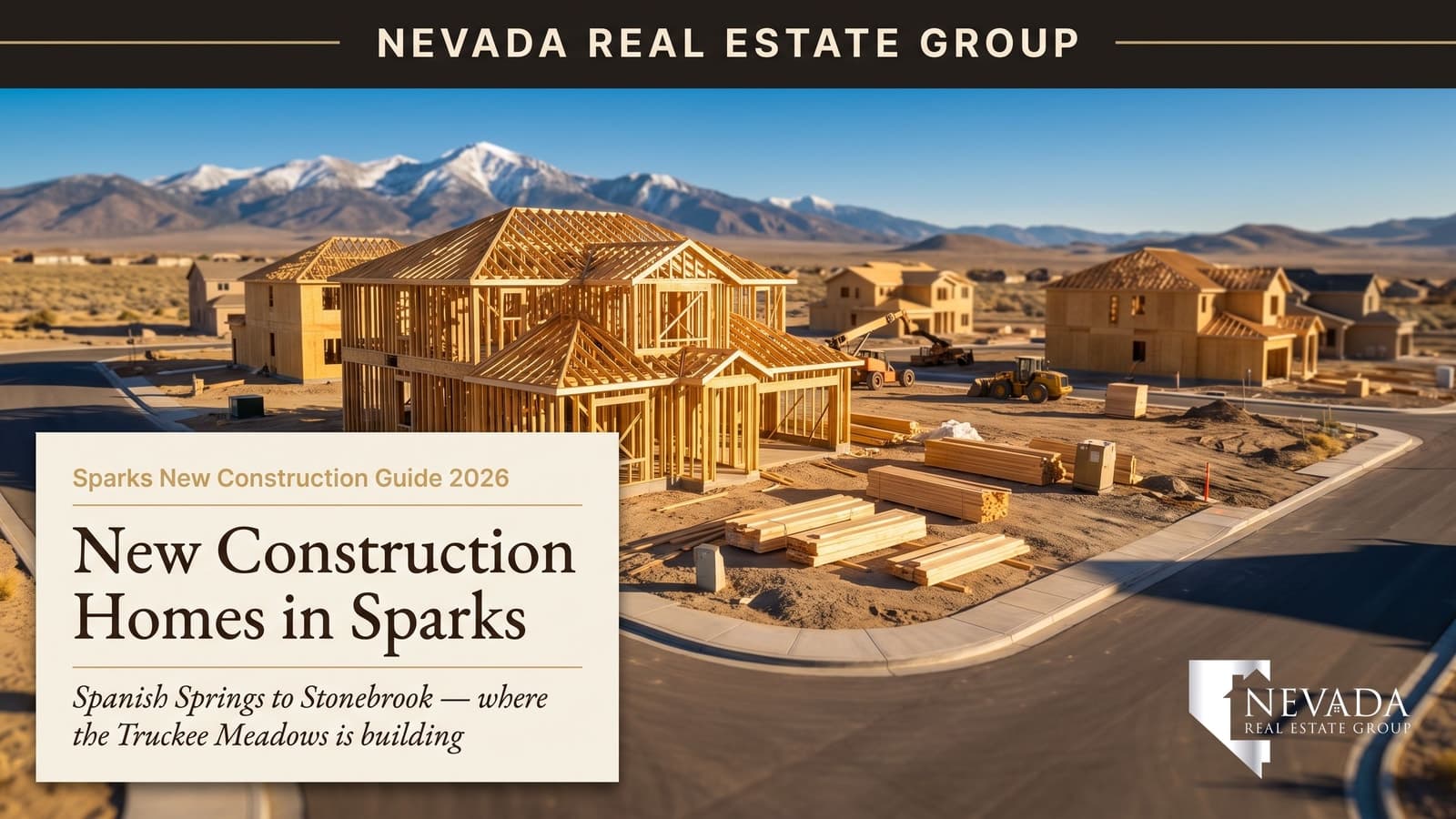

Sparks doesn't get the headlines Reno does, but if you want to buy a brand-new home in the Truckee Meadows right now, it may be the smartest place to start looking. As of July 12, 2026, Nevada Real Estate Group's live NNRMLS feed shows 57 active new-construction listings in Sparks (single-family and attached homes built 2024 or later) carrying a median list price of $700,000 — about $121,000 above the citywide median list of $579,000 across all 562 active Sparks listings.
That premium is real, but so is what it buys: current Sierra snow-load and energy code, a 1/2/10 warranty backed by Nevada statute, and a lot in whichever master plan will anchor the northeast Truckee Meadows for the next decade. I've spent 16 years walking Northern Nevada buyers through framing sites from Spanish Springs to Stonebrook, and this guide is the map I wish every relocating buyer had before their first model-home visit.
Sparks has 57 active new-construction listings (built 2024 or later) at a $700,000 median list price as of July 12, 2026 — about 21% above the citywide $579,000 median. Stonebrook alone holds 21 of those 57 listings, with Wingfield Springs and the Spanish Springs valley close behind. National and regional builders price from the low $400,000s to past $1 million. Tour with your own agent from the first visit and confirm in writing whether the builder pays. Call (775) 277-2120.
- 57 new-build listings (built 2024+) are active in Sparks at a $700,000 median — 21% above the $579,000 citywide.
- Stonebrook holds 21 of the 57 active new-construction listings; Wingfield Springs about 12, Spanish Springs roughly 10.
- Sparks is closest to the Tahoe-Reno Industrial Center — the shortest new-build commute to Tesla.
- Some newer Sparks communities carry SID or LID assessments on top of HOA dues — verify first.
- Register your own agent at your first model-home visit; confirm in writing whether the builder pays.
What Does Sparks' New-Construction Market Look Like in July 2026?
Here are the live numbers, pulled from Nevada Real Estate Group's NNRMLS feed on July 12, 2026 (methodology: active for-sale counts and medians by city, with new construction defined as year built 2024 or later — the same feed that powers our site search):
| Segment | Active / sold listings | Median price | What it tells you |
|---|---|---|---|
| Sparks new construction (built 2024+) | 57 active | $700,000 list | New-build inventory is about 10% of the Sparks market |
| Sparks — all active listings | 562 active | $579,000 list | The citywide baseline |
| Sparks — closed sales, last 90 days | 299 sold | $550,000 sold | Solds confirm the resale baseline is real |
| Reno new construction (built 2024+) | 124 active | $688,950 list | Context — Sparks is roughly a third of the metro's new-build inventory |
Three things jump out of that table. First, the new-construction premium in Sparks runs about $121,000 over the citywide median list — call it 21% — and a full $150,000 over the 90-day sold median of $550,000, because what's delivering new right now skews toward larger, better-optioned family product rather than entry townhomes. Second, the 299 closed sales in the last 90 days at a $550,000 median tell you the broader Sparks market is holding, not gapping. Third, Sparks' 57 new-build actives sit alongside Reno's 124 — so of the roughly 181 active new-construction listings in the Reno-Sparks core, Sparks carries about 31% of the region's brand-new inventory despite being the smaller city.
For the broader resale picture — months of inventory, rate effects, and how 2026 compares to the boom years — see my full Sparks housing market breakdown. The short version: balanced conditions, which is exactly the environment where builder incentives get generous.
Which Builders Are Actively Building in Sparks?
The publicly traded nationals dominate production volume in Sparks: D.R. Horton, Lennar, KB Home, Toll Brothers, Tri Pointe Homes, and Century Communities. The regional builders — Ryder Homes, Reynen & Bardis, and Blackstone Homes among them — carry the value-corridor and infill product the nationals don't always prioritize, often with more flexible floor plans and deep local subcontractor benches. Toll Brothers anchors the luxury and active-adult end through Regency at Stonebrook, its gated 55+ neighborhood.
| Builder | Type | Typical price range | Active Sparks areas |
|---|---|---|---|
| Toll Brothers | National luxury | $650K–$1.2M+ | Regency at Stonebrook (55+), Stonebrook |
| Lennar | National volume | $425K–$850K | Stonebrook, Kiley Ranch corridor |
| KB Home | National volume | $415K–$775K | Spanish Springs, Stonebrook |
| D.R. Horton | National entry | $399K–$725K | Spanish Springs, Stonebrook |
| Tri Pointe Homes | National mid/move-up | $500K–$950K | Stonebrook, Wingfield corridor |
| Century Communities | National entry/mid | $410K–$700K | Spanish Springs |
| Ryder Homes | Regional mid | $450K–$1.1M | Sparks, Spanish Springs |
| Reynen & Bardis | Regional entry/mid | $420K–$750K | Spanish Springs |
| Blackstone Homes | Regional entry | $400K–$650K | Sparks infill, Pyramid corridor |
One important note on how NNRMLS listings work: unlike some MLS systems, the Northern Nevada feed doesn't carry a structured "builder" field on most new-build listings, so builder identity has to be confirmed community by community rather than pulled from a database — which is exactly the kind of legwork our agents do before a tour. Never assume the builder on a spec home from the listing photos alone; a master plan's active phase may have changed hands since the sign went up. In my experience, the fastest way to get it wrong is to trust a billboard from six months ago.
Where in Sparks Is New Construction Actually Being Built?
The 57 active Sparks new-builds aren't scattered evenly — they cluster hard on the north and northeast side of the city. Sorting the live feed by recorded subdivision, Stonebrook alone accounts for 21 of the 57 active new-construction listings across its lettered villages (West Village 1 and 2, plus the C, E, F, and G villages), making it the single busiest new-home master plan in Sparks right now. The next tier: the Wingfield Springs corridor (Wingfield Commons and the continuing Wingfield Springs phases, about 12 actives combined) and the Spanish Springs valley (Harris Ranch, Broken Hills, Pioneer Meadows, and Eagle Canyon, roughly 10 actives together).
Zoom out and those subdivisions resolve into three broad areas:
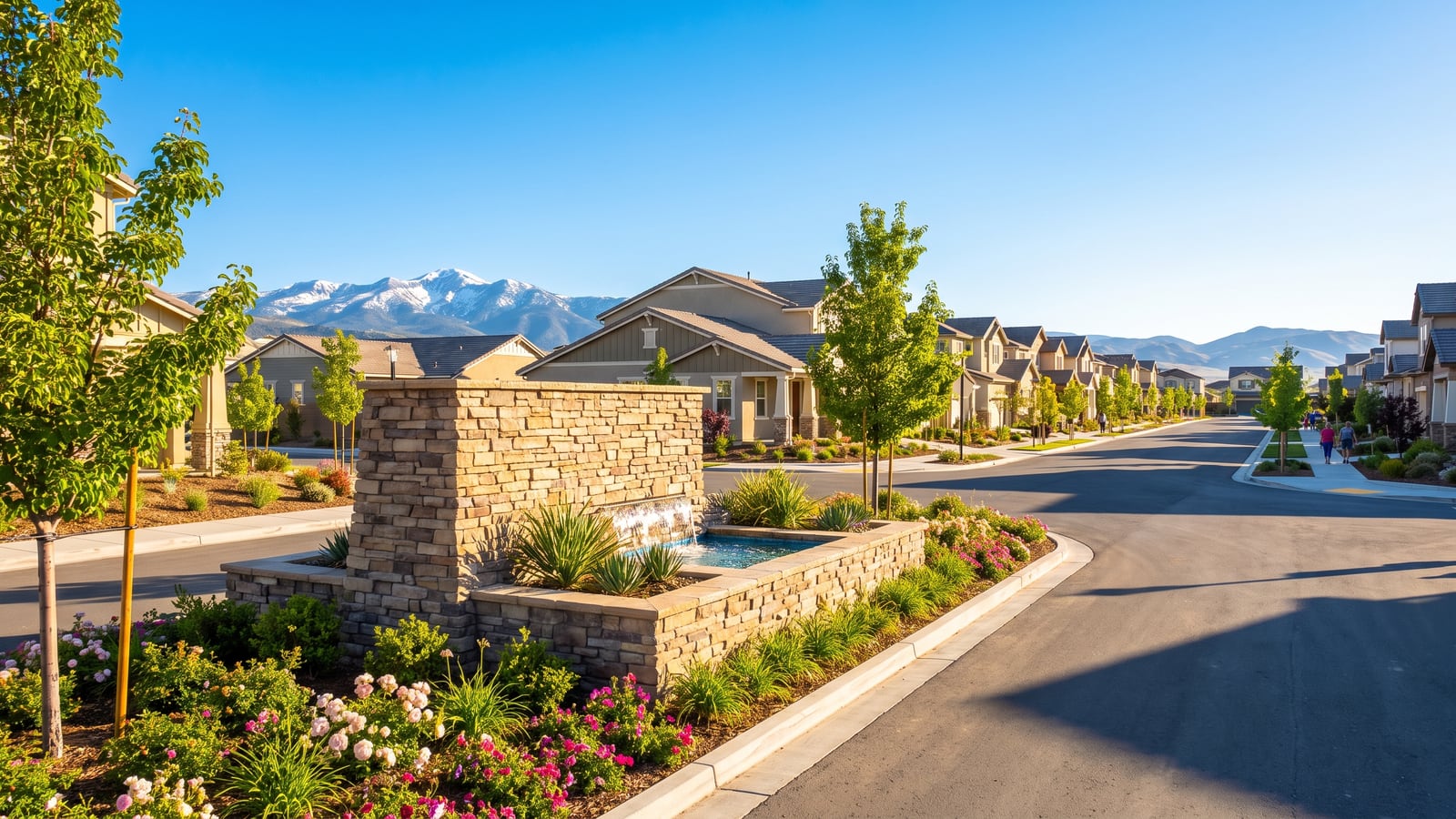
- Stonebrook — the 610-acre master plan off Pyramid Highway on the growing north side, the volume center of Sparks new construction in 2026.
- Spanish Springs valley — the big valley northeast of Pyramid Highway, where entry-to-mid single-family from the nationals and regionals fills out established neighborhoods like Harris Ranch and Pioneer Meadows.
- Wingfield Springs and the Kiley Ranch corridor — the amenity-rich, golf-and-trail eastern master plans, delivering mid-tier family product as phases release.
For a deeper look at how Sparks stacks up as a place to live — schools, parks, safety, and lifestyle — my guide to whether Sparks is a good place to live walks through it in detail, or browse the full roster of Northern Nevada communities we cover. If you want the wider metro view of every builder working from South Reno to the Lyon County line, see my companion Reno new-construction builders guide, the metro-wide Reno–Sparks new-construction hub, or our statewide new-construction directory.
What Does the Spanish Springs Valley Offer New-Build Buyers?
Spanish Springs is the big high-desert valley northeast of Pyramid Highway, and it's where a lot of Sparks families have quietly bought new over the last decade. The valley skews toward entry-to-mid single-family on full-size lots — D.R. Horton, Century Communities, KB Home, and Reynen & Bardis all build here, typically $410,000 to $800,000 depending on floor plan and phase. Neighborhoods like Harris Ranch, Broken Hills, and Pioneer Meadows carry the current new-build actives.
The Spanish Springs trade-off is straightforward: you're farther from downtown Reno and the university, but you get more house per dollar, wider streets, and quick Pyramid Highway access south toward I-80 and the Tahoe-Reno Industrial Center jobs. In my experience, this is the corridor where a young family relocating for a warehouse, logistics, or manufacturing job on the industrial center's east side finds the best math — a new four-bedroom in the mid-$500,000s with a commute measured in the 20s, not the 40s. Browse what's active on our Sparks new homes for sale page to compare current Spanish Springs phases against Stonebrook.
What Makes Stonebrook the Busiest New-Home Master Plan in Sparks?
Stonebrook is the reason Sparks leads the region in new-build concentration right now. It's a 610-acre master plan off Pyramid Highway on the north side, with development that began around 2020 and has scaled fast — 21 of the city's 57 active new-construction listings sit inside it as of the July 12 pull. The community brings together multiple national builders — Lennar, Toll Brothers, D.R. Horton, and Tri Pointe among them — across a genuine range of floor plans and price points, from entry single-family in the low $400,000s to Toll Brothers product past $1 million.
Two things make Stonebrook distinct. First, it's a true master plan with planned parks, trails, and a coherent street grid, rather than a scatter of infill lots — so a new build there drops into an intentional neighborhood rather than an orphaned cul-de-sac. Second, it houses Regency at Stonebrook, Toll Brothers' gated active-adult (55+) enclave with its own clubhouse and single-story floor plans — the kind of new-build luxury communities product that anchors the top of the Sparks market. If you're downsizing or retiring, that Regency at Stonebrook product is worth a dedicated look — it's the Sparks answer to the Del Webb-style 55+ communities that dominate other Sun Belt markets. Across the 9,600+ closings our team has represented, active-adult buyers consistently tell me the brand-new, single-story, low-maintenance package is worth paying for when the alternative is retrofitting a two-story resale.
What About Wingfield Springs and the Kiley Ranch Corridor?
Wingfield Springs is the established, amenity-rich master plan on the northeast side, anchored by the Red Hawk golf courses and mature landscaping that most brand-new master plans won't have for a decade. New construction here comes in continuing phases and infill — Wingfield Commons carries the largest single cluster of current actives in the corridor — so the appeal is a new home that drops into a finished, tree-lined community rather than a raw dirt phase.
Kiley Ranch sits just south, an amenity-rich master plan built around an extensive trail and open-space system. It's more established than Stonebrook, so new-build volume ebbs and flows with phase releases rather than running steady, but it remains one of the most desirable mid-tier family addresses in Sparks when inventory opens up. Retirees and downsizers should also keep Sierra Canyon by Del Webb on the radar — the region's flagship active-adult community on the Somersett-adjacent northwest edge, consistently among the fastest-absorbing communities in Northern Nevada. Whichever corridor fits, you can filter live inventory by community on our Sparks homes search.
How Much Does New Construction Cost by Sparks Corridor?
Pulling the tiers together — live medians from our July 12 feed plus the base-price ranges builders are quoting across active Sparks communities this summer:
| Corridor | Entry tier | Mid tier | Luxury / 55+ |
|---|---|---|---|
| Stonebrook (north Sparks) | $410K–$525K | $525K–$800K | $800K–$1.2M+ |
| Spanish Springs valley | $410K–$500K | $500K–$725K | $725K–$900K |
| Wingfield Springs / Kiley Ranch | $450K–$550K | $550K–$850K | $850K–$1.1M |
| Sparks infill / Pyramid corridor | $400K–$500K | $500K–$650K | $650K–$800K |
| Regency at Stonebrook (55+) | $500K–$600K | $600K–$800K | $800K–$1M+ |
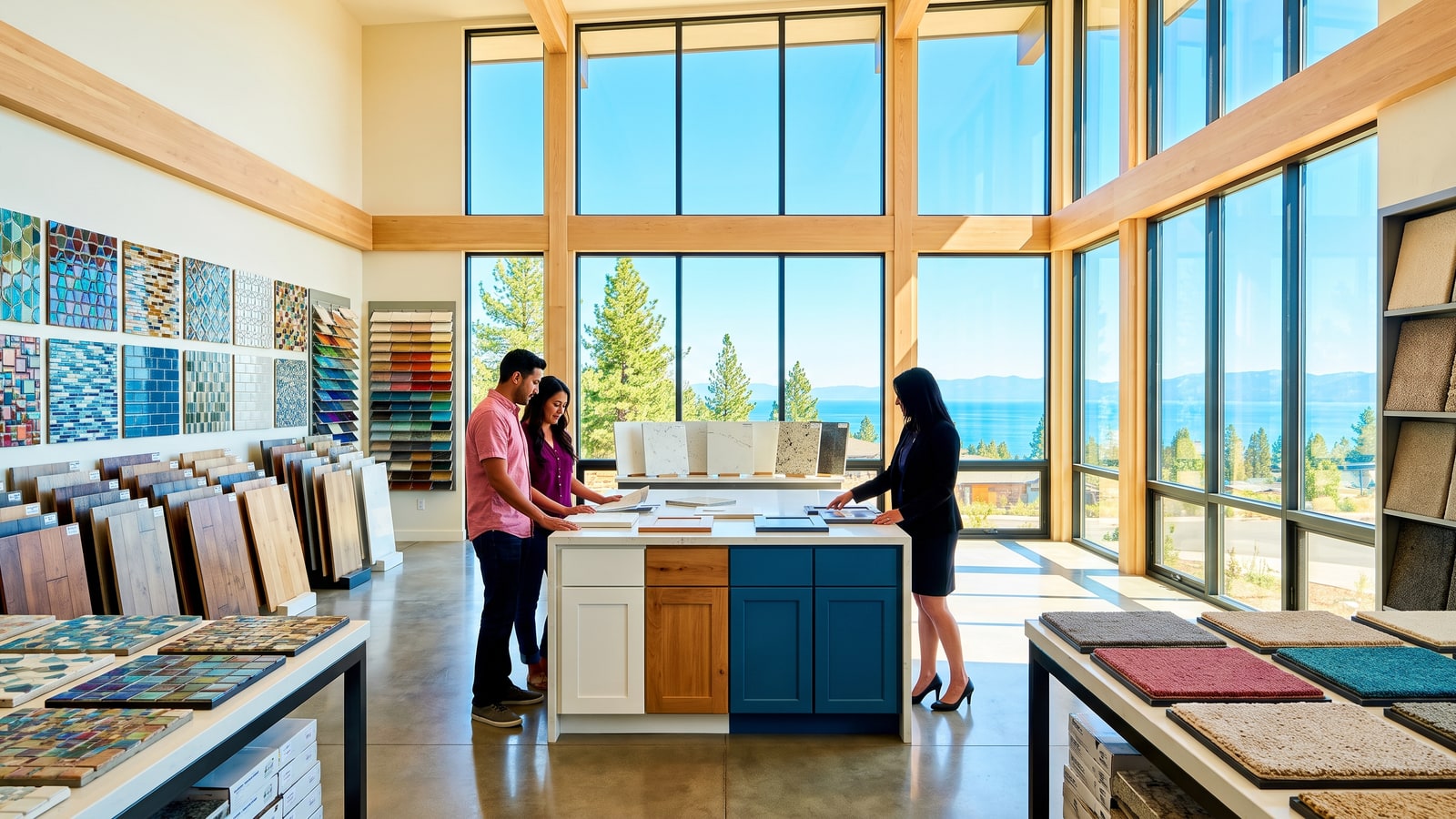
Remember that a builder's advertised "from the $400s" is a base price for the smallest floor plan on the least desirable lot with builder-grade finishes. The realistic all-in number is base price plus lot premium ($5,000 to $75,000 in Sparks, higher on the rare view or open-space lot) plus design-center selections ($15,000 to $80,000 on mid-tier product) — which is why the live MLS median of $700,000 runs meaningfully higher than the billboard numbers on Pyramid Highway. According to the City of Sparks planning and building department, permit activity has stayed concentrated on the north and northeast sides where the entitled lot supply is, which is exactly where those medians are being set.
Is New Construction Worth the Premium Over a Sparks Resale?
The honest answer depends on which trade-offs you value, so here is the whole decision in one table:
| Decision dimension | New construction | Resale |
|---|---|---|
| Price (live medians) | $700,000 median list — about a 21% premium | $579,000 median list; $550,000 median sold |
| Warranty | 1/2/10 structure backed by Nevada NRS 40 | None unless negotiated or transferable |
| Snow load & energy code | Built to current Sierra snow-load and efficiency code | Varies by decade — verify insulation and roof detail |
| Customization | Design center + structural options before drywall | Renovate after close, at retail cost |
| Negotiability | Incentives, not price: buydowns, credits, upgrades | Direct price and repair negotiation |
| Assessments | May carry SID/LID on top of HOA — verify per community | Assessment history is on record — ask for it |
| Landscaping & window coverings | Usually not included — budget $15K–$45K after close | Included, mature |
| Timeline | 30–60 days on specs; 6–12 months build-to-order | 30–45 day close |
| HOA track record | Unknown — new association, builder-controlled board | Years of financials and minutes to review |
Across the closings our team has represented, the buyers happiest with the new-build premium are the ones who monetize the warranty and the code vintage: households planning to hold seven-plus years, buyers who'd otherwise spend $70,000 renovating a 1990s Spanish Springs resale, and anyone who values the first-owner certainty of knowing exactly what's behind the drywall. The buyers who regret it are usually the ones who forgot the after-close costs — backyard landscaping alone on a Sparks production lot commonly runs $18,000 to $40,000 — or who never checked whether the community carried a special assessment district. More on that next.
What Are SID and LID Assessment Districts — and How Do They Change Your Payment?
This is the single most-overlooked line item in Sparks new construction, and it's the one I make sure every buyer understands before they write an offer. A Special Improvement District (SID) or Local Improvement District (LID) is a financing mechanism a city uses to pay for the roads, sewer, water, and other infrastructure that make a new master plan possible. Instead of the builder pricing all of that into the home, the cost is bonded and repaid over years as an assessment attached to the parcel — so you, the homeowner, pay it down through an annual or semi-annual charge on top of your property taxes and HOA dues.
According to the Nevada Revised Statutes Chapter 271, Nevada cities are authorized to create these improvement districts and levy assessments against benefited property, and Sparks has used them to fund infrastructure in its growth corridors. The practical effect on your budget can be significant: a $600,000 Stonebrook home with a $2,000-a-year SID assessment carries a materially different monthly cost than an identical home without one — roughly $165 a month more, on top of principal, interest, taxes, insurance, and HOA.
Here's how I coach buyers to handle it:
- Ask the sales office directly, in writing, whether the community carries a SID or LID, what the current annual amount is, and how many years remain on the bond.
- Get it reconciled against the title report during your contingency window — the assessment shows up as a lien or special district disclosure, not always in the glossy brochure.
- Add it to your payment math before you compare communities. Two homes at the same price aren't the same deal if one carries a $2,400 annual assessment and the other doesn't.
- Confirm the payoff terms. Some SID assessments can be prepaid; whether that makes sense depends on your hold period and rate.
None of this is a reason to avoid a great community — plenty of Sparks' best new neighborhoods carry assessments and are still worth every dollar. It's a reason to know the number before, not after.
How Does the TRIC and Tesla Commute Shape Where You Buy in Sparks?
Sparks' quiet superpower is geography: it's the metro city closest to the Tahoe-Reno Industrial Center (TRIC) — home to Tesla's Gigafactory, Switch, Google, Panasonic, and a deep bench of logistics operators — which sits east of Sparks on I-80. According to the Economic Development Authority of Western Nevada (EDAWN), the industrial corridor's expansion has been the region's dominant jobs story for well over a decade. According to the U.S. Bureau of Labor Statistics, the Reno-Sparks MSA has kept adding employment through 2026 on the strength of manufacturing, logistics, and healthcare.
For a household with a job at the industrial center, Sparks new construction is often the shortest commute in the entire metro. Practical rankings from the Sparks new-build corridors: Spanish Springs and east Sparks run roughly 20 to 30 minutes to TRIC via Pyramid and I-80 — against traffic on much of the route. Stonebrook and Wingfield Springs sit in a similar 25-to-35-minute band. Compare that to South Reno at 35 to 45 minutes or northwest Reno's Somersett at 40 to 50, and the Sparks advantage is obvious. Match the corridor to the commute before you fall in love with a model home; a $30,000 price advantage evaporates fast against 90 extra minutes of daily round-trip driving.
If you're weighing a move from out of state, the tax math reinforces the point — Nevada's zero state income tax against California rates that reach 13.3% remains the single biggest line item for the relocating buyers we work with, and it's a big reason the Reno-Sparks metro keeps drawing industrial and tech payrolls.
What Do Altitude, Snow Load, and Water Mean for a Sparks New Build?
Sparks sits around 4,400 feet with real winters, and Northern Nevada new construction carries site-specific realities that Las Vegas buyers (and most national how-to articles) never encounter:
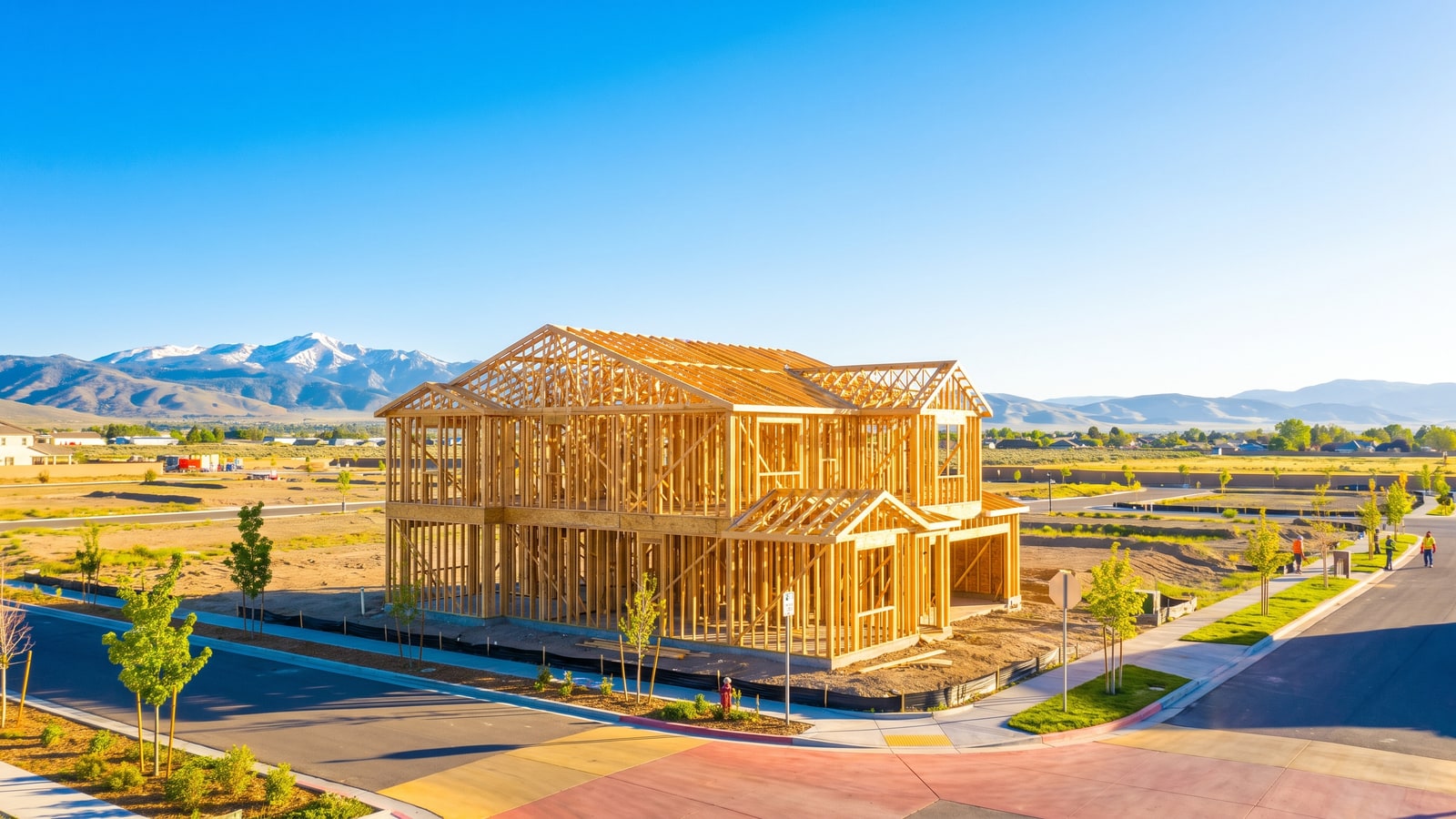
- Snow load and roof detail. Truckee Meadows homes are engineered for Sierra-influenced snow loads. On a pre-drywall inspection, roof framing and ice-dam detailing are items I have my inspectors slow down on, because they're expensive to fix after occupancy and nearly impossible to see once the drywall is up.
- Winter build timelines. Concrete doesn't cure well below freezing, and framing crews lose days to storms. A build-to-order contract signed in October will realistically deliver later than the same contract signed in March — plan rate locks and lease timing around it, and get the builder's delay provisions in writing.
- Water is metered policy, not vibes. According to the Truckee Meadows Water Authority, new development connects only where dedicated water resources are committed — one reason approved-lot supply in the Truckee Meadows is structurally tighter than in Las Vegas, and one reason entitled master plans like Stonebrook matter so much to future supply.
- Property taxes stay tame. According to the Nevada Department of Taxation, owner-occupied primary residences are capped at a 3% annual property-tax increase under NRS 361.4723 — one more line in Nevada's favor against the coastal states most of our relocating buyers arrive from. Just remember the SID/LID assessment discussed above sits outside that cap.
Which Builder Incentives Can You Actually Negotiate in 2026?
According to Freddie Mac's Primary Mortgage Market Survey, the 30-year fixed has spent 2026 holding in the mid-6s to low-7s — which is exactly why builders are competing on incentives rather than base price. In Sparks this summer, the packages we're seeing across active communities include:
- Closing-cost credits of $10,000 to $25,000, usually tied to using the builder's affiliated lender.
- Rate buydowns — temporary 2-1 buydowns that cut your first-year rate by two points, or permanent buydowns worth 0.5 to 1.5 points off the 30-year rate. On a $600,000 purchase, a permanent one-point buydown is worth roughly $280 a month.
- Design-center allowances of $10,000 to $40,000, most common on standing inventory the builder wants moved before quarter-end.
- Lot-premium waivers and appliance packages on specs that have sat more than 60 days.
The negotiating leverage hierarchy: standing inventory at quarter-end is where builders bend the most; a to-be-built home in a hot Stonebrook phase is where they bend least. And always price the builder-lender tie-in honestly — a $20,000 credit that requires a loan priced 0.375 points above market can be a wash or worse over a seven-year hold. We run that math on every builder deal we represent — our buyer's playbook walks through the full checklist.
How Do You Negotiate a Builder Contract in Nevada?
Builder purchase agreements are not Nevada's standard resale forms — they're drafted by the builder's counsel, for the builder. Nevada law gives you a floor: NRS 40 provides the constructional-defect framework behind the standard 1/2/10 warranty (one year workmanship, two years systems, ten years structural). According to the Nevada State Contractors Board, every general contractor building your home must hold an active Nevada license you can verify online in about two minutes. Everything above that floor is negotiation:
- Get pre-approved with an independent lender first, then let the builder's lender compete. The independent letter is your pricing benchmark and your leverage.
- Cap the escalation and delay exposure. Push for defined outside-completion dates and remedies, and understand exactly what the material-substitution clause allows the builder to swap.
- Negotiate the earnest money and default terms. Builder contracts often make deposits harder to recover than resale escrows — know what happens to your $25,000 deposit if your loan falls through in month eight.
- Put every model-home feature in writing. The staged model is typically $50,000 to $150,000 above base price. Get the base-elevation spec sheet and reconcile line by line.
- Order third-party inspections at pre-pour, pre-drywall, and final. Builders in this market accept them routinely; the $1,200 you spend across three visits is the cheapest insurance in the deal.
- Confirm the HOA and SID/LID disclosures. Get the assessment amount, the bond term, and the HOA budget in hand before you remove contingencies — a $2,400 annual charge changes the whole payment.
Do You Need Your Own Agent to Buy New Construction in Sparks?
You aren't required to bring one — and that's exactly why the builder's sales office would prefer you didn't. The on-site agent works for the builder, full stop. Many builders offer to pay the buyer's agent, but that's set by each builder's policy and your written buyer agreement (how buyer-broker agreements work in Nevada), so confirm it before your first visit. Most builders also require your agent to register with you at your first visit; Toll Brothers' agent page, for example, makes registration at the client's first visit to a community a condition of its co-op program. Show up alone on Saturday, and you may have waived representation for that community before you knew you wanted it.
What representation actually gets you on a new build: release-calendar intelligence (which phases are opening and at what pricing), lot-premium history across the community, incentive comps from the builder's other buyers, a professional read on the purchase agreement and the SID disclosure, and inspection scheduling at the right construction milestones. Nevada Real Estate Group is the #1-ranked team in Nevada with 9,600+ closings and 789 transactions in 2025 alone, and our Northern Nevada agents work builder releases from Stonebrook to Spanish Springs every week. Start with the live inventory on Sparks homes for sale or the statewide search, tell us what you're looking for through our contact page, or call the Northern Nevada line at (775) 277-2120 before your first model-home tour — statewide, we're one call: Las Vegas (702) 637-1759 · Reno (775) 277-2120. And if a current home has to sell before the build closes, start with our home value estimator and seller playbook so the two timelines actually meet in the middle.
Frequently Asked Questions
Which builders are active in Sparks right now?
Nationals lead production volume: D.R. Horton, Lennar, KB Home, Toll Brothers, Tri Pointe Homes, and Century Communities. Regionals — Ryder Homes, Reynen & Bardis, and Blackstone Homes — carry value-corridor and infill product. Toll Brothers anchors the luxury and active-adult end through Regency at Stonebrook. Because NNRMLS doesn't carry a structured builder field, our agents confirm the builder community by community before every tour.
What do new-construction homes in Sparks start at in 2026?
Entry product starts in the low $400,000s — Spanish Springs and Sparks infill communities carry the region's most accessible new-build base prices. The citywide new-build median was $700,000 on our July 12, 2026 NNRMLS pull, versus a $579,000 citywide median for all listings. Toll Brothers and view-lot product in Stonebrook run past $1 million.
Where in Sparks is most of the new construction happening?
Stonebrook dominates: 21 of the city's 57 active new-construction listings sit inside that 610-acre master plan off Pyramid Highway. The Wingfield Springs corridor adds about 12 actives, and the Spanish Springs valley — Harris Ranch, Broken Hills, Pioneer Meadows — carries roughly 10 more. Almost all of it is on the north and northeast side of the city.
What are SID and LID assessments on a Sparks new home?
A Special Improvement District (SID) or Local Improvement District (LID) is a bonded charge a city uses to fund the roads, sewer, and utilities for a new master plan, repaid by homeowners as an annual assessment on top of property taxes and HOA dues. Under NRS Chapter 271, Nevada cities can levy these. A $2,000-a-year assessment adds roughly $165 to your monthly cost, so ask the sales office in writing before you buy.
How long does a new build take in Sparks' climate?
Plan on six to twelve months for build-to-order production homes, and add winter cushion: concrete pours and framing slow between December and March at 4,400 feet, so a fall contract typically delivers later than a spring one. Standing inventory and spec homes close on a normal 30-to-60-day timeline. Get outside-completion dates and delay remedies in the contract rather than relying on a verbal estimate.
Do I need my own agent to buy a new-construction home in Sparks?
It's not required, but the builder's on-site agent represents the builder — not you — and whether the builder pays your agent is a term to confirm in writing before you tour. The critical detail is timing: most builders only honor buyer representation if your agent registers with you at your first visit. Bring your agent before you tour and you keep contract review, incentive comps, SID-disclosure scrutiny, and inspection scheduling on your side of the table.
Is new construction or resale the better buy in Sparks in 2026?
The live spread is $700,000 new versus $579,000 resale at the medians — about 21%. New construction wins if you'll hold long enough to monetize the warranty, current snow-load and energy code, and zero-renovation entry; resale wins on price per square foot, mature landscaping, and known HOA and assessment history. Budget honestly for the new-build extras — landscaping, window coverings, and design upgrades commonly add $35,000 to $85,000 after the base price.
Which Sources Inform This Sparks New-Construction Guide?
Live inventory counts, medians, and subdivision clustering come from Nevada Real Estate Group's NNRMLS feed via Repliers IDX, pulled July 12, 2026 (Sparks: 57 new-construction actives at $700,000 median, 562 total actives at $579,000 median, 299 closed sales in 90 days at $550,000 median; Reno: 124 new-construction actives at $688,950 median for contrast; new construction defined as year built 2024 or later, with Stonebrook holding 21 of the 57 Sparks new-build actives by recorded subdivision). Builder rosters and community assignments reflect our agents' current field notes across active Sparks communities. Additional context draws on these authorities:
- Northern Nevada Regional MLS (NNRMLS) — the listing data backbone for the region
- Sierra Nevada REALTORS (SNR) — regional market statistics and context
- City of Sparks — planning, permitting, and improvement-district administration
- U.S. Census Bureau — Washoe County QuickFacts — population and housing baselines
- U.S. Bureau of Labor Statistics — Reno-Sparks MSA — employment trends
- Economic Development Authority of Western Nevada (EDAWN) — TRIC and regional jobs pipeline
- Nevada Department of Taxation — property-tax caps and abatements
- Nevada Revised Statutes Chapter 271 — special and local improvement district authority
- Nevada Revised Statutes Chapter 40 — constructional-defect and warranty framework
- Nevada Revised Statutes 361.4723 — the 3% owner-occupied property-tax cap
- Nevada State Contractors Board — contractor licensing verification
- Truckee Meadows Water Authority — water-resource commitments for new development
- Freddie Mac Primary Mortgage Market Survey — mortgage-rate benchmarks
Ready to walk a framing site instead of a spreadsheet? Call or text Nevada Real Estate Group's Northern Nevada team at (775) 277-2120, browse the Sparks new-construction hub, or start with everything currently listed among Sparks' new homes for sale.