

This October 21, 2026 update separates three questions that should not share one headline number: what Sparks homes have closed for, what sellers are asking today, and what the regional board reports for all of Washoe County. Those datasets describe different groups of properties. Keeping them separate makes the guide more useful when you are deciding whether to tour, offer or list.
The current research uses residential records rather than a mixture of homes and vacant land. It also avoids calling every recently built home “new construction.” For a buyer, the important distinction is whether a specific property meets your budget, condition and delivery needs. For a seller, the important distinction is whether comparable homes support your price.
Sparks' August 2026 residential median sold price was $553,000 across 128 MLS records in our October 21 extract. Current active residential inventory contained 455 records with a $579,000 median asking price. These use the MLS city field, not verified municipal boundaries. August's provider-reported median days on market was 61. Use those dated measures for context, then compare the specific home with similar recent sales.
- August sold median: $553,000; 128 residential records.
- October 21 active snapshot: 455 records; $579,000 median asking price.
- Reno's August sold median was $589,995 under the same broad filters.
- September feed closings remain preliminary under our reporting-lag rule.
- Neither a regional median nor a neighborhood label predicts an individual home's value.
What Do the Latest Settled Sparks Sales Show?
According to NREG's NNRMLS/Repliers aggregate extract collected October 21, 2026, Sparks residential closings produced a median of $550,000 in June, $540,000 in July and $553,000 in August. The monthly counts were 172, 151 and 128 respectively. These are residential sale records with the MLS city field set to Sparks and sold status; they do not include a separate vacant-land search. They are also not a detached-single-family-only series. September has settled since that extract. Our Sparks market report for November 2026, pulled on November 11 and counted by closing date, has 138 residential closings that month at a $565,000 median and 324 homes listed that day. Its August figures differ a little from the extract, so compare months within one source.
| Month | Closed records | Median sold price | Median DOM |
|---|---|---|---|
| June | 172 | $550,000 | 54 |
| July | 151 | $540,000 | 43 |
| August | 128 | $553,000 | 61 |
This sequence does not describe a straight line upward or downward in value. Different homes sold each month, and the median moved within that changing mix. We have not created a repeat-sales index or controlled for size, condition and location. August's higher median than July therefore does not establish that an unchanged home appreciated by the same amount.
The counts also need context. A smaller completed-sales sample can reflect transaction volume and data reporting; it cannot, by itself, identify the cause. We allow at least 40 days after month-end before treating a feed month as settled for editorial comparisons. September is still inside that window on October 21, so its partial count is excluded from this table. Late corrections remain possible even in older months.
For an actual purchase, start with Sparks listings and narrow to your property requirements. For a sale, compare similar completed transactions rather than using $553,000 as a target for every house. The headline answers what sold in the specified dataset; it does not replace a property valuation.
How Does Sparks Compare With Reno on the Same Basis?
The fair city-field comparison uses the same month, board and residential filters. Under that approach, August 2026 showed a $553,000 median for Sparks and $589,995 for Reno. The numerical difference is $36,995, but calling that a discount on the same house would be misleading. The two groups have different mixes of homes, locations, sizes and conditions.
| Measure | Sparks | Reno |
|---|---|---|
| August closed records | 128 | 300 |
| August median sold price | $553,000 | $589,995 |
| August provider-reported median DOM | 61 | 54 |
| October 21 active records | 455 | 1,193 |
| October 21 median asking price | $579,000 | $634,000 |
According to NREG's paired October 21 extracts, both cities use residential sale records and the same status definitions. The city field is a search field, not a boundary survey. That qualification matters when a property has a mailing address or familiar area name that differs from its governmental jurisdiction. Confirm the actual parcel when comparing location-sensitive costs or services.
Use the table to decide whether expanding your search could reveal useful alternatives. Then compare individual properties with the same bedrooms, usable area, condition and travel requirements. A lower city median does not establish a fixed percentage of savings or a superior commute. Nor does a higher active median prove that sellers in one city are more negotiable: active and sold records are different populations.
The Reno housing market guide reports the companion figures. Our Reno-versus-Sparks living discussion can help frame broader questions, but the decision should return to specific homes and routes. A property outside your original search may be worth touring; it still needs the same financing, condition and document checks as the first choice.
What Does the Official Washoe County Report Add?
According to Sierra Nevada REALTORS' September 2026 Market Review, updated October 4, Washoe County recorded a $595,000 median, 487 closed sales, 1,196 active properties, 28 median days to contract and 2.5 months of supply. The September report identifies its scope as all residential property types. It is a county report, not a Sparks-only result.
That scope is essential. An earlier county report limited to single-family homes cannot be joined to September's broader series as though the population stayed unchanged. Likewise, the board's time-to-contract measure should not be relabeled as the provider-reported days-on-market field in our city extract. The two measures may differ in both definition and included records. We retain the original labels rather than forcing agreement.
The board report and our feed analysis can therefore be useful at the same time without matching numerically. The board supplies a published regional snapshot with its own cutoff and methodology. Our extract helps isolate the city-field shopping question and dates the current inventory. A mismatch is a reason to examine scope and timing, not to choose whichever number supports a preferred market story.
For buyers, use county conditions as background while evaluating the competition for the specific property. For sellers, use local comparable sales and current competing listings before deciding whether a regional supply figure describes your price tier. Our Northern Nevada market data desk provides another dated series; read its population and window before comparing it. A market label such as “balanced” cannot guarantee a concession, an offer deadline or a successful asking price for a particular home.
How Much Residential Inventory Is Available Right Now?
As of October 21, 2026, the active Sparks residential extract contained 455 records with a $579,000 median asking price. This is a snapshot of the feed at collection, not a promise that all of those properties remain available when you read this. A buyer should verify the latest status before touring or preparing an offer, especially when a listing has recently changed price or moved between statuses.
The active count answers a different question from closed volume. It describes the stock of listed residential choices, while a monthly closing count describes completed transactions over a period. Dividing a current active count by a much older month's sales can produce a rough ratio, but it should not be presented as an official months-of-supply figure without aligning dates, property types and method. This update uses the board's published county supply measure only in its county context.
A large inventory total can still leave few choices for a specific buyer. Apply the filters that matter: maximum full payment, number and arrangement of rooms, accessibility needs, garage dimensions, lot use, condition and move date. A property that fails a nonnegotiable requirement should not make the search feel more abundant simply because it appears in the headline count.

Use the Sparks search to build a current shortlist and note the date of any saved result. Ask why a property has returned to the market rather than assuming the seller is motivated or the home has a defect. The answer may change your due diligence, but the status history alone does not establish either conclusion.
How Should You Compare Sparks Neighborhoods?
A neighborhood comparison should use a defined boundary, consistent property type and enough recent observations. The October 21 research for this update did not collect those neighborhood-level samples, so this page does not assign unsupported price medians to each community. A familiar area name is a useful search starting point, not evidence for an exact price premium.
For a practical shortlist, compare actual properties in Spanish Springs, Pioneer Meadows, Wingfield Springs and Kiley Ranch using the same requirements. Check the home's subdivision and parcel rather than assuming every listing under a broad label has the same services, restrictions or association charges. Sun Valley is a separate nearby community; its placement in a website search directory should not be mistaken for a statement that it lies inside Sparks municipal boundaries.
Your comparison worksheet should connect a requirement to observable evidence. If garage space matters, measure usable dimensions. If you want less maintenance, read the ownership and association obligations. If proximity to a specific destination matters, test the route from the exact address. Do not turn broad neighborhood descriptions into demographic recommendations or a ranking of who should live where.

For an offer, ask which completed sales most closely match the candidate and why. A comparison can remain useful even when the sample is small, provided the limitations and differences are explicit. What it should not do is convert a few unlike sales into a universal neighborhood median or a promised future return.
What Should You Verify About New Construction in Sparks?
A recent year-built field does not prove a property is new construction, builder-owned or available for immediate delivery. It can describe a resale of a recently completed home. This update therefore removes the old shortcut that counted every home built in 2024 or later as a new build. For each candidate, verify the seller, construction status, completion expectation and the contract that would govern the purchase.
When comparing a builder offering with resale, obtain the actual home or lot price, included features, premiums, landscaping obligations, association charges and delivery terms. A model home may show options that are not included in the advertised base price. A financing incentive may require a particular lender or closing date. None of those details can be inferred from the city's active median.
According to the CFPB's Loan Estimate comparison guidance, buyers should compare loan costs and terms rather than relying on one headline payment. Request comparable lender quotes for the same loan amount and timing. A temporary buydown's first-year payment is not the permanent payment; test affordability after the subsidy ends as well as cash required at closing.
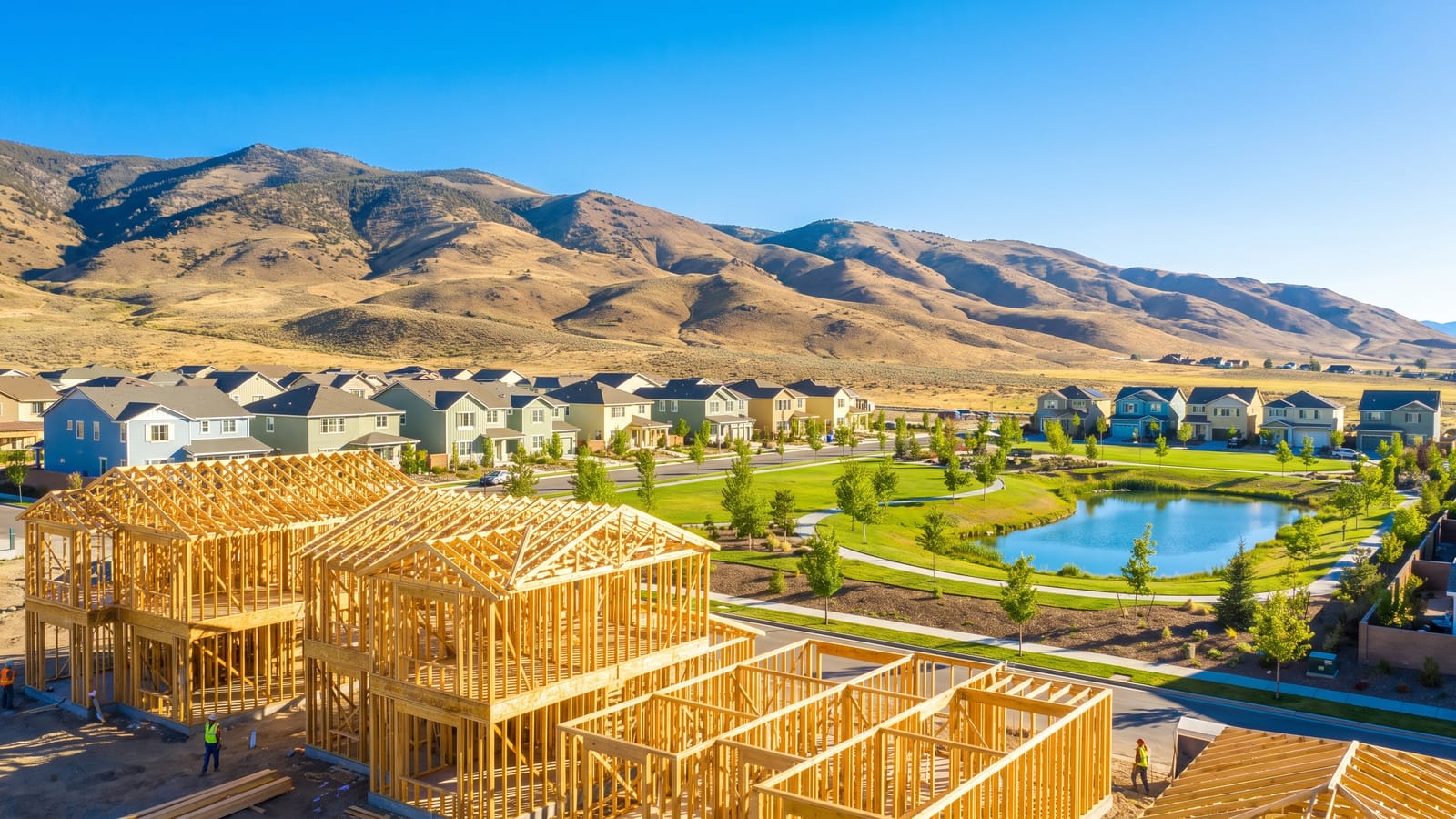
Use Sparks new-construction listings to identify candidates, then verify their current status directly. Before visiting a sales office, clarify representation and registration rules. Do not assume a builder pays buyer-representative compensation; have any arrangement confirmed in writing. Our Nevada buyer-broker agreement guide explains the separate agreement to review. A useful comparison ends with two documented alternatives, not a generic claim that new homes always offer a better effective price.
What Would a Sparks Purchase Cost at Today's Rate Benchmark?
According to Freddie Mac's PMMS, the national average for a 30-year fixed mortgage was 7.40% on October 15, 2026. That is a dated benchmark, not a Sparks-specific quote. Your loan terms depend on the lender, program, credit profile, down payment, points and timing. This guide does not assume FHA or VA loans are a fixed number of basis points cheaper than conventional financing.
For a transparent illustration, a $550,000 purchase with 10% down leaves a $495,000 loan. Over 30 years at 7.40%, principal and interest are about $3,427 per month. The purchase price is a round scenario near the recent city median, not an available listing or an appraisal. Taxes, insurance, mortgage insurance, association charges and maintenance are additional.
| Rate scenario | Monthly principal and interest | Meaning |
|---|---|---|
| 6.40% | About $3,096 | Lower-rate scenario, not a forecast |
| 7.40% | About $3,427 | October 15 national benchmark |
| 8.40% | About $3,771 | Higher-rate stress test |
According to the CFPB Loan Estimate explainer, the estimated total payment and cash to close require separate review. Ask for property-specific tax and insurance estimates and identify charges paid outside escrow. Do not import a universal HOA fee or tax percentage from another Sparks home. Our mortgage calculator can test other balances, and first-time buyer resources outline questions to discuss with a lender about assistance and eligibility.
A lower rate would improve the calculation, but no future decline is guaranteed. Choose a purchase whose full payment and required reserves work under terms you can actually obtain. If the budget depends on refinancing soon, compare a lower price or a different property before accepting that risk.
Before choosing the down payment, compare the cash left after closing. Moving expenses, an immediate repair and an insurance deductible can arrive before the household has rebuilt savings. A larger down payment reduces the loan balance, but it also removes money from the accessible reserve. Ask the lender for both payment and cash-to-close estimates under the options you can actually fund. Keep any retirement withdrawal consequences or other funding costs separate from the mortgage calculation.
The Sparks housing-budget comparison can help organize property choices; confirm current prices separately from its dated examples. For an association property, request the current budget, regular assessment, special-assessment information and the documents describing owner maintenance responsibilities. A lower purchase price can coexist with a higher recurring obligation. Compare the complete monthly expense and expected near-term work, not just the amount shown in the mortgage calculator. If a charge has not been documented, mark it as an open question instead of entering zero.
Finally, write down the payment you would still consider acceptable if a refinance never becomes useful. Include a reserve contribution appropriate to the property's condition and your household's other obligations. Compare that limit with the actual lender estimate before negotiating a credit or a rate incentive. A temporary payment subsidy can improve initial cash flow without changing the contractual payment that follows. Ask who funds it, when it ends and how unused funds are handled. The useful outcome is a purchase you can carry through the full planned ownership period, with a clear explanation of the cash tradeoffs.
How Should Commute and Redevelopment Affect the Decision?
Treat commute as an address-and-schedule question. An employer's presence in the region does not establish how long a particular drive takes or what an individual buyer can afford. Test the route from the actual property to your destination at the times you would travel, including parking and any shift-change traffic. A single off-peak map estimate should not become a promised daily commute.
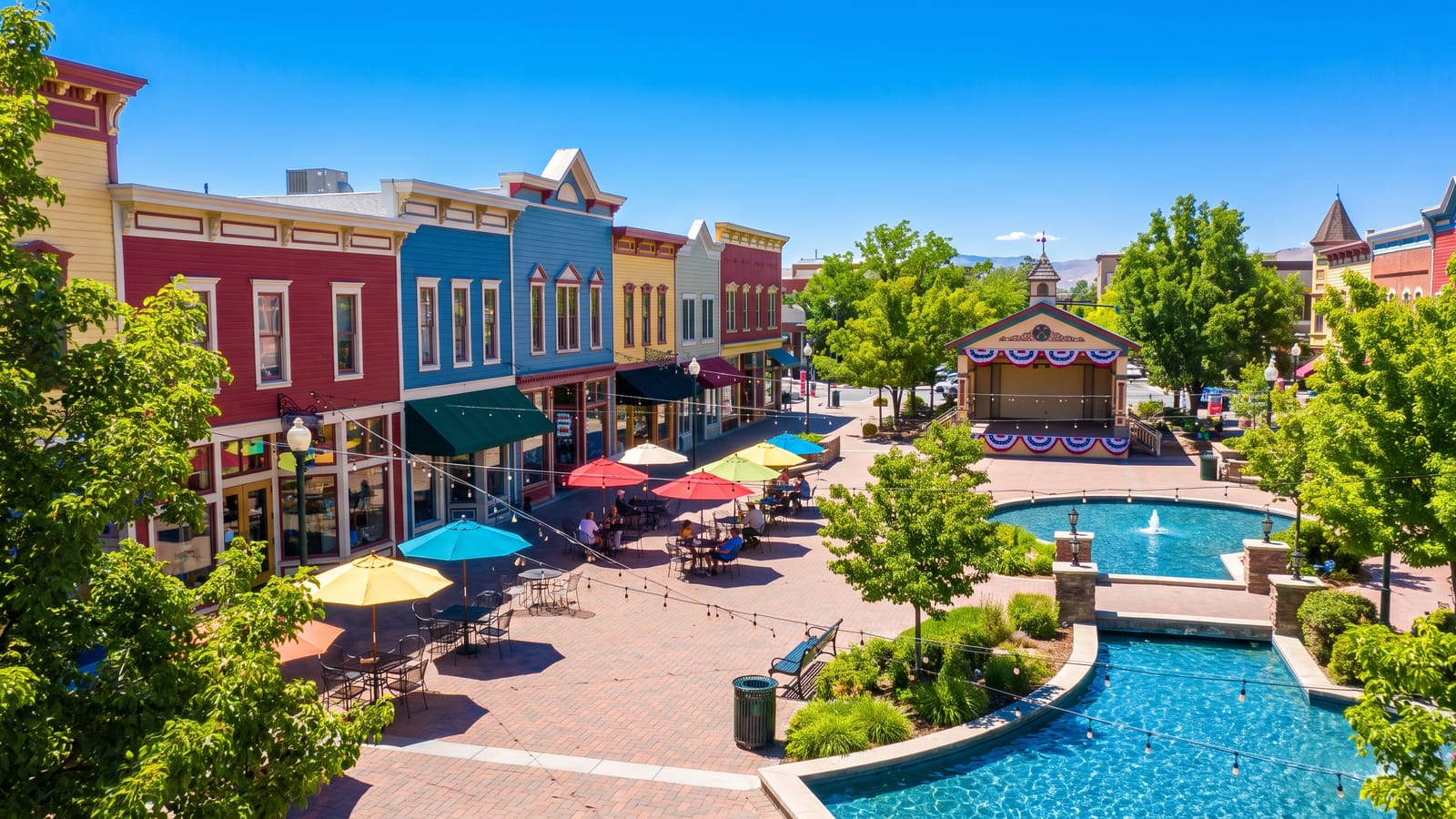
For a candidate near Victorian Square, the marina or another amenity, inspect the practical access and current surroundings. Walk the route on public streets, check parking and observe the location at times relevant to your routine. A proposed project nearby is different from a completed amenity. If a development materially affects your choice, obtain current public plans and status rather than assuming a marketing description establishes its approval or completion.
This guide does not forecast appreciation from redevelopment. A neighborhood can become more useful to a buyer without guaranteeing a profitable resale. Conversely, nearby construction can create a temporary inconvenience even when the eventual project is appealing. Put both the benefit and the tradeoff into the decision instead of treating any announced investment as an automatic price catalyst.
Across the 9,600+ closings our team has represented statewide, the property-specific decision still starts with the buyer's stated requirements. A broad regional narrative should not override an unsuitable layout, excessive payment or difficult route. The Sparks cost-of-living guide provides additional categories to investigate, but current quotes and your own travel observations belong in the final worksheet.
How Should Sparks Sellers Price and Compare Offers?
Start with comparable completed sales and current competing listings, then account for the property's condition and material differences. The city median is background. It does not establish the right list price, and the difference between active and sold medians is not a measured negotiation discount. Ask your agent to explain why each comparable belongs in the analysis and which differences are uncertain.
Price is only one part of an offer. Compare net proceeds after agreed credits, compensation, repairs and closing charges; then evaluate financing, contingencies, deposit terms and the proposed calendar. A credit can help a buyer's cash position, but it is still a cost to the seller. A larger headline offer does not automatically produce a larger net if the associated concessions or obligations are larger too.
Set a review plan before listing. Decide which evidence would justify a change: feedback about condition, new competing inventory, comparable closings or a lack of qualified showings. Avoid a fixed rule that every home should sell within a particular number of weekends. The August provider-reported median DOM of 61 is a description of that completed sample, not a service promise or a deadline for your property.
Our Sparks selling page, seller resources and comparative market analysis request can help organize a property-specific plan. For the cost calculation, the Reno selling-cost guide explains Washoe County transfer-tax mechanics and an itemized example. Use a current written net sheet for your own payoff and contract terms. The decision to accept an offer should rest on the net and the execution risk you can evaluate, rather than an unsupported seasonal price forecast.
How Should Buyers Decide Whether to Buy Now or Wait?
Separate personal readiness from a prediction about the market. Readiness includes a full-payment budget, cash remaining after closing, an acceptable property, a workable move date and an understood contract. A forecast that prices might rise cannot replace any of those conditions. This update does not carry forward the previous claim that waiting costs a fixed dollar amount each month or that Sparks will appreciate within a particular annual band.
Compare at least two realistic paths. In the buy-now path, include current financing, cash to close, taxes, insurance, maintenance and moving costs. In the wait path, include where you will live, rent or ownership costs, savings changes and the possibility that rates or suitable inventory move either direction. If a current home must be sold, include that transaction and the risk of overlapping housing costs.
Use a range rather than selecting one price outcome as certain. For example, rerun the budget with unchanged prices and rates, a higher payment and a lower payment. The exercise is not a probability forecast; it shows which outcomes your finances can absorb. A plan that works only after a favorable rate move is different from a plan that remains workable without one.
The next action should address the largest uncertainty. If financing is unclear, obtain mortgage pre-approval. If property fit is unclear, tour a short list with the same requirements. If sale proceeds are unclear, obtain a current net sheet. If an inspection or association issue is unclear, resolve it within the contract's deadlines. Waiting can be sensible when the requirements are not met, and buying can be sensible when they are; neither decision needs a claim that the market has reached its bottom or peak.
How Can You Follow Sparks Trends Without Mistaking Noise for a Signal?
Keep a small set of consistently defined measures and record the observation date. For this guide, the city extract uses residential sales with the MLS city field Sparks. A future update should preserve those filters or explicitly explain any change. If a new report changes from single-family to all residential property types, begin a separately labeled comparison instead of joining incompatible numbers.
According to Sierra Nevada REALTORS' September report, its published county numbers were updated October 4. Our city extract was collected October 21. Those dates should travel with the figures wherever they are reused. A later data pull may include corrections or late closings; an archived snapshot documents what was observed, not a promise that a live feed will never restate.
Watch the number of observations alongside the median. Then compare multiple settled months and, when available, property segments that match your decision. Do not derive year-over-year changes from known incomplete months. This analysis excludes September 2026 from settled feed comparisons and does not use the known anomalous August–September 2025 or January 2026 feed months to construct a growth claim.
Nevada Real Estate Group closed 789 transactions at approximately $361.5M in 2025 alone. For your current decision, contact our Northern Nevada team or call (775) 277-2120 with the property type, budget and timeline you need to evaluate. We can compare the relevant homes and documents rather than treating a citywide headline as an offer recommendation. The publication date, substantive update date and data observation dates are separate; this guide's current figures are the dated October 21 research described here, not a claim that the body changes automatically every month.
Frequently Asked Questions
What is the Sparks median home price now?
The latest settled month used here is August 2026: $553,000 across 128 residential sold records with the MLS city field Sparks, extracted October 21. The active median asking price on October 21 was $579,000 across 455 records. These describe different populations.
Is Sparks cheaper than Reno?
The identical August residential filters produced $553,000 for Sparks and $589,995 for Reno. That $36,995 difference is between group medians, not a measured discount on equivalent houses. Compare actual properties before estimating savings.
How fast do Sparks homes sell?
The August extract's provider-reported median days on market was 61. We have not verified that field as time to contract or as total time through escrow, so it should not be relabeled. A particular home's marketing and closing schedule can differ substantially.
Are Sparks prices expected to rise in 2026?
This research does not establish a reliable appreciation forecast. June, July and August medians were $550,000, $540,000 and $553,000 across changing groups of homes. Use scenarios for planning rather than treating those observations as a promised trend.
Does a home built in 2024 count as new construction?
Not automatically. It may be a resale. Verify the seller, construction status, occupancy history, warranty terms and delivery expectations for the actual property before comparing it with a builder offering.
What is the payment on a $550,000 Sparks purchase?
With 10% down, a $495,000 loan at an illustrative 7.40% fixed rate over 30 years has about $3,427 monthly principal and interest. Taxes, insurance, mortgage insurance, association charges and maintenance are additional. Obtain a current lender quote.
Why is September excluded from the settled city table?
On October 21, September is still within 40 days of month-end, when late postings can materially change the feed. The board's separately published September county report is cited with its own scope and update date; it is not substituted for a settled Sparks-only series.
Which Sources and Methods Inform This Sparks Guide?
NREG collected NNRMLS/Repliers aggregate records on October 21, 2026: type Sale, property type Residential, city field Sparks; active status for inventory and sold status with monthly grouping for closings. The Reno comparison used the same filters with city Reno. June–August are the settled comparison months under the 40-day editorial rule; September remains preliminary. No private client information was used. Provider DOM is retained under its original label, and the city field is not a verified jurisdiction boundary.
The SNR September report supplies all-residential Washoe County context, not Sparks-specific results. Freddie Mac PMMS supplies the October 15 rate benchmark. The CFPB comparison guide and Loan Estimate explainer support financing distinctions. Original payment calculations use standard monthly amortization. No neighborhood price study, commute study, builder-incentive survey or appreciation model was performed for this update.
Thinking of selling in Sparks? See how these numbers apply to your home