

Reno sellers ask me the same two questions at every listing appointment: what is my house actually worth right now, and what will it really cost me to sell it? Both deserve real numbers, not portal guesses — so let's start with the live ones. As of July 12, 2026, Nevada Real Estate Group's live NNRMLS feed shows 1,570 active listings in the city of Reno at a median asking price of $599,000, with 852 homes closed over the last 90 days at a median sold price of $606,500 and a median of 47 days on market.
I'm Chris Nevada, and my team has represented sellers across every Reno segment — from character bungalows in the Old Southwest to foothill estates in Somersett and Montreux. This guide walks the full journey: what sells fast by neighborhood, how to price to this exact market, which prep dollars pay off at 4,500 feet in a four-season climate, the complete cost stack including how Washoe County's transfer tax differs, and a line-by-line net sheet.
Selling a Reno home in 2026 runs most owners about 6 to 8 percent of the sale price once commission, Washoe County's $2.05-per-$500 transfer tax, title, escrow, and prep are totaled — roughly $37,000 on a $600,000 sale. Homes are taking a median 47 days on market, so price to the newest closed comp, stage for light, and start with a real valuation before you list.
- Reno's median list is $599,000 across 1,570 active listings (live NNRMLS feed, July 12, 2026).
- 852 homes sold in 90 days at a $606,500 median, taking a median 47 days on market.
- Budget 6-8% in selling costs — Washoe's transfer tax is $2.05 per $500, lighter than Clark County.
- Old Southwest and Somersett foothill homes move fastest when priced to the newest comp.
- Spring and early fall draw the deepest buyer pool — but a prepared seller wins any month.
- Start with a data-driven valuation, not a portal guess, before you list.
What Does the Reno Market Look Like for Sellers in July 2026?
Here is the live picture, pulled directly from Nevada Real Estate Group's NNRMLS feed on July 12, 2026 (methodology: status and price statistics across all active and 90-day-sold residential listings in the city of Reno, from the same feed that powers our site search):
- 1,570 active listings in Reno at a median asking price of $599,000
- 852 closed sales in the last 90 days — roughly 284 closings a month — at a median sold price of $606,500
- Sold homes took a median 47 days on market (the average, dragged up by slow luxury listings, runs 70)
- 627 active listings ask $700,000 or more, a band whose own median list sits at $1,100,000 — meaning about 40% of Reno inventory now lives in the move-up and luxury tiers
Two things in that data should shape your strategy. First, the tight gap between the $599,000 median ask and the $606,500 median sale tells you Reno is a disciplined, realistically-priced market: sellers are listing close to where buyers actually transact, and the homes that close are the ones priced to the comps rather than to hope. Second, a 47-day median means Reno is neither a frenzy nor a freeze — a well-prepared, correctly-priced home draws offers inside the first two to three weekends, while an aspirational listing sits long enough to go stale and invite lowball offers.
According to the Economic Development Authority of Western Nevada, sustained job growth around the Tahoe-Reno Industrial Center and a steady stream of California relocation keep demand durable even as mortgage rates hold buyers to a budget — our own Reno housing market report breaks down the month-to-month trend behind these medians. For a seller, that combination means the market rewards preparation and punishes wishful pricing. The rest of this guide is about staying on the right side of that line.
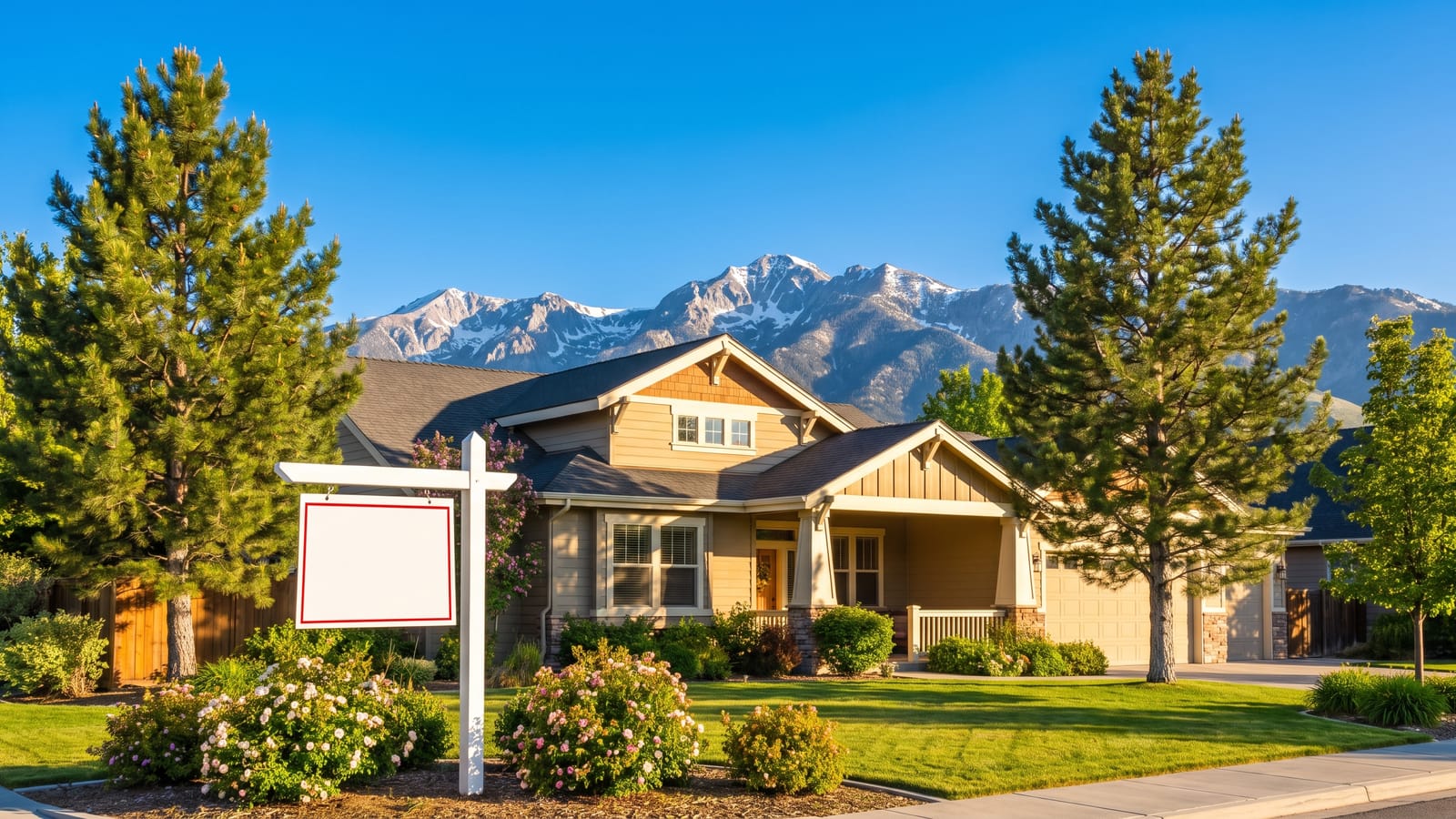
How Does the Reno Home-Selling Process Work Step by Step?
The mechanics of a Reno sale run on a predictable clock once you know the sequence. Here is the timeline my team runs on a typical listing:
| Stage | Typical timing | What happens |
|---|---|---|
| Valuation and strategy | 2-3 weeks before listing | Comparative market analysis, pricing strategy, net-sheet review, prep plan |
| Prep, repairs, staging | 1-3 weeks | Paint, deep clean, landscape refresh, staging, pre-listing punch list |
| Photos and launch | 2-4 days | Professional photography, MLS launch, syndication, sign, first showings |
| Active marketing | First 21 days are decisive | Showings, open houses, feedback loop, price adjustment if traffic is thin |
| Offer and negotiation | 1-5 days per round | Price, concessions, contingencies, timelines, buyer financing strength |
| Escrow to closing | 30-45 days (cash: 10-14) | Inspection, appraisal, HOA resale package, title, well/septic in the foothills, signing |
Add it up and a well-run Reno sale takes roughly 60 to 90 days from the first strategy meeting to funded closing. The single most compressible stage is prep — and the single most dangerous one to rush is pricing. Nevada also imposes hard legal checkpoints inside that window: according to NRS Chapter 113, the Seller's Real Property Disclosure form must be delivered to the buyer at least 10 days before conveyance, and foothill and rural-fringe properties on private wells or septic systems carry their own inspection and disclosure steps that add days to escrow if you don't order them early.
Sellers planning a replacement purchase can compare the Reno home-buying process with their listing and possession dates.
One structural note on hiring an agent: you do not need to marry a listing contract. Our 7-Day Listing Agreement lets you fire us at any time if we are not performing — a confidence structure very few Northern Nevada teams offer.
What Sells Fast in Reno Right Now — and What Sits?
Reno is not one market; it is a stack of them, and the playbook changes by segment. The three that define the city:
| Dimension | Old Southwest and established midtown Reno | Somersett, ArrowCreek, and the foothill master plans | Spanish Springs-adjacent and the North Valleys value belt |
|---|---|---|---|
| Typical price band | $500,000-$900,000 | $650,000 to $3 million | $425,000-$650,000 |
| Buyer profile | Buyers who want character, mature trees, and walkable Midtown | Move-up families, California equity buyers, golf and view buyers | First-time and value buyers priced out of the core |
| What makes it sell fast | Preserved character plus updated systems; honest roof and foundation story | View premiums priced correctly, twilight photography, gated-community polish | Move-in-ready condition, newer build, competing with builder incentives |
| Biggest watch-out | 1940s-60s wiring, single-pane windows, and deferred maintenance reading as a project | Overpricing the view; foothill luxury days-on-market runs multiples of the city median | New-construction spec homes undercutting resale price a few blocks away |
| Time-on-market vs 47-day city median | At or below median when systems are updated | Expect 48+ days at the median sold price near $989,000; reach matters more than the sign | Below median when move-in ready, above when tired |
In my experience, the fastest sales in Reno right now share three traits regardless of segment: they show light and clean, they hit the market priced at — not above — the newest closed comp, and their sellers handled the paperwork friction (disclosures, HOA documents, well and septic reports) before the buyer ever appeared. Sellers in newer South Reno and Damonte Ranch are competing with builders still selling new-construction phases, so condition and incentives matter — the live feed shows 49 brand-new (2024-or-later) Reno homes closing in the last 90 days at a $687,950 median. Value buyers priced out of the core often land in the Spanish Springs and North Valleys belt, where newer, move-in-ready homes compete on condition and price. Sellers in established Caughlin Ranch and the Northwest win on location and lot maturity but lose weeks if the interior reads dated. And sellers in ArrowCreek, Montreux, and the foothill guard-gated and luxury tier need to understand that the clock above $900,000 simply runs slower — those 337 closings in the last 90 days took a median 48 days even priced right, and mispriced view homes can sit for months.
How Should You Price to a $599,000-Median Market?
Pricing is where Reno sales are won or lost, and the discipline is simple to state and hard to follow: price to the closest, newest closed comparable — not to the actives, not to your neighbor's asking price, and not to what you need for your next down payment.
The live data explains why. With the median active asking $599,000 and the median sale closing at $606,500, Reno buyers are transacting almost exactly at ask — which means overpriced listings don't get "negotiated down," they get skipped entirely while realistically-priced homes collect the offers. When we run a comparative market analysis, we weight three things: closed sales inside the same neighborhood in the last 90 days, pending sales (tomorrow's comps), and the condition delta between your home and each comp. A Sierra view, a low-maintenance xeriscaped lot, an owned solar array, a newer roof rated for foothill wind, or an updated 1950s Old Southwest kitchen each carry a specific, defensible adjustment — and an appraiser will apply their own version of the same math after you accept an offer.
The strategic choice most sellers face is between two postures:
- Price at the last comp and negotiate from strength when multiple buyers engage in the first two weekends. This is my default recommendation in the $425,000-$750,000 core where buyer traffic is deepest. Before you settle on a number, spend twenty minutes on our Reno home search looking at what a buyer sees when they shop your price band — your real competition is every active listing in their results, not just your street.
- Price 2-3% above the last comp only when your home is genuinely superior — and accept that you are volunteering for a longer runway than the 47-day median and a probable price conversation at day 21.
What I counsel against is the "leave room to negotiate" instinct of listing 5% or more high. In a disciplined market, buyers don't negotiate with overpriced listings — they ignore them. According to the Federal Housing Finance Agency, price growth across the Mountain West has cooled to low single digits, which means the market will not inflate its way up to an aggressive ask the way it did in 2021. The listing that sits 60 days then cuts $25,000 almost always nets less than the one priced correctly on day one.
What Prep and Staging Actually Pays Off at Altitude?
Reno buyers shop light, cleanliness, and the story your systems tell — and this is a four-season mountain market, so curb appeal has to survive both July sun and February snow. Across the 9,600+ closings our team has represented statewide, the prep dollars that consistently return more than they cost are unglamorous:
- Interior repaint in a warm neutral: roughly $2,500-$4,500 on a typical Reno single-family. Nothing resets a 1990s foothill interior or a tired Old Southwest room faster.
- Deep clean plus window washing: $400-$700. High-desert dust and winter grime film every window; buyers notice sparkle without knowing why.
- Landscape refresh: $800-$1,800. In a snow-shoulder market, curb appeal is fragile — fresh bark or rock, trimmed shrubs, a swept walk, and a pot of color at the entry. Dead or snow-flattened landscaping reads as neglect on the exact photos buyers scroll first.
- Staging: $1,800-$3,500 for a vacant home, often less for an occupied consultation. Vacant rooms photograph small and cold; staged ones photograph like the model homes your Damonte Ranch and Somersett buyers just toured.
- Lighting: $300-$800. Swap yellowed 2,700K bulbs for bright 3,000-4,000K and replace dated fixtures with $40 flush mounts — the cheapest transformation in real estate, and it matters more in a market with short winter daylight.
Just as important is what NOT to do. Full kitchen and bath remodels rarely return their cost at resale — the buyer wanted white shaker, you picked gray, and you financed their remodel at a loss. The short version: repair what's broken, refresh what's dated and cheap to refresh, and leave the $60,000 renovation to the next owner. For project-by-project numbers, including Reno's Cost vs. Value figures and what remodeled homes sold for in our own MLS pull, see our guide to which upgrades increase home value in Reno. Two Reno-specific exceptions: service the furnace and document it — in a market with real winters, a heating surprise during the inspection period is a common source of four-figure repair credits, and a $150 service receipt defuses it — and have a roof and gutter story ready, because foothill wind and snow load make roofs a top buyer concern.

What Does It Cost to Sell a Reno Home in 2026?
Here is the complete cost stack. Every line below shows up on real Washoe County settlement statements; the amounts assume the $600,000 example we'll carry into the net sheet:
| Cost item | Typical amount | Notes |
|---|---|---|
| Listing-side commission | $15,000 (2.5%) | Fully negotiable; set in your listing agreement |
| Buyer-agent compensation or concession | $0-$15,000 (0-2.5%) | Post-NAR settlement: negotiated per deal, not set on the MLS |
| Real Property Transfer Tax (Washoe County) | $2,460 | $2.05 per $500 of value (0.41%); the contract decides who pays (NRS 375.030) |
| Owner's title insurance policy | $2,300-$2,700 | Split varies by county custom in the north — nail it down at listing |
| Escrow/settlement fee (seller half) | $900-$1,200 | Split 50/50 with the buyer by custom |
| HOA demand, transfer, capital contribution | $0-$900 | Many Reno homes are HOA-free; master plans like Somersett add fees |
| Inspection repairs or credits | $1,500-$5,000 | Negotiated after the buyer's due-diligence period |
| Home warranty for buyer | $500-$700 | Common ask in Reno resale offers |
| Well/septic inspection (foothill and rural) | $0-$800 | Only on private-system properties; order early |
| Recording, courier, payoff processing | $200-$500 | Administrative escrow charges |
Rule of thumb: budget 6-8% of the sale price all-in. On the $606,500 median sale that is roughly $36,000-$48,000 before mortgage payoff and prorations. If you want the statewide version of this math — including how Washoe's $2.05-per-$500 rate compares to Clark County's $2.55 and the rural counties' base rate — my Nevada net-sheet guide works every county line by line.
Two costs deserve their own sections, because they are the two sellers most often get wrong: commission structure after the NAR settlement, and how Washoe County's transfer tax actually works.
How Does the NAR Settlement Change What You Pay in Commission?
Since the practice changes took effect in August 2024, the old model — seller sets a total commission, MLS broadcasts the buyer-agent share — is gone. According to the National Association of REALTORS, offers of buyer-broker compensation can no longer be communicated on the MLS, and every buyer working with an agent now signs a written agreement spelling out what their agent is owed.
What that means for a Reno seller in practice:
- You negotiate your listing-side fee directly with your listing broker — that part never changed, and it remains fully negotiable.
- Buyer-agent compensation is now a deal point, not a default. A buyer's offer may ask you to pay some or all of their agent's fee as a seller concession. You can accept, counter, or decline — weighed against the offer's price and strength, exactly like any other term.
- Refusing all buyer-side concessions is legal but has a cost. Many Reno buyers at the $600,000 median are stretching for down payment and closing costs; a seller who won't engage on compensation shrinks their effective buyer pool. In my experience the winning posture is flexibility: evaluate each offer's net to you rather than anchoring on a commission philosophy.
- Concessions have become the market's shock absorber. Rate buydowns, closing-cost credits, and compensation coverage are how competitive deals get assembled with mortgage rates still in the mid-6s — according to Freddie Mac's Primary Mortgage Market Survey, the 30-year fixed has held in that band through mid-2026.
When we prepare your net sheet, we model the scenarios side by side — full concession, partial, none — so you see exactly what each negotiating posture nets you before the first offer arrives.
How Does Washoe County's Transfer Tax Work When You Sell?
The Real Property Transfer Tax (RPTT) is Nevada's one unavoidable, statutory selling cost, and it is one place Reno sellers come out ahead of their Southern Nevada counterparts. According to the Nevada Department of Taxation and NRS Chapter 375, the state base rate is $1.95 per $500 of value, and Washoe County adds a small local increment for a total of $2.05 per $500 (0.41%). Clark County, by contrast, totals $2.55 per $500 (0.51%) — so on a $600,000 sale, a Reno seller pays $2,460 in transfer tax versus $3,060 down in Las Vegas, a $600 difference that scales with price.
A few things every Reno seller should know about it:
- The purchase contract decides who pays it; under NRS 375.030 the buyer and seller are jointly and severally liable.
- It is collected through escrow at closing by the Washoe County Recorder and appears as a line on your settlement statement — you never write a separate check.
- Certain transfers are exempt under NRS 375.090, including transfers between former spouses under a divorce decree, into a family trust without consideration, or between parents and children — if your sale is actually one of these, your escrow officer and a CPA can confirm before the tax is charged.
The transfer tax is small relative to commission, but it is one of the few costs you cannot shop or reduce — which is exactly why it belongs on the net sheet from day one rather than as a closing-week surprise.
What Does a Real Reno Net Sheet Look Like?
Let's put the whole stack together on a realistic deal: a $600,000 sale in central Reno with a $310,000 remaining mortgage, a 2.5% listing fee, a negotiated 2% buyer-side concession, and typical title, escrow, and repair numbers.
| Line item | Amount |
|---|---|
| Sale price | $600,000 |
| Listing-side commission (2.5%) | -$15,000 |
| Buyer-agent concession (2%) | -$12,000 |
| Real Property Transfer Tax (Washoe) | -$2,460 |
| Owner's title policy | -$2,500 |
| Escrow fee (seller half) | -$1,050 |
| HOA demand and transfer (if applicable) | -$400 |
| Inspection repair credit | -$2,500 |
| Home warranty for buyer | -$600 |
| Recording, courier, misc. escrow | -$350 |
| Total selling costs (6.1%) | -$36,860 |
| Mortgage payoff | -$310,000 |
| Estimated net proceeds | $253,140 |
A few notes on reading this. Prorations for property taxes and any HOA dues will nudge the final figure either direction depending on your closing date. Many Reno homes carry no HOA at all, so that line is often zero — a real advantage over the master-plan-dense Southern Nevada market. And on taxes: according to the IRS, most owner-occupant sellers exclude up to $250,000 of gain ($500,000 married filing jointly) under the Section 121 exclusion if they owned and lived in the home for two of the last five years — which shelters the typical Reno equity position entirely, though investors and short-tenure sellers should talk to a CPA before listing.
Every seller consultation we run produces this exact document with your real numbers — your payoff, your HOA status, your comp-supported price range — before you commit to anything.
When Is the Best Time to Sell in a Four-Season Mountain Market?
Reno seasonality is real and sharper than a desert market — this is a true four-season climate at altitude, and the calendar matters more here than it does 450 miles south. Here is how I frame it for sellers:
- March through June is the deep end of the pool. Snow clears, landscaping greens up, families shop ahead of the school year, and California equity buyers plan summer moves. Listings launched in April and May consistently draw the heaviest first-weekend traffic my team sees all year, and homes photograph at their best.
- July and August stay strong but hot. The buyer pool is deep and serious, though afternoon heat and wildfire-season haze can shorten showing windows — schedule morning showings and keep the home cool.
- September and October are an excellent second season. Temperatures moderate, the light turns golden, and relocation buyers who missed spring return. A very strong window in Reno.
- November through February is the thin stretch — but with a real twist. Inventory drops faster than demand once snow arrives, so a clean, well-priced, easy-to-heat home faces the least competition of the year. I've had sellers win in January precisely because every hesitant neighbor "waited for spring." The keys in winter: keep the walk and driveway cleared and safe for showings, and lean on twilight and drone photography since curb appeal is muted under snow.
The honest answer, though, is that your personal timeline outranks the calendar. According to the U.S. Census Bureau, Reno's population keeps climbing on relocation demand that doesn't fully respect the seasons, and the spread between the best and worst listing months is far smaller than the cost of holding an empty house for two extra quarters or missing the right purchase on the other side. Sell when your life says sell; use the season to set expectations, not to postpone them.

What Disclosures and Paperwork Does Nevada Require From Sellers?
Nevada is a disclosure state, and Reno sellers should treat the paperwork as seriously as the pricing. The core stack:
- Seller's Real Property Disclosure (SRPD). Under NRS Chapter 113, you must disclose known defects in writing at least 10 days before conveyance. Answer honestly and completely — the statute gives buyers remedies for nondisclosure, and "I forgot about the 2022 roof leak" is an expensive sentence to say in a lawsuit. If something was repaired, disclose it and the repair; documented fixes reassure buyers rather than scare them.
- Well and septic reports for foothill, Washoe Valley-adjacent, and rural-fringe properties on private systems. Order the water-quality test and septic inspection early; they are a common source of last-minute escrow delays.
- HOA resale package, where applicable — CC&Rs, financials, current demand statement. Somersett, ArrowCreek, and Montreux require them; much of the Old Southwest and older Reno sells HOA-free. Order the package early, as it can take days to weeks and carries a fee.
- Open-range, water-rights, and other statutory notices baked into the standard Northern Nevada purchase agreement your agent prepares.
None of this is difficult with a team that runs the checklist on day one. All of it is deal-threatening when discovered at day 25 of a 30-day escrow. In my experience, the smoothest closings are won in the first week of the listing — before a buyer exists. Northern Nevada also loads more onto that form than the statewide checklists suggest: wells, septic records, water rights, defensible space and snow load mostly land in the one catch-all line, which we work through in our guide to seller disclosure requirements in Reno and Washoe County.
How Do You Get a Real Valuation Before You List?
Portal estimates miss Reno badly, because Reno's value drivers — Sierra view premiums, foothill versus valley-floor location, well-and-septic versus city services, HOA versus no HOA, and the wide condition gap between an updated Old Southwest character home and an original one — are exactly the variables an automated model handles worst. A $599,000-median city with a foothill luxury tier topping several million dollars is not a market you can average your way through.
Getting a real number takes two steps. Start with our home value estimator — it runs on live MLS data rather than stale public records, and it will put you inside a realistic range in about a minute. Then, when you're within a few months of listing, have us run the full comparative market analysis: same-neighborhood closed sales, pending activity, a condition walk-through, and the net sheet scenarios from this guide with your actual payoff and HOA status. The estimate tells you the neighborhood of the answer; the CMA tells you the address.
That two-step is free, and it is the difference between listing at $629,000 because a portal said so and listing at $612,500 because the last three closed comps on your street said so — a difference that, at a 47-day median days on market, determines whether you're reviewing offers in week two or cutting your price in week seven.
Why Do Reno Sellers List With Nevada Real Estate Group?
Because the margin between a good sale and a mediocre one in this market is execution, and execution is a volume game. Nevada Real Estate Group is the #1-ranked real estate team in Nevada, with more than $4.85 billion in career sales volume, 9,600+ closed transactions, and 789 closings in 2025 alone. We sell across Reno, Sparks, and the wider Northern Nevada communities every week — which means the foothill view appraisal, the well-and-septic disclosure timeline, the post-NAR concession negotiation, and the winter twilight photography that makes a snow-muted listing shine are Tuesday for us, not a research project. And if your situation calls for speed or certainty over top dollar, we can also walk you through a cash-offer alternative alongside the traditional listing.
Sellers also stay in control: our 7-Day Listing Agreement means you can fire us at any time if we don't perform, and every listing gets professional photography, a staging consultation, and the pricing discipline this guide describes. If you're selling and buying at once, our buyer's division coordinates both closings so you're never homeless between houses — you can read more about how the team works before we ever meet. Start with the home value estimator, read up on our full seller services, or skip straight to a conversation — call or text our Reno line at (775) 277-2120, reach either office at Las Vegas (702) 637-1759 · Reno (775) 277-2120, or reach out here and we'll build your net sheet this week.

Frequently Asked Questions
What does it cost to sell a house in Reno in 2026?
Budget 6-8% of the sale price all-in. On a $600,000 sale that's roughly $36,860 in a typical deal: a negotiable listing commission (2.5% in our example), any buyer-agent concession you agree to, Washoe County's $2.05-per-$500 transfer tax ($2,460), the owner's title policy, your half of escrow, any HOA transfer fees, inspection credits, and small administrative charges. Foothill and rural properties add a well or septic inspection. Many Reno homes carry no HOA, which trims the stack versus master-plan-heavy markets.
How long does it take to sell a Reno home right now?
Sold Reno homes took a median 47 days from listing to closing over the 90 days ending July 12, 2026, on Nevada Real Estate Group's live NNRMLS feed. In that feed, days on market runs to the closing date, so the 47 days already includes escrow, which the process table above puts at 30-45 days after acceptance (cash: 10-14). Well-priced homes in the $425,000-$750,000 core routinely attract offers within the first two to three weekends; foothill luxury homes above $900,000 took a median 48 days even priced correctly and can run far longer when the view is overpriced.
What should I fix before selling in Reno — and what should I skip?
Fix what's broken and refresh what's cheap: neutral paint, deep clean, lighting, landscape refresh, a furnace service with a receipt, and a clear roof-and-gutter story. Skip full kitchen and bath remodels — they rarely return their cost, and the buyer would rather pick their own finishes. When in doubt, spend nothing until an agent has walked the house; my team regularly talks sellers out of $20,000 of unnecessary "improvements" at the first consultation.
When is the best month to list a house in a four-season Reno market?
April and May draw the deepest buyer traffic, with September and October a strong second season once summer heat and wildfire haze fade. Reno's seasonality is sharper than the desert's — but the twist is that a clean, easy-to-heat December or January listing faces the least competition of the year, since inventory drops faster than demand once snow arrives. Your personal timeline should still outrank the season in almost every case.
Is staging worth it when selling a Reno home?
For vacant homes, yes — vacant rooms photograph small and cold, and staging a vacant Reno single-family typically runs $1,800-$3,500. Occupied homes usually need only a consultation: declutter, depersonalize, brighten bulbs, and rearrange what you own. Staging matters extra in a short-daylight winter market and against professionally merchandised builder models in Damonte Ranch and South Reno — your photos are judged against theirs.
How much is the transfer tax when I sell a home in Washoe County?
Washoe County's Real Property Transfer Tax is $2.05 per $500 of value, or 0.41% — that's $2,460 on a $600,000 sale. Buyer and seller are jointly liable under NRS 375.030 and the contract decides who pays; it is collected through escrow by the Washoe County Recorder, so you never write a separate check. It runs lighter than Clark County's $2.55 per $500 (0.51%). Certain family, trust, and spousal transfers are exempt under NRS 375 — confirm with your escrow officer and a CPA.
How do I find out what my Reno home is actually worth?
Start with our free home value estimator, which runs on live MLS data instead of stale public records. Then get a full comparative market analysis before you list — same-neighborhood closed comps from the last 90 days, pending sales, and a condition walk-through. Reno's value drivers (Sierra views, foothill versus valley location, well/septic, HOA status) are exactly what automated portal models get wrong, so never price off a portal number alone.
Which Sources Inform This Reno Home-Selling Guide?
Live inventory, pricing, sold, and days-on-market figures come from Nevada Real Estate Group's NNRMLS MLS feed, pulled July 12, 2026 (1,570 Reno actives at a $599,000 median list; 852 closed sales in 90 days at a $606,500 median; 47-day median days on market; 627 actives at $700,000 or more with a $1,100,000 band median; 49 new-construction closings at a $687,950 median). Regulatory, tax, and market context draws on these authorities:
- Nevada Legislature — NRS Chapter 113 — seller's real property disclosure requirements
- Nevada Legislature — NRS Chapter 375 — real property transfer tax and exemptions
- Nevada Department of Taxation — transfer tax rates and administration
- Washoe County Recorder — transfer tax collection and recording
- Washoe County Assessor — parcel records and assessed values
- City of Reno — municipal services and community information
- Economic Development Authority of Western Nevada — Northern Nevada job growth and relocation trends
- National Association of REALTORS — The Facts — settlement practice changes governing broker compensation
- Freddie Mac Primary Mortgage Market Survey — weekly 30-year mortgage rate benchmarks
- U.S. Census Bureau — Reno QuickFacts — population and housing baselines
- IRS Topic 701 — Sale of Your Home — Section 121 capital-gain exclusion rules
- Federal Housing Finance Agency — house price index trends
Ready to see your own numbers? Call or text Nevada Real Estate Group's Reno office at (775) 277-2120, get an instant range from the home value estimator, or start your Reno listing conversation today.