
Published June 25, 2026 · Updated June 25, 2026 · By Chris Nevada, Nevada Real Estate Group · NV License S.181401
It is the first question almost every Lake Tahoe visitor asks, and the most important one for anyone thinking about buying a home here: is Lake Tahoe in California or Nevada? The short answer surprises people — it is in both. The state line runs straight through the lake, splitting roughly two-thirds of the water into California and one-third into Nevada. But for a buyer, that line is far more than trivia. Which side of it your front door sits on can change your tax bill by six figures a year.
For the purchase-process implications beyond the state-line question, review our guide to buying on the Nevada side of Lake Tahoe, including the TRPA checks.
I'm Chris Nevada, and across the Lake Tahoe and Northern Nevada closings Nevada Real Estate Group has represented, the state line is the single most underestimated factor for out-of-area buyers. People fall in love with "Tahoe" as one place, then discover that two otherwise-identical homes a mile apart can have wildly different ownership costs because one is in Nevada and one is in California. This guide settles the question, maps which communities sit in which state, and walks through exactly what the line means for your money.
Lake Tahoe is in both California and Nevada — the state line runs through the lake, with about two-thirds in California and one-third in Nevada. The Nevada side (Incline Village, Crystal Bay, Zephyr Cove, Glenbrook, Stateline) has no state income tax; California's top rate is 13.3%. For buyers, that gap can be worth more than $100,000 a year. Call (775) 277-2120 to weigh the two sides.
- Lake Tahoe spans both states — roughly two-thirds California, one-third Nevada, split by the state line through the water.
- Nevada-side communities: Incline Village, Crystal Bay, Zephyr Cove, Glenbrook, and Stateline (Washoe and Douglas counties).
- Nevada has zero state income tax; California's top marginal rate is 13.3% — about $133,000 a year saved at $1 million income.
- Nevada also has no state estate or capital-gains tax, a major edge when selling an appreciated home.
- The "right" side depends on tax exposure, school needs, ski access, and lifestyle — not just the listing price.
Ready to browse? Lake Tahoe homes for sale lists every active MLS home with photos, prices, and map search.
So Is Lake Tahoe in California or Nevada?
Both. According to the U.S. Geological Survey, the California–Nevada border was surveyed to run through Lake Tahoe, placing about two-thirds of the lake's surface in California and the remaining third in Nevada. The line enters the lake near Crystal Bay on the north shore and exits near Stateline on the south shore — which is exactly why the casino district sits at "Stateline," right on the boundary.
For a visitor, this is a fun fact. For a buyer, it is the foundation of the entire decision. The lake itself is one body of water with one set of recreation rules, but the land around it is governed by two states with profoundly different tax codes, two different sets of counties, and two different approaches to everything from short-term rentals to wildfire insurance. According to the Tahoe Regional Planning Agency, the bi-state agency created to manage the basin as one environment, the lake is regulated jointly — but ownership, taxation, and residency are decided entirely by which state your parcel sits in. The first thing I tell any buyer is to stop thinking of "Tahoe" as one market and start thinking of it as two. Browse both on our Lake Tahoe hub.
Which Lake Tahoe Communities Are in Nevada?
The Nevada side of Lake Tahoe runs along the north and east shores, and it is where buyers chasing the tax advantage concentrate. According to the State of Nevada, the Nevada-side communities fall within Washoe and Douglas counties, plus a sliver of Carson City's jurisdiction.
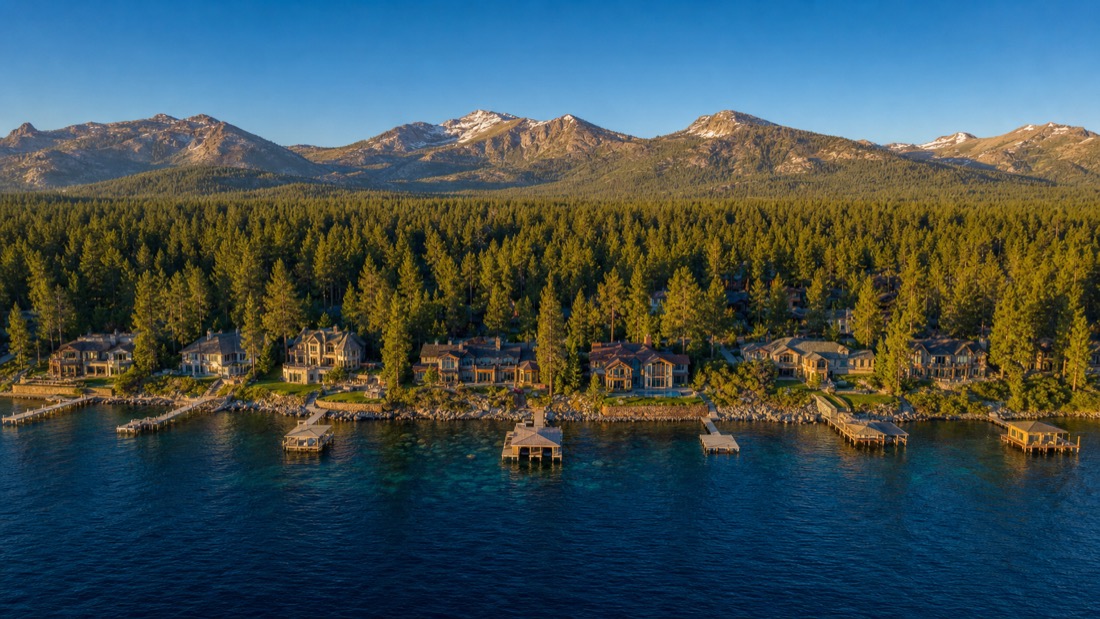
The Nevada-side communities are:
- Incline Village (Washoe County) — the largest and most amenity-rich, with private IVGID beaches and Diamond Peak ski access.
- Crystal Bay (Washoe County) — small, exclusive, and right on the state line; still inside the IVGID district.
- Zephyr Cove (Douglas County) — east shore value with quick Stateline and Heavenly access.
- Glenbrook (Douglas County) — the lake's only fully gated lakefront community.
- Stateline (Douglas County) — the casino corridor right on the border.
If your goal is to live in Nevada for the tax benefits while still owning on Lake Tahoe, these are your options. We cover all of them, and a local Incline Village real estate agent is the fastest way to understand the differences block by block.
Which Lake Tahoe Communities Are in California?
The California side wraps the west and south shores and holds the majority of the lake's shoreline and population. According to the State of California, these communities fall within El Dorado and Placer counties.
The main California-side communities are:
- South Lake Tahoe (El Dorado County) — the largest town on the lake, the most affordable entry, and the hub for Heavenly Mountain Resort.
- Tahoe City (Placer County) — the north-shore California anchor, charming and walkable.
- Kings Beach and Tahoe Vista (Placer County) — north-shore value on the California side.
- Homewood and Tahoma (west shore) — quieter, scenic, and closer to Tahoe City than to South Lake.
- Truckee (nearby, not on the lake) — the gateway town with its own large market.
The California side offers lower entry prices, more total inventory, and proximity to more ski resorts. But every dollar of income, capital gain, and estate value you hold as a California resident is exposed to California's tax code — which is where the real cost difference lives.
What Is the Tax Difference Between the California and Nevada Sides?
This is the heart of the entire question, and it is why so many buyers cross the line. According to the California Franchise Tax Board, California taxes personal income at rates up to 13.3% — the highest in the nation. Nevada, according to the Nevada Department of Taxation, levies no state income tax at all, no state estate tax, and no state capital-gains tax.
| Factor | Nevada side | California side |
|---|---|---|
| State income tax | 0% | Up to 13.3% |
| State capital-gains tax | None | Up to 13.3% |
| State estate tax | None | None (but higher income exposure) |
| Property-tax growth cap | 3% / yr (NRS 361) | 2% / yr (Prop 13) |
| Annual savings at $1M income | about $133,000 | baseline |
On $1 million of annual income, a Nevada resident keeps roughly $133,000 more than a California resident. On the sale of a long-held home with a $5 million gain, the Nevada resident avoids up to about $665,000 in state capital-gains tax that a California seller would owe. According to Nevada Revised Statutes Chapter 361, Nevada also caps owner-occupied property-tax growth at 3% a year. In my experience, for any buyer with significant income or a large eventual gain, the Nevada side pays for its premium many times over.
Does Buying on the Nevada Side Make Me a Nevada Resident?
Not automatically — and this is the trap that catches buyers. Owning a home on the Nevada side of Lake Tahoe does not, by itself, eliminate your California taxes. According to the California Franchise Tax Board residency guidance (Publication 1031), you must establish Nevada domicile: move the center of your life to Nevada with a Nevada driver's license, vehicle and voter registration, and a documented majority of the year physically in the state.
California is aggressive about auditing high-income taxpayers who claim to have left, and California-sourced income remains taxable regardless of where you live. So the Nevada-side tax advantage is real, but it is conditional on genuinely making Nevada your home — not just buying a second house there. We routinely connect buyers with Nevada residency attorneys and CPAs before closing so the savings actually hold up. Our moving to Lake Tahoe guide walks through the relocation steps in detail.
How Do Home Prices Compare on Each Side of Lake Tahoe?
Price and tax pull in opposite directions, which is what makes the decision interesting. The California south shore offers the lowest entry — modest South Lake Tahoe homes start in the mid-$600,000s. The Nevada side skews far more expensive because its inventory is luxury-heavy and its lakefront is the most coveted on the lake.
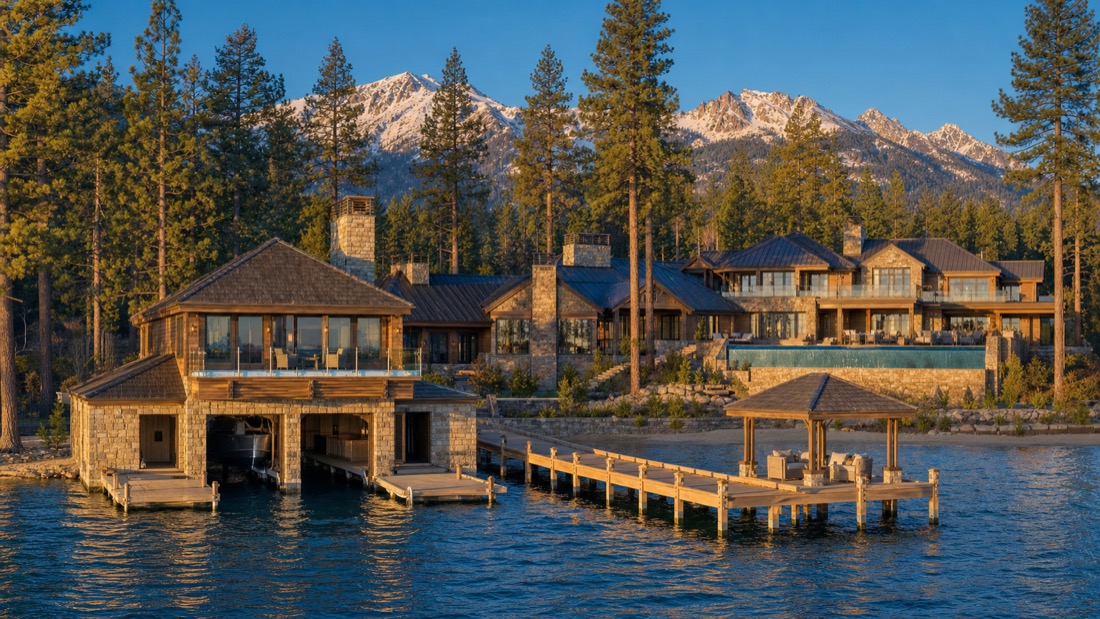
According to the Northern Nevada Regional MLS, the Nevada-side lakefront median list runs near $16.45 million, while Incline Village luxury (non-lakefront) sits near $3.2 million. By contrast, the California south shore's overall median is a fraction of that. The key insight for buyers: a higher Nevada sticker price can still be the cheaper home to own once you account for years of zero income tax. We break the numbers down in our Lake Tahoe market report and track live inventory on the lakefront homes for sale page.
| Community (side) | Typical price range | Lakefront top end |
|---|---|---|
| South Lake Tahoe (CA) | $600,000 – $1.2M | $3M – $20M+ |
| Tahoe City / Kings Beach (CA) | $900,000 – $2.5M | $5M – $30M+ |
| Zephyr Cove / Stateline (NV) | $700,000 – $2.5M | $3M – $17M |
| Incline Village (NV) | $900,000 – $3.5M | $15M – $49M+ |
| Crystal Bay (NV) | $1.2M – $4M | $10M – $46M |
What Does $1 Million Buy on Each Side of Lake Tahoe?
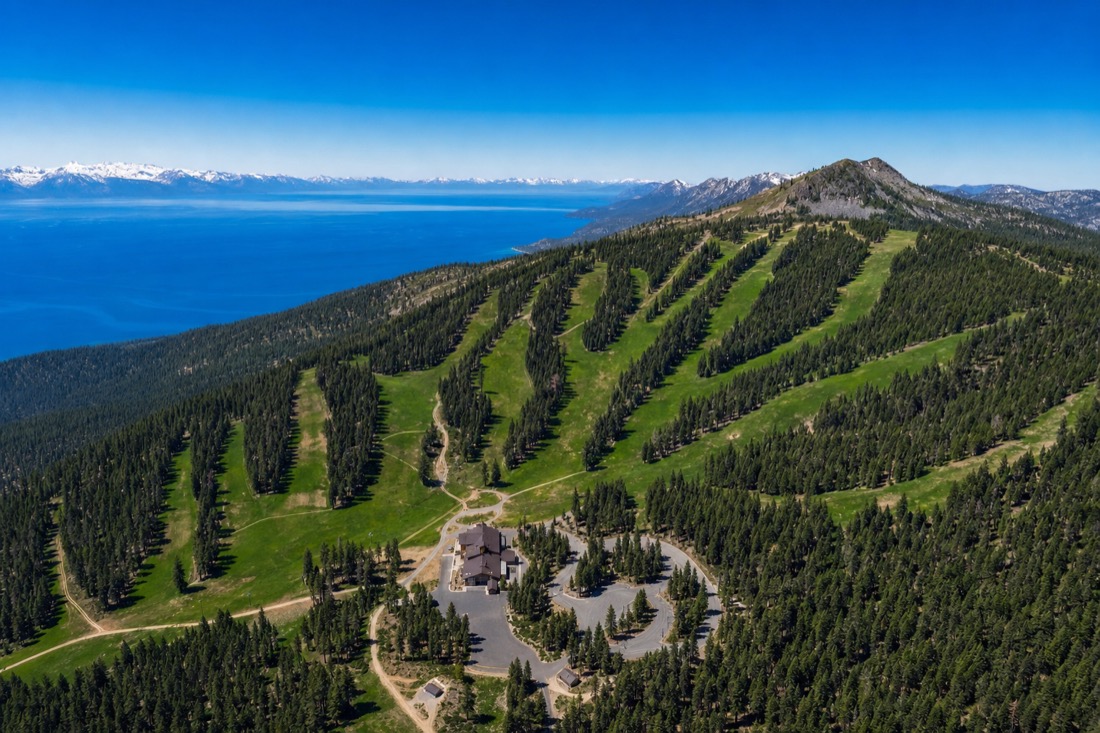
A million dollars is a useful yardstick because it buys very different homes depending on the side. On the California south shore, $1 million buys a comfortable 3-bedroom single-family home, often updated, within a few minutes of Heavenly and the lake — genuinely a primary-residence-quality home. Push to $1.2 million and you add square footage or a better location; drop to $700,000 and you are into condos and older cabins.
On the Nevada side, $1 million goes less far on paper but buys into the tax advantage. In Incline Village, $1 million lands an entry single-family home or an updated condo with IVGID beach and Diamond Peak access; in Zephyr Cove it stretches further, toward a mid-size home. In Crystal Bay, entry sits closer to $1.2 million. The honest comparison: a $1 million California home and a $1 million Nevada home look similar on day one, but the Nevada owner who earns $1 million a year keeps roughly $133,000 more annually — so over a 10-year hold the Nevada home is effectively more than $1.3 million cheaper to own. That is the entire reason the Nevada side commands a premium and still sells faster at the top. For buyers who want the lake without a seven-figure price at all, pairing a Reno or Sparks primary home with a smaller Tahoe condo keeps the all-in number well under $1 million.
How Much Are Property Taxes on Each Side of Lake Tahoe?

Property taxes are set by county and differ meaningfully across the line. On the Nevada side, according to Washoe County and Douglas County records, effective rates run roughly 0.5% to 0.7% of taxable value — about $5,000 to $7,000 a year on a $1 million home, or roughly $35,000 to $70,000 on a $10 million lakefront. According to Nevada Revised Statutes Chapter 361, annual increases on an owner-occupied home are capped at 3%.
On the California side, Prop 13 caps annual assessed-value growth at 2%, but the base rate plus local assessments often lands the effective bill near 1.1% to 1.25% — roughly $11,000 to $12,500 a year on a $1 million home, noticeably higher than Nevada in raw property tax. The bigger gap, though, is income: a California resident also pays up to 13.3% on income and capital gains that a Nevada resident does not. So on a $1 million home the property-tax difference is a few thousand dollars a year, while the income-tax difference for a high earner can be more than $100,000 a year. In my experience, buyers fixate on the property-tax line and miss the income-tax line — which is where the real money is.
Which Counties Are the Two Sides Of Lake Tahoe In?
Knowing your county matters because property taxes, building permits, and short-term-rental rules are set at the county level, not the state level. Here is how the lake's shoreline divides.
| Community | State | County |
|---|---|---|
| Incline Village | Nevada | Washoe |
| Crystal Bay | Nevada | Washoe |
| Zephyr Cove / Glenbrook / Stateline | Nevada | Douglas |
| South Lake Tahoe | California | El Dorado |
| Tahoe City / Kings Beach | California | Placer |
According to Washoe County and Douglas County records, Nevada-side effective property-tax rates run a low 0.5% to 0.7% of value. California's Prop 13 framework caps increases at 2% but starts from a higher base in many cases. Always confirm the specific county rules for any home, because they shape your carrying cost and your rental options.
How Do Short-Term Rental Rules Differ by Side?
If you plan to rent the home when you are away, the state line matters enormously. According to Washoe County, Nevada-side Incline Village and Crystal Bay require short-term-rental permits with occupancy and parking caps, and some HOAs (notably Glenbrook) restrict rentals further. Douglas County operates its own permit program for Zephyr Cove and Stateline neighborhoods.
The California side has its own, often stricter, regimes. South Lake Tahoe has tightly limited vacation-home rentals in residential zones, and Placer County caps permits in many north-shore areas. In my experience, buyers counting on rental income to offset carrying costs must verify a specific address's permit status before writing an offer — the rules change frequently and vary parcel by parcel. We pull the current rules for any home a client is considering, on either side of the line.
How Do Schools and Services Compare Across the State Line?
Families weighing the two sides should look past the lake view to the school and service question. Nevada-side Incline Village and Crystal Bay are served by the Washoe County School District, while Zephyr Cove and Glenbrook fall under the Douglas County School District. The California side is served by the Lake Tahoe Unified School District (south shore) and Tahoe-Truckee Unified (north and west).
According to the U.S. Census Bureau, the Nevada-side communities are small and affluent, which supports well-resourced local schools but limited size and program breadth. Many families also use the broader Reno and Carson City areas for additional school, medical, and shopping options — both are within an hour of the Nevada shore. The practical reality is that no Tahoe community, on either side, offers big-city service density; you are trading that for the lake. Weigh it honestly against your family's needs.
What Is the Lifestyle Difference Between the Two Sides?
Beyond taxes and prices, the two shores simply feel different. The Nevada side — Incline Village, Crystal Bay, Glenbrook — is quieter, more residential, and more exclusive, anchored by private beaches and Diamond Peak. It draws second-home owners, retirees, and California relocators establishing Nevada residency.
The California side is busier and more varied. South Lake Tahoe is a true town with year-round services, nightlife, and the lake's biggest ski resort at Heavenly; the north and west shores offer charming villages and more ski options. According to the USDA Lake Tahoe Basin Management Unit, roughly 90% of the basin is protected national forest on both sides, so the natural beauty is constant — what changes is the density, the price, and the tax exposure. The buyers we've represented tend to choose the Nevada side for the tax math and the quiet, and the California side for the value and the activity.
Which Side of Lake Tahoe Should You Buy On?
The decision comes down to a few honest questions about your situation. Choose the Nevada side if you have significant income or a large eventual capital gain, can establish genuine Nevada residency, and value privacy and amenities over price — the tax savings will likely dwarf the premium. Choose the California side if entry price is your priority, you want a true town with full services, or you are buying a smaller vacation home where the tax exposure is modest.
For buyers who can flex, there is a third path I often recommend: base a primary residence in nearby Reno or Sparks — closer to the airport and far more affordable — and add a smaller Tahoe property. That captures Nevada residency, full-city services, and lake access without an eight-figure lakefront price. Whichever path fits, run the numbers before you fall for a view. Our buyer resources and a quick call to (775) 277-2120 will get you a side-by-side comparison.
How Do I Start the Process of Buying at Lake Tahoe?
Start by deciding the tax question first, because it narrows everything else. If the Nevada advantage applies to you, focus the search on the north and east shores and line up a residency plan with a CPA before you make an offer. If price leads, the California south shore opens up. Then get pre-qualified — most Tahoe purchases above the roughly $1.149 million conforming limit need jumbo or portfolio financing, which takes longer to arrange.
From there, work with an agent who closes on the specific shore you are targeting, because pier rights, new construction options, county rules, and off-market inventory all differ by side. When you are ready to sell an existing property to fund the move, our seller resources and a free home valuation map out the strategy. Reach our team through the contact page or call (775) 277-2120 to start.
How Does Wildfire Insurance Differ on Each Side of Lake Tahoe?
Insurance has become one of the most important — and most overlooked — differences between the two sides, and it has nothing to do with the view. The entire Tahoe basin carries wildfire risk, but the California insurance market has tightened far more sharply than Nevada's. According to the California Department of Insurance, many national carriers have paused or sharply limited new homeowner policies in high-risk California areas, pushing more owners toward the state's FAIR Plan of last resort, where premiums and deductibles run high.
The Nevada side has been more stable, though not immune — carriers still underwrite, but they require defensible space, hardened roofs, and TRPA Best Management Practices compliance. In practice, I've seen California-side buyers face annual premiums several thousand dollars higher than a comparable Nevada-side home, plus a harder time even securing a policy at closing. On luxury and lakefront homes the gap widens: insuring a $10 million estate can run $15,000 to $60,000 a year, and on the California side it can be difficult to place at any price without specialty coverage. The practical advice is the same on both shores — bind insurance during the offer phase, not at closing, and budget for it as a real line item. We flag insurance availability on every Tahoe home we show, because a home you cannot insure is a home you cannot finance. Compare what is listed across both shores on our Lake Tahoe hub and the lakefront page.
Frequently Asked Questions About Lake Tahoe and the State Line
Is Lake Tahoe more in California or Nevada?
More of Lake Tahoe is in California. The state line splits the lake so that roughly two-thirds of the water surface lies in California and about one-third in Nevada. The California side also holds the majority of the shoreline and population, including the largest town, South Lake Tahoe. The Nevada side is smaller but draws disproportionate luxury demand because of its tax advantages.
What part of Lake Tahoe is in Nevada?
The Nevada portion of Lake Tahoe runs along the north and east shores. It includes Incline Village and Crystal Bay in Washoe County, plus Zephyr Cove, Glenbrook, and Stateline in Douglas County. These communities have no state income tax, which is the primary reason high-income buyers concentrate on the Nevada side despite higher home prices.
Why is the Nevada side of Lake Tahoe so popular with buyers?
Because of Nevada's tax structure. Nevada has no state income tax (California's top rate is 13.3%), no state estate tax, and no state capital-gains tax. For buyers with substantial income or a large eventual gain on an appreciated home, the Nevada side can save more than $100,000 a year, which often more than offsets its higher purchase prices. Nevada-side Incline Village and Crystal Bay also include private IVGID beach and ski amenities.
Do I pay California taxes if I buy on the California side of Lake Tahoe?
If you become a California resident, yes — your income, capital gains, and other taxable activity are subject to California's tax code, with a top marginal rate of 13.3%. Even owning a California-side vacation home while living elsewhere can create California tax exposure on California-sourced income. Always confirm your situation with a tax professional before buying.
Can I avoid California taxes by buying a Nevada-side Tahoe home?
Only if you establish genuine Nevada residency — not just by owning the home. You must move your domicile to Nevada: a Nevada driver's license, vehicle and voter registration, and spending the majority of the year physically in Nevada, with your financial and family ties shifted there. California audits departing high earners aggressively, so work with a Nevada residency attorney or CPA before counting on the savings.
Is it cheaper to live on the California or Nevada side of Lake Tahoe?
It depends on how you measure it. The California south shore has lower home prices and is cheaper to buy into. But the Nevada side is cheaper to own for higher earners once you account for zero state income tax, no capital-gains tax, and a property-tax cap. For a modest vacation home the California side often wins on cost; for a high-income buyer or a long-term hold, the Nevada side usually wins.
Which Sources Inform This Lake Tahoe State-Line Guide?
This guide draws on government, agency, and regional MLS sources. No competitor listing portals were used.
- U.S. Geological Survey — California–Nevada border and lake geography
- Tahoe Regional Planning Agency (TRPA) — bi-state basin regulation
- California Franchise Tax Board — California income-tax rates and residency
- Nevada Department of Taxation — Nevada tax framework
- Nevada Revised Statutes Chapter 361 — property-tax cap
- Washoe County — Nevada-side assessment and short-term-rental rules
- Northern Nevada Regional MLS (NNRMLS) — Nevada-side pricing
- U.S. Census Bureau — population and demographics
- USDA Lake Tahoe Basin Management Unit — protected-land share
- State of Nevada and State of California — jurisdiction
This guide reflects conditions current as of mid-2026 and is intended for informational purposes only. Tax and residency rules are complex and change; consult a licensed tax professional and a licensed Nevada real estate professional before making any purchase decision. Nevada Real Estate Group · Chris Nevada · License S.181401 · (702) 637-1759 · Northern Nevada office line (775) 277-2120.