

Published June 25, 2026 · Updated June 25, 2026 · By Chris Nevada, Nevada Real Estate Group · NV License S.181401
Few real estate markets in the country behave like Lake Tahoe. The shoreline is permanently capped, the lake straddles two states with very different tax rules, and a single deep-water pier can swing a sale by seven figures. Heading into the second half of 2026, the Nevada side is setting records while the broader basin holds firm against higher interest rates — a divergence that rewards buyers and sellers who understand the submarket they are actually in.
I'm Chris Nevada, and across the Lake Tahoe and Northern Nevada closings Nevada Real Estate Group has represented, the through-line every season is the same: this is a scarcity market, not a volume market. The macro headlines about national housing barely move it. What moves Tahoe is shoreline permits, pier rights, the California-versus-Nevada tax line, and how many trophy buyers are circling a handful of listings. This report breaks down the 2026 numbers by shore and by community so you can price a purchase or a sale against reality, not against a generic "is the market up or down" narrative.
Lake Tahoe real estate in 2026 is a scarcity-driven, two-state market sitting at record highs on the Nevada side, where the lakefront median list runs about $16.45 million and Crystal Bay is up roughly 27% year over year. Inventory stays tight under permanent shoreline caps, days on market run long at the top, and zero Nevada income tax keeps luxury demand strong. Call (775) 277-2120 to position your purchase or sale.
- Nevada-side lakefront median list runs near $16.45 million (range $3.45M–$45M).
- Crystal Bay is up about 27% year over year; Incline luxury sits near $3.2 million (about $1,014/sqft).
- 2026 set records: a $46 million Crystal Bay sale and a $22.15 million Glenbrook close, $2.15M over ask in 8 days.
- A permitted private pier adds roughly $500,000 to $2 million; new piers are effectively unbuildable.
- Nevada's zero income tax sustains demand — expect long days on market and off-market deals.
Shopping the area? Browse live Lake Tahoe homes for sale — every active MLS listing with prices, photos, and instant filters.
What Is the State of the Lake Tahoe Real Estate Market in 2026?
The headline for 2026 is divergence. The entry and mid-tiers around the lake have cooled to a balanced, rate-sensitive pace, while the luxury and lakefront tiers — especially on the Nevada shore — are still posting record sales. According to the Federal Housing Finance Agency, home-price appreciation across the Reno-Carson-Tahoe region has moderated from the frenzy years but remains positive, and Tahoe's top tier has decoupled from that average entirely because its supply cannot expand.
In my experience, that decoupling is the single most important thing to understand before you transact here. A buyer reading national headlines about slowing sales will assume leverage that simply does not exist on a Crystal Bay point or a Glenbrook lakefront. According to the National Association of REALTORS, resort and second-home markets nationwide have softened on volume — fewer transactions — but Tahoe's scarcest segments have held price because demand permanently outstrips a fixed shoreline.
The practical 2026 picture: more days on market than the 2021 peak, more negotiation room in the under-$2 million tier, and almost none at the trophy level. Sellers of ordinary cabins and condos must price to the new reality; sellers of pier-rights lakefront still hold the cards. For the full live inventory, our Lake Tahoe homes for sale hub updates throughout the day.
How Much Do Homes Cost Around Lake Tahoe in 2026?
Price depends almost entirely on which shore and which community you are in — Tahoe is not one market but a dozen. The table below frames the 2026 ranges we see across the major submarkets, from entry condos to generational lakefront compounds.
| Submarket | Typical price range | Lakefront / luxury top end |
|---|---|---|
| Incline Village (NV) | $900,000 – $3.5M (non-lakefront) | $15M – $49M+ |
| Crystal Bay (NV) | $1.2M – $4M | $10M – $46M |
| Glenbrook (NV, gated) | $2.5M – $8M | $15M – $25M+ |
| Zephyr Cove / Stateline (NV) | $700,000 – $2.5M | $3M – $17M |
| South Lake Tahoe (CA) | $600,000 – $1.2M | $3M – $20M+ |
| North Shore / Truckee (CA) | $900,000 – $2.5M | $5M – $30M+ |
According to the Northern Nevada Regional MLS and the Reno/Sparks Association of REALTORS, Nevada-side medians run well above the California south shore because the Nevada inventory skews luxury and lakefront. A $700,000 budget that buys a modest South Lake Tahoe home barely enters the Nevada market outside of Zephyr Cove condos. We help buyers match budget to shore on our Lake Tahoe and Incline Village pages.
How Does the Nevada Side Compare to the California Side in 2026?
The state line running through the lake is the most consequential feature of the entire market. Nevada has no state income tax and no estate tax; according to the California Franchise Tax Board, California's top marginal rate is 13.3%. For a high-income buyer, that difference is worth roughly $133,000 a year at $1 million of income — before you account for zero Nevada capital-gains tax at sale.
| Factor | Nevada side | California side |
|---|---|---|
| State income tax | 0% | Up to 13.3% |
| Property-tax growth cap | 3% / yr (NRS 361) | 2% / yr (Prop 13) |
| Median lakefront | approximately $16.45M | $8M – $15M |
| 2026 record sale | $46M (Crystal Bay) | about $30M |
| Private beach access | IVGID (Incline / Crystal Bay) | Public or HOA |
| Capital-gains tax at sale | None (state) | Up to 13.3% (state) |
According to Nevada Revised Statutes Chapter 361, owner-occupied property-tax growth is capped at 3% per year, and effective rates in Washoe and Douglas counties run a low 0.5% to 0.7% of value — roughly $35,000 to $70,000 a year on a $10 million lakefront. The tax math is why so much trophy demand concentrates on the Nevada shore, and why I've seen California buyers cross the line for a comparable home even at a higher sticker price.
What Is Happening With Lake Tahoe Lakefront Prices in 2026?
Lakefront is the rarest asset class at Tahoe and the engine of every record. According to the Tahoe Regional Planning Agency Shorezone Ordinance, new piers are effectively unbuildable and shoreline structures are permanently capped — so lakefront supply cannot grow, only change hands.
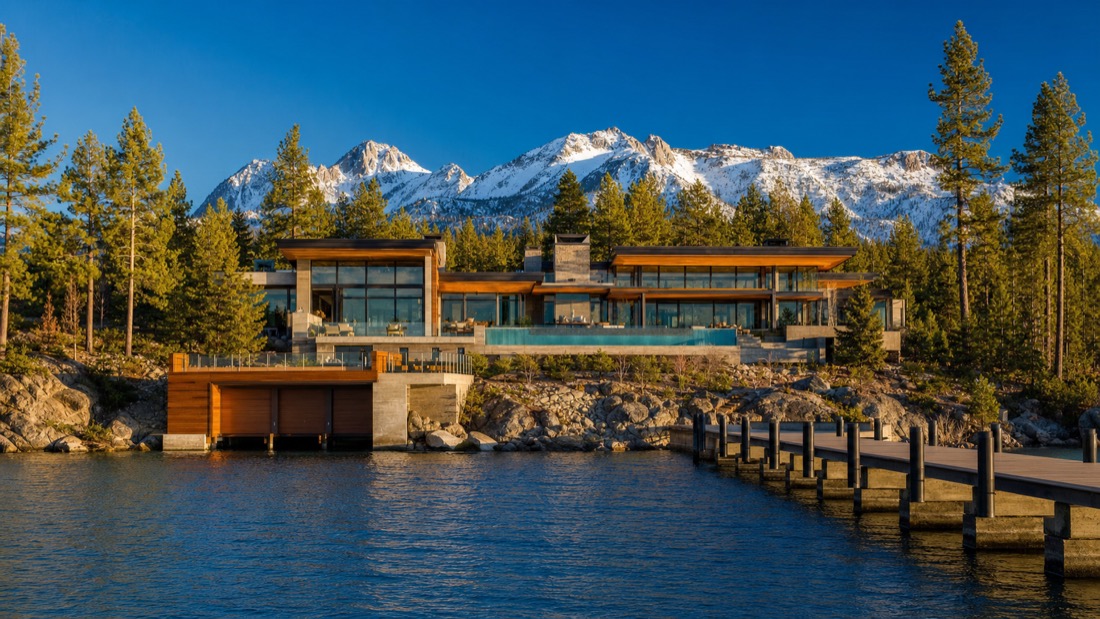
The 2026 numbers tell the story. The Nevada-side lakefront median list sits near $16.45 million across a $3.45 million to $45 million range, and the year produced a $46 million Crystal Bay sale plus a $22.15 million Glenbrook close that went $2.15 million over asking in eight days. In late 2024, a single Incline Village lakefront traded at $62 million. Active lakefront inventory is genuinely thin — typically 8 to 15 homes across all five Nevada-side submarkets combined, and the best trade off-market before they are ever advertised. Browse what is listed on our Lake Tahoe lakefront homes for sale page, and set an alert, because at this tier speed matters more than budget.
How Are Incline Village and Crystal Bay Performing in 2026?
Incline Village and Crystal Bay are the heart of the Nevada-side market and the most amenity-rich corner of the lake. Both sit inside the Incline Village General Improvement District, so owners get private beaches, the Burnt Cedar pool, Diamond Peak ski access, and golf — perks that protect resale value and exist nowhere else on Tahoe.
In 2026, Incline Village luxury (non-lakefront) is running near a $3.2 million median at roughly $1,014 per square foot, while Crystal Bay's median is up about 27% year over year to roughly $1.6 million. Entry into Incline still exists — older condos and townhomes start under $900,000 — but the bulk of demand and nearly every record sits at the top. We've represented buyers across this spectrum, from a first Incline Village condo to lake-view estates, and the pattern holds: well-priced, updated homes move fast while dated trophy listings sit until they reprice. For buyers targeting the top tier, our Incline Village luxury homes page tracks the segment, and a local Incline Village real estate agent is essential for the off-market flow. For a deeper breakdown of this submarket, see our dedicated Incline Village market report.
What Does the East Shore Market Look Like — Glenbrook, Zephyr Cove, and Cave Rock?
The Nevada east shore is where privacy peaks and character runs deepest. Glenbrook is the lake's only fully gated lakefront community — 297 residences, just 61 true lakefront parcels, a private marina, beach, and a 9-hole course — and its lakefront rarely lists publicly. The 2026 $22.15 million Glenbrook close that ran $2.15 million over ask in eight days is the clearest signal of how thin and competitive that inventory is.
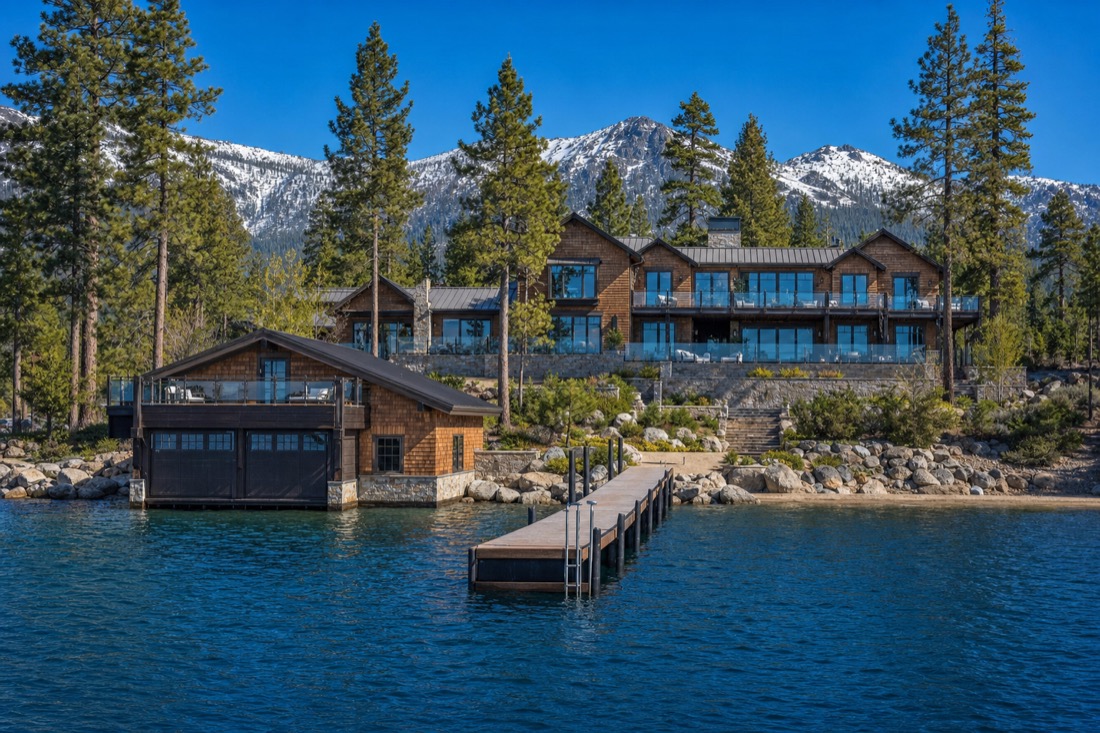
Zephyr Cove and the Stateline corridor offer the east shore's relative value: lakefront in the $3 million to $17 million band that would cost two to three times as much in Incline, plus fast access to Heavenly and the casinos. Cave Rock and the Clear Creek Tahoe golf community above the lake round out the Douglas-County options for buyers who want Tahoe proximity without an eight-figure lakefront price. In my experience, the east shore is the smartest play for buyers who prioritize privacy and value over amenity density.
How Is the Tahoe Cabin and Condo Market Holding Up in 2026?
Below the lakefront headlines sits the market most buyers actually shop: cabins and condos. This is the rate-sensitive tier, and it is where 2026 has handed buyers the most leverage in years. According to Freddie Mac, 30-year mortgage rates have held in a range that prices out some second-home buyers who stretched in 2021, cooling demand for financed cabins and condos even as the cash luxury market roars.
| Segment | Typical price | 2026 buyer dynamic |
|---|---|---|
| Entry condo (NV / CA) | $450,000 – $750,000 | Most negotiable; rate-sensitive |
| Classic Tahoe cabin | $700,000 – $1.3M | Balanced; price-to-condition matters |
| Ski-access / amenity condo | $900,000 – $2M | Steady; STR rules drive value |
| Lake-view cabin | $1.2M – $3M+ | Resilient; view premium holds |
For buyers, this is the opening. A well-prepared offer on a financed cabin in 2026 carries real negotiating weight that did not exist three years ago. Browse current inventory on our Lake Tahoe cabins for sale page, and read our moving to Lake Tahoe guide for the full relocation workflow.
How Long Are Lake Tahoe Homes Taking to Sell in 2026?
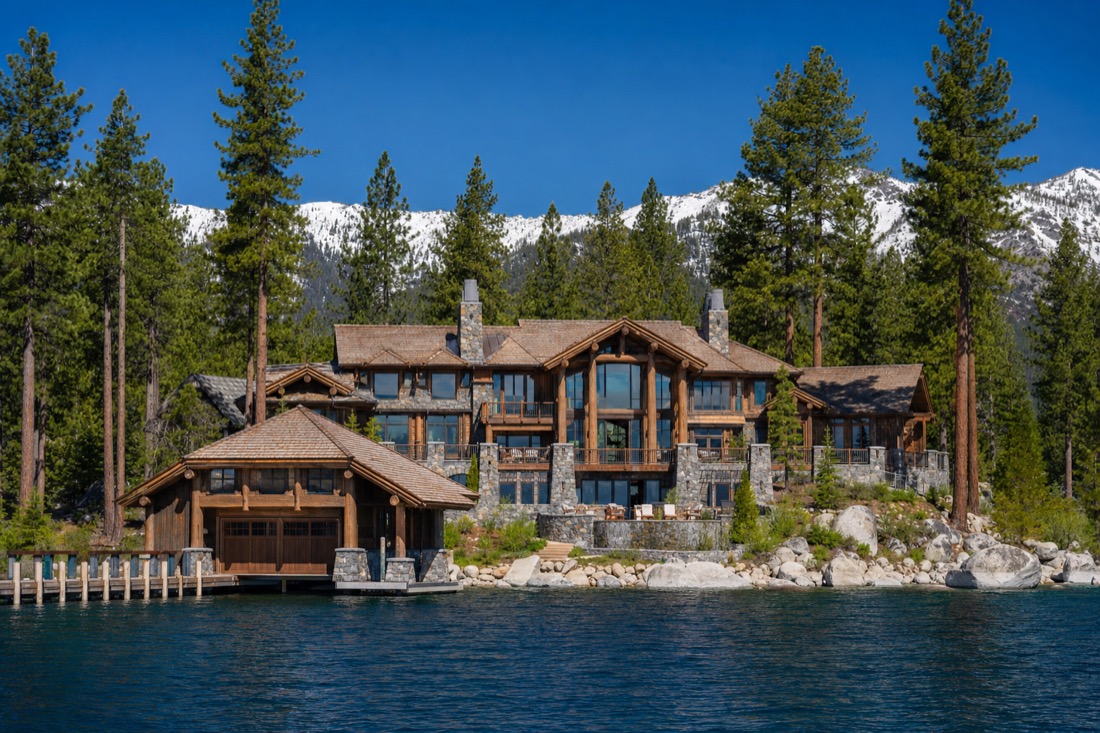
Days on market is the metric that most exposes Tahoe's two-speed reality. According to the Reno/Sparks Association of REALTORS, well-priced cabins and condos in good condition are moving in a balanced 30 to 75 days, while dated or overpriced listings linger far longer. Lakefront is the opposite extreme — average days on market at the trophy tier runs near 192 days, not because demand is weak but because the buyer pool for a $20 million pier-rights estate is tiny and patient.
The takeaway for sellers: condition and pricing decide your timeline in the financed tiers, while at the top, the right single buyer is worth waiting for. The takeaway for buyers: a long days-on-market figure on a lakefront listing is not a discount signal — it is the normal cadence of a scarce, thin market. I've seen buyers misread a 150-day lakefront listing as desperation and lose it to a cleaner offer the same week they hesitated.
How Are Interest Rates and the Cash Market Shaping Tahoe in 2026?
Tahoe runs on two engines that respond to rates very differently. The financed market — entry condos, cabins, and move-up homes — tracks national mortgage rates closely. According to Freddie Mac, the elevated-rate environment has thinned that buyer pool, which is exactly why the under-$2 million tier has the most room to negotiate in 2026.
The luxury and lakefront market, by contrast, is largely a cash market and barely notices rates at all. Most eight-figure Tahoe trades close in cash or through private-client portfolio financing, so the trophy tier is driven by wealth creation, equity markets, and the tax line — not by the 30-year fixed. According to the National Association of REALTORS, cash purchases nationally have risen as a share of high-end transactions, and at Tahoe that share is overwhelming at the top. For financed buyers, jumbo loans above the roughly $1.149 million Washoe and Douglas conforming limit carry stricter underwriting and longer timelines — plan for it early so financing does not cost you a competitive home.
What Is Driving Demand for Lake Tahoe Real Estate in 2026?
Three forces keep Tahoe demand structurally strong regardless of the rate cycle. First, scarcity: according to the USDA Lake Tahoe Basin Management Unit, roughly 90% of the basin is protected national forest, and the TRPA shoreline cap means lakefront can never expand. Second, taxes: Nevada's zero income tax and zero estate tax pull wealth across the state line, a pull that compounds at the trophy tier.
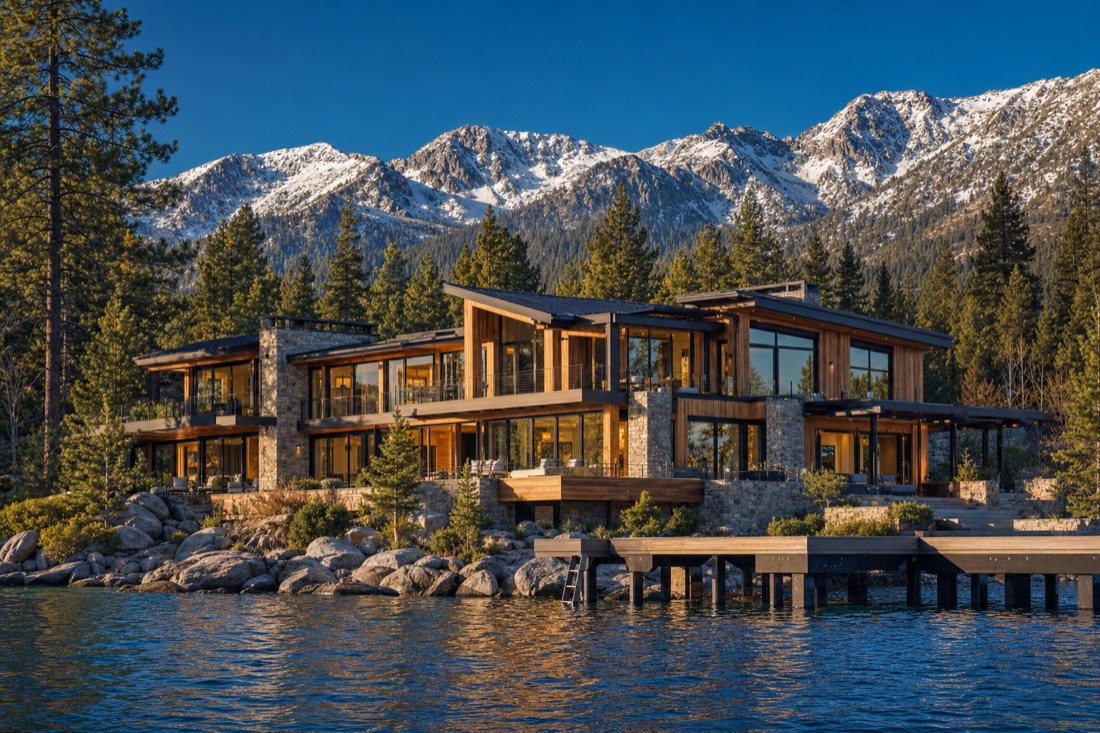
Third, flexibility: remote and hybrid work made a Tahoe primary or near-primary residence viable for a class of buyer who previously could only justify a vacation home. According to the U.S. Census Bureau, the Reno-Carson-Tahoe region continues to draw net in-migration from California, and a meaningful slice of that flow targets the lake. The buyer who used to fly in for ski weekends now works from Incline three days a week — and that shift has permanently raised the floor under Tahoe demand. Many of those arrivals start with our Reno and moving to Incline Village resources before focusing on the lake.
How Do Pier and Buoy Rights Affect Lake Tahoe Values in 2026?
Nothing else at Tahoe creates value like water access, and 2026 only sharpened that premium. According to the Tahoe Regional Planning Agency, the Shorezone Ordinance caps every pier, buoy, and shoreline structure on the lake, and new private piers are effectively impossible to permit. That makes an existing, permitted private pier one of the most finite assets in Western real estate.
In practice, a permitted private pier adds roughly $500,000 to $2 million to a lakefront home's value, scaling with pier length, water depth, and whether it is solely owned or shared. A private buoy — allocated only through a capped TRPA lottery — adds less but still commands a premium, and a parcel with neither sits well below an otherwise identical neighbor that has both. In my experience, the single most common and costly due-diligence mistake buyers make is assuming a structure shown in listing photos carries a current TRPA permit. It often does not. We verify pier, buoy, and shorezone status on every lakefront home before a client removes contingencies — it is the difference between buying an asset and buying a liability.
Which Lake Tahoe Communities Offer the Best Value in 2026?
Value at Tahoe is not about the lowest price — it is about what a dollar buys relative to access, amenities, and the tax line. In my experience, the smartest 2026 buys cluster in a few specific pockets where the market has not fully repriced the upside.
On the Nevada side, Crystal Bay remains the value story at the top — its median is up about 27% year over year, yet it still trades below Incline Village while sharing the same IVGID beach, ski, and golf privileges. For buyers who want lakefront proximity without an eight-figure entry, Zephyr Cove and the Douglas County east shore deliver homes in the $700,000 to $2.5 million band that would cost two to three times as much in Incline, with faster access to Heavenly and the Stateline casinos.
Above the lake, Clear Creek Tahoe offers a gated golf-community alternative for buyers who prioritize new construction and privacy over a lakefront address — often at a fraction of the per-square-foot cost of the shoreline. And for the most budget-conscious buyers, the financed cabin and condo tier across both shores is where 2026's higher rates created the clearest opening; our Lake Tahoe cabins for sale page is the place to watch for sub-$1 million entry points.
Buyers relocating from out of state often underestimate how much the surrounding Northern Nevada market matters to a Tahoe purchase. Many of the buyers we've represented use Reno or neighboring Sparks as a practical base — closer to the airport, deeper inventory, lower prices — while keeping a smaller Tahoe property for weekends. Pairing a primary home in the Truckee Meadows with a Tahoe cabin is one of the most cost-effective ways into the lake, and I expect more buyers to use it as long as rates stay elevated. Whichever community fits, compare them against your real budget and use case rather than chasing a single "best" answer — start on our Lake Tahoe and Incline Village pages.
Is 2026 a Good Time to Buy or Sell Around Lake Tahoe?
The honest answer is that it depends entirely on your tier. For buyers in the financed cabin and condo market, 2026 is the best window in years — higher rates thinned the competition, days on market lengthened, and a clean, pre-approved offer carries weight it lacked at the peak. If you have been priced out of Tahoe by bidding wars, this is your re-entry point — our buyer resources map out the financing and offer strategy.
For buyers at the lakefront and luxury tier, "waiting for a dip" is a losing strategy. Supply is permanently capped, the tax pull is permanent, and 2026 set new records — the homes do not get cheaper, they get scarcer. The winning move is readiness: pre-qualification or proof of funds, a local agent with off-market access, and the discipline to act in days. For sellers, the playbook splits the same way. Financed-tier sellers should start with an honest comparative market analysis, price to current condition, and accept a longer timeline; lakefront and pier-rights sellers still hold genuine leverage and should market patiently to the right global buyer. Our seller resources walk through the listing strategy for each tier. Whichever side you are on, call us at (775) 277-2120 and we will model your specific scenario against live data.
What Is the Forecast for the Lake Tahoe Market Through 2026 and Beyond?
Expect the divergence to widen. The financed tiers should stay rate-dependent and balanced — modest price movement, healthy but unhurried demand — for as long as mortgage rates hold elevated. According to Freddie Mac and the Federal Housing Finance Agency, regional appreciation is likely to stay positive but moderate, not the double-digit surges of 2021.
The lakefront and trophy tier is the safer long-term bet precisely because it ignores the rate cycle. With shoreline permanently capped, Nevada's tax advantage intact, and global wealth continuing to seek scarce hard assets, I expect Nevada-side lakefront to keep setting records, with Crystal Bay and Glenbrook leading. The risk to watch is insurance — wildfire-driven premium increases and carrier pullback are the real headwind for every Tahoe tier, and buyers should bind coverage during the offer phase, not at closing. Net for 2026 and beyond: a resilient, scarcity-protected market that rewards local knowledge over market timing. Across the closings we've represented, the buyers and sellers who win at Tahoe are the ones who understand their submarket cold — start with our Lake Tahoe hub and reach our team when you are ready to move.
Frequently Asked Questions About the Lake Tahoe Market
Is the Lake Tahoe real estate market going up or down in 2026?
It is doing both at once, depending on tier. The financed cabin and condo market has cooled to a balanced, rate-sensitive pace with more negotiating room, while the lakefront and luxury tier — especially on the Nevada side — is still setting records, including a $46 million Crystal Bay sale in 2026. Lake Tahoe is a scarcity market, so its top tier largely ignores the national housing cycle.
How much does a lakefront home on Lake Tahoe cost in 2026?
Nevada-side lakefront ranges from roughly $3.45 million to $45 million, with a median list near $16.45 million. Entry lakefront with buoy or shared-pier rights starts around $5 million, while trophy estates with a private pier on Crystal Bay or in Glenbrook reach $25 million to $46 million and beyond. The California south shore offers somewhat lower lakefront entry, generally in the $3 million to $20 million range.
Is it cheaper to buy on the Nevada or California side of Lake Tahoe?
The California south shore has lower entry prices — modest homes from about $600,000 — but the Nevada side wins on total cost of ownership for higher earners because Nevada has zero state income tax versus California's up-to-13.3% rate, no estate tax, and no state capital-gains tax at sale. On $1 million of income that is roughly $133,000 saved per year, which is why so much luxury demand concentrates on the Nevada shore.
How long do homes take to sell at Lake Tahoe in 2026?
Well-priced cabins and condos in good condition typically sell in 30 to 75 days, while overpriced or dated listings sit far longer. Lakefront is different — average days on market at the trophy tier runs near 192 days, which reflects a small, patient buyer pool rather than weak demand. A long days-on-market figure on a lakefront listing is normal, not a discount signal.
Why are Lake Tahoe lakefront homes so expensive?
Because supply is permanently fixed. The Tahoe Regional Planning Agency Shorezone Ordinance caps every pier, buoy, and shoreline structure on the lake and makes new private piers effectively impossible to build, so existing lakefront cannot expand. A permitted private pier alone adds roughly $500,000 to $2 million in value. Combine fixed supply with Nevada's tax advantage and global trophy demand, and prices compound over time.
Should I buy a Lake Tahoe home now or wait?
In the financed cabin and condo tier, 2026 is a strong entry window — higher rates thinned competition and lengthened days on market. At the lakefront and luxury tier, waiting tends to backfire because supply only shrinks and 2026 set new records; readiness and off-market access matter more than timing. The right answer depends on your tier and budget, which is exactly what we model before you commit.
Which Sources Inform This Lake Tahoe Market Report?
This report draws on regional MLS data, REALTOR association statistics, and government and agency sources. No competitor listing portals were used.
- Northern Nevada Regional MLS (NNRMLS) — listing and sales data
- Reno/Sparks Association of REALTORS (RSAR) — market statistics
- Tahoe Regional Planning Agency (TRPA) — Shorezone Ordinance and shoreline caps
- Federal Housing Finance Agency (FHFA) — House Price Index
- Freddie Mac (PMMS) — mortgage-rate trends
- National Association of REALTORS (NAR) — second-home and cash-buyer research
- California Franchise Tax Board — California income-tax rates
- Nevada Revised Statutes Chapter 361 — property-tax cap
- Nevada Department of Taxation — Nevada tax framework
- U.S. Census Bureau — migration and population data
- USDA Lake Tahoe Basin Management Unit — protected-land share
This report reflects market data current as of mid-2026 and is intended for informational purposes only. Real estate market conditions change; consult a licensed Nevada real estate professional before making any purchase or sale decision. Nevada Real Estate Group · Chris Nevada · License S.181401 · (702) 637-1759 · Northern Nevada office line (775) 277-2120.