
These conversations tend to open the same way. Someone has sold a rental in California, has a 1031 clock running, and has read that Reno cash-flows. They want a fourplex. What they have not yet priced is that the fourplex they are imagining — the one with separate meters, a new roof and four tenants who pay on the first — is competing against a 1952 building with a shared water heater and a leach line that has never been scoped, and that the difference between those two buildings is about $200,000 and eighteen months of aggravation.
So this guide starts from the board rather than from a pro forma. On September 12, 2026 I pulled every active income and multifamily listing in Reno and Sparks, plus every such sale that closed between March 1 and August 31, 2026, and read the remarks, the unit counts and the year built on each one. That is 33 active listings and 23 closings. Against those I set the actual rents on the MLS-listed rentals in both cities and today's financing, and ran the math without the optimism that usually decorates a marketing flyer.
Reno and Sparks had 33 active income and multifamily listings on September 12, 2026, at a $899,000 median ask, ranging from $391,500 to $2.7 million. Ten were duplexes, three triplexes and four fourplexes. Twenty-three closed between March and August at a $745,000 median, $313 a square foot, in a median 21 days. The median active building was constructed in 1949.
- 33 active income listings, median ask $899,000; 23 closings at a $745,000 median.
- Twenty-nine of 33 active buildings predate 1978, triggering federal lead-paint disclosure.
- Small multifamily closed at 97.4 percent of list against 100 percent for houses.
- Nevada caps primary-residence tax rises at 3 percent but rentals at up to 8 percent.
- Only five active listings advertised a cap rate; treat every unverified pro forma as marketing.
How Many Duplexes and Fourplexes Are Actually for Sale in Reno and Sparks?
Thirty-three, which is a thin market by any measure and the first thing an investor arriving from a larger metro needs to internalise. Against roughly 1,500 total active listings across the two cities, income property is about two percent of the board.
The composition matters more than the count. Of the 33 active listings, ten were duplexes, three triplexes and four fourplexes, with five carrying the generic Income classification and eleven the broader Multi Family designation, the latter mostly buildings of six units and up. So the true small-multifamily set — the two-to-four-unit buildings that qualify for residential financing — is roughly seventeen properties at any given moment.
That distinction is the single most consequential thing in this guide, and it is not cosmetic. A property of one to four units is financed as residential: conventional, FHA or VA, with residential appraisal methods and residential rates. At five units it becomes commercial, which means a commercial loan, typically a larger down payment, a shorter term with a balloon, and a valuation driven by net operating income rather than by comparable sales. Crossing from four units to five changes the entire transaction, and several of the listings in the current inventory sit just past that line.
Turnover is reasonable relative to supply. Twenty-three closings across six months against 33 active listings works out to roughly 8.6 months of supply — slower than the housing market, faster than land. Median days on market for those closings was 21, which is quicker than the 42-day median for single-family resales over the same period, though that figure is skewed by several properties that traded with essentially no market exposure.
The active listings themselves reveal how long some of this inventory sits. Days on market among current listings ranged from zero to 504, with a 243-day listing at $899,000 and a 343-day listing at $1,432,000. Buildings that do not sell in this market are usually priced on pro forma rents rather than in-place income, which is a theme that runs through the rest of this guide.
What Does a Reno Duplex Cost Compared With a Single-Family Rental?
More per door and less per square foot, which is the trade that defines the segment.
| Building type | Active | Closed Mar–Aug | Median price | Typical active range |
|---|---|---|---|---|
| Duplex | 10 | 8 | $594,300 | $525,000 to $1,325,000 |
| Triplex | 3 | 3 | $914,975 | $699,666 to $1,050,000 |
| Quadruplex | 4 | 2 | $820,000 | $715,000 to $1,050,000 |
| Income (unclassified) | 5 | 5 | $794,500 | $391,500 to $2,700,000 |
| Multi Family (mostly 6 units and up) | 11 | 5 | $1,425,000 | $899,000 to $2,323,000 |
The duplex band is where most first-time small multifamily buyers land, and it runs from $525,000 to about $800,000 for a conventional two-unit building, with outliers above that for larger or redevelopment-oriented properties. The eight duplex closings ran a $594,300 median. Set that against the $620,000 median for the 1,573 single-family resales in the same cities over the same window, and the headline is striking: a duplex costs roughly what a house costs, and it comes with two rent cheques instead of one.
The catch is in the price-per-square-foot column. Small multifamily closed at a median $313 a square foot against $340 for single-family resales — a discount, but a much smaller one than the income difference would suggest, because you are buying older, smaller, plainer buildings. The median active income property was built in 1949. The median single-family resale was not.
Fourplexes cluster between $715,000 and $1,050,000, which on a per-door basis is $179,000 to $263,000 — genuinely attractive against a $620,000 median house, and the reason the four-unit band gets the most competition. The three current fourplex listings under $850,000 are in ZIPs 89512 and 89502, both older, centrally located and worth understanding before you buy.
The honest comparison to run is not duplex against house on price. It is duplex against house on total return after vacancy, turnover, maintenance on a seventy-five-year-old building, and the extra management load of multiple tenants. Two of those four line items are systematically worse on small multifamily, and the rent premium has to cover them.
Which ZIP Codes Hold the Small Multifamily Inventory?
Six, and they sort cleanly by age, price and tenant profile.
| ZIP | Area | Properties | Median price | Character |
|---|---|---|---|---|
| 89502 | Midtown, Medical District, south central Reno | 19 | $859,950 | Largest concentration, widest price range |
| 89431 | Central Sparks | 15 | $649,000 | Cheapest entry, oldest stock |
| 89503 | Old Northwest Reno, near the university | 10 | $848,750 | Mixed duplexes and small apartment buildings |
| 89512 | University district, north central Reno | 6 | $732,500 | Fourplex cluster, student-adjacent |
| 89509 | Old Southwest Reno | 5 | $1,015,000 | Priciest, best-located, triplexes |
| 89523 | Northwest Reno | 1 | $2,250,000 | Single large mixed-use property |
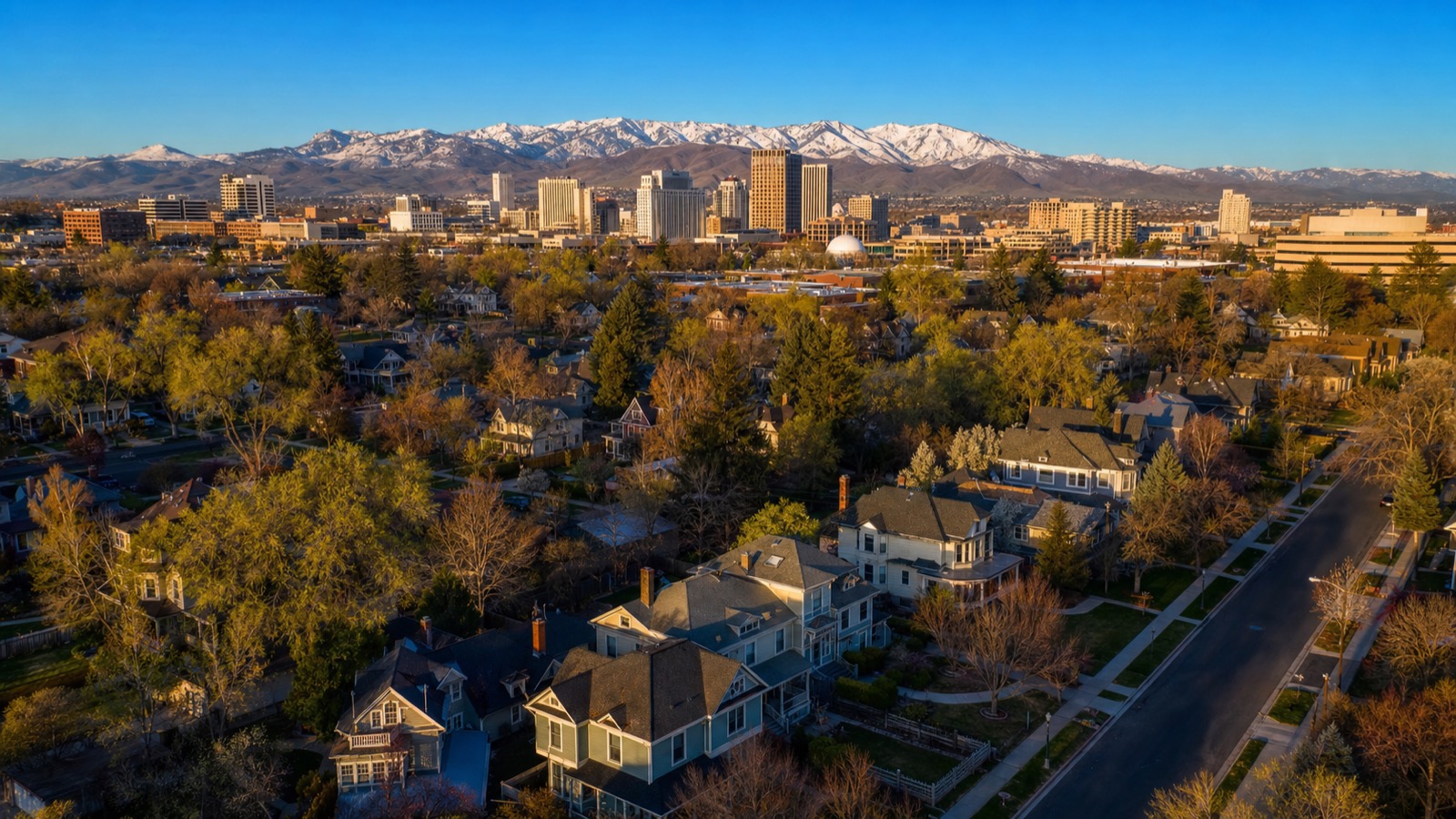
ZIP 89502 is the centre of gravity with nineteen properties. It covers Midtown, the corridor around the Renown medical campus and the older neighbourhoods south of the river, and it carries everything from a $550,000 duplex to a $2.7 million pair of eight-unit buildings. The tenant base is the most diverse in the region — medical workers, service staff, young professionals — and the buildings run from 1920 to 1985. If you are going to spend one Saturday driving inventory, spend it here and in the Midtown Reno blocks.
Central Sparks at 89431 is the value entry with fifteen properties at a $649,000 median, and it holds the oldest stock in the region. Buildings there in the current data were constructed in 1903, 1915, 1917, 1923, 1935, 1936, 1937 and 1963. That is not a disqualifier — several of those closed at or near asking — but it means the inspection matters more than the spreadsheet. Three duplexes there were listed between $525,000 and $550,000, the cheapest conventional two-unit product in either city.
ZIP 89509, Old Southwest Reno, is the premium end. Five properties at a $1,015,000 median, including triplexes that closed at $970,000 and $1,000,000 and a fourplex at $1,015,000. You are paying for the best-located rental real estate in the metro — walkable, tree-lined, close to downtown and the river — and the rent premium is real but rarely large enough to make the cap rate competitive with Sparks. This is an appreciation play more than a yield play. Our Old Southwest Reno page covers the neighbourhood in detail.
ZIP 89512 near the university holds the fourplex cluster: two at $715,000 and $740,000, a $725,000 income property advertising a 7.2 percent cap on in-place income, and a 1918 triplex at $1,050,000 that has been listed for 504 days. Student-adjacent rentals carry their own rhythm — August turnover, more wear, easier lease-up — and they are a specialist's product rather than a beginner's.
What Rents Can You Actually Collect on a Reno Unit?
This is where most out-of-state pro formas break, because the rent assumptions are pulled from listing-site averages that include newer product the small multifamily stock cannot match.
Against MLS-listed rentals in September 2026, Reno showed a median asking rent of $1,745 on one-bedroom units, $2,100 on two-bedrooms and $2,898 on three-bedrooms. Sparks showed $1,742 on two-bedrooms and $2,700 on three-bedrooms, with no one-bedroom listings at all in the sample. Those figures come from a small pool — 49 active rental listings in Reno and 36 in Sparks — because most Northern Nevada rentals are leased off-market by property managers rather than through the MLS, so treat them as a directional ceiling rather than a market average.
The ceiling caveat matters. MLS-listed rentals skew newer and better-presented than the median unit in a 1949 duplex, which typically has smaller rooms, older kitchens, window air conditioning or a wall unit, and no in-unit laundry. A realistic underwriting rent for a two-bedroom unit in an older Sparks or Midtown duplex generally sits below the $2,100 MLS median, and the honest way to establish it is to have your agent pull the actual leased comps for that submarket and vintage rather than the asking prices.
The unit mix on the current inventory tells you what you would be renting. Among the active listings with recorded bedroom counts, the duplexes ran two to four bedrooms in total across both units — meaning mostly one-bedroom and two-bedroom units — while the fourplexes showed six to eight bedrooms total, so predominantly two-bedroom units. One Sparks duplex advertised two separate one-bedroom, one-bath residences. Another listing at $391,500 in 89512 described two single-family structures on a third-acre parcel with mixed-use zoning.
For an underwriting sanity check, take the $594,300 median duplex sale and assume two two-bedroom units. At an optimistic $2,100 each, gross scheduled rent is $50,400 a year, or 8.5 percent of price. At a more realistic $1,800 each, it is $43,200, or 7.3 percent. Those gross figures are where the analysis starts, not where it ends, and the next section takes them through to the number that actually matters.
Does the Math Work at Today's Mortgage Rates?
Sometimes, and rarely on the first pass. The honest answer depends almost entirely on the down payment and on whether you live in one of the units.
Start with financing. According to Freddie Mac's Primary Mortgage Market Survey, the 30-year fixed averaged 6.76 percent and the 15-year 6.09 percent in the week ending September 10, 2026. Investment-property financing on a two-to-four-unit building prices above that headline: lenders apply loan-level adjustments for both the non-owner-occupied purpose and the unit count, so an investor should plan on a meaningfully higher rate than an owner-occupant sees, plus a down payment that commonly runs 20 to 25 percent.
Run the median duplex. At $594,300 with 25 percent down, the loan is $445,725. At an investor rate around 7.5 percent on a 30-year term, principal and interest land near $3,117 a month, or roughly $37,400 a year. Against a realistic $43,200 gross scheduled rent, you have about $5,800 before a single other expense.
Then subtract the expenses that an optimistic pro forma leaves out. Property tax on a rental in Washoe County, insurance on an older multi-unit building, water and sewer if the units share a meter, vacancy at five to eight percent, maintenance on a 1949 structure, capital reserves for the roof and the sewer lateral, and management at eight to ten percent of collected rent if you are not local. On that duplex those lines comfortably exceed $5,800, which means the median deal at 25 percent down is negative on cash flow in year one.
That is not a reason to avoid the segment. It is a reason to be precise about which deal you are buying and why. The paths that do work in this market are narrow and specific: buy below the median with a larger down payment; buy a building with genuine below-market in-place rents and a plan to bring them to market; buy the fourplex rather than the duplex, where the per-door cost is lower; or live in one unit, which changes the financing entirely. The last of those is the strongest lever available and it gets its own section below.
What Cap Rate Should You Expect, and Which Listings Advertise One?
Five of the 33 active listings mentioned a cap rate in their public remarks. That is the whole set, and it is worth understanding why the number is scarce.
A cap rate is net operating income divided by price, and it is only meaningful when the income is real and the expenses are complete. On small multifamily, sellers frequently advertise a cap rate built from gross rents minus a partial expense list, or from pro forma rents the building has never achieved. One current listing states a 7.2 percent cap rate on in-place income, and the phrase "in-place" is doing important work — it distinguishes that listing from the two others in the inventory that describe pro forma projections. Another Sparks duplex makes the point explicitly in its remarks, saying it is priced on actual in-place income rather than pro forma projections, which tells you how common the opposite practice is.
The verification sequence is not complicated, but it has to be run. Ask for the rent roll and the last twelve months of actual operating statements, not a one-page summary. Ask for copies of the leases, because a rent roll is a spreadsheet and a lease is a contract. Confirm which utilities the owner pays, since a shared water heater or a single water meter shifts a real cost onto the landlord. Confirm the actual property-tax bill after your purchase rather than the seller's current bill, for the reason set out two sections below. Then rebuild the cap rate yourself from those documents.
As a calibration: with gross scheduled rents on a median duplex around 7.3 to 8.5 percent of price, and a normal expense load on older small multifamily running somewhere around 35 to 45 percent of collected rent once taxes, insurance, utilities, maintenance, vacancy and management are included, a defensible cap rate on this inventory typically lands in the four-to-six percent range. A listing advertising materially more than that is either genuinely mispriced, which happens, or it is not counting something.
Four listings described themselves as fully occupied and five mentioned a new roof, both of which are worth real money and worth verifying. Occupancy at close is a due-diligence item confirmed with estoppel certificates from the tenants, not a marketing claim.
How Does Living in One Unit Change the Down Payment?
Dramatically, and it is the single largest advantage available in this segment.
A two-to-four-unit property that you occupy as your primary residence is eligible for owner-occupied financing. According to the U.S. Department of Housing and Urban Development, FHA insures mortgages on one-to-four-unit properties where the borrower occupies one of the units as a principal residence, and FHA's minimum down payment is 3.5 percent for borrowers meeting the credit requirements. On a $594,300 duplex, that is roughly $20,800 down rather than roughly $148,600 at 25 percent — a difference of about $128,000 in cash at the table.
Two FHA specifics matter on multi-unit purchases. The first is the self-sufficiency rule, which applies to three-and-four-unit properties: the net rental income from the units must cover the mortgage payment, which in practice screens out a good share of triplexes and fourplexes and is why the duplex is often the easier FHA purchase. The second is mortgage insurance, which on FHA loans is both an upfront premium and an annual premium that persists for the life of the loan at typical down payments, and which must go in your monthly math from the start.
Veterans have the better version of this. According to the U.S. Department of Veterans Affairs, VA-guaranteed loans may be used for properties of up to four units where the veteran occupies one as a home, with no down payment required for eligible borrowers and no monthly mortgage insurance, though a funding fee generally applies. On the Reno and Sparks inventory, a VA-eligible buyer purchasing a fourplex and living in one unit is running the most favourable structure available in this market by a wide margin.
Five active listings used house-hacking or owner-occupancy language in their remarks, including one $675,000 Reno property described as two separate homes on a single parcel with a history of low turnover. Those are the listings to look at first if this is your path, because a seller who has already framed the property this way has usually thought about the occupancy logistics.
The constraint is real and worth stating plainly: you have to actually live there, on a timeline the loan specifies, and in a building where you will share a wall and a driveway with your tenants. That suits some people and does not suit others, and it is a lifestyle decision before it is a financing one.
Why Does the 3 Percent Property-Tax Cap Not Apply to Your Rental?
This is the rule that surprises out-of-state investors most often, and it has a direct effect on year-one cash flow.
Nevada's property-tax abatement is not one cap but two. According to NRS 361.4723, a partial abatement limits the annual increase in the tax bill on an owner's primary residence to 3 percent, and only one property in the state may be selected as that primary residence. A separate provision applies a different, higher cap — up to 8 percent — to other property, including residential rentals that do not qualify as the owner's primary residence.
Two practical consequences follow. First, the seller's current tax bill is a poor guide to yours, though not because the sale resets anything. Both caps are measured against the prior year's bill, and a sale does not reset that base. What changes is which cap applies: if the seller claimed the 3 percent primary-residence cap, as an owner living in one unit may have, the building moves to the general cap of up to 8 percent once you hold it as a rental. According to the Washoe County Assessor, a new owner is placed at the higher cap until a qualifying claim is filed, so underwrite from the current bill escalated at up to 8 percent a year rather than at the seller's 3 percent. Second, the gap compounds. On a long hold, a rental escalating at up to 8 percent a year against a primary residence capped at 3 percent produces a materially different expense line a decade out, and that belongs in any model longer than a year.
There is a partial exception worth knowing. Nevada's statutes provide for residential rentals charging rent at or below defined affordable thresholds to qualify for the lower 3 percent cap, which is claimed through the county rather than granted automatically. If your rents sit near that threshold, ask the Washoe County Assessor what the current qualifying figures are and what the claim process requires. Most market-rate landlords will not qualify, but it costs one phone call to find out.
The wider tax picture still favours Nevada, and it is why so many of these calls originate in California. There is no state income tax on the rental income itself, and no state-level capital gains tax on the eventual sale. For an investor comparing a Reno fourplex against a Sacramento one, that difference frequently outweighs the cap distinction discussed above. Just do not let the headline advantage hide the move from the 3 percent cap to the higher general cap, which shows up in your first tax bill as an owner.
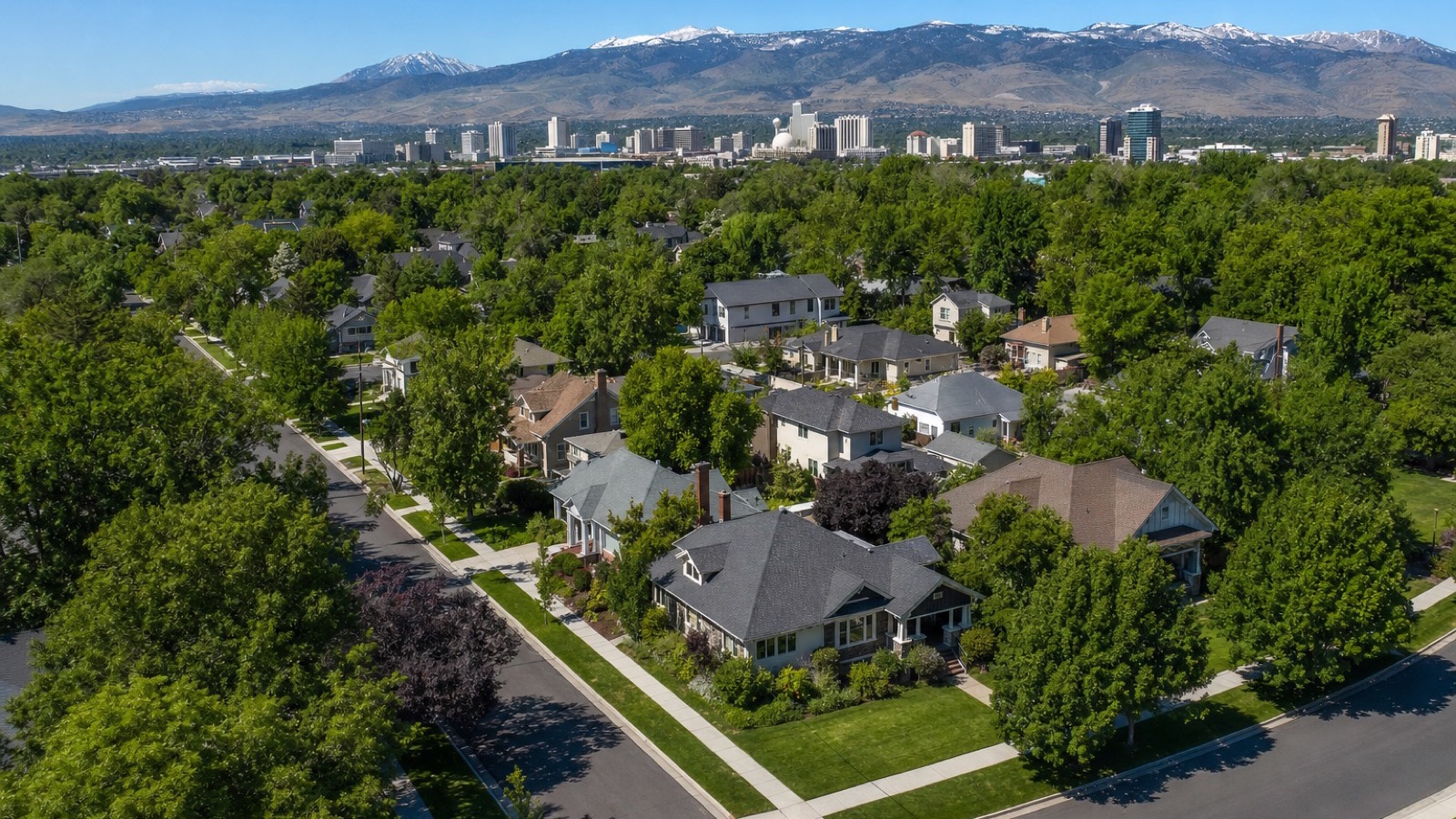
For the county framework behind the tax estimate, read Washoe County property taxes explained.
What Breaks on a 1949 Reno Duplex?
The median active income property in this market was built in 1949, and twenty-nine of the thirty-three predate 1978. That single fact should shape your inspection budget, your capital reserve and your disclosure obligations.
Start with the legal one. Federal law requires sellers and landlords of most housing built before 1978 to disclose known lead-based paint and hazards and to provide the EPA-approved pamphlet, and buyers get an opportunity to conduct an assessment. According to the U.S. Environmental Protection Agency, the disclosure rule covers target housing built before 1978, and renovation work that disturbs painted surfaces in such housing is subject to lead-safe work practice requirements by certified firms. That is not a formality on a building you intend to renovate unit by unit between tenancies — it changes who can do the work and what it costs.
Then the systems, in the order they tend to fail. Sewer laterals on pre-war buildings in Midtown and central Sparks are frequently original clay, and a camera scope before closing is the cheapest insurance in this segment. Galvanised supply piping restricts flow and eventually leaks. Electrical panels and knob-and-tube remnants affect both safety and insurability, and some carriers will decline a building outright on panel type. Roofs, water heaters and heating systems all have finite lives and several of the current listings advertise a new roof precisely because it is a known buyer concern.
Two multi-unit-specific items deserve their own line. Shared utilities are a recurring cost transfer: exactly one active listing mentioned separate metering, which implies most of this inventory has some shared service, and a single water meter or a shared water heater puts that cost permanently on the landlord. And foundation, drainage and site grading matter more on older Truckee Meadows buildings than buyers expect, particularly on the 1903-to-1937 Sparks stock.
Budget accordingly. On a seventy-five-year-old two-to-four-unit building, a capital reserve well above the one-percent-of-value rule of thumb is prudent for the first several years, and the inspection should include a sewer scope, a roof assessment and an electrical evaluation as standard rather than as optional add-ons.
Before assigning a renovation reserve, review the Northern Nevada home-inspection guide.
How Do Nevada's Landlord Rules Differ From California's?
Meaningfully, and almost entirely in the landlord's favour, which is a large part of why California investors look here. The important thing is to learn the actual framework rather than assuming the absence of California's rules means an absence of rules.
According to NRS Chapter 118A, residential landlord and tenant relations in Nevada are governed by that chapter, which sets out the obligations of both parties, the habitability standard, the rules on security deposits and the required notices. Evictions run under NRS Chapter 40. According to that chapter, Nevada's summary eviction process is faster than what a California landlord is used to, with specific notice periods that vary by cause. Get the notice wrong and you restart, so this is an area where a local property manager or a landlord-tenant attorney earns their fee on the first matter.
Nevada has no statewide rent control and no statewide just-cause eviction requirement of the sort California imposes, which is the structural difference driving most of the migration of investor capital. What the state does regulate closely is the mechanics: deposit limits and return timelines, required disclosures, entry notice and the handling of abandoned property. Those are the rules that generate disputes here.
Short-term rental is the area most likely to catch an investor out, because the answer differs by jurisdiction within the same metro. The City of Reno, the City of Sparks and unincorporated Washoe County each regulate short-term rentals separately, with their own permitting, density and occupancy rules, and a strategy that works on one side of a city boundary may be prohibited on the other. If your underwriting depends on short-term rental income, verify the specific parcel's jurisdiction and current rules before you remove contingencies, and do not rely on the fact that a current owner is operating one.
For a broader treatment of the rental market fundamentals — rents, tenant base and the Tesla and Reno industrial economy driving them — see our Reno investment property guide, which covers single-family rentals in depth alongside this segment.
Our guide to Reno and Sparks rent increases adds renewal and notice questions to the landlord's operating checklist.
What Does the Sold Data Say About Negotiating Room?
More room than the housing market offers, and the gap is measurable.
| Measure | Income and multifamily | Single-family resale |
|---|---|---|
| Closings in the window | 23 | 1,573 |
| Median sale as a share of list | 97.4 percent | 100.0 percent |
| Mean sale as a share of list | 95.9 percent | 99.4 percent |
| Closed at or above asking | 6 of 23 | 936 of 1,573 |
| Closed below asking | 17 of 23 | 637 of 1,573 |
| Median days on market | 21 | 42 |
| Median sale price | $745,000 | $620,000 |
| Median sold price per square foot | $313 | $340 |
Seventeen of twenty-three closings came in under asking, against a housing market where a clear majority hit or beat it. The mean landed at 95.9 percent, so a four-point discount from list was closer to normal than exceptional. The individual spreads confirm it: sales closed at $475,000 against a $550,000 ask, $745,000 against $850,000, $897,500 against $995,000, $1,015,000 against $1,175,000 and $1,020,000 against $1,125,000.
There is a straightforward reason, and it is the pro forma problem again. A house is priced against recent comparable sales that both parties can verify. An income property is often priced against a projection the buyer's own underwriting will not support, so the negotiation becomes a process of the buyer walking the seller back to in-place income. That process shows up in the data as a four-point average discount.
The exception is the well-documented, fully-occupied building at a defensible price. Six of the twenty-three closed at or above asking, and several traded with zero days on market, which in this segment usually means a prepared buyer moving on a property that priced honestly from day one.
The tactical read: on a listing priced on pro forma, build your offer from the rent roll and the operating statements and be prepared to justify the gap in writing, because the seller will need to defend the decision to themselves. On a listing that has been on the market 120, 243 or 504 days — and the current inventory contains all three — the seller has already had that conversation with the market, and your offer is the one that ends it.

What Should You Verify Before You Write an Offer on a Reno Duplex?
Twelve items, grouped by what they protect.
On the income: the rent roll, the last twelve months of operating statements, copies of every lease, and estoppel certificates from each tenant confirming rent, deposit and term. A rent roll that disagrees with the leases is the most common early warning in this segment.
On the expenses: the actual utility bills with a clear answer on which services are shared and who pays them, the current insurance quote on the specific building rather than a generic estimate, and the property-tax projection after transfer at the applicable cap rather than the seller's existing bill.
On the building: a full inspection, a sewer camera scope, a roof assessment and an electrical evaluation, all treated as standard on pre-1978 stock. Add a lead-based paint assessment where you intend to renovate.
On the legal and regulatory: confirmation of the zoning and the legal number of units, because unpermitted conversions exist in this inventory and one current listing openly describes a bonus unpermitted living space. Confirm the jurisdiction — Reno, Sparks or unincorporated Washoe County — and its short-term rental rules if that is part of your plan. Confirm any HOA. And get the federal lead-paint disclosure and the Nevada seller disclosures in hand rather than waived.
On the financing: confirm early whether the property is one-to-four units or five-plus, because that single fact determines your loan type, your down payment, your rate and your appraisal method, and discovering it late has killed more of these deals than any inspection finding.
Where an offer is unpermitted-unit-dependent or pro-forma-dependent, write the contingency to cover the specific risk rather than relying on a general inspection clause. And if you are buying from out of state, line up the property manager before the offer, not after closing, because their read on achievable rent for that specific vintage and submarket is the best underwriting check available.
Frequently Asked Questions
How much does a duplex cost in Reno?
Active duplex listings in Reno and Sparks ran from $525,000 to $1,325,000 on September 12, 2026, with the eight duplexes that closed between March and August 2026 landing at a $594,300 median. The cheapest conventional two-unit inventory is in central Sparks, ZIP 89431, where three duplexes were listed between $525,000 and $550,000. For context, the median single-family resale across both cities over the same period was $620,000, so a duplex costs roughly what a house costs and comes with two rent streams.
Can you get an FHA loan on a duplex or fourplex in Reno?
Yes, provided you occupy one of the units as your principal residence. FHA insures mortgages on one-to-four-unit owner-occupied properties, with a minimum down payment of 3.5 percent for qualifying borrowers — roughly $20,800 on the $594,300 median duplex against about $148,600 at a 25 percent investor down payment. Two caveats: three-and-four-unit purchases must satisfy FHA's self-sufficiency test, where net rental income covers the mortgage payment, which screens out many triplexes and fourplexes; and FHA mortgage insurance includes an upfront and an annual premium.
What cap rate do Reno duplexes and fourplexes actually produce?
Only five of the 33 active listings advertised a cap rate at all, and the ones that do are not consistent about whether the figure reflects in-place or pro forma income — one explicitly advertised 7.2 percent on in-place income, which is unusual enough to be a selling point. Working from the data, gross scheduled rents on a median duplex run about 7.3 to 8.5 percent of price, and once taxes, insurance, shared utilities, vacancy, maintenance on pre-1978 stock and management are subtracted, a defensible cap rate on this inventory typically lands in the four-to-six percent range.
Is it better to buy a duplex or a single-family rental in Reno?
They solve different problems. The duplex gives you two rent streams for roughly the price of one house, diversifies your vacancy risk across two tenants, and costs less per square foot — $313 against $340 on the March-to-August closings. The single-family rental is newer, simpler to maintain, easier to finance, easier to sell to an owner-occupant, and historically appreciates against a deeper buyer pool. The deciding factor is usually the building age: the median active income property here was built in 1949, and a seventy-five-year-old building carries a maintenance profile a 2005 house does not.
Do Nevada's property-tax caps apply to rental property?
Not the 3 percent one, in most cases. NRS 361.4723 limits the annual tax-bill increase on an owner's primary residence to 3 percent, and only one property in Nevada may be claimed as that residence. Other property, including most residential rentals, falls under a separate provision with a higher cap of up to 8 percent. There is a statutory exception for rentals charging at or below defined affordable-rent thresholds, claimed through the county rather than granted automatically. A sale does not reset the tax base, but a rental you do not live in usually sits on the higher cap, so underwrite from the current bill escalated at up to 8 percent a year rather than at the seller's 3 percent.
Where should I look for multifamily in Reno and Sparks?
Six ZIP codes carry essentially all of it. ZIP 89502 covering Midtown and the Medical District is the largest with nineteen properties at an $859,950 median and the widest range of building types. Central Sparks at 89431 is the value entry with fifteen properties at $649,000 and the oldest stock. ZIP 89503 in Old Northwest Reno has ten. ZIP 89512 near the university holds the fourplex cluster with six. ZIP 89509 in Old Southwest is the premium submarket at a $1,015,000 median, bought for location and appreciation rather than yield.
How much negotiating room is there on a Reno income property?
Considerably more than on a house. Of the 23 income and multifamily closings between March and August 2026, seventeen closed below asking and only six at or above, with a median sale at 97.4 percent of list and a mean at 95.9 percent. Single-family resales over the same window closed at a 100 percent median with a majority at or above asking. Individual spreads included $475,000 against a $550,000 ask and $1,015,000 against $1,175,000. The reason is that income property is frequently priced on pro forma rents the buyer's underwriting will not support.
What should I inspect on an older Reno duplex?
Treat the sewer scope, roof assessment and electrical evaluation as mandatory rather than optional, because twenty-nine of the thirty-three active buildings predate 1978 and the median was built in 1949. Original clay sewer laterals, galvanised supply piping and outdated electrical panels are the three findings that most often reprice a deal, and some insurers decline older panel types outright. Add a lead-based paint assessment if you intend to renovate, since federal lead-safe work practice rules apply to pre-1978 housing. Confirm whether utilities are separately metered — only one active listing said they were.
Which Sources Inform This Reno Small Multifamily Guide?
Every count, price, ratio and days-on-market figure above was measured directly from the NNRMLS-fed listing data for Reno and Sparks on September 12, 2026, covering all 33 active income and multifamily listings and the 23 such sales that closed between March 1 and August 31, 2026, with unit type, year built, square footage and public remarks read listing by listing. The single-family comparisons use the 1,573 resale closings in the same cities over the same window, and the rent figures come from the 49 active Reno and 36 active Sparks MLS-listed rentals on the same date — a small, newer-skewing sample noted as such in the text. Live inventory changes daily; the Reno multi-family listings and Sparks multi-family listings carry current numbers.
Financing and regulatory sources: Freddie Mac for the Primary Mortgage Market Survey averages of 6.76 percent on the 30-year and 6.09 percent on the 15-year in the week ending September 10, 2026; the U.S. Department of Housing and Urban Development for FHA one-to-four-unit owner-occupancy and down-payment rules; the U.S. Department of Veterans Affairs for VA multi-unit eligibility; the U.S. Environmental Protection Agency for pre-1978 lead-based paint disclosure and renovation requirements; NRS 361.4723 for the primary-residence and other-property tax abatement caps; NRS Chapter 118A for landlord and tenant obligations; NRS Chapter 40 for the summary eviction process; and the Washoe County Assessor for assessed values, district rates and the affordable-rent abatement claim.
For the wider Northern Nevada rental picture, including single-family rentals, the Tesla and industrial employment base and short-term rental rules, see the Reno investment property guide. Investors weighing the two metros should read Reno versus Las Vegas, and anyone new to the market should start with the Reno relocation guide.
Want the rent roll and operating statements read before you write, and the sewer scope ordered before your contingency runs? Call Nevada Real Estate Group at (775) 277-2120, or browse the Reno multi-family listings and send us the two or three worth underwriting.