History Lovers
- Live in a National Historic Landmark District
- Victorian townsite homes packed with character
- C Street, V&T Railroad, and Comstock heritage
- Walkable historic downtown
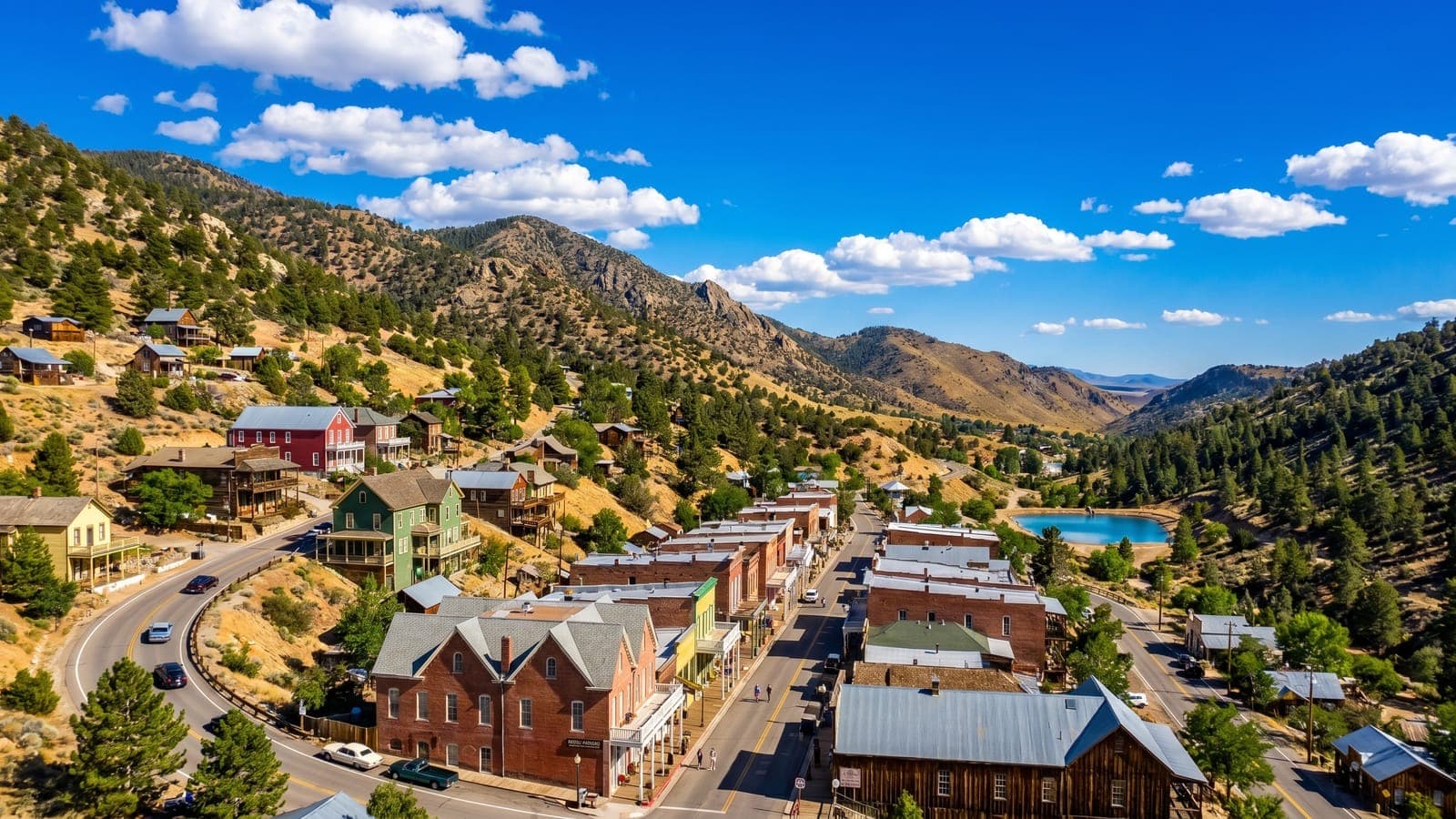
Nevada Real Estate Group — your Northern Nevada team for Virginia City real estate. Search homes for sale in the historic heart of the Comstock: Victorian townsite homes along C Street, custom mountain estates on acreage in the Virginia City Highlands, and one-of-a-kind heritage properties in Storey County.
MEDIAN LIST PRICE
$450K
RSAR / NNRMLS, June 2026
DAYS ON MARKET
60
RSAR / NNRMLS, June 2026
TO RENO
40 min
via Geiger Grade SR-341
ELEVATION
6,200 ft
U.S. Geological Survey

Property research
Verify for your address
Confirm current school assignments, association documents, parcel taxes, and insurance with the applicable sources.
Last updated
June 20, 2026
Individual data periods may differ from the page update date.
KEY TAKEAWAYS
Virginia City, seat of Storey County and the historic heart of the Comstock Lode, holds roughly 800 townsite residents per the Nevada State Demographer, with a median list price near $450,000 and homes averaging about 60 days on market per Reno/Sparks Association of REALTORS. The five takeaways below capture what those numbers mean for buyers weighing this town.
Last updated June 2026 · Sources: RSAR, U.S. Census, Nevada State Demographer
Virginia City carries roughly 20-40 active homes in mid-2026 according to Reno/Sparks Association of REALTORS and NNRMLS data, ranging from restored townsite homes in the $400K–$600K band to custom acreage estates in the Virginia City Highlands from the mid-$400Ks past $1.2M. The eight newest listings appear below, refreshed daily, with every active property searchable in our MLS portal.
PRICE DISTRIBUTION
The Virginia City median list price sits near $450K per Reno/Sparks Association of REALTORS June 2026 NNRMLS data, with townsite homes clustered in the $380K–$600K band and Highlands acreage estates extending well above. Each card below shows current active-listing counts by price range, so you can gauge competition at your budget before touring areas.
Virginia City's active listings break down primarily into historic single-family homes, custom estates, and vacant acreage — concentrated in the $400K–$900K range with Highlands land extending higher — each link opens our live MLS search pre-filtered for that slice, with counts updated daily from Reno/Sparks Association of REALTORS and NNRMLS data.
Tap an area to see current listings, price ranges, and what daily life looks like inside.
Updated daily · 30 active listings · MLS data
STAY AHEAD OF THE MARKET
Custom alerts by area, price, beds, baths, and home features — no spam, unsubscribe anytime. Virginia City inventory is thin and specialty-driven, so when a restored townsite home or a Highlands acreage estate hits the market, buyers who see it within hours hold a real edge in a market where the right property rarely lasts.
Before choosing a home, request address-specific school assignments for the intended school year from the district. Confirm grade levels, program eligibility, enrollment requirements and any boundary changes. Use the exact property address, including any unit number, and ask the district to confirm the assignment before making a purchase decision.
Find your school district · View Nevada Report Card
Compare each school’s programs and published results for the same reporting year. Proximity to a school does not guarantee admission; contact charter, magnet and private schools about their application and enrollment requirements.
CRIME DATA
Review reports from the law-enforcement agency serving the address. Check the reporting period, area covered, offense definitions and completeness before comparing locations. When requesting local information, provide the property address and ask which agency and geographic boundary each report represents, along with any known reporting gaps.
The FBI publishes crime and law-enforcement statistics through its Crime Data Explorer. Its guidance cautions against using crime totals alone to rank communities: reporting practices and local conditions affect comparisons.
A citywide statistic does not establish conditions at a particular home. Ask the local agency about current reports for the area and gaps in the available data. Missing records do not mean zero crime, and a gated entrance does not establish a safety rating.
FBI crime data resources · FBI guidance on comparing communities
Virginia City offers a one-of-a-kind life in a preserved 1859 silver-mining boomtown on the Comstock Lode, with Victorian townsite homes and large-acreage mountain estates above town. The Storey County seat draws history lovers and acreage buyers who want heritage and space, with Nevada's zero state income tax adding five-figure annual savings at a $450K median.
Virginia City is known as the boomtown of the Comstock Lode — the richest silver strike in American history. Today it is a National Historic Landmark District famous for C Street's saloons and boardwalks, Piper's Opera House, the Virginia & Truckee Railroad, mining-history museums, and its ties to a young Mark Twain, who got his start at the local Territorial Enterprise newspaper.
Virginia City fits history lovers who want to live inside a living museum, custom-home and acreage buyers drawn to the Virginia City Highlands plateau, heritage-tourism business owners, and households who prize mountain living and open space over big-metro convenience. It rewards buyers willing to trade a 40-minute Geiger Grade commute for character and land no other Northern Nevada town can offer.
Daily life in Virginia City runs at a small-mountain-town pace — a walk along C Street's boardwalks for coffee or provisions, a 40-minute drive over the Geiger Grade to Reno or down SR-341 to Carson City for major shopping and services, and the open high country of the Virginia Range just outside the door. It is quiet, historic, and deeply community-oriented, with the metro's full resources within reach when needed.
Virginia City sits on the Comstock Lode in the Virginia Range, Storey County, Nevada — about 40 minutes south of Reno via the Geiger Grade (SR-341) and 40 minutes north of Carson City. Elevation approximately 6,200 ft. ZIP code 89440.
Quick Answer
Virginia City offers something no other Northern Nevada town can: life inside a National Historic Landmark District on the Comstock Lode, with Victorian townsite homes and large-acreage custom estates on the Virginia City Highlands plateau. Buyers gain genuine heritage, mountain space, and Nevada's zero state income tax — five-figure annual savings versus California — all 40 minutes from Reno and Carson City. For history lovers and acreage buyers, Virginia City delivers character and land at a $450K median that the Reno-Sparks metro can't match.
Source: Nevada State Demographer
According to the U.S. Census Bureau, the Virginia City area holds roughly 800 townsite residents (Storey County totals around 4,000) with a median household income near $70,000, drawing longtime Comstock families, heritage-tourism business owners, and acreage buyers from the Reno-Sparks metro and California. The median age skews older, and owner-occupancy is strong versus urban Nevada markets.
Home values reflect the area's specialty character — restored Victorian properties and large-parcel Highlands estates command premiums tied to history, views, and land rather than tract pricing. The workforce blends tourism, hospitality, and small business in town with commuters who drive the Geiger Grade to Reno-Sparks employment or work at the Tahoe-Reno Industrial Center in northern Storey County.
Source: U.S. Census Bureau ACS estimates & Nevada State Demographer · Updated
POPULATION & GROWTH
Virginia City's townsite population has held remarkably steady for decades — historic-district preservation and limited buildable land keep the town small by design. Storey County overall has grown through the Tahoe-Reno Industrial Center in its northern reaches, while the Virginia City Highlands plateau adds gradual residential growth as custom homes are built on large parcels.
Growth in the Virginia City area concentrates on the Highlands plateau, where custom homes continue to be built on 1-, 10-, and 40-acre parcels. The historic townsite itself is largely built out and protected by historic-district standards, so inventory there turns over through resale of period homes. Storey County's industrial corridor in the north drives the county's broader population and tax-base growth, but Virginia City proper stays intentionally small.
Sources: Nevada State Demographer and U.S. Census Bureau ACS. Historical figures are townsite/CDP-level approximations; projection reflects State Demographer planning. Last updated June 2026.
MARKET TRENDS · LAST 12 MONTHS
Median list price, days on market, and active listings from Northern Nevada Regional MLS data updated monthly. Virginia City's small, specialty market sees its median move with the mix of townsite homes versus large-acreage Highlands estates — the charts below show the past twelve months.
Median List Price
+4.7% YoY (May 2025 → May 2026)
Source: Las Vegas REALTORS
Days on Market
55 → 60 days YoY — specialty pace
vs the prior year
Source: Las Vegas REALTORS
Active Listings
~5-12 closings/month, seasonal pattern
vs the prior year
Source: Las Vegas REALTORS
A RARE MARKET
Market Competitiveness
Virginia City is a slow-paced, specialty market — homes average about 60 days on market per NNRMLS data, with demand concentrated among history lovers and acreage buyers rather than mass first-time-buyer volume. Well-priced townsite homes near C Street can move quickly, while large custom Highlands estates take longer as the high-country buyer pool narrows.
Virginia City is not for every buyer — it suits households that value heritage, character, and mountain space over big-metro convenience, and can tolerate the 40-minute Geiger Grade commute and high-country living. Six buyer profiles below match lifestyles to what Virginia City offers, followed by the honest pros and trade-offs our team walks every client through.
Ready to explore homes in Virginia City? Nevada Real Estate Group knows the Comstock market inside and out — from historic townsite homes to large-acreage estates in the Virginia City Highlands.
Start Your Virginia City SearchNeighborhood Comparison
A side-by-side comparison of Virginia City's primary residential areas — median price, lifestyle fit, and inventory — using active-listing data refreshed monthly via Reno/Sparks Association of REALTORS and NNRMLS. The historic townsite and the Virginia City Highlands serve very different buyers, and nearby Gold Hill and Silver City extend the Comstock's historic-canyon character.
| Submarket | Median Price | $ / Sq Ft | Days on Market | Active Listings | Best For |
|---|---|---|---|---|---|
| Historic Townsite (C Street) | $480,000 | ~$300 | 55 | 12 | Victorian · Historic · Walkable |
| Virginia City Highlands | $650,000 | ~$240 | 70 | 11 | Acreage · Custom · Mountain Views |
| Gold Hill | $520,000 | ~$280 | 60 | 4 | Historic · Canyon · Character |
| Silver City / Comstock Outlying | $450,000 | ~$250 | 65 | 6 | Historic · Rural · Arts |
| Storey County Acreage | $550,000 | ~$230 | 75 | 5 | Large Lots · Off-Grid · Horses |
| Townsite Restoration Opportunities | $420,000 | ~$270 | 80 | 3 | Project Homes · Historic · Value |
Source: Reno/Sparks Association of REALTORS and NNRMLS data, June 2026. Median prices based on active listings; days on market from closed sales.
Neighborhood Deep Dive
Submarket 1
The heart of the Comstock — Victorian homes, miner's cottages, and restored period properties along and around C Street. Buyers here want character and walkability inside a National Historic Landmark District, with heritage tourism and festivals at the doorstep.
Browse Historic Townsite (C Street) homes →Submarket 2
A high plateau roughly five miles north of town, the Highlands offer custom mountain homes on 1-, 10-, and 40-acre parcels at 6,200–7,500 feet, with sweeping Virginia Range views and room for horses and outbuildings — a true high-country lifestyle within commuting range.
Browse Virginia City Highlands homes →Submarket 3
Just down the grade from Virginia City, Gold Hill is a tiny historic Comstock community with period homes, the famed Gold Hill Hotel, and the V&T Railroad depot — character-rich canyon living a few minutes from C Street.
Browse Gold Hill homes →Submarket 4
A small arts-colony hamlet in Gold Canyon south of Virginia City, Silver City offers restored historic structures and custom homes on irregular canyon lots — quiet, lived-in authenticity for buyers who want Comstock history without the tourist bustle.
Browse Silver City / Comstock Outlying homes →Submarket 5
Rural parcels across the broader Comstock and Virginia Range — large lots, off-grid potential, and permissive land use for buyers who want maximum space and privacy in the high desert.
Browse Storey County Acreage homes →Submarket 6
Period properties in need of restoration along the historic district's side streets — value entry points for buyers willing to invest in bringing a Comstock home back to life under historic-district standards.
Browse Townsite Restoration Opportunities homes →Submarket 7
The Highlands is Virginia City's primary area for new building — custom mountain homes on 1-, 10-, and 40-acre parcels at 6,200–7,500 feet, with sweeping Virginia Range views and a property owners association overseeing roads. Lots range from build-ready acreage to completed estates; expect well, septic, and propane systems on most properties.
Browse Virginia City Highlands (custom-home acreage plateau) homes →Virginia City's residential footprint (ZIP 89440) centers on the historic C Street townsite, with the Virginia City Highlands plateau roughly five miles north and the historic communities of Gold Hill just down the grade and Silver City to the south. The map below pins each area in the Virginia Range, about 40 minutes from both Reno and Carson City.
STILL DECIDING?
BY ZIP CODE
Virginia City and its surrounding Comstock communities are served primarily by ZIP code 89440, which covers the historic townsite, the Virginia City Highlands, and Gold Hill. The table below shows the current market snapshot for that ZIP, so you can benchmark Virginia City against the broader Northern Nevada region before deciding on location.
| ZIP | Primary Area | Median Price | $ / Sq Ft | Days on Market | Active | YoY |
|---|---|---|---|---|---|---|
| 89440 | Virginia City · Historic Townsite · Virginia City Highlands · Gold Hill | $450K | ~$260 | 60 | 30 | +4.7% |
Source: Reno/Sparks Association of REALTORS and NNRMLS. Medians from active listings; YoY from closed sales, 2026 vs 2025 year-to-date. Per-sqft figures approximate. ZIP boundaries per Storey County GIS.
New Construction
Virginia City has no tract-home subdivisions — new construction here is custom, concentrated on the Virginia City Highlands plateau where buyers build mountain homes on large parcels. The builders below represent the custom and regional firms active in the Highlands and surrounding Storey County. In the historic townsite, "building" usually means restoration held to historic-district standards.
Custom Mountain Homes
Custom builds on 1-, 10-, and 40-acre Highlands parcels
Period Restoration
Restoration of Victorian-era homes to historic-district standards
High-Country Custom
Regional custom builders experienced with snow-country sites
Regional Custom & Semi-Custom
Northern Nevada regional builder
Efficient Custom
Cost-efficient builds suited to remote acreage lots
Build-Your-Own
Buy acreage and build with a local general contractor
Mountain Character
Custom log and timber homes for the high-country setting
Sustainable Custom
Solar, well, and septic systems for off-grid mountain living
Outdoor Recreation
Virginia City sits high in the Virginia Range, surrounded by BLM open land, historic mining trails, and the high-country recreation of the Comstock — with Lake Tahoe and the Sierra a scenic drive west. The Storey County area blends heritage attractions with genuine mountain outdoor access for residents.
CITY EDGE
Historic mining roads and high-country trails wind through the Virginia Range right from town — open to hiking, horseback riding, and OHV use across BLM and public land.
IN TOWN
The famed V&T Railroad runs heritage excursions between Virginia City and Gold Hill — a living piece of Comstock history and a centerpiece of the town's tourism draw.
ALL SIDES
Bureau of Land Management public land surrounds the Comstock — open to OHV use, hunting with appropriate licenses, and backcountry exploring across the high desert.
70 MIN W
A scenic drive west through Carson City or Reno connects Virginia City to Lake Tahoe and a dozen Sierra ski resorts — world-class boating, skiing, and alpine beaches.
45 MIN E
The Carson River and Lahontan Reservoir to the east offer boating, fishing, and camping in the Lahontan Valley — a short drive down the grade from the Comstock.
IN TOWN
Mine tours, museums, cemeteries, and Piper's Opera House make the entire town an open-air heritage attraction — outdoor history at every turn along C Street.
40 MIN N
The Truckee River Riverwalk, Bartley Ranch, and Galena Creek Recreation Area are 40-50 minutes north over the Geiger Grade for residents who want developed trail and park systems.
50 MIN SW
The Carson Ranger District of the Humboldt-Toiyabe National Forest, southwest of the Comstock, offers alpine camping, hiking, and fishing in the Sierra front.
The Virginia City Lifestyle
Morning coffee along C Street's boardwalks, a V&T Railroad ride or a trail through the Virginia Range, an afternoon at a museum or a festival, and dinner with a sunset over the Comstock — all per the Storey County area's heritage calendar. Virginia City residents trade metro density for living history, mountain space, and weekends with a sense of place.
THIS WEEKEND'S OPEN HOUSES
Virginia City sellers run open houses Friday through Sunday, with historic townsite homes and Highlands acreage estates available to tour by appointment most weekends. At 60 median days on market the pace is calm, but distinctive homes still draw the right buyer quickly. Set alerts or browse all active Virginia City inventory now.
Build a budget around the particular home and your circumstances. Obtain current financing terms, property records and service quotes before comparing the cost of a move. A community average cannot establish your tax bill, insurance premium, association charges or savings.
Ask a tax adviser to review income sources, residency dates and any continuing connections to another state. California-source income can remain taxable after a move; the Franchise Tax Board explains part-year and nonresident rules. A headline tax-rate comparison does not calculate your savings.
Get the exact parcel's current tax bill and assessment record from its county. Confirm the property's abatement status and any effect of new construction, a change in use or your circumstances with the assessor. Do not apply a community-wide percentage to a purchase price or assume a tax cap is automatic.
Use lender estimates, insurance quotes, association documents and utility information for the exact address. Include maintenance, moving expenses and any special assessments in the comparison. Renting and buying involve different costs and obligations; future equity or resale gains are not assured.
Check school assignments for the enrollment year and ask about choice-program applications. Investigate parcel-specific hazards and permitted uses with the responsible agencies. Review travel routes and the features that matter to you instead of relying on a broad safety score or a neighborhood recommendation based on household type.
Discuss the homes, budget and timing you want to evaluate with the team.
Explore relocation planningRELOCATION TIMELINE
Plan the purchase and move around your circumstances and the property's verified requirements. Coordinate the transaction, possession and moving arrangements with the relevant parties. For license and vehicle questions, consult the Nevada DMV new-resident guide. Confirm your own deadlines and any exemptions directly with the agency.
Compare homes using your budget, accessibility needs, desired features and travel routes. Evaluate the particular property and surroundings using your own priorities; a neighborhood label does not establish its suitability.
Ask a lender for terms based on your circumstances and the property. Obtain the parcel tax record, insurance quotes, association charges and other recurring costs; a community-wide estimate cannot establish your payment or approval.
Discuss services, compensation, communication and touring arrangements with the agent. Confirm the details in the applicable agreement before relying on a promised service or access to a property.
Check school assignments with the district for the enrollment year and ask about separate program applications. Review parcel-specific flood, wildfire, utility, zoning and intended-use questions with the relevant agencies and service providers.
Discuss price, deposit, contingencies and the proposed schedule with your agent and lender. The signed contract determines the transaction deadlines; market averages do not promise when an offer will be accepted or a purchase will close.
Arrange appropriate inspections and review disclosures, title information, association documents and financing conditions. Investigate unresolved findings with the relevant specialist before the contractual decision deadlines.
Verify which utilities serve the address, what deposits or appointments are required, and when service can begin. Coordinate access and the moving date with the agreed possession terms and any building or association requirements.
Confirm completion and possession with the closing parties before arranging access. Consult the Nevada DMV's current new-resident guide for license, registration, documentation and exemption requirements that apply to you.
ECONOMY & JOBS
Virginia City's economy centers on heritage tourism — the historic district draws visitors year-round to C Street, the V&T Railroad, museums, and festivals. Storey County's broader economy is anchored by the Tahoe-Reno Industrial Center. Per the U.S. Bureau of Labor Statistics, Reno-Sparks MSA unemployment sits near historic lows, and many residents commute the Geiger Grade to metro jobs.
Sources: U.S. Bureau of Labor Statistics, Nevada State Demographer. Last updated June 2026.
CITY COMPARISON
If you're deciding between Virginia City and other Northern Nevada options, this covers the metrics buyers care about most. Virginia City leads on heritage and acreage, Carson City and Reno on amenities, Dayton on conventional value. Sources are RSAR, the U.S. Census, and BLS Reno-Sparks MSA.
| Metric | Virginia City | Carson City | Reno | Dayton |
|---|---|---|---|---|
| Median List Price | $450K | $525K | $575K | $400K |
| Price / Sq Ft | ~$260 | $280 | $340 | $230 |
| Days on Market | 60 | 40 | 38 | 45 |
| Population | ~800 | ~58,000 | ~275,000 | ~15,000 |
| State Income Tax | None | None | None | None |
| Median Household Income | $70,000 | $68,000 | $72,000 | $66,000 |
| To Reno | 40 min | 30 min | — | 40 min |
| New Construction Activity | Custom only | Moderate | Very High | Moderate |
| Best For | Heritage · Acreage | Capital · Amenities | Amenities · Tahoe · Jobs | Value · US-50 Access |
Sources: Reno/Sparks Association of REALTORS, U.S. Census ACS. Last updated June 2026.
Build a property-specific budget using a lender quote, the parcel tax estimate, insurance quotes and association documents. The starting amounts below are editable illustrations, not current local rates or verified fees. Compare the result with your Loan Estimate, and budget separately for maintenance, utilities and closing costs.
Inputs are assumptions, not a loan offer, insurance quote or parcel tax calculation. This simplified fixed-rate example applies the selected PMI rate below 20% down; actual mortgage-insurance eligibility, cost and cancellation depend on the loan. Maintenance, utilities, closing costs and special assessments are additional. Review the CFPB housing budget guide and confirm amounts with the relevant providers.
BUYING AND RENTING
Compare actual homes that meet the same needs over your expected time in the area. A purchase price and an advertised rent alone do not establish which option costs less. Use current quotes and separate monthly cash flow, upfront cash, and the amount you might recover when moving.
Start with the down payment, lender and closing charges, and any immediate repairs. Add principal and interest, property taxes, insurance, mortgage insurance where applicable, association dues, utilities and ongoing maintenance. Identify expenses paid outside escrow so they are included in your household budget.
For a later sale, model the remaining loan balance and selling expenses. Appreciation is uncertain; compare unchanged-price and lower-price cases as well as any growth assumption. Principal repayment builds an ownership interest, but that does not guarantee a profit or make every cash payment recoverable.
Use an actual lease offer and confirm the term, deposit, renewal provisions, parking, pet charges, utilities and renter's insurance. Record which maintenance services are included and any costs or restrictions associated with an early move. An advertised starting rent may not include every required charge.
Keep the comparison consistent: use the same time period, household needs and moving assumptions. Include the cash that remains available when a down payment is not used, without assuming a guaranteed investment return. Your need for flexibility and responsibility for repairs also matter alongside the financial figures.
There is no verified community-wide holding period or five-year equity gain shown here. Ask your lender to explain financing assumptions and have a tax professional assess any claimed tax benefit for your circumstances. Keep a copy of the quotes and dates so you can update the comparison before making an offer.
PROPERTY-SPECIFIC ASSOCIATION COSTS
A community name does not establish a property's current dues or all the associations that govern it. Obtain the applicable resale package, budget and governing documents for the exact address. Confirm the effective date and payment frequency of each fee with the association or its manager.
Identify master and sub-association dues separately. Check whether utilities, exterior maintenance, insurance, amenities or club access are included, optional or billed separately. A listing's monthly figure may omit a quarterly or annual charge, and an advertised amenity does not establish membership rights.
Ask about transfer, document, capital-contribution and other transaction fees, as well as approved or proposed assessments. Confirm who pays each item under the contract. Review available reserve and budget information; historical dues are not a guarantee of future charges.
Verify the actual rules for leasing, pets, parking, property changes and amenity access. Age restrictions and gate staffing require their own current documentation. Do not assume neighboring subdivisions or similarly named communities have identical rules, services or fees.
COMMUTE & TRANSPORTATION
The Geiger Grade (SR-341) is Virginia City's lifeline — connecting residents north to Reno-Sparks in about 40 minutes and south to Carson City in about 40 minutes via SR-341/342. It is a car-dependent mountain town with mean commutes near 40 minutes for metro workers per U.S. Census ACS data. Within the townsite, everything along C Street is walkable.
Drive times based on average non-rush-hour conditions. Sources: Google Maps traffic data, RTC Washoe.
Quick Answer
Most Virginia City purchases close in 30 to 45 days. Cash offers close in 7-14 days; conventional, FHA, and VA loans run 30-45 days; USDA Rural Development loans add a few business days for agency review. Historic townsite homes may need extra inspection time for period construction, and large-acreage Highlands properties with wells and septic can require additional due-diligence and appraisal time given limited comparable sales.
Quick Answer
Conventional loans generally require 620+, FHA allows 580+ with 3.5% down, VA has no formal floor but most lenders look for 620, and USDA Rural Development loans typically need 640+ for the guaranteed program. Virginia City's median price of about $450K keeps most purchases out of jumbo territory — though large-acreage Highlands estates above the conforming limit may require jumbo or portfolio financing. Higher scores reduce your rate: the spread between 640 and 760 can exceed $250/month on a Virginia City median purchase.
Virginia City FAQ — 18 Answers
The median asking price for a Virginia City home is about $450,000 according to Reno/Sparks Association of REALTORS and NNRMLS data. This small, characterful Comstock-era market sees restored Victorian homes and townsite cottages run $400K–$600K, while custom estates on acreage in the Virginia City Highlands range from roughly $450K well past $1.2M depending on land, views, and finish.
Virginia City is a small National Historic Landmark District with two distinct residential profiles tracked by NNRMLS. The historic townsite along and around C Street offers Victorian-era homes, miner's cottages, and restored period properties packed with Comstock character. Above town, the Virginia City Highlands plateau provides custom mountain homes on 1-, 10-, and 40-acre parcels with sweeping Virginia Range views. Nearby Gold Hill and Silver City extend the same historic-canyon character just down the grade.
Virginia City is a tiny, historic Storey County town about 40 minutes south of Reno on the Geiger Grade (SR-341), with a median near $450,000 versus roughly $575,000 in Reno. Where Reno is a full metro — university, Midtown dining, an international airport, and Lake Tahoe 45 minutes away — Virginia City is a preserved 1859 silver-mining boomtown built on the Comstock Lode, all C Street saloons, boardwalks, and the V&T Railroad. Buyers trade urban amenities for genuine heritage, mountain acreage, and a one-of-a-kind sense of place. Both share Nevada's zero state income tax advantage.
Virginia City homes take a median of about 60 days on market from list to accepted offer, per Northern Nevada Regional MLS data. This is a small, specialty market — well-priced historic homes in good condition near C Street can move quickly to history lovers and second-home buyers, while large-acreage custom estates in the Virginia City Highlands typically take longer as the buyer pool for high-country property narrows.
Property taxes in Virginia City sit within Storey County's rate structure, which runs roughly 0.5–0.7% of taxable value — similar to other Nevada counties. The state caps annual increases on a primary residence at 3% under Nevada Revised Statutes 361.471, and the Storey County Assessor sets assessed values at 35% of taxable value. On a median-priced Virginia City home the annual bill typically runs about $2,200–$3,500. Paired with no Nevada state income tax, the total carrying cost is very low by national standards.
Most of historic Virginia City has no HOA — the townsite is governed by Storey County and historic-district design standards rather than a homeowners association. The Virginia City Highlands plateau is overseen by a property owners association that maintains roads and common interests across the large-parcel subdivision, with modest dues. Always review the CC&Rs, road-maintenance terms, and any historic-district restrictions before writing an offer — coverage varies sharply between the townsite and the Highlands.
Virginia City's cost of living is moderate for Northern Nevada. Housing is the primary driver — a median near $450,000 sits below the Reno-Sparks metro for comparable space, and Nevada's zero state income tax benefits Virginia City buyers the same as anywhere in the state. The trade-off is the high-country location: heating, propane, and the commute to Reno or Carson City for major shopping add to day-to-day costs. For buyers who value heritage and acreage, the total package remains compelling versus California pricing.
Virginia City's schools sit within the Storey County School District, one of Nevada's smallest districts. Virginia City Elementary, Virginia City Middle School, and Virginia City High School serve the community with very small class sizes and a tight-knit campus. Families seeking larger programs or specific options access Washoe County and Carson City campuses, both within a 40-45 minute drive over the Geiger Grade or down SR-341.
Yes — for families who value small-town life, history, and open space. Virginia City offers a tight-knit community, very small class sizes in the Storey County School District, and the safety of a low-density mountain town. Children grow up surrounded by living history — the V&T Railroad, museums, and the Comstock's mining heritage. The trade-off is distance from big-metro amenities, so families weigh the 40-minute commute to Reno against the character and space Virginia City provides.
Virginia City's rental market is thin and specialty-driven — inventory is limited because most owners hold their historic homes or use them as second homes and short-term heritage-tourism rentals. Long-term single-family rents, when available, typically run about $1,600–$2,400/month per Reno/Sparks Association of REALTORS regional data. Demand comes from tourism-business workers and locals tied to the community, while many period properties earn income through vacation rentals serving Virginia City's heritage visitors.
New construction in Virginia City is custom, not tract — there are no production-home subdivisions in the historic district. The Virginia City Highlands plateau is where most new building happens: custom mountain homes on 1-, 10-, and 40-acre parcels, generally in the $450K–$1.2M+ range depending on size and finish. Within the historic townsite, "new" usually means a careful restoration or an infill custom build held to historic-district design standards.
Virginia City's amenities are uniquely its own — C Street's saloons, restaurants, and shops; Piper's Opera House; the Virginia & Truckee Railroad; mining-history museums; and a calendar of festivals that draw heritage tourists year-round. Practical services (major grocery, big-box retail, hospitals) are a 40-minute drive to Reno or Carson City. For day-to-day needs the town has local provisions, and the Highlands lifestyle leans on Reno and Carson City for major shopping.
Virginia City sits about 40 minutes from both Reno (north via the Geiger Grade, SR-341) and Carson City (south via SR-341/SR-342). The Reno-Tahoe International Airport is roughly 40-45 minutes away. The Geiger Grade is a scenic mountain highway that can see winter weather, so commuters factor seasonal conditions into the drive. Within town, everything along C Street is walkable, while the Virginia City Highlands require a vehicle for all trips.
Yes — Virginia City's small-town character and low density produce crime rates well below Nevada's urban averages. The Storey County Sheriff's Office serves the community, and the tight-knit nature of the town means neighbors know one another. Both the historic townsite and the Virginia City Highlands post minimal incident histories, and standard small-town precautions cover most day-to-day scenarios.
Before buying in Virginia City, understand the two very different markets: historic townsite homes carry character but also historic-district design standards and the realities of older construction (foundations, wiring, plumbing), while Highlands properties involve wells, septic, propane, and snow-country road access. Confirm the commute tolerance for the 40-minute Geiger Grade drive to Reno, budget for a thorough inspection of any period home, and plan roughly 2–3% in closing costs. Nevada closes through escrow companies in 30-45 days.
Most Virginia City buyers put down 5% to 20% — conventional loans start at 3–5% for qualified buyers, FHA loans allow 3.5% with a 580 credit score, and USDA loans may offer 0% down for eligible rural properties within qualifying Storey County tracts. On a $450K median-priced Virginia City home, that is roughly $22,500 (5%) to $90,000 (20%). Custom and large-acreage Highlands properties may require larger down payments or portfolio financing. Buyers using less than 20% should budget for monthly PMI.
It depends on priorities. Virginia City delivers the deepest Comstock heritage in the region — a National Historic Landmark townsite plus large-acreage Highlands estates — but adds a 40-minute Geiger Grade commute and a thin, specialty inventory. Dayton offers more conventional inventory, lower entry prices, and an easier commute down US-50, but far less historic character and no high-country plateau acreage. Buyers chasing authentic heritage and mountain land choose Virginia City; value-and-convenience buyers often choose Dayton.
Most Virginia City purchases close in 30 to 45 days. Cash offers can close in 7-14 days, while financed purchases (conventional, FHA, USDA, VA) run 30-45 days from accepted offer to keys-in-hand. Historic townsite homes may add time if an inspection finds period-construction issues, and Highlands properties with wells and septic can need extra appraisal time.
Updated June 2026
STILL HAVE QUESTIONS?
Want more Nevada real estate answers like this in your Google results?
PEOPLE ALSO ASK
Eight questions Virginia City buyers actually search — answered with verifiable data from the U.S. Census, RSAR and NNRMLS prices, BLS employment figures, and Nevada State Demographer projections. Each answer names its source so you can verify before writing an offer on a Storey County home.
Yes, for the right buyer. Virginia City offers life inside a National Historic Landmark District, large-acreage estates on the Virginia City Highlands, Nevada's zero state income tax, and 40-minute access to both Reno and Carson City. The trade-off is a thin, specialty market, a high-country location with snow and propane costs, and a small school district.
Heritage and space. Virginia City is the best-preserved silver boomtown in America, and the Highlands plateau offers mountain acreage few markets can match. California buyers gain Nevada's zero state income tax plus land and character versus small Bay Area lots, while history lovers get to live inside a living museum on the Comstock Lode.
About 40 minutes north of Virginia City on the Geiger Grade (SR-341) — a scenic mountain highway that climbs from the Truckee Meadows to the Comstock. Winter weather can add time, so commuters factor seasonal conditions into the drive.
The Virginia City Highlands plateau holds the highest-priced properties — custom mountain estates on 10- and 40-acre parcels with Virginia Range views regularly run $700K to well past $1.2M. Restored landmark Victorian homes in the historic townsite can also command premiums tied to history, condition, and location near C Street.
Yes, but it is custom, not tract. The Virginia City Highlands is where most building happens — custom mountain homes on large acreage parcels, typically $500K to $1.2M+. Within the historic townsite, building is largely restoration or infill held to historic-district design standards rather than production subdivisions.
Virginia City is in Storey County, and it is the county seat. This matters for school districts (Storey County School District), property-tax assessment (Storey County Assessor), and county services. Storey County also contains the northern Tahoe-Reno Industrial Center, which anchors the county's tax base.
The Virginia City Highlands is a rural residential subdivision on a high plateau about five miles north of historic Virginia City, at elevations of roughly 6,200 to 7,500 feet. It offers custom mountain homes on 1-, 10-, and 40-acre parcels with sweeping Virginia Range views, room for horses and outbuildings, and a property owners association overseeing roads.
Portions of Virginia City and surrounding Storey County may qualify for USDA Rural Development guaranteed loans — 0% down for eligible buyers meeting income and property location requirements. Eligibility changes with each USDA map update; confirm with a USDA-approved lender before assuming any specific address qualifies, and note that high-value Highlands estates may exceed program limits.
WHY NEVADA REAL ESTATE GROUP
9,061+ verified five-star reviews across Google, Zillow, and FastExpert; 9,600+ closed transactions; $4.85B+ in total volume since 2011. Our agents serve Virginia City, Storey County, and all of Northern Nevada — earning the #1 Nevada and #44 national team ranking.
WORK WITH THE BEST
Tell the team about your preferred area, budget, timing and property requirements. Ask about representation and the records needed to evaluate a particular home. Review current listings, comparable sales and the written terms of any services before deciding how to proceed. Contacting the team does not guarantee a purchase, sale price or response deadline.
NEARBY COMMUNITIES
Compare Virginia City with neighboring Northern Nevada cities. Each card pairs the drive time from Virginia City with median price — Carson City at $525K (40 min), Reno at $575K (40 min), Dayton at $400K (40 min) — so you can judge whether the Comstock's heritage and acreage are worth the high-country commute.
A–Z INDEX
Every active area and historic community in and around Virginia City (ZIP 89440), Storey County. Each linked entry opens current NNRMLS listings and price data — from historic townsite Victorians on C Street to the newest custom estates on the Virginia City Highlands plateau.
KEEP LEARNING
These guides extend the research most Virginia City buyers do next — comparing nearby Northern Nevada markets on price and commute, exploring Carson City and Dayton as Comstock-adjacent alternatives, and understanding the broader Reno-area market for buyers weighing the 40-minute Geiger Grade commute.
GUIDE
Nevada's capital, 40 minutes south — full market data, neighborhoods, and amenities for buyers comparing the Comstock with the capital.
Read →GUIDE
A Comstock-adjacent Lyon County town with conventional value and an easier US-50 commute than the Geiger Grade.
Read →MARKET REPORT
Statewide market data, city comparisons, and every Northern Nevada community page.
Read →RELOCATION GUIDE
The Northern Nevada move playbook — taxes, cost of living, and neighborhoods.
Read →LIVING GUIDE
Jobs, cost, weather, and lifestyle across Northern Nevada.
Read →Sources & Methodology
Every statistic on this page is sourced from a primary or government dataset, refreshed monthly. The organizations below — from the U.S. Census Bureau to the Reno/Sparks Association of REALTORS — supply the underlying data; follow any link to verify a figure or pull deeper detail than we publish here.
Methodology: Listing data is sourced via Repliers IDX feed (Las Vegas MLS) and refreshed every 15 minutes. Demographic and economic data are pulled monthly via Census/BLS APIs. School data is refreshed quarterly. All comparisons are like-for-like (same metric, same time period).