Top Rated 8/10
8/10
8/10Walter Bracken STEAM Academy
Zoned · Central Chinatown corridor
K-5580 Students18:1
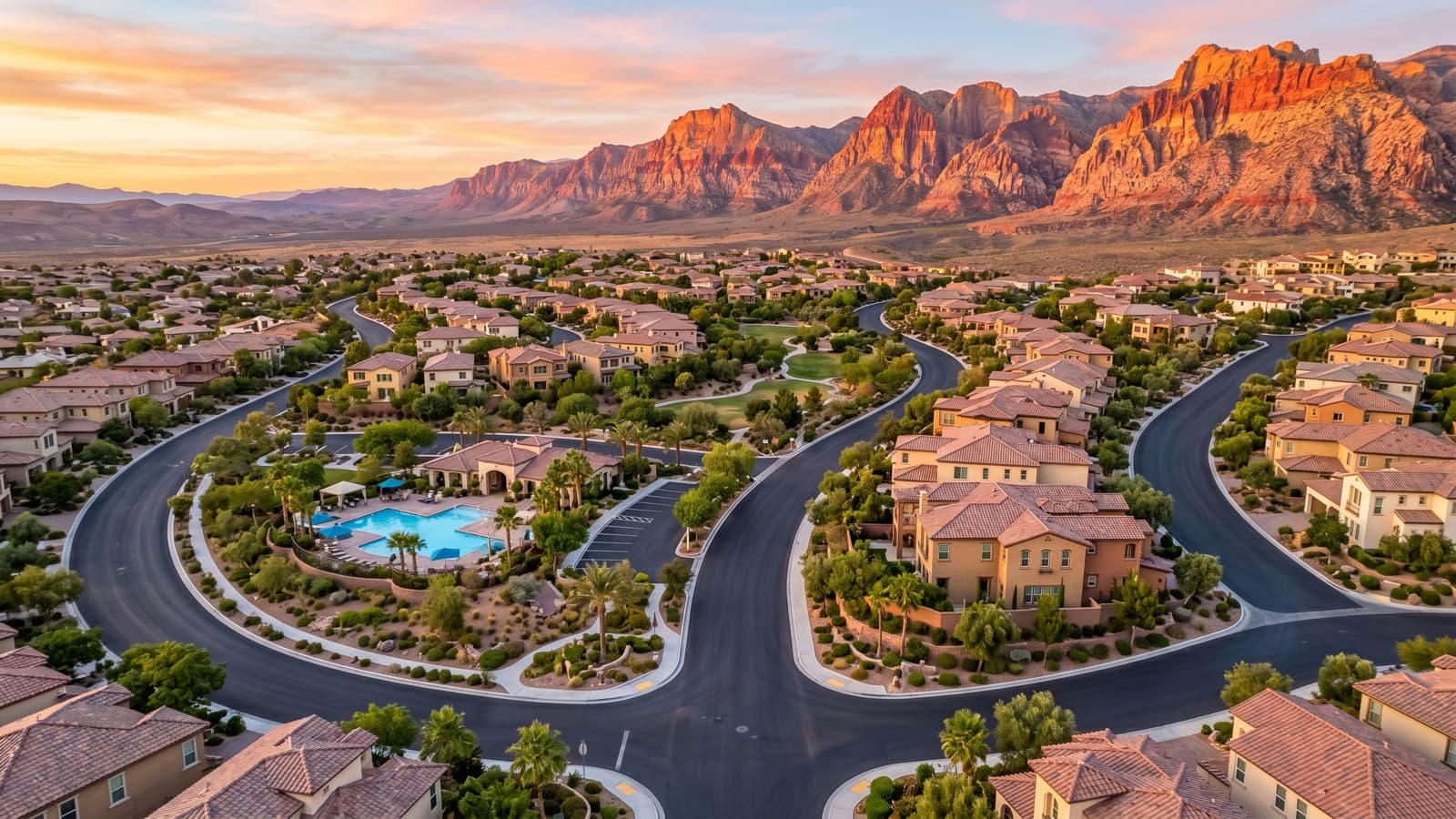
Nevada's #1 team for Chinatown real estate. Explore central Las Vegas's premier dining and cultural district — homes from $250K, Strip access in 8 minutes, and live MLS data updated daily.
MEDIAN LIST PRICE (ZIPs 89102–89146)
$399K
LVR / GLVAR, June 2026
HOMES IN THE CORRIDOR
5,000+
Community records
CORRIDOR ESTABLISHED
1995
Community records
DAYS ON MARKET
21
LVR / GLVAR sold data, June 2026

Data reviewed by
NREG Research Team
All statistics verified against primary sources (LVR, U.S. Census, FBI, BLS)
Last updated
June 2026
Reviewed monthly · Next review July 2026
KEY TAKEAWAYS
Chinatown is a 2-mile Spring Mountain Road cultural and mixed-use district in central Las Vegas, established in 1995 with 5,000-plus homes from $250K to $600K. ZIPs 89102, 89103, and 89146 show a $399,000 median list and 21-day pace per Las Vegas REALTORS; City of Las Vegas covers municipal services. Takeaways below unpack this Strip-adjacent urban address.
Last updated June 2026 · Sources: LVR, U.S. Census, City of Las Vegas
ZIPs 89102, 89103, and 89146 carried 111 active listings in June 2026 according to Las Vegas REALTORS MLS data, spanning the full range of Chinatown corridor properties from entry condos to renovated single-family homes. The newest listings appear below, refreshed daily, and every active Chinatown-area home is searchable in our live MLS portal.
PRICE DISTRIBUTION
Chinatown pricing spans $250,000 for entry condos and 1970s ranches to $600,000 for larger renovated homes, with the surrounding ZIP footprint showing a $399,000 median list price per Las Vegas REALTORS June 2026 MLS data. The bands below show the modeled split of the corridor's 111 active listings, with concentration in the $300K–$450K move-up band.
The corridor's 111 active listings break down into six sub-pockets, three property types, and the price filters below — each link opens our live Las Vegas MLS search, with counts updated daily from Las Vegas REALTORS MLS data across ZIPs 89102, 89103, and 89146.
The six distinct sub-neighborhoods within the Chinatown corridor differ by housing type, walkability, school zone, and price point. Each card links to the most relevant hub or live search so you can see current inventory and lifestyle fit for that slice of the district.
Updated daily · 111 active listings · MLS data
STAY AHEAD OF THE MARKET
Custom alerts by sub-pocket, property type, price, and beds — no spam, unsubscribe anytime. With 111 active listings across a diverse corridor and a 21-day median market pace, updated and move-in-ready Chinatown homes go under contract quickly. Alert subscribers see new listings within hours of hitting the MLS, ahead of the general market.
Walter Bracken STEAM Academy rates 8/10 on GreatSchools — the strongest zoned elementary in the corridor. Hyde Park Middle rates 5/10, the honest trade-off. Charter options Doral Academy of Nevada (9/10) and Somerset Academy (8/10) are within 12 minutes. Bishop Gorman (A+) and The Meadows School (A+) serve private families within 15 minutes. Verify CCSD zone boundaries before offering.
8/10 9/10
9/10 8/10
8/10 10/10
10/10 10/10
10/10Campus photos are representative imagery — school names, ratings, and enrollment data refer to the actual schools listed.
According to GreatSchools.org, Walter Bracken STEAM Academy (8/10) is the strongest zoned elementary in the corridor; Doral Academy of Nevada charter option rates 9/10. Hyde Park Middle (5/10) is the honest weak point — the charter and private alternatives within 15 minutes outperform significantly. Ratings cross-checked against the Nevada Report Card, with the ranked table below.
| Rank | School | Type | Grades | GreatSchools | Neighborhood | Homes Near |
|---|---|---|---|---|---|---|
| 1 | Bishop Gorman HS | Private | 9-12 | 10/10 | West Las Vegas · 15 min | $250,000+ |
| 2 | The Meadows School | Private | PreK-12 | 10/10 | Summerlin · 15 min | $250,000+ |
| 3 | Doral Academy of Nevada | Public charter | K-8 | 9/10 | Las Vegas · 10 min | $250,000+ |
| 4 | Walter Bracken STEAM Academy | Public (zoned) | K-5 | 8/10 | Central Chinatown corridor | $250,000+ |
| 5 | Somerset Academy | Public charter | K-8 | 8/10 | Las Vegas · 12 min | $250,000+ |
SAFETY & CRIME
The Chinatown corridor is an open, mixed-use urban district — not guard-gated. Las Vegas overall tracks below national violent-crime averages in FBI Uniform Crime Reporting comparisons. Buyers who prioritize controlled-access security should compare guard-gated communities in the valley; Chinatown's appeal is urban energy and convenience, not enclosed perimeter security.
Las Vegas Metropolitan Police Department data consistently places the city below national violent-crime averages per FBI UCR comparisons. The Chinatown corridor, as a high-foot-traffic dining and cultural district, maintains an active street presence that itself serves as informal crime deterrence — busy, well-lit commercial streets with consistent foot traffic seven days a week.
The residential sub-pockets immediately north and south of Spring Mountain Road share the corridor's active character. Buyers comparing Chinatown to suburban master plans should understand that the urban density driving the dining culture is also the trade-off on street-level security relative to guard-gated communities in Summerlin or Henderson.
For buyers wanting additional security data, LVMPD publishes precinct-level crime statistics covering the central Las Vegas area. Nevada Real Estate Group can help buyers compare specific blocks and sub-pockets within the corridor to find the best combination of walkability and residential character.
Sources: FBI Uniform Crime Reporting (latest available data), City of Las Vegas / LVMPD. Last updated June 2026.
Chinatown delivers genuine urban walkability and Strip access in 8 minutes — rare in Las Vegas. The Spring Mountain Road spine holds hundreds of restaurants across eight cuisines, with homes from $250,000. City of Las Vegas handles municipal services, and Nevada's zero income tax keeps costs well below coastal urban equivalents.
Chinatown is known as the best Asian food corridor in the western United States — a 2-mile stretch of Spring Mountain Road that exploded from a 1995 plaza opening into hundreds of restaurants, specialty markets, tea houses, and cultural businesses. Residents gain world-class dining at neighborhood prices and the shortest commutes to the Strip of any affordable Las Vegas residential district.
It fits hospitality and Strip workers who need short commutes, first-time buyers seeking the most affordable Strip-adjacent address, food-culture enthusiasts who want walkable dining in their daily routine, California transplants trading state income tax for urban energy at a fraction of the coastal price, and investors targeting steady rental demand from UNLV students and hospitality professionals.
Mornings pick up fresh dim sum or Vietnamese coffee from one of dozens of nearby spots, afternoons run errands at H Mart or 99 Ranch Market, and evenings rotate through ramen, Korean barbecue, or Cantonese seafood — all within a 5-minute radius. The Strip is 8 minutes east for entertainment, Desert Breeze Park 10 minutes for outdoor recreation.
Chinatown anchors the cultural and dining identity of central Las Vegas along Spring Mountain Road between Valley View and Rainbow Boulevards. About 2 miles of commercial and residential corridor. Roughly 5–8 miles from the Strip.
LIVABILITY REPORT CARD
Chinatown earns top marks for dining access, commute convenience, and urban energy, with honest trade-offs on school ratings relative to suburban master plans and the absence of guard-gated security. Below is our category-by-category report card — the same six factors our agents walk through with every buyer considering this district before a first tour.
Hundreds of restaurants across eight Asian cuisines, specialty markets, tea houses, and year-round cultural events — the best urban food scene in Las Vegas.
Walter Bracken STEAM Academy 8/10 (GreatSchools); Doral Academy of Nevada charter option 9/10; Hyde Park Middle 5/10 is the honest trade-off. Bishop Gorman (A+) and The Meadows (A+) are private options within 15 minutes.
Entry from $250K with HOA fees of $0–$250/mo depending on property type. Nevada's zero income tax offsets carrying costs significantly relative to California urban equivalents at double the price.
8 minutes to the Strip, 10 minutes to Downtown and UNLV, 15 minutes to Harry Reid Airport — among the shortest average commutes in the Las Vegas Valley for Strip and hospitality workers.
Desert Breeze Park (20 acres, lake, trails) is 10 minutes away; Paul Meyer Park nearby. The corridor is walkable for dining and errands, though far from mountain and canyon recreation.
Las Vegas tracks below national violent-crime averages per FBI UCR data. Open residential neighborhoods without gates — buyers who prioritize controlled access should compare guard-gated communities in the valley.
Source: Compiled from GreatSchools.org, FBI UCR, BLS, and Walk Score. Methodology: 6 weighted categories on a 4.0-equivalent scale. Last refreshed June 2026.
Quick Answer
Yes — by every urban-lifestyle metric, Chinatown is the most distinctive residential district in Las Vegas. It pairs the best Asian dining scene west of New York, 8-minute Strip access, and homes from $250,000 with genuinely urban walkability that no master-planned suburb replicates. The honest trade-offs: middle school ratings below Summerlin's best, no guard-gated security, and an urban density that favors buyers comfortable with a lively mixed-use corridor rather than quiet cul-de-sac streets. Nevada's zero income tax sweetens every relocation to the area.
Source: City of Las Vegas
According to the U.S. Census Bureau QuickFacts for Las Vegas city — the municipality containing Chinatown — the parent city holds 656,274 residents with a median household income of $66,820. Community records place the Chinatown corridor at 5,000-plus households across ZIPs 89102, 89103, and 89146, with a homeownership rate estimated at 45% and a median age of 36.
The Census does not break Chinatown out as its own place, so the figures below are Las Vegas citywide — presented honestly as the statistical backdrop. Inside the corridor, our closing data shows a blend of hospitality and Strip workers seeking short commutes, first-time buyers entering at the $250K–$350K range, California transplants trading state income tax for urban dining access, UNLV-area professionals, and investors targeting rental demand from the district's large renter population.
Source: U.S. Census Bureau QuickFacts, Las Vegas city (Chinatown corridor is not separately tabulated) · Updated
POPULATION & GROWTH
The Chinatown corridor itself is a mature residential district adding through infill and renovation rather than greenfield expansion, while its parent city of Las Vegas and the broader metro continue growing. Las Vegas has added roughly 70,000 people since 2010 per U.S. Census counts, and ongoing commercial investment along Spring Mountain Road signals sustained demand for the corridor's housing stock.
Inside the Chinatown corridor, growth means revitalization and rising values — ongoing restaurant openings, commercial investment, and infill residential development keep improving the district while the broader metro adds residents who want short Strip commutes and affordable central-Las Vegas housing. That demand equation favors long-term holders in the $250K–$600K band.
Sources: U.S. Census Bureau QuickFacts and City of Las Vegas. Citywide figures shown because the Census does not tabulate Chinatown separately; projection reflects recent Las Vegas growth rates. Last updated June 2026.
LIVABILITY SCORES
Chinatown earns an A+ for dining access and commute to the Strip, with honest trade-offs on middle school ratings and open-district security relative to guard-gated alternatives. The six rings below benchmark each category against Census, FBI UCR, and GreatSchools data, so buyers weigh the full picture before touring.
Overall Livability
Schools (zoned)
Safety
Cost of Living
Dining & Culture
Commute / Location
MARKET TRENDS · LAST 12 MONTHS
Median sold price, days on market, and monthly closings for the Chinatown ZIP footprint (89102/89103/89146) from Las Vegas REALTORS MLS data. These ZIP-area figures are broader than any single sub-pocket — read the level and the pace as corridor-wide orientation, not block-level precision.
Median Sold Price
$325K–$342K monthly band; $335,000 median over the last 100 days
vs May 2025
Source: Las Vegas REALTORS
Days on Market
19–28 day monthly range; 21 median over the last 100 days — a moderately active urban corridor
vs May 2025
Source: Las Vegas REALTORS
Closed Sales / Month
Steady volume from a 5,000-plus-home corridor — individual renovated or move-in-ready homes consistently outpace dated inventory
vs May 2025
Source: Las Vegas REALTORS
ACTIVE CULTURAL MARKET
Market Competitiveness
Chinatown runs at 21 median days on market across ZIPs 89102, 89103, and 89146 per Las Vegas REALTORS data. Updated, move-in-ready homes attract multiple offers; fixer inventory sits longer. Strip-adjacent location and ongoing revitalization support above-average demand for the price tier.
Chinatown spans six sub-neighborhoods from $250K condos in Chinatown East to $600K renovated homes in Chinatown West, all 8 minutes from the Strip with walkable dining. Six buyer profiles below match lifestyles to sub-pockets, followed by honest pros and trade-offs our agents review before every first tour.
Ready to explore homes in the Chinatown corridor? Our team knows every sub-pocket, school zone, and price tier along Spring Mountain Road.
Start Your Home SearchSub-Neighborhood Comparison
A like-for-like comparison of the six distinct sub-pockets within the Chinatown corridor — indicative price, dollars per square foot, days on market, and lifestyle fit — using ZIP-area listing data via Las Vegas REALTORS. Per-pocket figures are Nevada Real Estate Group-modeled slices of the ZIP 89102/89103/89146 market; use them as orientation, not appraisal.
| Submarket | Median Price | $ / Sq Ft | Days on Market | Active Listings | Best For |
|---|---|---|---|---|---|
| Spring Mountain Corridor | ~$380,000 | ~$285 | 18 | ~38 | Urban · Walkable · Dining Access |
| Chinatown West | ~$420,000 | ~$275 | 22 | ~25 | Single-Family · Larger Lots · Quieter |
| Chinatown East | ~$295,000 | ~$290 | 19 | ~22 | Strip-Adjacent · Entry Price · Condos |
Source: Las Vegas REALTORS MLS data plus Nevada Real Estate Group analysis, June 2026. The MLS reports at ZIP level — per-pocket medians are our modeled estimates from active-listing review. Listing counts updated daily via Repliers IDX.
Sub-Neighborhood Deep Dive
Submarket 1
The most walkable and culturally connected sub-pocket — properties nearest the Spring Mountain Road commercial spine give residents dining, markets, and tea houses within a short walk. Urban density is highest here, and the rental market is correspondingly active from hospitality workers seeking minimal commutes.
Browse Spring Mountain Corridor homes →Submarket 2
Established single-family homes west of Decatur Boulevard with larger lots and 1980s–1990s construction. A quieter residential character contrasts with the dining-corridor energy — good for buyers who want proximity to Chinatown culture without living directly on the commercial strip.
Browse Chinatown West homes →Submarket 3
The most Strip-adjacent and most affordable section — condos, townhomes, and smaller single-family homes at entry-level prices. Maximum convenience for hospitality workers who value the 8-minute commute above all else. Condo project warrantability varies — verify with your lender before writing an offer.
Browse Chinatown East homes →Submarket 4
The lifestyle engine that makes the Chinatown address so distinctive: hundreds of restaurants across eight Asian cuisines, H Mart and 99 Ranch grocery markets, specialty tea houses and bakeries, cultural bookstores, and year-round Lunar New Year and community events — all within a 2-mile walkable corridor that no other Las Vegas residential district can match.
Browse Spring Mountain Road Cultural Spine homes →STILL DECIDING?
BY ZIP CODE
Chinatown spans three ZIPs, each with slightly different character and pricing. The table below presents the primary ZIP as a corridor anchor, with an honest note that each ZIP blends Chinatown residential product with adjacent neighborhoods per Las Vegas REALTORS.
| ZIP | Primary Area | Median Price | $ / Sq Ft | Days on Market | Active | YoY |
|---|---|---|---|---|---|---|
| 89102 | Central Chinatown — Spring Mountain Rd spine · Chinatown East · Mixed residential | $399,000 | ~$280 | 21 | 111 | n/a* |
Source: Las Vegas REALTORS MLS plus Nevada Real Estate Group corridor analysis. The $399,000 ZIP median blends the full range from entry condos ($250K) to renovated single-family homes ($600K). *Year-over-year change is intentionally omitted at corridor level. Boundaries per Clark County GIS.
BY THE NUMBERS
Eight verifiable numbers — each sourced to Las Vegas REALTORS, the U.S. Census Bureau, the City of Las Vegas, or GreatSchools — capture the Chinatown corridor faster than any brochure: a $399,000 ZIP-area median, 21 median days on market, 5,000-plus homes in a 2-mile dining district established in 1995, and an 8-minute commute to the Strip.
$399,000
Median list price across ZIPs 89102, 89103, and 89146 (Chinatown corridor), June 2026.
Las Vegas REALTORS
$335,000
Median sold price across the corridor over the past hundred days of closings.
LVR / GLVAR, June 2026
21
Median days from list to accepted offer — a moderately active urban corridor.
LVR / GLVAR, June 2026
5,000+
Homes in the Chinatown corridor across ZIPs 89102, 89103, and 89146.
Community records
1995
Year the Chinatown cultural district was established with the opening of Chinatown Plaza.
Community records
8/10
GreatSchools rating at Walter Bracken STEAM Academy — the strongest zoned elementary in the corridor.
GreatSchools.org
$250K
Entry price for condos and smaller homes in Chinatown East — the most affordable Strip-adjacent address in Las Vegas.
Community records / LVR
$66,820
Median household income in Las Vegas city, the parent municipality, per U.S. Census Bureau QuickFacts.
U.S. Census QuickFacts
WHY CHINATOWN
From the dining culture to the Strip commute, Chinatown occupies a position no master-planned suburb can claim at its price point in Las Vegas. The five advantages below are each tied to a verifiable source — the Nevada Revised Statutes, FBI crime data, Census figures, GreatSchools, and Las Vegas REALTORS — so you can check every claim.
Hundreds of restaurants across eight cuisines along a 2-mile Spring Mountain Road spine — a cultural amenity no master-planned suburb can import or replicate.
Shorter commute to the resort corridor than any other affordable Las Vegas residential district — a structural advantage for hospitality workers and Strip employers.
The most affordable Strip-adjacent residential address in the valley — condos and 1970s ranches at entry price points that competing central districts cannot match.
Nevada levies no personal income tax and caps annual primary-residence tax increases at 3% under NRS 361.471 — meaningful savings at every Chinatown price point.
Consistent commercial investment in the dining and cultural district keeps improving the residential backdrop, supporting property values in a corridor that was already centrally located.
WHY BUY IN CHINATOWN
Chinatown's case rests on location, culture, and value: the closest affordable residential district to the Strip, property taxes capped at 3% annual growth under Nevada law per Nevada Revised Statutes 361.471, zero state income tax, world-class dining within walking distance, and entry prices from $250,000. Ten sourced reasons follow.
Hundreds of restaurants across eight cuisines within a 2-mile corridor — a dining culture that rival Las Vegas neighborhoods cannot replicate.
Community records / Industry recognition
Shortest commute to the resort corridor of any affordable central Las Vegas residential district — a structural daily-life advantage.
Drive time data
The most affordable Strip-adjacent residential address in Las Vegas — accessible to first-time buyers and investors alike.
LVR / GLVAR, June 2026
Nevada levies no personal income tax — meaningful annual savings for every household relocating from California or other high-tax states.
Nevada Department of Taxation
Annual primary-residence property-tax increases are capped by statute — predictable carrying costs in a value-priced corridor.
NRS 361.471
Specialty Asian markets, tea houses, bakeries, and cultural businesses within walking distance — a lifestyle unavailable in master-planned suburbs.
Community records
1970s ranch homes, modern infill townhomes, and condos in a single corridor — options for first-time buyers, move-up buyers, and investors.
LVR / GLVAR, June 2026
UNLV 10 minutes east on Flamingo Road, medical district along Rancho Drive similarly close — steady renter demand from students and healthcare workers.
Community records
New restaurant openings, commercial projects, and infill residential development keep improving the district and supporting property values.
City of Las Vegas development records
Strip-adjacent location makes Chinatown one of the strongest rental demand corridors in central Las Vegas — vacancy rates stay low among the large renter population.
Nevada Real Estate Group market analysis
New Construction
Chinatown's new residential product is primarily infill townhome development from smaller builders rather than large national builder tracts. Nearby suburban master plans in Spring Valley, The Lakes area, and Summerlin offer broader new-construction options from national builders. Verify current communities and incentives before writing an offer.
Family & Mid-Market
Volume builder with active Las Vegas Valley presence
Entry & Mid-Market
Entry-tier new builds within 20–30 min of Chinatown
First-Time Buyer
Personalization options and first-time buyer programs
Family
Accessible new builds within 20 minutes of the corridor
Mid-Market
Value-tier new construction accessible from Chinatown
Outdoor Recreation
Desert Breeze Park anchors outdoor recreation within 10 minutes of the corridor, and the broader Las Vegas park network provides additional options across central and southwest Las Vegas. The City of Las Vegas maintains parks and recreational facilities throughout the area, complementing the corridor's walkable character.
10 MIN
The closest major park to Chinatown — a 20-acre recreational anchor with a lake, playground, tennis courts, walking trails, and a skate park. Perfect for families and fitness-minded residents in the corridor.
10 MIN
Neighborhood park serving the Spring Valley edge with sports fields, playground equipment, open turf for weekend pick-up games, and picnic areas.
8 MIN
Recreation center adjacent to the Spring Mountain Road spine, with walking paths and shade structures for year-round outdoor use.
8 MIN
The world's premier entertainment corridor 8 minutes east — pools, theaters, world-class dining, and nightlife accessible as a daily amenity for Chinatown residents.
10 MIN
University campus with public running paths, athletic events, and cultural programming. Thomas & Mack Center and Sam Boyd Stadium host concerts and major events accessible to Chinatown residents.
25 MIN
America's most dramatic red-sandstone landscape — 13-mile Scenic Loop and 26 miles of hiking trails about 25 minutes west, the nearest major natural recreation area to the corridor.
The Chinatown Lifestyle
Three everyday rhythms define Chinatown living: morning dim sum or banh mi from the Spring Mountain Road spine, afternoon errands at H Mart or 99 Ranch, and evening exploration of a new ramen or Korean barbecue spot — with the City of Las Vegas's park network and the Strip 8 minutes east for bigger-occasion entertainment.
THIS WEEKEND'S OPEN HOUSES
Chinatown is an open residential district — no gate coordination required. With 111 active listings and a 21-day median market pace, updated and move-in-ready homes move quickly. Set up instant alerts, browse the corridor inventory, or call (702) 637-1759 and our team will schedule your weekend tour across the sub-neighborhood that best fits your lifestyle and budget.
Quick Answer
HOA fees in Chinatown run $50 to $250 per month depending on property type. Attached condos and townhomes tend toward the higher end, covering exterior maintenance, common areas, and sometimes water and trash. Older detached single-family homes frequently carry no HOA or a minimal fee under $75. Always request the current financials — dues, reserve fund status, and any pending assessments — during escrow before contingency deadlines.
California transplants find the Chinatown corridor delivers what most of Las Vegas cannot: a 2-mile restaurant district, Strip access in 8 minutes, and homes from $250,000. California top income-tax rate is 13.3% per the Franchise Tax Board; Nevada is zero — making Chinatown one of the most compelling urban relocation targets in the valley.
The tax math works at every price point: California's top marginal state income tax is 13.3% — Nevada's is zero. A household earning $150,000 saves over $12,000 per year in state income taxes alone. Chinatown adds the cultural and culinary argument that most Las Vegas suburban master plans cannot match: hundreds of restaurants within walking distance, specialty Asian grocery markets, tea houses, and a street-level energy that feels more like a West Coast urban neighborhood than a desert suburb.
At a $400,000 budget, Los Angeles buyers are looking at a small condo in a competitive market with a 45-plus-minute commute. That same budget in Chinatown secures a renovated single-family home or modern townhome 8 minutes from the Strip, surrounded by world-class dining, with Nevada's zero income tax stretching every paycheck further — and commutes to the Strip and Downtown Las Vegas that run under 10 minutes most of the day.
According to Las Vegas REALTORS, the median list price across the Chinatown ZIP footprint (89102/89103/89146) is $399,000. Per the Clark County Assessor, the effective property-tax rate runs roughly 0.5–0.7% of assessed value. FBI Uniform Crime Reporting data places the Las Vegas metro below national violent-crime averages, and GreatSchools rates Walter Bracken STEAM Academy — the zoned elementary — at 8/10, with Doral Academy of Nevada charter option at 9/10.
Chinatown runs on the Strip's economic engine with a cultural district overlay: hospitality employment dominates within 8 minutes, UNLV research and academic employment is 10 minutes east, and the corridor's own restaurant and retail economy employs thousands in the 2-mile Spring Mountain Road spine. Healthcare workers in the medical district along Rancho Drive find the commute among the shortest in the valley.
Day-to-day costs run meaningfully lower than coastal California across every category that matters. Nevada has no state income tax and no personal property tax on vehicles beyond registration. The category that flips hardest for urban-lifestyle buyers is housing: a renovated home with walkable dining access that costs $350,000–$500,000 here would easily exceed $800,000–$1.5 million in comparable Los Angeles urban neighborhoods.
| Metric | Chinatown, LV | Los Angeles, CA |
|---|---|---|
| State Income Tax | None | Up to 13.3% |
| Entry-Level Home Price | $250K+ (Chinatown) | $600K+ typical urban |
| Effective Property Tax Rate | ~0.5%–0.7% | ~1.1% on new purchases |
| Strip / Downtown Commute | 8–10 min | 45–90 min (downtown LA) |
| Asian Restaurant Access | Hundreds within 1 mile | Similar — at much higher cost |
Figures are approximate, for illustration. Contact our team for current market data.
Single-family homes in the Chinatown corridor typically rent for $1,800–$3,000 per month, with renovated and larger homes toward the top of that band. Townhomes and condos run $1,400–$2,200. Hospitality worker demand and proximity to UNLV keep vacancy rates relatively low. Short-term rentals are tightly regulated by the City of Las Vegas — confirm current rules before underwriting any nightly income on a Chinatown property.
Updated June 2026 · Source: Las Vegas REALTORS rental tracking & Nevada Real Estate Group market analysis
Already planning a relocation to central Las Vegas? Our team specializes in the Chinatown corridor — virtual tours, school zone verification, FHA and conventional financing referrals, and closing support for every price band.
Start Your Chinatown Home SearchRELOCATION TIMELINE
From first research to keys-in-hand, here's the 8-12 week timeline most Chinatown buyers follow. Two deadlines are statutory: Nevada requires a driver's license within 30 days of residency and vehicle registration within 60, per the Nevada DMV — miss them and registration penalties stack.
Decide which Chinatown sub-neighborhood fits: $250K–$350K Chinatown East condos for maximum Strip proximity, $350K–$450K Spring Mountain Corridor homes for walkable dining access, or $375K–$600K Chinatown West single-family for larger lots and quieter streets.
If targeting condos or townhomes, work with a lender who can verify HOA project warrantability for FHA/conventional financing before you tour. Non-warrantable buildings require portfolio lenders and may limit your resale market. Detached homes avoid this issue entirely.
Sub-pocket character, school zone verification, HOA structure, and rental regulation rules shift block by block in the corridor. An agent who knows Spring Mountain Road saves real time and money — call Nevada Real Estate Group at (702) 637-1759.
Chinatown is an open district — no gate coordination required. Visit target sub-pockets at different times of day to gauge traffic noise, walkability, and neighborhood energy. Spring Mountain Road at dinner service is different from Sunday morning. Our team schedules multi-stop corridor tours.
Updated and move-in-ready homes in the corridor attract competing offers at a 21-day median market pace. Dated inventory and fixer product give more room for inspection-based negotiation. Know your sub-pocket before writing.
Age the diligence to the property: 1970s ranch homes may need electrical, plumbing, and roof updates. Pull HOA financials — dues, reserve fund status, CC&Rs, and any special assessments — the day you go under contract. Confirm rental rules with the City of Las Vegas if you plan to rent.
Nevada closes through escrow companies, not attorneys; expect 30–45 days from acceptance to funding. Condo purchases with HOA project approval steps can run closer to 45 days. Cash buyers can close in 10–14 days.
Transfer utilities (NV Energy, Southwest Gas, City of Las Vegas water), change your address with USPS and financial institutions, then handle the DMV — license within 30 days, vehicle registration within 60.
ECONOMY & JOBS
Strip hospitality and conventions dominate employment within 8–10 minutes of the corridor. According to the U.S. Bureau of Labor Statistics, Las Vegas metro jobs center on hospitality and food service, with Spring Mountain Road itself adding hundreds of local restaurant and retail positions inside the district.
Sources: U.S. Bureau of Labor Statistics, City of Las Vegas. Last updated June 2026.
COMMUNITY COMPARISON
Chinatown leads on dining and Strip commute; Spring Valley on suburban family character; The Lakes on waterfront lifestyle; Downtown on urban arts — this June 2026 side-by-side covers price, HOA, commute, and lifestyle fit, sourced from LVR, the U.S. Census, and FBI UCR.
| Metric | Chinatown | Spring Valley | The Lakes | Downtown LV |
|---|---|---|---|---|
| Entry Price | $250K | $300K | $350K | $200K |
| Guard-Gated | No — open district | Some sections | Some sections | No |
| HOA Monthly | $0–$250 | $0–$175 | $75–$200 | $100–$500+ |
| ZIP Median List | $399K (89102) | $476K area | $548K (89117) | $422K (89101) |
| Days on Market | 21 | 22 | 21 | 23 |
| Strip Commute | 8 min | 15 min | 20 min | 10 min |
| Dining / Walkability | A+ (Asian corridor) | B (suburban strip malls) | B (suburban) | A (Fremont St) |
| Best For | Dining · Commute · Culture | Family · Suburban · Value | Waterfront · Established | Urban · Arts · Entry |
Sources: Las Vegas REALTORS, U.S. Census QuickFacts. Community income and crime figures are Las Vegas city-wide — the Census and FBI do not tabulate Chinatown separately. Last updated June 2026.
A $399,000 median-price Chinatown purchase runs about $2,100 monthly with 20% down at 7% per Freddie Mac's rate survey. The tabs below model your payment, compare renting in the central Las Vegas corridor, and budget the HOA tiers that vary significantly by property type in Chinatown.
Estimated calculations only — consult a lender for exact figures. Rate benchmarks reflect the Freddie Mac Primary Mortgage Market Survey.
BUY VS RENT
Central Las Vegas rents near the Strip remain firm, and at current rates the monthly ownership cost is comparable to rent on a similar unit — for 5-plus-year holds, Strip-adjacent location and ongoing district revitalization tilt the math toward owning.
OWN (20% DOWN, 7%)
5-year net cost:~$105,000
Equity built:~$120,000
RENT (CORRIDOR MEDIAN)
5-year net cost:~$160,000
Equity built:$0
Avg annual rent increase: 4.0%
Owning a $399,000 Chinatown home for five years nets out comparable to renting once principal paydown and conservative 3% appreciation are counted — and the owner exits with roughly $120,000 in total equity while the renter exits with none. Strip-adjacent location and ongoing revitalization support the appreciation assumption structurally for long-term holds.
Model assumptions: 7.0% 30-yr fixed (Freddie Mac PMMS), 3% annual appreciation, 4% annual rent growth, 0.6% effective property tax, $125/mo blended HOA, ~7% resale costs.
HOA Fees by Community
HOA fees in Chinatown vary dramatically by property type — detached single-family homes may carry no HOA while attached condos and townhomes range from $50 to $250 monthly. Verify the exact dues, reserves, transfer fees, and any special-assessment history with the resale package during escrow.
$0–$75 / mo
No-HOA or minimal HOA (older detached)
$0–$75
Includes:
No common area maintenance in most cases; minimal fees where applicable cover shared entry or landscaping only
$100–$250 / mo
Condo association (typical)
$100–$200
Includes:
Exterior maintenance, common area landscaping, building insurance, water/trash (varies by building)
Newer townhome HOA
$150–$250
Includes:
Common area maintenance, exterior painting, roof reserves, community landscaping; no pool in most Chinatown developments
$50–$250 / mo
Corridor average by property type
$50–$250
Includes:
Varies significantly by building age, amenities, and reserve fund health; always verify with the resale package during escrow
COMMUTE & TRANSPORTATION
Spring Mountain Road and I-15 are the primary arteries, connecting Chinatown to the Strip in about 8 minutes and Downtown Las Vegas in 10. Mean Las Vegas commutes run near 25 minutes per U.S. Census ACS data, and Chinatown residents heading to Strip or hospitality employers typically run well under that metro average.
Drive times based on average non-rush-hour conditions. Sources: Google Maps traffic data, RTC of Southern Nevada.
Quick Answer
Most Chinatown purchases close in 30 to 45 days — Nevada uses escrow companies, not attorneys. Cash buyers close in 10 to 14 days. Condo buyers should confirm HOA project warrantability before writing an offer; lender approval of the project can add 1 to 2 weeks. Request the HOA document package on the day you go under contract.
Quick Answer
Most Chinatown buyers put down 3.5% to 20%. FHA loans allow 3.5% down with a 580+ credit score — on a $399,000 purchase that is about $14,000. Conventional first-time buyer loans start at 3% down. Condo buyers must confirm HOA project warrantability for FHA and conventional approval; non-warrantable buildings require portfolio financing and may limit resale options. VA loans allow 0% down for eligible veterans at any price point.
Chinatown FAQ — 18 Answers
Homes in the Chinatown corridor range from roughly $250,000 for entry-level condos and smaller 1970s-era ranches to $600,000 for larger renovated single-family homes and newer townhomes. ZIPs 89102, 89103, and 89146 carried a $399,000 median list price in June 2026 per Las Vegas REALTORS — the corridor's Strip-adjacent location and ongoing revitalization support stable values. First-time buyers, move-up buyers, and investors all compete in the same $250K–$600K band, which is unusual for a district this close to the resort corridor. Call (702) 637-1759 for current inventory by sub-pocket.
Las Vegas Chinatown runs roughly two miles along Spring Mountain Road between Valley View Boulevard and Rainbow Boulevard, just west of the Strip. Residential neighborhoods spread across ZIPs 89102, 89103, and 89146. The resort corridor sits about 8 minutes east via Spring Mountain Road, with I-15 and US-95 flanking the district for fast freeway access. It is among the most centrally located residential addresses in the Las Vegas Valley.
Yes — especially for buyers who prioritize dining, culture, and commute convenience above master-planned community amenities. The district holds hundreds of restaurants spanning eight cuisines, some of the shortest commutes in the valley (Strip in 8 minutes, Downtown and UNLV in 10), and ongoing commercial investment that keeps the corridor improving. The honest trade-off versus suburban master plans is fewer shared amenities and more urban density, but for walkable energy and character, nothing else in Las Vegas matches it.
Chinatown spans ZIPs 89102, 89103, and 89146 in central Las Vegas, with homes priced from $250,000 to $600,000. Housing character shifts meaningfully by pocket — 1970s ranch homes on larger lots in older sections, modern 2010s–2020s townhomes in newer infill developments — so the ZIP matters less than the specific street and school zone. Nevada Real Estate Group can narrow the search by commute target, school zone, and housing style.
About 8 minutes east via Spring Mountain Road — one of the closest residential areas to the resort corridor. Downtown Las Vegas is roughly 10 minutes via I-15 North, UNLV about 10 minutes east on Flamingo Road, and Harry Reid International Airport approximately 15 minutes south via I-15. For hospitality workers and Strip employees, that proximity translates into meaningful daily savings of time and fuel.
Yes. Strip-adjacent location, an expanding restaurant and cultural scene, and ongoing commercial investment keep pushing property values, while hospitality professionals and UNLV students supply steady rental demand. Entry points from $250,000 let investors start with condos and scale into single-family or townhome product. Nevada's zero state income tax improves net returns. Entry price, rental yield, and long-term appreciation potential all favor the district for patient buy-and-hold investors. Call (702) 637-1759 for current rent data by pocket.
Hundreds of restaurants span Chinese, Japanese, Korean, Vietnamese, Thai, Filipino, Taiwanese, and fusion cuisines, plus specialty Asian grocery markets, tea houses, bakeries, and cultural bookstores. The district is widely regarded as having the best Asian food scene of any U.S. city outside the San Francisco and New York metros. For residents, a world-class dinner at reasonable prices is a walk or a two-minute drive away, every night of the week.
Yes, but the scale differs from suburban master plans. New product in Chinatown is primarily infill townhome development from the 2010s and 2020s — smaller releases that sell through quickly rather than large builder tracts. Some sections of the corridor are fully built out and resale-only. Availability shifts by season and project phase. Contact Nevada Real Estate Group at (702) 637-1759 for the current list of actively selling projects and expected upcoming releases in the corridor.
Six distinct pockets define the corridor. Spring Mountain Corridor offers the most walkable restaurant and retail access. Chinatown East is closest to the Strip with condos and townhomes. Chinatown West has larger-lot 1980s–1990s single-family homes and a quieter suburban feel. Spring Valley Edge transitions into family-friendly neighborhoods to the south. Modern Townhome District features 2010s–2020s infill with smart-home features. Ranch Row preserves original 1970s homes on generous lots with renovation upside.
HOA fees in the Chinatown corridor typically run $50 to $250 per month, depending on the property type and association. Attached townhomes and condos tend toward the higher end of that range, covering exterior maintenance, common areas, and sometimes water. Older detached single-family homes frequently carry no HOA or a minimal fee under $75. Always request the current HOA financials — dues, reserve fund status, and any pending special assessments — early in escrow before contingency deadlines.
Nevada's effective property-tax rate runs roughly 0.5–0.7% of assessed value per the Clark County Assessor, and the state caps annual increases on a primary residence at 3% under Nevada Revised Statutes 361.471. On a $399,000 purchase, budget approximately $2,000 to $2,800 per year. One key note: long-held Chinatown homes often carry abated tax bills — the assessed value resets to current market value after sale, so verify the post-sale tax figure with the Assessor before building your ownership-cost budget.
Both areas sit in central/southwest Las Vegas in a similar price range, but the lifestyle split is clear: Chinatown delivers urban walkability, a world-class restaurant corridor, and the shortest commutes to the Strip. Spring Valley at /las-vegas/spring-valley offers a more suburban character with quieter streets, larger lots, and more established family neighborhoods. Buyers choosing between them are really choosing between urban energy and suburban calm at comparable price points. Nevada Real Estate Group can walk you through both in one tour.
The corridor zones primarily to Clark County School District campuses: Walter Bracken STEAM Academy (K-5, 8/10 GreatSchools), Hyde Park Middle School (6-8, 5/10), and Clark High School (9-12, 6/10). Strong charter options nearby include Doral Academy of Nevada (K-8, 9/10) and Somerset Academy (K-8, 8/10). For private education, Bishop Gorman High School (A+) and The Meadows School (A+) are within 15 minutes. Always verify current CCSD zone boundaries with the district before submitting an offer — assignments can shift between years.
The corridor shows 111 active listings across ZIPs 89102, 89103, and 89146 at a $399,000 median list price with a 21-day median days on market per June 2026 Las Vegas REALTORS data — a moderately active market by Las Vegas Valley standards. Well-priced move-in-ready homes and updated townhomes attract multiple offers. Entry-level condos and homes needing renovation tend to sit longer. The market rewards buyers who move quickly on updated product and negotiate on fixer inventory.
Four factors matter most. First, sub-pocket selection: each of the six distinct neighborhoods has a different character — verify walkability, school zone, and commute before narrowing. Second, HOA structure: attached product carries $50–$250 monthly dues and rules that affect rentals; detached homes often have no HOA. Third, tax reset: long-held homes re-assess to market value at sale — verify the post-sale number with the Assessor. Fourth, rental regulations: the City of Las Vegas tightly regulates short-term rentals — confirm rules before underwriting nightly income on any Chinatown property.
Most Chinatown buyers put down 3.5% to 20%. FHA loans allow 3.5% down with a 580+ credit score — on a $399,000 purchase that is about $14,000. Conventional loans start at 3% for first-time buyers. Condos require a warrantable HOA for FHA and conventional approval — confirm condo project status with your lender early, as some older Chinatown buildings are non-warrantable and require portfolio financing. VA loans allow 0% down for eligible veterans at any price.
More walkable than most of Las Vegas. The Spring Mountain Road commercial spine puts hundreds of restaurants, markets, and services within a short walk or two-minute drive for residents in the corridor's most central pockets. Daily life still requires a car for errands outside the dining district — UNLV, Downtown, and the Strip are 8–10 minutes by car, not walking distance. For Las Vegas, the walkability score is unusually high; nationally, it is moderate. Bike infrastructure is limited but improving.
Most purchases close in 30 to 45 days from accepted offer — Nevada closes through escrow companies, not attorneys. Cash buyers can close in 10 to 14 days. Condo purchases add complexity: lender approval of the HOA project can extend the timeline by 1 to 2 weeks if the project is not already on an approved list. FHA and VA buyers should confirm condo project eligibility before writing an offer to avoid a closing delay. Start the HOA document request the day you go under contract.
Updated June 2026
STILL HAVE QUESTIONS?
PEOPLE ALSO ASK
Eight queries Chinatown buyers search most — answered with verifiable figures sourced from City of Las Vegas, Las Vegas REALTORS MLS data, and GreatSchools ratings. Every number links to a primary source.
Yes — the Chinatown corridor along Spring Mountain Road between Valley View and Rainbow Boulevards falls within incorporated Las Vegas city limits, served by the City of Las Vegas for municipal services and the Las Vegas Metropolitan Police Department for law enforcement. Mailing addresses carry Las Vegas, NV with ZIPs 89102, 89103, or 89146 depending on the specific property.
Chinatown spans ZIPs 89102, 89103, and 89146. The primary commercial and cultural spine is in 89102 and 89103, with residential neighborhoods spreading through all three ZIPs. Drive times from this footprint run 8 minutes to the Strip, 10 minutes to Downtown and UNLV, and 15 minutes to Harry Reid International Airport.
No — Chinatown is one of the more affordable central Las Vegas districts at a $399,000 median list price per June 2026 Las Vegas REALTORS data, with entry points from $250,000 for condos and smaller homes. Comparable Strip-adjacent addresses with walkable dining culture in coastal cities run two to three times higher. The strip-adjacent location and cultural amenity are priced at a meaningful discount to what equivalent coastal urban neighborhoods charge.
The Chinatown corridor has a diverse vintage — from 1970s ranch-style homes on larger lots to modern 2010s–2020s infill townhome developments. The cultural district established in 1995 gave the corridor its identity, but the underlying residential stock ranges across five decades. Older homes typically offer larger lots and renovation upside; newer townhomes offer low maintenance and modern design at higher price-per-square-foot.
It depends on the property. Detached single-family homes in the Chinatown corridor often carry no HOA or a minimal fee under $75 monthly. Condos and attached townhomes typically have HOA fees of $100–$250 monthly covering exterior maintenance, common areas, and sometimes water and trash. Always request the current HOA financials during escrow and confirm project warrantability if using FHA or conventional financing on a condo.
More walkable than most Las Vegas neighborhoods. The Spring Mountain Road spine puts restaurants, Asian grocery markets, tea houses, and specialty shops within a short walk for residents in the most central pockets. Daily errands beyond the dining district still require a car — UNLV, Downtown, and Harry Reid Airport are 10–15 minutes by car, not walking distance. For Las Vegas, the walkability is unusually high; nationally, it is moderate.
About 10 minutes east via Flamingo Road — a practical commute for students and faculty who want affordable central housing without paying premium prices near campus. The corridor's rental market actively serves UNLV students and graduate researchers, making it a reliable tenant base for investors considering Chinatown rental properties.
The fundamentals are favorable for patient buy-and-hold investors: Strip-adjacent location, ongoing district revitalization, strong rental demand from hospitality workers and UNLV students, and entry prices from $250,000 that pencil on low down payments. Short-term rental regulations are tight — the City of Las Vegas enforces STR rules actively. Long-term residential rentals are the stronger investment thesis here. Ask Nevada Real Estate Group for recent closed comps and rent data before writing an offer.
WHY NEVADA REAL ESTATE GROUP
6,225+ closed transactions and $4.1B+ in volume since 2009 — including central Las Vegas corridors, Chinatown, Spring Valley, The Lakes, and Strip-adjacent communities. Direct MLS access, the largest agent team in Nevada, and 9,061+ verified five-star reviews back the #1 ranking statewide.
WORK WITH THE BEST
6,225+ closed transactions and $4.1B+ in volume since 2009. In a corridor where sub-pocket character, school zone, HOA warrantability, and rental regulations shift block by block, knowing Spring Mountain Road matters. Call (702) 637-1759 or tell us what you need and we'll find your Chinatown home.

NEARBY COMMUNITIES
Compare Chinatown with neighboring central and southwest Las Vegas communities. Each card pairs the drive time with price positioning, so you can judge whether trading Chinatown's urban dining energy for Spring Valley's suburban character or The Lakes' waterfront lifestyle actually buys you more of the lifestyle you want.
A–Z INDEX
The Chinatown corridor and surrounding central Las Vegas area include multiple residential sub-neighborhoods and adjacent communities. Dedicated pages are rolling out across the central Las Vegas area; entries below are indexed for orientation, and our team can pull current listings, HOA dues, and school zoning for any address on request.
KEEP LEARNING
These guides extend the research most Chinatown buyers do next — understanding the broader Las Vegas housing market, comparing communities across the valley, and tracking pricing trends — each written by our team from the same MLS data and primary sources used throughout this page.
MARKET UPDATE
Valley-wide pricing, inventory, and rate context — the macro backdrop behind Chinatown's ZIP corridor numbers.
Read →GUIDE
The definitive valley comparison for buyers considering a move up from central Las Vegas price points.
Read →CITY HUB
All Las Vegas neighborhoods, community guides, and side-by-side comparisons in one place.
Read →Sources & Methodology
Every figure on this page comes from a primary or government dataset, refreshed monthly. The MLS reports at ZIP level — ZIPs 89102, 89103, and 89146 are broader than any single Chinatown sub-pocket — so corridor statistics are labeled accordingly and per-sub-pocket figures are modeled estimates. Follow any link to verify.
Methodology: Listing data is sourced via Repliers IDX feed (Las Vegas MLS) and refreshed every 15 minutes. Demographic and economic data are pulled monthly via Census/BLS APIs. School data is refreshed quarterly. All comparisons are like-for-like (same metric, same time period).
Last refresh: June 2026 · Next scheduled refresh: July 2026